
What are the top 10 places to visit in Thailand? The answer spans from the bustling streets of Bangkok to the pristine shores of Koh Phi Phi, encompassing ancient temple ruins, misty mountain retreats, and turquoise island paradises. Thailand offers an unparalleled diversity of experiences that make it one of Southeast Asia’s most captivating destinations.
Thailand welcomed over 28 million international visitors in 2024, according to the Tourism Authority of Thailand, cementing its position as one of the world’s premier travel destinations. This extraordinary appeal stems from the country’s remarkable blend of experiences: golden-spired Buddhist temples, postcard-perfect beaches, mouthwatering cuisine, and a culture renowned for its warmth and hospitality.
From the cultural richness of the North with its mountain temples and hill tribe villages, to the historical heartland of Central Thailand where ancient kingdoms once flourished, and down to the spectacular islands of the South with their limestone cliffs and coral reefs, Thailand truly offers something for every type of traveller.
This comprehensive guide covers the top 10 must-visit destinations across all regions of Thailand, providing you with essential information about highlights, best visiting times, and practical travel tips to help you plan an unforgettable journey through the Land of Smiles.
TL;DR: Quick Overview – Top 10 Places to visit in Thailand
- Bangkok – The vibrant capital brimming with ornate temples, world-class street food, and electrifying nightlife
- Chiang Mai – Northern cultural hub surrounded by misty mountains, ancient temples, and ethical elephant sanctuaries
- Phuket – Thailand’s largest island featuring luxury resorts, pristine beaches, and crystal-clear turquoise waters
- Ayutthaya – UNESCO World Heritage Site showcasing the magnificent ruins of Siam’s ancient capital
- Krabi – Adventure paradise with dramatic limestone cliffs, hidden beaches, and world-class rock climbing
- Pai – Bohemian mountain town offering waterfalls, hot springs, and a laid-back backpacker atmosphere
- Koh Samui – Coconut island retreat perfect for honeymooners, wellness seekers, and beach lovers
- Sukhothai – The birthplace of Thai civilization featuring serene historical parks and early Thai architecture
- Chiang Rai, Thailand’s northernmost city, offers a more authentic, less touristy alternative to Chiang Mai.
- Koh Phi Phi — The Island That Defines Paradise
1. Bangkok
Highlights
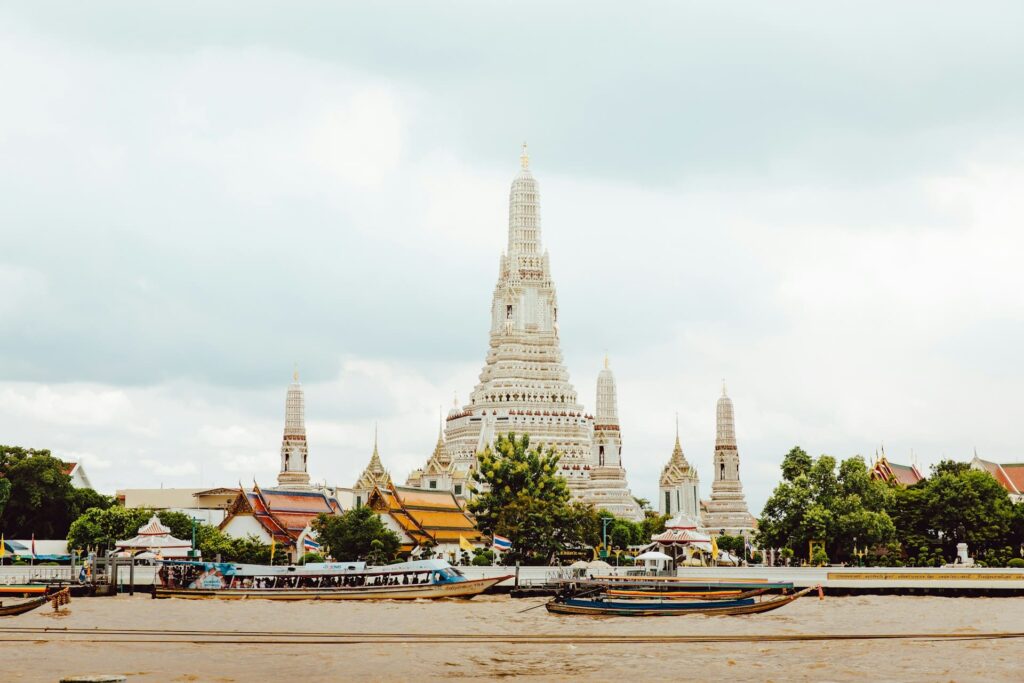
Bangkok, Thailand’s pulsating capital, is a sensory explosion where ancient traditions collide with modern urban energy. With a population exceeding 10.5 million people in the metropolitan area, according to World Population Review, Bangkok ranks as one of the world’s most visited cities, attracting over 22 million international visitors annually.
The city’s skyline features glittering golden temple spires alongside towering skyscrapers, while its streets buzz with tuk-tuks, luxury cars, and monks in saffron robes. The Chao Phraya River winds through the city like a liquid highway, connecting historic neighbourhoods with modern developments.
Must-see attractions include:
- The Grand Palace and Wat Phra Kaew – Thailand’s most sacred temple complex housing the revered Emerald Buddha
- Wat Pho – Home to the massive 46-meter Reclining Buddha and birthplace of traditional Thai massage
- Wat Arun – The stunning “Temple of Dawn” with its iconic Khmer-style prang tower
- Chatuchak Weekend Market – One of the world’s largest markets with over 15,000 stalls
- Khao San Road – The legendary backpacker hub and nightlife epicenter
- Rooftop bars – Sky-high venues like Vertigo, Octave, and Lebua offering panoramic city views
- Jim Thompson House – Traditional Thai teakwood house museum showcasing Southeast Asian art
Why Visit
Bangkok serves as both Thailand’s gateway and a destination in itself. The city offers an unparalleled street food scene recognized by the Michelin Guide, with legendary dishes available for as little as $1-2 USD per plate. From pad thai served on banana leaves to boat noodles in old-town alleys, Bangkok is a culinary adventure.
The city’s cultural richness is staggering. With over 400 temples (wats) scattered throughout the city, you’ll find spiritual serenity amid urban chaos. Shopping ranges from ultra-modern mega-malls like Siam Paragon and IconSiam to traditional floating markets like Damnoen Saduak.
Bangkok’s nightlife scene is legendary, offering everything from sophisticated rooftop bars with craft cocktails to bustling night markets and vibrant entertainment districts. The city truly never sleeps.
Best Time to Visit
November to February is considered the peak season and ideal time to visit Bangkok. During these months, temperatures range between 25-32°C (77-90°F) with low humidity and minimal rainfall, according to Thailand Meteorological Department data.
The hot season (March-May) sees temperatures soaring above 35°C (95°F), making outdoor temple exploration challenging. The rainy season (June-October) brings afternoon downpours but also fewer crowds and lower hotel rates—a worthwhile trade-off for budget travelers who don’t mind occasional rain.
How to Get There
Suvarnabhumi Airport (BKK) serves as Bangkok’s main international gateway, ranking as one of the world’s busiest airports with connections to over 100 countries. The modern Airport Rail Link provides a convenient 30-minute connection to downtown for just 45 baht ($1.30 USD).
Don Mueang Airport (DMK) handles primarily domestic and regional budget flights. Both airports are well-connected by taxi, airport bus, and ride-sharing services.
Within the city, the BTS Skytrain and MRT subway systems provide efficient, air-conditioned transport. The Chao Phraya Express Boat offers a scenic way to reach riverside attractions while avoiding traffic.
2. Chiang Mai
Highlights
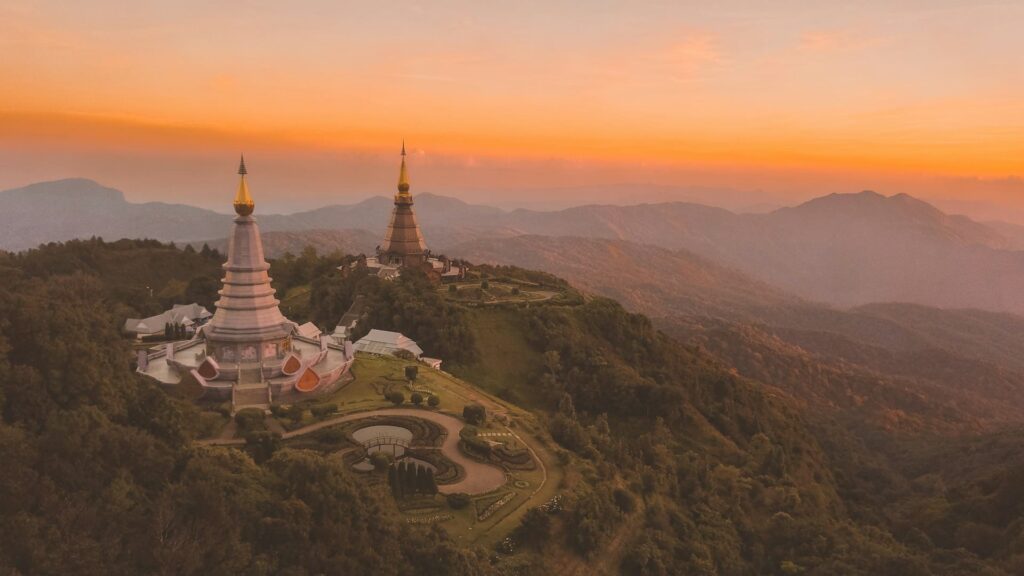
Chiang Mai, the “Rose of the North,” offers a completely different rhythm from Bangkok’s frenetic pace. Nestled in a valley surrounded by misty mountains, this northern city of approximately 1.2 million residents combines rich cultural heritage with stunning natural beauty.
The city’s Old City is contained within ancient walls and a moat, featuring over 300 temples in varying architectural styles. Beyond the urban center, the surrounding mountains harbor hill tribe villages, cascading waterfalls, and ethical elephant sanctuaries.
Top attractions include:
- Doi Suthep – Chiang Mai’s most sacred temple perched 1,073 meters above sea level with panoramic city views
- Old City temples – Wat Chedi Luang, Wat Phra Singh, and dozens of historic wats within walking distance
- Sunday Walking Street – The famous night market stretching along Ratchadamnoen Road
- Elephant Nature Park – Pioneering ethical elephant sanctuary focusing on rescue and rehabilitation
- Night Bazaar – Sprawling market offering handicrafts, textiles, and local cuisine
- Sticky Waterfall (Bua Tong) – Unique limestone waterfall you can climb with bare hands
- Monk Chat programs – Cultural exchange opportunities at various temples
Why Visit
Chiang Mai has evolved into a digital nomad hub while maintaining its authentic cultural identity. The cost of living is significantly lower than Bangkok, with excellent cafes, co-working spaces, and accommodation options.
The region’s culinary scene showcases Northern Thai specialties distinct from central and southern cuisine. Don’t miss khao soi (curry noodle soup), sai oua (northern sausage), and nam prik ong (spicy tomato dip). Cooking classes here are among Thailand’s best, offering market tours and hands-on instruction.
Nature and adventure opportunities abound in the surrounding mountains. Trekking, zip-lining, white-water rafting, and mountain biking attract outdoor enthusiasts. The region’s hill tribe villages offer cultural immersion opportunities, though it’s important to choose ethical tour operators.
Best Time to Visit
November to February is optimal, with cool mountain temperatures ranging 15-25°C (59-77°F). December and January evenings can be quite cool by Thai standards, requiring light jackets.
The Yi Peng Lantern Festival (usually November, coinciding with Loy Krathong) is one of Thailand’s most magical experiences, with thousands of paper lanterns floating skyward. Book accommodation months in advance for this period.
March to May brings the burning season, when farmers clear fields, causing significant air quality issues. The Air Quality Index frequently reaches unhealthy levels—this is the worst time to visit.
How to Get There
Chiang Mai International Airport (CNX) connects to Bangkok (1.5-hour flight), as well as regional hubs like Singapore, Kuala Lumpur, and Chengdu. Budget airlines offer frequent Bangkok-Chiang Mai flights for $30-60 USD.
The overnight sleeper train from Bangkok (11-15 hours) provides a romantic, budget-friendly option with first and second-class sleeper berths available. Advance booking through 12Go Asia is recommended.
VIP buses operate between Bangkok and Chiang Mai (approximately 10 hours), offering a cheaper alternative to flights.
Discover more northern Thailand destinations in our Northern Thailand travel guide.
3. Phuket
Highlights
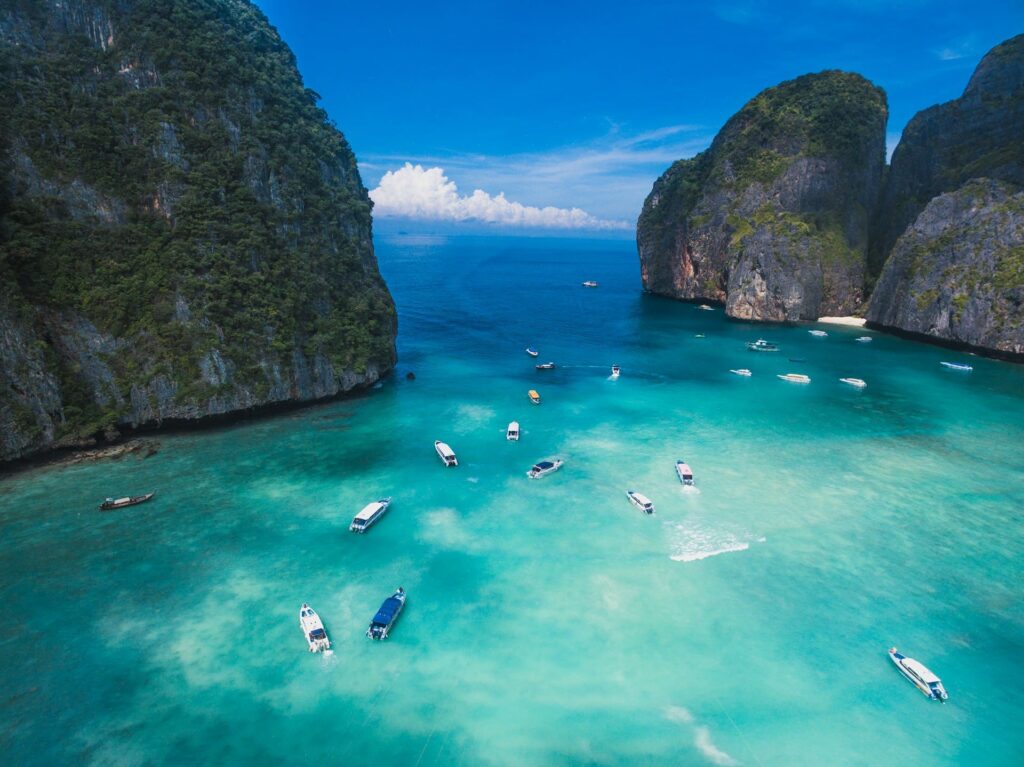
Phuket, Thailand’s largest island at 576 square kilometers, reigns as the country’s most developed beach destination. The island welcomed approximately 9.6 million visitors in 2023, according to Phuket Tourism Statistics, making it one of Asia’s premier beach resort destinations.
The island’s west coast features a string of beautiful beaches, each with its own character. Patong Beach buzzes with energy, water sports, and nightlife, while Kata and Karon offer more relaxed atmospheres. The exclusive Surin Beach and Kamala Beach areas feature high-end resorts and sophisticated dining.
Key attractions include:
- Patong Beach – The main tourist hub with vibrant nightlife and water activities
- Kata and Karon Beaches – Family-friendly beaches with excellent swimming conditions
- Phang Nga Bay – Iconic limestone karsts rising from emerald waters, featured in James Bond films
- Big Buddha – The 45-meter tall marble statue overlooking the island
- Old Phuket Town – Sino-Portuguese architecture, street art, and trendy cafes
- Promthep Cape – Stunning sunset viewpoint at the island’s southern tip
- Phi Phi Islands day trips – Easily accessible from Phuket for day excursions
Why Visit
Phuket offers resort luxury spanning all budget levels. From backpacker hostels to ultra-luxe properties like Amanpuri and the Trisara, accommodation options are vast. Many resorts feature world-class spas, infinity pools, and private beach access.
The island’s water activities are exceptional. Diving and snorkeling sites around nearby islands offer encounters with whale sharks, manta rays, and vibrant coral reefs. The PADI diving industry is well-established with numerous reputable dive shops.
Island-hopping tours connect Phuket to stunning nearby destinations including the Phi Phi Islands, Similan Islands (seasonal, November-April), and James Bond Island. Long-tail boat rentals and speedboat tours make exploring easy.
Best Time to Visit
November to April constitutes the dry season with optimal beach weather. December and January see peak crowds and premium pricing due to the Christmas/New Year holidays and perfect weather conditions.
May to October is the monsoon season with rougher seas and frequent afternoon rains. However, prices drop significantly, crowds thin out, and you’ll still enjoy plenty of sunshine between showers. Many hotels offer discounts of 30-50% during this period.
How to Get There
Phuket International Airport (HKT) is Thailand’s second-busiest airport, with direct international connections to major Asian cities, as well as seasonal flights from Europe, Australia, and the Middle East. The airport is located on the island’s northern end, approximately 40 kilometers from Patong.
Airport transfers include taxis (fixed rate of 800-1,000 baht depending on destination), airport buses (100-200 baht), and pre-booked private transfers. Grab (Southeast Asia’s Uber equivalent) operates on the island.
Ferries connect Phuket to Krabi, Koh Phi Phi, Koh Lanta, and other Andaman Sea destinations during high season.
4. Ayutthaya
Highlights
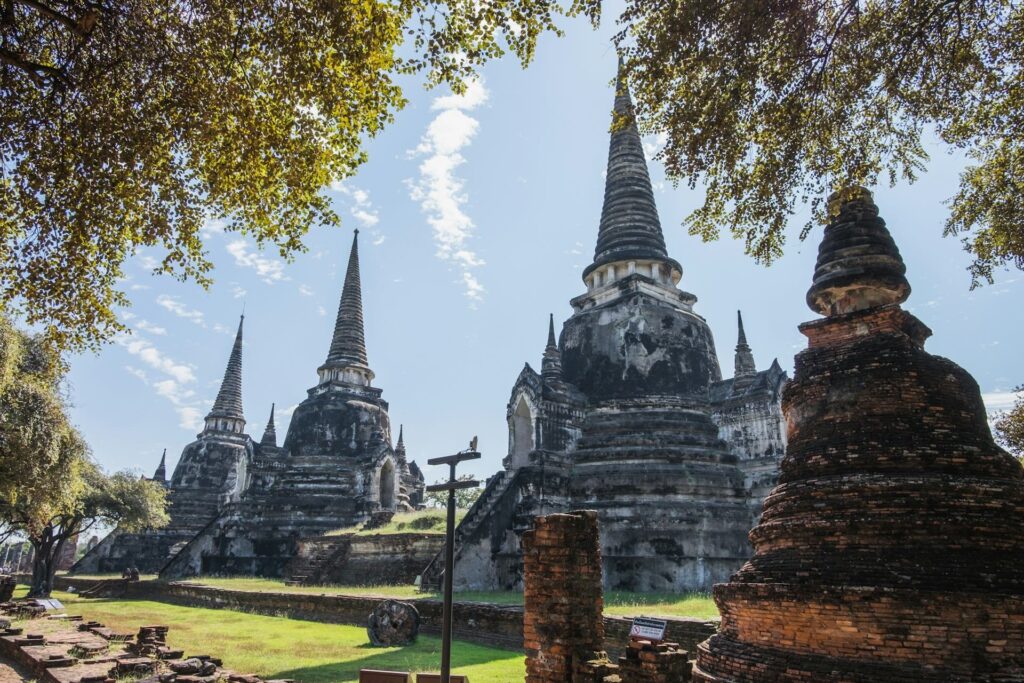
Ayutthaya, located just 80 kilometers north of Bangkok, served as Siam’s capital for 417 years (1351-1767) until Burmese invaders destroyed it. Today, the Ayutthaya Historical Park stands as a UNESCO World Heritage Site, showcasing the architectural grandeur of one of Southeast Asia’s greatest kingdoms.
At its peak in the 17th century, Ayutthaya was one of the world’s largest and most cosmopolitan cities, with a population exceeding one million and diplomatic relations with France, Portugal, and Japan. The ruins that remain—magnificent temple complexes, royal palaces, and towering prangs—offer a haunting glimpse into this glorious past.
Must-visit sites include:
- Wat Mahathat – Famous for the Buddha head entwined in tree roots
- Wat Phra Si Sanphet – The most important temple complex, once part of the royal palace
- Wat Chaiwatthanaram – Stunning Khmer-style temple reflecting Angkor Wat’s influence
- Wat Ratchaburana – Features a crypt you can descend into (claustrophobic be warned!)
- Wat Yai Chai Mongkhon – Still an active temple with a massive reclining Buddha
- Ayutthaya Historical Study Centre – Provides historical context before exploring the ruins
- Chao Sam Phraya National Museum – Houses recovered Buddha images and artifacts
Why Visit
Ayutthaya offers an accessible historical experience without the crowds and heat of more distant archaeological sites. The compact nature of the historical park allows you to cover major sites in a single day.
The ruins create incredibly photogenic settings, especially during golden hour when warm light illuminates the ancient brickwork. Photography enthusiasts will find endless compositions among the weathered chedis and headless Buddha statues.
Cycling tours are popular, with bicycle rentals available throughout the town for 50-100 baht per day. The flat terrain and circuit route connecting major temples make this an enjoyable way to explore.
Best Time to Visit
November to February provides the most comfortable temperatures for outdoor exploration. The ruins offer minimal shade, so cooler months make the experience much more pleasant.
Early morning visits (7-9 AM) or late afternoon (4-6 PM) help avoid midday heat and harsh lighting. Some temples open as early as 6:30 AM.
How to Get There
Ayutthaya is easily accessible as a day trip from Bangkok (1.5-2 hours each way) or as an overnight stop between Bangkok and northern destinations.
Trains depart frequently from Bangkok’s Hua Lamphong or Bang Sue stations (20-30 baht, 1.5-2 hours). The scenic route runs alongside rice paddies and local villages.
Minivans operate from Bangkok’s Mo Chit bus terminal (60-80 baht, 1-1.5 hours with less charm but more speed and comfort than trains).
Private tours and river cruises from Bangkok offer hassle-free options, with many combining Ayutthaya with Bang Pa-In Summer Palace or floating markets.
5. Krabi
Highlights
Krabi Province encompasses some of Thailand’s most dramatic coastal scenery. While less developed than Phuket, Krabi offers more authentic beach experiences alongside stunning limestone formations that have become iconic images of Thai tourism.
The province includes over 150 islands and features dramatic karst topography—towering limestone cliffs rising vertically from turquoise waters. This unique geology creates spectacular beaches accessible only by boat, hidden lagoons, and world-class rock climbing routes.
Top destinations include:
- Railay Beach – Legendary rock climbing destination accessible only by boat, with four distinct beaches
- Ao Nang – Main tourist hub with beachfront development, restaurants, and tour operators
- Phra Nang Cave Beach – Consistently rated among the world’s most beautiful beaches
- Four Islands Tour – Popular day trip visiting Koh Poda, Chicken Island, Tup Island, and Phra Nang Cave
- Tiger Cave Temple (Wat Tham Sua) – Challenging 1,237-step climb rewarded with panoramic views
- Koh Lanta – Laid-back island with long beaches perfect for relaxation
- Emerald Pool and Blue Pool – Natural swimming holes in the jungle interior
Why Visit
Krabi is an adventure sports paradise. The region hosts over 700 bolted rock climbing routes on limestone karsts, attracting climbers worldwide. The Princess of Thailand Cup Climbing Competition takes place here annually.
Kayaking through mangrove forests and hidden lagoons offers magical experiences. Bor Thor kayaking takes you through ancient mangrove ecosystems, while Ao Thalane features dramatic limestone scenery.
The beach quality here rivals or exceeds Phuket, with clearer water, less development, and more dramatic scenery. Koh Hong’s emerald lagoon and Railay’s limestone cliffs create postcard-perfect settings.
Best Time to Visit
November to April is the dry season with calm seas perfect for island hopping and water activities. December-February sees the most reliable weather and peak tourist numbers.
May to October brings the southwest monsoon. While some days feature heavy rain and rough seas, you’ll often enjoy weeks of good weather with significantly lower prices and fewer tourists. Some islands and boat services reduce operations during this period.
How to Get There
Krabi International Airport (KBV) receives domestic flights from Bangkok (1.5 hours) plus international connections from major Asian cities. The airport is located 15 kilometers from Ao Nang and 45 kilometers from Krabi Town.
Airport transfers include shared minivans (150 baht), private taxis (600 baht), and pre-booked transfers. To reach Railay Beach, you’ll need to get to Ao Nang first, then take a long-tail boat (100-150 baht, 15 minutes).
Ferries connect Krabi to Phuket, Koh Phi Phi, Koh Lanta, and other Andaman destinations. The Rassada Pier in Phuket offers multiple daily departures.
Overnight buses run from Bangkok to Krabi (12 hours), offering a budget alternative to flying.
6. Pai
Highlights
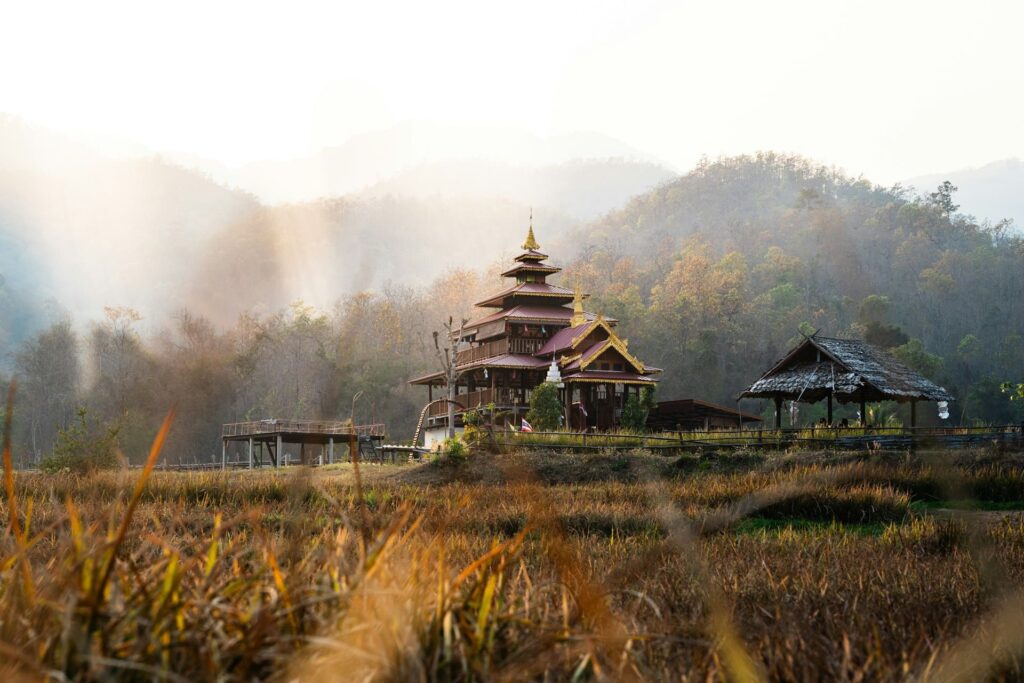
Pai, a small town nestled in a mountain valley 130 kilometers northwest of Chiang Mai, has transformed from a quiet agricultural community into a beloved traveler hangout. Despite its popularity, Pai maintains a relaxed, artistic atmosphere that contrasts sharply with Thailand’s more developed tourist destinations.
The town’s population of around 2,500 locals swells with backpackers, digital nomads, artists, and hippies drawn to Pai’s laid-back vibe, beautiful countryside, and creative community. The surrounding mountains offer waterfalls, hot springs, caves, and stunning viewpoints.
Highlights include:
- Pai Canyon (Kong Lan) – Narrow ridges offering sunset views and an adrenaline-pumping walk
- Mor Paeng Waterfall – Multi-tiered waterfall perfect for swimming
- Pam Bok Waterfall – More secluded alternative with natural pools
- Tha Pai Hot Springs – Natural hot springs in a forest setting
- Chinese Village (Santichon) – Yunnan-style settlement with tea shops and mountain views
- Land Split (Pai Rift) – Geological fault line that opened during a 2008 earthquake
- Wat Phra That Mae Yen – White Buddha statue overlooking the valley
- Walking Street – Evening market with street food, handicrafts, and live music
Why Visit
Pai offers natural beauty without the over-development found in more accessible areas. The valley’s rice paddies create stunning vistas, particularly when green during rainy season or golden before harvest.
The creative community has established excellent cafes, organic restaurants, art galleries, and yoga studios. Vegetarian and vegan options abound—unusual for rural Thailand.
Motorcycle exploration is the preferred way to discover Pai’s surroundings. Rental shops charge 150-250 baht per day for scooters. The famous 762 curves on the Chiang Mai-Pai road test riding skills but reward with spectacular mountain scenery.
Best Time to Visit
November to February provides cool mountain weather perfect for outdoor activities. December and January evenings can be chilly (10-15°C/50-59°F), requiring warm layers—unexpected in tropical Thailand.
June to September is rainy season but often less impactful than in southern regions. Afternoon showers are common, but mornings usually stay clear. The countryside is lushest during this period.
Avoid March-May when burning season creates hazardous air quality similar to Chiang Mai.
How to Get There
Minivans from Chiang Mai (3-4 hours, 150-200 baht) operate throughout the day from Chiang Mai Arcade Bus Station. The winding mountain road requires strong stomachs.
Private cars or taxis offer more comfortable travel (2,500-3,500 baht) with the ability to stop at scenic viewpoints.
Buses provide the cheapest option (80-150 baht) but take longer and offer less comfort.
Pai Airport handles twice-daily flights from Chiang Mai (25 minutes, $60-80 USD) on Kan Air small propeller planes—a scenic but expensive option.
Motorcycle riders tackle the famous Chiang Mai-Pai route, though it requires riding experience and caution on the many curves.
7. Koh Samui
Highlights
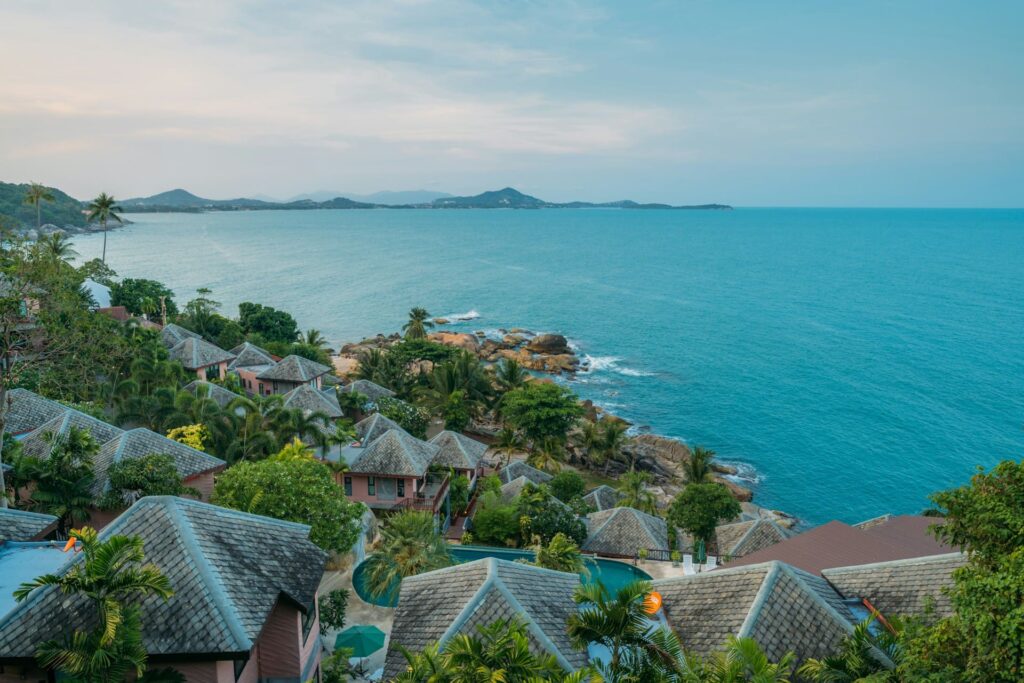
Koh Samui, Thailand’s second-largest island at 228.7 square kilometers, sits in the Gulf of Thailand approximately 700 kilometers south of Bangkok. The island’s interior remains largely undeveloped, covered in coconut plantations and jungle-clad mountains, while the coastline features pristine beaches backed by luxury resorts.
Koh Samui has evolved into a sophisticated island destination that maintains tropical charm while offering upscale amenities. The island welcomed approximately 2.5 million visitors in 2023, according to Tourism Authority of Thailand statistics.
Must-visit locations include:
- Chaweng Beach – The most developed beach with nightlife, water sports, and restaurant variety
- Lamai Beach – Quieter than Chaweng with a more local feel and excellent beach quality
- Bophut Beach (Fisherman’s Village) – Charming area with boutique hotels and beachfront dining
- Big Buddha (Wat Phra Yai) – 12-meter golden Buddha statue on a small island connected by causeway
- Na Muang Waterfalls – Jungle waterfalls with natural swimming pools
- Ang Thong National Marine Park – Day trip to 42-island archipelago with kayaking and snorkeling
- Hin Ta and Hin Yai Rocks – Natural rock formations resembling male and female genitalia (yes, really!)
- Secret Buddha Garden – Hidden sculpture garden in the jungle hills
Why Visit
Koh Samui excels as a honeymoon and wellness destination. The island boasts numerous luxury resorts with world-class spas, including Kamalaya, one of Asia’s premier wellness retreats. Many resorts offer holistic programs combining yoga, meditation, detox treatments, and traditional Thai healing.
The beach quality is exceptional, with powdery white sand and calm, clear water perfect for swimming. Unlike the Andaman Sea islands, Koh Samui’s Gulf of Thailand location means fewer dramatic cliffs but more swimmable beaches.
Culinary diversity exceeds what you’d expect from an island. Beyond excellent Thai cuisine, you’ll find Italian trattorias, French bistros, Japanese omakase, and trendy fusion restaurants. The Fisherman’s Village Walking Street (Friday evenings) combines street food with live music and beachfront ambiance.
Best Time to Visit
Koh Samui’s weather pattern differs from Phuket and Krabi. December to April is generally dry with peak season crowds and pricing.
May to September offers good weather with occasional rain—an excellent shoulder season with lower prices.
October to early December brings the wettest weather as the northeast monsoon hits the Gulf. Heavy rains and rough seas can disrupt travel, though many visitors still enjoy their stays with periodic sunshine between storms.
How to Get There
Samui International Airport (USM) is privately owned by Bangkok Airways, which maintains a near-monopoly on direct flights. This results in higher airfares (Bangkok-Samui typically costs $100-200+ USD one-way). The open-air terminal design creates a resort-like arrival experience.
Combination ferry-bus tickets from Bangkok via Surat Thani offer budget alternatives (10-12 hours total, 800-1,200 baht) but require significantly more time and comfort sacrifice.
High-speed ferries connect Koh Samui to Koh Phangan (30 minutes), Koh Tao (2-3 hours), and mainland Surat Thani, making island-hopping convenient.
Once on the island, songthaew trucks (shared taxis) and private taxis are the main transport. Motorcycle rentals (200-300 baht/day) offer freedom to explore, though traffic can be chaotic and roads hilly.
8. Sukhothai
Highlights
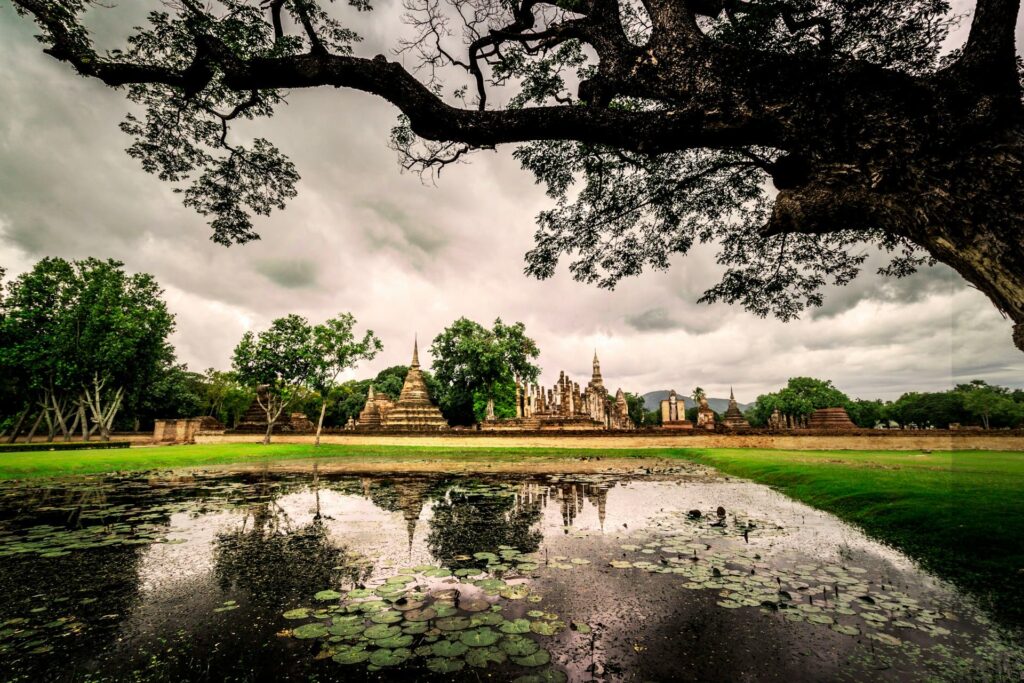
Sukhothai, meaning “Dawn of Happiness,” served as the capital of the first Thai kingdom from 1238 to 1438. The Sukhothai Historical Park, a UNESCO World Heritage Site, preserves the ruins of this ancient capital across 70 square kilometers containing over 190 ruins.
Often overshadowed by the more accessible Ayutthaya, Sukhothai offers a more peaceful, contemplative historical experience. The ruins are better preserved, more aesthetically arranged, and far less crowded. The site represents the golden age of Thai culture, when distinctive Thai art, architecture, and written language emerged.
Key sites include:
- Wat Mahathat – The largest temple with iconic lotus-bud stupas and a central seated Buddha
- Wat Si Chum – Features a massive 15-meter seated Buddha in a confined space creating a powerful visual impact
- Wat Sa Si – Picturesque temple on an island in a lotus-filled pond
- Wat Sorasak – Distinguished by elephant statues supporting the chedi base
- Ramkhamhaeng National Museum – Essential first stop for historical context and artifact displays
- Royal Palace ruins – Once the administrative center of the kingdom
- Wat Saphan Hin – Located on a hill requiring a 300-meter climb, rewarding with valley views
Why Visit
Sukhothai offers architectural elegance distinct from the later Ayutthaya period. The Sukhothai style Buddha images—with their graceful, elongated proportions and flame-shaped ushnisha (cranial protuberance)—represent the pinnacle of Thai Buddhist art according to art historians.
The serene atmosphere contrasts with busier tourist sites. You can explore at a relaxed pace, often finding yourself alone with ancient monuments. The well-maintained grounds, lotus ponds, and surrounding mountains create a meditative setting.
Cycling is the ideal exploration method. The park provides bicycle rentals (30-50 baht) at entrances, with paved roads connecting temple clusters. The flat terrain and shaded paths make this pleasant even in warm weather.
Best Time to Visit
November to February provides optimal weather for outdoor exploration. The park hosts the Loy Krathong and Candle Festival in November, featuring spectacular light shows among the ruins—one of Thailand’s most photogenic cultural events.
Early morning visits (6:30-9:00 AM) offer the best light for photography and fewer tour groups.
How to Get There
New Sukhothai (the modern town) is located 12 kilometers from the historical park. Most travelers stay in Old Sukhothai near the ruins.
Buses run from Bangkok’s Mo Chit terminal (6-7 hours, 300-400 baht) and from Chiang Mai (5-6 hours, 250-350 baht). Sukhothai makes an excellent stopover when traveling between Bangkok and northern Thailand.
Trains don’t directly serve Sukhothai. The nearest station is Phitsanulok (70 kilometers away), requiring a connecting bus.
Phitsanulok Airport (65 kilometers away) offers Bangkok Airways flights, with taxi transfers to Sukhothai available.
Songthaews (shared pickup trucks) connect New Sukhothai, Old Sukhothai, and the historical park frequently during daylight hours (30-40 baht).
9. Chiang Rai
Highlights
The city itself has a population of approximately 200,000, maintaining a small-town feel despite being a provincial hub. Chiang Rai’s surrounding countryside features tea plantations, hill tribe villages, and mountainous terrain perfect for exploration.
Must-see attractions include:
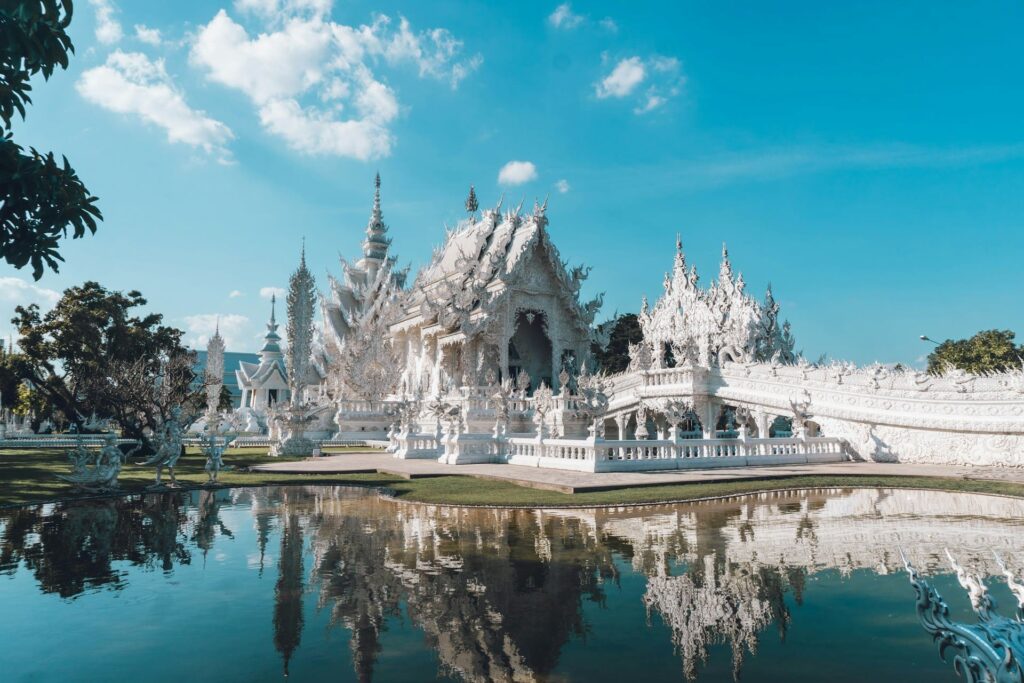
- Wat Rong Khun (White Temple) – Contemporary masterpiece by artist Chalermchai Kositpipat, covered in mirror mosaics
- Wat Rong Suea Ten (Blue Temple) – Stunning electric blue temple with intricate interior murals
- Wat Huay Pla Kang (Big Buddha Temple) – Features a massive 79-meter tall Guanyin statue with interior elevator
- Baan Dam Museum (Black House) – Dark, provocative art installation by national artist Thawan Duchanee
- Golden Triangle – Historic opium-producing region where three countries meet
- Hall of Opium Museum – Educational museum documenting the opium trade’s history
- Mae Fah Luang Art and Culture Park – Lanna architecture and gardens
- Singha Park – Sprawling agricultural park with tea plantations and ziplines
- Chiang Rai Night Bazaar – Local market with crafts and northern Thai cuisine
Why Visit
Chiang Rai’s temple architecture pushes boundaries beyond traditional designs. The White Temple, though controversial among purists, has become an Instagram sensation with its intricate white facade symbolizing Buddha’s purity. The gleaming white structure contrasts dramatically against blue skies, while the interior murals incorporate modern imagery including superheroes and pop culture references—an artistic commentary on temptation and worldly attachments.
The Blue Temple, completed in 2016, showcases electric blue walls and gold accents with a stunning interior featuring a white Buddha against deep blue murals. The Black House provides a darker counterpoint—a collection of black-stained buildings housing animal bones, skins, and provocative artwork exploring death and impermanence.
The Golden Triangle region offers historical intrigue. Once the heart of Southeast Asia’s opium production, the area has transformed into agricultural development producing coffee and tea. The Hall of Opium Museum provides comprehensive, non-sensationalized education about the opium trade’s impact.
Hill tribe visits are more accessible from Chiang Rai than Chiang Mai, with ethical tours available to Akha, Lahu, and Karen villages. Choose operators carefully to ensure visits respect local communities and don’t exploit tribal minorities.
Best Time to Visit
November to February offers cool, dry weather ideal for temple visits and countryside exploration. Morning temperatures can drop to 15°C (59°F) in December and January.
December sees peak tourism during the Chiang Rai flower festival when gardens and parks showcase spectacular blooms.
March to May brings challenging conditions with intense heat and poor air quality from agricultural burning.
How to Get There
Mae Fah Luang-Chiang Rai International Airport (CEI) serves the region with flights from Bangkok (1.5 hours), Chiang Mai (40 minutes), and Phuket. Budget carriers keep prices reasonable (1,500-2,500 baht from Bangkok).
Buses from Chiang Mai operate throughout the day (3-4 hours, 150-250 baht depending on service class). VIP buses from Bangkok take 10-12 hours overnight (600-1,000 baht).
The Green Bus operates modern, comfortable services throughout northern Thailand, bookable through their app or website.
Within Chiang Rai, songthaews and tuk-tuks handle local transport. The White Temple is located 13 kilometers south of the city center—taxi or arranged transport necessary.
10. Koh Phi Phi
Highlights
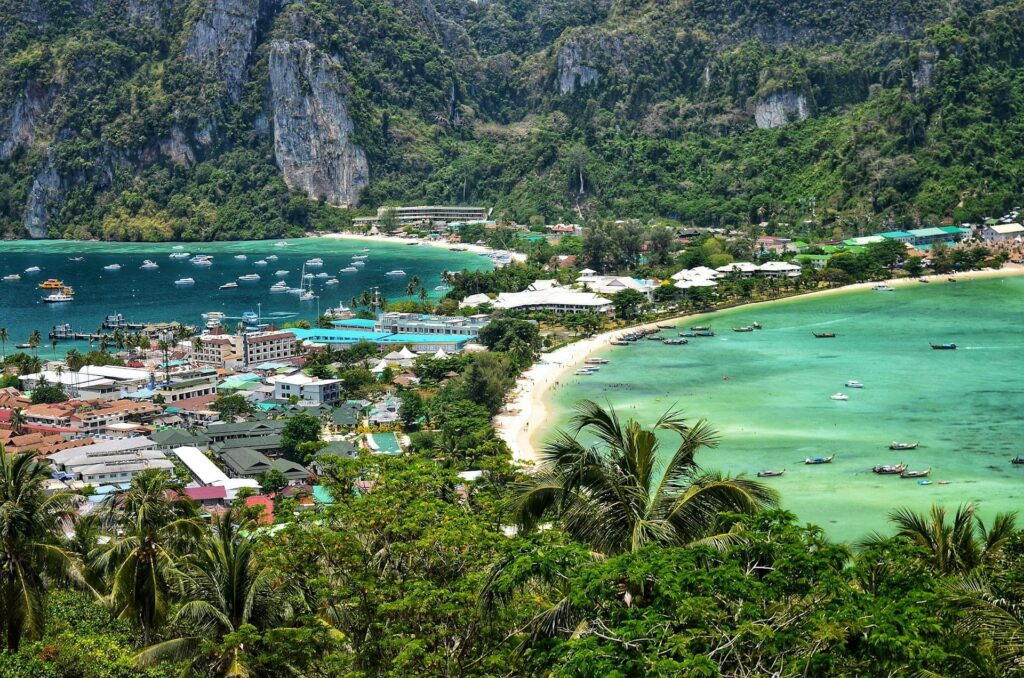
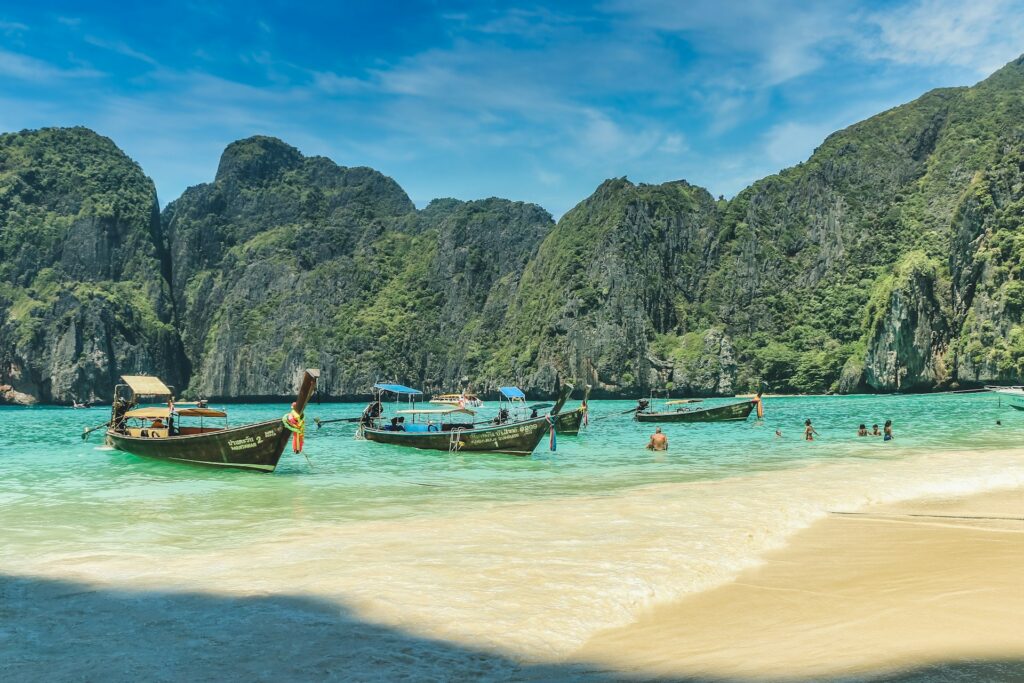
Koh Phi Phi comprises two main islands: Phi Phi Don (the inhabited island) and Phi Phi Leh (home to the famous Maya Bay). Located in the Andaman Sea between Phuket and Krabi, these limestone islands rising from turquoise water have become synonymous with tropical paradise.
Maya Bay on Phi Phi Leh achieved global fame as the filming location for the 2000 movie “The Beach” starring Leonardo DiCaprio. The bay was closed from June 2018 to January 2022 to allow environmental recovery from over-tourism, reopening with strict visitor limits and regulations.
Phi Phi Don’s main settlement, Tonsai Village, occupies a narrow isthmus between two bays. The car-free island means everything moves by foot, bicycle, or boat—adding to its laid-back tropical appeal.
Top experiences include:
- Maya Bay – Iconic beach surrounded by towering cliffs (limited visitors, advance booking required)
- Pileh Lagoon – Emerald lagoon surrounded by limestone cliffs, perfect for swimming
- Viking Cave – Sea cave with ancient wall paintings and bird’s nest harvesting
- Monkey Beach – Small beach inhabited by (sometimes aggressive) macaques
- Viewpoint hike – Challenging climb rewarded with panoramic views of the twin bays
- Long Beach – Quieter beach on the eastern side ideal for sunset watching
- Loh Dalum Beach – Main party beach with fire shows and beachside bars
- Diving and snorkeling – Abundant marine life including leopard sharks, turtles, and colorful reef fish
Why Visit
Koh Phi Phi offers world-class diving and snorkeling. The surrounding waters host numerous dive sites suitable for all experience levels. Bida Nok and Bida Nai are considered among Thailand’s best dive sites, featuring swim-throughs, caves, and abundant marine life including reef sharks, turtles, and schooling fish.
The dramatic scenery creates unforgettable vistas. Towering limestone karsts covered in jungle vegetation rise vertically from crystal-clear water. The contrast between turquoise shallows and deep blue depths creates stunning gradients.
The island’s vibrant nightlife surprises first-time visitors. Despite its small size, Phi Phi Don hosts beach parties, fire shows, reggae bars, and clubs that rage until sunrise. The party scene centers around Loh Dalum Beach and Tonsai Village streets.
Island hopping tours from Phi Phi reach nearby gems including Bamboo Island (pristine white sand and clear water) and Mosquito Island (excellent snorkeling with colorful soft corals).
Why Visit (Environmental Considerations)
It’s important to note that Koh Phi Phi faces significant environmental challenges. The island struggled with waste management, coral damage from over-tourism, and crowding before Maya Bay’s closure. According to marine biologists, the bay’s closure allowed significant coral recovery and fish population rebounds.
When visiting, practice responsible tourism: use reef-safe sunscreen, don’t touch coral or marine life, properly dispose of waste, support eco-conscious tour operators, and respect daily visitor limits at Maya Bay.
Best Time to Visit
November to April is the dry season with calm seas ideal for diving, snorkeling, and island hopping. December-February sees peak crowds and prices, while November and March-April offer slightly better value.
December to January can be extremely crowded, with accommodation often fully booked. Advance reservations are essential during this period.
May to October brings the southwest monsoon. Many resorts and dive shops close or operate reduced schedules. Seas can be too rough for safe boat travel, and some routes may suspend service entirely. Budget travelers sometimes find deals, but weather unpredictability makes this risky.
How to Get There
No airport exists on Koh Phi Phi—all access is by boat. The island’s car-free nature means all luggage must be hand-carried or transported by porters from the pier.
From Phuket: Ferries depart from Rassada Pier (2 hours, 300-600 baht depending on boat type). Speed boats take 45 minutes but cost more (1,000-1,500 baht).
From Krabi: Ferries leave from Klong Jilad Pier (1.5-2 hours, 300-450 baht).
From Koh Lanta: Ferries operate during high season (1.5 hours, 300-400 baht).
Book tickets through 12Go Asia, Phuket Ferry, or directly at piers. Bring motion sickness medication as seas can be choppy.
Upon arrival at Tonsai Pier, expect chaos during high season. Porters offer luggage transport to hotels (100-200 baht depending on distance and bag size)—worth it if staying far from the pier.
Comparison Table: Top 10 Places to Visit in Thailand
| Destination | Region | Best For | Average Stay | Best Time to Visit | Budget Level |
|---|---|---|---|---|---|
| Bangkok | Central | Culture & Nightlife | 3–4 days | Nov–Feb | $ |
| Chiang Mai | North | Temples & Nature | 3–5 days | Nov–Feb | $ |
| Phuket | South | Beaches & Resorts | 4–6 days | Nov–Apr | $$ |
| Ayutthaya | Central | History | 1–2 days | Nov–Feb | $ |
| Krabi | South | Adventure & Scenery | 3–4 days | Nov–Apr | $ |
| Pai | North | Relaxation | 2–3 days | Nov–Feb | $ |
| Koh Samui | Gulf | Honeymoon & Wellness | 3–5 days | Dec–Apr | $$ |
| Sukhothai | North | Culture & Heritage | 2–3 days | Nov–Feb | $ |
| Chiang Rai | North | Temples & Culture | 2–3 days | Nov–Feb | $ |
| Koh Phi Phi | South | Island Life | 2–4 days | Nov–Apr | $ |
Budget Key: $ = Budget-friendly ($30-50/day) | $ = Mid-range ($50-100/day) | $$ = Upscale ($100+/day)
Data compiled from Tourism Authority of Thailand and Numbeo cost of living statistics.
Cultural Context: Understanding Thailand
The Role of Buddhism
Theravada Buddhism shapes Thai culture profoundly, with approximately 95% of Thais practicing Buddhism according to Pew Research Center data. Over 40,000 Buddhist temples dot the landscape, serving as spiritual, social, and educational centers.
Temple etiquette is essential:
- Dress modestly: Cover shoulders and knees (long pants/skirts, no tank tops)
- Remove shoes: Always take off footwear before entering temple buildings
- Respect Buddha images: Never climb on or pose disrespectfully with Buddha statues
- Women and monks: Women should never directly hand items to monks or touch them
- Photography: Ask permission before photographing monks or worship ceremonies
Thai Social Customs
“Sanuk” (สนุก) meaning “fun” or “joyful” represents a core Thai value. Thais prioritize enjoying life and maintaining positive attitudes. Work should be sanuk, travel should be sanuk—this philosophy creates Thailand’s relaxed, welcoming atmosphere.
“Mai pen rai” (ไม่เป็นไร) translates roughly to “no worries” or “never mind.” This phrase reflects Thai tolerance, acceptance, and desire to avoid conflict. When things go wrong, responding with frustration contradicts cultural norms.
The wai is Thailand’s traditional greeting—hands pressed together at chest level with a slight bow. Generally, younger people or those of lower social status initiate the wai to elders or superiors. As a visitor, returning a wai is respectful, though not strictly required with service staff.
Respect for monarchy: Thailand’s lèse-majesté laws strictly prohibit criticism of the royal family. Avoid political discussions about the monarchy. Stand respectfully during royal anthem playings in cinemas and public spaces.
Regional Cuisine Variations
Thai cuisine varies significantly by region, offering far more than the pad thai and green curry known internationally.
Central Thailand (including Bangkok):
- Pad Thai – Stir-fried rice noodles with tamarind sauce
- Tom Yum Goong – Spicy and sour shrimp soup
- Green Curry – Coconut milk-based curry with Thai basil
- Som Tam – Spicy green papaya salad (originally from Isaan but ubiquitous nationwide)
Northern Thailand:
- Khao Soi – Curry noodle soup with crispy noodles on top (Chiang Mai’s signature dish)
- Sai Oua – Herbed northern sausage with lemongrass and galangal
- Nam Prik Ong – Spicy tomato and pork dip served with vegetables
- Kaeng Hang Lay – Burmese-influenced pork curry with ginger and tamarind
Southern Thailand:
- Massaman Curry – Rich, mildly spicy curry with peanuts and potatoes
- Gaeng Tai Pla – Intensely pungent fermented fish curry (acquired taste!)
- Khua Kling – Dry curry with minced meat and intense spice
- Roti – Malaysian-influenced flatbread served with condensed milk or curry
Isaan (Northeast):
- Larb – Spicy minced meat salad with toasted rice powder
- Sticky Rice – The staple of northeastern cuisine, eaten with hands
- Grilled Chicken (Gai Yang) – Marinated and charcoal-grilled chicken
Major Festivals
Songkran (April 13-15) marks the traditional Thai New Year with nationwide water fights. What began as gentle religious cleansing has evolved into full-scale water warfare. Major cities see massive celebrations, though attractions and businesses may close. Book accommodation well in advance.
Loy Krathong (November, full moon of the 12th lunar month) involves floating decorated baskets (krathong) on waterways to pay respects to the water goddess and release negativity. Chiang Mai’s Yi Peng coincides with this, featuring thousands of paper lanterns floating skyward—creating magical scenes.
Chinese New Year (January/February) is celebrated enthusiastically, particularly in areas with significant Chinese-Thai populations like Bangkok’s Chinatown and Phuket. Expect street parades, lion dances, and special foods.
Tipping Culture
Tipping isn’t traditionally Thai but has become common in tourist areas:
- Restaurants: 10% is appreciated at mid-range and upscale establishments; round up the bill at casual eateries
- Taxis: Round up to the nearest 10 baht
- Hotel staff: 20-50 baht for bellboys and housekeeping
- Spa/massage: 50-100 baht per service
- Tour guides: 200-500 baht per day depending on service quality
Language Basics
While English is widely spoken in tourist areas, learning basic Thai phrases enhances interactions:
- Hello/Goodbye: Sawasdee krap (male) / Sawasdee ka (female)
- Thank you: Khop khun krap/ka
- How much?: Tao rai?
- Delicious: Aroi
- Spicy: Phet
- Not spicy: Mai phet
- Check please: Check bin
Practical Travel Information
Visa Requirements
Visa exemption allows citizens from over 60 countries including the USA, UK, Canada, Australia, and most European nations to enter Thailand without a visa for tourism stays. As of 2024, the exemption period is 60 days, with the possibility of a 30-day extension at immigration offices (1,900 baht).
Visa on arrival (15-30 days depending on nationality) is available for citizens from select countries at major airports and land borders.
Always check current requirements at Thailand’s Ministry of Foreign Affairs as policies change.
Health and Safety
Thailand is generally very safe for travelers, though standard precautions apply:
Health concerns:
- Tap water: Not safe to drink; bottled water is widely available and cheap
- Travel insurance: Essential; medical tourism is popular but emergency care can be expensive
- Vaccinations: Consider Hepatitis A, Typhoid, and Japanese Encephalitis for rural areas
- Dengue fever: Mosquito-borne disease present year-round; use repellent and cover exposed skin
Safety tips:
- Scams: Be wary of gem scams, taxi meter refusals, and overly friendly strangers in Bangkok
- Petty theft: Watch belongings in crowded areas and on overnight buses
- Traffic: Thailand has high traffic accident rates; drive defensively if renting vehicles
- Marine safety: Follow warning flags at beaches; rip currents and jellyfish can be dangerous
Money Matters
Currency: Thai Baht (THB). As of October 2024, approximate exchange rate: $1 USD = 35 THB.
ATMs: Widely available, charging 220 baht ($6-7 USD) per international withdrawal. Max withdrawal typically 20,000-30,000 baht per transaction.
Credit cards: Accepted at hotels, malls, and upscale restaurants; less common at street stalls and local establishments.
Cash is king: Carry cash for markets, street food, temples, and rural areas.
Internet and Connectivity
Thailand has excellent internet infrastructure. Tourist SIM cards (150-500 baht for 15-30 days) offer prepaid data packages from providers like AIS, DTAC, and TrueMove. Available at airports and 7-Eleven stores.
Free WiFi is common at hotels, cafes, restaurants, and shopping malls.
Transportation Tips
Domestic flights: Budget carriers like AirAsia, Nok Air, and Thai Lion Air offer cheap inter-city flights.
Trains: Scenic and comfortable; book sleeper trains in advance through 12Go Asia or official Thai Railways.
Buses: Range from local to VIP; higher classes offer significantly more comfort.
Grab: Southeast Asia’s Uber operates in major cities; more reliable than taxis.
Motorcycle taxis: Identifiable by orange vests; fast for short distances in traffic.
Conclusion
Thailand’s appeal as a top global destination stems from its remarkable diversity of experiences. From the frenetic energy of Bangkok’s street markets to the serene temples of Sukhothai, from Phuket’s luxury beach resorts to Pai’s bohemian mountain charm, the country offers authentic experiences for every travel style and budget.
The top 10 places to visit in Thailand showcased in this guide represent just the beginning of what this extraordinary country offers. Whether you’re drawn to ancient cultural heritage, pristine natural beauty, culinary adventures, or tropical relaxation, Thailand delivers with the warm hospitality that has earned it the nickname “Land of Smiles.”
The country’s accessibility, affordability, and infrastructure make it ideal for first-time Asian travelers, while its depth and diversity keep seasoned visitors returning year after year. With improved visa policies, expanding flight connections, and continued investment in tourism infrastructure, Thailand remains more accessible than ever.
As you plan your Thai adventure, consider combining multiple regions for a comprehensive experience. A typical 2-3 week itinerary might include Bangkok’s temples and food scene, northern cultural exploration in Chiang Mai or Chiang Rai, historical immersion at Ayutthaya or Sukhothai, and beach relaxation in Phuket, Krabi, or the islands.
Remember that sustainable and respectful travel enhances both your experience and Thailand’s future. Support local businesses, respect religious sites and customs, minimize plastic use, choose ethical animal encounters, and travel with environmental consciousness.
Thailand awaits with open arms, ready to share its temples and beaches, its flavors and festivals, its history and hospitality. Your journey through these top 10 places to visit in Thailand promises memories that will last a lifetime.
Frequently Asked Questions
Q1: What is the best time to visit Thailand?
November to February is generally considered optimal for most of Thailand, offering cooler temperatures, lower humidity, and minimal rainfall. However, ideal timing varies by region:
- Bangkok and Central Thailand: November-February (25-32°C / 77-90°F)
- Northern Thailand (Chiang Mai, Chiang Rai, Pai): November-February for cool weather; avoid March-May due to burning season air quality issues
- Andaman Coast (Phuket, Krabi, Phi Phi): November-April for dry weather and calm seas
- Gulf Coast (Koh Samui, Koh Phangan): December-April; note that Samui’s weather patterns differ from the Andaman side
Shoulder seasons (March-May and September-October) offer fewer crowds and lower prices but come with heat and occasional rain. Budget travelers often find May-June ideal before peak monsoon arrives.
Q2: How many days are enough to explore Thailand?
Minimum 10-14 days allows for meaningful exploration, though 3-4 weeks provides a more comprehensive experience.
Sample itineraries by duration:
1 week: Bangkok (3 days) + Chiang Mai (3 days) + 1 beach destination 2 weeks: Bangkok (3 days) + Ayutthaya (1 day) + Chiang Mai (4 days) + Pai (2 days) + Phuket or Krabi (4 days) 3 weeks: Add Sukhothai, Chiang Rai, and additional islands or extend stays in favorite destinations
First-time visitors should prioritize 2-3 regions rather than attempting to see everything. Thailand rewards slow travel and deserves return visits.
Q3: Is Thailand expensive for travelers?
Thailand remains one of Asia’s best value destinations, though costs vary significantly by travel style and location.
Daily budget estimates (per person):
Budget travelers: $30-50 USD
- Hostels/guesthouses: $10-20
- Street food meals: $3-8
- Local transport: $5-10
- Activities: $10-15
Mid-range travelers: $75-150 USD
- Comfortable hotels: $30-60
- Mix of local and tourist restaurants: $15-30
- Private transport/tours: $20-40
- Activities and experiences: $20-40
Luxury travelers: $200+ USD
- High-end resorts: $100-500+
- Fine dining: $40-100+
- Private guides and transfers: $100+
Islands and tourist areas (Phuket, Samui, Phi Phi) cost 30-50% more than mainland destinations. Northern Thailand and central provinces offer the best value.
According to Numbeo’s Cost of Living Index, Thailand ranks as approximately 40-50% cheaper than Western countries for everyday expenses.
Q4: What is the most visited place in Thailand?
Bangkok is overwhelmingly Thailand’s most visited destination, receiving approximately 22-25 million international visitors annually according to Mastercard’s Global Destination Cities Index.
The top 5 most visited destinations:
- Bangkok – 22+ million visitors
- Phuket – 9-10 million visitors
- Pattaya – 8-9 million visitors
- Chiang Mai – 3-4 million visitors
- Krabi – 2-3 million visitors
Bangkok’s combination of being Thailand’s primary international gateway plus a destination in its own right ensures it maintains the top position. However, many visitors spend only 1-2 days before heading to beaches or northern regions.
Q5: Do I need a visa to visit Thailand?
Most tourists do not need to apply for a visa in advance. Citizens from over 60 countries receive 60-day visa exemption upon arrival (as of 2024 policy updates).
Eligible countries include: USA, Canada, UK, Australia, New Zealand, most EU countries, Japan, South Korea, and many others.
Requirements:
- Passport valid for at least 6 months
- Proof of onward travel (occasionally requested)
- Sufficient funds (occasionally checked)
Extensions: The 60-day exemption can be extended once for an additional 30 days at immigration offices (1,900 baht fee).
Longer stays: Consider the 60-day Tourist Visa (applied for at Thai embassies abroad) which can also be extended, or explore Special Tourist Visa options for extended stays.
Always verify current requirements at the Thai Ministry of Foreign Affairs or your nearest Thai embassy, as policies change periodically.
Q6: Is Thailand safe for solo female travelers?
Yes, Thailand is generally safe for solo female travelers and ranks among Asia’s most female-friendly destinations. However, standard precautions apply:
Safety tips:
- Avoid excessive alcohol consumption in party areas
- Use registered taxis or Grab rather than accepting rides from strangers
- Dress modestly, especially at temples and in rural areas
- Be aware of drink spiking in party destinations like Koh Phangan and Phi Phi
- Trust your instincts if situations feel uncomfortable
Harassment is relatively uncommon compared to some other destinations. Thai culture emphasizes politeness and non-confrontation.
Q7: What should I pack for Thailand?
Essential items:
Clothing:
- Lightweight, breathable fabrics
- Modest clothing for temple visits (covering shoulders and knees)
- Swimwear and beach cover-ups
- Light jacket for air-conditioned spaces and northern highlands
- Comfortable walking shoes and sandals
Practical items:
- Sunscreen (reef-safe for ocean activities)
- Insect repellent (DEET-based for dengue prevention)
- Power adapter (Type A, B, C, or F plugs)
- Reusable water bottle with filter
- Small daypack
- Waterproof phone case
Medications: Pack prescription medications, anti-diarrheal medicine, and basic first-aid supplies.
Q8: Can I drink the tap water in Thailand?
No, tap water is not safe to drink in Thailand. Bottled water is inexpensive (10-20 baht per liter) and available everywhere.
Water safety tips:
- Use bottled or filtered water for drinking and brushing teeth
- Avoid ice in rural areas (major cities use filtered ice)
- Peel fruits or wash with bottled water
- Consider a reusable bottle with filter to reduce plastic waste
Most hotels provide complimentary bottled water, and 7-Eleven stores (ubiquitous throughout Thailand) always stock water.