
A Scene Straight Out of Kung Fu Panda
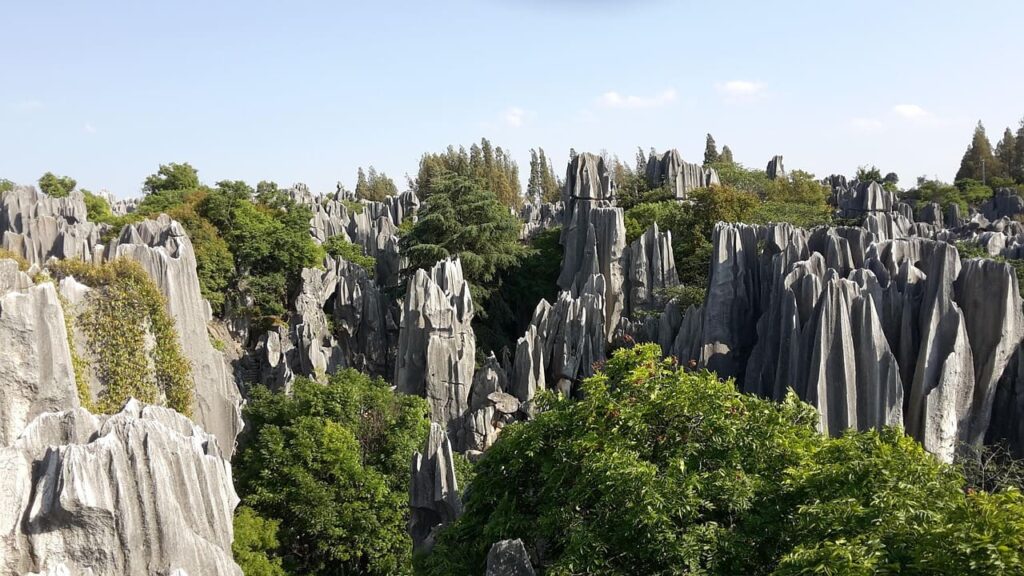
The moment I stepped through the entrance gates of Stone Forest, I felt like I had walked onto a movie set. Towering limestone pillars stretched toward the sky like ancient warriors frozen in stone, their jagged silhouettes cutting dramatic shapes against the brilliant blue Yunnan sky. The air smelled of earth and pine, and as sunlight filtered through the narrow passages between the rocks, I half-expected Master Shifu to appear around the next corner.
If you’ve ever watched Kung Fu Panda, you’ll instantly recognize the landscape. The Valley of Peace, where Po trains to become the Dragon Warrior, draws heavy inspiration from these very formations. The twisted stone spires, hidden pathways, and mystical atmosphere of the Stone Forest create that same sense of wonder and otherworldly beauty that made the animated film so visually stunning.
Walking through these formations feels like stepping into a different realm entirely. The rocks don’t just stand there; they seem to move with personality. Some lean toward each other like conspirators sharing secrets. Others stand alone, proud and defiant. The paths wind between them in ways that feel almost choreographed, as if designed specifically for an epic martial arts sequence.
This isn’t just geological tourism. It’s an experience that touches something deeper, a landscape so unusual and magnificent that it has inspired legends, films, and countless works of art throughout Chinese history.
What Exactly Is the Stone Forest?
The Stone Forest (Shilin in Mandarin) sits approximately 90 kilometers southeast of Kunming, the capital city of Yunnan Province. This isn’t just another pretty rock formation. It represents one of Earth’s most spectacular examples of karst topography, a landscape type formed when water dissolves soluble bedrock over millions of years.
A Journey Through Geological Time
These limestone formations began their story roughly 270 million years ago during the Permian Period, when this entire region lay beneath a shallow sea. As marine organisms died and accumulated on the seafloor, their calcium-rich remains compressed into limestone layers hundreds of meters thick.
The real magic happened when tectonic forces lifted these ancient seabeds above water. Once exposed to air and rain, the limestone began its transformation. Slightly acidic rainwater, enriched with carbon dioxide, slowly dissolved the rock along cracks and fissures. Over millions of years, this chemical weathering carved away softer sections while leaving harder, more resistant stone standing as the pillars we see today.
According to geological surveys published by the China Geological Survey, the Stone Forest represents one of the world’s finest examples of pinnacle karst formations, with some pillars reaching heights of up to 30 meters.
UNESCO Recognition
In 2007, the Stone Forest became part of the South China Karst UNESCO World Heritage Site, recognized alongside similar formations in Libo and Wulong. UNESCO’s designation acknowledges both the site’s outstanding geological significance and its exceptional natural beauty. The organization noted that these karst landscapes “represent superlative natural phenomena and areas of exceptional natural beauty.”
Cultural Significance and the Legend of Ashima
For the Yi minority people who have lived in this region for centuries, the Stone Forest holds deep cultural and spiritual meaning. The rocks aren’t just geological formations; they’re characters in an epic love story that has been passed down through generations.
The most famous formation in the entire park is Ashima Rock, which resembles the profile of a young woman carrying a basket on her back. According to Yi legend, Ashima was a beautiful and kind-hearted girl who fell in love with a poor shepherd named Ahei. When a wealthy chieftain’s son tried to force her into marriage, Ashima refused and was imprisoned. Ahei rescued her, but as they fled, the chieftain’s son caused a great flood. Ashima turned into stone rather than submit, and her spirit remains in the forest forever.
Every year during the Torch Festival (usually in July or August), Yi people gather at Stone Forest to celebrate their culture, perform traditional dances, and honor Ashima’s memory. The festival transforms the geological park into a vibrant cultural celebration with bonfires, wrestling matches, and traditional music performances.
Understanding the Layout
The Stone Forest scenic area actually comprises several distinct sections, each with its own character:
Greater Stone Forest (Da Shilin): This is the main attraction and what most visitors picture when they think of Stone Forest. It features the most dramatic formations, the widest pathways, and the majority of famous photo spots like Sword Peak Pond and Ashima Rock. Most visitors spend 2-3 hours exploring this section.
Lesser Stone Forest (Xiao Shilin): More intimate and slightly less crowded, this area features narrower passages between rocks and a more maze-like quality. The formations here tend to be smaller but no less impressive, and the winding paths create wonderful opportunities for photography.
Naigu Stone Forest: Located about 8 kilometers from the main area, Naigu offers a completely different experience. The rocks here are darker, often covered with moss and vegetation, creating an even more ancient and mysterious atmosphere. This section receives far fewer visitors, making it perfect for those seeking solitude and authentic exploration.
Zhiyun Cave: An underground karst cave system that showcases stalactites, stalagmites, and underground rivers, demonstrating how water continues to shape the landscape below ground.
Moon Lake: A seasonal lake that reflects the stone formations, creating mirror-image photographs that seem almost surreal.
The total protected area covers approximately 350 square kilometers, though the main tourist zones occupy a much smaller, more manageable space.
How to Get There from Kunming
Getting to Stone Forest from Kunming is remarkably straightforward, even for independent travelers. The journey offers several options depending on your budget, time constraints, and preference for flexibility versus convenience.
By Train: The Fastest Option
The high-speed rail connection between Kunming and Shilin provides the quickest and most comfortable transportation option. Trains depart from Kunming Railway Station and arrive at Shilin West Railway Station approximately 35-40 minutes later.
Costs: Second-class tickets typically cost around 19-34 RMB (approximately $3-5 USD), making this an incredibly affordable option. First-class seats run about 30-54 RMB.
Frequency: Multiple trains run throughout the day, generally starting around 7:00 AM and continuing until early evening. Check the China Railway 12306 official website for current schedules.
From the Station to the Park: Shilin West Railway Station sits about 5 kilometers from the Stone Forest entrance. Taxis waiting outside the station will take you directly to the park for approximately 15-20 RMB. Some guesthouses in Shilin town also offer pickup services if arranged in advance. Alternatively, local bus Route 5 connects the station to Stone Forest, though it takes longer and costs only a few RMB.
By Bus: The Budget-Friendly Choice
Direct buses to Stone Forest depart from Kunming East Bus Station (Kunming Dongbu Keyun Zhan) throughout the day. This option costs less than the train but takes significantly longer.
Costs: Bus tickets range from 25-34 RMB depending on the service class. Some buses are older with hard seats, while newer express buses offer air conditioning and comfortable seating.
Travel Time: Expect the journey to take 1.5 to 2 hours depending on traffic and the number of stops.
Frequency: Buses depart approximately every 30-40 minutes during peak hours (roughly 8:00 AM to 4:00 PM).
Pro tip: The buses drop passengers either at Shilin Bus Station in town or directly at the Stone Forest scenic area entrance. Make sure to clarify with the driver or ticket seller if you want to go directly to the park.
Group Tours: Convenience at a Premium
Nearly every hotel and hostel in Kunming offers day tours to Stone Forest, typically combining it with other attractions like Jiuxiang Cave or ethnic minority villages. These tours handle all transportation, entrance fees, and usually include a guide and lunch.
Costs: Expect to pay 150-300 RMB per person depending on what’s included and the quality of the tour operator.
Advantages: Zero planning required, English-speaking guides available, and you might make friends with fellow travelers.
Disadvantages: Rigid schedules, limited time at each location, pressure to visit souvenir shops, and less flexibility for photography or personal exploration.
For budget-conscious travelers or those who prefer setting their own pace, independent travel makes much more sense. The money saved can cover your entrance fee and meals.
Best Time to Visit
Early morning arrivals (before 9:00 AM) offer several advantages: fewer crowds, softer lighting for photography, and cooler temperatures for walking. The park opens at 7:00 AM, and arriving on the first train or bus allows you to experience the formations in relative solitude before tour groups descend around 10:00 AM.
Late afternoon (after 3:00 PM) presents another good option as day-trippers begin leaving. The golden hour light creates stunning shadows and highlights across the rock formations, perfect for dramatic photographs.
Avoid Chinese national holidays if possible, particularly Golden Week (first week of October) and Spring Festival (Chinese New Year). During these periods, the park becomes overwhelmingly crowded, and accommodation prices in the area spike dramatically.
What to Do in Stone Forest
Stone Forest offers much more than simply walking and taking photos, though those activities alone could easily fill an entire day. The key to fully experiencing this natural wonder lies in understanding the different zones, knowing which paths lead to the best viewpoints, and timing your visit to each section for optimal lighting and crowd levels.
Walking the Major Trails
The Greater Stone Forest contains the most developed pathway system, with clearly marked trails that wind through the most spectacular formations. The main walking loop takes approximately 2-3 hours to complete at a leisurely pace, though photographers and nature enthusiasts often spend considerably longer.
Start your journey at the entrance plaza, where you’ll immediately be greeted by impressive formations that hint at what lies ahead. Follow the signs toward Sword Peak Pond (Jianfeng Chi), one of the park’s most photographed locations. Here, tall stone pillars rise directly from a small reflecting pool, creating mirror images that seem to stretch infinitely into the earth below.
The Stone Forest Lake area provides another stunning vista where multiple formations cluster around a larger body of water. This spot works particularly well in early morning when mist sometimes rises from the water, adding an ethereal quality to the already mystical landscape.
As you continue through Greater Stone Forest, you’ll encounter numerous named formations that the Chinese guides often describe as resembling various animals, people, or objects. While some require considerable imagination to see the resemblance, others are remarkably evocative. Look for:
- Phoenix Combing Its Wings: A tall, narrow formation that supposedly looks like a phoenix preening
- Two Birds Feeding: Twin pillars that lean toward each other
- Elephant Turning to Stone: A chunky formation with a trunk-like protrusion
Lesser Stone Forest connects to the Greater area but features narrower passages and a more intimate scale. The paths here feel almost like walking through stone corridors, with formations pressing close on either side. This section receives noticeably fewer visitors, making it excellent for peaceful contemplation or attempting more creative photography without crowds.
Ashima Rock: The Heart of Stone Forest
No visit to Stone Forest would be complete without seeing Ashima Rock, the formation that has become the iconic symbol of the entire park. Located in a prominent position within Greater Stone Forest, this rock genuinely does resemble a young woman in traditional Yi clothing, carrying a basket on her back.
The viewing platform near Ashima Rock tends to be crowded, particularly when tour groups arrive. If possible, visit during early morning or late afternoon when you might have the space to yourself for photographs. Many visitors also attempt to capture the full moon rising behind Ashima Rock, though this requires careful planning and a willingness to stay in the park until closing or arrange special after-hours access.
Local Yi women in traditional dress often position themselves near Ashima Rock, offering to pose for photographs in exchange for tips (usually 10-20 RMB). These photos can make for memorable souvenirs, and the small fee directly supports local community members.
Stone Forest Museum
Situated near the main entrance, the Stone Forest Museum provides valuable context for understanding what you’re seeing in the park. The museum’s exhibits cover:
- Geological formation processes: Detailed diagrams and models showing how karst topography develops over millions of years
- Paleontology displays: Fossils found in the area, including marine organisms from when this region was underwater
- Cultural exhibits: Yi minority history, traditions, and their relationship with the Stone Forest landscape
- Comparative karst formations: Photos and information about similar formations worldwide, helping visitors understand Stone Forest’s global significance
Admission to the museum is typically included with your park entrance ticket. Budget 30-45 minutes for a thorough visit, though you could spend less if you’re primarily interested in the outdoor formations.
Naigu Stone Forest: The Road Less Traveled
While most visitors concentrate their time in the main Stone Forest areas, Naigu Stone Forest (Black Pine Rock) offers a distinctly different and less touristed experience. Located approximately 8 kilometers north of the main scenic area, Naigu requires separate transportation (taxi or dedicated bus service) and has its own entrance fee.
What makes Naigu special:
Different geology: The rocks here are darker, often covered in moss and vegetation, giving them an ancient, primordial appearance. The formations are generally smaller and more densely packed than in the main area.
Fewer visitors: On an average day, Naigu might receive 5-10% of the visitors that flood the main Stone Forest areas. This means you can often explore entire sections without seeing another person.
More challenging terrain: Paths in Naigu are less developed and sometimes steeper, offering a bit more adventure for those who enjoy less manicured hiking experiences.
Different atmosphere: If the main Stone Forest feels cinematic and dramatic, Naigu feels mysterious and primeval. The darker rocks and increased vegetation create a completely different mood.
Budget tip: Some travelers skip Naigu to save money on the separate entrance fee (typically 10 RMB), but if you have time and interest, the unique experience justifies the small additional cost.
Yi Cultural Performances
Depending on your visit timing, you might catch traditional Yi minority cultural performances held in open-air theaters within the park or in Shilin town. These performances typically include:
- Traditional Yi dancing with colorful costumes
- Musical performances using indigenous instruments
- Wrestling demonstrations (a traditional Yi sport)
- Storytelling sessions about Ashima and other local legends
Performance schedules vary by season and day of the week, with more frequent shows during weekends and holiday periods. Check with your accommodation or the visitor center near the park entrance for current performance times.
If you visit during the annual Torch Festival (usually late July or early August), you’ll witness the Stone Forest at its most culturally vibrant, with massive celebrations, bonfires, and thousands of Yi people gathering to honor their traditions.
Beyond the Stone Forest: Nearby Attractions
If you have extra time in the area, several other attractions near Stone Forest make worthwhile additions to your itinerary:
Jiuxiang Cave: Located about 30 kilometers from Stone Forest, this spectacular cave system features enormous underground chambers, dramatic stalactite formations, and underground rivers. The cave complex extends over 6 kilometers, though tourist routes cover about 3 kilometers. Many day tours combine Stone Forest and Jiuxiang Cave.
Dadie Waterfall: Part of the Jiuxiang scenic area, this underground waterfall plunges 30 meters in a dramatic cave setting. The cave system here demonstrates how water continues to shape karst landscapes underground.
Long Lake: A picturesque lake surrounded by stone formations, offering boating opportunities and different photographic perspectives on karst scenery.
Yi ethnic villages: Several traditional Yi villages near Stone Forest welcome visitors interested in learning more about local culture, traditional architecture, and daily life. Some villages offer homestay opportunities, allowing for deeper cultural immersion.
Hidden Gems & Insider Tips
While the main pathways through Stone Forest showcase the most dramatic formations and iconic viewpoints, some of the park’s most magical moments happen off the beaten path or through knowing exactly when and how to experience familiar spots differently.
Secret Corners and Quiet Spaces
The back trails of Lesser Stone Forest: While most visitors rush through Lesser Stone Forest on their way between major attractions, several smaller side paths lead away from the main route into more secluded areas. Look for unmarked trails that appear less maintained; these often lead to intimate grottos or small clearings surrounded by formations where you can sit in complete solitude.
Early morning in the Pine Forest area: The wooded sections between major stone formations often get overlooked entirely, but they provide crucial context for understanding the landscape. Visiting these areas around sunrise reveals mist hanging between the trees, with stone pillars emerging from the fog like islands from the sea. The interplay of organic pine shapes against angular stone creates compelling visual contrasts.
Behind the tourist viewing platforms: Many of the major viewpoints feature raised platforms that direct visitors toward specific vantage points. If you walk around or past these platforms, you’ll often find different angles on the same formations that are equally striking but completely unphotographed.
The northwestern section of Greater Stone Forest: Most tour groups follow a clockwise route through the park. Walking counter-clockwise or heading to the northwestern areas means encountering far fewer people, even during busy periods. The formations here are equally impressive but significantly less photographed.
Local Legends Beyond Ashima
While Ashima’s story dominates the narrative at Stone Forest, the Yi people have named and attached stories to dozens of other formations:
The Old Mother Watching: A squat formation said to resemble an elderly woman eternally waiting for her son to return from war. Local guides say that on foggy mornings, you can sometimes see what looks like tears running down the stone face (actually condensation).
The Courtyard of Five Brothers: A cluster of five tall pillars standing close together, said to represent five siblings who turned to stone rather than be separated when their village was attacked.
The Scholar Reading: A leaning formation with what appears to be a small ledge or shelf about midway up, supposedly showing a studious man absorbed in ancient texts.
Seeking out these lesser-known formations and learning their stories adds narrative depth to what might otherwise be simply geological tourism. The visitor center near the entrance sometimes provides maps marking these culturally significant rocks, though asking local Yi guides often yields better information.
Photography Hacks
Golden hour is everything: The hour after sunrise and the hour before sunset transform Stone Forest from impressive to transcendent. The low-angle light creates dramatic shadows that emphasize the three-dimensional nature of the formations and produces warm color tones that contrast beautifully with the blue sky. Arrive early or stay late for the best photographs.
Wide-angle lenses work better than telephoto: The formations’ scale and the need to capture context make wide-angle lenses (16-35mm equivalent) more useful than telephoto options. A quality smartphone camera with a wide lens can produce excellent results if you don’t have dedicated camera equipment.
Use people for scale: The stone pillars’ size isn’t always obvious in photographs. Including a person in your composition immediately communicates the massive scale of the formations. Position your subject near the base of a large pillar for maximum effect.
Look for leading lines: The paths, waterways, and natural alignments of stone formations create excellent leading lines that draw viewers’ eyes through your photographs. Experiment with different angles to find these compositional elements.
Reflection shots: Any pool of water, no matter how small, offers opportunities for reflection photography. Sword Peak Pond is the obvious location, but after rain, temporary puddles throughout the park can create stunning mirror images.
Vertical orientation: Given the formations’ height, don’t forget to shoot in portrait orientation. Many of the most compelling Stone Forest photographs are vertical, emphasizing the pillars’ reach toward the sky.
Avoid midday harsh light: Between roughly 11:00 AM and 2:00 PM, the overhead sun creates harsh shadows and washed-out colors. Use this time for lunch, visiting the museum, or exploring shaded areas.
Off-the-Beaten-Path Locations
Moon Lake (Yue Hu): This seasonal lake isn’t always accessible depending on water levels, but when it’s full, it provides some of the most stunning reflection photography in the entire Stone Forest complex. The lake is located in a less-visited section of the park; ask at the visitor center about current accessibility and directions.
Zhiyun Cave: While not exactly hidden (it’s a marked attraction), significantly fewer visitors make the effort to visit this cave system compared to the surface formations. The cave demonstrates a completely different aspect of karst geology with stalactites, stalagmites, and underground streams. The temperature inside stays cool year-round, making it a pleasant respite during hot weather.
The agricultural terraces beyond Naigu: If you venture beyond the official Naigu Stone Forest area, you’ll encounter local Yi farmers working traditional terraced fields with karst formations rising directly from their croplands. This area isn’t technically part of the scenic area, so there’s no entrance fee, and you’ll see how local people have adapted their agricultural practices to this unusual terrain.
Stone Forest Village homestays: Instead of rushing back to Kunming, consider staying overnight in one of the traditional Yi guesthouses in the villages near the park. This allows you to experience Stone Forest at sunrise (often the most magical time) and gain insight into daily life in this unique landscape. Many homestays offer home-cooked Yi meals and opportunities to learn about local customs.
Timing Your Visit for Different Experiences
For photography: Visit during spring (March-May) or autumn (September-November) when weather is most predictable and skies are frequently clear. Aim for early morning or late afternoon light.
For cultural experiences: Plan your trip around the Torch Festival (late July or early August) to see traditional Yi celebrations and the Stone Forest at its most culturally vibrant.
For solitude: Visit on weekdays during winter (December-February) when both domestic and international tourism drops significantly. Weather can be cold, but crowds virtually disappear. Bring warm layers, and you might have entire sections of the park to yourself.
For optimal weather: Spring and autumn offer the best combination of comfortable temperatures, lower rainfall probability, and clear skies. Summer brings more rain (this is monsoon season) but also lush green vegetation that contrasts beautifully with gray stone.
To avoid crowds entirely: The first or last hour the park is open will always be quietest. Alternatively, visit during weekday lunch hours (11:30 AM to 1:30 PM) when tour groups leave for meals, creating a temporary lull in visitor numbers.
Budget Travel Guide to Stone Forest China
Experiencing Stone Forest doesn’t require breaking the bank. With smart planning and insider knowledge, budget travelers can enjoy this natural wonder while spending significantly less than package tour participants.
Entrance Fees and Available Discounts
The Stone Forest entrance ticket costs 175 RMB (approximately $24-27 USD) for adults during peak season. This includes access to Greater Stone Forest, Lesser Stone Forest, and the Stone Forest Museum.
Discount categories available:
- Students: Present a valid student ID for a 50% discount (87.5 RMB). International student IDs usually work, but enforcement varies by ticket seller.
- Seniors: Chinese citizens over 60 receive free entry, while international visitors over 65 may receive discounts depending on reciprocal agreements. Always ask and present your passport.
- Children: Kids under 1.2 meters tall enter free; those between 1.2-1.4 meters receive discounted tickets (87.5 RMB).
- Disabled visitors: Reduced or free entry depending on disability type and documentation.
Separate fees:
- Naigu Stone Forest: Additional 10 RMB if you choose to visit this separate area
- Electric cart service: 25 RMB for transport within the park (completely optional; walking is perfectly feasible for most visitors)
- Audio guide rental: 20 RMB (also optional, and of questionable value for English speakers)
Money-saving tip: Purchase tickets directly at the park entrance rather than through hotel tours or third-party vendors who add markup. The official ticket booths accept cash, WeChat Pay, and Alipay. Some vendors offer online booking with small discounts, but this usually requires a Chinese payment method.
Avoiding Overpriced Food and Souvenirs
Inside the Stone Forest scenic area, food prices run approximately 3-4 times higher than in Shilin town or Kunming. A bottle of water that costs 2 RMB outside the park sells for 6-8 RMB inside. Simple meals from the park’s restaurants cost 40-60 RMB per person, while the same food costs 15-20 RMB in town.
Smart strategies:
Pack your own snacks and water: There’s no prohibition against bringing food into the park. Pack sandwiches, fruit, nuts, and at least 1-2 liters of water per person. You’ll walk 5-7 kilometers exploring the park, so staying hydrated is essential.
Eat before or after your visit: Have a substantial breakfast before arriving at the park, or plan to eat after you leave. Several inexpensive restaurants line the street leading from the park entrance into Shilin town.
Avoid vendor areas: Near major viewpoints and photo spots, vendors sell everything from bottled drinks to traditional crafts at inflated prices. If you forgot supplies, wait until you’re near the entrance area where competition keeps prices slightly more reasonable.
Souvenir reality check: Nearly every souvenir sold at Stone Forest can be found in Kunming markets for a fraction of the price. The “unique stone carvings” are mass-produced. The “traditional Yi handicrafts” are often made in factories elsewhere. If you want genuine local crafts, visit actual Yi villages or reputable craft cooperatives in Kunming where artisans receive fair compensation.
Where to Eat in Shilin Town
Local noodle shops: Clustered along the main street, these basic establishments serve generous bowls of rice noodles (guoqiao mixian, Yunnan’s famous crossing-bridge noodles) for 12-20 RMB. Point at what looks good or show photos on your phone if language is a barrier.
Small family restaurants: Look for places filled with local workers and farmers rather than tourists. Dishes typically cost 15-30 RMB, and you can assemble an excellent meal of stir-fried vegetables, rice, and perhaps a meat dish for 40-50 RMB total.
Street food vendors: Around the bus station and market areas, vendors sell steamed buns (baozi), grilled skewers, fresh fruit, and other snacks. This is the absolute cheapest eating option, with most items costing 2-5 RMB.
Minimarkets: Several small supermarkets in Shilin town stock snacks, instant noodles, bottled water, and basic groceries at reasonable prices. Stock up here before heading to the park.
Recommended local dishes to try:
- Guoqiao mixian (crossing-bridge noodles): Yunnan’s signature dish, featuring rice noodles in hot broth with fresh ingredients you add yourself
- Erkuai: Grilled rice cakes, a Yunnan specialty often served with spicy sauce
- Rushan: “Milk fans” or fried milk sheets, a unique local snack often sold by street vendors
- Steam pot chicken: A Yi specialty where chicken slowly cooks in its own juices in a special ceramic pot
Accommodation Options: Kunming vs. Shilin
Staying in Kunming (most popular budget option):
- Advantages: Wider range of accommodation, more dining options, easier to find English-speaking staff, good base for exploring other Yunnan attractions
- Disadvantages: Daily commute to Stone Forest, miss sunrise/sunset at the park, more time spent in transit
Budget hostels in Kunming typically cost 40-80 RMB for a dorm bed, 120-200 RMB for a private room. Recommended areas include around Green Lake Park (Cuihu) or near Kunming Railway Station for convenience.
Staying in Shilin town:
- Advantages: Experience Stone Forest at the best times (sunrise/sunset), no commute, immersion in local life, potential homestay opportunities
- Disadvantages: Fewer amenities, language barriers more significant, limited evening entertainment
Budget guesthouses in Shilin run 80-150 RMB for basic double rooms. Some traditional Yi guesthouses offer authentic accommodation experiences for similar prices. Facilities are simpler than in Kunming, but adequate for budget travelers.
Yi homestays (near the park but outside town):
- Costs: 60-120 RMB per night, often including breakfast and sometimes dinner
- Experience: Sleep in traditional architecture, eat home-cooked local meals, learn about Yi culture firsthand
- Booking: Often requires Chinese language skills or advance arrangement through platforms like Airbnb China or local tourism offices
Money-saving strategy: Stay in Kunming for most of your Yunnan trip, but book one night in Shilin if your schedule allows. This gives you the best of both worlds (convenience and amenities in Kunming, plus magical sunrise access to Stone Forest).
Transportation Costs Breakdown
Here’s a realistic budget breakdown for a DIY Stone Forest day trip from Kunming:
| Item | Cost (RMB) | USD Equivalent |
|---|---|---|
| Train to Shilin (return) | 38-68 | $5-10 |
| Taxi from station to park | 15-20 | $2-3 |
| Stone Forest entrance | 175 (87.5 student) | $24-27 ($12-13 student) |
| Food/snacks | 20-40 | $3-6 |
| Water | 6-10 | $1-2 |
| Taxi back to station | 15-20 | $2-3 |
| Total | 269-333 RMB | $37-46 USD |
| Total (student) | 181.5-245.5 RMB | $25-34 USD |
Compare this to typical organized tours costing 200-300 RMB per person just for transportation and guide service, plus entrance fees on top. The independent approach saves 100-200 RMB while providing much more flexibility.
Avoiding Tours: Complete DIY Guide
Many hostels and hotels aggressively push Stone Forest day tours, but the independent experience offers significant advantages:
Why skip tours:
- Time flexibility: Stay as long as you want, leave when you choose, no rushing between designated photo stops
- Route freedom: Explore lesser-visited sections, return to favorite spots, follow your interests
- Cost savings: Tours add 150-300 RMB per person compared to independent travel
- No shopping stops: Tours often include mandatory visits to tea houses, jade shops, or tourist markets where you’ll face sales pressure
- Better photography: No waiting for 30 other people to finish their photos before you can shoot
How to do it independently:
- Book train tickets: Use the 12306 app (Chinese required) or visit Kunming Railway Station ticket office where some staff speak basic English. Book one day ahead or buy tickets the same morning during non-holiday periods.
- Navigate to the park: At Shilin West Railway Station, exit and look for taxis or bus Route 5. Show drivers a photo of Stone Forest entrance or use your phone to display “石林风景区” (Shilin Scenic Area).
- Explore at your pace: Use the clear park maps available at the entrance, or download offline maps before visiting. The main paths are well-marked, making it difficult to get lost.
- Return to Kunming: Taxis wait outside the park entrance. Alternatively, walk 10-15 minutes down the main road to Shilin Bus Station for direct buses back to Kunming (last buses typically depart around 6:00 PM).
Translation apps like Google Translate (download offline Chinese language pack) or Pleco help significantly with language barriers. Have key phrases ready:
- 火车站 (huǒchē zhàn) = train station
- 石林 (shílín) = Stone Forest
- 多少钱 (duōshǎo qián) = how much money?
- 我要去… (wǒ yào qù…) = I want to go to…
Packing & Travel Tips
Proper preparation significantly improves your Stone Forest experience. The park covers substantial ground with varied terrain, and Yunnan’s weather can change rapidly depending on season and elevation.
What to Wear
Footwear (most important):
Comfortable, broken-in walking shoes are absolutely essential. You’ll walk 5-7 kilometers on pathways ranging from smooth pavement to uneven stone steps. The paths include hundreds of stairs as you climb around and between formations.
Don’t wear: New shoes (blisters guaranteed), flip-flops or sandals (unsafe on stairs and uneven surfaces), high heels (seriously, people try this)
Do wear: Running shoes, hiking shoes, or well-cushioned walking shoes with good tread
Clothing layers:
Yunnan’s weather varies significantly by season and time of day. Even during summer, early mornings can be surprisingly cool, while midday sun is intense.
Spring/Fall: T-shirt or light long-sleeve shirt, light jacket or fleece for morning/evening, long pants or comfortable shorts
Summer: Breathable clothing, sun protection (long-sleeve shirt or sunscreen), hat, light rain jacket (afternoon thunderstorms are common)
Winter: Warm layers including thermal base layer, fleece or down jacket, long pants, warm hat and gloves for early morning visits
Practical considerations: Wear clothing with secure pockets for your phone and valuables. Avoid long skirts or dresses if you plan to climb around rocks or take photos in various positions.
What to Bring
Essential items:
- Water: At least 1-2 liters per person, more in hot weather
- Snacks: Trail mix, fruit, energy bars, or sandwiches
- Sunscreen: UV rays are intense at this elevation; reapply every 2-3 hours
- Hat and sunglasses: For sun protection during peak hours
- Cash: While WeChat Pay and Alipay dominate in China, small vendors and taxis often prefer cash. Bring at least 200-300 RMB in small bills
Photography equipment:
- Camera or smartphone: Fully charged with plenty of storage space
- Extra batteries or power bank: Battery life drains quickly with constant photo-taking
- Wide-angle lens: If using a camera, a wide-angle lens captures the scale better than standard lenses
- Lightweight tripod: Optional but useful for low-light photography or group shots
Helpful extras:
- Offline maps: Download Maps.me or similar offline mapping apps before visiting
- Translation app: Google Translate with offline Chinese pack, or Pleco dictionary app
- Small backpack: Day pack for carrying water, snacks, and layers
- Tissues or toilet paper: Public restrooms may not always be stocked
- Hand sanitizer: Convenient for cleaning hands before snacking
- Rain gear: Light poncho or umbrella, especially during summer months
Best Time to Visit Stone Forest
Understanding seasonal variations helps you plan the optimal visit for your priorities, whether that’s weather, crowds, photography, or cultural experiences.
Spring (March-May):
The absolute best time for most visitors. Weather is mild with average temperatures between 15-22°C (59-72°F). Clear skies are frequent, perfect for photography. Flowers bloom throughout the park, adding color to the landscape. The Yi minority’s traditional festivals sometimes fall during this period.
Disadvantages: Increasingly popular with both domestic and international tourists, so expect moderate crowds, especially on weekends.
Summer (June-August):
Warmest temperatures (20-26°C / 68-79°F) make for comfortable walking. Lush vegetation provides maximum greenery. This season coincides with the Torch Festival, offering the best cultural experiences.
Disadvantages: Monsoon season brings frequent afternoon thunderstorms. Rain can make pathways slippery and reduce visibility. Peak domestic tourism season means larger crowds.
Autumn (September-November):
Another excellent time with weather similar to spring. Clear, crisp air provides exceptional visibility. Autumn colors add warm tones to photographs. Crowds begin to thin after October Golden Week.
Disadvantages: October 1-7 (Golden Week) brings massive domestic tourism. Avoid this week if possible.
Winter (December-February):
The quietest season with minimal crowds. Budget travelers find the best accommodation deals. Clear winter skies often produce the most dramatic blue backgrounds for photographs.
Disadvantages: Cold temperatures (5-15°C / 41-59°F), especially in early morning. Some services may have reduced hours. Less colorful vegetation.
According to China Highlights, the park receives approximately 2 million visitors annually, with 60% concentrated during spring and summer months.
Language Tips for Solo Travelers
China’s tourism infrastructure has improved significantly, but English proficiency outside major international hotels remains limited. Here are practical communication strategies:
Essential Mandarin phrases:
- 你好 (Nǐ hǎo) = Hello
- 谢谢 (Xièxiè) = Thank you
- 多少钱?(Duōshǎo qián?) = How much?
- 我要去石林 (Wǒ yào qù Shílín) = I want to go to Stone Forest
- 洗手间在哪里?(Xǐshǒujiān zài nǎlǐ?) = Where is the bathroom?
- 不要辣 (Bù yào là) = No spicy (for food orders)
- 太贵了 (Tài guì le) = Too expensive
Technology solutions:
Download Google Translate with offline Chinese language pack before your trip. The app’s camera function translates signs and menus in real-time by simply pointing your phone at text.
Pleco is a comprehensive Chinese-English dictionary app with handwriting recognition, perfect for looking up characters you encounter.
Have your hotel write your destination in Chinese characters on a card. Show this to taxi drivers or bus ticket sellers to avoid miscommunication.
Yi language basics:
While Mandarin works everywhere, learning a few Yi phrases shows cultural respect and often delights local people:
- Apfu = Hello/Thank you (general greeting)
- Ashima = Beautiful girl (after the legend)
Most Yi people in the Stone Forest area speak Mandarin fluently and appreciate any effort to engage with their culture.
Safety Considerations
Stone Forest is generally very safe for tourists, but standard precautions apply:
Physical safety:
- Watch your footing on stairs and uneven surfaces
- Stay on marked paths; climbing on formations is prohibited and dangerous
- Be cautious during rain when stone surfaces become extremely slippery
- Keep children close, as some formations have significant drops nearby
Health considerations:
- Kunming and Stone Forest sit at approximately 1,800-2,000 meters elevation. Most people adjust without issues, but stay hydrated and pace yourself if you feel light-headed
- Bring any necessary medications; pharmacies in Shilin town stock basics, but specific medications may be unavailable
- Sun exposure is intense at this elevation; reapply sunscreen frequently
Theft and scams:
- Pickpocketing is rare but possible in crowded areas
- Keep valuables in front pockets or internal backpack compartments
- Be wary of aggressive souvenir sellers; a firm “不要” (bù yào / “don’t want”) usually suffices
- Some vendors may quote inflated prices to foreigners; don’t be afraid to walk away or negotiate
Emergency contacts:
- Police: 110 (English operators sometimes available in tourist areas)
- Ambulance: 120
- Tourist complaint hotline: 12301
Final Thoughts: Walk Where Warriors Might Have Trained
Standing among the stone pillars of Shilin, with sunlight filtering through narrow passages and creating dramatic shadows across ancient limestone, it’s easy to understand why this landscape has captured human imagination for millennia. The Yi people saw spirits and love stories frozen in stone. Film animators found the perfect backdrop for an epic martial arts tale. Geologists read Earth’s history written in dissolved calcium carbonate.
The Stone Forest offers something increasingly rare in our modern world: a landscape so unusual and magnificent that it genuinely inspires wonder. It’s not domesticated or tame. The rocks don’t follow predictable patterns. Every turn reveals new formations, new perspectives, new photo opportunities. The scale simultaneously humbles and energizes you.
For budget travelers, Stone Forest represents exceptional value. Unlike many natural wonders that require expensive guided tours or specialized equipment, this UNESCO World Heritage site remains remarkably accessible to independent travelers. With basic planning, you can experience the same dramatic landscapes, walk the same paths, and capture the same stunning photographs as tour group participants, all while spending less and enjoying more flexibility.
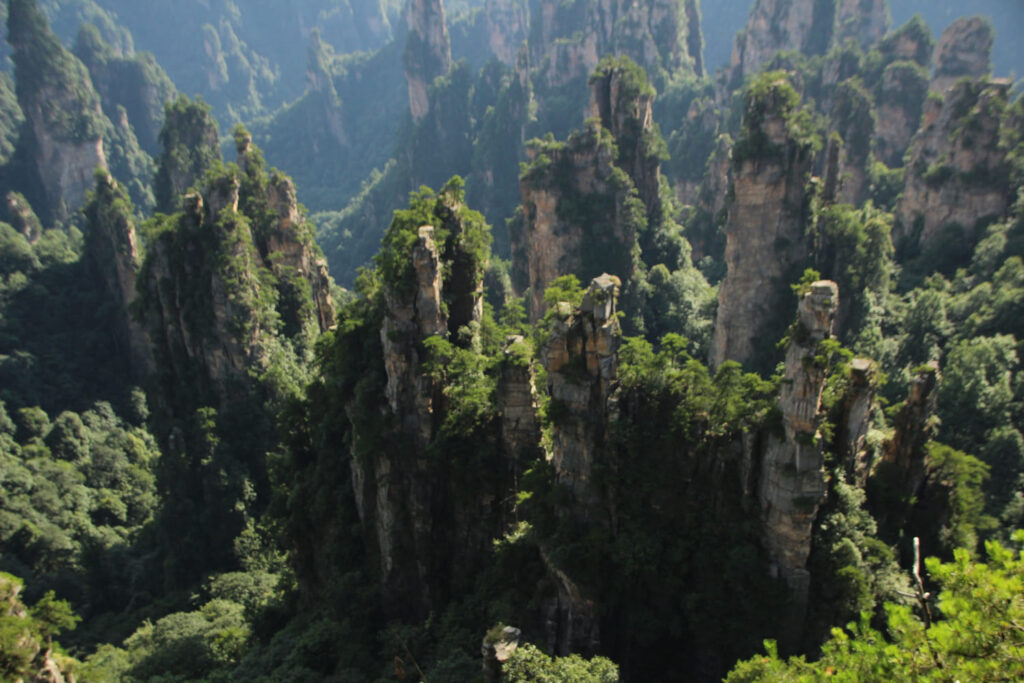
The Kung Fu Panda connection adds an extra dimension of delight, especially for families or animation fans. But even if you’ve never seen the films, the Stone Forest stands as one of China’s most unique natural attractions. It belongs on the same bucket list as the Great Wall, the Terracotta Warriors, and Zhangjiajie National Forest Park.
Beyond the stones themselves, a visit here connects you to Yi minority culture, to geological processes millions of years in the making, and to the broader natural wonders of Yunnan Province. This corner of southwestern China offers incredible diversity: snow-capped mountains, tropical valleys, ancient tea forests, and geological formations found nowhere else on Earth.
So lace up comfortable walking shoes, pack plenty of water, charge your camera, and prepare to walk among warriors frozen in stone. Whether you spend three hours or a full day exploring, whether you stick to the main paths or venture into lesser-known sections, the Stone Forest will leave you with memories of one of nature’s most spectacular artistic achievements.
And who knows? As you navigate the narrow passages between towering pillars, you might just understand how Po felt training to become the Dragon Warrior. The magic is real, even if the pandas remain animated.
For more incredible travel destinations and insider tips, visit Top Travel Insider for comprehensive guides to extraordinary places around the world.
Frequently Asked Questions
Where is the Stone Forest located in China?
The Stone Forest (Shilin) is located in Yunnan Province, approximately 90 kilometers southeast of Kunming, the provincial capital. The specific location is in Shilin Yi Autonomous County. The nearest city is Kunming, which serves as the main access point for most visitors.
How was the Stone Forest in China formed?
The Stone Forest formed over approximately 270 million years through a geological process called karstification. During the Permian Period, this area was covered by a shallow sea. Marine organisms accumulated on the seafloor, forming thick limestone deposits. When tectonic forces lifted the seabed above water, slightly acidic rainwater began dissolving the limestone along cracks and fissures. Over millions of years, this weathering process carved away softer rock while leaving harder, more resistant stone standing as the dramatic pillars we see today. According to the United States Geological Survey, karst landscapes cover approximately 20% of Earth’s land surface, but Stone Forest represents one of the finest examples of pinnacle karst formations.
Is Stone Forest worth visiting?
Absolutely. Stone Forest offers a unique landscape found in few other places on Earth. The dramatic limestone formations create an otherworldly atmosphere perfect for photography, nature appreciation, and cultural exploration. The site’s UNESCO World Heritage status recognizes both its geological significance and natural beauty. For budget travelers, the park is easily accessible from Kunming, reasonably priced, and can be explored independently without expensive tours. Most visitors spend 3-5 hours in the park and leave thoroughly impressed.
How do I get from Kunming to Stone Forest?
The easiest and fastest option is taking the high-speed train from Kunming Railway Station to Shilin West Railway Station (35-40 minutes, 19-34 RMB). From there, take a taxi (15-20 RMB) or local bus to the park entrance. Alternatively, direct buses depart from Kunming East Bus Station (1.5-2 hours, 25-34 RMB) and can drop you directly at the Stone Forest entrance. Both options are budget-friendly and don’t require joining a tour group.
What is the entrance fee for Stone Forest China?
The standard adult entrance fee is 175 RMB (approximately $24-27 USD), which includes access to Greater Stone Forest, Lesser Stone Forest, and the Stone Forest Museum. Students with valid IDs receive 50% discounts (87.5 RMB). Children under 1.2 meters enter free. Seniors and disabled visitors may qualify for reduced or free entry depending on age and documentation. Naigu Stone Forest requires a separate 10 RMB ticket if you choose to visit that section.
What is special about the Stone Forest?
Stone Forest is special for multiple reasons: its geological significance as one of the world’s finest examples of pinnacle karst formations (270+ million years old), its UNESCO World Heritage status, its cultural importance to the Yi minority people (especially the legend of Ashima), and its visual similarity to landscapes depicted in films like Kung Fu Panda. The formations create a genuinely unique landscape that feels mystical and otherworldly. According to UNESCO, the South China Karst (including Stone Forest) represents “superlative natural phenomena” of outstanding universal value.
Can I visit Stone Forest in one day from Kunming?
Yes, Stone Forest makes an excellent day trip from Kunming. The journey takes only 35-40 minutes by train or 1.5-2 hours by bus. Most visitors spend 3-5 hours exploring the main areas, leaving plenty of time to return to Kunming the same day. However, staying overnight in Shilin allows you to experience the park during magical sunrise hours when crowds are minimal and lighting is optimal for photography.
What should I wear to Stone Forest?
Wear comfortable, broken-in walking shoes with good tread (you’ll walk 5-7 kilometers on varied terrain including stairs). Dress in layers since weather can change throughout the day. Bring sun protection (hat, sunglasses, sunscreen) as UV exposure is intense at this elevation. Avoid new shoes, flip-flops, sandals, or high heels. During summer, bring light rain gear for afternoon thunderstorms.
Are there English signs at Stone Forest?
Major pathways and main attractions have English signs alongside Chinese, but many smaller paths and detailed information remain Chinese-only. The park layout is straightforward enough to navigate without language skills, and maps at the entrance provide visual guidance. Download translation apps like Google Translate with offline Chinese language packs for additional support.
When is the best time to visit Stone Forest?
Spring (March-May) and autumn (September-November) offer the best combination of pleasant weather, clear skies, and manageable crowds. Early morning arrivals (before 9:00 AM) provide the best light for photography and fewer tourists. Avoid Chinese national holidays, especially Golden Week (first week of October) and Spring Festival, when the park becomes extremely crowded and accommodation prices spike dramatically.