
The United Kingdom’s most memorable destinations aren’t always the ones that dominate travel guides. Beyond Edinburgh’s Royal Mile and London’s iconic landmarks lies a landscape of quiet coastal villages, mystical woodland gorges, and remote harbour towns where local culture remains beautifully intact.
These ten destinations reward travelers who venture beyond the conventional circuit. Each offers something increasingly rare: authenticity without pretense, natural beauty without crowds, and cultural depth that reveals itself slowly. Whether you’re planning a weekend escape or mapping a longer journey through Britain’s lesser-known corners, these places deserve a spot on your itinerary.
TL;DR: Quick Guide to Britain’s Hidden Treasures
Here’s your at-a-glance guide to the locations featured in this article:
- St Nectan’s Glen, Cornwall – Enchanted waterfall gorge with spiritual significance
- Portmeirion, Wales – Whimsical Italianate village on the Welsh coast
- Craster, Northumberland – Traditional fishing village famous for oak-smoked kippers
- Kynance Cove, Cornwall – Caribbean-like waters meeting serpentine cliffs
- Dungeness, Kent – Britain’s only desert landscape with artistic heritage
- Painswick Rococo Garden, Cotswolds – 18th-century garden tucked in a Cotswold valley
- Ullapool, Scottish Highlands – Remote whitewashed harbour town with thriving folk music scene
- Llyn Padarn, Snowdonia – Glacier-carved lake beneath Snowdon’s northern slopes
- St Abb’s Head, Scottish Borders – Dramatic seabird cliffs and coastal reserve
- Clovelly, Devon – Steep, cobbled village frozen in maritime history
1. St Nectan’s Glen: Cornwall’s Spiritual Heart
Tucked into woodland near Tintagel, St Nectan’s Glen feels like a place where the ordinary world pauses. A narrow footpath follows a stream through moss-covered boulders and twisted tree roots before opening onto a 60-foot waterfall that plunges through a natural basin in the rock. The setting has drawn pilgrims, artists, and travelers seeking something beyond conventional tourism for centuries.
Local legend connects the site to St Nectan, a 6th-century hermit who allegedly lived in a cell behind the falls. Visitors often tie ribbons to branches overhanging the water, a modern echo of ancient Celtic traditions. The practice may feel unfamiliar if you’re expecting a typical nature walk, but it reflects the site’s enduring role as a place of reflection and renewal.
Practical Details: The glen operates as a private heritage site with a small admission fee. Approach via the B3263 from Tintagel, following signs to Trethevy. The path from the entrance includes uneven stone steps, so sturdy footwear matters. Visit early morning or late afternoon to avoid tour groups. The waterfall flows year-round, but spring runoff creates the most dramatic cascade.
If you’re exploring Cornwall’s north coast, St Nectan’s Glen pairs naturally with other lesser-known Cornwall experiences rather than the crowded beaches further south.
2. Portmeirion: Wales’ Italianate Fantasy
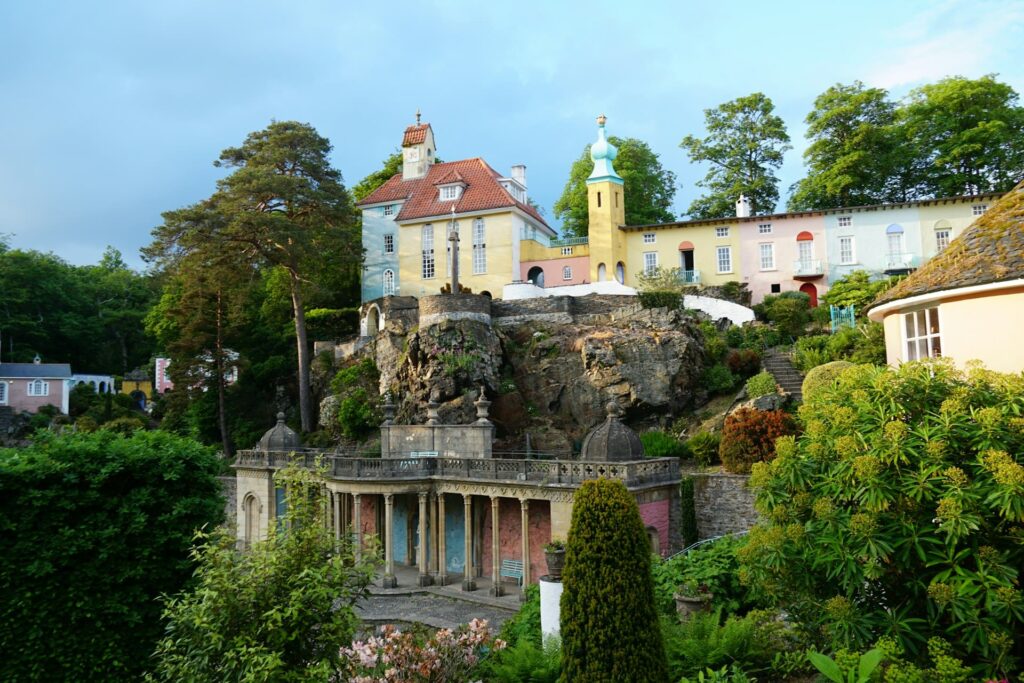
Portmeirion shouldn’t exist on the Welsh coast, which is precisely why it captivates visitors. Architect Clough Williams-Ellis spent five decades (1925-1975) constructing this pastel-colored village inspired by Portofino, complete with a campanile, piazzas, and Mediterranean-style villas perched above an estuary in Snowdonia.
The result resembles a film set, and indeed, the 1960s television series The Prisoner was filmed here. But Portmeirion functions as more than architectural curiosity. Williams-Ellis intended the village as proof that development could enhance rather than degrade natural landscapes. The 70-acre woodland gardens surrounding the buildings contain exotic plants from around the world, creating microclimates where palms and rhododendrons flourish together.
The village welcomes day visitors but maintains a limited number of overnight stays in its historic hotel and cottages. Staying overnight offers the rare experience of having the grounds essentially to yourself once day-trippers depart around 5:30 PM.
Practical Details: Located near Porthmadog in north Wales, Portmeirion charges admission for day visits. The village operates year-round, though winter offers quieter exploration and dramatic coastal light. Allow 3-4 hours to properly explore both village and gardens. The on-site hotel accepts reservations months in advance for peak season.
Those exploring Scotland’s cities might consider extending their journey south to include this Welsh outlier.
3. Craster: Northumberland’s Working Coast
Few British villages remain as authentically rooted in their working heritage as Craster. This Northumberland fishing village has supplied oak-smoked kippers to discerning buyers for over a century, with L. Robson & Sons still operating their 1906 smokehouse using traditional methods. The scent of burning oak chips drifts across the harbor most mornings, a reminder that this remains a working community rather than a preserved museum.
The village serves as the gateway to one of England’s finest coastal walks. A 90-minute path northeast leads to Dunstanburgh Castle, whose ruins crown a basalt headland visible for miles along the coast. The National Trust manages the route, which passes through wildflower meadows and alongside rocky beaches where seabirds outnumber people.
Practical Details: Craster sits on the B1339, roughly 40 miles north of Newcastle. Limited village parking fills quickly on summer weekends; arrive before 10 AM or after 3 PM for easier access. The Jolly Fisherman pub offers harbor views and local seafood. Purchase kippers directly from Robson’s smokehouse to take home, though be aware they require refrigeration.
This stretch of Northumberland Coast rewards slow exploration. Consider combining Craster with nearby Bamburgh Castle and the Farne Islands for a full day along Britain’s less-traveled northern coast.
4. Kynance Cove: Cornwall’s Serpentine Jewel
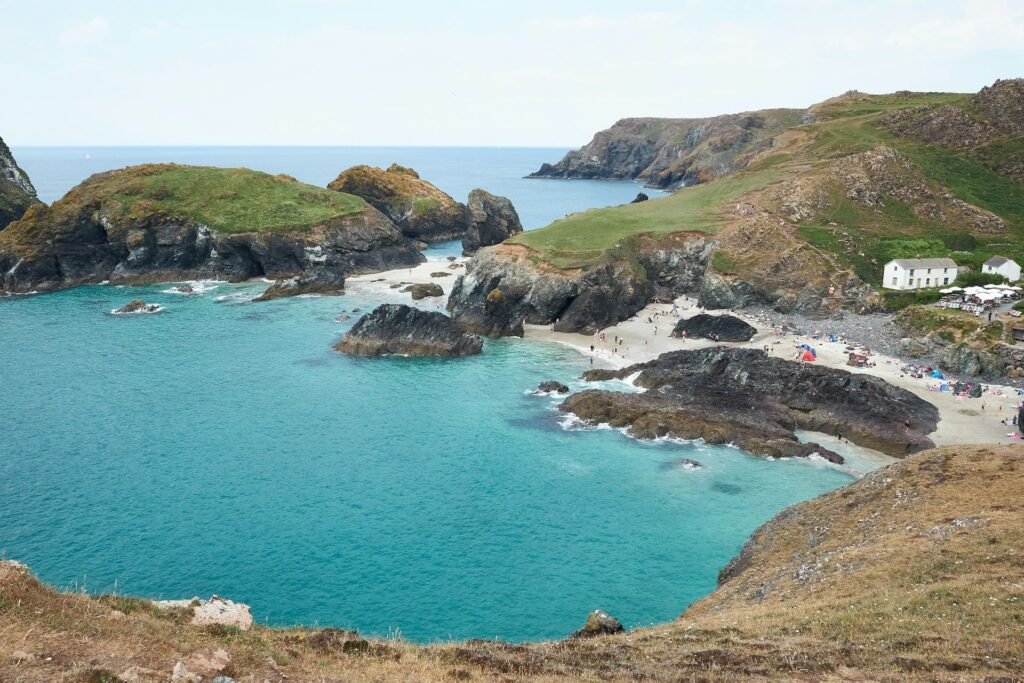
Kynance Cove delivers the kind of coastal scenery typically associated with the Mediterranean or Caribbean: turquoise water meeting white sand, framed by serpentine rock formations carved into arches and caves. The geology here is genuinely unique. The dark green and red serpentine rock, formed 375 million years ago, creates a stark contrast with the white sand and clear water.
The National Trust manages this section of the Lizard Peninsula, ensuring the cove remains largely undeveloped despite its photogenic qualities. Timing matters significantly here. Visit at low tide to explore caves and rock pools. Two hours either side of low tide allows access to areas otherwise hidden beneath the waves.
The approach requires a 15-minute walk down a steep coastal path from the car park. The gradient means your return journey will test your fitness, but the descent offers increasingly dramatic views as the cove reveals itself below.
Practical Details: Located on the Lizard Peninsula, approximately 11 miles south of Helston. The National Trust car park charges daily rates. Facilities are minimal: a seasonal café operates at the cove, but expect limited food options. The beach is lifeguarded during summer months. Check tide times before visiting through the UK Hydrographic Office to maximize your access to the cove’s features.
5. Dungeness: Kent’s Otherworldly Landscape
Dungeness looks like nowhere else in Britain. This vast shingle foreland, officially designated as Britain’s only desert, stretches out flat and almost treeless beneath immense skies. Black wooden cottages and fishermen’s huts punctuate the landscape alongside two lighthouses and a nuclear power station, creating a surreal juxtaposition that has attracted artists, filmmakers, and photographers for decades.
Film director Derek Jarman famously created his final home and garden here, cultivating sculptural plantings among the shingle that survive without traditional soil. His Prospect Cottage remains privately owned but visible from the road, and the garden’s example inspired others to work with rather than against the harsh environment.
The shingle supports rare plant species adapted to the extreme conditions: sea kale, sea pea, and viper’s bugloss create subtle color against the stones. The RSPB Dungeness Reserve protects breeding birds, and the area serves as an important stop for migratory species.
Practical Details: Reach Dungeness via the A259 and B2075, approximately 10 miles south of Ashford. The Romney, Hythe & Dymchurch Railway offers a nostalgic alternative approach via narrow-gauge steam train. The Pilot Inn provides food and atmosphere. The Old Lighthouse opens for climbing during summer months. Respect private property and stay on marked paths through the nature reserve. Strong winds are common; bring layers regardless of season.
6. Painswick Rococo Garden: Cotswolds’ Theatrical Retreat
While crowds flock to Bourton-on-the-Water and Bibury, Painswick Rococo Garden offers an entirely different Cotswolds experience. This 18th-century garden, restored over the past 40 years to its original 1740s design, occupies a hidden valley outside the village of Painswick. The garden represents one of the few surviving examples of Rococo garden design in Britain, characterized by playful structures, winding paths, and theatrical surprises.
Unlike formal classical gardens, Rococo gardens embraced asymmetry and whimsy. Here, you’ll encounter a Gothic alcove, an Eagle House, and various follies scattered through wooded slopes. Snowdrops carpet the grounds in late January and February, drawing photographers from across Britain. Later, rare plants and traditional kitchen gardens demonstrate historical horticultural practices.
The intimate scale means an hour wanders naturally into two or three as paths reveal unexpected vistas and quiet corners for contemplation.
Practical Details: Located on the B4073 just outside Painswick village, roughly 3 miles north of Stroud. The garden opens seasonally from January through October. The on-site Rococo Garden Restaurant sources ingredients from the kitchen garden when possible. Combined tickets with Painswick village attractions offer value. The snowdrop season (January-February) draws significant visitors; weekday mornings provide quieter access.
7. Ullapool: Highland Gateway to the Hebrides
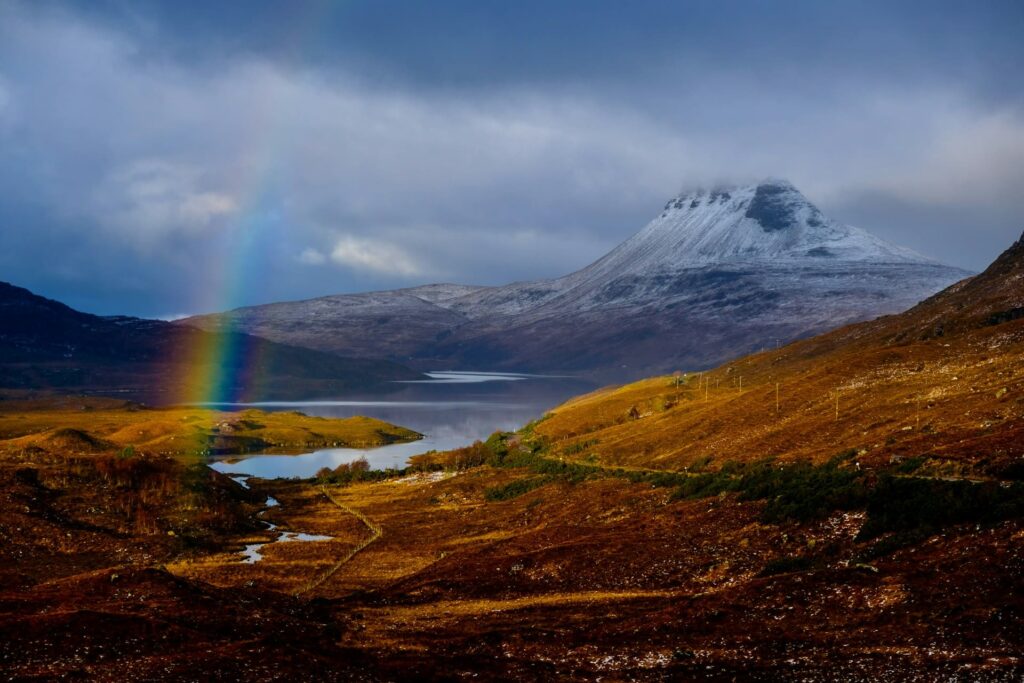
Ullapool sits at the edge of Scotland’s most remote country. This whitewashed fishing village on Loch Broom serves as the ferry port to the Outer Hebrides, but the town rewards visits in its own right. The setting alone, with mountains rising steeply from the loch’s far shore, creates a backdrop that shifts with every change of weather and light.
The village was planned and built in 1788 by the British Fisheries Society, and its grid layout remains intact. Today, Ullapool balances working harbor functions with a thriving cultural scene. The Ceilidh Place combines accommodation, restaurant, bar, and performance space, hosting folk musicians and writers throughout the year. The bookshop carries an impressive collection focused on Scottish culture and landscape.
Strong walking routes radiate from town into the surrounding Assynt region. The geology here is among the oldest in Europe, with Lewisian gneiss exposures dating back 3 billion years creating a landscape of bare rock, scattered lochans, and peaks like Stac Pollaidh.
Practical Details: Reach Ullapool via the A835, approximately 60 miles northwest of Inverness. The village offers accommodation ranging from hostels to boutique hotels, but book ahead for summer months. CalMac ferries to Stornoway depart regularly; even if you’re not continuing to the islands, the ferry journey offers excellent wildlife viewing opportunities. Several fishing charter operators work from the harbor. Visit the Ullapool Museum for context on the area’s herring fishing heritage.
For those already exploring Edinburgh and Scotland’s major cities, Ullapool represents the Highlands in their most authentic form.
8. Llyn Padarn: Snowdonia’s Tranquil Depths
Llyn Padarn doesn’t demand attention the way Snowdon’s summit does, yet this glacier-carved lake beneath the mountain’s northern slopes offers something the popular peaks cannot: silence and space even during peak season. The Welsh name (pronounced “thlin pad-arn”) translates simply to “Lake Padarn,” named for a 6th-century saint.
The lake stretches nearly two miles, with exceptionally clear water that reveals submerged features to significant depth. The National Slate Museum sits at the lake’s eastern end in Llanberis, occupying the former Dinorwic Quarry workshops. The surrounding mountains are scored with terraces and tunnels from centuries of slate extraction.
A lakeside path suitable for all abilities follows the northern shore, passing through oak woodland to the village of Llanberis at the far end. Paddleboarding and kayaking are permitted, offering intimate exploration of the shoreline and inlets.
Practical Details: Access the lake from the A4086 between Caernarfon and Capel Curig. Several car parks line the shore, with the largest near Llanberis town. The Llanberis Lake Railway, a narrow-gauge heritage line, runs along part of the southern shore during summer months. Water temperature remains cold year-round; wetsuits are advisable for water sports even in summer. Canoe Wales provides equipment rental and guided trips.
9. St Abb’s Head: Scotland’s Seabird Sanctuary
The coastal cliffs at St Abb’s Head rise 300 feet above the North Sea, creating prime nesting habitat for tens of thousands of seabirds. This National Nature Reserve, jointly managed by the National Trust for Scotland and Scottish Wildlife Trust, supports colonies of guillemots, razorbills, kittiwakes, fulmars, and shags. Visit between April and July to witness the cliffs alive with nesting activity and the surrounding air thick with wheeling birds.
The headland offers a circular walk of approximately two hours, departing from the car park near the lighthouse. The path traces the cliff edge, providing dramatic views north toward the Borders coast and south to the Farne Islands and Northumberland beyond. On clear days, the Bass Rock’s gannet colony is visible offshore.
St Abb’s village below the headland maintains a working harbor and diving center. The cold, clear waters attract divers to explore kelp forests and wrecks.
Practical Details: Located off the A1107, roughly 13 miles north of Berwick-upon-Tweed. The National Trust for Scotland car park operates an honesty box payment system. Stick to marked paths; cliff edges can be unstable. Binoculars significantly enhance the seabird viewing experience. The Lighthouse Café near the car park offers simple meals and locally caught seafood. Strong winds are common; layers and windproof clothing matter year-round.
10. Clovelly: Devon’s Cobbled Time Capsule
Clovelly cascades down a 400-foot cliff in a single, steep street of whitewashed cottages. No vehicles navigate the gradient; goods arrive by sledge, just as they have for centuries. The village has belonged to a single family since 1738, ensuring development remained carefully controlled and the historic character preserved.
Walking down the cobbled High Street past cottage gardens and glimpses of the harbor below creates a sense of stepping back in time. The village supported herring fishing for centuries. Today, tourism sustains the community, though the £8.50 admission fee (2024) keeps casual visitors limited and helps maintain the buildings and infrastructure.
The Red Lion Hotel at the harbor serves locally caught fish and offers overnight accommodation. A steep return climb awaits after exploring the harbor, though a Land Rover taxi service operates for those preferring mechanical assistance up the hill.
Practical Details: Located 11 miles west of Bideford via the A39. All visitors pay admission at the hilltop visitor center, which includes access to two museums documenting village history and the Kingsley connection (author Charles Kingsley grew up here). The village operates year-round, but many facilities close November through March. Sturdy shoes with good grip are essential; the cobbles become slippery when wet. An alternative donkey trail offers a gentler gradient for descent and ascent.
Making the Most of Britain’s Lesser-Known Places
These ten destinations share common threads despite their geographic spread. Each rewards travelers who approach with curiosity rather than a checklist mentality. Slow down. Allow time for weather to change the light on water or mountains. Talk to locals in village shops and pubs. Accept that reaching remote places requires effort, and that effort is part of the experience.
Britain’s hidden corners remain hidden precisely because they require intentionality to visit. They’re not convenient stops between major attractions. They don’t offer comprehensive tourist infrastructure. But they do offer something increasingly valuable: places where local culture, landscape, and history remain genuinely connected, where you can still feel like a traveler rather than a tourist.
The UK’s transport network makes independent exploration feasible even for international visitors. Rental cars provide the most flexibility for reaching places like Dungeness or St Abb’s Head. Train services reach coastal Wales and the Scottish Highlands reliably, if less frequently than routes to major cities. Local buses connect many smaller villages, though schedules require advance planning.
Consider visiting outside peak summer months. Late spring and early autumn offer excellent weather with fewer crowds. Even winter has merit: shorter days and cold weather reduce visitor numbers significantly, creating opportunities for solitary experiences in places like St Nectan’s Glen or Painswick Garden.
Pack appropriate gear. Britain’s weather remains famously changeable. Layered clothing, waterproof outerwear, and sturdy walking shoes matter far more than in urban London explorations. Many of these locations lack extensive facilities; carry water and snacks for longer walks.
Respect the communities and landscapes you’re visiting. These places remain special partly because they haven’t been overrun. Follow marked paths, observe wildlife from appropriate distances, support local businesses, and leave no trace of your visit.
Britain’s hidden treasures are waiting. They won’t shout for your attention or compete with better-known destinations. But for travelers willing to venture beyond the conventional circuit, they offer experiences and memories that outlast any Instagram moment.