Last updated: October 2026
Rome is the most visited city in Italy, yet some of its best sights sit a few streets from the crowds and barely appear on a standard itinerary. If you are looking for the best hidden gems in Rome, start with the Aventine keyhole, the layered Basilica of San Clemente, the fairytale Quartiere Coppedè and the statues-among-turbines museum at Centrale Montemartini. Most of them rarely have long queues, and several are free or very cheap.
This guide covers ten hidden gems, each with a practical box. Further down you will find how to pick between them, plans for one, two or three days, where to stay, getting around and budget guidance. For official visitor information, the city’s Turismo Roma site is a good place to start.
Opening days, ticket rules and access change often, particularly at churches and small museums. This guide avoids exact hours and prices, and where something could not be confirmed it says so, so check the official page before you go.
If this is your first trip and you still want the Colosseum and the Vatican, Rome is number two in our guide to the best places to see in Europe, which covers the big sights. The gems below are for the quieter side of the city.
Quick answer: What are the best hidden gems in Rome? For a classic secret, look through the Aventine keyhole. For history under your feet, visit the Basilica of San Clemente. For something unexpected, try Centrale Montemartini or Quartiere Coppedè, and for art without the crowds, choose Galleria Spada or Palazzo Altemps.
Quick comparison: best hidden gems in Rome
| Hidden gem | Area | Best for | Price tier |
|---|---|---|---|
| Quartiere Coppedè | Trieste | Fairytale architecture | Free |
| Aventine Keyhole | Aventine Hill | A secret view of St Peter’s | Free |
| Basilica of San Clemente | Colosseum area | Layers of Roman history | Cheap |
| Galleria Spada | Campo de’ Fiori | An optical illusion by Borromini | Cheap |
| Centrale Montemartini | Ostiense | Ancient statues among machinery | Cheap |
| Capuchin Crypt | Via Veneto | Macabre, unforgettable art | Cheap |
| Villa Torlonia | Nomentano | Quiet gardens and odd villas | Cheap |
| Non-Catholic Cemetery | Testaccio | Poets’ graves and calm | Donation |
| Palazzo Altemps | Piazza Navona | Classical sculpture without queues | Cheap |
| San Pietro in Vincoli | Oppian Hill | Michelangelo’s Moses | Free |
1. Quartiere Coppedè
Quartiere Coppedè is a small fairytale district that looks like it belongs in another city. It sits in the Trieste area, north of the centre, and it is entered through a large arch on Via Tagliamento. Inside, the streets are lined with villas and palaces in a mix of Art Nouveau, Gothic, Baroque and medieval styles, designed in the early twentieth century by the architect Gino Coppedè.
The centrepiece is Piazza Mincio, where the Fountain of the Frogs stands among towers, balconies, mosaics and carved faces. Look up as you walk, because the details are on the upper floors and above the doors: spiders, bees, chandeliers hanging from arches and painted frescoes. There are no tickets or queues, because it is a residential neighbourhood, and you simply walk in.
It takes less than an hour to see, so it pairs well with a walk through nearby Villa Ada or a visit to the Villa Torlonia further along. Please remember that people live here, so keep voices low and respect private entrances.
Getting here needs a little planning, because there is no metro station on the doorstep. The usual route is metro line B to Policlinico, then tram 3 or 19 to Piazza Buenos Aires and a short walk. Tram services are sometimes replaced by buses during works, so check ATAC or a live transport app on the day.
If you enjoy architecture that does not follow the rules, this is the place in Rome that most surprises first-time visitors.
The district is small enough to walk end to end in a few minutes, so the pleasure lies in slowing down and noticing the odd details. It is also a good stop for photographers, particularly on a bright morning when the colours and carvings stand out. Afterwards, the surrounding Trieste area has ordinary cafes and bakeries where you can sit down.
- How to get there: Metro line B to Policlinico, then tram 3 or 19 to Piazza Buenos Aires and a short walk to the arch on Via Tagliamento.
- How long to spend: 45 minutes to an hour.
- Best time to go: Morning or late afternoon, when the light is soft and the streets are quiet.
- Tip: Walk through the arch slowly and look upwards, because most of the decoration is above eye level.
2. Aventine Keyhole
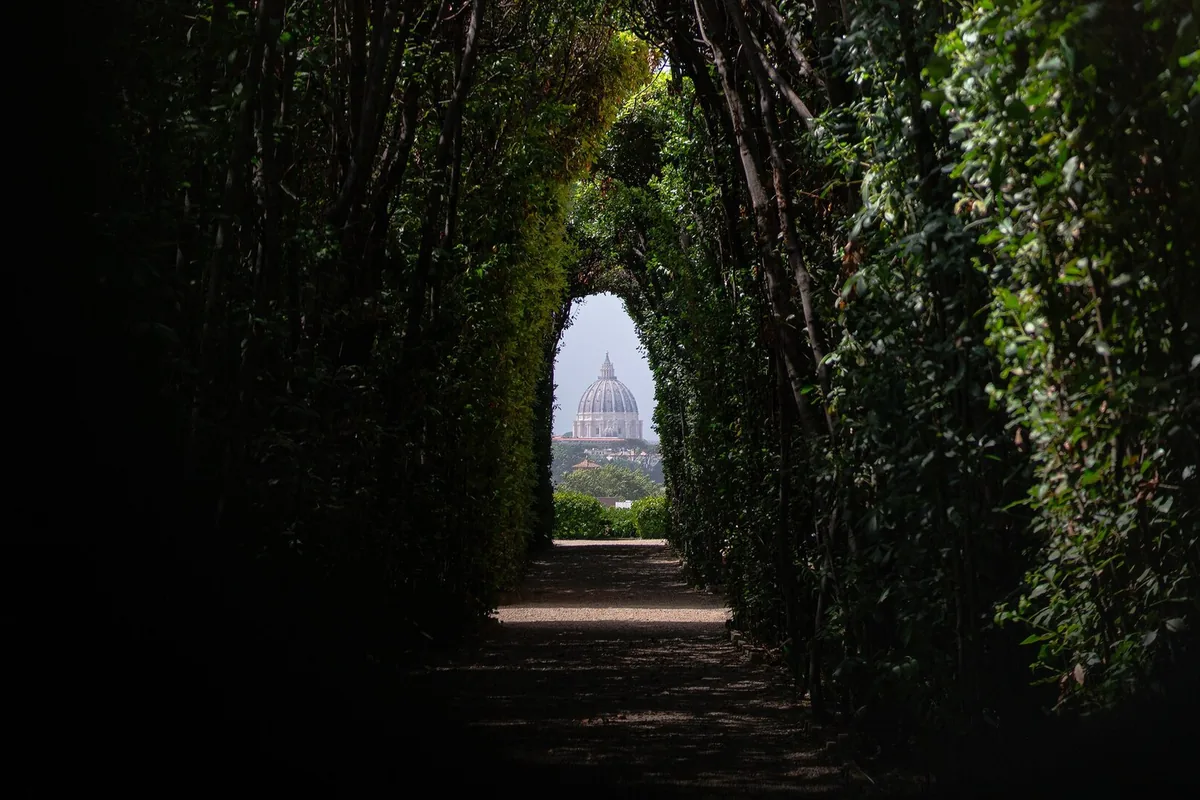
The Aventine keyhole is the most famous secret view in Rome. It is on the door of the Villa del Priorato di Malta, on Piazza dei Cavalieri di Malta on the Aventine Hill, and if you bend down and look through it, you see a tidy garden path framed by hedges that leads to the dome of St Peter’s in the distance.
It costs nothing, and it is open to anyone on the public square. The catch is the queue, which can build at busy times, especially on summer days, so a weekday morning or just after sunrise is the best slot. Each person takes a turn at the hole, so be patient and quick.
The priory behind the door is the seat of the Sovereign Military Order of Malta, and it is not generally open to the public, so do not plan on seeing the garden or the church inside. It has opened on occasional special days in the past, so look out for announcements if you want to see more.
Combine the keyhole with the nearby orange garden, Giardino degli Aranci, which is a separate public park with views over the city. The two sights are a few minutes apart, so they make a pleasant short walk together.
The view works because the garden hedges line up with the dome, so it looks as though a path leads straight to the Vatican. It is a very short stop, which is why it combines well with the Aventine’s quiet streets and the nearby church of Santa Sabina. Bring patience rather than a long list of plans.
- How to get there: On foot up the Aventine Hill from Circo Massimo metro station, a steady uphill walk.
- How long to spend: 30 minutes, longer if you add the orange garden.
- Best time to go: Early on a weekday morning, before the queue builds.
- Tip: Hold your phone close to the keyhole for a photo, and keep your turn short so others can look.
3. Basilica of San Clemente
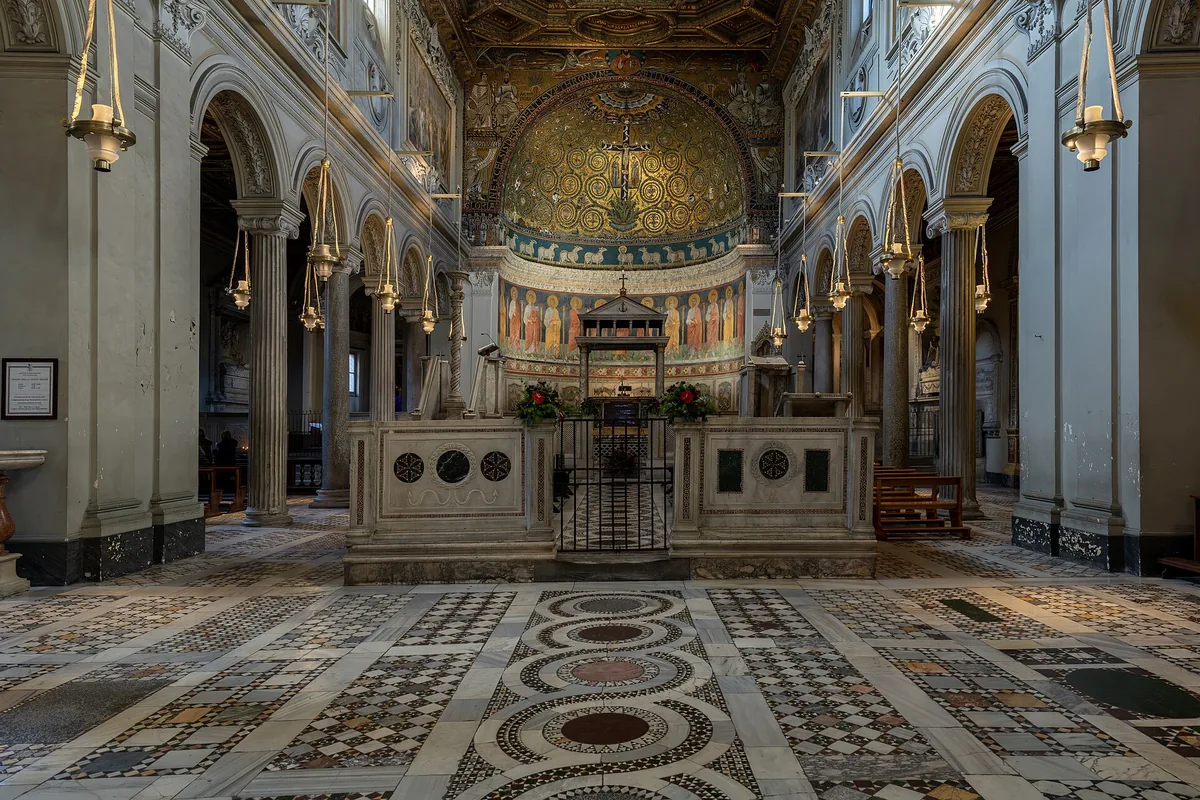
The Basilica of San Clemente is a church built on top of two earlier buildings, so you can walk down through two thousand years of Rome. It stands near the Colosseum, and the upper church, which is usually free to enter, has medieval mosaics and frescoes that are worth a look on their own.
The real surprise is below. A ticket takes you down to an early Christian lower basilica from around AD 400, with old frescoes, and then further to a first-century level with a Roman house, where a shrine to Mithras, a god worshipped by a secretive Roman cult, was later built. You can hear running water in the lowest part, which comes from an underground stream.
Entry to the excavations has to be booked online on the basilica’s official site, where you choose a date and time slot, and daily numbers are limited. Book there rather than through a reseller. A major restoration of the basilica is under way, so expect scaffolding in the upper church. Dress as you would for any church, with shoulders and knees covered.
San Clemente is a good rainy-day choice and an excellent contrast to the busy Colosseum a few minutes away. Many visitors walk past without realising what is underneath, which is exactly why it counts as a hidden gem.
The twelfth-century mosaic in the apse of the upper church is one of the finest in the city, and, works permitting, it rewards a few minutes of attention before you go down. The contrast between the bright medieval church and the damp, dark lower levels is what makes the visit stick in the memory, especially for anyone who likes archaeology.
- How to get there: On foot from the Colosseum, about ten minutes, or take the metro to Colosseo.
- How long to spend: One hour for the basilica and the underground levels.
- Best time to go: Morning, when it is quieter and the church is bright.
- Tip: Book the excavations online for a time slot and cover your shoulders and knees.
4. Galleria Spada
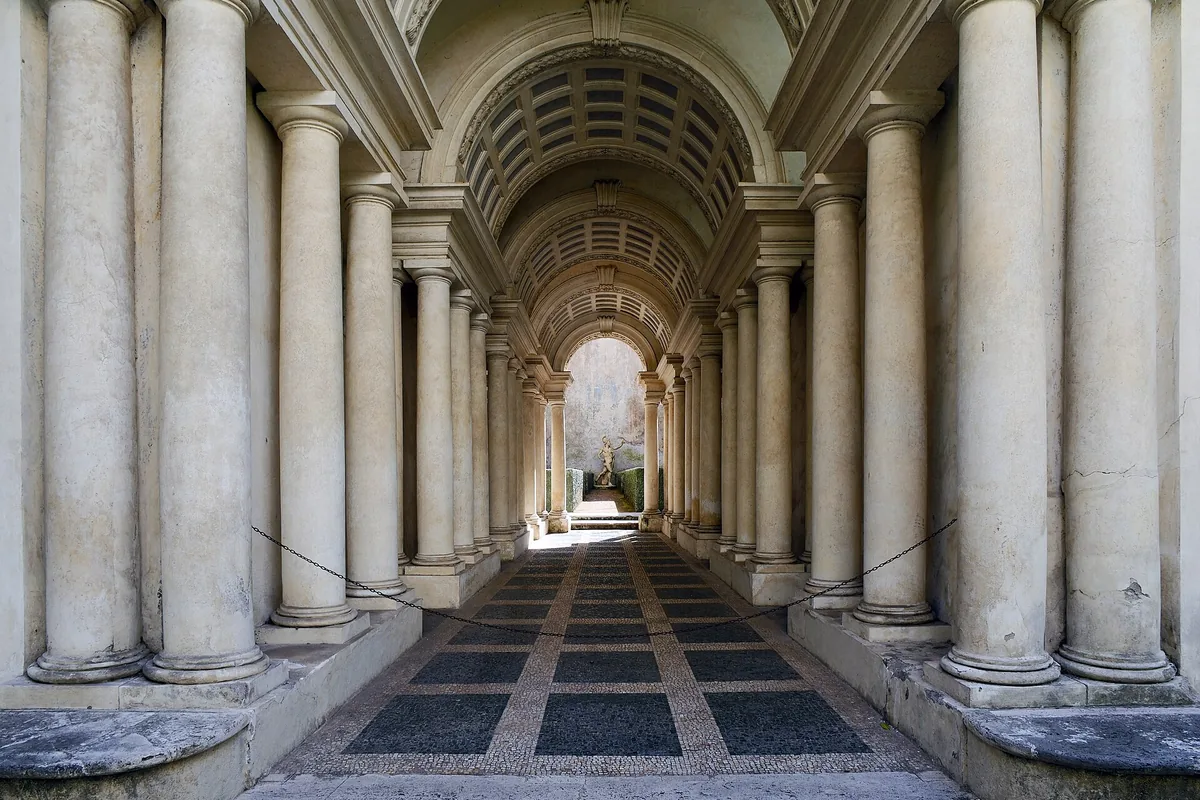
Galleria Spada is a small gallery with one of the cleverest tricks in Rome. It is in Palazzo Spada, near Campo de’ Fiori, and it holds four richly decorated rooms of Baroque paintings. The star is in the courtyard, where the architect Francesco Borromini built the Perspective Gallery in 1653 for Cardinal Bernardino Spada.
It looks like a long, columned corridor with a statue at the end. In fact, the columns shrink and the floor rises, so the corridor, only about eight metres long, looks several times longer than it is. Seeing the illusion in person is far more convincing than a photograph, and a person standing at the far end looks tiny.
The gallery is quiet compared with the Vatican or the Borghese, and it is easy to see in under an hour. The paintings are shown in their original palace rooms, which gives the visit a private-house feel rather than a museum one.
Opening days and tickets change, so check the official site at galleriaspada.cultura.gov.it before you go. It is a short walk from Campo de’ Fiori and Piazza Farnese, so it fits naturally into a day in the historic centre.
The paintings include works by Italian and Flemish masters, but the illusion is what people remember. Ask a member of staff or read the signs at the entrance of the corridor, and then walk towards the statue to see how the proportions change. It is a good stop for children, who tend to enjoy the trick.
- How to get there: On foot from Campo de’ Fiori, about two minutes.
- How long to spend: 45 minutes to an hour.
- Best time to go: Weekday mornings, when it is quietest.
- Tip: Check the official site for closing days and free-entry days before you set out.
5. Centrale Montemartini
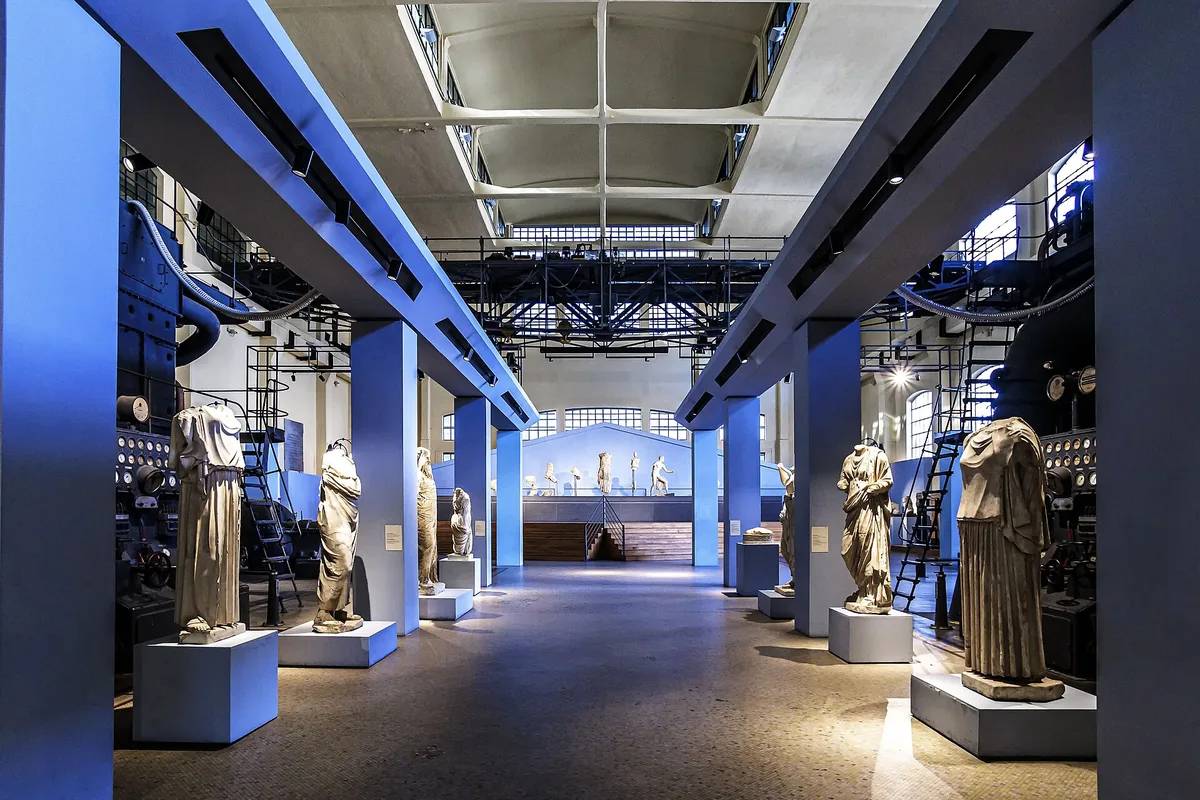
Centrale Montemartini is a former power station filled with ancient Roman statues. It is a second site of the Capitoline Museums, on Via Ostiense, and it sits in Rome’s first public electricity plant, which opened in 1912. The museum began in 1997 as a temporary home for sculptures during the renovation of the main Capitoline complex, and the setting proved so popular that it became permanent.
The contrast is the whole point. Marble gods, emperors and mosaics stand beside huge diesel engines and boilers that have been left in place. The collection spans the Republican era to the late Empire, and highlights include sculptures from the pediment of a temple and a large hunting mosaic.
It is one of the least-visited museums in the city, so you can often look at a statue without a crowd around it. The neighbourhood of Ostiense is also an area of street art and former warehouses, so it feels very different from the historic centre.
Check the official site for current hours and ticket options before you go. The Musei in Comune site lists the museum’s details.
Ostiense is also home to the old markets and former industrial sites that now host street art and nightlife, so you can turn the visit into a half day. Look for the rooms that mix different eras, where a Roman portrait sits next to a turbine, because they show most clearly why the museum is so unusual.
- How to get there: Metro line B to Garbatella, the closest stop, then about a ten-minute walk, or a longer walk down Via Ostiense from Piramide.
- How long to spend: One and a half to two hours.
- Best time to go: Weekday afternoons, when it is calm.
- Tip: Photograph the statues against the machinery, because the contrast is the best part.
6. Capuchin Crypt
The Capuchin Crypt is the most unusual sight on this list, and it is not for everyone. It lies beneath the church of Santa Maria della Concezione dei Cappuccini, on Via Veneto, and it is decorated with the bones of about 3,700 people, mostly Capuchin friars, arranged into patterns, arches and chandeliers across several small chapels.
The idea behind it is a reminder of mortality, not a horror show. The crypt is part of a museum run by the friars, and the route goes through the museum first before reaching the chapels. The official site allows photos and video for private, non-commercial use only, so be discreet and respectful.
Treat it as a religious site. Shoulders and knees must be covered, and loud talking is considered disrespectful. The museum floor is reached by lift, while the crypt has three low steps and motorised wheelchairs are not allowed, so visitors with access needs should contact the museum first. It is not for anyone sensitive to human remains, and the museum advises that under-18s visit the crypt with an adult.
The museum opens daily apart from a few major holidays, and the ticket includes an audio guide, according to the official site. Confirm current times there before you go.
Its position on Via Veneto means you can combine it with a walk to the Spanish Steps or Piazza Barberini afterwards.
The museum before the crypt tells the story of the Capuchin order and includes religious art, which helps explain why the chapels exist at all. Go with a calm mindset and read the signs, because the context turns a shocking sight into something more thoughtful. Many visitors find it quieter and more moving than expected.
- How to get there: Metro line A to Barberini, then a short walk up Via Veneto.
- How long to spend: About an hour, including the museum.
- Best time to go: Mid-morning, when the queue is shorter.
- Tip: Cover your shoulders and knees, and keep any photos for private use only.
7. Villa Torlonia
Villa Torlonia is a calm park with some of the most eccentric buildings in Rome. It is in the Nomentano area, north-east of the centre, and its grounds hold several villas, including the neoclassical Casino Nobile, the Casino dei Principi and the Casina delle Civette, the House of the Owls, which is now a museum of stained glass. Its name comes from the owls that appear in its decoration, a sign of the esoteric interests of its owner.
Benito Mussolini was granted the villa as a residence in 1925, moved in with his family in 1929 and stayed until 1943. Air raid shelters were built under the Casino Nobile and in the grounds, along with a bunker that was never finished, and they can be seen only on a guided tour that has to be booked. The Casina delle Civette, with its fairytale shapes, colourful windows and winding roofs, is the most photogenic building and the best reason to come.
The park itself is a local favourite for walks, with shaded paths and lawns, so it suits a slow half day. An ancient Jewish catacomb, found in 1919, lies beneath the north-west of the grounds, but it is not part of the museum visit, so do not plan around it.
The villas are run as the Musei di Villa Torlonia. Tickets and visiting rules change, so check museivillatorlonia.it before you visit.
Pack a picnic or plan a coffee stop, because the park is large enough to spend hours in. Families often use the lawns and paths, and the buildings make good photographs from outside even if you skip the interiors. It is far from the main tourist routes, so you are likely to share it mostly with locals.
- How to get there: Metro line B to Bologna, then about a ten-minute walk, or a bus along Via Nomentana to the main entrance at Via Nomentana 70.
- How long to spend: Two to three hours for the park and one or two villas.
- Best time to go: A sunny weekday morning.
- Tip: If you want the bunker, book the guided tour in advance through the official site.
8. Non-Catholic Cemetery
The Non-Catholic Cemetery is one of the most peaceful places in Rome. It is in Testaccio, beside the Pyramid of Cestius, and it is often called the Protestant Cemetery, although it holds graves of Orthodox Christians, Jews, Muslims and many others. The poets John Keats and Percy Bysshe Shelley are buried here, along with the painter Joseph Severn and the Italian thinker Antonio Gramsci.
The grounds are a garden of cypresses, cats and carved stone, and the atmosphere is quiet and reflective. It is not a sightseeing site in the usual sense, so treat it with respect, keep your voice low and stay on the paths. The cemetery depends on donations, volunteers and fundraising, and visitors are asked to leave a contribution towards its upkeep.
Opening hours are shorter on Sundays and public holidays, with a last entrance before closing, according to Turismo Roma. Check the cemetery’s official site, cemeteryrome.it, for the current times and any holiday closures.
It is a short walk from the Piramide metro stop, and the nearby Testaccio neighbourhood is known for its food markets and traditional trattorias. That makes it easy to combine a quiet hour among the graves with a good lunch afterwards.
The Pyramid of Cestius, built as a tomb in the first century BC, stands right beside the walls and is visible from the paths, which adds to the unusual setting. Look for the cats that roam the grounds, and for the older, more weathered stones in the quieter corners, where moss and cypress shade give a hushed feel.
- How to get there: Metro line B to Piramide, then a short walk to Via Caio Cestio.
- How long to spend: About an hour.
- Best time to go: Morning, when the light is gentle and it is calmest.
- Tip: Bring a small donation and check the official site for opening times before you go.
9. Palazzo Altemps
Palazzo Altemps is the best place in Rome to see ancient sculpture without the crowds. It is a late fifteenth century palace near Piazza Navona, and it forms part of the Museo Nazionale Romano. Its rooms house a large part of the museum’s classical collection, including many pieces from the Ludovisi collection assembled by Cardinal Ludovico Ludovisi in the seventeenth century.
The highlights include the Ludovisi Gaul, a dramatic statue of a warrior supporting his wife, and the Ludovisi Throne, a carved marble block with a famous relief of Venus rising from the sea. The Ludovisi Ares was restored by Bernini in 1622, and his additions include the right foot. The most famous works are mostly on the upper floor.
What makes it a hidden gem is the setting. The palace has frescoed rooms, a handsome courtyard and a calm atmosphere, so it feels like a private collection rather than a museum. It is only a few minutes from Piazza Navona, yet the crowds there rarely come inside.
Allow about an hour to an hour and a half. Since 2025 a single ticket has covered all the Museo Nazionale Romano sites, valid for a week, according to the Ministry of Culture listing, so you can combine Altemps with Palazzo Massimo or the Baths of Diocletian. Check current details before you go.
The palace also has a small decorated chapel and a courtyard with sculpture, so give yourself time to wander rather than rushing through the headline pieces. It is an easy museum for a hot afternoon or a rainy day, because the rooms are cool and the crowds are thin. Pair it with a coffee on a side street rather than the busy square.
If you are staying in the area for the evening, Terrazza Borromini looks down on Piazza Navona and features in our guide to the best bars in Rome, alongside cocktail bars and wine bars a short walk away.
- How to get there: On foot from Piazza Navona, about three minutes.
- How long to spend: One to one and a half hours.
- Best time to go: Weekday mornings, when it is almost empty.
- Tip: Head upstairs first to the main Ludovisi rooms, then work back down.
10. San Pietro in Vincoli
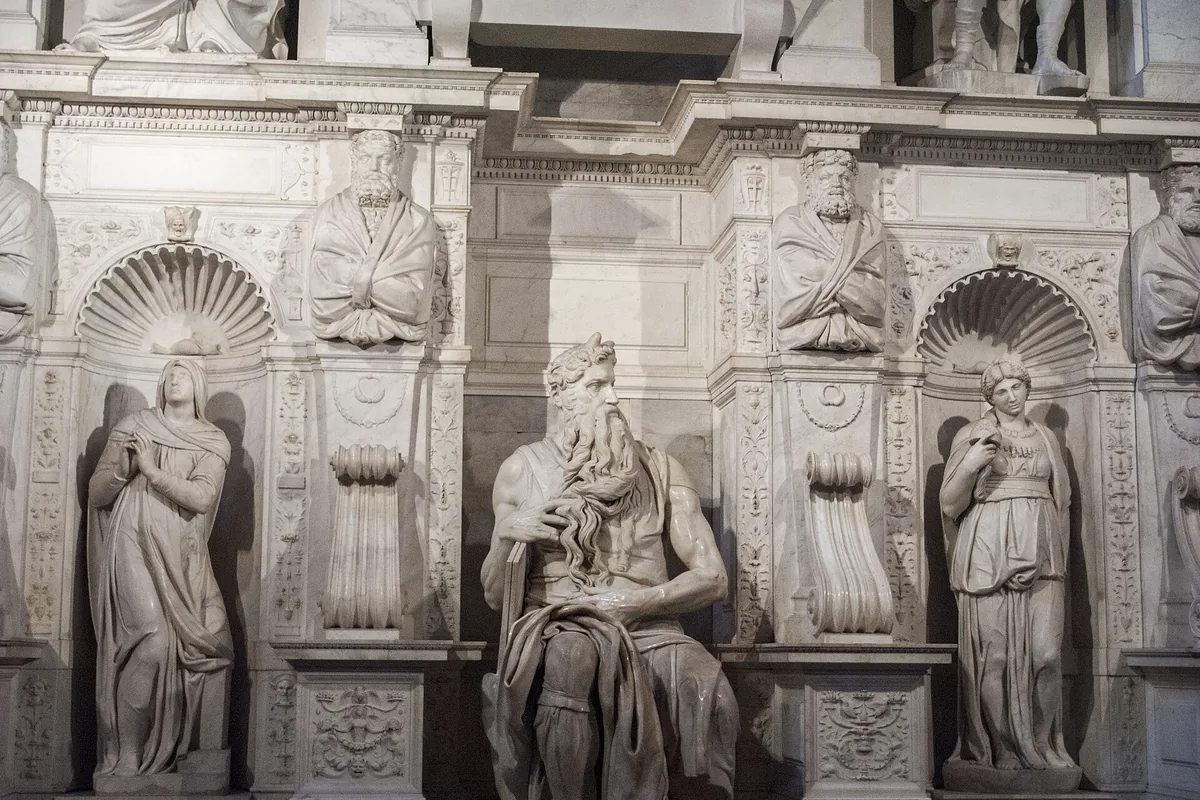
San Pietro in Vincoli is the church to visit for Michelangelo’s Moses. It stands on the Oppian Hill, a few minutes from the Colosseum, and it was built to house the chains said to have bound St Peter, which are kept in a reliquary under the main altar.
The statue of Moses was made for the tomb of Pope Julius II, a grand project that Michelangelo never finished as planned. The tomb was scaled down to a much smaller monument, and Julius II was buried in St Peter’s instead, so the tomb here is empty. The finished Moses, seated with his tablets and famous horns, is the focus of the church, and it is easy to stand in front of it with very few other people around.
Despite being so close to the Colosseum and the Roman Forum, the church is quiet, which is why many visitors miss it. Entry is usually free, and the visit is short, so it fits well into a morning that includes the Colosseum, San Clemente and the Roman Forum.
The church usually closes for a break in the middle of the day, so check the current times before you go. Because it is a working church, cover your shoulders and knees, and be quiet during services.
The Oppian Hill location also means a pleasant walk past small streets and gardens with views over the Colosseum area, so you can enjoy the setting as well as the sculpture. Stand a little way back from the statue to see the proportions as Michelangelo intended, and read the information panels for the tomb’s history.
- How to get there: Metro line B to Cavour, then a short uphill walk.
- How long to spend: 20 to 30 minutes.
- Best time to go: Morning, or late afternoon after the midday break.
- Tip: Check the opening hours, because many churches close in the middle of the day.
How to pick the right hidden gem
Start with what you enjoy. For history, choose San Clemente and San Pietro in Vincoli. For art, Galleria Spada and Palazzo Altemps give you masterpieces without the crowds. For something unusual, Centrale Montemartini and the Capuchin Crypt are the most memorable, while Quartiere Coppedè and the Aventine keyhole are the easiest to fit into a short walk.
Then think about timing. Churches and small museums often close at midday and on one day a week, so check the day before. Morning is usually quieter almost everywhere, and the keyhole is best at sunrise or on a weekday.
Suggested plans for 1, 2 or 3 days
- One day: Start at the Aventine keyhole, walk down to the Non-Catholic Cemetery in Testaccio, then spend the afternoon at Galleria Spada and Palazzo Altemps.
- Two days: Add a morning at San Pietro in Vincoli and San Clemente near the Colosseum, and an afternoon at Centrale Montemartini in Ostiense.
- Three days: Spend the third day in the north, with Quartiere Coppedè, Villa Torlonia, and the Capuchin Crypt on the way back through the centre.
Where to stay in Rome
- Monti and the Colosseum area: Walkable to San Clemente and San Pietro in Vincoli, with plenty of restaurants.
- Centro Storico: Close to Galleria Spada and Palazzo Altemps, but busier and pricier.
- Testaccio and Aventine: Quieter streets, good food and easy access to the cemetery and the keyhole.
- Nomentano and Trieste: Calmer residential areas for Villa Torlonia and Quartiere Coppedè.
Getting around
Rome’s centre is walkable, but the hidden gems are spread out, so combine walking with the metro, trams and buses. Metro lines A and B reach several of these sights, and buses and trams fill the gaps. The Turismo Roma site has transport and visitor information, and routes, tickets and strike notices are on the site of ATAC, Rome’s public transport operator. Keep an eye on strike days, which can affect public transport, and wear comfortable shoes for cobbles and hills.
Budget guidance
- Free or nearly free: The Aventine keyhole, Quartiere Coppedè, San Pietro in Vincoli and a donation at the Non-Catholic Cemetery.
- Mid-range: Entry to Galleria Spada, Palazzo Altemps, Centrale Montemartini, Villa Torlonia and the San Clemente excavations.
- Special occasion: A guided tour of the Capuchin Crypt or the underground levels, if you want a guide.
Many small museums offer reduced or free entry on certain days, so check the official site for each one. Visiting two or three sights in a day keeps costs down and avoids rushing.
Frequently Asked Questions
What are the best hidden gems in Rome?
Good choices include the Aventine keyhole, the Basilica of San Clemente, Quartiere Coppedè and Centrale Montemartini. Galleria Spada and Palazzo Altemps are quiet options for art.
What is the most unusual place to visit in Rome?
The Capuchin Crypt is the most unusual, with chapels decorated with the bones of friars. It is a religious site, photos are for private use only and it is not for everyone.
Is the Aventine keyhole free?
Yes, it costs nothing to look through the keyhole from the public square. Expect a queue in the daytime, and go early on a weekday to avoid it.
Do you need to book hidden gems in Rome?
Most do not need booking, but the San Clemente excavations need an online booking with a time slot, and the Villa Torlonia bunker is seen only on a booked guided tour. Check each official page before you go.
Which hidden gems in Rome are free?
The Aventine keyhole, Quartiere Coppedè and San Pietro in Vincoli are free to visit. The Non-Catholic Cemetery asks for a donation.
When is the best time to visit Rome’s hidden gems?
Mornings on weekdays are usually quietest. Spring and autumn are comfortable for walking, and churches often close at midday, so plan around that.
Discover More of Rome and Italy
After a day of quiet churches and museums, end with a drink and a view from one of the terraces in our guide to the best rooftop bars in Rome. If you are travelling on from the capital, head south with our guide to the prettiest Amalfi Coast towns, or north to Tuscany with our guide to the best places to eat in Florence.
Featured image: Photo by Hugo DK, CC BY-SA 4.0, cropped, via Wikimedia Commons