The Mekong Delta stretches across southwestern Vietnam like a living tapestry of rivers, rice paddies, and floating markets. This labyrinth of waterways, spanning approximately 40,000 square kilometers, forms the agricultural heartland of Vietnam and produces roughly half of the country’s rice output.
What are the top 10 attractions in the Mekong Delta? The region’s must-visit destinations include Cai Rang Floating Market, Tra Su Cajuput Forest, Ben Tre’s coconut gardens, Sa Dec Flower Village, Sam Mountain, Vinh Trang Pagoda, Phoenix Island, Tram Chim National Park, Tan Lap Floating Village, and Ha Tien’s limestone coast.
This guide takes you beyond typical tourist circuits into a world where life flows at the rhythm of tides. Expect early morning boat rides through mist-covered canals, intimate encounters with artisan communities, and landscapes that shift between emerald rice fields and ancient temple complexes.
TL;DR: Quick Overview
- Cai Rang Floating Market – View on Google Maps
- Tra Su Cajuput Forest – View on Google Maps
- Ben Tre Coconut Gardens – View on Google Maps
- Sa Dec Flower Village – View on Google Maps
- Sam Mountain & Ba Chua Xu Temple – View on Google Maps
- Vinh Trang Pagoda – View on Google Maps
- Phoenix Island – View on Google Maps
- Tram Chim National Park – View on Google Maps
- Tan Lap Floating Village – View on Google Maps
- Ha Tien – View on Google Maps
1. Cai Rang Floating Market (Can Tho)
Highlights
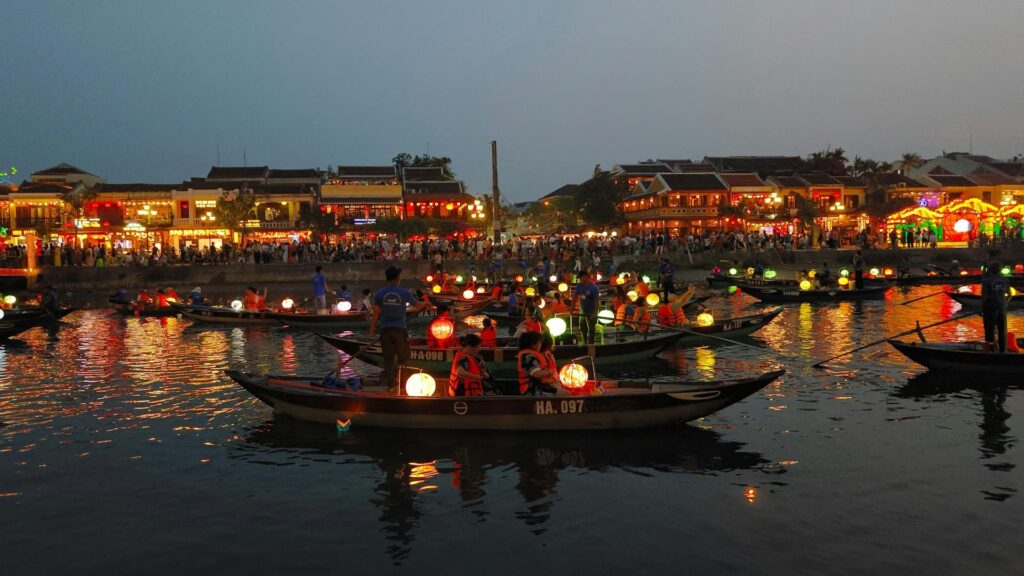
Cai Rang Floating Market operates year-round as the Mekong Delta’s most active wholesale trading hub. Between 5:00 AM and 9:00 AM, hundreds of boats converge on this section of the Can Tho River, creating a colorful spectacle of commerce conducted entirely on water.
Vendors advertise their goods using cay beo, long poles displaying sample products like pineapples, dragon fruit, or morning glory vegetables. The system allows buyers to identify suppliers from a distance, eliminating the need for shouting across the water.
Smaller canoes weave between wholesale boats, selling coffee, noodle soup (hu tieu), and fresh banh mi to hungry traders. You’ll find locals balancing charcoal stoves on their boats, preparing breakfast amid the trading chaos.
Why Visit
This market represents authentic delta commerce untouched by modern retail systems. Unlike tourist-oriented floating markets elsewhere, Cai Rang serves local farmers and distributors who’ve traded here for generations.
Photography opportunities peak during golden hour when low sunlight illuminates the colorful produce against dark water. The sheer scale of the operation, with boats stacked high with watermelons, cabbages, and sweet potatoes, creates dramatic compositions.
Best Time
Dawn arrivals between 5:30 AM and 6:30 AM capture the market at peak activity. By 10:00 AM, most wholesale boats have dispersed. The dry season (December through April) offers calmer waters and clearer skies, though the market operates daily regardless of weather.
How to Get There
Can Tho sits approximately 160 kilometers southwest of Ho Chi Minh City. Most visitors base themselves in Can Tho and arrange morning boat tours through their accommodation or local agencies. Tours typically last 2-3 hours and include stops at smaller canals.
2. Tra Su Cajuput Forest (An Giang)
Highlights
Tra Su Cajuput Forest encompasses 850 hectares of seasonally flooded forest in An Giang Province. The forest transforms into a green cathedral during flood season, when water levels rise and visitors navigate narrow channels aboard traditional wooden boats.
Cajuput trees (Melaleuca cajuputi) grow with their trunks submerged, creating an otherworldly landscape of twisted branches reflected in still water. The forest supports diverse wildlife including painted storks, egrets, and pythons.
A 20-meter observation tower at the forest’s center provides panoramic views across the canopy. During peak flooding, only tree crowns remain visible, creating an endless sea of green foliage.
Why Visit
Tra Su offers the delta’s most immersive nature experience. The silence broken only by bird calls and paddle strokes creates a meditative atmosphere entirely different from the region’s bustling markets.
Photographers particularly prize the forest for its symmetrical reflections and dramatic morning mist. The narrow channels lined with lotus flowers add layers of color to the predominantly green palette.
Best Time
Flood season from August through November provides the deepest water levels and easiest boat access throughout the forest. Morning visits between 6:00 AM and 9:00 AM offer the best light and wildlife activity before temperatures rise.
How to Get There
Tra Su lies 30 kilometers southwest of Chau Doc town in An Giang Province. Most visitors combine it with a trip to Sam Mountain as both attractions sit within the same region. Motorbike rentals or private car hires from Chau Doc work best for independent travelers.
3. Ben Tre Coconut Gardens & River Cruises
Highlights
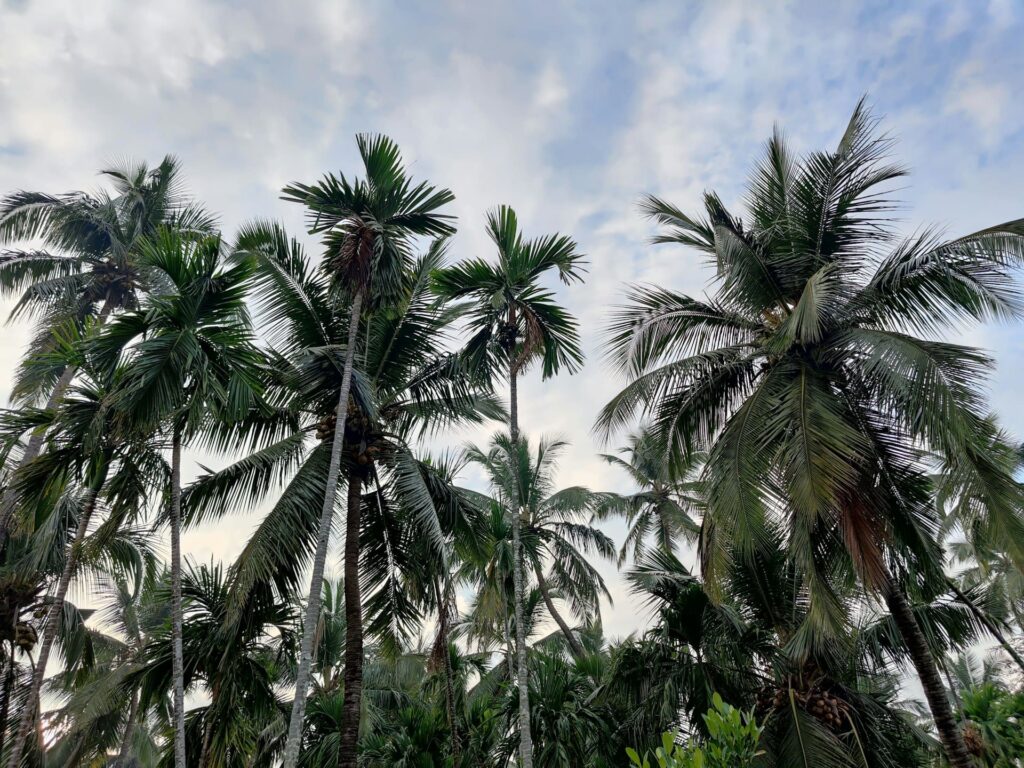
Ben Tre Province earned its nickname “Coconut Kingdom” by producing roughly 30% of Vietnam’s coconut harvest. The province processes coconuts into candy, cooking oil, bowls, and construction materials, supporting an entire economy around a single crop.
River cruises through Ben Tre’s narrow canals pass between coconut groves where workers scale 20-meter-tall trees to harvest fruit. Tours typically include stops at family-run workshops producing coconut candy, rice paper, and honey products.
The rach nho (small canals) provide intimate glimpses into delta life. Houses built on stilts line the waterways, with boats serving as the primary transportation for everything from children heading to school to vendors selling vegetables.
Why Visit
Ben Tre offers hands-on cultural experiences unavailable in larger delta cities. Visitors can try coconut candy making, paddle traditional basket boats (thung chai), and enjoy live performances of don ca tai tu folk music.
The province maintains an authentic, unhurried atmosphere. Cycling tours along narrow paths between fruit orchards and fish farms allow close interaction with farming communities.
Best Time
January through April brings the driest weather and easiest access to rural paths. Coconut harvests occur year-round, so workshops remain active in all seasons. Early morning or late afternoon visits avoid midday heat.
How to Get There
Ben Tre town sits 85 kilometers southwest of Ho Chi Minh City. Regular buses depart from the Western Bus Station. Day tours from Ho Chi Minh City typically combine Ben Tre with nearby My Tho, while overnight stays allow deeper exploration of the coconut groves.
4. Sa Dec Flower Village (Dong Thap)
Highlights
Sa Dec Flower Village transforms entire neighborhoods into botanical wonderlands where families cultivate ornamental plants across generations. The village supplies flowers, bonsai trees, and decorative plants to markets throughout southern Vietnam and Cambodia.
Walking through Sa Dec reveals gardens bursting with roses, chrysanthemums, marigolds, and potted kumquat trees. During Tet preparations (January to February), production intensifies as households across Vietnam purchase flowering plants for holiday displays.
The village gained international recognition through Marguerite Duras’ novel The Lover, which chronicled her teenage romance in 1920s colonial Sa Dec. The author’s former lover’s house remains a popular attraction, though the flower gardens themselves steal the show.
Why Visit
Sa Dec offers visual richness unmatched elsewhere in the delta. The contrast between vibrant blooms and traditional wooden houses creates exceptional photography opportunities, particularly during early morning when growers water their plants.
Unlike many tourist attractions, Sa Dec remains a working agricultural community. Conversations with flower farmers reveal specialized knowledge passed down through families, from grafting techniques to seasonal planting strategies.
Best Time
Late December through early February coincides with peak Tet production when gardens overflow with every variety imaginable. The explosion of color during this period makes it the most spectacular time to visit, though prices for plants reach their yearly high.
How to Get There
Sa Dec sits in Dong Thap Province, approximately 160 kilometers west of Ho Chi Minh City. Buses run regularly from both Ho Chi Minh City and Can Tho. The flower village lies within walking distance of Sa Dec town center, making it easily accessible for independent travelers.
5. Sam Mountain & Ba Chua Xu Temple (Chau Doc)
Highlights
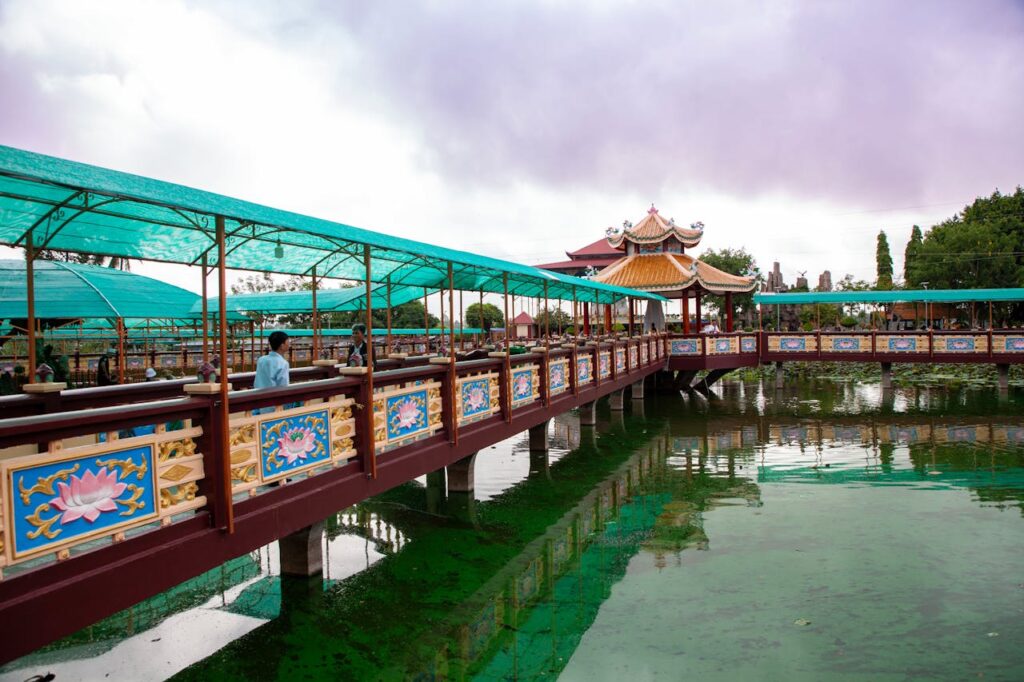
Sam Mountain rises 284 meters above the otherwise flat delta landscape, creating a natural landmark visible for kilometers. The mountain’s slopes host numerous temples, pagodas, and cave shrines that attract Buddhist and Cao Dai pilgrims year-round.
Ba Chua Xu Temple sits at the mountain’s base, dedicated to a deity believed to grant wishes and protect the region. The temple’s annual festival (late April) draws hundreds of thousands of pilgrims who carry the goddess statue in elaborate processions.
Cave pagodas carved into Sam Mountain’s limestone face offer cool respites from delta heat. Tay An Pagoda near the mountain’s base blends Indian, Islamic, and Chinese architectural elements into one of Vietnam’s most unusual religious structures.
Why Visit
Summit views from Sam Mountain reveal the delta’s true scale. On clear days, you can see across rice paddies into Cambodia, watching the sun set over an agricultural landscape that feeds millions.
The mountain’s religious significance provides insights into Vietnamese spirituality. Watching pilgrims climb the steps, some on their knees as acts of devotion, reveals the deep faith that shapes delta culture.
Best Time
Early morning climbs between 5:00 AM and 7:00 AM avoid both crowds and heat. The cooler months from November through February make the ascent most comfortable. Avoid the Ba Chua Xu festival period unless you specifically want to experience the massive pilgrim gatherings.
How to Get There
Chau Doc town in An Giang Province serves as the base for Sam Mountain visits. The mountain sits just 6 kilometers southwest of Chau Doc’s center. Motorbike taxis or bicycle rentals make the short journey manageable, while tour groups often combine Sam Mountain with Tra Su Forest visits.
6. Vinh Trang Pagoda (My Tho)
Highlights
Vinh Trang Pagoda represents one of the delta’s oldest and most ornate Buddhist temples. Built in 1849, the complex spans 2 hectares and showcases an unusual architectural fusion of Vietnamese, Chinese, Cambodian, and French colonial influences.
The entrance gate features porcelain fragments arranged in intricate patterns, a technique borrowed from southern Chinese temple design. Inside, three massive Buddha statues dominate the main hall, each representing different aspects of Buddhist teaching.
Gardens surrounding the main temple structures contain ancient bonsai trees, lotus ponds, and ornamental archways decorated with ceramic mosaics depicting Buddhist stories. The attention to decorative detail extends to every surface, from ceiling beams to floor tiles.
Why Visit
Vinh Trang demonstrates how delta communities synthesized diverse cultural influences into distinctive local expressions. The temple’s eclectic style reflects My Tho’s historical position as a trading hub where Chinese merchants, Khmer communities, and Vietnamese settlers interacted.
The peaceful temple grounds provide welcome tranquility after hectic market visits. Monks often welcome respectful visitors to observe prayer ceremonies, offering glimpses into contemporary Buddhist practice.
Best Time
Late afternoon visits between 3:00 PM and 5:00 PM capture the pagoda bathed in golden light while avoiding peak tour group times. The temple remains open daily, though ceremonies occur most frequently during weekends and Buddhist holidays.
How to Get There
My Tho lies 70 kilometers southwest of Ho Chi Minh City, making it the delta’s most accessible major town. Vinh Trang Pagoda sits just 1 kilometer from My Tho’s center. Most visitors include it as part of day tours that also explore nearby river islands and coconut groves.
7. Phoenix Island (Con Phung)
Highlights
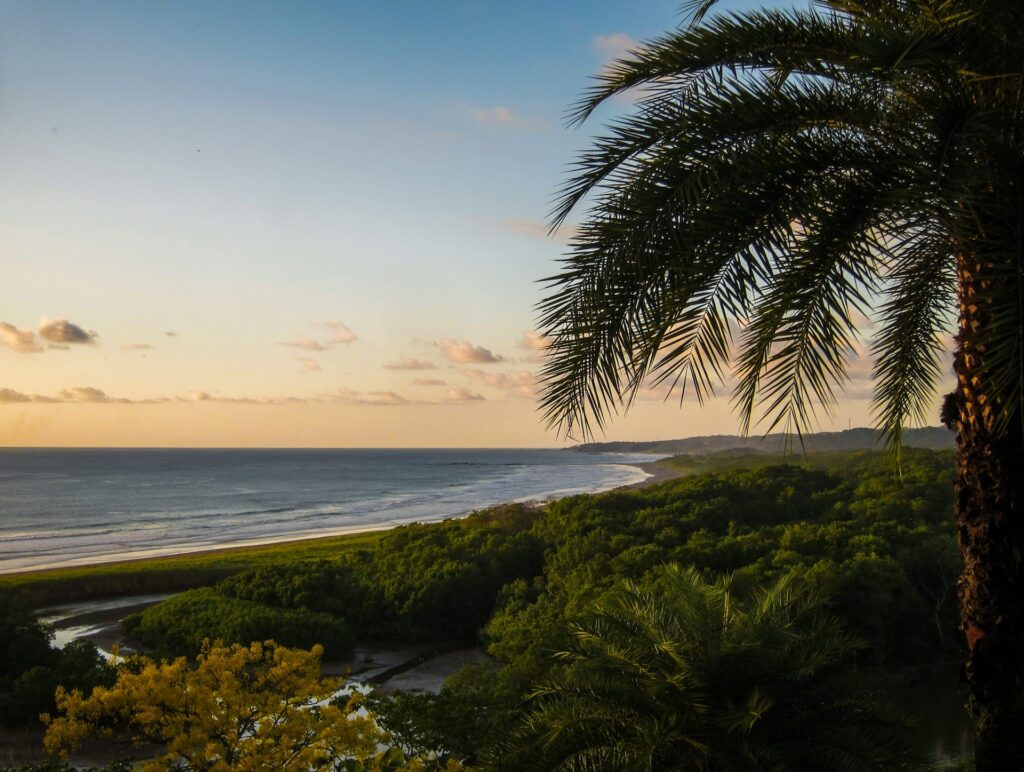
Phoenix Island sits in the Tien River between My Tho and Ben Tre, creating a 120-hectare fruit orchard accessible only by boat. The island earned its name from its shape, which supposedly resembles a phoenix when viewed from above.
Narrow paths wind between longan, rambutan, and mango orchards where families cultivate fruit trees passed down through generations. Small thatched pavilions scattered across the island serve honey tea and fresh fruit to visitors while traditional musicians perform don ca tai tu.
This musical genre, recognized by UNESCO as Intangible Cultural Heritage in 2013, features improvisational melodies played on traditional instruments including the dan tranh (16-string zither) and dan kim (moon-shaped lute).
Why Visit
Phoenix Island preserves traditional delta agriculture and folk arts threatened by modernization. The performances offer authentic cultural experiences rather than shows staged for tourists, as many musicians learned the tradition from older family members.
The short boat crossing from My Tho (roughly 15 minutes) delivers immediate immersion into rural delta life. Walking between fruit trees with the Tien River visible through gaps in the foliage creates a sense of isolation despite the island’s proximity to town.
Best Time
Fruit season from May through August means orchards overflow with ripe produce. However, the island remains visitable year-round, as the cultural performances and river scenery maintain appeal regardless of harvest cycles. Morning visits offer cooler temperatures for walking the paths.
How to Get There
All Phoenix Island visits require boat transport from My Tho’s riverside. Tour operators in My Tho arrange crossings, typically bundling them with visits to other river islands. Independent travelers can negotiate with boat operators at the My Tho pier for private crossings.
8. Tram Chim National Park (Dong Thap)
Highlights
Tram Chim National Park protects 7,588 hectares of seasonally flooded grasslands and melaleuca forests in Dong Thap Province. The park serves as critical habitat for the endangered red-headed crane (Grus antigone), with roughly 1,000 individuals visiting during migration season.
During flood season, water levels rise up to 2 meters, transforming the landscape into vast wetlands. Visitors navigate this aquatic environment aboard flat-bottomed boats that glide through submerged grasslands where purple waterlilies bloom.
The park supports remarkable biodiversity beyond cranes, including painted storks, spot-billed pelicans, and several rare fish species adapted to seasonal flooding patterns that have shaped the delta for millennia.
Why Visit
Tram Chim offers the delta’s best birdwatching opportunities. Early morning visits during crane season (December through May) provide chances to observe these massive birds, which stand over 1 meter tall with striking red caps.
The park demonstrates the delta’s ecological complexity beyond rice paddies. Understanding how seasonal flooding cycles support unique plant and animal communities adds depth to the region’s agricultural landscapes seen elsewhere.
Best Time
December through April brings both migratory cranes and lower water levels that concentrate wildlife. Dawn visits between 6:00 AM and 8:00 AM coincide with peak bird activity. According to park data, February typically offers the highest crane numbers.
How to Get There
Tram Chim lies approximately 45 kilometers northwest of Cao Lanh city in Dong Thap Province. The park sits roughly 180 kilometers from Ho Chi Minh City. Private transportation works best as public buses don’t serve the park directly. Overnight stays in Cao Lanh allow early morning arrivals when wildlife viewing peaks.
9. Tan Lap Floating Village (Long An)
Highlights
Tan Lap Floating Village spreads across wetlands in Long An Province, where residents live in houses built on floating platforms that rise and fall with water levels. Approximately 800 families call this amphibious community home, sustaining themselves through fishing and harvesting lotus plants.
The village occupies a landscape dominated by lotus fields that bloom spectacularly from May through September. Pink and white flowers extend to the horizon, creating scenes that inspired countless Vietnamese poems and paintings celebrating delta beauty.
Traditional ghe boats serve as the primary transportation, taking children to floating schools and transporting harvested lotus stems to markets. The lotus plants provide food (seeds, roots, shoots), materials for tea and medicine, and decorative flowers sold in cities.
Why Visit
Tan Lap offers insights into adaptation strategies that allowed humans to thrive in the delta’s challenging wetland environments. Watching families navigate daily life on floating platforms reveals ingenious solutions to flooding that modern infrastructure often overlooks.
The lotus fields create extraordinary photographic opportunities. Sunrise and sunset light transforms the flowers into luminous displays, while morning mist adds atmospheric depth to wide landscape compositions.
Best Time
Lotus blooming season from May through September showcases the village at its most beautiful. Early morning between 6:00 AM and 8:00 AM captures flowers fully open before heat causes them to partially close. The dry season (January to April) means lower water levels but reduced mosquito populations.
How to Get There
Tan Lap sits in Long An Province, approximately 90 kilometers southwest of Ho Chi Minh City. Visitors typically reach Tan Lap town first, then arrange boat transport into the floating village. Day tours from Ho Chi Minh City have become increasingly common, though overnight homestays with village families provide deeper cultural immersion.
10. Ha Tien & Its Coastal Limestone Landscapes
Highlights
Ha Tien occupies Vietnam’s southwestern corner where the delta meets the Gulf of Thailand. Unlike the flat riverine landscapes dominating most of the delta, Ha Tien features dramatic limestone karsts similar to those found in Ha Long Bay in northern Vietnam.
The town serves as a gateway to nearby beaches and the Cambodian border. Thach Dong Cave Temple complex carved into limestone cliffs contains Buddhist and Taoist shrines alongside natural caverns with stalactites and stalagmites.
Mac Cuu family tombs on Nui Lang (East Mountain) showcase elaborate Chinese-style burial architecture built in the 17th and 18th centuries. The tombs overlook Ha Tien town and the surrounding karst landscape, creating dramatic viewpoints especially at sunset.
Why Visit
Ha Tien provides geological and cultural diversity absent elsewhere in the delta. The limestone formations, caves, and beaches create landscapes more typical of central Vietnam, offering relief from the endless flatness of rice paddies and canals.
The town’s proximity to Cambodia makes it a natural stopping point for overland border crossings. The Cambodian influence remains visible in local cuisine, architecture, and the significant Khmer population living in surrounding areas.
Best Time
November through March brings dry weather ideal for beach visits and cave exploration. The town remains pleasantly uncrowded compared to Vietnam’s more famous coastal destinations, making it particularly attractive for travelers seeking quieter alternatives during peak season.
How to Get There
Ha Tien sits approximately 95 kilometers west of Rach Gia and 340 kilometers from Ho Chi Minh City. Buses connect Ha Tien with major delta cities and Ho Chi Minh City, though the journey requires most of a day. The town serves as a jumping-off point for Phu Quoc Island, with ferries making the crossing to Vietnam’s largest island.
Cultural Context: Understanding Mekong Delta Life
Food culture in the Mekong Delta revolves around water. Hu tieu, a noodle soup originating from Chinese and Cambodian influences, appears at breakfast tables across the region. Vendors prepare individual bowls using pork broth, rice noodles, and protein ranging from pork slices to squid.
Fresh river fish dominates delta cuisine. Grilled ca loc (snakehead fish) wrapped in rice paper with herbs and vermicelli represents classic delta eating. Ca kho to (caramelized fish in clay pot) showcases how cooks transform abundant catches into intensely flavored dishes using fish sauce, coconut water, and palm sugar.
Coconut candy production, particularly concentrated around Ben Tre, creates an entire cottage industry. Families boil coconut milk with sugar for hours until it reaches the proper consistency, then cut and wrap individual pieces. The chewy candy appears at every tourist stop, though visiting workshops reveals the labor-intensive production process.
Life on waterways shapes everything from architecture to social interactions. Houses built on stilts accommodate seasonal flooding that can raise water levels by several meters. Extended families often live in compounds connected by narrow bridges, creating riverside neighborhoods where boats replace cars.
Markets function as social hubs where gossip spreads as quickly as produce changes hands. Early morning gatherings at floating markets serve multiple purposes beyond commerce, allowing isolated farming families to maintain social connections and share information about water levels, weather patterns, and family news.
Khmer influences become increasingly visible near An Giang Province and the Cambodian border. Khmer Buddhists maintain distinct temple styles featuring bright colors and more elaborate ornamentation than Vietnamese pagodas. The Khmer language, script, and cultural practices remain alive in communities that predate Vietnamese migration into the delta.
According to Vietnam’s General Statistics Office, the Mekong Delta accounts for more than half of Vietnam’s rice production and 90% of its rice exports, highlighting the region’s continuing importance to national food security despite rapid urbanization elsewhere in the country.
Conclusion: Your Mekong Delta Journey
These top 10 attractions in the Mekong Delta span the region’s geographic and cultural diversity, from Can Tho’s bustling floating markets to Ha Tien’s quiet limestone coast. Together, they reveal how water shapes every aspect of delta life, creating landscapes and communities unlike anywhere else in Vietnam.
The experiences outlined here move beyond surface-level tourism into genuine encounters with delta rhythms. Early morning boat rides to Cai Rang market, quiet paddles through Tra Su’s flooded forests, and conversations with Sa Dec’s flower farmers create memories rooted in the region’s authentic daily life rather than performances staged for visitors.
Whether you’re drawn to the delta for its agricultural landscapes, cultural heritage, or simply the appeal of traveling slowly through regions where water dictates the pace of life, these destinations provide comprehensive access to what makes the Mekong Delta essential to understanding modern Vietnam. Similar to the diversity found when exploring Vietnam’s top destinations, the delta rewards travelers who venture beyond single-day tours into deeper regional exploration.
FAQ: Planning Your Mekong Delta Visit
What is the best month to visit the Mekong Delta?
December through February offers the most comfortable weather with lower humidity and minimal rainfall. Water levels remain high enough for easy boat access without the challenging flood conditions of the wet season. However, different attractions peak at different times (lotus blooms in Tan Lap during May to September, bird migrations at Tram Chim from December to May), so timing depends partly on which experiences you prioritize.
Where should I stay when exploring the Mekong Delta?
Can Tho serves as the most practical base for first-time delta visitors, offering the widest range of accommodation from budget guesthouses to upscale hotels. Its central location provides access to Cai Rang market and makes it a good launching point for trips to Ben Tre, Tra Su, and other attractions. For more extensive exploration, consider staying in multiple locations (Can Tho, Chau Doc, and My Tho) to reduce daily travel distances.
Is the Mekong Delta safe for solo travelers?
Yes, the Mekong Delta ranks among Vietnam’s safest regions for solo travelers. Violent crime remains extremely rare, and locals generally welcome foreign visitors warmly. Solo travelers should observe standard precautions like avoiding very late-night walking in unfamiliar areas and watching belongings in crowded markets. Women traveling alone report few problems beyond occasional curiosity from locals unaccustomed to seeing solo female travelers. The region’s laid-back atmosphere and community-oriented culture create environments where solo travelers often feel more comfortable than in larger Vietnamese cities like Ho Chi Minh City or Hanoi.
How many days do you need to explore the region?
Three to five days allows coverage of the delta’s major highlights without feeling rushed. A three-day itinerary might include Can Tho and the floating market, a day in Ben Tre’s coconut groves, and Sa Dec flower village. Five days permits adding Chau Doc with Sam Mountain and Tra Su Forest, plus time for slower travel that better matches the delta’s natural pace. Travelers with more time can extend to a week, adding destinations like Ha Tien, Tram Chim National Park, or extended homestays in rural communities.
Are floating markets still active?
Yes, though they’ve changed. Cai Rang Floating Market continues to function as an authentic wholesale trading venue, operating daily with peak activity between 5:00 AM and 9:00 AM. Smaller floating markets have declined as road improvements made land-based transport more efficient. Tourist-oriented floating markets near My Tho cater primarily to day-trippers rather than serving as actual trading venues. For genuine floating market experiences rather than staged performances, visit Cai Rang early and avoid any market advertised primarily as a tourist attraction.