Last updated: October 2026
Rome’s food is built on a short list of humble ingredients: pecorino, guanciale, eggs, black pepper, artichokes and offal, treated with enormous respect. If you are wondering what to eat in Rome, the answer is a handful of dishes that Romans have cooked for generations and still argue about over lunch.
If you only have time for a few bites, eat a plate of carbonara or cacio e pepe, a fried supplì and a maritozzo for breakfast. That trio covers the city’s pasta, street food and pastry traditions in one day. Everything else on this list is worth adding if you have more time.
This guide covers ten Roman foods, what makes each one special, and where people usually go to find them. After the list you will find a short glossary, advice on booking and tipping, a plan for one, two or three days, where to stay and how much to budget. For general trip planning, the city’s official tourism website and the national Italia tourism site are good places to start. Restaurant details change often, so check opening days and booking rules before you go. Anything this guide could not confirm is marked “check before you go”.
Quick answer: What are the best foods to try in Rome? Start with the four Roman pastas: carbonara, cacio e pepe, amatriciana and gricia. Add supplì, fried artichokes, saltimbocca and pizza bianca for the classics, and finish with a maritozzo. Coda alla vaccinara is the one for adventurous eaters.
Quick comparison: best foods to try in Rome
| Food | Type | Best for | Price tier |
|---|---|---|---|
| Carbonara | Pasta | The dish everyone asks about | Mid-range |
| Cacio e pepe | Pasta | Simple cheese and pepper | Mid-range |
| Amatriciana | Pasta | Tomato and cured pork | Mid-range |
| Pasta alla gricia | Pasta | The ancestor of the others | Mid-range |
| Carciofi alla giudia | Starter | Crisp fried artichokes | Mid-range |
| Supplì | Street food | A fried rice snack | Cheap |
| Saltimbocca alla romana | Main | Veal, ham and sage | Comfortable |
| Coda alla vaccinara | Main | A slow-cooked oxtail stew | Comfortable |
| Pizza bianca and pizza al taglio | Street food | A quick, cheap lunch | Cheap |
| Maritozzo | Pastry | Breakfast with cream | Cheap |
1. Carbonara
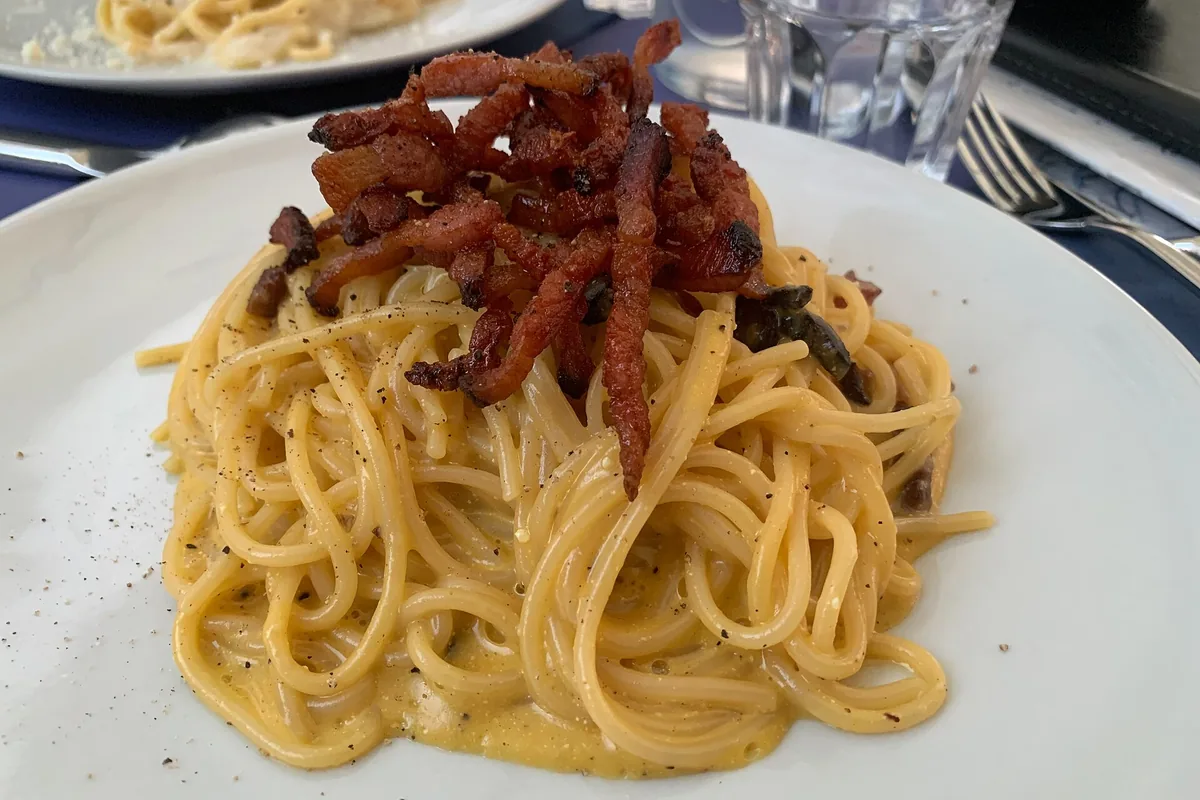
Carbonara is the dish most visitors come to Rome for, and the Roman version is made with just a few ingredients. The classic recipe uses eggs, hard pecorino cheese, black pepper, pasta and guanciale, which is cured pork cheek. There is no cream. The sauce is created off the heat by mixing the egg and cheese with a splash of the pasta water, so that it clings to the pasta without scrambling.
Origins are disputed, and food historians do not agree on who first made it. What matters at the table is the balance: a glossy, peppery sauce, crisp edges of guanciale and pasta cooked to the right bite. Rigatoni and spaghetti are the usual shapes.
Guides to the city often name SantoPalato near Porta Metronia, Trecca near Garbatella and Armando al Pantheon as places to try a careful version, and Armando has been run by the same family since the 1960s. Booking policies change, so check before you go. If a menu offers carbonara with cream or peas, walk on.
Order it as a first course (primo), and share a starter if you want to try more dishes. A portion is usually generous.
Carbonara also shows how seriously Romans take technique. Many cooks mix the egg and cheese in a bowl with pepper first, then add the hot pasta and a spoonful of cooking water, stirring quickly so the heat cooks the sauce gently. If the plate arrives dry or with scrambled egg, the kitchen has rushed it. A good version leaves a little sauce at the bottom of the bowl, which is exactly what the bread basket is for.
- How to get there: Most good carbonara is in Trastevere, Testaccio, Garbatella or near the Pantheon, all reachable by tram, bus or metro plus a short walk.
- How long to spend: One to one and a half hours for a relaxed meal.
- Best time to go: Lunch, when kitchens are at their sharpest and tables are easier to get.
- Tip: Check the menu for guanciale rather than pancetta or bacon, which is a sign of a traditional kitchen.
2. Cacio e pepe
Cacio e pepe is the simplest great pasta in Rome, made from only pecorino romano, black pepper and pasta water. The name means “cheese and pepper”. Shepherds are said to have carried the dry ingredients on long journeys, and the dish remains a staple of Roman trattorias.
The trick is the emulsion. The cook toasts the pepper, adds pasta water and then stirs in the finely grated cheese until it turns into a silky sauce. Done badly, it clumps. Done well, it coats every strand of tonnarello, the thick square-cut spaghetti traditionally used.
Testaccio is the neighbourhood most often associated with it, and guides frequently mention Flavio al Velavevodetto and Felice a Testaccio. At Felice, the pasta is mixed with the sauce at the table, which is part of the show. Roma Sparita in Trastevere serves a famous version in an edible cheese basket. Check current booking rules and hours for each.
It is a pasta for people who love bold, salty flavour. If you find carbonara too rich, this is the lighter, sharper choice.
Pecorino romano is salty, so the dish needs almost no extra seasoning, and a good cook will add pepper in generous amounts but keep the salt in the pasta water low. If you like heat, you will enjoy it. If you find black pepper sharp, ask whether the pepper is lightly toasted, as this softens it. The dish also pairs well with a crisp white wine from the Lazio hills, which cuts through the richness of the cheese.
- How to get there: Metro line B to Piramide for Testaccio, or tram 8 to Trastevere.
- How long to spend: One to one and a half hours.
- Best time to go: Lunch, which is often quieter than dinner.
- Tip: Eat it immediately. The sauce thickens as it cools.
3. Amatriciana
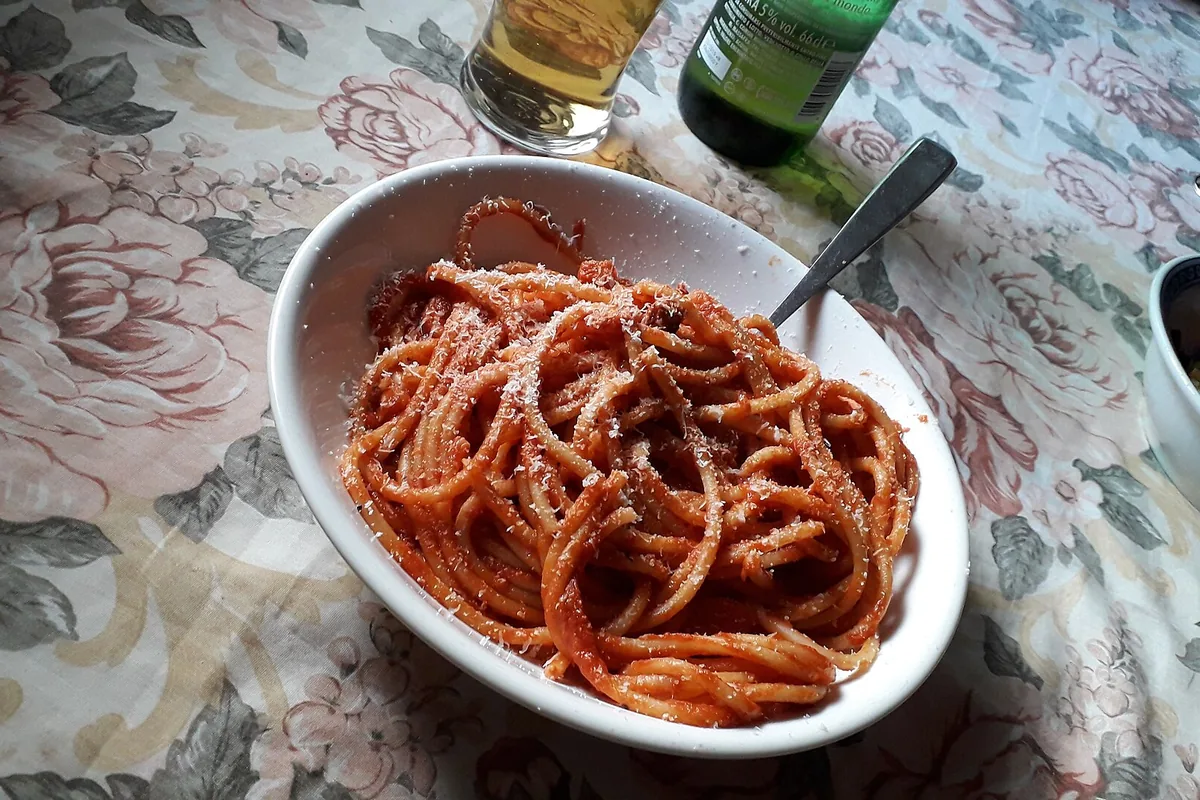
Amatriciana is the tomato-based member of the Roman pasta family, built on guanciale, pecorino and a simple sauce. It takes its name from the town of Amatrice in the hills north-east of Rome, and many Romans treat it as their own. The sauce is made by rendering guanciale slowly, adding tomato, and finishing with pecorino and a little chilli.
You will meet it with bucatini, the long hollow pasta that is notoriously good at flicking sauce onto your shirt, or with rigatoni. A good plate is rich and slightly spicy, with enough fat from the pork to carry the sweetness of the tomato.
Guides to the city often mention Matricianella near the Spanish Steps and La Matriciana near Termini as traditional spots, and Trattoria Al Moro near the Trevi Fountain also appears in recommendations. Details can change, so check before you go. Because several of the best places are close to the major sights, this is an easy dish to fit into a sightseeing day.
If you only try one tomato pasta in Rome, make it this one. It shows how the same ingredients behave differently from carbonara.
Because it contains tomato, amatriciana is a good bridge for visitors who find the egg-based pastas too heavy. The sauce should be thick enough to coat the pasta rather than pool at the bottom. Debates about whether to add onion or garlic never end, and traditionalists say neither belongs. Whatever the version, the guanciale should be browned rather than boiled, so that the sauce has a savoury, almost smoky depth.
- How to get there: Walk from the Spanish Steps or Trevi Fountain, or take the metro to Termini or Barberini.
- How long to spend: One hour.
- Best time to go: Lunch, after a morning at the sights.
- Tip: Wear a dark top if you order bucatini.
4. Pasta alla gricia
Pasta alla gricia is the dish that connects the others, and many Romans call it carbonara without the egg or amatriciana without the tomato. It uses only guanciale, pecorino, black pepper and pasta, usually rigatoni or spaghetti. Its roots are linked to shepherds and the hills of Lazio, but the details of its history are not firmly documented.
The flavour is deceptively intense. The pork fat melts into the pasta water, the pecorino binds it and the pepper adds heat. There is nothing to hide behind, so the quality of the guanciale and the cooking of the pasta matter even more.
Gricia appears on the menus of many traditional Roman trattorias, often alongside the other three pastas. It is the sort of dish a waiter will suggest if you say you want to eat like a local. Because it is less famous with visitors, it is a good way to taste something different from the standard tourist order.
If you want to compare the family, order a half portion of two pastas to share. Many Roman restaurants are happy for you to do this, but ask first, as policies vary.
The name is often linked to the town of Grisciano, near Amatrice, although the origin is debated and not firmly documented. That does not stop it being a favourite among Roman cooks, who see it as the base recipe. Once you have eaten gricia, carbonara and amatriciana make more sense, because each is a small variation on the same idea. It is also a good test of a kitchen, as nothing hides a mistake.
- How to get there: Look for it in Testaccio, Trastevere, Monti or the Prati district, all served by metro, tram or bus.
- How long to spend: One hour.
- Best time to go: Lunch or an early dinner.
- Tip: Ask which pasta shape they recommend with it, as the answer tells you a lot about the kitchen.
5. Carciofi alla giudia
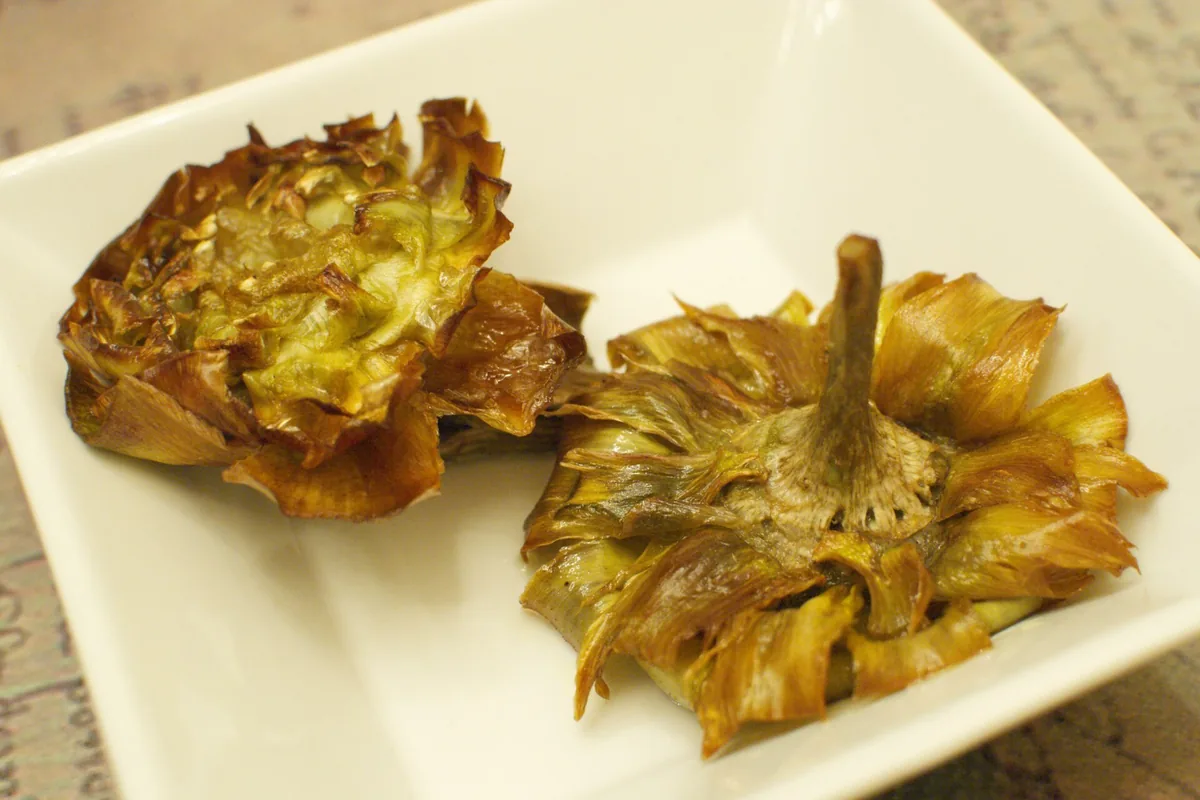
Carciofi alla giudia, or Jewish-style artichokes, are the crispiest, most dramatic starter in Rome. The dish comes from the city’s Jewish community and is closely associated with the old Ghetto area. A whole artichoke is flattened, fried until the outer leaves are golden and brittle, and served with a pinch of salt.
You eat the leaves with your fingers, starting from the outside, until you reach the tender heart. The texture is a mix of crunch and creaminess, and the flavour is nutty. They are at their best in spring, when Roman artichokes are in season, though some restaurants serve them for longer.
There is also carciofi alla romana, in which the artichoke is braised with mint and garlic. It is gentler and worth trying if you want to compare the two styles. Both appear in the Ghetto restaurants.
Guides often recommend Nonna Betta and Ba’Ghetto in the Jewish Ghetto, and Nannarella in Trastevere is also praised for its artichokes. Check opening days before you go, as kosher restaurants such as Ba’Ghetto close for the Sabbath, from Friday evening. Treat this as a starter to share, since the dish is rich.
The preparation takes skill. The cook trims the artichoke, beats it against the work surface to open the leaves, and fries it twice, first at a lower heat to cook the heart and then hotter to crisp the leaves. The variety matters too: the round, thornless romanesco artichoke is the one traditionally used in Lazio. When it is out of season, restaurants may use other types, and the dish can taste less delicate.
- How to get there: Walk from Largo di Torre Argentina, or take tram 8 to the Ghetto area.
- How long to spend: Forty-five minutes to an hour.
- Best time to go: Spring, when artichokes are in season.
- Tip: Eat them while hot, when the leaves are crispest.
6. Supplì
Supplì are Rome’s favourite fried snack: oval balls of rice, tomato sauce and mozzarella, coated in breadcrumbs and deep-fried. The name is usually traced to the French “surprise”, a nod to the string of melted mozzarella that stretches when you bite one open. Romans call this the “supplì al telefono”, because the cheese resembles a telephone cord.
The classic filling is rice in a meaty tomato sauce with a cube of mozzarella. Variations include cacio e pepe, carbonara or amatriciana flavours. The outside should be crisp and the inside soft and savoury, so eat it hot.
The easiest place to try one is a friggitoria, a small fried-food shop. Trapizzino, which was started in Testaccio and now has more than one branch, is often mentioned for its supplì, and some versions are made at pizza al taglio shops such as Bonci. Supplizio is known for a more refined take. Check the current locations and hours before you go.
Supplì are a snack, not a meal, so they make a good light bite between sights. Pair one with a cold drink.
If you want to see how supplì are made, look for a counter where they are fried to order. The sound and smell of the fryer is often the best advertisement. Prices are low enough to try two flavours, so ask for one classic and one seasonal special. The leftovers of a pasta dish, turned into a crumb-coated snack, are a good example of how Roman cooking wastes little and makes simple things taste good.
- How to get there: Friggitorie are across the city, with several in Trastevere, Testaccio and near the Pantheon.
- How long to spend: Ten minutes.
- Best time to go: Mid-morning or late afternoon as a snack.
- Tip: Let it cool for a minute, as the cheese inside is very hot.
7. Saltimbocca alla romana
Saltimbocca alla romana is a quick, elegant main of veal, prosciutto and sage cooked in white wine and butter. The name means “jumps in the mouth”, a nod to how good it tastes. Thin veal slices are topped with a sage leaf and a slice of prosciutto, secured with a toothpick and sautéed briefly.
Its history is old, although recorded recipes appear only in the nineteenth century. The sauce is simple: white wine and butter reduced in the pan. Done well, the veal stays tender, the prosciutto adds salt and the sage gives a fragrant lift.
It is on the menu of most traditional Roman restaurants, so you do not need to hunt. It is a comforting dish after a day of sightseeing, and it works well with a side of sautéed greens such as cicoria, a bitter chicory that Romans love.
Because it is a meat course, it is typically ordered after a pasta. Many menus allow you to order a primo and a secondo, but it is also fine to order just the main if you are not very hungry. Prices tend to rise in tourist areas, so look at the menu before you sit down.
A good plate is judged by the sauce. It should be glossy, lightly buttery and slightly sharp from the wine, with the sage still green and fragrant. Overcooked veal turns dry and tough, so the dish must be made to order and served straight away. If a restaurant serves it with a heavy cream sauce or thick breadcrumbs, it has strayed from the Roman tradition. A plain side of potatoes or bitter greens makes a classic pairing.
- How to get there: Available throughout the centre. Many trattorias are a short walk from the Pantheon or Piazza Navona.
- How long to spend: One to one and a half hours.
- Best time to go: Dinner, when the full menu is on.
- Tip: Ask for chicory or spinach on the side to balance the richness.
8. Coda alla vaccinara
Coda alla vaccinara is Rome’s great slow-cooked stew, made from oxtail braised in tomato, celery and wine. The name refers to the “vaccinari”, the men who slaughtered and skinned cattle in old Rome, who are said to have been paid partly in offal and less valued cuts. Cooks turned these into dishes of real depth.
The meat is cooked for hours until it falls from the bone, and the sauce becomes thick and glossy. Some traditional recipes add a hint of sweetness, such as raisins, pine nuts or a little dark chocolate, to balance the richness. The result is deep, savoury and warming, and it is best in cooler months.
It belongs to the “quinto quarto”, the “fifth quarter” tradition of Roman cooking, which also includes tripe, sweetbreads and pajata. If oxtail is too bold for you, the same tradition gives milder dishes, such as trippa alla romana with mint and tomato.
Testaccio, the old slaughterhouse district, is the natural home of this cooking, and its trattorias are a good place to start. Check current menus, as some places serve it only on certain days. Order bread to mop up the sauce.
The cooking takes patience, usually several hours over low heat, and the flavour improves if the stew is left to rest. Celery is a defining ingredient, and the bright note of the vegetable cuts through the rich meat. Many Romans see it as a Sunday dish, meant to be shared and followed by a nap. If you are curious but cautious, share a portion and add a lighter pasta to start.
- How to get there: Metro line B to Piramide, then a short walk into Testaccio.
- How long to spend: One and a half hours.
- Best time to go: Autumn or winter evenings.
- Tip: Eat it with a spoon and bread, and do not worry about neat manners.
9. Pizza bianca and pizza al taglio
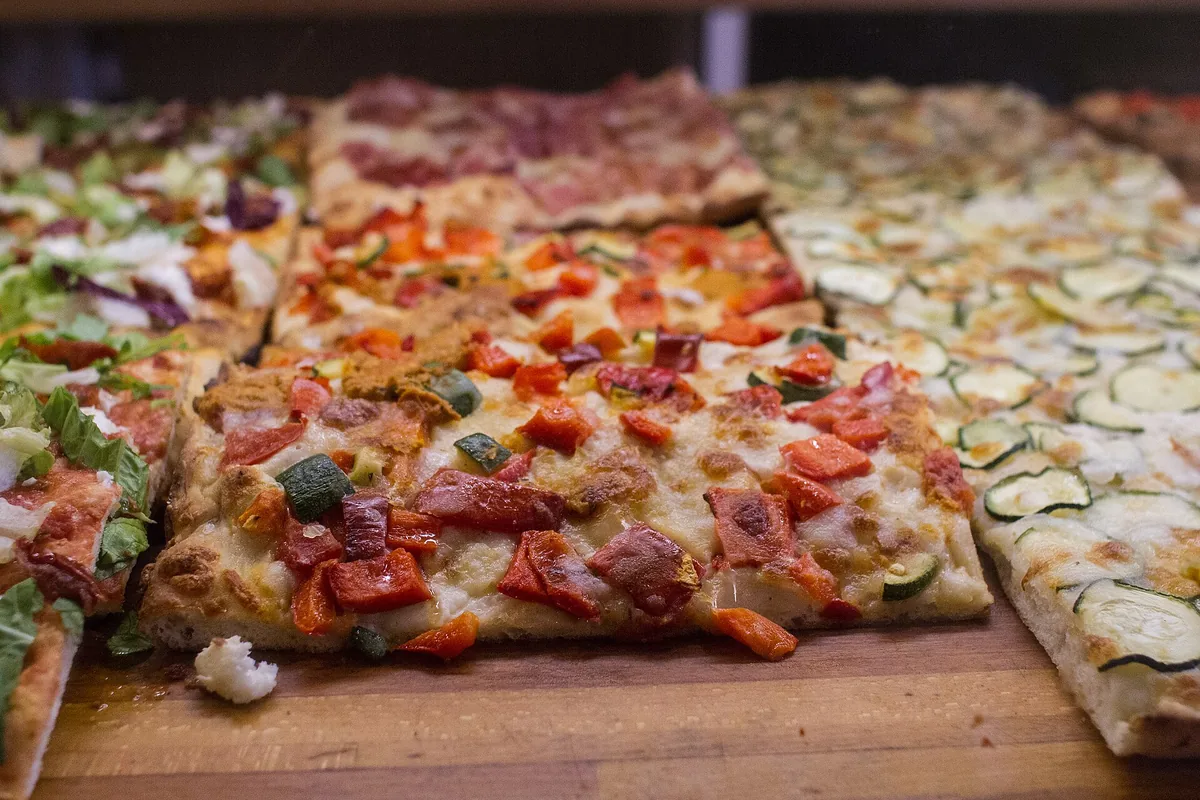
Pizza bianca and pizza al taglio are Rome’s cheap, filling street foods, sold by weight and eaten standing up. Pizza bianca is a flat, chewy bread drizzled with olive oil and salt, similar to focaccia but thinner. Romans split it and fill it with mortadella, or simply eat it plain with a coffee. Pizza al taglio, or pizza by the slice, comes in rectangular trays with toppings from classic tomato to potato and rosemary.
Roman pizza is different from Neapolitan pizza. Roman pizza al taglio has a lighter, crisper base and is cut with scissors, weighed and sold by the piece. You point at what you want and say how big a piece.
Antico Forno Roscioli is often mentioned for pizza bianca, and Bonci Pizzarium is well known for creative pizza al taglio toppings. Mercato Testaccio has stalls such as Casa Manco, and the market is a good place to browse local food. Check hours, as bakeries and markets keep morning-heavy schedules.
This is the best food on the list for a budget, a fast lunch or a picnic. Buy a few slices of different kinds and share them.
Pizza bianca is best eaten fresh from the oven, when the crust is crisp and the inside soft. Romans often buy it for breakfast or a mid-morning snack, and some bakeries sell out by lunchtime. Pizza al taglio is usually baked in large trays, and the toppings change with the season. Look for places with a high turnover, because the trays are replaced often and the pizza stays fresh. Eating it on the go is part of the experience.
- How to get there: Bakeries are across the city. For Mercato Testaccio, take metro line B to Piramide.
- How long to spend: Fifteen to thirty minutes.
- Best time to go: Late morning, when trays are freshest.
- Tip: Ask for a small piece of several kinds rather than one big slice.
10. Maritozzo
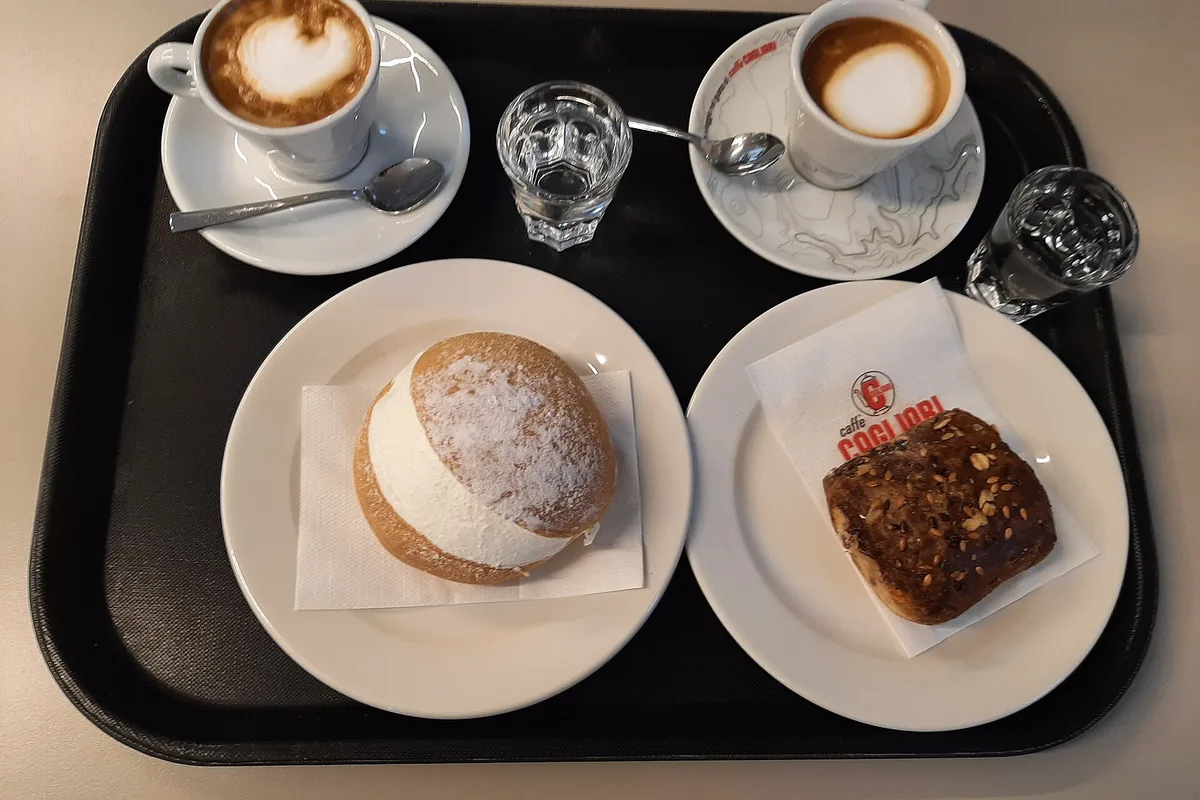
The maritozzo is Rome’s traditional breakfast pastry: a soft, lightly sweet bun split open and filled with whipped cream. It is eaten in the morning with a cappuccino, and the name is usually linked to “marito”, the Italian word for husband, linked to an old tradition of giving the buns as a love token.
The bun is slightly sweet and often scented with orange peel or raisins. The cream is fresh and lightly sweetened. Some bakeries sell flavours with chocolate, pistachio or jam, and others make savoury versions.
Guides often name Pasticceria Regoli, in the Esquilino district, as an old-school bakery for maritozzi, and it is worth checking whether it is open on the day you go. You can also find them at many city bars. Eat it fresh, because the cream does not keep well.
It is a rich start to the day, so pair it with a strong espresso and plan a walk afterwards. If you prefer something lighter, ask for a plain cornetto instead.
Maritozzi are traditionally linked to Lent and spring, when they were given as small gifts. Today they are eaten all year, and the cream filling can be generous. Some bakeries offer a smaller version, which is easier to finish. Locals often eat one at the counter standing up, with a cappuccino, and it is not unusual to see office workers doing exactly that before work. It is sweet, soft and a little messy, and well worth the calories.
- How to get there: Pasticcerie and bars are across the city. Regoli is a short walk from Termini or Vittorio Emanuele metro.
- How long to spend: Twenty minutes.
- Best time to go: Morning, when the buns are freshest.
- Tip: Eat it at the counter with your coffee, as locals do.
Roman food terms to know
A few words make menus much easier to read.
- Primo, secondo and contorno: The pasta course, the main course and the side dish. You do not have to order all three.
- Guanciale: Cured pork cheek, used in carbonara, amatriciana and gricia.
- Pecorino romano: A hard, salty sheep’s cheese used in most Roman pastas.
- Quinto quarto: The “fifth quarter”, the Roman tradition of cooking offal and cheaper cuts.
- Al taglio: Sold by the slice or by weight.
- Coperto: A small cover charge that many restaurants add per person.
- Gelato: Italian ice cream, best from a gelateria that stores it in covered tubs. Giolitti, a family business that began as a dairy in 1890, is a famous old name near the Pantheon.
Booking, tipping and eating times in Rome
Romans eat lunch from around midday to mid-afternoon and dinner from around eight in the evening. Many traditional restaurants close between lunch and dinner, and some close one day a week, often Sunday or Monday. Book dinner at popular trattorias, especially at weekends, and check whether a place takes lunch reservations at all, as some do not.
A coperto is normal and is not a tip. Service is sometimes added to the bill, so read it before adding more. Tipping is appreciated but not expected, and rounding up or leaving a few coins is fine. Menus should show the cover charge, so check before you order.
Be wary of restaurants with photo menus and staff calling to people in the street near the busiest sights. Walk a few minutes away and prices and quality usually improve.
Suggested food plans for 1, 2 or 3 days
One day: Start with a maritozzo and cappuccino near your hotel. Have pizza bianca or a supplì for a snack. Eat carbonara or cacio e pepe at lunch in Testaccio or Trastevere, and finish with saltimbocca for dinner near the Pantheon.
Two days: On day two, add amatriciana at lunch near the Spanish Steps, carciofi alla giudia in the Jewish Ghetto and a gelato walk through the centre in the evening.
Three days: Spend day three in Testaccio. Visit Mercato Testaccio in the morning, try gricia at lunch and coda alla vaccinara for dinner in one of the area’s old trattorias. Leave time for an afternoon coffee at a bar counter, as Romans do.
Where to stay for food lovers
Trastevere is lively and full of trattorias, though it is busy in the evening. Testaccio is quieter, with a local feel and Rome’s best-known food market. Monti is central and has good restaurants and wine bars. The area near the Pantheon puts you next to historic eateries and cafes but is more expensive and touristy. Near Termini is practical for trains, with fewer food highlights on the doorstep but easy metro links.
Getting around
Central Rome is walkable, and most of the foods on this list can be reached on foot from each other. The metro is limited, but lines A and B reach many useful areas, including Termini, the Spanish Steps and Testaccio. Buses and trams fill the gaps, and tram 8 connects Trastevere with the centre, although track works sometimes replace trams with buses. Check current ticket options on the ATAC website, Rome’s public transport operator, and validate your ticket as instructed. Taxis are available, but traffic can be slow, so walking is often quicker.
Budget guidance
Cheap eats: Pizza al taglio, supplì, pizza bianca, a maritozzo and a coffee at the bar can be done on a very small budget.
Mid-range: A trattoria meal with a pasta and a shared starter, plus house wine, is the classic mid-range choice.
Special occasion: A longer dinner with a pasta, a main course such as saltimbocca or coda alla vaccinara, dessert and wine in a well-reviewed restaurant. Prices rise near the biggest sights, so check menus first.
Frequently Asked Questions
What is the most famous food in Rome?
Carbonara is the best-known dish, followed closely by cacio e pepe, amatriciana and gricia. Together they make up the four classic Roman pastas.
What should I eat for breakfast in Rome?
Most Romans have a coffee and a pastry at the bar. A maritozzo with cream, a cornetto or a slice of pizza bianca are all typical choices.
Is it rude to ask for cream in carbonara?
Cream is not part of the traditional recipe, and many Roman cooks consider it wrong. Ask for the traditional version and you will get a sauce made from egg and pecorino.
Is Roman street food safe and cheap?
Yes. Pizza al taglio, supplì and pizza bianca are popular with locals and are among the cheapest ways to eat in the centre. Choose busy shops with a high turnover.
Do I need to book restaurants in Rome?
For popular trattorias, especially at dinner and on weekends, booking is wise. Some places do not take lunch reservations, so check each venue’s policy.
What is the best time of year to eat in Rome?
Spring is ideal for artichokes, and autumn and winter suit heavier dishes like coda alla vaccinara. Pasta and street food are good all year.
Discover More of Rome and Italy
Pair your meals with a night out using our guide to the best bars in Rome for wine, cocktails and aperitivo, or end the day with a view from Rome’s best rooftop bars. Between meals, walk off the pasta with our guide to Rome’s hidden gems away from the crowds. If you are heading north by train, see where to eat in Florence, from trattorias to the Mercato Centrale, and compare Rome’s four pastas with Tuscan pici and pappardelle in our guide to the best places for pasta in Florence.
Featured image: Photo by Jordiferrer, CC BY-SA 4.0, cropped, via Wikimedia Commons