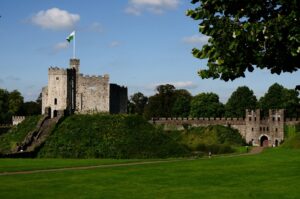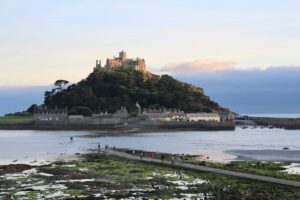
The United Kingdom is home to over 1,500 castles, each telling stories of royal intrigue, medieval warfare, and centuries of history. From working royal residences to dramatic cliff-top ruins, these ancient fortresses offer travelers an unparalleled glimpse into Britain’s past.
Whether you’re exploring the historic landmarks of London, venturing into Scotland’s vibrant cities, or discovering the hidden gems scattered across the UK, these castles represent the pinnacle of British heritage.
This guide covers the top 10 castles to visit in the UK, complete with practical travel details, historical context, and insider tips to help you plan your perfect castle-hopping adventure.
TL;DR: Quick Overview
Best for Royal History: Windsor Castle (working royal residence)
Best in Scotland: Edinburgh Castle (iconic fortress on volcanic rock)
Most Photogenic: Eilean Donan Castle (perfect Highland setting)
Best for Families: Warwick Castle (interactive exhibits and shows)
Most Dramatic Ruins: Dunluce Castle (perched on coastal cliffs)
Best Medieval Fortress: Caernarfon Castle (UNESCO-listed Edward I stronghold)
Best Historical Significance: Tower of London (Crown Jewels and 1,000 years of history)
Most Imposing: Dover Castle (commanding Channel views)
Most Romantic: Bamburgh Castle (stunning Northumberland coastline)
Best Welsh Castle: Conwy Castle (perfectly preserved medieval town walls)
1. Windsor Castle
Highlights
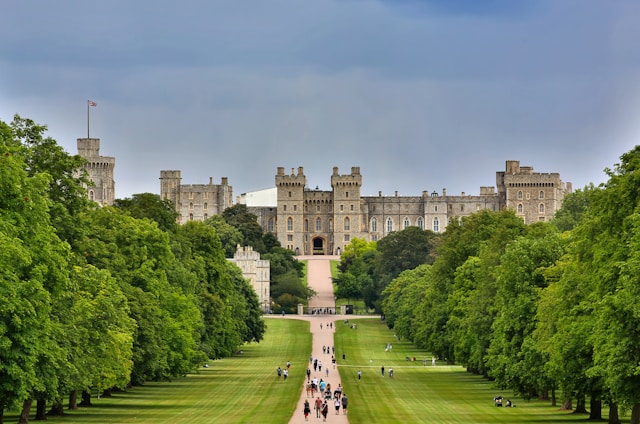
Windsor Castle holds the distinction of being the oldest and largest occupied castle in the world, according to Guinness World Records. Built by William the Conqueror in the 11th century, this working royal residence has been home to 40 monarchs over nearly 1,000 years.
The State Apartments showcase priceless artworks by Rembrandt, Rubens, and Canaletto. St George’s Chapel, a masterpiece of Gothic architecture, serves as the final resting place for ten monarchs, including Henry VIII and Queen Elizabeth II.
The Changing of the Guard ceremony draws crowds year-round, offering a glimpse into royal pageantry that has remained largely unchanged for centuries.
Why Visit
Windsor Castle is not a museum. It’s a living, breathing royal residence where King Charles III regularly stays and conducts official duties. Walking through rooms where monarchs have lived, worked, and entertained world leaders for nearly a millennium creates an incomparable connection to British history.
The castle’s architecture spans nearly every period of English building, from Norman fortifications to Victorian Gothic Revival. The semi-state rooms, open during specific periods, reveal how the royal family actually lives when in residence.
Best Time to Visit
Weekday mornings between April and May or September offer the best experience. Summer brings overwhelming crowds, with visitor numbers exceeding 1.5 million annually according to Royal Collection Trust data.
Arrive at opening (10:00 AM) to beat tour groups. The Changing of the Guard occurs on Tuesdays, Thursdays, and Saturdays at 11:00 AM, weather permitting.
How to Get There
Direct trains depart from London Paddington and Waterloo stations every 30 minutes, reaching Windsor & Eton Central or Windsor & Eton Riverside in approximately 35-50 minutes.
By car, the castle sits just off the M4 motorway, 25 miles west of central London. However, parking in Windsor town centre is limited and expensive.
Entry & Practical Info
Standard admission: £28.50 for adults (2026 pricing)
Family tickets available for significant savings
Tickets include access to State Apartments, St George’s Chapel, and grounds. Allow 2.5 to 3 hours for a thorough visit. Book online in advance for guaranteed entry and modest discounts.
The castle closes for royal events, so check the official website before traveling. Photography is prohibited inside the State Apartments.
2. Tower of London
Highlights
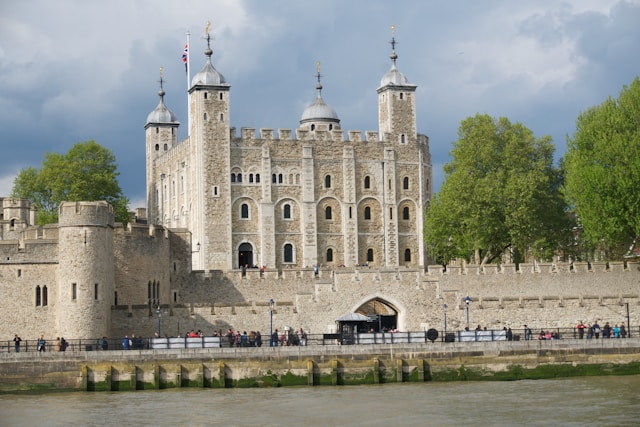
The Tower of London has served as royal palace, fortress, prison, and execution site over its 950-year history. Today, it houses the Crown Jewels, including the Imperial State Crown containing 2,868 diamonds.
The White Tower, built by William the Conqueror in 1078, stands as one of the finest examples of Norman military architecture in Europe. The Medieval Palace recreates royal life in the 13th century with remarkable attention to detail.
Yeoman Warders, better known as Beefeaters, lead entertaining tours sharing dark tales of imprisonment, torture, and royal intrigue. The Tower’s ravens, protected by royal decree, maintain the legend that Britain will fall if they ever leave.
Why Visit
Few historic places in the UK offer such concentrated layers of British history. Anne Boleyn, Catherine Howard, Lady Jane Grey, and countless others met their end within these walls.
The Crown Jewels collection, valued at over £3 billion, represents the largest working collection of crown jewels in the world. Seeing these ceremonial objects, still used in state occasions, creates a tangible link to modern monarchy.
Best Time to Visit
Tuesday or Wednesday mornings between October and March see the smallest crowds. Summer weekends can draw over 15,000 visitors daily.
Book the earliest entry slot available (9:00 AM). Head straight to the Crown Jewels before queues form, then join a Yeoman Warder tour departing every 30 minutes.
How to Get There
Tower Hill Underground station (Circle and District lines) sits directly adjacent to the entrance. Multiple bus routes also stop nearby.
River buses operated by Thames Clippers provide a scenic approach from Westminster or Greenwich piers.
Entry & Practical Info
Standard admission: £33.60 for adults
Annual membership pays for itself after two visits
Allocate a minimum of 3 hours, though history enthusiasts could easily spend an entire day. The Tower forms part of several essential London experiences for first-time visitors.
Audio guides are included with admission. The complex remains mostly accessible, though some medieval staircases present challenges for visitors with mobility issues.
3. Edinburgh Castle
Highlights
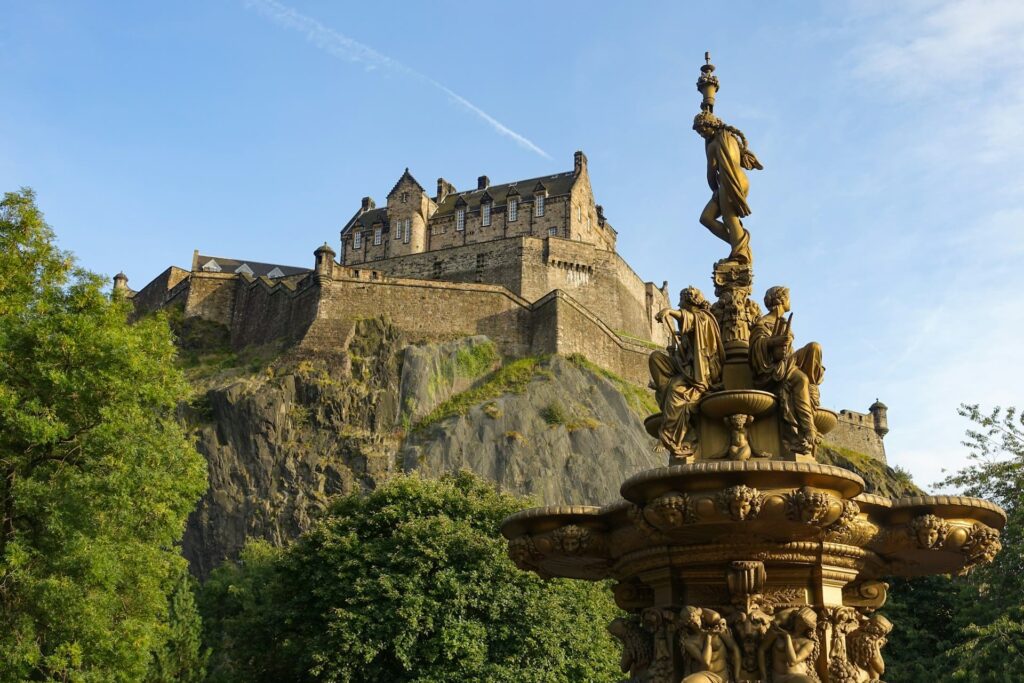
Edinburgh Castle dominates the city skyline from its position atop Castle Rock, an extinct volcanic outcrop rising 130 meters above sea level. Archaeological evidence suggests the rock has been fortified since at least the Iron Age.
The Honours of Scotland, the oldest crown jewels in Britain (dating to the 15th and 16th centuries), rest within the castle alongside the Stone of Destiny, used in the coronation of Scottish monarchs for centuries.
St Margaret’s Chapel, built in 1130, survives as Edinburgh’s oldest building. The One O’Clock Gun fires daily except Sundays, a tradition begun in 1861 to help ships in the Firth of Forth set their maritime clocks.
Why Visit
This fortress witnessed some of Scotland’s most pivotal moments, from the Wars of Scottish Independence to Mary Queen of Scots giving birth to the future King James VI within its walls.
The views across Edinburgh to the Firth of Forth and surrounding hills rival any in Britain. The National War Museum and Prisons of War exhibition provide context for Scotland’s military history spanning five centuries.
For visitors exploring Edinburgh, the castle serves as both geographical and historical anchor point.
Best Time to Visit
Early morning visits between April and June offer the best combination of manageable crowds and good weather. The castle welcomes over 2 million visitors annually, making it Scotland’s most visited paid attraction according to VisitScotland statistics.
Avoid August during the Edinburgh Festival Fringe unless you book well in advance. Winter brings atmospheric misty conditions but fewer tourists.
How to Get There
Edinburgh Castle sits at the top of the Royal Mile in the city center, easily walkable from Waverley Station in 15 minutes uphill.
Numerous bus routes serve the Castle Esplanade. Edinburgh Waverley station connects directly to London King’s Cross via LNER services in 4.5 hours.
Entry & Practical Info
Standard admission: £19.50 for adults
Advance booking essential during peak season
Plan for 2 to 3 hours to see the main attractions. The site involves steep slopes and numerous staircases, though accessible routes exist for most areas.
Free audio guides enhance the self-guided experience. Photography is permitted throughout the castle.
4. Caernarfon Castle
Highlights
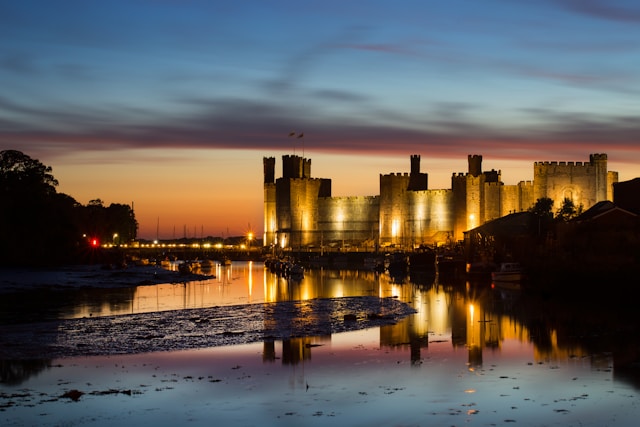
Caernarfon Castle represents medieval military architecture at its absolute peak. Edward I constructed this fortress between 1283 and 1330 as the ultimate statement of English power over Wales, modeling its polygonal towers on the Walls of Constantinople.
UNESCO designated Caernarfon as a World Heritage Site in 1986 as part of the “Castles and Town Walls of King Edward in Gwynedd.” The Eagle Tower, rising 38 meters, once housed the king’s personal chambers.
The castle witnessed the investiture of Prince Charles as Prince of Wales in 1969, continuing a tradition begun here in 1301 when Edward II was presented as the first English Prince of Wales.
Why Visit
Few castles communicate medieval power politics as forcefully as Caernarfon. Edward I spent £27,000 building it (equivalent to roughly £30 million today), bankrupting the English treasury to create an unassailable symbol of dominance.
Walking the battlements provides sweeping views across the Menai Strait to Anglesey. The King’s Gate, though never completed, demonstrates the sophisticated defensive architecture that made these Edwardian castles virtually impregnable.
Best Time to Visit
Late spring (May) and early autumn (September) bring pleasant weather without summer crowds. The town of Caernarfon hosts fewer tourists than other Welsh destinations, making most times relatively peaceful.
Visit on weekdays if possible. The castle integrates beautifully with the surrounding medieval town walls, which can be explored freely.
How to Get There
Caernarfon lies in northwest Wales, approximately 8 miles from Bangor. Regular bus services (route 5 and 5X) connect Bangor railway station to Caernarfon in 30 minutes.
By car, the castle sits just off the A487, with several pay-and-display car parks in the town. Chester and Liverpool provide the nearest major transport hubs, both under 90 minutes by car.
Entry & Practical Info
Standard admission: £10.50 for adults
Cadw membership covers all Welsh heritage sites
Allocate 1.5 to 2 hours for a thorough exploration. The site involves significant climbing on spiral staircases, with limited accessibility for wheelchairs.
Guided tours run during summer months. The town itself warrants exploration, with independent shops and cafes serving Welsh specialties.
5. Conwy Castle
Highlights
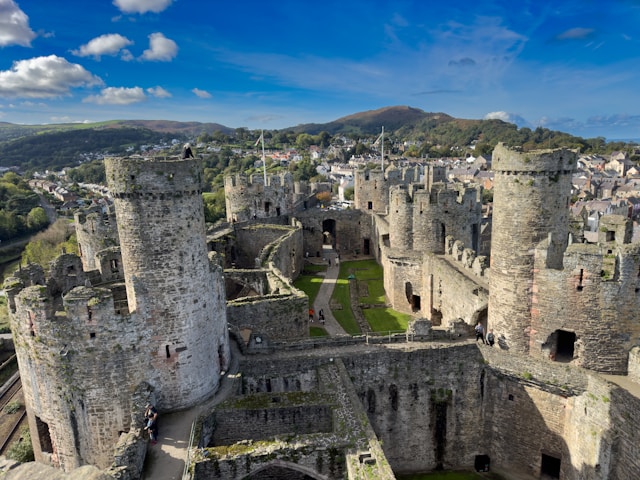
Conwy Castle forms an integral part of one of Europe’s finest surviving medieval fortified towns. Built simultaneously with the town walls between 1283 and 1289, the castle and fortifications cost Edward I £15,000 (approximately £20 million today).
Eight massive towers and two barbicans create an architectural masterpiece. The outer ward once contained the Great Hall, capable of hosting the entire garrison and court. The inner ward housed the royal apartments overlooking the estuary.
The UNESCO World Heritage designation recognizes Conwy alongside Caernarfon as exemplary Edwardian military architecture.
Why Visit
Conwy delivers an unmatched medieval atmosphere. Unlike many castles that stand in isolation, this fortress integrates seamlessly with its original town walls, allowing visitors to experience a complete medieval defensive system.
The views from the battlements across the Conwy Estuary and Snowdonia National Park justify the climb alone. The castle’s remarkably complete state (considering it withstood a siege during the English Civil War) helps visitors visualize medieval castle life.
Best Time to Visit
Shoulder seasons provide the ideal visiting window. The castle and town attract significant tourist traffic in July and August but remain pleasantly quiet in May, June, and September.
Early morning visits offer the best light for photography and fewer crowds. The castle stays open year-round, with winter visits providing dramatic atmosphere as sea mists roll through the towers.
How to Get There
Conwy sits on the North Wales coast between Chester and Holyhead. Regular train services on the North Wales Coast Line stop at Conwy station, a 5-minute walk from the castle.
The A55 expressway provides direct road access from Chester (1 hour) and Manchester (1.5 hours). Multiple pay-and-display car parks serve the town.
Entry & Practical Info
Standard admission: £10.50 for adults
Joint tickets available with Caernarfon Castle for savings
Budget 1.5 to 2 hours for castle exploration. Add extra time to walk the complete circuit of town walls (1.2 miles).
The castle features steep spiral staircases and uneven surfaces throughout. Audio guides available for hire. The surrounding town offers excellent dining options and independent shops.
6. Warwick Castle
Highlights
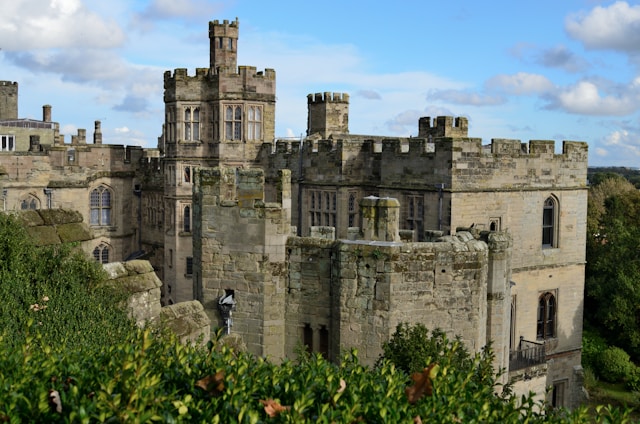
Warwick Castle combines authentic medieval heritage with engaging modern attractions, making it particularly popular with families. Built by William the Conqueror in 1068, the castle evolved through the centuries from wooden motte-and-bailey to stone fortress to stately home.
The Great Hall contains an impressive arms and armor collection. The state rooms showcase Victorian splendor from the castle’s period as the seat of the Earls of Warwick. The dungeons recreate medieval torture and imprisonment with theatrical flair.
Modern additions include bird of prey shows, archery experiences, and seasonal events like jousting tournaments. The Kingmaker exhibition uses wax figures to recreate preparations for the Battle of Barnet in 1471.
Why Visit
Warwick successfully balances historical authenticity with entertainment, making castle history accessible without dumbing it down. Children engage with interactive exhibits while adults appreciate genuine medieval architecture and carefully curated artifacts.
The castle’s position on a bend of the River Avon creates spectacular views from the ramparts. Walking the walls provides perspective on medieval defensive strategies, with clear sightlines across the surrounding countryside.
Best Time to Visit
Term-time weekdays between April and June offer the best experience for visitors wanting to avoid school groups. Summer weekends and school holidays see the castle at maximum capacity.
Special events run throughout the year, from summer jousting to Halloween ghost tours. Check the calendar when booking, as some visitors prefer quieter periods while others seek the full entertainment package.
How to Get There
Warwick lies in the heart of England, approximately 100 miles northwest of London. Regular trains from London Marylebone reach Warwick station in 90 minutes to 2 hours, with the castle a 15-minute walk from the station.
By car, Warwick sits near Junction 15 of the M40, with on-site parking available (additional fee). The location makes Warwick an excellent day trip from Birmingham, Stratford-upon-Avon, or the Cotswolds.
Entry & Practical Info
Standard admission: £32.40 for adults when booked online
Annual passes available for frequent visitors
Allocate 3 to 4 hours minimum, with a full day possible if attending all shows and experiences. The castle grounds cover 64 acres, including peacock gardens and riverside walks.
Book tickets online in advance for guaranteed entry and best prices. Most areas are accessible, though some ramparts and towers involve stairs. Dining options range from quick-service cafes to fine dining in the converted conservatory.
7. Dover Castle
Highlights
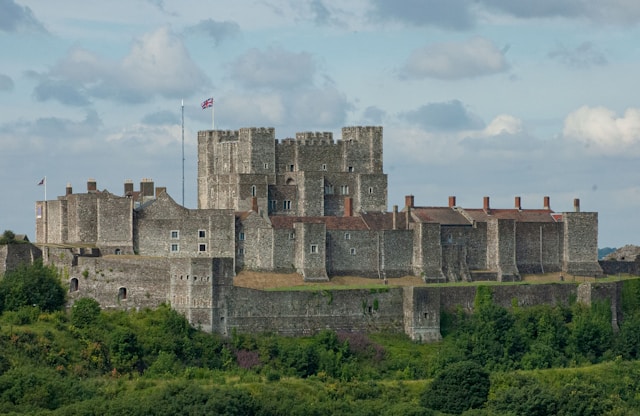
Dover Castle guards the shortest crossing to continental Europe, a strategic position that made it central to English defense for over 2,000 years. Romans first fortified this clifftop, with the Saxon church of St Mary in Castro still standing within the walls.
The Great Tower, built by Henry II in the 1180s, served as a luxurious royal palace. The Secret Wartime Tunnels, carved into the white cliffs, housed a military command center and underground hospital during World War II. Operation Dynamo, the Dunkirk evacuation, was coordinated from these tunnels in 1940.
The views across the English Channel to France, just 21 miles away, explain why Dover earned the title “Key to England.”
Why Visit
Dover tells England’s complete defensive story, from Roman pharos (lighthouse) to Cold War-era nuclear command post. The layering of 2,000 years of fortification creates unmatched historical depth.
The Secret Wartime Tunnels tour, featuring actors recreating 1940s military operations, brings World War II vividly to life. Standing on the battlements watching modern ferries cross to Calais while imagining Viking raids or Norman invasions creates powerful historical perspective.
Best Time to Visit
Spring and early autumn provide optimal conditions. Dover’s exposed clifftop position means summer can be windy, while winter brings challenging weather.
Weekday visits between April and June avoid the worst crowds. The castle welcomes approximately 375,000 visitors annually according to English Heritage figures, making it less crowded than some others on this list.
How to Get There
Dover Priory station sits 2 miles from the castle, with regular trains from London St Pancras via high-speed rail (65 minutes). Buses run from the station to the castle, or it’s a 30-minute uphill walk.
By car, Dover lies at the southeastern tip of England on the A2/M2 from London (80 miles). On-site parking is included with admission.
Entry & Practical Info
Standard admission: £22.50 for adults
English Heritage membership covers unlimited visits to over 400 sites
Reserve 3 to 4 hours to see the Great Tower, tunnels, and ramparts properly. Wartime tunnel tours run every 15 minutes and last 50 minutes, tickets are timed entry.
The site involves significant walking and stairs. Most areas are accessible, though the tunnels present challenges for visitors with mobility issues. Multiple cafe options available on-site.
8. Bamburgh Castle
Highlights
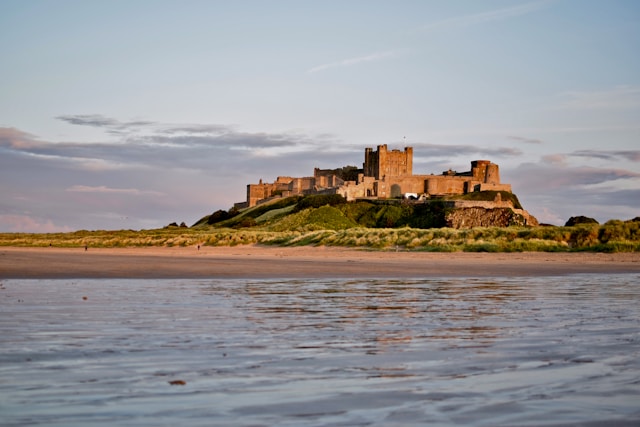
Bamburgh Castle rises dramatically from a volcanic outcrop on the Northumberland coast, dominating three miles of sandy beach. The fortress has been occupied since ancient British times, serving as the royal seat of the Kings of Northumbria.
The keep, constructed on Norman foundations, was extensively restored by the Victorian industrialist Lord Armstrong. The King’s Hall features stunning oak paneling and medieval artifacts. The Armstrong Museum displays an eclectic collection of porcelain, furniture, and arms.
The castle’s position between the North Sea and the Cheviot Hills creates spectacular landscapes in every direction.
Why Visit
Bamburgh combines genuine medieval grandeur with one of Britain’s most beautiful coastal settings. The castle appears in countless films and TV shows, including Transformers: The Last Knight and various period dramas.
Unlike more heavily touristed castles, Bamburgh retains a relatively peaceful atmosphere. The beach below the castle ranks among England’s finest, with pristine sand and views to the Farne Islands.
Best Time to Visit
Late spring through early autumn offers the best weather, though Northumberland’s coast can be brisk even in summer. The castle opens year-round except Christmas period.
Summer weekends bring respectable crowds but nothing approaching Tower of London levels. Early morning or late afternoon visits provide the best light for photography of the dramatic silhouette.
How to Get There
Bamburgh village sits on the B1342 between Seahouses and Belford in northern Northumberland. The nearest station is Berwick-upon-Tweed, 18 miles north, with bus service to Bamburgh (limited service, check schedules).
By car, the castle lies approximately 50 miles north of Newcastle, with free parking in the village. The remote location makes Bamburgh perfect for multi-day Northumberland coast explorations visiting Holy Island, Lindisfarne, and Alnwick Castle.
Entry & Practical Info
Standard admission: £13.75 for adults
Season tickets available for local visitors
Allow 1.5 to 2 hours for castle exploration. The state rooms and museum showcase the Armstrong family’s collections, while the ramparts provide stunning coastal panoramas.
Most public rooms are accessible, though some upper levels involve stairs. The village offers cafes, pubs, and gift shops. The beach is open freely and perfect for post-castle walks.
9. Eilean Donan Castle
Highlights
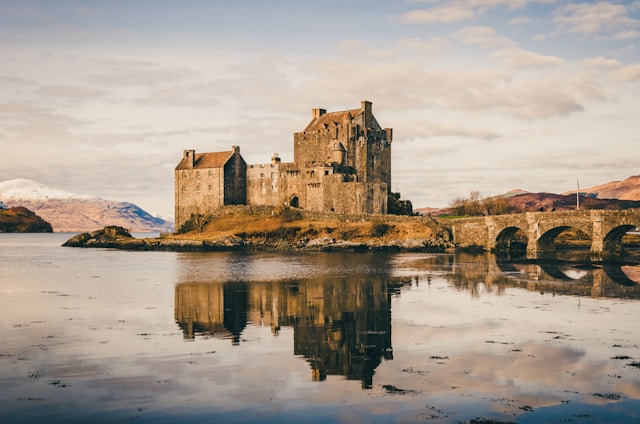
Eilean Donan Castle occupies a tiny tidal island where three sea lochs meet in the Western Highlands. A stone bridge connects the castle to the mainland, creating one of Scotland’s most photographed scenes.
The original 13th-century castle was destroyed in 1719 during the Jacobite risings. Lieutenant Colonel John MacRae-Gilstrap purchased and meticulously reconstructed the ruins between 1919 and 1932, creating the structure visitors see today.
The Banqueting Hall features Jacobite relics and clan memorabilia. The Billeting Room displays weapons and armor. The position amid dramatic Highland scenery makes Eilean Donan instantly recognizable from films including Highlander and The World Is Not Enough.
Why Visit
No castle better captures romantic Highland atmosphere. The combination of craggy mountains, still waters, and the perfectly proportioned castle creates scenes that define Scotland for millions worldwide.
While substantially reconstructed in the 20th century, the castle occupies its original medieval site with careful attention to historical accuracy. The MacRae clan’s dedication to preserving Highland heritage shines through every restored room.
Best Time to Visit
May through September provides the most reliable weather, though Scottish weather remains famously unpredictable. Midges can be problematic in July and August.
The castle opens daily from February through December, closing only in January. Summer brings tour buses, but the dramatic setting never feels overcrowded. Sunset visits in June and July create magical light across the lochs.
How to Get There
Eilean Donan sits near Dornie village on the A87, approximately 8 miles from Kyle of Lochalsh. No direct public transport serves the castle, though buses on the Inverness-Kyle of Lochalsh route stop nearby (20-minute walk).
By car, the castle lies 80 miles west of Inverness (1.5 hours) on the scenic route to the Isle of Skye. Free parking available on-site. The location makes Eilean Donan perfect for Scottish Highland tours and Skye day trips.
Entry & Practical Info
Standard admission: £11.00 for adults
Photography encouraged throughout grounds and interior
Budget 1 to 1.5 hours for your visit. The compact interior displays the castle’s history and clan connections efficiently. The surrounding area rewards photography from multiple angles.
The tidal location means visiting times don’t affect accessibility, as the bridge provides constant connection. The visitor center includes a cafe serving light refreshments and local specialties.
10. Dunluce Castle
Highlights
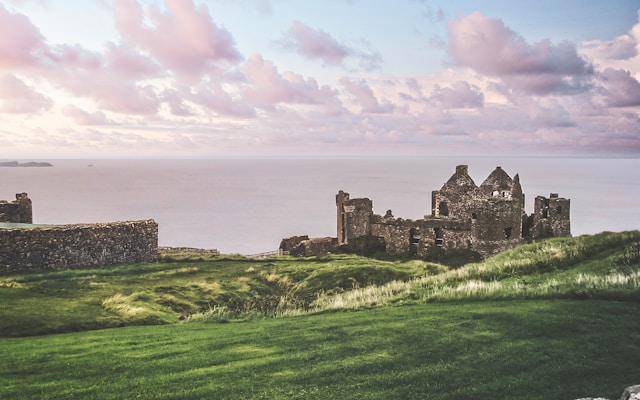
Dunluce Castle clings to dramatic coastal cliffs on Northern Ireland’s Causeway Coast. The medieval fortress sits on a narrow basalt outcrop, separated from the mainland by a chasm crossed by a bridge.
Built in the 13th century by the MacQuillan family, the castle passed to the MacDonnell clan in the 1500s. The castle’s kitchen infamously collapsed into the sea during a storm in 1639, taking several servants with it. The MacDonnells abandoned the increasingly unstable fortress shortly after.
The ruins inspired C.S. Lewis’s Cair Paravel in The Chronicles of Narnia and appear in Game of Thrones as House Greyjoy’s stronghold, Pyke.
Why Visit
Few castles offer such dramatic positioning. Standing in the ruins with Atlantic waves crashing far below creates a visceral connection to the castle’s turbulent history. The partial collapse adds an element of romantic decay absent from better-preserved fortresses.
The surrounding Causeway Coastal Route ranks among the world’s most scenic drives, with Dunluce perfectly positioned between the Giant’s Causeway and the Carrick-a-Rede rope bridge.
Best Time to Visit
Late spring and early autumn balance good weather with fewer crowds. Summer brings busloads of Giant’s Causeway visitors, while winter can see the site closed in extreme weather.
The exposed coastal position means wind and rain are common year-round. Dramatic weather actually enhances the atmospheric ruins, though waterproof clothing is essential.
How to Get There
Dunluce Castle sits on the A2 coast road approximately 3 miles east of Portrush. Regular bus services connect Portrush and the castle, though driving provides maximum flexibility for exploring the Causeway Coast.
The nearest airports are Belfast International (60 miles) and Belfast City (70 miles). Coleraine provides the closest rail station, 8 miles away.
Entry & Practical Info
Standard admission: £5.50 for adults
Visitor center with interpretive displays
Allow 45 minutes to 1 hour for the ruins and visitor center. The site involves uneven ground and cliff edges, requiring careful supervision of children.
Limited facilities on-site, with full services available in nearby Portrush. The castle forms an essential part of any Northern Ireland coastal itinerary alongside the best places to visit in the UK.
Comparison Table
| Castle | Location | Founded | Best For | Entry Fee (Approx.) | Time Needed |
|---|---|---|---|---|---|
| Windsor Castle | Berkshire, England | 1070s | Royal history & working palace | £28.50 | 2.5-3 hours |
| Tower of London | London, England | 1078 | Crown Jewels & Tudor history | £33.60 | 3-4 hours |
| Edinburgh Castle | Edinburgh, Scotland | 12th century | Scottish heritage & city views | £19.50 | 2-3 hours |
| Caernarfon Castle | Gwynedd, Wales | 1283 | Medieval military architecture | £10.50 | 1.5-2 hours |
| Conwy Castle | Conwy, Wales | 1283 | Complete medieval fortified town | £10.50 | 1.5-2 hours |
| Warwick Castle | Warwickshire, England | 1068 | Family-friendly experiences | £32.40 | 3-4 hours |
| Dover Castle | Kent, England | Ancient | WWII history & Channel views | £22.50 | 3-4 hours |
| Bamburgh Castle | Northumberland, England | 6th century | Coastal setting & tranquility | £13.75 | 1.5-2 hours |
| Eilean Donan Castle | Highlands, Scotland | 13th century | Photography & Highland scenery | £11.00 | 1-1.5 hours |
| Dunluce Castle | County Antrim, N. Ireland | 13th century | Dramatic cliff-top ruins | £5.50 | 45 mins-1 hour |
Frequently Asked Questions
What is the most famous castle in the UK?
Windsor Castle holds the title as the UK’s most famous castle due to its status as the world’s oldest and largest continuously occupied royal residence. Over 1.5 million people visit annually, and it remains an active working palace where the British monarch regularly stays. The Tower of London rivals it in international recognition thanks to the Crown Jewels and its infamous history of imprisonments and executions.
Which UK castle is best to visit?
The answer depends on your interests. Windsor Castle offers the best royal experience with working palace atmosphere. Edinburgh Castle provides spectacular views and Scottish heritage. Warwick Castle excels for families with children who want interactive exhibits. For pure medieval military architecture, Caernarfon Castle is unmatched. Photography enthusiasts should prioritize Eilean Donan Castle for its Highland setting.
Are UK castles worth visiting?
Absolutely. UK castles offer unparalleled access to authentic medieval and royal history that exists nowhere else at this scale. Many castles have been continuously occupied or maintained for nearly 1,000 years, preserving architecture, artifacts, and stories that bring history vividly to life. The variety ranges from working royal palaces to atmospheric ruins, providing experiences for every interest and budget.
What is the oldest castle in Britain?
Windsor Castle, founded in the 1070s by William the Conqueror, claims the title of oldest continuously occupied royal residence. However, the oldest castle structure depends on definition. The Tower of London’s White Tower dates to 1078, while Bamburgh Castle’s site was fortified as early as the 6th century, though little of that original structure survives. Archaeologically, fortified sites existed in Britain during Roman and Iron Age periods.
Can you stay overnight in a UK castle?
Yes, numerous UK castles offer overnight accommodations ranging from basic self-catering apartments to luxury five-star hotels. Some notable options include Amberley Castle in West Sussex, Thornbury Castle in Gloucestershire, and Dromoland Castle in Ireland. Expect premium pricing, with rooms typically starting around £200-£400 per night. Several castles also offer exclusive hire for weddings and special events.
Final Thoughts
The United Kingdom’s castles represent over 1,000 years of architectural evolution, political intrigue, and military innovation. From Norman conquest to Scottish independence, from medieval warfare to World War II command centers, these fortresses have witnessed and shaped British history at every turn.
Whether you’re drawn to the grandeur of working royal palaces, the atmospheric romance of Highland ruins, or the military precision of Edwardian fortresses, Britain’s castles deliver experiences found nowhere else in the world.
Start planning your castle adventure today. Each fortress offers unique insights into the forces that shaped modern Britain, and visiting these magnificent structures remains one of the most rewarding ways to understand British culture, history, and heritage.