
The UK coastline stretches over 11,000 miles, offering some of Europe’s most diverse and dramatic seaside landscapes. From the rugged cliffs of Cornwall to the wild shores of the Scottish Highlands, coastal destinations in the UK combine natural beauty with rich maritime heritage, exceptional local food, and beaches that rival Mediterranean hotspots during summer months.
This guide covers the top 10 coastal destinations in the UK, spanning England, Wales, and Scotland. Whether you’re seeking family-friendly beaches, cultural exploration, outdoor adventure, or simply a peaceful retreat by the sea, these destinations deliver unforgettable experiences. Each location has been selected for its unique character, accessibility, and year-round appeal.
TL;DR: Quick Overview
- Cornwall – Turquoise waters, surf culture, coastal paths, and charming fishing villages
- Brighton – Vibrant pier culture, pebble beaches, and creative energy on England’s south coast
- Jurassic Coast – UNESCO World Heritage fossil cliffs stretching 95 miles through Dorset and Devon
- Isle of Skye – Dramatic Scottish landscapes with fairy pools, sea cliffs, and remote beauty
- Pembrokeshire – Wales’ coastal gem with sandy coves, puffin colonies, and ancient castles
- Whitby – Gothic harbour town famous for its abbey, fish and chips, and Captain Cook heritage
- Norfolk Coast – Quiet beaches, seal colonies, salt marshes, and traditional seaside charm
- Tenby – Colourful Welsh harbour town with medieval walls and award-winning beaches
- Llandudno – Victorian elegance meets Welsh coast with the longest pier in Wales
- Northumberland Coast – Wild, uncrowded beaches with castles, Holy Island, and dark sky reserves
1. Cornwall

Highlights
Cornwall represents the quintessential British coastal experience with over 400 beaches spread across 300 miles of coastline. The region features turquoise waters comparable to the Caribbean, particularly at beaches like Porthcurno and Kynance Cove.
St Ives combines artistic heritage with stunning beaches, while St Michael’s Mount offers a tidal island castle accessible by causeway. The South West Coast Path provides 300 miles of clifftop walking through Cornwall alone, passing through fishing villages like Mousehole and Polperro.
Surfing culture thrives in Newquay, hosting international competitions, while Padstow has become a culinary destination thanks to Rick Stein’s seafood restaurants.
Why Visit
Cornwall offers the most diverse coastal experience in England. Unlike other UK destinations, it provides consistent surf conditions, Mediterranean-style climate (the warmest in the UK), and a distinct cultural identity with Celtic heritage.
The region supports year-round tourism with excellent infrastructure while maintaining authentic fishing village character. Cornwall’s beaches cater to all preferences from family-friendly St Ives Harbour Beach to wild surf at Fistral.
Best Time to Visit
May to September offers the warmest weather and calmest seas, with August temperatures averaging 19°C. However, this is peak season with higher prices and crowds.
April, May, and October provide better value with pleasant weather, fewer visitors, and comfortable temperatures for coastal walking. Surfers favour autumn and winter for consistent swells, though water temperatures require wetsuits year-round.
How to Get There
By Train: Direct services run from London Paddington to Penzance (5.5 hours), with stops at St Ives, Truro, and other coastal towns.
By Air: Newquay Airport connects to London, Manchester, and European cities during summer.
By Car: The A30 is the main route into Cornwall, though journey times from London exceed 5 hours. Car hire is recommended for exploring multiple beaches and villages.
2. Brighton
Highlights
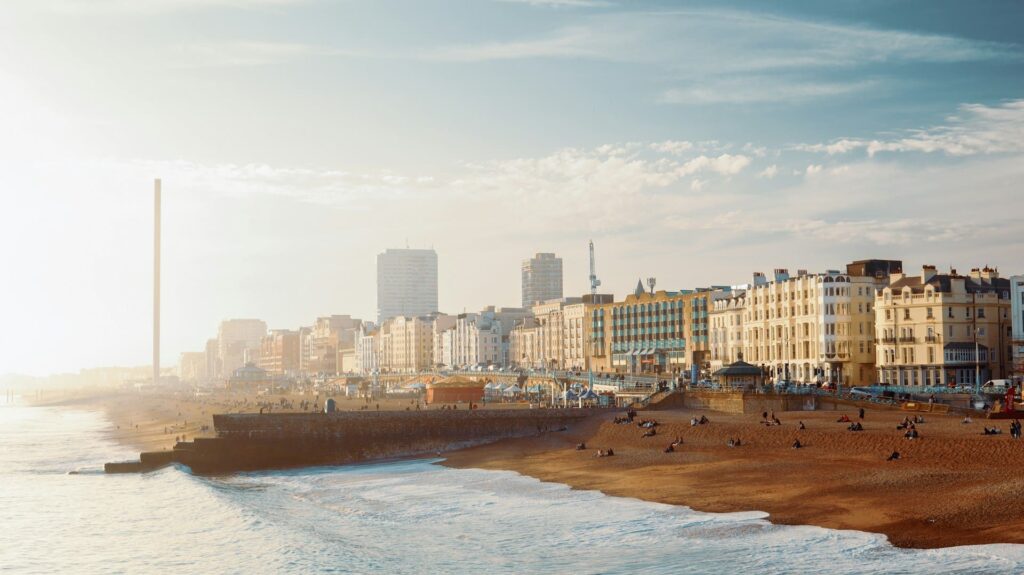
Brighton represents Britain’s most vibrant seaside city, combining Victorian pier heritage with contemporary creative culture. The Brighton Palace Pier features traditional amusements and arcades, while the skeletal remains of the West Pier create dramatic photography opportunities.
The Royal Pavilion, built for King George IV, showcases Indo-Saracenic architecture unique in the UK. Brighton’s Lanes district offers independent shopping through narrow alleys dating to medieval times.
Brighton Beach itself stretches for miles of pebbles backed by elegant Regency squares. The city’s LGBTQ+ scene is the UK’s largest outside London, centred around the Kemptown district.
Why Visit
Brighton delivers urban energy at the seaside. No other UK coastal destination offers this combination of beach access, nightlife, cultural venues, and dining options.
The city functions as a year-round destination with museums, theatres, and events filling the calendar beyond summer months. Its proximity to London (under an hour by train) makes it perfect for short breaks.
Brighton attracts creative industries, resulting in exceptional independent cafes, vintage shops, and street art throughout the city.
Best Time to Visit
June to August offers the best beach weather and outdoor events, including the Brighton Festival (May) and Pride (August), one of the UK’s largest.
April, May, and September provide milder weather ideal for city exploration without peak season crowds. Even winter brings atmosphere with Christmas markets and storm watching from the pier.
How to Get There
By Train: Frequent services from London Victoria and London Bridge reach Brighton in 55-60 minutes. Direct trains also connect to Gatwick Airport (30 minutes).
By Car: The M23/A23 runs directly from London (around 1.5 hours), though parking in Brighton can be expensive and limited.
3. Jurassic Coast
Highlights
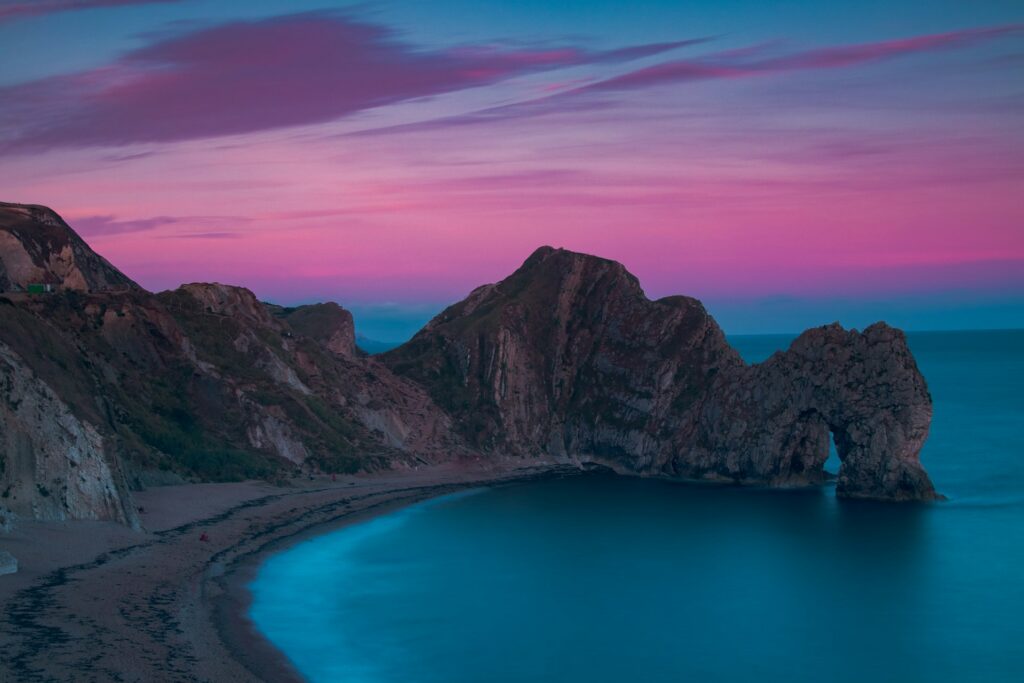
The Jurassic Coast holds UNESCO World Heritage status as the only place on Earth where 185 million years of geological history is exposed in sequence. Stretching 95 miles from Exmouth to Studland Bay, this coastline reveals Triassic, Jurassic, and Cretaceous periods in its cliffs.
Durdle Door, a natural limestone arch, ranks among England’s most photographed landmarks. Lulworth Cove forms a perfect horseshoe bay carved by wave action over millennia.
Fossil hunting thrives at Charmouth and Lyme Regis, where Mary Anning made groundbreaking dinosaur discoveries in the 1800s. The Cobb harbour wall at Lyme Regis dates to the 14th century.
Chesil Beach presents an 18-mile pebble barrier beach connecting to Portland, while Old Harry Rocks offers dramatic white chalk stacks at Studland.
Why Visit
The Jurassic Coast provides unmatched geological interest combined with outstanding natural beauty. Fossil hunting offers hands-on engagement with deep time, particularly for families.
Unlike more developed coasts, much of this region remains unspoiled with small villages, farm-to-table dining, and quiet beaches even in summer. The South West Coast Path provides some of England’s finest coastal walking.
This destination suits those seeking natural drama over commercial attractions, with landscapes that inspired writers like Jane Austen and John Fowles.
Best Time to Visit
Winter storms (November to February) expose new fossils as cliffs erode, making this prime time for fossil hunters. However, weather can be harsh.
May to September offers the best conditions for swimming, walking, and exploring rock pools. July and August bring the warmest water temperatures, though beaches become busier.
Spring and autumn balance good weather with fewer visitors, ideal for coastal path walking when wildflowers bloom or autumn colours emerge.
How to Get There
By Train: Services to Dorchester, Weymouth, or Axminster provide access points, though bus connections or car hire are needed to explore the coast.
By Car: The A35 and A3052 run parallel to the coast. Parking at popular sites like Durdle Door requires advance booking in peak season.
Tours: Guided fossil hunting walks and boat trips operate from Lyme Regis and Charmouth during summer months.
4. Isle of Skye
Highlights
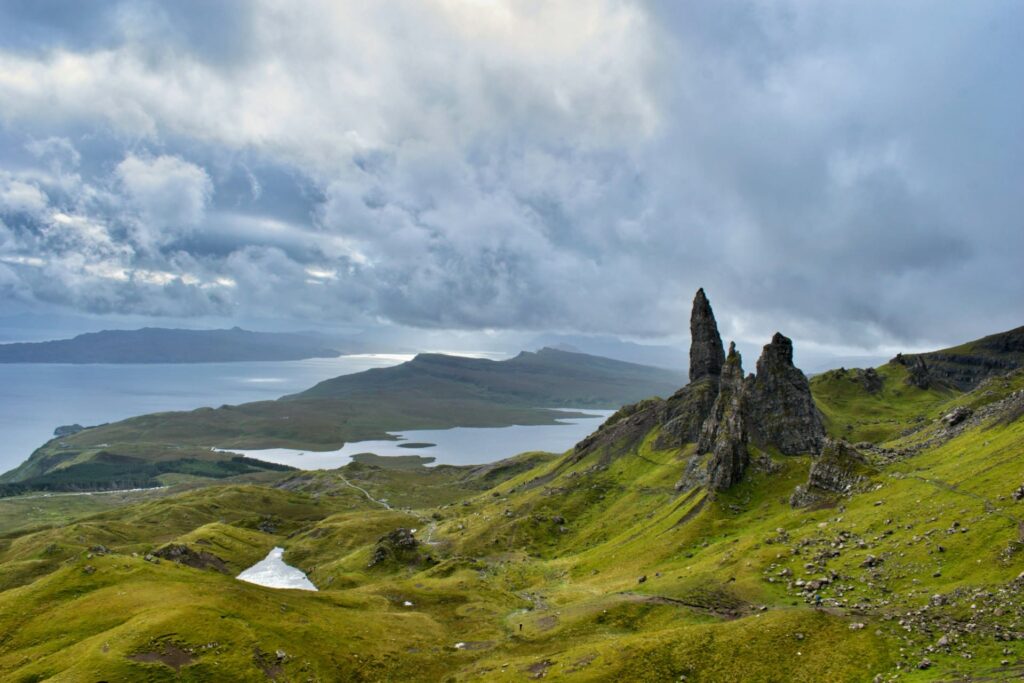
The Isle of Skye delivers Scotland’s most dramatic coastal landscapes. The Old Man of Storr, a pinnacle of volcanic rock, towers 50 metres above the surrounding ridge. The Quiraing presents an otherworldly landscape of landslip cliffs and hidden plateaus.
Fairy Pools at Glen Brittle offer crystal-clear blue pools beneath the Black Cuillin mountains. Neist Point lighthouse sits at Skye’s westernmost tip, with cliffs dropping into the Atlantic.
Dunvegan Castle, continuously inhabited by Clan MacLeod for 800 years, features formal gardens and boat trips to seal colonies. The Trotternish Ridge provides one of Britain’s finest coastal drives.
Portree harbour, with colourful buildings rising above the water, serves as Skye’s capital and main hub.
Why Visit
Skye offers wilderness coastal experiences impossible to find elsewhere in the UK. The combination of sea cliffs, mountain backdrops, and Celtic culture creates an atmosphere distinct from English or Welsh coasts.
Wildlife encounters include golden eagles, otters, seals, and occasional orcas offshore. The island’s geology tells stories of ancient volcanoes, ice ages, and tectonic forces visible in every cliff face.
Despite growing popularity, Skye retains remoteness and authenticity, with single-track roads, Gaelic place names, and communities maintaining traditional Highland culture.
Best Time to Visit
May to September provides the longest daylight hours and mildest weather, though Skye’s climate remains unpredictable year-round. Midges can be troublesome June to August, particularly in calm, damp conditions.
April and October offer fewer visitors and dramatic light for photography, though weather becomes more challenging. Some facilities close outside peak season.
Winter (November to March) brings harsh conditions with short days, but clear spells reveal snow-capped peaks and the possibility of Northern Lights.
How to Get There
By Car: The Skye Bridge connects to the mainland at Kyle of Lochalsh. From Glasgow or Edinburgh, expect 5-6 hours driving. Car hire is essential for exploring the island.
By Train: The scenic West Highland Line runs to Mallaig, where ferries connect to Armadale on Skye (a more dramatic approach than the bridge).
By Air: Inverness Airport (2 hours drive) offers the nearest flights from London and other UK cities.
5. Pembrokeshire
Highlights
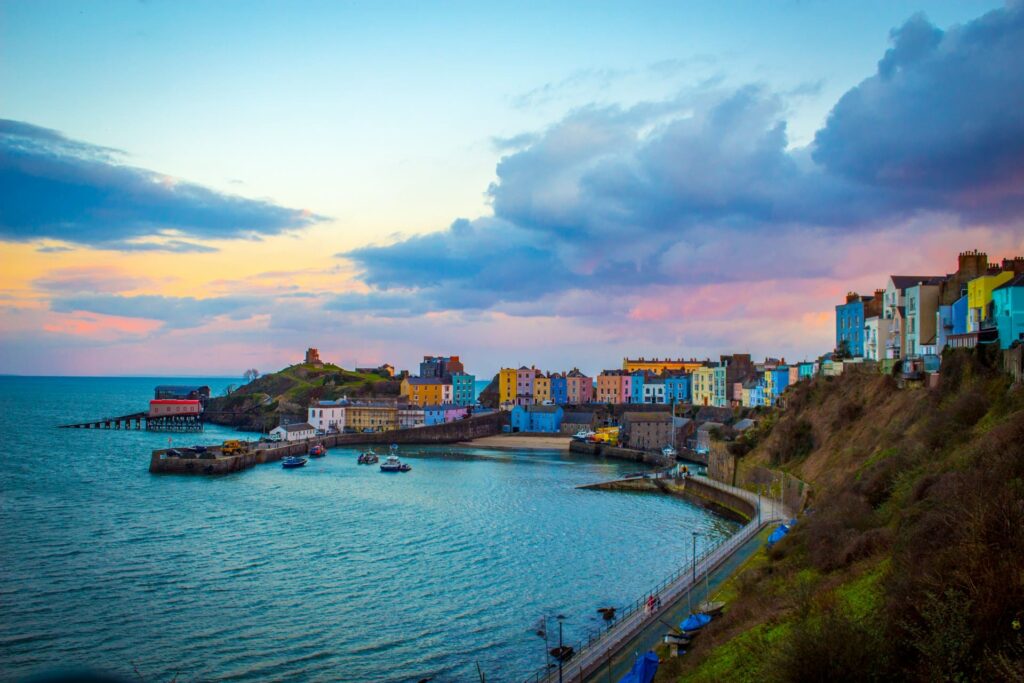
The Pembrokeshire Coast National Park, Britain’s only coastal national park, protects 186 miles of Wales’ finest shoreline. Barafundle Bay consistently ranks among the UK’s best beaches with golden sand accessed via a clifftop walk.
St Davids, Britain’s smallest city, features a magnificent 12th-century cathedral in a valley setting. Boat trips to Skomer Island between April and July offer close encounters with 10,000 breeding puffins.
Tenby (covered separately below) sits within Pembrokeshire, while Pembroke Castle showcases impressive Norman military architecture. The Pembrokeshire Coast Path National Trail runs 186 miles with some of Britain’s most dramatic coastal walking.
Freshwater West offers wild surf and featured in films including Harry Potter and Robin Hood, while Marloes Sands provides fossil hunting and seal spotting opportunities.
Why Visit
Pembrokeshire combines the best elements of Cornish beaches, Scottish wilderness, and Welsh culture into one accessible region. The concentration of quality beaches, wildlife sites, and historic landmarks within a compact area makes it exceptionally efficient to explore.
Beaches remain less crowded than equivalent English destinations despite comparable quality. The region’s Celtic heritage, visible in ancient standing stones and Welsh language, adds cultural depth beyond scenery.
Fresh seafood, particularly lobster and crab from local fishing boats, reaches restaurants within hours of catch. The area’s agricultural heritage supports farm shops and food festivals throughout summer.
Best Time to Visit
April to July is ideal for wildlife, particularly puffins on Skomer (April to July) and seal pups (September to October). The Pembrokeshire Fish Week takes place in June.
July and August offer the warmest sea temperatures and longest days, though beaches and coastal paths become busiest. Advance booking is essential for Skomer Island visits.
September and October provide excellent weather with fewer crowds, perfect for coastal path walking as autumn colours emerge. Many facilities remain open through October.
How to Get There
By Train: Direct services run from London Paddington to Haverfordwest (5 hours), with buses connecting to coastal villages.
By Car: The M4 motorway crosses into Wales, then A40 and A477 lead to Pembrokeshire. From London, expect around 5 hours. A car significantly enhances exploration options.
6. Whitby
Highlights
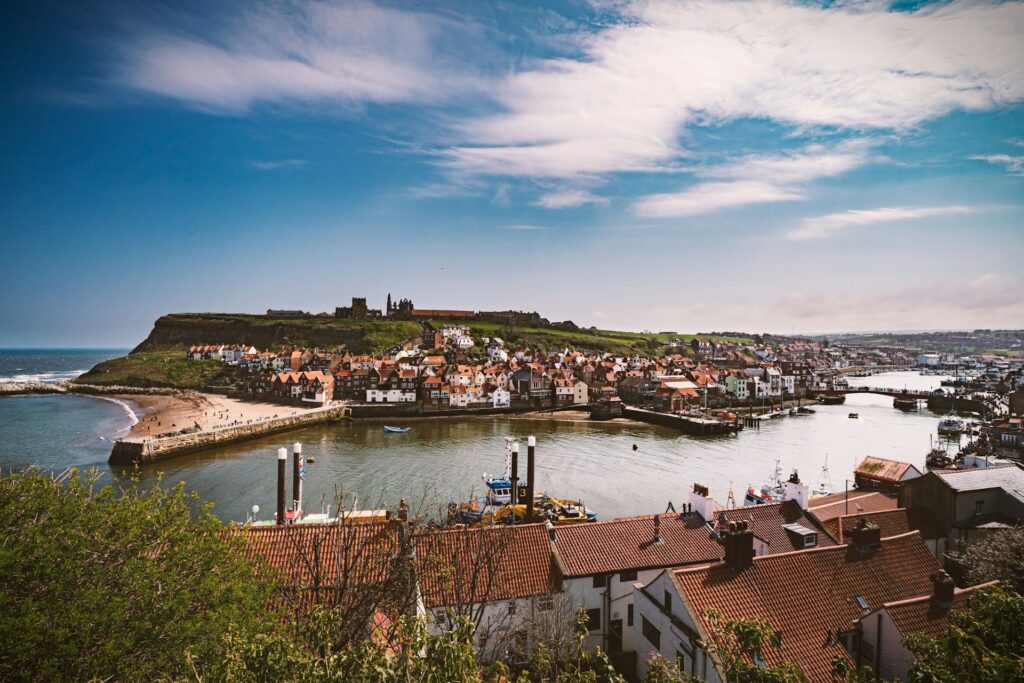
Whitby Abbey, perched on clifftops above the harbour, inspired Bram Stoker’s Dracula and remains one of England’s most atmospheric ruins. The 199 Steps climb from the old town to the abbey, offering views across red-roofed buildings cascading down to the harbour.
The harbour itself divides into two distinct areas: the old town with medieval streets and the West Cliff with Victorian terraces. Captain Cook served his apprenticeship here, and his ships were built in Whitby shipyards.
Whitby Fish Market sells the day’s catch directly from fishing boats. The town is famous for fish and chips from the Magpie Cafe, regularly voted Britain’s best. Whitby Jet workshops continue the Victorian tradition of carving this local gemstone.
The surrounding coastline includes Robin Hood’s Bay, a former smuggling village with houses built into the cliff, and Sandsend Beach, stretching for miles at low tide.
Why Visit
Whitby delivers authentic maritime heritage without commercialisation. The working harbour maintains fishing traditions dating back centuries, while Gothic atmosphere from the abbey and Dracula connections creates unique character.
The town balances history with quality local food, particularly seafood. Unlike many UK seaside towns, Whitby retains independence with family-run shops and cafes rather than chains.
Coastal walking access includes sections of the Cleveland Way National Trail. The combination of beach, clifftops, and harbour creates diverse landscapes within walking distance.
Best Time to Visit
May to September offers the best weather for beach days and harbour strolls. The Whitby Goth Weekend (April and October) attracts thousands celebrating the town’s dark atmosphere.
August brings the annual Regatta and Folk Week, though crowds peak. September and October provide beautiful light for photography with fewer tourists.
Winter has its own appeal with storm watching, though many attractions close. The abbey covered in snow creates dramatic scenes, and cosy pubs offer refuge from North Sea winds.
How to Get There
By Train: Services from Middlesbrough connect to the scenic Esk Valley Line, taking around 1.5 hours. From London or major cities, change at Darlington or Middlesbrough.
By Car: The A171 connects Whitby to the A19, with journey times from York around 1.5 hours, and from Newcastle 2 hours.
7. Norfolk Coast
Highlights
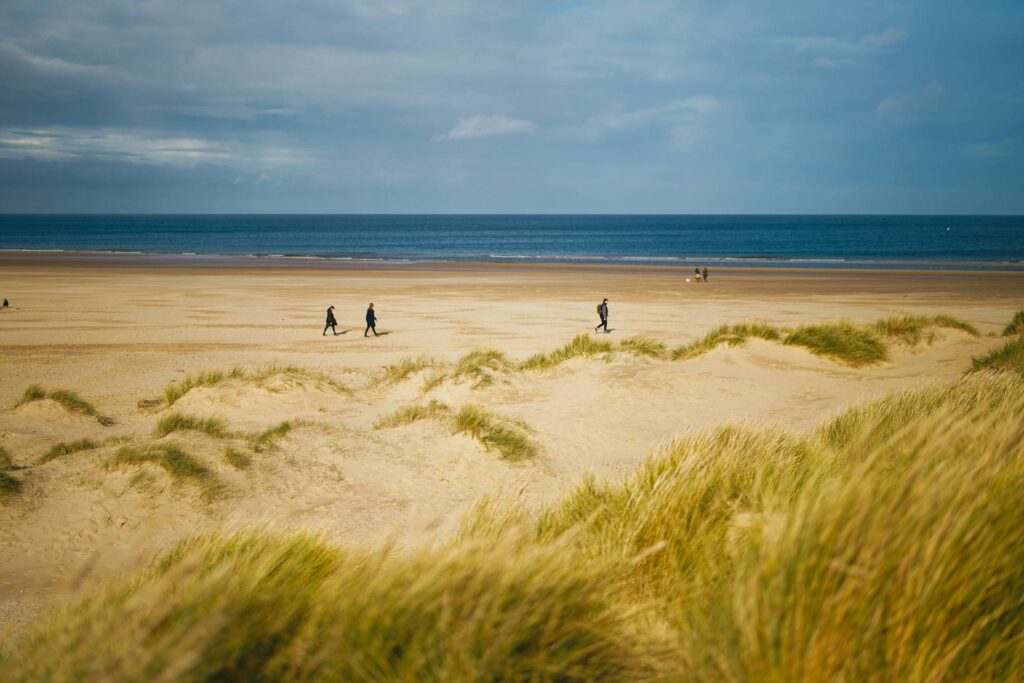
The Norfolk Coast Area of Outstanding Natural Beauty stretches 45 miles from Hunstanton to Sea Palling. Holkham Beach, backed by pine forests and sand dunes, offers vast golden sands that inspired the final scenes of Shakespeare in Love.
Blakeney Point hosts England’s largest grey seal colony, with over 4,000 pups born each winter. Boat trips from Blakeney or Morston allow close viewing. Wells-next-the-Sea maintains its working fishing harbour with colourful beach huts lining the mile-long walk to the beach.
Cromer continues the Victorian seaside tradition with its pier, where the Pavilion Theatre hosts summer variety shows. The town is famous for sweet Cromer crabs, sold fresh from stalls on the seafront.
Salt marshes at Cley-next-the-Sea attract serious birdwatchers, while Burnham Market offers upmarket shopping and dining in a Georgian village setting.
Why Visit
Norfolk provides a gentler, more traditional British seaside experience compared to dramatic cliffs elsewhere. The flat landscape creates huge skies and exceptional light, attracting artists and photographers.
Beaches remain relatively quiet even in summer, with space to spread out. The region’s slower pace suits those seeking relaxation over adrenaline.
Heritage steam trains, stately homes like Holkham Hall, and medieval wool churches provide cultural depth beyond the coast. Local food culture emphasises fresh seafood, particularly samphire gathered from salt marshes.
Best Time to Visit
June to August offers the warmest weather and calmest seas for swimming. Beach huts at Wells and Holkham become highly sought after.
November to March is seal pupping season at Blakeney Point, with the largest numbers visible December to January. Wrap up warm for boat trips.
Spring and autumn provide excellent conditions for birdwatching as migrants pass through. The coast becomes particularly beautiful in late summer when heather blooms on the marshes.
How to Get There
By Train: Regular services from London Liverpool Street to Norwich (2 hours), then local buses reach coastal towns. The Bittern Line runs from Norwich to Sheringham via Cromer.
By Car: The A149 Coastal Road connects all main towns. From London, take the A11 to Norwich then A140/A148, around 3 hours total.
8. Tenby
Highlights
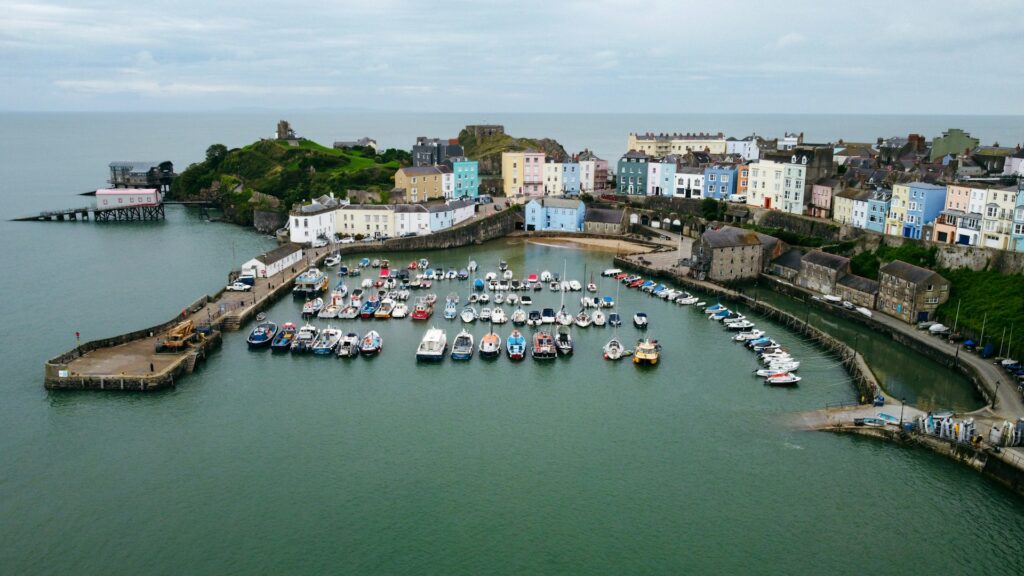
Tenby presents one of Britain’s most picturesque harbours, with pastel-coloured Georgian houses rising above three golden beaches. Medieval town walls, among the best-preserved in Wales, encircle the old town.
North Beach and South Beach offer traditional seaside experiences with rock pools, gentle waves, and beach facilities. Castle Beach, smaller and more sheltered, sits beneath the ruins of Tenby Castle.
St Catherine’s Island, accessible at low tide, features a Victorian fort. Boat trips to Caldey Island depart from Tenby Harbour, visiting a monastery where monks produce perfume and chocolate.
The Tudor Merchant’s House, preserved by the National Trust, provides insight into 15th-century life. Tenby’s narrow medieval streets host independent shops, galleries, and seafood restaurants.
Why Visit
Tenby combines postcard-perfect aesthetics with genuine Welsh character. Unlike many pretty seaside towns that feel sanitised, Tenby maintains authentic community life.
The concentration of beaches within walking distance suits families, while harbour atmosphere and medieval architecture interest culture-focused visitors. Award-winning beaches regularly receive Blue Flag status.
As a base, Tenby provides access to wider Pembrokeshire Coast National Park attractions within short drives. The town’s size keeps everything walkable, reducing car dependency once arrived.
Best Time to Visit
June to August offers peak beach weather with the warmest sea temperatures by British standards. The harbour buzzes with boat trips, water sports, and outdoor dining.
May and September provide better value with pleasant weather and fewer crowds. Many families visit during these shoulder months.
Winter brings a quieter atmosphere with storm watching from the town walls. Many hotels and restaurants close between November and Easter, limiting options.
How to Get There
By Train: Regular services connect Tenby to Cardiff (3 hours) and London Paddington (5 hours) via Swansea and Carmarthen.
By Car: The A477 and A478 reach Tenby from the M4 motorway. From London, expect around 5 hours. Parking in summer requires advance planning as the town centre has limited spaces.
9. Llandudno
Highlights
Llandudno Pier, at 2,295 feet, is Wales’ longest and one of Britain’s finest Victorian piers. The town sits on a peninsula between two beaches: North Shore with its Victorian promenade, and the quieter West Shore facing Anglesey.
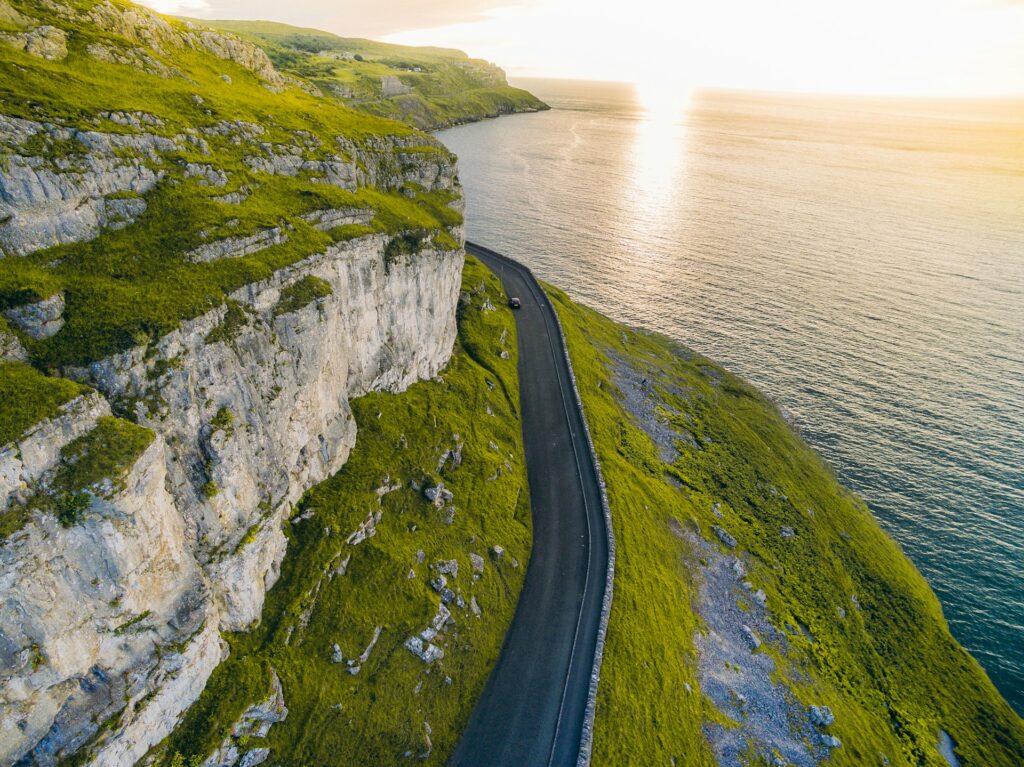
Great Orme, a limestone headland rising 679 feet, can be ascended by Victorian tramway (Britain’s only cable-hauled street tramway), cabin lift, or on foot. Summit views extend across Snowdonia National Park, Anglesey, and on clear days to the Lake District.
The Great Orme Mines, dating to the Bronze Age, offer underground tours of ancient copper workings. Wild Kashmir goats roam the headland, descendants of a pair gifted by Queen Victoria.
Venue Cymru theatre hosts touring productions, while Mostyn Gallery showcases contemporary art. The town retains elegant Victorian architecture throughout, particularly along the seafront.
Why Visit
Llandudno represents Britain’s best-preserved Victorian seaside resort, maintaining grandeur without tackiness. The town avoided overdevelopment, keeping architectural coherence and a refined atmosphere.
Unlike many British resorts, Llandudno balances tradition with quality modern facilities. Family-friendly beaches combine with cultural venues and outdoor activities on Great Orme.
The town serves as a base for exploring North Wales, including Conwy Castle, Snowdonia National Park, and the Zip World adventure activities, all within 30 minutes’ drive.
Best Time to Visit
June to August offers the best weather for beach days and outdoor activities. The Victorian Extravaganza in May celebrates the town’s heritage with period costumes and entertainment.
Spring and autumn provide milder weather ideal for exploring Great Orme on foot. The tramway and cable car operate April to October.
Winter brings festive atmosphere with Christmas shopping events, though many attractions close. The town’s sheltered position makes it less exposed than other North Wales coastal areas.
How to Get There
By Train: Direct services run from Manchester (2 hours), Chester (1 hour), and Birmingham (2.5 hours). From London, change at Crewe or Chester (around 4 hours total).
By Car: The A55 North Wales Expressway provides easy access. From Manchester, expect 1.5 hours; from Liverpool, 1 hour; from London, around 4.5 hours.
10. Northumberland Coast
Highlights
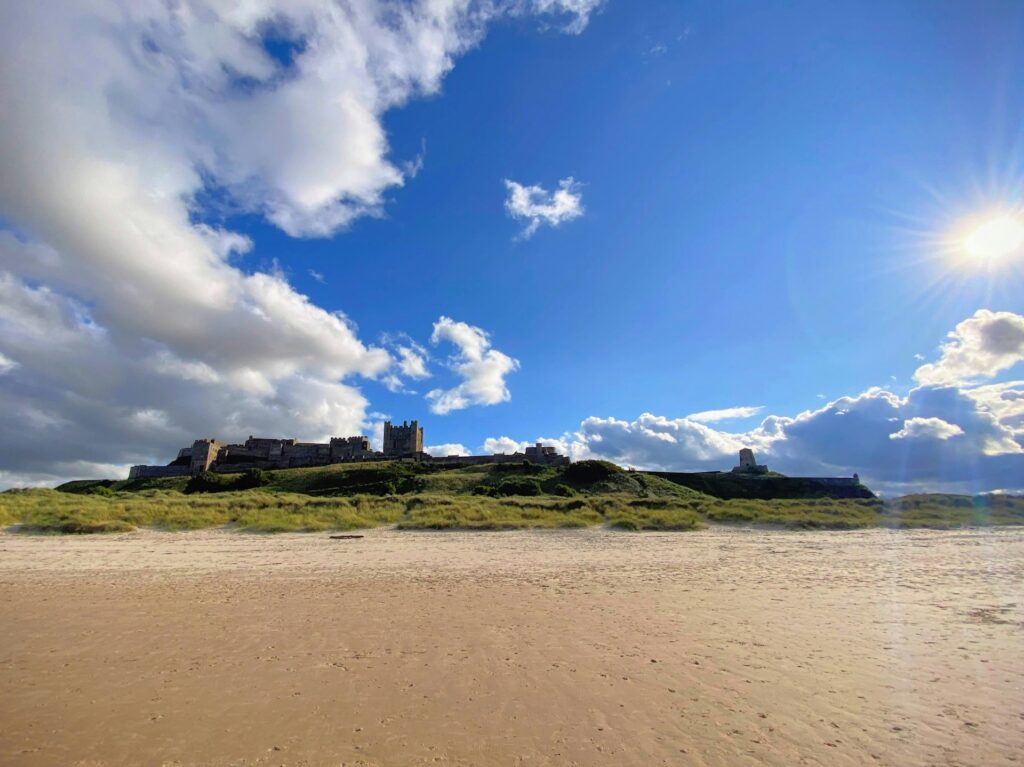
Northumberland delivers England’s wildest, most unspoiled coastline. Bamburgh Castle, one of Britain’s largest inhabited castles, dominates three miles of golden beach backed by dunes.
Holy Island (Lindisfarne), accessible via tidal causeway twice daily, holds spiritual significance dating to 635 AD. The island’s Lindisfarne Priory ruins and small fishing village create atmospheric isolation.
Dunstanburgh Castle ruins, reached only by coastal footpath, rise dramatically from a rocky promontory. Seahouses serves as the departure point for boat trips to the Farne Islands, home to puffins, Arctic terns, and grey seals.
Alnmouth, a Georgian village at a river mouth, offers colourful houses and quieter beaches. The coast holds International Dark Sky Park status, making it exceptional for stargazing.
Berwick-upon-Tweed, England’s northernmost town, features complete Elizabethan town walls and three bridges spanning the River Tweed.
Why Visit
Northumberland provides space and solitude impossible on southern English coasts. Even peak summer sees beaches remain uncrowded, with miles of uninterrupted sand.
The combination of castles, wildlife, and dark skies creates diverse experiences beyond typical beach holidays. History enthusiasts find Roman remains, medieval fortifications, and border conflict heritage throughout the region.
This coast suits active visitors with excellent walking, cycling routes, and water sports. The absence of commercialisation means fewer facilities but more authenticity.
Best Time to Visit
May to July is ideal for puffins on the Farne Islands, with birds returning to breed. June offers the longest days for exploring, with midnight twilight this far north.
September and October provide beautiful light and autumn colours with fewer visitors. Seal pupping season brings newborns to beaches.
Winter offers dramatic storm watching and dark skies for astronomy, though weather can be harsh and many facilities close. Holy Island becomes particularly atmospheric in winter.
How to Get There
By Train: The East Coast Main Line stops at Alnmouth and Berwick-upon-Tweed, with direct services from Edinburgh (45 minutes to Berwick) and London (3.5 hours to Berwick).
By Car: The A1 runs parallel to the coast. From Newcastle, expect 1-1.5 hours to reach central Northumberland coast villages. Car hire is recommended for exploring.
Comparison Table
| Destination | Best For | Beach Type | Ideal Trip Length | Peak Season |
|---|---|---|---|---|
| Cornwall | Surfing, diverse beaches, food scene | Sandy, surf beaches | 4-7 days | June-September |
| Brighton | City energy, nightlife, culture | Pebble | 2-3 days | Year-round |
| Jurassic Coast | Geology, fossil hunting, natural beauty | Mixed sand/pebble | 3-5 days | May-September |
| Isle of Skye | Dramatic landscapes, wilderness, wildlife | Rocky, remote | 4-6 days | May-September |
| Pembrokeshire | Wildlife, quiet beaches, coastal paths | Sandy coves | 4-7 days | April-October |
| Whitby | Maritime heritage, Gothic atmosphere, seafood | Sandy | 2-3 days | May-September |
| Norfolk Coast | Traditional seaside, seal colonies, birdwatching | Sandy, dunes | 3-5 days | June-August |
| Tenby | Picturesque harbour, family beaches | Sandy | 2-4 days | June-August |
| Llandudno | Victorian elegance, family-friendly | Sandy | 2-3 days | June-August |
| Northumberland Coast | Castles, wild beaches, dark skies | Sandy, uncrowded | 4-6 days | May-September |
Cultural Context: The UK’s Maritime Soul
Britain’s identity has always been shaped by its relationship with the sea. Maritime heritage runs deep through coastal communities, from fishing traditions to naval history visible in harbours, lighthouses, and maritime museums across all ten destinations.
Seafood and Coastal Cuisine
Fresh seafood defines UK coastal dining. Cornwall’s fishing ports supply restaurants with day-boat catches, while Whitby remains famous for fish and chips using locally caught haddock. Norfolk’s Cromer crabs, sweet and delicate, are sold from beach huts and featured on pub menus throughout the region.
Pembrokeshire specialises in lobster and laverbread (seaweed preparation), reflecting Welsh culinary traditions. Scottish coastal regions, including Skye, serve langoustines, scallops, and smokehouse salmon. Many destinations now host seafood festivals celebrating local catches with cooking demonstrations and tastings.
According to Seafish data, the UK fishing industry lands approximately 700,000 tonnes of fish annually, with significant portions from vessels operating around these coastal destinations. This supports not just commercial operations but also the restaurants and food culture that make these areas distinctive.
Coastal Paths and Walking Heritage
The National Trails system includes several coastal routes. The South West Coast Path (630 miles total) passes through Cornwall and the Jurassic Coast, while the Pembrokeshire Coast Path (186 miles) circles that entire region. The Cleveland Way includes coastal sections near Whitby.
These paths originated from coastguard patrols watching for smugglers, a trade that thrived in many of these locations through the 18th and 19th centuries. Today they provide access to landscapes otherwise unreachable, with waymarkers, stiles, and seasonal maintenance funded by national park authorities.
Fishing Villages and Maritime Architecture
Traditional fishing villages characterise the UK coast. Cornwall’s Polperro and Mousehole feature narrow streets designed to shield from Atlantic winds, with houses painted white to maximise light reflection. Northumberland’s fishing cottages use local stone, while Norfolk’s flint-built villages reflect geological differences.
Harbours reveal working maritime communities continuing centuries-old traditions. Whitby’s harbour hosts both commercial fishing boats and leisure craft, maintaining infrastructure dating to medieval times. The Captain Cook & Staithes Heritage Centre documents how this coastline shaped one of history’s greatest explorers.
Victorian and Georgian Seaside Heritage
The Victorian era established seaside holidays as we know them. Brighton’s development as a resort began in the 1780s when sea bathing gained medical endorsement. The Royal Pavilion (1823) cemented its fashionable status.
Llandudno was purpose-built as a Victorian resort in the 1850s, with deliberate planning creating wide promenades and orderly streets. Its preservation as a heritage resort reflects recognition of this architectural legacy.
Piers, originally built for landing passengers from paddle steamers, evolved into entertainment venues. According to the National Piers Society, 58 pleasure piers remain in the UK, down from a Victorian peak of over 100, with those at Brighton and Llandudno among the finest survivors.
Island Heritage and Spiritual Significance
Holy Island (Lindisfarne) holds particular importance as the birthplace of English Christianity. The Lindisfarne Gospels, created here around 700 AD, represent one of the finest surviving illuminated manuscripts. The island’s tidal isolation continues to shape community life.
Skye’s Celtic and Norse heritage blends in place names and folklore. The island’s Gaelic culture persists through language, music, and traditions despite tourism growth.
This deep cultural layering distinguishes UK coastal destinations from simple beach resorts, adding historical depth and authentic character that enriches any visit.
Conclusion
The top coastal destinations in the UK offer extraordinary diversity, from Cornwall’s surf beaches to Northumberland’s wild shores, from Brighton’s urban energy to Skye’s remote wilderness. Each destination provides unique character shaped by geology, history, and local culture.
British coastal holidays deliver far more than beaches. Medieval castles, Victorian architecture, world-class seafood, wildlife encounters, and coastal paths create layered experiences impossible to replicate elsewhere. Whether you prioritise family-friendly beaches, outdoor adventure, cultural exploration, or simply peaceful seaside relaxation, these ten destinations provide outstanding options.
The UK’s maritime heritage runs deep through these locations, visible in working harbours, fishing traditions, and communities maintaining centuries-old connections to the sea. Combined with excellent accessibility via train or car, these coastal destinations make ideal escapes from urban life, offering restorative time by the water within reach of most UK residents and international visitors.
Explore beyond a single region to appreciate the full spectrum of British coastal character, from the Celtic fringes of Wales and Scotland to England’s historic ports and fashionable resorts. Each coast tells different stories and rewards exploration with memorable experiences and stunning scenery.
Frequently Asked Questions
What is the best coastal destination in the UK?
Cornwall consistently ranks as the UK’s most popular coastal destination, offering the widest variety of beaches, surf culture, coastal paths, and dining options. However, “best” depends on priorities: Brighton for city energy, Pembrokeshire for wildlife, Skye for dramatic landscapes, or Northumberland for uncrowded space.
Which UK coast is best for families?
Tenby excels for families with young children due to calm waters, proximity of multiple beaches, and compact walkable size. Norfolk Coast beaches like Holkham offer gentle slopes and vast sand for building. Llandudno provides traditional seaside entertainment with Victorian charm and excellent facilities.
Are UK beaches good for swimming?
UK beaches offer excellent swimming during summer months (June to September) when water temperatures reach 15-18°C in southern England and Wales. Over 800 UK beaches hold Blue Flag status for water quality. Cornwall and Pembrokeshire provide the warmest waters. Always check tide times and conditions, and respect warning flags at lifeguarded beaches.
When is the best time for a UK seaside holiday?
July and August offer the warmest weather and calmest seas but bring peak crowds and prices. June and September provide excellent conditions with better value and fewer visitors. May works well for avoiding crowds while enjoying spring blooms along coastal paths. For specific wildlife like puffins, visit April to July in Pembrokeshire or Northumberland.
What should I pack for a UK coastal trip?
Pack layers as coastal weather changes quickly: waterproof jacket, fleece or sweater, sun protection (hat, sunscreen), comfortable walking shoes, and beach footwear. Even in summer, evenings can be cool. Bring a wind-break for beach days and binoculars for wildlife watching. Swimming kit with wetsuit consideration for cooler months. Check specific destinations for particular needs like walking boots for rugged coastal paths.