New York City stands as a living museum where centuries of American history unfold across five boroughs. From colonial churches that witnessed the birth of a nation to architectural marvels that redefined urban skylines, the city’s historic landmarks tell stories of ambition, immigration, innovation, and resilience. With over 100 recognized historic sites under the National Park Service and the New York City Landmarks Preservation Commission, choosing which landmarks deserve your time can feel overwhelming.
This guide highlights the top 10 historic landmarks in NYC, essential sites that capture different chapters of the city’s remarkable past while offering unforgettable experiences for modern visitors. Whether you’re planning your first trip or you’re a longtime resident seeking deeper connections to the city’s heritage, these must-see historic sites NYC offers will transport you through time while standing firmly in one of the world’s most dynamic urban landscapes.
TL;DR – Quick Links to the Top 10 Historic Landmarks in NYC
- Statue of Liberty & Ellis Island – (Google Maps)
- Brooklyn Bridge – (Google Maps)
- Empire State Building – (Google Maps)
- Grand Central Terminal – (Google Maps)
- Federal Hall National Memorial – (Google Maps)
- Trinity Church – (Google Maps)
- Flatiron Building – (Google Maps)
- 9/11 Memorial & Museum – (Google Maps)
- St. Patrick’s Cathedral – (Google Maps)
- The High Line – (Google Maps)
1. Statue of Liberty and Ellis Island: Symbols of Freedom and Immigration
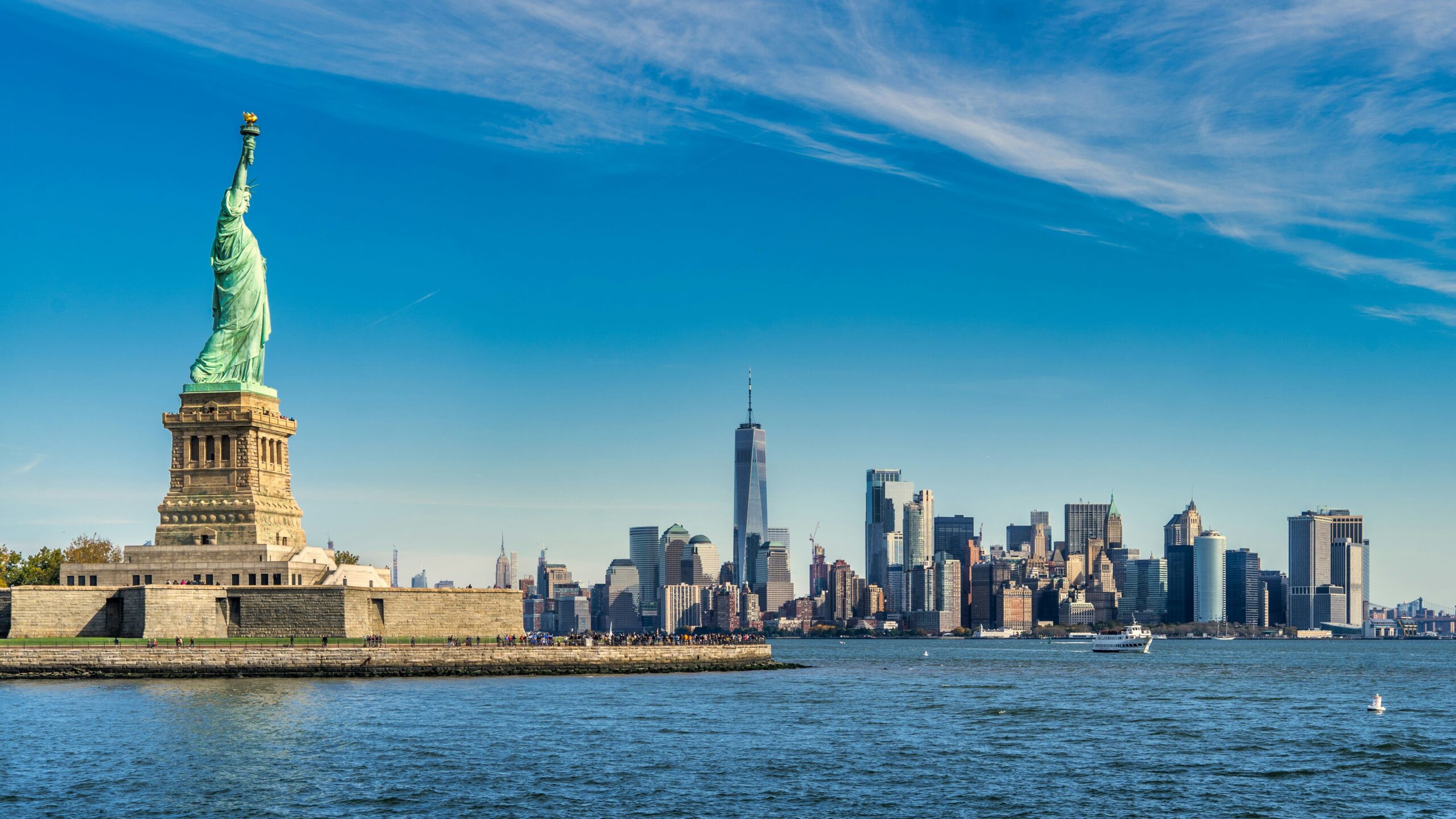
No discussion of historic landmarks in New York City would be complete without the Statue of Liberty. This colossal copper figure has welcomed millions to American shores since her dedication in 1886, becoming perhaps the most recognizable symbol of freedom worldwide. Designed by French sculptor Frédéric Auguste Bartholdi and engineered by Gustave Eiffel, Lady Liberty was a gift from France celebrating American independence and the abolition of slavery.
Standing 305 feet from ground to torch tip, the statue occupies Liberty Island in New York Harbor. Visitors can explore the grounds, visit the museum inside the pedestal, or climb the 354 steps to the crown for panoramic harbor views (reservations required). The experience goes beyond sightseeing; it’s a pilgrimage to understand America’s foundational ideals of liberty and opportunity.
Adjacent Ellis Island deepens this narrative. Between 1892 and 1954, over 12 million immigrants passed through this federal immigration station, making it the gateway through which approximately 40% of all Americans can trace their ancestry. The restored Great Registry Room, with its soaring vaulted ceiling, stands as a powerful reminder of those who arrived with little more than hope. The Ellis Island National Museum of Immigration now occupies the building, offering interactive exhibits, oral histories, and a searchable database where visitors can research their own family’s arrival records.
Visitor Tips: Ferry tickets include access to both islands. Book tickets well in advance through the official Statue Cruises website, especially for crown access. Plan for at least half a day to experience both sites properly. The first ferry of the day typically offers the smallest crowds.
2. Brooklyn Bridge: An Engineering Marvel Connecting Two Cities
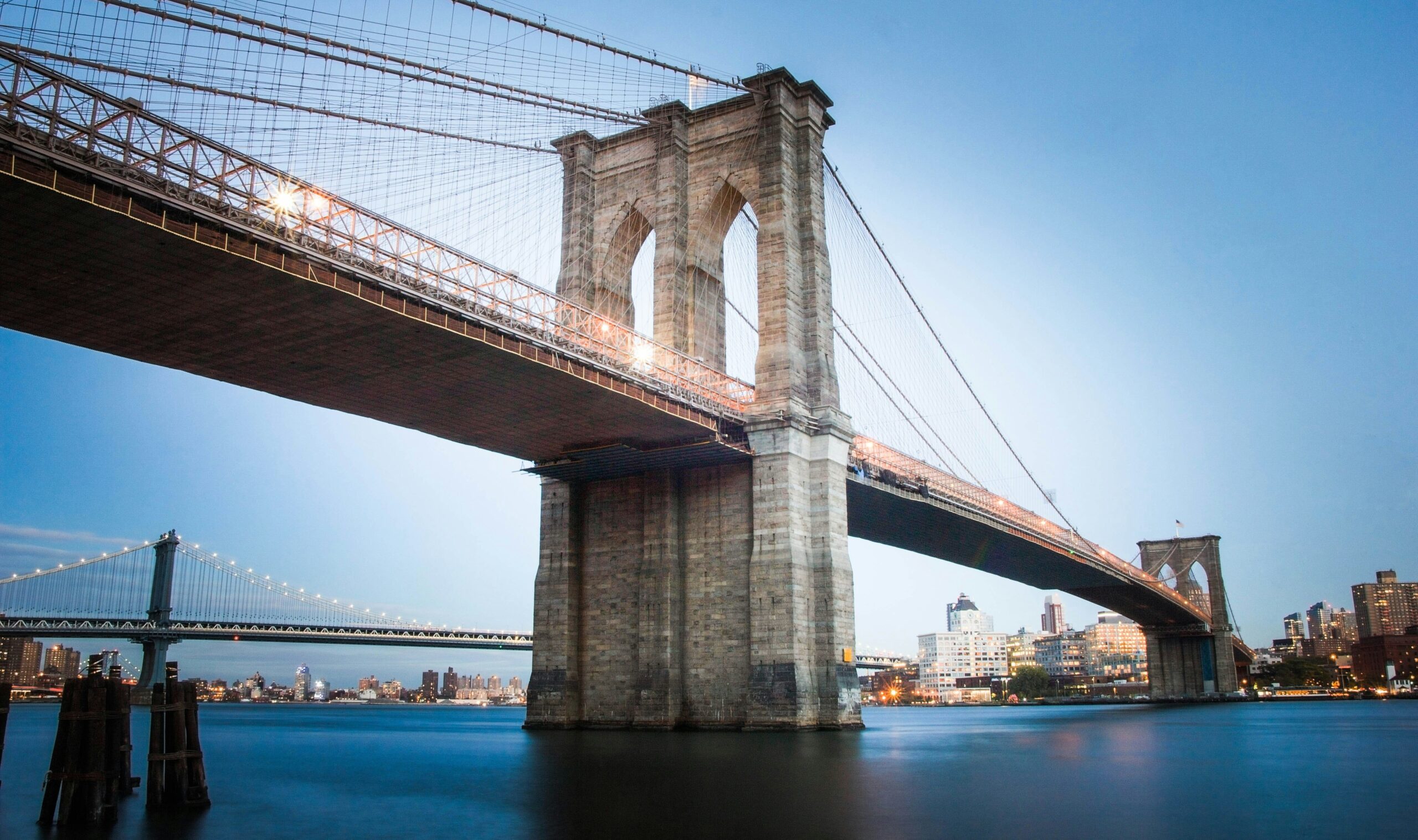
When the Brooklyn Bridge opened in 1883, it was the longest suspension bridge in the world and a triumph of 19th-century engineering that many experts had deemed impossible. John Augustus Roebling’s visionary design connected Manhattan and Brooklyn, then separate citie,s with a graceful span that combined Gothic Revival architecture with cutting-edge cable suspension technology.
The bridge’s construction story is itself legendary. John Roebling died from an injury sustained during the planning phase, and his so,n Washington Roebling, took over as chief engineer, only to be paralyzed by decompression sickness from working in the underwater caissons. Washington’s wife, Emily Warren Roebling, then assumed much of the engineering supervision, becoming one of the first women field engineers in American history. The bridge claimed approximately 30 lives during its 14-year construction, including several workers who fell or suffered from “the bends.”
Today, the Brooklyn Bridge remains one of New York City’s most iconic landmarks and a working testament to American ingenuity. Its pedestrian walkway offers one of the best free experiences in the city a mile-long elevated promenade with breathtaking views of the Manhattan skyline, harbor, and the East River below. The wooden planked walkway sits above the roadway, creating a peaceful escape from urban chaos while keeping you immersed in the city’s energy.
Visitor Tips: Walk from Brooklyn to Manhattan for the best skyline views facing you. Start in DUMBO (Down Under the Manhattan Bridge Overpass), where you can capture the perfect Instagram shot of the bridge framed by brownstones. Early morning or sunset provides the best light and smaller crowds. The walk takes about 30-45 minutes at a leisurely pace.
3. Empire State Building: Art Deco Icon and Depression-Era Achievement
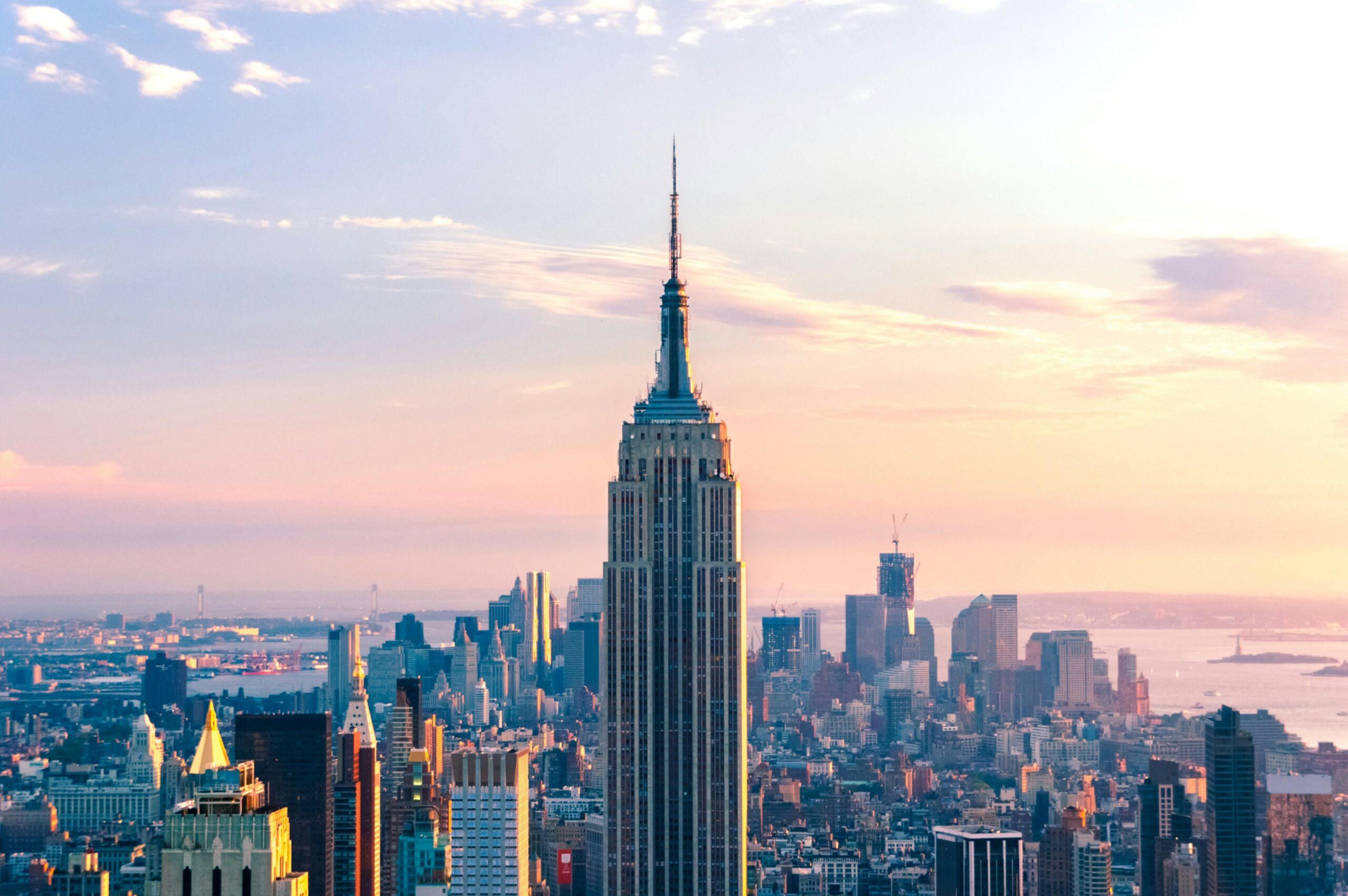
The Empire State Building represents more than architectural beauty it embodies American determination during the darkest economic period in the nation’s history. Constructed in just 410 days during the Great Depression, this Art Deco masterpiece opened in 1931 as the world’s tallest building, a title it held for nearly 40 years. The speed of construction remains remarkable: workers completed an average of four and a half floors per week, a pace unmatched in skyscraper history.
Designed by the architectural firm Shreve, Lamb & Harmon, the building rises 1,454 feet, including its antenna. Its distinctive setback design wasn’t merely aestheti,c it followed the 1916 Zoning Resolution that required tall buildings to allow sunlight to reach street level. The result was a stepped silhouette that became synonymous with the New York skyline itself.
The building’s observation decks on the 86th and 102nd floors offer 360-degree views spanning up to 80 miles on clear days. You’re standing where countless historic moments unfolded: the famous 1945 B-25 bomber crash into the 79th floor (the building survived), King Kong’s cinematic climb, and the annual Empire State Building Run-Up rac,e where athletes climb 1,576 steps to the 86th floor.
Beyond its physical presence, the Empire State Building achieved cultural landmark status through film, literature, and photography. Its tower lights now illuminate in colors commemorating everything from holidays to social causes, making it a beacon that connects past and present.
Visitor Tips: Skip-the-line tickets are worth the premium during peak seasons. Visit at sunrise for the most dramatic lighting and smallest crowds, or come after 10 PM for the late-night discount. The 102nd-floor observatory, fully enclosed and recently renovated, provides a more intimate viewing experience.
4. Grand Central Terminal: Beaux-Arts Masterpiece and Transportation Hub
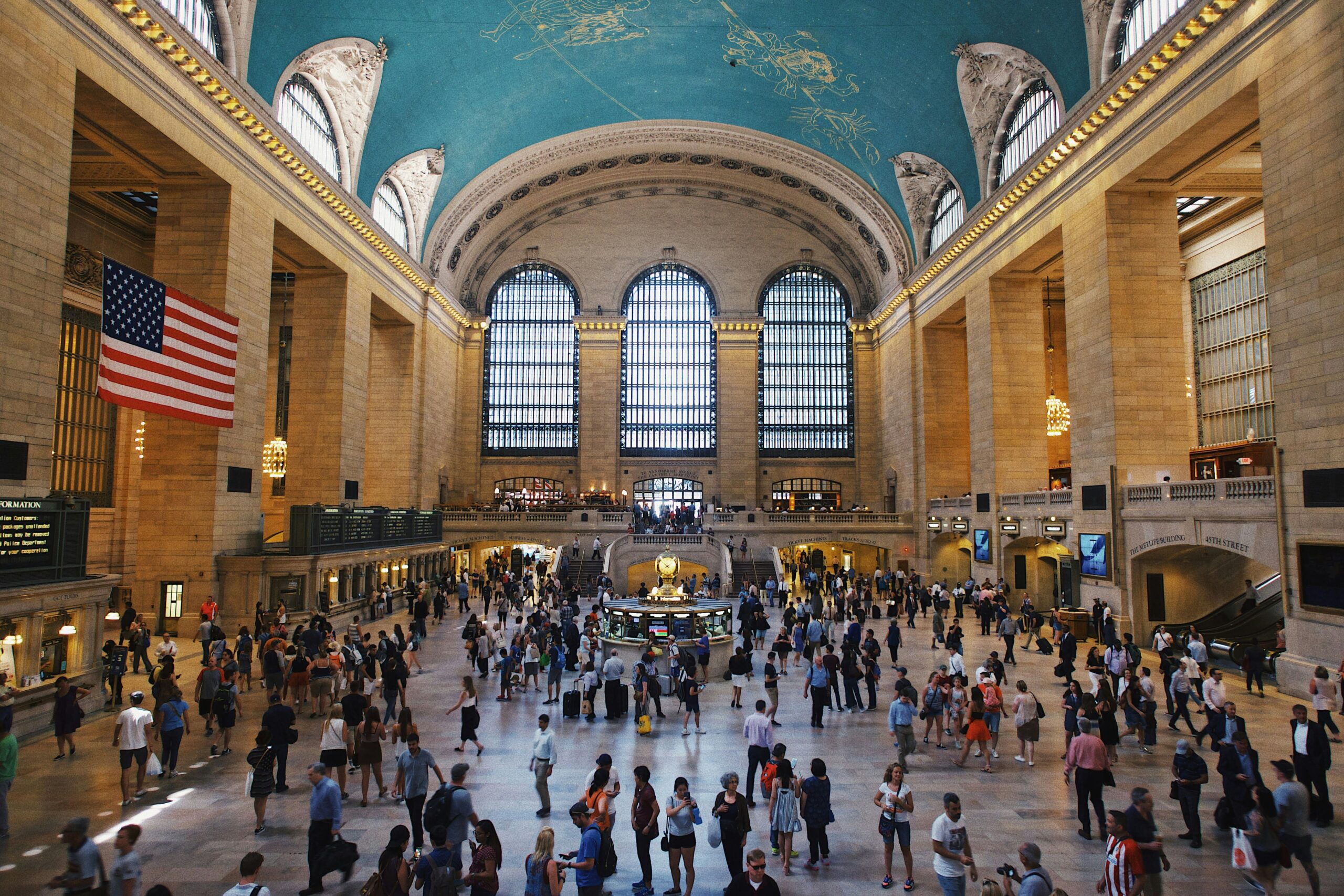
Grand Central Terminal isn’t just a train station, it’s a 102-year-old architectural cathedral dedicated to the romance of rail travel. Opened in 1913, this Beaux-Arts landmark features a Main Concourse so grand that it feels more like a European palace than a transportation hub. The terminal’s iconic celestial ceiling mural, painted by French artist Paul César Helleu, depicts the Mediterranean sky with 2,500 stars, 60 of which are illuminated by fiber optic lights.
The terminal’s history intertwines with New York’s transformation into a modern metropolis. Cornelius Vanderbilt’s original Grand Central Depot opened in 1871, but the current structure emerged from a massive early-20th-century project that electrified rail lines and buried them underground, creating valuable Park Avenue real estate above. This innovation allowed the terminal to anchor Midtown Manhattan’s development as a commercial center.
Architectural details reveal themselves slowly: the sculpted clock above the information booth uses opal faces valued at millions of dollars; the Whispering Gallery outside the Oyster Bar creates acoustic phenomena where whispers travel clearly across arched corridors; hidden staircases and passages recall the terminal’s past when it served diverse social classes in separate waiting areas. The terminal even contains a secret sub-basement track, dubbed Track 61, which once provided private rail access to the Waldorf Astoria hotel for presidents and dignitaries.
Grand Central narrowly escaped demolition in the 1960s when developers proposed replacing it with a modern office tower. Jacqueline Kennedy Onassis led the preservation campaign, resulting in the 1978 Supreme Court decision that upheld New York City’s landmarks law, a ruling that protected historic buildings nationwide.
Visitor Tips: Free walking tours run daily at 12:30 PM (Friday and Saturday onl,y currently check the Grand Central Partnership website for schedules). Visit the Campbell Bar, once a 1920s tycoon’s private office, for cocktails in a lavishly restored space. The terminal’s lower level houses the dining concourse with quality affordable options and the famous Oyster Bar, a New York institution since 1913.
5. Federal Hall National Memorial: Where American Democracy Began
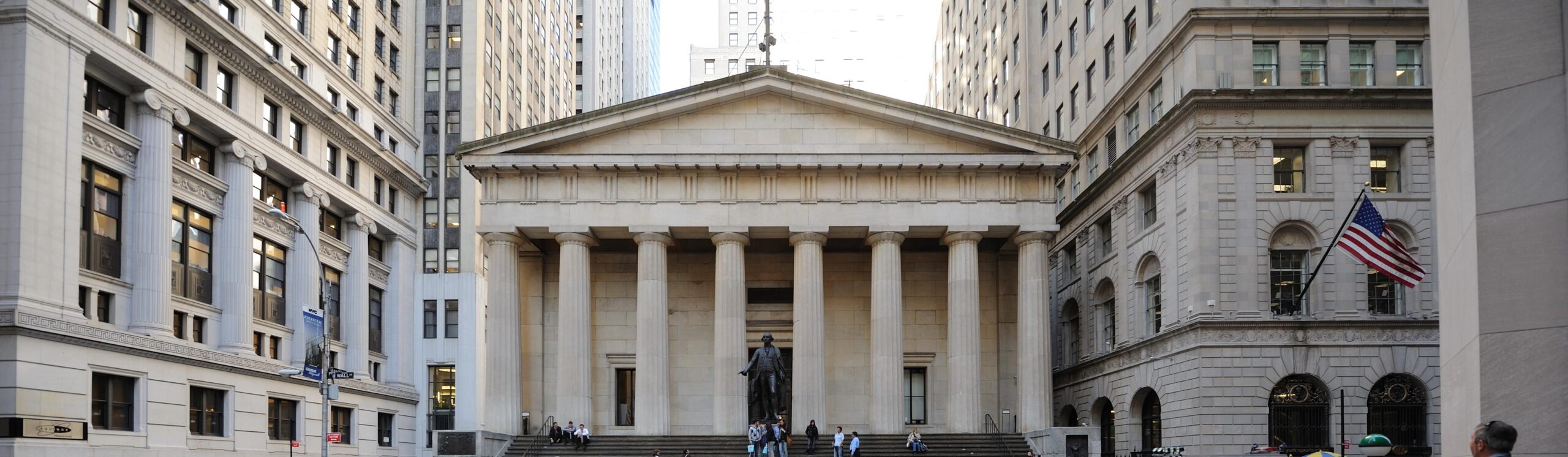
Federal Hall occupies hallowed ground in American history, though the current Greek Revival structure dates to 1842, not to the colonial era. The original building on this Wall Street site witnessed three pivotal moments in the birth of American democracy: the 1735 trial of John Peter Zenger (establishing freedom of the press), the Stamp Act Congress of 1765 (Colonial resistance to British taxation), and most significantly, George Washington’s inauguration as the nation’s first president on April 30, 1789.
That first Federal Hall also served as the nation’s first Capitol, housing Congress, the Supreme Court, and executive offices. The Bill of Rights was debated and ratified within its walls, and the first departments of government took shape here before the capital moved to Philadelphia in 1790.
The original building was demolished in 1812 when New York lost its capital status, deemed no longer necessary. The current structure was built as the U.S. Custom House and later served as the Federal Reserve Bank’s first headquarters. Its imposing Doric columns and John Quincy Adams Ward’s bronze statue of Washington dominate the intersection of Wall and Broad Streets, marking the exact spot where Washington took his oath of office.
Today, Federal Hall operates as a museum and memorial managed by the National Park Service. Inside, exhibits chronicle early American government, the development of constitutional law, and New York’s brief period as national capital. The building itself represents American neoclassical architecture at its finest, with a soaring rotunda featuring Corinthian columns and a coffered dome.
Visitor Tips: Admission is free, though donations are encouraged. Park rangers offer informative talks about Washington’s inauguration and early American government. The building is smaller than many NYC landmarks, so budget 30-45 minutes for your visit. Combine it with a walking tour of the Financial District to see other historic sites like Trinity Church and the 9/11 Memorial.
6. Trinity Church: Colonial Survivor in the Financial District
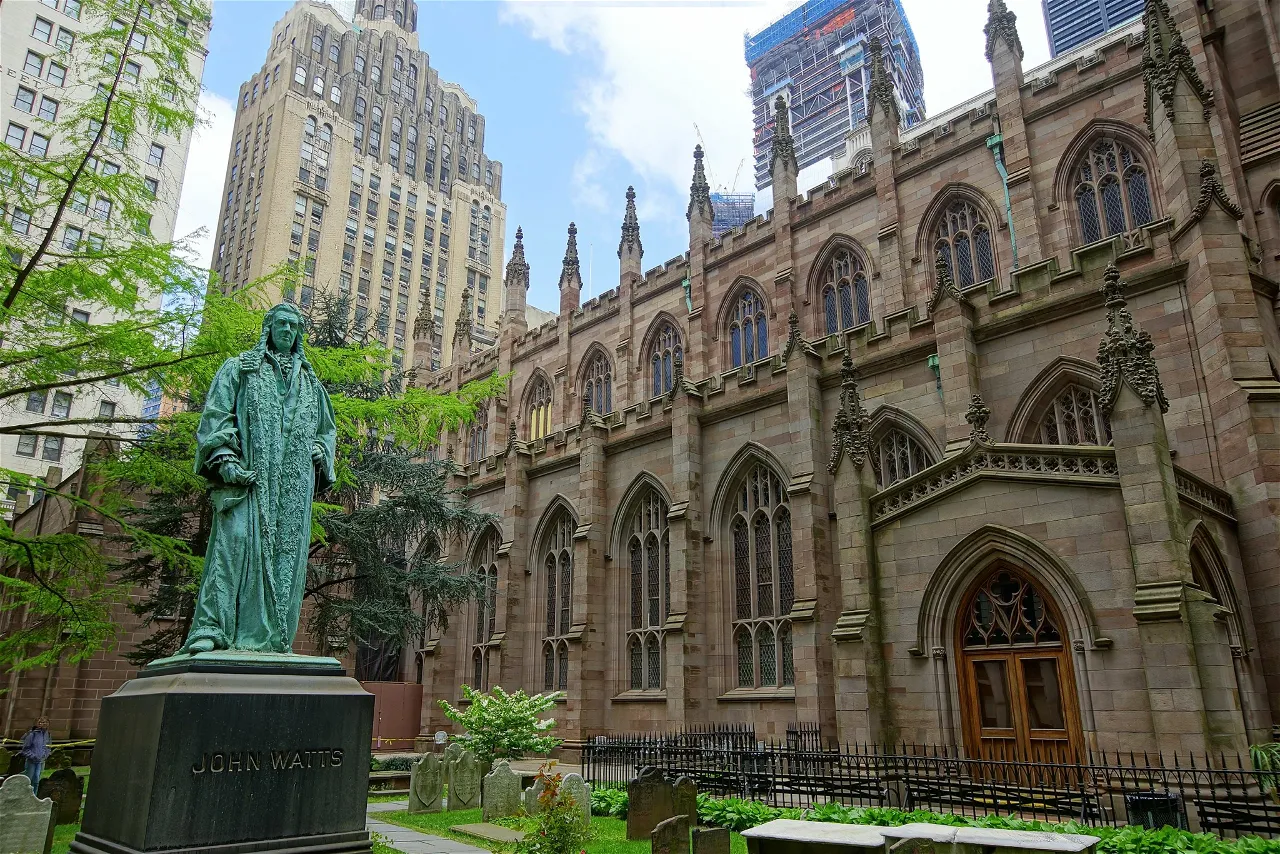
Trinity Church rises like a Gothic Revival sanctuary amid the glass and steel canyons of Lower Manhattan, creating a striking contrast between sacred and secular, old and new. Founded in 1697 by charter from King William III of England, Trinity Church has occupied this Wall Street location for over three centuries, though the current building is the congregation’s third, designed by architect Richard Upjohn and consecrated in 1846.
When completed, Trinity’s 281-foot spire made it the tallest building in New York City, a distinction it held for half a century. The church’s brown sandstone exterior and elaborate Gothic details represented a conscious rejection of simple Federal-style architecture, sparking the Gothic Revival movement in American church design.
Trinity’s cemetery contains the graves of historic figures, including Alexander Hamilton, the first Secretary of the Treasury, killed in his 1804 duel with Aaron Burr; Robert Fulton, steamboat inventor; and Francis Lewis, a signer of the Declaration of Independence. The cemetery itself is a peaceful oasis where office workers eat lunch among 18th-century headstones, creating surreal moments where modern life brushes against colonial history.
The church played crucial roles during pivotal moments: it held special services after Washington’s inauguration, survived the Great Fire of 1776 (though its first building didn’t), and offered sanctuary and relief services following the September 11 attacks, when it stood just blocks from Ground Zero.
Inside, the church maintains traditions while embracing contemporary needs. Daily services continue, world-class concerts fill the sanctuary with sacred music, and the museum explores the intersection of faith, commerce, and urban life across centuries. The church also manages a substantial real estate portfolio, making it one of New York’s wealthiest congregations a fitting irony for a church on Wall Street.
Visitor Tips: Entry is free during visiting hours. Attend one of the renowned lunchtime concerts (Thursdays) or Sunday services to experience the church’s acoustics and Aeolian-Skinner pipe organ. The cemetery is open daily and offers a quiet respite from the Financial District’s intensity.
7. Flatiron Building: Groundbreaking Architecture That Changed the Skyline
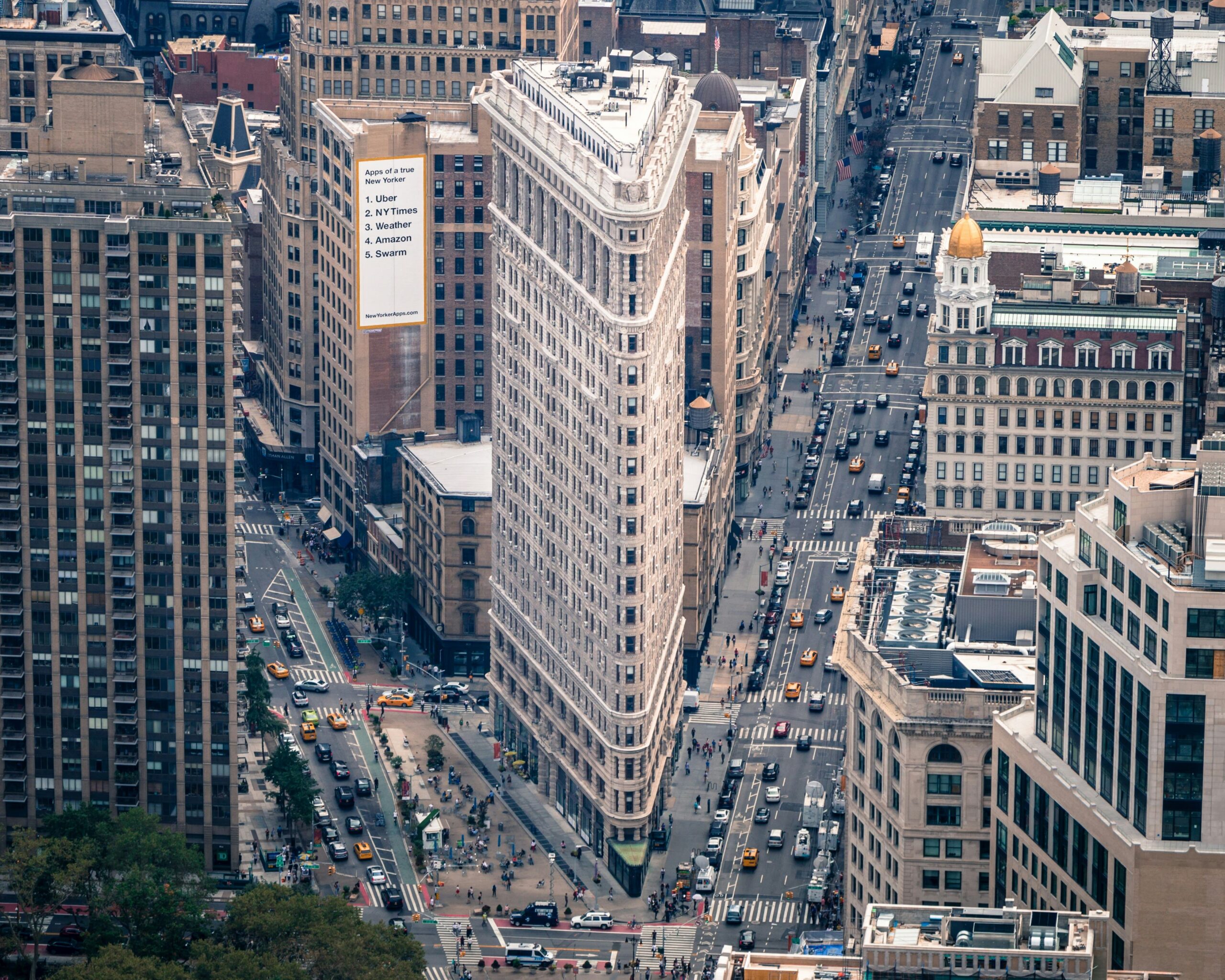
The Flatiron Building’s distinctive triangular shape has captivated New Yorkers and visitors since its completion in 1902. Officially named the Fuller Building after the construction company that built it, this 22-story structure earned its nickname from its resemblance to a cast-iron clothes iron, a shape dictated by the acute angle where Fifth Avenue and Broadway intersect at 23rd Street.
Architect Daniel Burnham designed one of New York’s first steel-frame skyscrapers, using a technology that allowed buildings to rise far higher than traditional masonry construction permitted. Many New Yorkers doubted the thin building’s stability, with some predicting it would collapse in strong winds. The building not only survived but thrived, becoming one of the city’s most photographed landmarks.
The Flatiron’s completion coincided with New York’s transformation into a modern metropolis. Its location marked the northern edge of the Ladies’ Mile shopping district and the southern boundary of the developing Madison Square area. The building’s height and prominent location made it a symbol of New York’s ambition and modernity the first skyscraper north of the Financial District.
The structure’s narrow triangular form created an unexpected phenomenon: strong winds whipping around the building would lift women’s skirts, leading men to loiter nearby for the show. Police officers would shoo them away with the phrase “23 skidoo,” a saying that entered American slang meaning to leave quickly.
While the Flatiron Building is not open for public tours, its exterior remains one of the most rewarding examples of New York City history landmarks for architecture enthusiasts. The Beaux-Arts facade features elaborate Renaissance Revival details in limestone and terracotta, with decorative elements that reward close examination.
Visitor Tips: The best viewpoints for photographs are from Madison Square Park directly to the east, or from the traffic island at 23rd and Fifth where Broadway crosses. Visit during different times of day to see how changing light transforms the building’s appearance. The surrounding Flatiron District offers excellent dining and shopping, making this a natural stop during Manhattan explorations.
8. 9/11 Memorial and Museum: Honoring Tragedy, Celebrating Resilience
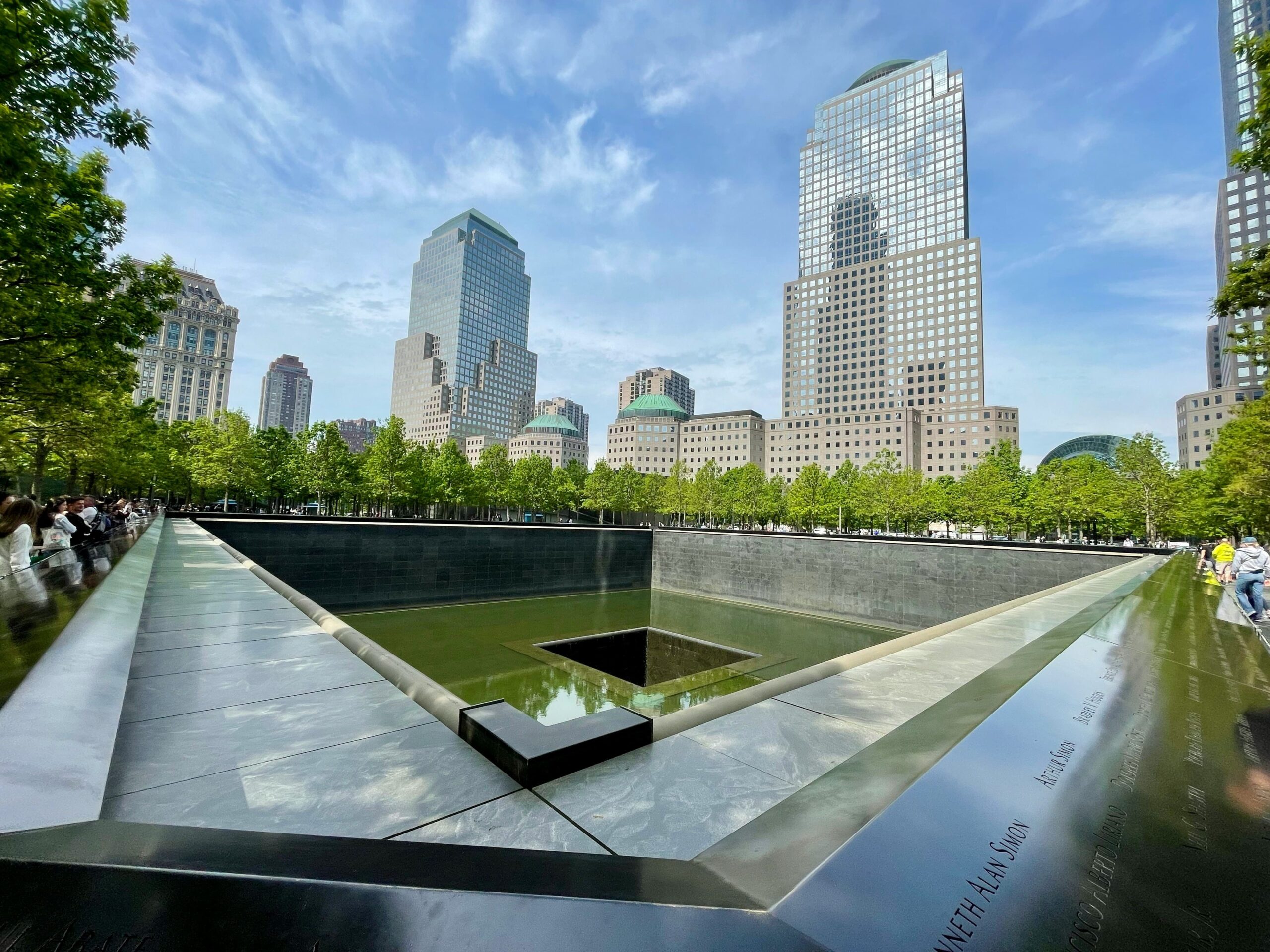
The National September 11 Memorial and Museum occupies sacred ground where the Twin Towers once stood, transforming the site of America’s deadliest terrorist attack into a place of remembrance, reflection, and education. The memorial’s twin reflecting pools, each nearly an acre in size, sit within the footprints of the original towers, with the names of all 2,977 victims inscribed on bronze parapets surrounding the voids.
Architect Michael Arad’s design, titled “Reflecting Absence,” creates a powerful statement about loss and memory. The pools’ continuous waterfalls the largest man-made waterfalls in North America, produce a sound that provides both solace and contemplation while shielding visitors from the surrounding city noise. The water disappears into smaller central voids, a detail suggesting the unfathomable nature of the loss.
The underground museum, designed by Davis Brody Bond, descends to bedrock and Foundation Hall, where visitors encounter the Last Column a 36-foot steel beam covered with inscriptions from recovery workers and a portion of the original slurry wall that held back the Hudson River during and after the attacks. The museum’s historical exhibition traces the day’s events through artifacts, oral histories, and multimedia installations, creating an immersive experience that honors those lost while documenting the attacks’ broader impact.
Beyond remembering September 11, 2001, the memorial includes victims of the 1993 World Trade Center bombing, acknowledging that the site witnessed two attacks separated by eight years. The museum also explores the aftermath: recovery operations, the global War on Terror, and the ongoing challenges of preventing extremism.
Visiting the 9/11 Memorial and Museum ranks among the most emotionally powerful experiences among NYC sightseeing historic landmarks. It’s a place where recent history feels immediate and personal, where the line between past and present blurs, and where collective memory takes physical form.
Visitor Tips: Memorial access is free and available daily. Museum admission requires timed tickets that can be booked online in advance. Plan for at least two hours to experience the museum fully; many visitors need more time to process the emotional weight of the exhibits. First responders, military members, and families who lost loved ones receive free admission. Visit later in the evening when the memorial pools are illuminated for a different perspective.
9. St. Patrick’s Cathedral: Gothic Revival Sanctuary in Midtown Manhattan
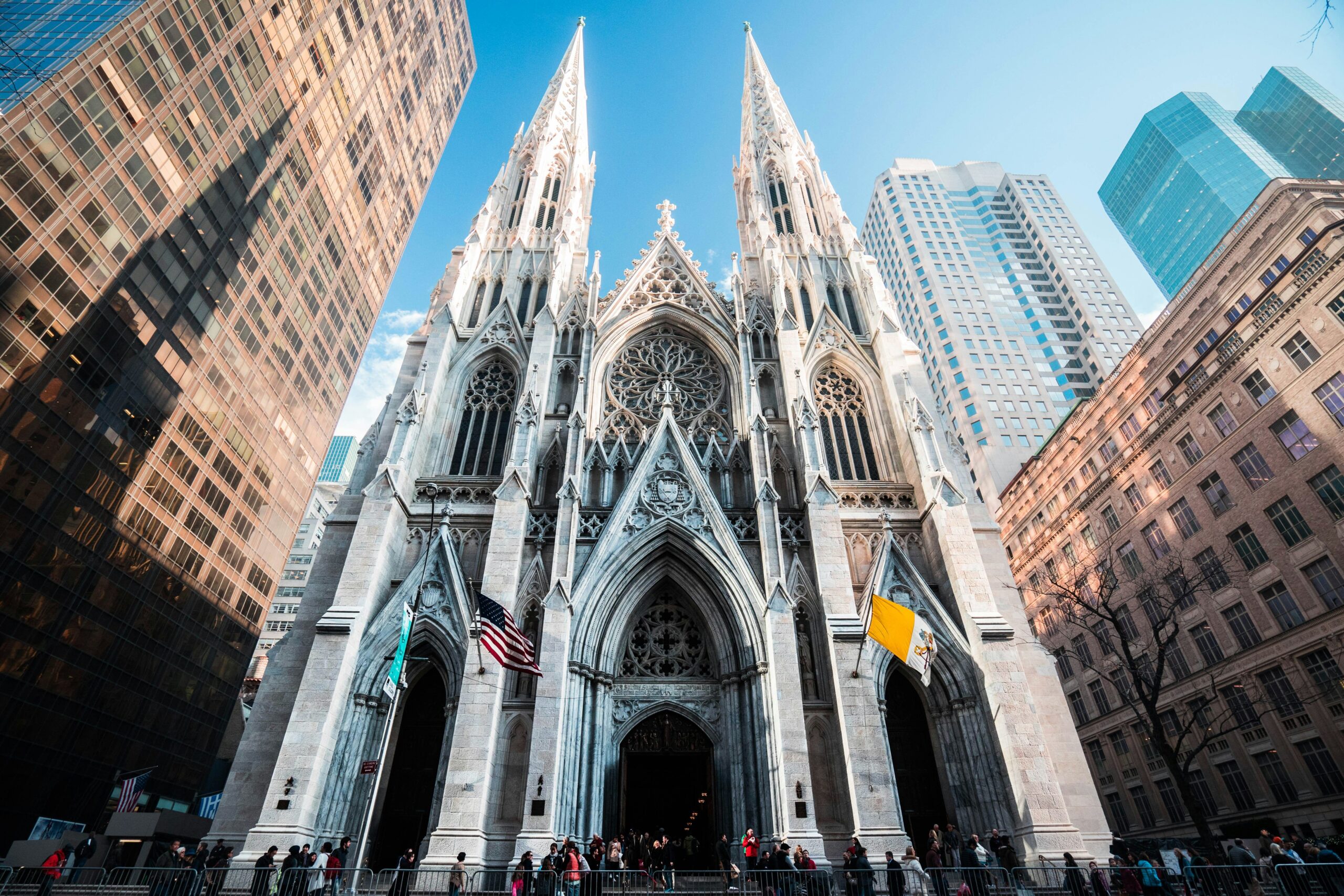
St. Patrick’s Cathedral rises majestically along Fifth Avenue, its white marble spires reaching 330 feet above Midtown Manhattan’s most exclusive shopping corridor. Dedicated in 1879, the cathedral represents the largest Catholic Gothic Revival church in North America and serves as the seat of the Archdiocese of New York.
Architect James Renwick Jr. designed the cathedral in the French Gothic style, drawing inspiration from Europe’s great medieval cathedrals, particularly Cologne Cathedral in Germany. Construction began in 1858 on what was then the outskirts of developed Manhattan, with many questioning the choice of such a remote location. The building rose slowly through the Civil War years and fthe inancial panic of 1873, finally opening for worship in 1879, though the spires weren’t completed until 1888.
The cathedral’s scale impresses even in a city of superlatives: it seats approximately 2,400 people, measures 405 feet long and 274 feet wide at the transepts, and contains more than 2,800 stained glass panels imported from England and France. The Rose Window above the great organ measures 26 feet in diameter, while the Pieta sculpture behind the altar, three times larger than Michelangelo’s famous version in Rome, commands reverent attention.
St. Patrick’s has hosted numerous historic events: Andy Warhol’s funeral, memorial services for Babe Ruth and Robert F. Kennedy, and masses attended by presidents and popes. Pope Francis celebrated mass here during his 2015 U.S. visit, and the cathedral regularly hosts significant Catholic ceremonies, including the annual Midnight Mass broadcast worldwide on Christmas Eve.
A recently completed multi-year restoration cleaned decades of grime from the marble facade, revealing the stone’s original luminous quality. The cathedral now gleams against the modern towers surrounding it, a testament to 19th-century craftsmanship holding its own among 21st-century architecture.
Visitor Tips: Entry is free, though donations support ongoing preservation. Self-guided tour brochures are available, or download the cathedral’s app for an audio tour. Mass schedules are posted online. Attending a service reveals the cathedral’s intended purpose as a sacred space, not merely a tourist attraction. Photography is permitted but be respectful during services.
10. The High Line: Industrial Heritage Transformed into Urban Park
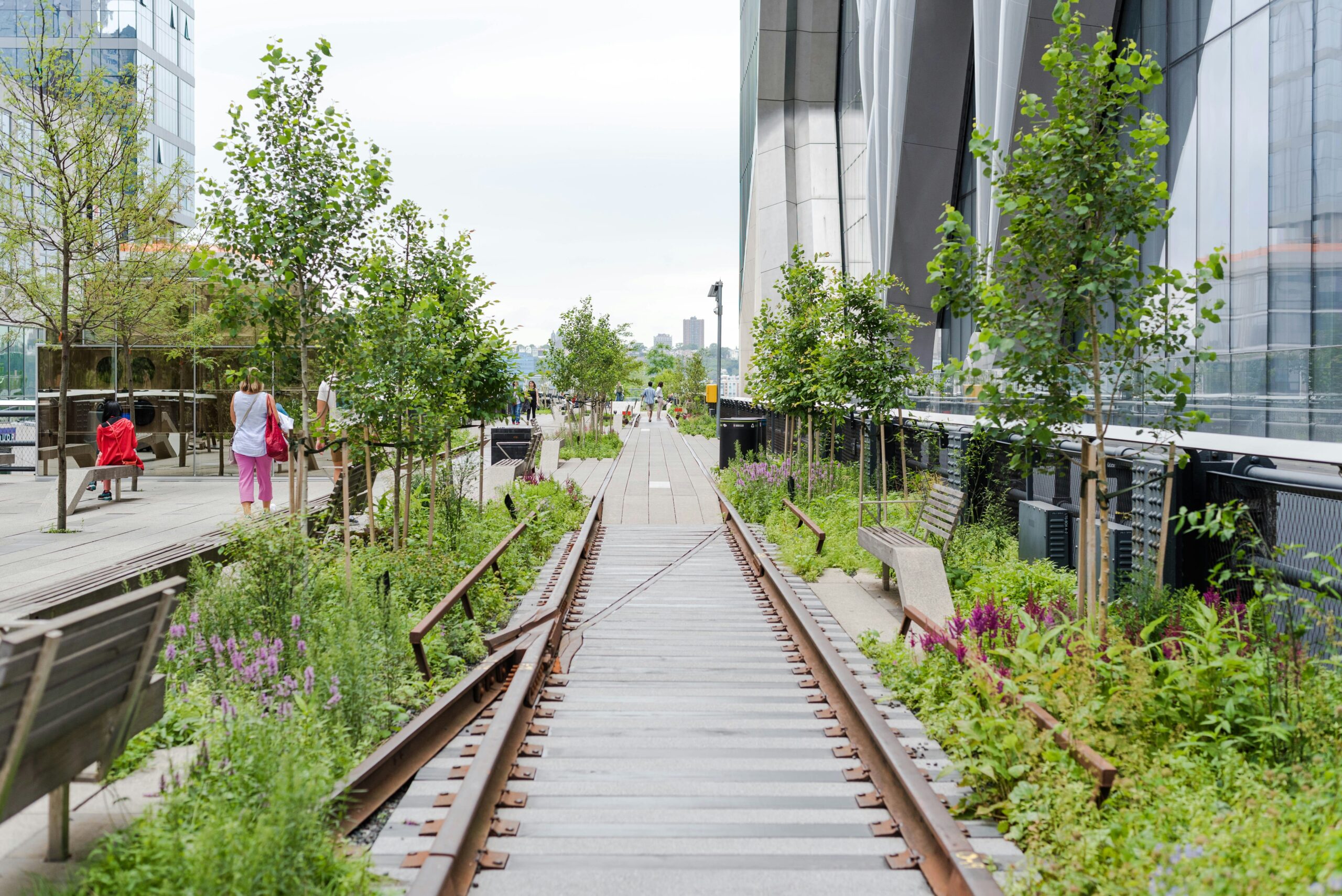
The High Line represents historic preservation reimagined as an elevated freight rail line converted into an innovative public park that has transformed Chelsea and sparked urban renewal projects worldwide. Built in the 1930s as part of the West Side Improvement project, the railway carried goods directly into Manhattan’s factories and warehouses, eliminating dangerous street-level crossings that had earned Tenth Avenue the nickname “Death Avenue.”
The rail line fell into disuse by 1980 as trucking replaced freight trains. Rather than demolishing the structure, community activists Joshua David and Robert Hammond formed Friends of the High Line in 1999 to advocate for the elevated structure’s preservation and reuse. Their vision succeeded, and the first section opened as a park in 2009, designed by James Corner Field Operations, Diller Scofidio + Renfro, and Piet Oudolf.
The High Line’s design preserves the railway’s industrial character while introducing carefully curated plantings, public art installations, and gathering spaces. Original rail tracks remain visible, embedded in the walking path as reminders of the structure’s past. Native grasses and wildflowers evoke the self-seeded landscape that overtook the abandoned railway, while viewing areas frame iconic New York scenes, including the Hudson River, the Meatpacking District, and the glass towers of Hudson Yards.
This linear park revolutionized thinking about adaptive reuse and industrial heritage. It demonstrated that old infrastructure could gain new life while preserving historical integrity, that parks didn’t need to be traditional green spaces, and that thoughtful design could catalyze neighborhood transformation. The High Line’s success inspired similar projects globally, from Paris’s Promenade Plantée to Seoul’s Seoullo 7017.
Walking the High Line today feels like time travel; you’re simultaneously experiencing 1930s infrastructure, viewing Chelsea’s art galleries and gritty warehouses, and confronting glittering new development that the park’s popularityhas accelerated. This layering of eras makes the High Line uniquely representative of New York’s constant reinvention while respecting its past.
Visitor Tips: Entry is free, though donations support maintenance and programming. The park runs from Gansevoort Street in the Meatpacking District to 34th Street on the West Side. Walk from south to north for the best Hudson River views. Visit during spring or fall when the landscaping is at its peak. Weekday mornings offer the most peaceful experience; weekends can be extremely crowded.
Planning Your Historic Landmark Tour: Practical Tips and Strategies
Experiencing these top 10 historic landmarks in NYC requires planning, especially if your time is limited. Here are strategies to maximize your historic landmark exploration:
Geographic Clustering: Group landmarks by location to minimize travel time. Lower Manhattan offers Federal Hall, Trinity Church, and the 9/11 Memorial within walking distance. Midtown includes the Empire State Building, Grand Central Terminal, and St. Patrick’s Cathedral in proximity. The Brooklyn Bridge connects to the Brooklyn Heights Promenade and the DUMBO neighborhood for extended exploration.
Free vs. Paid Experiences: Several landmarks offer free access, including Trinity Church, Federal Hall, the 9/11 Memorial, the Brooklyn Bridge, and the High Line. This allows budget-conscious travelers to experience significant history without admission fees. Paid sites like the Statue of Liberty, Empire State Building, and 9/11 Museum require booking and represent bigger budget commitments.
Timing Strategies: Visit major attractions early morning or late evening to avoid peak crowds. The Empire State Building offers sunrise tickets and late-night discounts. The 9/11 Memorial is particularly moving at night when the pools are illuminated. Grand Central Terminal is fascinating during weekday rush hours when it functions as a working transportation hub.
Combination Tickets and Passes: New York City offers several sightseeing passes that bundle admission to multiple attractions at discounted rates. Calculate whether these passes make financial sense based on your specific itinerary. Individual tickets sometimes provide better value if you’re selective about paid attractions.
Seasonal Considerations: New York’s seasons dramatically affect the landmark experience. Summer brings the largest crowds but the longest daylight hours. Fall offers comfortable temperatures and beautiful foliage, especially noticeable at the High Line. Winter holidays create magical atmospheres, particularly at Grand Central Terminal and St. Patrick’s Cathedral, though cold weather can make outdoor sites like the Brooklyn Bridge challenging. Spring provides moderate temperatures and fewer tourists than summer.
Accessibility: Most landmarks provide accessibility accommodations, though historic buildings may face limitations. The Statue of Liberty’s crown requires climbing stairs. Brooklyn Bridge’s pedestrian walkway involves a gradual incline but is wheelchair accessible. Contact specific sites in advance regarding accessibility needs.
Beyond the Top 10: Honorable Mentions
New York City’s historic richness extends far beyond ten landmarks. The Woolworth Building (1913) pioneered neo-Gothic skyscraper design. The Tenement Museum on the Lower East Side provides intimate glimpses of immigrant life. The New York Public Library’s main branch on Fifth Avenue houses the Stephen A. Schwarzman Building, a 1911 Beaux-Arts masterpiece with the iconic Patience and Fortitude lions. The Dakota apartment building, where John Lennon lived and died, represents late 19th-century luxury housing. These and countless other sites await exploration for those who fall under New York’s historic spell.
Understanding New York’s Landmark Preservation System
New York City’s designation as a center for historic preservation resulted from loss as much as foresight. The 1963 demolition of Pennsylvania Station a Beaux-Arts masterpiece shocked New Yorkers into action. The public outcry led to the 1965 Landmarks Preservation Law, creating the Landmarks Preservation Commission with the power to designate and protect significant buildings, interiors, and districts.
Today, New York has over 37,000 landmark properties spread across 150 historic districts. This extensive system protects not just famous buildings but entire neighborhoods that maintain architectural coherence and historic character. Understanding this system helps visitors appreciate how New York balances preservation with development, maintaining connections to the past while accommodating future growth.
The Evolution of Historic Tourism in New York City
Historic landmarks have anchored New York tourism since the 19th century. Early guidebooks directed visitors to Trinity Church and the original City Hall. The early 20th century saw the rise of skyscraper tourism, with observation decks becoming essential experiences. Post-9/11, historic tourism gained renewed significance as visitors sought to understand the city’s resilience and transformation.
Today’s historic tourism blends traditional sightseeing with immersive experiences. Audio tours, augmented reality apps, and interactive museums transform passive observation into active learning. Many landmarks now offer behind-the-scenes access, special events, and educational programming that deepens engagement with New York’s past.
Connecting Past to Present: What These Landmarks Reveal About New York
These famous historic places in NYC collectively tell the story of American ambition, diversity, innovation, and resilience. They reveal a city built by immigrants, driven by commerce, shaped by tragedy, and constantly reinventing itself while maintaining threads of continuity.
The Statue of Liberty and Ellis Island speak to America’s identity as a nation of immigrants, an ongoing conversation in contemporary politics. Federal Hall and Trinity Church connect us to colonial and revolutionary history, showing how New York helped birth American democracy. The Brooklyn Bridge, Empire State Building, and Flatiron Building demonstrate the engineering and architectural ambition that made New York synonymous with modernity. Grand Central Terminal and St. Patrick’s Cathedral reveal how infrastructure and faith shaped urban development. The 9/11 Memorial reminds us that historic significance emerges from tragedy as well as triumph. The High Line shows how cities can honor industrial heritage while adapting to new needs.
Together, these landmarks create a narrative arc from colonial settlement through industrial revolution to global city status, each monument marking a chapter in New York’s extraordinary journey.
Making History Personal: How to Deepen Your Experience
Visiting historic landmarks becomes more meaningful when you connect them to personal interests or family history. Research whether your ancestors passed through Ellis Island using the free online database. Study the architectural styles represented across landmarks and trace their evolution. Focus on a particular historical period the Revolutionary War, the Gilded Age, the Great Depression and explore how different landmarks reflect that era.
Photography offers another avenue for deeper engagement. Each landmark presents unique compositional challenges and opportunities. Capture the interplay between historic structures and modern surroundings. Document architectural details that reveal craftsmanship. Experiment with different lighting conditions to see how the atmosphere transforms familiar scenes.
Reading historical accounts, memoirs, and architectural analyses before visiting enriches on-site experiences. Understanding the Brooklyn Bridge’s construction challenges makes walking it more profound. Knowing Grand Central Terminal’s preservation battle adds weight to appreciating its restored beauty. Context transforms sightseeing into genuine historical understanding.
Preserving for the Future: The Ongoing Story
These landmarks aren’t static monuments; they’re living pieces of infrastructure requiring constant maintenance, restoration, and adaptation. Climate change threatens coastal landmarks like the Statue of Liberty with flooding and erosion. Aging buildings need structural reinforcement and system updates. Increasing tourism demands a balance between access and preservation.
Supporting historic preservation through donations, membership in preservation organizations, and advocacy for landmark funding ensures these sites survive for future generations. When you visit, you become part of the preservation story, your ticket purchases and donations funding the ongoing work that maintains these connections to the past.
Your Journey Through New York’s History
The top 10 historic landmarks in NYC offer more than sightseeing opportunities; they provide portals into the stories, struggles, and triumphs that built one of the world’s greatest cities. From the Statue of Liberty welcoming the world to America’s shores, to the High Line showing how creativity can transform obsolete infrastructure, these sites embody New York’s enduring capacity to honor its past while embracing its future.
Whether you spend a long weekend or a lifetime exploring these landmarks, each visit reveals new layers of meaning. You’ll discover that New York’s greatest landmark is the city itself, an ever-evolving monument to human ambition, diversity, and resilience, where history doesn’t just live in museums but walks the streets, rides the subways, and shapes the skyline above.
Plan your visit to these must-see places NYC offers, but remain open to unexpected discoveries. The city’s historic richness extends beyond any top-10 list, waiting in quiet churches, preserved townhouses, industrial buildings, and neighborhood streets where history unfolded. These landmarks provide the framework, but your exploration will write your own chapter in the ongoing story of New York City’s extraordinary heritage.
Start planning your historic New York adventure today, and discover why these landmarks continue to captivate millions of visitors who come seeking connection to the past and inspiration for the future. Whether you’re drawn to architectural marvels, immigration history, Revolutionary War sites, or 21st-century memorials, New York City’s historic landmarks offer something for every interest and every traveler.
For more information about visiting these sites, check the National Park Service New York website for details about federally managed landmarks and the NYC Landmarks Preservation Commission for comprehensive information about the city’s preservation efforts and designated landmarks.