TL;DR – Top 10 places to visit in Germany
- Berlin: History, nightlife, culture
- Munich: Oktoberfest, Bavarian charm
- Neuschwanstein Castle: Fairy-tale beauty
- Black Forest: Hiking & scenic villages
- Cologne: Gothic cathedral, Rhine cruises
- Hamburg: Harbor city vibes
- Heidelberg: Romantic old town
- Dresden: Baroque architecture
- Rothenburg ob der Tauber: Medieval magic
- Lake Constance: Nature and border towns
Why Visit Germany Today
Did you know Germany is home to over 25,000 castles? From fairy-tale fortresses perched on hilltops to sprawling palace complexes, this country reads like a storybook brought to life. But Germany isn’t just about the past. It’s a nation where medieval towns sit alongside cutting-edge cities, where you can hike through pristine forests in the morning and dance in world-class clubs by night.
If you’re planning your next Euro trip, this guide to the top 10 places to visit in Germany is your go-to roadmap for experiencing everything from vibrant urban culture and storied history to breathtaking natural landscapes. Whether you’re a first-timer or a seasoned traveler, Germany delivers an unforgettable mix of experiences that appeal to every type of adventurer.
Germany’s geographical diversity is staggering. The northern coastlines along the Baltic and North Seas offer beach towns and maritime heritage, while the southern regions showcase Alpine splendor and dramatic mountain scenery. The Rhine and Danube rivers carve through the heart of the country, connecting historic cities and vineyard-covered valleys. Each region maintains distinct cultural identities, culinary traditions, and architectural styles that have developed over centuries.
The country’s efficient infrastructure makes exploration remarkably easy. High-speed ICE trains connect major cities in just a few hours, while regional networks reach even the smallest villages. The comprehensive public transportation system means you can travel from Berlin’s Brandenburg Gate to Munich’s Marienplatz, from Hamburg’s harbor to the peaks of the Bavarian Alps, all without needing a rental car. English is widely spoken in tourist areas and major cities, though learning a few basic German phrases will enhance your interactions with locals and show respect for the culture.
Germany’s commitment to preserving its heritage while embracing modernity creates fascinating contrasts. You’ll find solar panels on medieval half-timbered houses, contemporary art galleries in repurposed industrial spaces, and Michelin-starred restaurants serving reimagined traditional cuisine. This blend of old and new, tradition and innovation, defines the German experience and makes it one of Europe’s most rewarding destinations to explore.
The country’s tumultuous 20th-century history has left profound marks that Germany addresses with remarkable openness and educational intent. Memorials, museums, and preserved sites offer sobering lessons about the past while celebrating the peaceful reunification that brought East and West together. This historical consciousness coexists with a forward-looking society that leads in renewable energy, innovative design, and progressive social policies.
10 Top Places to Visit in Germany
1. Berlin
Berlin pulses with creative energy and historical weight in equal measure. The capital city offers world-class museums on Museum Island (a UNESCO World Heritage site), remnants of the Berlin Wall that tell powerful stories, and a nightlife scene that’s legendary across Europe. Wander through neighborhoods like Kreuzberg for street art and multicultural vibes, or visit the sobering Holocaust Memorial. The Brandenburg Gate stands as an iconic symbol of reunification. Museum highlights include the Pergamon Museum’s ancient artifacts and the Neues Museum’s famous bust of Nefertiti. The East Side Gallery preserves 1.3 kilometers of the Berlin Wall covered in vibrant murals.
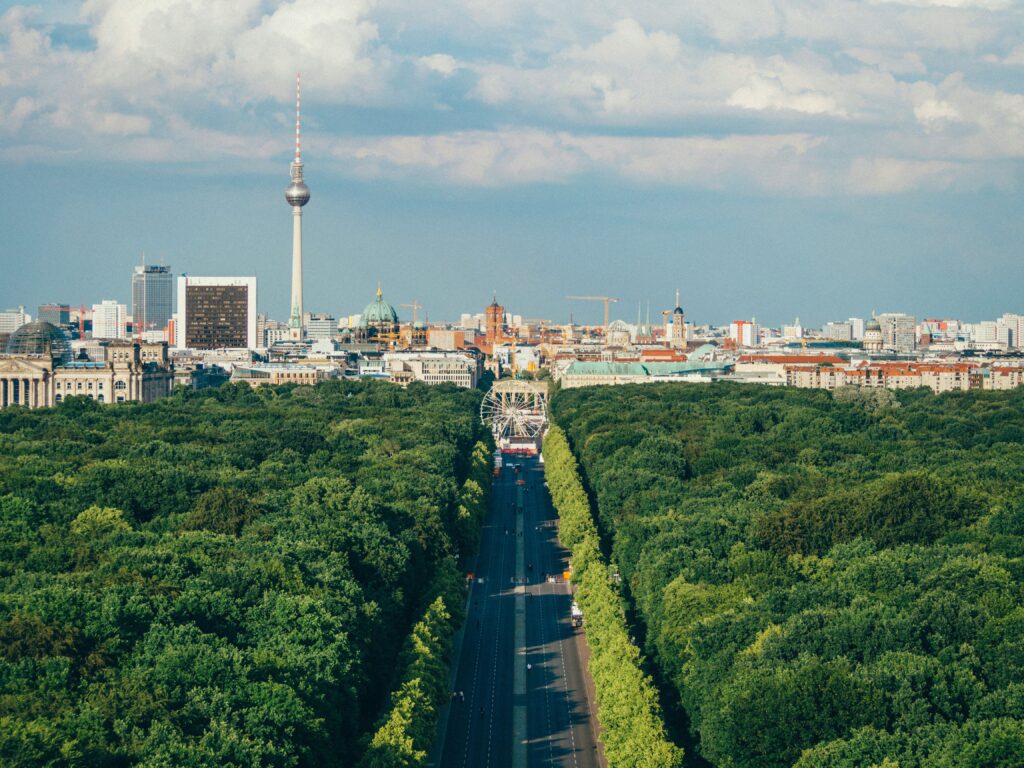
Berlin’s food scene reflects its multicultural character, from Turkish döner kebabs to Michelin-starred restaurants. For nightlife, legendary clubs like Berghain and Watergate draw international DJs and party crowds that celebrate from Friday through Monday. The contrast between profound historical sites and cutting-edge contemporary culture makes every Berlin visit unforgettable.
Standout reason: Berlin seamlessly blends profound history with cutting-edge contemporary culture, making it endlessly fascinating for every visitor.
Learn more: Visit the official Berlin Tourism website for current events and detailed attraction information.
2. Munich
Bavaria’s capital charms visitors with its perfect blend of traditional culture and modern sophistication. Famous worldwide for Oktoberfest (which attracts over 6 million visitors annually), Munich offers year-round pleasures including magnificent beer halls like Hofbräuhaus (founded in 1589), the impressive Marienplatz with its Glockenspiel that performs daily, and world-class museums like the BMW Museum and the Deutsches Museum (one of the world’s largest science museums). The English Garden is one of the world’s largest urban parks at 910 acres, complete with surfers riding the Eisbach wave year-round.
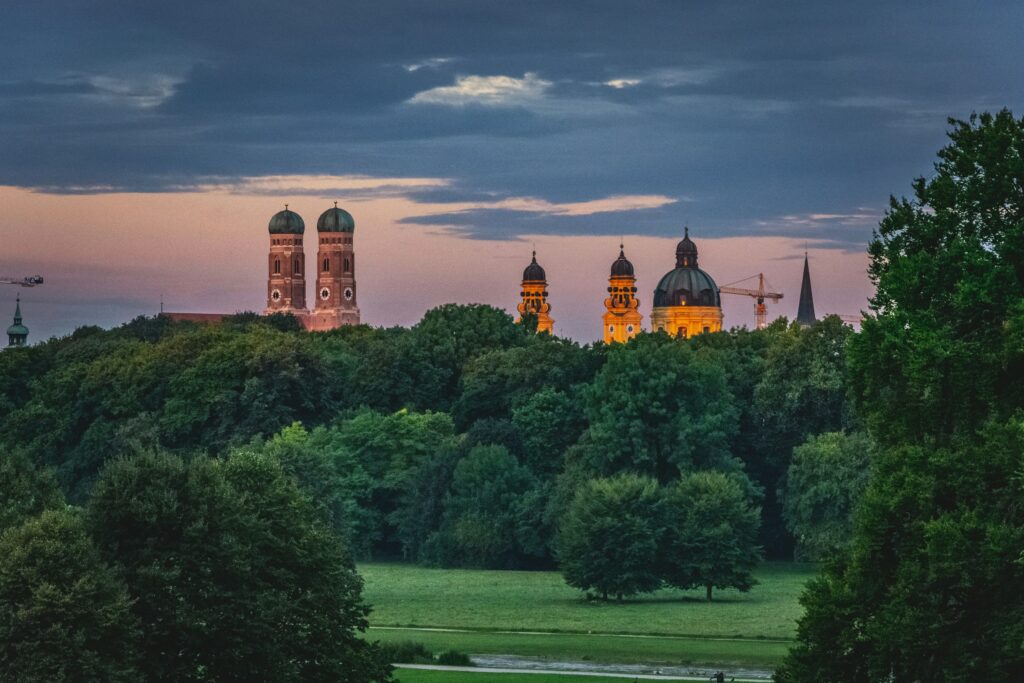
Munich hosts six major breweries, each with traditional beer gardens where locals and tourists enjoy liter-sized steins under chestnut trees. Art lovers can explore the Alte Pinakothek’s European masterpieces or the modern Pinakothek der Moderne. Day trips from Munich include the Dachau Memorial Site, Nymphenburg Palace with its baroque gardens, and the alpine resort of Garmisch-Partenkirchen. Salzburg, Austria sits just 90 minutes away by train.
Standout reason: Munich captures authentic Bavarian culture while maintaining cosmopolitan appeal that satisfies both tradition-seekers and modern travelers.
Learn more: Check the City of Munich’s official tourism portal for comprehensive visitor information.
3. Neuschwanstein Castle
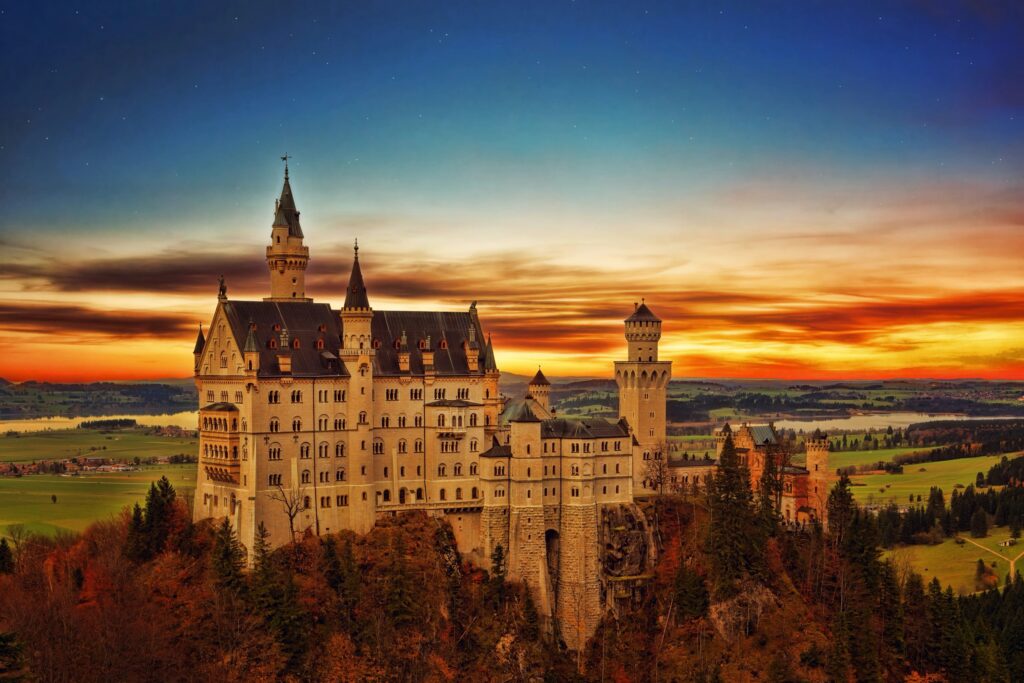
Perched dramatically on a rugged hill in the Bavarian Alps, Neuschwanstein Castle is the ultimate fairy-tale fortress and the inspiration behind Disney’s iconic Sleeping Beauty Castle. Built by King Ludwig II starting in 1869 as a personal refuge and homage to composer Richard Wagner, this Romanesque Revival palace features lavishly decorated rooms including a throne room with Byzantine-style murals, a singer’s hall, and Ludwig’s bedroom that took 14 woodcarvers four years to complete. The castle ironically incorporated cutting-edge technology including electric lighting, running water, and a telephone system.
Stunning mountain views surround the castle, with the classic photo opportunity from Marienbrücke (Mary’s Bridge) offering the iconic shot. The nearby Hohenschwangau Castle (Ludwig’s childhood home) and the picturesque town of Füssen add to the area’s appeal. Only 14 of 200 planned rooms were finished before Ludwig’s mysterious death in 1886. Tickets must be purchased in advance from Hohenschwangau village, with a steep 30-40 minute uphill walk or horse-drawn carriage ride to reach the entrance. Over 1.4 million people visit annually.
Standout reason: This is Germany’s most photographed building and an absolute must for anyone seeking that picture-perfect castle moment.
Learn more: Visit the official Neuschwanstein Castle website for tickets and visiting hours.
4. Black Forest
The Black Forest region offers a serene escape into nature with dense evergreen forests, charming villages with traditional farmhouses topped with massive thatched roofs, and scenic hiking trails winding through hills and valleys. This is the birthplace of the cuckoo clock, Black Forest cake (Schwarzwälder Kirschtorte), and countless Brothers Grimm fairy tales. The region’s name comes from the dense canopy that blocks sunlight, creating an atmosphere of mystery. Drive the scenic Schwarzwaldhochstraße (Black Forest High Road) for panoramic views, visit traditional clock-making workshops in Triberg, or hike to stunning waterfalls like Triberg Falls (Germany’s highest at 163 meters).
The elegant spa town of Baden-Baden offers thermal baths, belle-époque architecture, and a famous casino. Lake Titisee and Lake Schluchsee provide swimming and water sports in summer. Traditional Black Forest farmhouses serve hearty regional cuisine including smoked ham, spätzle, and the famous multi-layered chocolate cherry cake. In winter, the region transforms into a snowy wonderland perfect for skiing and snowshoeing.
Standout reason: Few places capture German forest mystique and traditional rural culture quite like this enchanting region of cuckoo clocks and dark woodland trails.
Learn more: Explore the Black Forest Tourism website for hiking routes and regional events.
5. Cologne
Dominated by its magnificent Gothic cathedral (Kölner Dom) that took over 600 years to complete, Cologne blends Roman history with modern urban energy along the Rhine River. The cathedral is a UNESCO World Heritage site and Germany’s most visited landmark with twin spires reaching 157 meters high, stunning stained glass windows, and the Shrine of the Three Kings containing relics of the Biblical Magi. The structure survived World War II bombing that destroyed much of the surrounding city. Stroll along the Rhine promenade with its outdoor cafés and river cruise departures, explore the charming Old Town (Altstadt) with its colorful buildings and narrow lanes, or sample the local Kölsch beer served in small 200ml glasses.
The city boasts excellent museums including the Romano-Germanic Museum with Roman artifacts, the Wallraf-Richartz Museum with medieval and baroque art, and the Chocolate Museum. Cologne’s famous carnival celebration (Karneval) is one of Europe’s largest street festivals. The Hohenzollern Bridge, covered in thousands of “love locks,” offers stunning cathedral views.
Standout reason: The cathedral alone is worth the trip with its architectural magnificence that leaves visitors awestruck by Gothic engineering.
Learn more: Plan your visit at Cologne Tourism’s official site for museum passes and event calendars.
6. Hamburg
Germany’s second-largest city captivates with its maritime heritage, canal-laced center nicknamed “Venice of the North,” and sophisticated cultural scene. The historic Speicherstadt warehouse district, a UNESCO World Heritage site with red-brick Gothic architecture, contrasts beautifully with the modern glass curves of the Elbphilharmonie concert hall (opened in 2017 and now an architectural icon). Take a harbor cruise through one of Europe’s largest ports to see massive container ships and learn about Hamburg’s trading history.
Explore the lively St. Pauli district with its fish market and waterfront, wander the trendy HafenCity development with contemporary architecture, or visit Miniatur Wunderland (the world’s largest model railway). The Reeperbahn offers legendary nightlife in Hamburg’s entertainment district. The city’s lakes Binnenalster and Außenalster provide scenic walks and boat rentals in the city center. Hamburg’s cosmopolitan character comes from centuries as a Hanseatic trading port. Excellent museums include the Kunsthalle art museum and the International Maritime Museum.
Standout reason: This harbor city delivers unique maritime charm combined with world-class music venues and cutting-edge architecture.
Learn more: Discover more at Hamburg Tourism for harbor tours and concert schedules.
7. Heidelberg
This quintessentially romantic university town sits along the Neckar River beneath the picturesque ruins of Heidelberg Castle, creating postcard-perfect scenery at every turn. Germany’s oldest university (founded in 1386) lends the city a youthful, intellectual energy with students filling cafés and pubs. The baroque Old Town features narrow cobblestone lanes, the Church of the Holy Spirit, historic student taverns, and the famous Old Bridge (Karl Theodor Bridge) with its iconic gate towers. Climb through the castle gardens or take the funicular railway to explore the red sandstone ruins and see the world’s largest wine barrel.
The castle courtyards host summer festivals and concerts against a backdrop of Renaissance and Gothic architecture. The Philosophers’ Walk trail on the opposite hillside offers riverside beauty and panoramic city views that inspired countless poets and writers throughout history including Mark Twain and Goethe. Heidelberg miraculously escaped World War II bombing, preserving its authentic historical character. The Main Street (Hauptstraße) is one of Europe’s longest pedestrian zones.
Standout reason: Few German cities capture romantic, old-world charm quite like Heidelberg with its castle ruins and riverside setting.
Learn more: Visit Heidelberg Tourism for castle tours and event information.
8. Dresden
Once called the “Florence on the Elbe” for its art treasures and baroque beauty, Dresden showcases spectacular architecture meticulously reconstructed after World War II devastation. The Zwinger Palace, a baroque masterpiece, houses world-class art collections including the Old Masters Picture Gallery with Raphael’s Sistine Madonna. The rebuilt Frauenkirche (Church of Our Lady) cathedral stands as a powerful symbol of reconciliation, destroyed in 1945 bombing and rebuilt using original stones where possible, finally reopening in 2005. The Semper Opera House hosts world-renowned performances in a stunning Neo-Renaissance building. The Royal Palace contains the Green Vault, one of Europe’s richest treasure chambers with jeweled artworks.
Stroll along Brühl’s Terrace, nicknamed “The Balcony of Europe,” for beautiful Elbe River views. The city’s Christmas market (Striezelmarkt) is Germany’s oldest, dating to 1434. Dresden’s phoenix-like resurrection from wartime destruction has restored one of Europe’s most beautiful historic city centers. The Neustadt district across the river offers alternative culture, street art, and vibrant nightlife. Day trips include Saxon Switzerland National Park.
Standout reason: Dresden’s phoenix-like resurrection has restored one of Europe’s most beautiful historic city centers with unmatched baroque splendor.
Learn more: Plan your cultural itinerary at Dresden Tourism for concert tickets and museum hours.
9. Rothenburg ob der Tauber
Step through Rothenburg’s medieval gates and travel back in time to a perfectly preserved walled town straight from the Middle Ages. Half-timbered houses painted in warm colors line cobblestone streets, towers and turrets punctuate intact city walls you can walk atop for 360-degree views, and the Market Square with its Renaissance Town Hall feels like a film set. The town survived World War II relatively intact and became a model for medieval preservation. Walk the complete town wall circuit (2.5 km) for unique perspectives. The Medieval Crime and Justice Museum offers quirky historical insights into punishment devices and legal history.
The Christmas Museum (Käthe Wohlfahrt) celebrates German holiday traditions year-round with ornaments and decorations. St. Jakob’s Church houses a stunning carved wooden altarpiece by Tilman Riemenschneider. The Plönlein, where two streets fork around a small yellow house, creates Rothenburg’s most photographed corner. Night watchman tours bring medieval life to vivid storytelling. Every street reveals another Instagram-worthy scene. The town sits on the Romantic Road scenic route.
Standout reason: This is Germany’s most authentically preserved medieval town, a living museum where every street transports you centuries back in time.
Learn more: Explore Rothenburg Tourism for walking tour schedules and accommodation options.
10. Lake Constance (Bodensee)
Where Germany, Switzerland, and Austria converge, Lake Constance offers Alpine beauty, historic island towns, vineyard-covered hillsides, and crystal-clear waters perfect for swimming and sailing. At 63 km long, it’s Central Europe’s third-largest lake. Visit the flower-covered island of Mainau (the “Flower Island”) with its baroque palace and botanical gardens featuring millions of blooms. Explore medieval Lindau on its island setting with Bavarian lions guarding the harbor entrance. Tour the lakeside town of Meersburg with its hilltop castle (Germany’s oldest inhabited castle), wine taverns, and stunning lake views. The views of the snow-capped Alps create a stunning backdrop across the water. Konstanz, the largest town, sits right on the Swiss border with a charming old town.
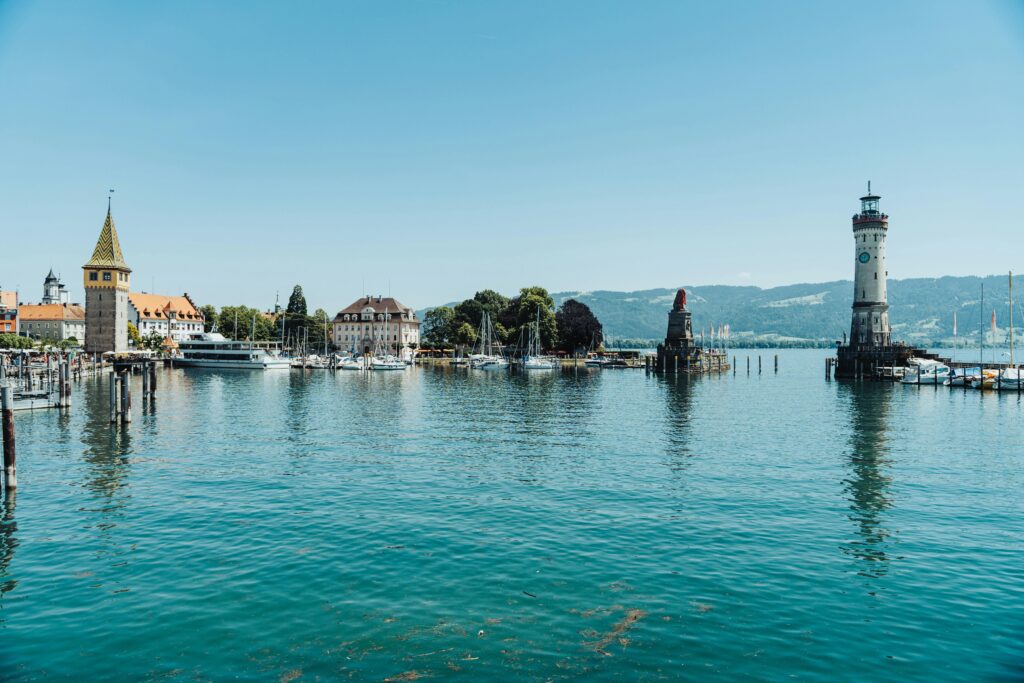
The Zeppelin Museum in Friedrichshafen tells the story of airship history. Cycling around the lake on the 270 km Bodensee-Radweg route is a popular multi-day activity. The mild climate supports vineyards producing excellent white wines. Water activities include sailing, windsurfing, and lake cruises. Medieval Reichenau Island, a UNESCO site, features three Romanesque churches.
Standout reason: This tri-border gem combines natural beauty with international flavor and laid-back resort charm unmatched elsewhere in Germany.
Learn more: Discover the region at Lake Constance Tourism for ferry schedules and cycling routes.
Local Tips & Must-See Attractions
Understanding Germany’s practical details helps you maximize your trip and avoid common tourist mistakes. These insider tips come from both local knowledge and years of traveler feedback about what works best when exploring the top 10 places to see in Germany.
Getting Around with Germany’s Train System: Germany’s railway network is one of Europe’s most efficient and extensive, making it the ideal way to explore multiple destinations without a car. The Deutsche Bahn (DB) operates high-speed ICE trains connecting major cities like Berlin, Munich, Hamburg, and Cologne in just a few hours. For instance, Berlin to Munich takes about 4 hours on the ICE, while Hamburg to Frankfurt requires just 3.5 hours.
For budget-conscious travelers, the Deutschland-Ticket offers incredible value at €49 per month for unlimited travel on all regional trains, S-Bahns, U-Bahns, trams, and buses nationwide. This ticket doesn’t cover the high-speed ICE trains, but regional trains reach virtually every destination, just at slower speeds. If you’re staying in Germany for several weeks or want complete flexibility to explore spontaneously, this pass pays for itself after just a few journeys. Purchase it through the DB Navigator app.
For ICE and long-distance trains, book tickets well in advance (up to 6 months early) through the Deutsche Bahn website or app for the best prices. Super Sparpreis tickets can be as low as €17.90 between major cities if booked early. These tickets are route-specific and non-refundable, so make sure your plans are firm. Flexible tickets cost significantly more but allow changes.
City Tourist Cards for Maximum Savings: Major German cities offer tourist cards that bundle unlimited public transportation with free or heavily discounted museum and attraction entry. Calculate whether these passes make financial sense based on your planned activities, but they often pay for themselves after visiting just 2-3 attractions while simplifying logistics.
The Berlin WelcomeCard covers zones AB or ABC (including Potsdam) for 48 hours to 6 days and provides discounts at over 200 attractions. The Museum Island’s five museums alone justify the card for culture enthusiasts. The Munich Card includes the U-Bahn and S-Bahn network plus discounts at museums, tours, and even restaurants. The Hamburg Card covers the extensive public transport network and includes harbor cruise discounts. Always check what percentage discount the card offers versus free entry, as some attractions only provide 25% off.
Sunday Shopping and Planning: One aspect of German culture that catches many tourists off-guard is that most shops close on Sundays. This tradition, protected by German law, gives workers a guaranteed day of rest. Exceptions include bakeries (usually open Sunday mornings), gas station convenience stores, train station shops, and some businesses in tourist areas.
Stock up on groceries, snacks, and any supplies on Saturday if you’ll need them Sunday. Restaurants, cafés, and tourist attractions remain open, so you won’t go hungry. Many museums actually see their highest attendance on Sundays when locals have free time. This tradition also creates a noticeably quieter, more relaxed Sunday atmosphere throughout the country, which can be quite pleasant once you adjust to it.
Best Times to Visit Different Regions: Germany’s climate varies significantly by region and season, affecting which of the top 10 best places to visit in Germany you should prioritize when.
May through September offers the warmest weather and longest days, perfect for sightseeing and outdoor activities. Summer temperatures typically range from 20-25°C (68-77°F), though heat waves can push temperatures higher. This is peak tourist season, especially July and August, meaning higher prices and larger crowds at major attractions like Neuschwanstein Castle. Book accommodations well in advance for summer travel.
December brings magical Christmas markets throughout Germany, with Nuremberg’s Christkindlesmarkt, Dresden’s Striezelmarkt, and Cologne’s Christmas markets ranking among the most famous. These markets typically run from late November through December 23rd. The festive atmosphere, twinkling lights, mulled wine (Glühwein), roasted chestnuts, and handcrafted ornaments create an enchanting experience. Bundle up as temperatures hover around freezing.
Spring (April-May) and fall (September-October) provide shoulder-season advantages including pleasant weather (10-18°C/50-64°F), fewer crowds, lower prices, and beautiful seasonal colors. The Black Forest looks particularly stunning in autumn with fall foliage, while spring brings Alpine wildflowers. These seasons offer the best balance for travelers seeking good weather without summer peak-season chaos.
Winter (January-March) brings the coldest weather but the fewest tourists and lowest prices. Ski resorts in the Bavarian Alps and Black Forest operate during these months. Cities remain fully functional with indoor attractions like museums and concerts providing cultural entertainment. Some smaller attractions in rural areas may have reduced hours or close entirely until spring.
Tipping Culture and Service Expectations: German service differs from American or British styles, appearing more reserved and less frequently checking on tables. This isn’t rudeness but rather a cultural norm of giving customers privacy. To get your server’s attention, make eye contact or raise your hand slightly.
Tipping (Trinkgeld) customs in Germany involve rounding up or adding 5-10% for good service. Rather than leaving cash on the table, tell your server the total you want to pay including tip when paying. For example, if your bill is €47, you might say “50 Euro, bitte” to round up and leave €3 as a tip. The server makes change based on your stated amount.
Language Basics: While English is widely spoken in tourist areas, major cities, and among younger Germans, learning a few basic German phrases shows respect and helps in smaller towns or with older locals. Essential phrases include “Guten Tag” (good day), “Danke” (thank you), “Bitte” (please/you’re welcome), “Entschuldigung” (excuse me/sorry), and “Sprechen Sie Englisch?” (Do you speak English?).
Germans appreciate when visitors attempt their language even if pronunciation is imperfect. Restaurant menus in tourist areas typically include English translations, but neighborhood spots may not. Download Google Translate’s offline German pack for quick translations when needed.
Budgeting & Money-Saving Advice
Germany can be surprisingly affordable when you know where to look and how locals save money. These strategies help stretch your budget without sacrificing experiences at the 10 top places to visit in Germany.
Free Walking Tours in Every Major City: Free walking tours have become one of the best-kept secrets for budget travelers throughout Germany. These tours operate on a tip-based model where knowledgeable local guides share city highlights, historical stories, and insider recommendations during 2-3 hour walks. You pay what you think the tour was worth at the end, typically €10-15 per person.
Every major German city offers these tours with multiple departure times daily. In Berlin, tours cover topics like the Berlin Wall, Cold War history, Third Reich sites, or alternative culture neighborhoods. Munich offers tours of the old town, Third Reich history, or beer culture. The guides are usually young, enthusiastic locals or long-term residents who share both official history and personal perspectives.
Beyond the historical and cultural knowledge, these tours provide excellent orientation on your first day in a new city. Guides recommend specific restaurants, bars, museums, and neighborhoods worth exploring. They’ll explain how to use public transport, where to find the best cheap eats, and which tourist traps to avoid. The value far exceeds any tip you’ll give.
City Museum Passes Equal Huge Savings: Germany’s world-class museums can consume a significant portion of your budget at €10-15 per museum. City museum passes bundle multiple institutions for substantial savings if you plan to visit several attractions.
Berlin’s Museum Pass covers admission to over 30 museums for three consecutive days (€29), including all five museums on Museum Island, the Pergamon Museum, the DDR Museum, and many others. Just visiting Museum Island’s attractions separately would cost more than the pass. The pass also includes fast-track entry, letting you skip ticket lines.
Munich’s museums require individual planning. The Pinakothek museums (Old, New, and Modern) offer combination tickets. Many Munich museums offer free entry on Sundays, though with correspondingly larger crowds.
The Museumsufer Frankfurt ticket covers admission to all 38 museums along the Main River embankment for two consecutive days. Dresden offers various combination tickets for the Zwinger Palace museums, Royal Palace, and other state museums.
Calculate your planned visits against the pass price to determine if it makes financial sense. If you’re mainly interested in outdoor activities, street life, and just one or two museums, buying individual tickets may be cheaper. Museum enthusiasts and rainy-day sightseers benefit most from these passes.
Eating Cheaply Like a Local: German food doesn’t have to break your budget. Skip sit-down restaurants for some meals and explore alternatives that locals use daily.
Bakeries (Bäckerei) are Germany’s secret weapon for cheap, delicious meals. Fresh pretzels (Brezeln) cost €1-2, sandwiches run €3-5, and pastries start at €2. The quality is consistently excellent, with dozens of bread varieties you won’t find elsewhere. Grab breakfast at a bakery to save €10-15 compared to hotel buffets or café breakfasts. Many bakeries have small seating areas and serve excellent coffee.
Imbiss stands represent Germany’s street food culture, selling döner kebabs, currywurst, bratwurst, schnitzel sandwiches, and fries for €4-8. Döner kebabs, brought to Germany by Turkish immigrants, have become a national favorite and provide filling, flavorful meals for about €6. Currywurst (sliced sausage with curry ketchup and fries) is a Berlin institution. Quality varies, so ask locals or check online reviews for the best stands.
Lunch specials (Mittagsmenü or Mittagstisch) at restaurants offer substantial discounts compared to dinner prices. Many restaurants serve 2-3 course lunch deals for €8-15 that would cost €20-30 at dinner. This is the perfect time to try nicer restaurants on a budget.
Grocery Shopping at Aldi and Lidl: For snacks, drinks, breakfast items, and picnic supplies, Aldi and Lidl supermarkets offer prices far below tourist-area convenience stores. These discount chains maintain surprisingly high quality despite rock-bottom prices.
A liter of excellent German beer costs €1-2 at Aldi versus €4-6 in restaurants. Fresh pretzels, bread, cheese, cold cuts, yogurt, fruit, and chocolate provide breakfast and snacks for a fraction of café prices. Water bottles cost pennies compared to €3-4 in tourist areas.
German supermarkets don’t provide free bags, so bring your own reusable bag or purchase one at checkout. Most German supermarkets require you to deposit coins (usually €0.50-1) to unlock shopping carts, which you get back when you return the cart. This system keeps parking lots clear of abandoned carts.
Free Attractions and Activities: Many of Germany’s most memorable experiences cost nothing. Walking through the Brandenburg Gate, crossing Cologne’s Hohenzollern Bridge, exploring Rothenburg’s medieval streets, strolling Heidelberg’s Old Town, or wandering Hamburg’s Speicherstadt costs exactly zero euros while providing the atmosphere and photo opportunities that define your visit.
Berlin’s East Side Gallery charges no admission to view the longest remaining stretch of Berlin Wall covered in murals. Munich’s English Garden provides free access to vast green spaces where you can watch surfers on the Eisbach. Most German cities have free viewpoints offering panoramic vistas.
Many churches and cathedrals remain free to enter outside service times, including Cologne Cathedral (though the tower climb costs extra). The exteriors and surrounding areas of castles like Neuschwanstein offer stunning views and photos even if you skip the interior tours.
Water and Drinks: German tap water (Leitungswasser) is perfectly safe, tastes good, and meets strict quality standards. Carrying a reusable water bottle and refilling it at public fountains or asking for tap water at cafés saves €2-4 per bottle. In restaurants, asking for tap water is less common than in some countries, and servers may seem reluctant, but it’s not illegal or impossible. Some establishments provide it free, others charge a small amount.
Be aware that in restaurants, “Wasser” typically means bottled water, which comes carbonated (mit Kohlensäure) by default unless you specify still water (stilles Wasser). Bottled water costs €3-6 in restaurants, another reason to carry your own bottle.
Top Hidden Gems & Insider Picks
While the top 10 place to visit in Germany attracts most attention, these lesser-known destinations provide incredible experiences with fewer tourists and often lower prices. Seasoned Germany travelers and locals treasure these hidden gems.
Bamberg: UNESCO Old Town and Smoked Beer
This Franconian town north of Nuremberg boasts over 1,000 years of history with a remarkably intact medieval and baroque center that UNESCO recognized as a World Heritage site. Unlike many German cities bombed during World War II, Bamberg emerged virtually unscathed, preserving over 2,400 historic buildings across seven hills with the Regnitz River flowing through the center.
The old town hall sits impossibly on an artificial island in the middle of the river, its frescoed walls and half-timbered construction creating Bamberg’s most iconic image. The cathedral, with its four towers and Romanesque-Gothic architecture, contains the only papal tomb north of the Alps and the mysterious Bamberg Rider statue. The New Residence palace features baroque state rooms and rose gardens overlooking the town.
Bamberg’s brewing tradition produces Rauchbier (smoked beer), a distinctive local specialty that tastes like liquid campfire due to malts dried over beechwood flames. The Schlenkerla brewery has served this acquired-taste beer since 1405. Nine breweries still operate within city limits, more per capita than nearly anywhere else in the world. The atmospheric taverns, particularly in the Sandstraße quarter, provide perfect venues for sampling Franconian beers and cuisine.
The town’s compact size allows complete exploration on foot, with virtually every street offering photogenic half-timbered buildings, historic fountains, or river views. The Venetian-inspired “Little Venice” quarter along the river showcases former fisherman’s houses with flower-filled balconies. Bamberg’s blend of architectural beauty, brewing culture, and authentic atmosphere makes it a hidden gem worth prioritizing.
Saxon Switzerland National Park: Unreal Rock Formations
Despite its name, Saxon Switzerland lies entirely within Germany near Dresden, where sandstone formations and forested gorges create a landscape unlike anywhere else in the country. The Elbe River carved through sandstone over millions of years, leaving behind dramatic table mountains, steep ravines, and hundreds of rock pillars that attract rock climbers from across Europe.
The Bastei Bridge, an iconic stone bridge built in 1851, connects rock pillars 194 meters above the Elbe River. The views from this formation across the Elbe Valley and surrounding rock formations are simply stunning. Reach it via a 2-3 hour hike from Rathen village or take a shorter walk from the nearby parking area. Sunrise and sunset provide particularly magical light for photography.
More adventurous hikers can tackle the challenging trail to Schrammsteine ridge for even more dramatic panoramas, or hike to Königstein Fortress, one of Europe’s largest hilltop fortifications with 50 buildings perched on a table mountain. The Kuhstall, a massive natural rock arch, and the Lichtenhain Waterfall add variety to the landscape.
The park’s proximity to Dresden (30 minutes by S-Bahn regional train) makes it perfect for a day trip, though overnight stays in villages like Rathen or Bad Schandau let you experience the park’s tranquility after day-trippers depart. Well-marked hiking trails of varying difficulty crisscross the region, with trail maps available from visitor centers.
Regensburg: Best-Preserved Medieval City
While Rothenburg gets the fame, Regensburg quietly preserves an even larger and more authentic medieval city center that UNESCO protects. The entire old town remains wonderfully intact, with over 1,500 buildings from various historical periods creating a living museum of 2,000 years of architecture.
The Stone Bridge, completed in 1146, served as the only bridge across the Danube for centuries and inspired many other European bridge-building projects. Walk across its 16 arches for views of colorful buildings lining the riverfront. The Gothic cathedral with its twin spires dominates the skyline, while narrow medieval lanes wind between patrician tower houses built by wealthy merchant families in the 12th and 13th centuries.
The historic sausage kitchen (Historische Wurstkuchl) next to the Stone Bridge has served grilled sausages since 1135, making it one of the world’s oldest continuously operating restaurants. Try the Regensburger sausages with sauerkraut and sweet mustard.
Regensburg’s strategic position at the northernmost point of the Danube made it a crucial trading center throughout history. This wealth funded the magnificent buildings that survive today. The city successfully balances preservation with modern life, with students from the university bringing youthful energy to historic beer gardens and cafés.
Unlike heavily touristed Rothenburg, Regensburg functions as a real city where locals outnumber visitors, providing authentic experiences and fair prices. The combination of intact medieval architecture, riverside location, and living culture makes it an essential stop for those seeking the top 10 places to see in Germany beyond the typical highlights.
Meersburg: Lakeside Town with Vineyards
On Lake Constance’s northern shore, Meersburg cascades down steep hillsides to the water’s edge, its old town crowned by two castles and surrounded by vineyard-covered slopes. The Old Castle (Altes Schloss) claims to be Germany’s oldest continuously inhabited castle, with parts dating to the 7th century. Walk through furnished medieval rooms, climb the tower for lake views, and explore the atmospheric chambers where poet Annette von Droste-Hülshoff lived.
The New Castle (Neues Schloss), a baroque palace, served as the residence of prince-bishops and now houses a museum with stunning lakeside views from its terrace. Between the two castles, the old town’s steep cobblestone lanes wind past half-timbered houses, wine taverns, and craft shops. The car-free upper town maintains its medieval character completely.
Meersburg’s wine culture thrives on the sun-drenched slopes surrounding the town. The Lake Constance wine region produces excellent white wines, particularly Müller-Thurgau and Pinot Blanc. Visit the Staatsweingut Meersburg (state winery) for tastings with lake views, or sample wines at cozy taverns serving Bodensee fish specialties.
The lake ferries connect Meersburg to Konstanz on the opposite shore, providing car and passenger service with beautiful water views. The waterfront promenade invites leisurely strolls past colorful buildings and outdoor cafés. The combination of medieval architecture, wine culture, and lakeside setting creates a romantic atmosphere perfect for relaxing exploration.
Spreewald: Canoe Through Forested Canals
Just an hour southeast of Berlin, the Spreewald Biosphere Reserve creates an utterly unique landscape where the Spree River splits into hundreds of canals winding through lush forests and meadows. This UNESCO-protected wetland has been shaped by the Sorbian minority culture, which maintains distinct traditions and language in the region.
Traditional wooden punt boats called Kähne provide the classic Spreewald experience. Boatmen pole these flat-bottomed vessels through narrow channels past waterside villages, forests, and fields. Some routes include stops at traditional restaurants serving Spreewald pickles (a regional specialty) and other local dishes. Tours range from one-hour introductory trips to full-day excursions with lunch stops.
For more independence, rent canoes or kayaks to explore the 200-kilometer canal network at your own pace. Well-marked routes connect villages like Lübbenau, Lehde, and Burg, where houses and restaurants sit directly on the canals. Some properties still receive mail and deliveries by boat. The Gurkenradweg (Pickle Cycling Route) provides 260 kilometers of scenic cycling paths through the region.
Lehde, a village accessible only by boat or foot, preserves traditional Spreewald farmhouses and lifestyle in an open-air museum. The thatched-roof buildings demonstrate how locals lived on and from the water for centuries. Visit in summer when the channels flow freely, or in winter if you want to see the frozen canals and possible ice-skating.
The Spreewald’s combination of unique waterway culture, peaceful natural beauty, and proximity to Berlin makes it an easy addition to any Germany itinerary. It offers a completely different landscape and pace from the urban energy or mountain grandeur found elsewhere among the top 10 best places to visit in Germany.
Packing & Travel Hacks
Smart packing and a few insider tricks transform a good Germany trip into a great one. These practical tips come from experienced travelers who have learned what actually matters when exploring the country.
Power Adapter Essentials
Germany uses Type F electrical outlets with two round pins and a grounding clip. The voltage is 230V with 50Hz frequency. Most modern electronics like phone chargers, laptops, and camera batteries handle 100-240V automatically, so you only need a plug adapter, not a voltage converter. Check your device’s power brick or label to confirm it says “INPUT: 100-240V” before assuming compatibility.
A universal travel adapter with multiple plug types provides flexibility for future trips, but a basic Type C or Type F adapter works perfectly for Germany. USB charging blocks with international adapters eliminate the need for multiple adapters. Many hotels provide adapters at the front desk, but don’t count on this, especially in smaller guesthouses or hostels.
If traveling with multiple devices, bring a small power strip with your home country’s outlets, then use a single adapter to connect the power strip to German outlets. This lets you charge several devices simultaneously using just one adapter. Ensure any power strip you bring doesn’t have surge protection, as surge protectors designed for 120V systems may not work properly or could be damaged by 230V power.
Cash is Still King in Germany
Despite Germany’s reputation for engineering and efficiency, the country remains surprisingly cash-dependent compared to other Western European nations. Many smaller restaurants, bakeries, shops, and even some hotels only accept cash (Bargeld). “Nur Bargeld” or “Keine Kartenzahlung” signs indicate cash-only establishments.
Always carry €50-100 in cash, with plenty of smaller bills and coins. €50 and €100 notes can be difficult to use for small purchases, so break large bills at supermarkets or train stations when possible. ATMs (Geldautomaten) are widely available throughout cities and towns. Use bank ATMs rather than independent ATM services to avoid excessive fees.
Notify your bank before traveling to prevent your card from being blocked for suspicious foreign activity. Ask about foreign transaction fees and ATM withdrawal fees, which can add up quickly. Some banks reimburse ATM fees worldwide, making them ideal for international travel. Credit unions often have partnerships with international ATM networks offering fee-free withdrawals.
In larger cities and tourist areas, card payment is becoming more common, especially for purchases over €10. Contactless payment works at many locations that accept cards. However, “cash is king” remains the rule rather than exception, particularly outside major cities or at traditional establishments.
DB Navigator App for Seamless Train Travel
The DB Navigator app (available for iOS and Android) is absolutely essential for navigating Germany’s train system. Download it before your trip and familiarize yourself with the interface. The app provides real-time schedules, platform information, delay notifications, and mobile tickets, all in English.
Search connections by entering your departure and arrival stations along with your preferred travel time. The app shows multiple options with transfer times, train types, and prices. Real-time updates show delays and platform changes, critical information when tight connections are involved. Save frequently used routes for quick access.
Purchase tickets directly through the app, eliminating lines at ticket machines or counters. Mobile tickets include a QR code that conductors scan during ticket checks. Keep your phone charged since you’ll need to display the ticket throughout your journey. Screenshot your ticket as a backup if worried about battery life or connectivity issues.
The app also covers local public transportation in many cities, making it useful for buses, trams, U-Bahns, and S-Bahns beyond just intercity trains. However, some cities still require separate tickets for local transport, so verify whether your ticket covers all modes of transportation for your route.
One quirk: German train stations have multiple names depending on size and location. Frankfurt has Frankfurt Hauptbahnhof (main station), Frankfurt Flughafen (airport), and several smaller stations. Always use the full, correct station name to avoid booking tickets to the wrong location. The app autocompletes station names and shows the city to prevent mistakes.
Weather Preparation and Layering
German weather can be notoriously unpredictable regardless of season, with sunny mornings turning to rain by afternoon. The saying “There’s no bad weather, only bad clothing” reflects the German approach to outdoor activities in all conditions.
Pack a lightweight, packable rain jacket even for summer trips. Sudden showers are common throughout the year, and having weather protection prevents soggy sightseeing. A rain jacket also provides wind protection for castle visits or waterfront walks. Choose something that stuffs into a small pouch in your daypack.
Layering works better than bulky items for adapting to changing temperatures and indoor/outdoor transitions. A base layer, mid-layer fleece or sweater, and outer jacket provide flexibility to adjust throughout the day. German buildings, trains, and museums are generally well-heated in winter but lack air conditioning in summer, so you’ll frequently add and remove layers.
Comfortable, waterproof walking shoes are non-negotiable. You’ll likely walk 10-20 kilometers daily exploring cities, castles, and old towns. Cobblestone streets, castle stairs, and forest paths require proper footwear with good support. Break in any new shoes before your trip to avoid blisters.
Summer (June-August) temperatures typically range from 20-25°C (68-77°F) but can spike higher during heat waves. Light, breathable clothing works best, with a light jacket for cooler evenings. Winter (December-February) brings temperatures near freezing or below, requiring warm coats, gloves, scarves, and hats, especially if visiting Christmas markets where you’ll be outdoors for extended periods.
Reusable Water Bottle for Savings and Sustainability
German tap water (Leitungswasser) meets strict quality standards and tastes excellent throughout the country. Carrying a reusable water bottle eliminates the need to constantly purchase bottled water at €2-4 per bottle, saving significant money over a week or two of travel.
Public water fountains are less common than in some countries, but you can refill your bottle at hotel rooms, hostel kitchens, restaurant bathrooms (just ask staff), and public restrooms. Most Germans drink tap water at home without hesitation, so don’t worry about water quality.
Germany has made significant efforts toward sustainability, with bottle deposit systems (Pfand) encouraging recycling. When you purchase drinks in bottles or cans, you pay an extra €0.08-0.25 deposit that you get back when returning the container to a machine (Rückgabeautomat) at any supermarket. This system keeps streets remarkably clean but adds extra steps for tourists. A reusable bottle sidesteps this entirely.
Choose an insulated bottle if you want to keep water cold during summer sightseeing or warm beverages during winter. Collapsible bottles save packing space when empty. Whatever style you choose, having water readily available keeps you hydrated during long days of walking and exploring.
Additional Packing Considerations
A small daypack or backpack is essential for carrying your water bottle, rain jacket, snacks, camera, and daily essentials while sightseeing. Choose something comfortable for all-day wear that doesn’t look overly touristy. Anti-theft features like lockable zippers and slash-proof fabric provide peace of mind in crowded areas, though Germany’s crime rates are generally low.
Portable battery pack for phone charging ensures you don’t run out of power when using navigation, taking photos, or displaying train tickets. German cities offer some public charging stations, but don’t rely on finding them when needed.
European pharmacies (Apotheken) sell quality products but with different brands than you might know. Bring any prescription medications in original packaging with prescriptions available if questioned at customs. Basic pain relievers, allergy medications, or other over-the-counter items you regularly use are worth packing since finding exact equivalents abroad takes time and effort.
Sunscreen and sunglasses for summer travel, even in northern Germany. The sun’s intensity during long summer days (with sunset around 9:30 pm) can surprise travelers. UV protection prevents sunburn during full days outdoors.
What next?
If you’re planning your European bucket list, don’t miss these top 10 places to visit in Germany. From Berlin’s powerful historical sites and vibrant cultural scene to the fairy-tale turrets of Neuschwanstein Castle, from Hamburg’s maritime heritage to the medieval perfection of Rothenburg ob der Tauber, Germany rewards curious travelers with incredible diversity. The country seamlessly blends centuries of history with modern innovation, urban sophistication with pristine nature, and traditional culture with forward-thinking values.
Each destination on this list offers distinct experiences that together paint a comprehensive picture of German culture and landscape. Berlin’s museums and nightlife satisfy culture vultures and party-goers. Munich’s beer gardens and Alpine proximity please those seeking authentic Bavarian traditions. The Black Forest’s hiking trails and Neuschwanstein’s dramatic setting appeal to nature lovers and photographers. Medieval towns like Rothenburg and Heidelberg transport you centuries back in time, while cities like Hamburg and Dresden showcase both historical restoration and contemporary architecture.
Beyond these top attractions, Germany’s hidden gems like Bamberg’s smoked beer culture, Saxon Switzerland’s rock formations, Regensburg’s intact medieval center, Meersburg’s lakeside vineyards, and the Spreewald’s canal network provide even more reasons to extend your stay. The country’s efficient train system makes exploring multiple destinations remarkably easy, whether you’re planning a week-long highlights tour or a month-long deep dive into regional cultures.
The practical advantages of visiting Germany include excellent infrastructure, widespread English proficiency in tourist areas, reasonable prices compared to neighboring countries, world-class museums and cultural institutions, and a genuine commitment to quality in everything from bread to engineering. The country’s tumultuous history has created a thoughtful, educated population that welcomes visitors while maintaining distinct regional identities and traditions.
Germany works beautifully as either a standalone destination or as part of a larger European adventure. Its central location provides
Essential Resources for Planning
For official travel information, updated visa requirements, and comprehensive event calendars, visit Germany’s National Tourism website for resources to help plan your perfect German adventure. The site includes practical information about entry requirements, transportation options, accommodation booking, and seasonal events.
The Deutsche Bahn website provides train schedules, ticket booking, and information about rail passes. Download the DB Navigator app before your trip for mobile access to schedules and tickets.
Individual city tourism websites linked throughout this guide offer detailed information about specific destinations, including current museum hours, special exhibitions, festival dates, and accommodation options. Most German tourism websites offer excellent English-language content.
Whether you’re drawn to Germany’s historical depth, natural beauty, cultural richness, or culinary traditions, these top 10 places to visit in Germany provide an excellent starting point for exploring one of Europe’s most rewarding destinations. Start planning your German adventure today and discover why millions of travelers return year after year to explore new regions and revisit beloved favorites.
Frequently Asked Questions; Top 10 Places to visit in Germany
What are the most beautiful places to visit in Germany?
Germany’s most beautiful destinations include Neuschwanstein Castle with its Alpine backdrop and Disney-inspired architecture, the romantic university town of Heidelberg with castle ruins overlooking the Neckar River, the perfectly preserved medieval town of Rothenburg ob der Tauber with half-timbered houses and intact city walls, the scenic Black Forest region with dense evergreens and traditional villages, and Lake Constance with stunning mountain views across crystal-clear waters. The restored baroque splendor of Dresden’s old town, the dramatic sandstone landscapes of Saxon Switzerland National Park, and the canal-laced Speicherstadt warehouse district in Hamburg also rank among the country’s most visually striking locations. Each region offers distinct natural beauty or architectural magnificence that makes Germany one of Europe’s most photogenic countries.
What city is the most visited in Germany?
Berlin is Germany’s most visited city, attracting millions of international tourists annually with its unique blend of profound history, world-class museums, vibrant nightlife, and contemporary culture. The capital draws visitors to iconic sites like the Brandenburg Gate, Museum Island’s five major museums, remnants of the Berlin Wall including the East Side Gallery, the Holocaust Memorial, and countless galleries and performance venues. Munich comes in second place for visitor numbers, particularly during Oktoberfest season when the city welcomes over 6 million visitors for the famous beer festival. Munich attracts travelers year-round with its Bavarian charm, beer gardens, proximity to Alpine attractions like Neuschwanstein Castle, and excellent museums. Other heavily visited German cities include Hamburg with its harbor culture, Cologne with its magnificent Gothic cathedral, and Frankfurt as a major international hub.
What is the most famous place in Germany?
Neuschwanstein Castle stands as Germany’s most famous landmark and the country’s most photographed building, drawing over 1.4 million visitors annually from around the world. This fairy-tale fortress perched in the Bavarian Alps inspired Disney’s Sleeping Beauty Castle and represents the romantic, storybook image many people associate with Germany. King Ludwig II built this 19th-century palace as a personal retreat, creating lavishly decorated rooms and a stunning exterior that looks straight from a medieval legend despite incorporating modern technology like electric lighting and running water. The Cologne Cathedral (Kölner Dom) ranks as another internationally iconic German attraction, with its twin Gothic spires dominating the city’s skyline and attracting millions of visitors as Germany’s most-visited landmark. The Brandenburg Gate in Berlin symbolizes German reunification and German history more broadly. Munich’s Oktoberfest celebration is Germany’s most famous event, known worldwide as the ultimate beer festival experience.
Is Germany expensive for tourists?
Germany offers moderate pricing compared to other Western European countries like Switzerland, Norway, or the United Kingdom, but costs more than Eastern European destinations. Major cities like Munich, Hamburg, and Frankfurt tend to be pricier, while smaller towns and cities in eastern Germany offer significantly better value. Budget travelers can manage on €50-70 per day by staying in hostels (€20-30 per night), using public transport, eating at bakeries and Imbiss street food stands (€5-10 per meal), and visiting free attractions. Mid-range travelers should expect €100-150 daily with private hotel rooms (€60-90), restaurant meals (€15-25), museum entry fees, and occasional taxis or tours. Luxury travelers may spend €200+ daily on upscale accommodations and fine dining. Strategic use of city tourist cards that bundle transport and museums, the €49 Deutschland-Ticket for unlimited regional train travel, eating breakfast at bakeries, and choosing shoulder seasons (April-May or September-October) significantly reduces costs while maintaining quality experiences.
What should you not miss when visiting Germany?
Don’t miss experiencing a traditional beer hall or beer garden where locals gather under chestnut trees to enjoy liter-sized steins and hearty food. Visit at least one castle, whether the famous Neuschwanstein in Bavaria or Heidelberg Castle ruins overlooking the town. If visiting in December, experience magical Christmas markets with their twinkling lights, Glühwein (mulled wine), roasted chestnuts, and handcrafted ornaments. Ride Germany’s efficient train system between cities to appreciate the landscape and infrastructure. Sample regional specialties like currywurst in Berlin, pretzels and Weisswurst in Munich, or Maultaschen in Swabia. Walk through a medieval town like Rothenburg ob der Tauber or Regensburg where cobblestone streets and half-timbered houses transport you back centuries. Visit world-class museums such as Berlin’s Museum Island or Dresden’s Zwinger Palace. Experience the contrast between profound historical sites like concentration camp memorials or Berlin Wall remnants and modern German cities with cutting-edge architecture and vibrant cultural scenes. Try local wines from the Rhine, Mosel, or Franconia regions. The combination of history, nature, culture, and cuisine creates unforgettable German experiences.
Is 1 week enough to explore Germany?
One week allows you to experience highlights but only scratches the surface of what Germany offers. A well-planned week-long itinerary might cover Berlin (2-3 days) for museums, historical sites, and nightlife, Munich and Neuschwanstein Castle (2-3 days) for Bavarian culture and fairy-tale castles, and one additional destination like Rothenburg ob der Tauber, Heidelberg, Cologne, or Hamburg (1-2 days) depending on your interests. Germany’s efficient trains make multi-city trips manageable, with high-speed ICE trains connecting Berlin to Munich in about 4 hours. However, this pace requires early starts and efficient sightseeing without much downtime. Two weeks provides a more comfortable pace with less rushed sightseeing, allowing time for day trips like Saxon Switzerland National Park from Dresden, Rhine Valley wine villages from Cologne, or Lake Constance from Munich. Three weeks or more allows deeper regional exploration, hidden gem discoveries, and a more relaxed pace where you can truly absorb local culture rather than just checking off major attractions. Consider your travel style: first-time visitors often prefer hitting major highlights quickly, while returning travelers enjoy slower, more immersive regional exploration.