Top 10 Travel Destinations and Places to Visit in Turkey
Turkey sits between continents and centuries. In one journey you can wander Roman ruins, sail on turquoise water, and sip tea in a bustling bazaar. This friendly, practical guide covers the top 10 places to visit in Turkey with tips, best times, and cultural insight to make planning easy.
TL;DR: Quick Overview
- Istanbul — Hagia Sophia, Blue Mosque, Grand Bazaar, Bosphorus ferries.
- Cappadocia — Sunrise balloons, cave hotels, rock-cut churches.
- Pamukkale — White travertines, Hierapolis, Cleopatra’s Pool.
- Antalya — Kaleiçi old town, beaches, Perge & Aspendos.
- Ephesus — Library of Celsus, Great Theatre, Terrace Houses.
- Bodrum — Castle, marina, nightlife.
- Fethiye & Ölüdeniz — Blue Lagoon, paragliding, Lycian Way.
- Ankara — Anıtkabir, Museum of Anatolian Civilizations.
- Mount Ararat — Mythic peak, Ishak Pasha Palace.
- Safranbolu — Ottoman town, saffron sweets, UNESCO heritage.
1. Istanbul
Few cities rival Istanbul for sheer atmosphere. Its skyline of domes and minarets hints at centuries of empires, while ferries, food stalls, and street music keep it alive and modern. Start your exploration in Sultanahmet, home to the Hagia Sophia — part church, part mosque, and now a museum that embodies the city’s blend of faiths and history. Across the plaza, the Blue Mosque shimmers with thousands of İznik tiles. Between them, the call to prayer echoes off ancient stones.
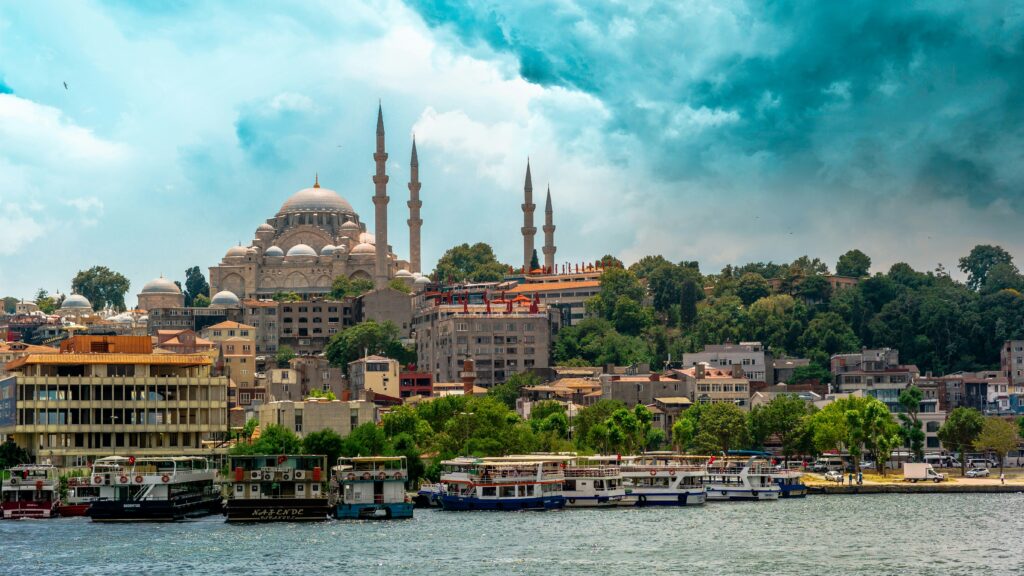
Spend a morning wandering the Grand Bazaar, a maze of over 4,000 shops where carpet sellers and jewellers offer tea as readily as prices. For a more local feel, head to Balat, a colourful neighbourhood of restored houses and cafés serving strong Turkish coffee. Cross the Galata Bridge for fish sandwiches sold from bobbing boats, then ride a Bosphorus ferry at sunset when the city glows gold on both continents.
Insider tip: Buy an Istanbulkart at any kiosk — it works on trams, metros, and ferries and saves time and money.
Best Time
April–June and September–November bring pleasant weather and smaller crowds. Winter is chillier but full of character, perfect for museums and steaming cups of salep.
How to Get There
Fly into Istanbul Airport (IST) or Sabiha Gökçen (SAW). The metro, tram, and ferry networks connect most attractions.
2. Cappadocia
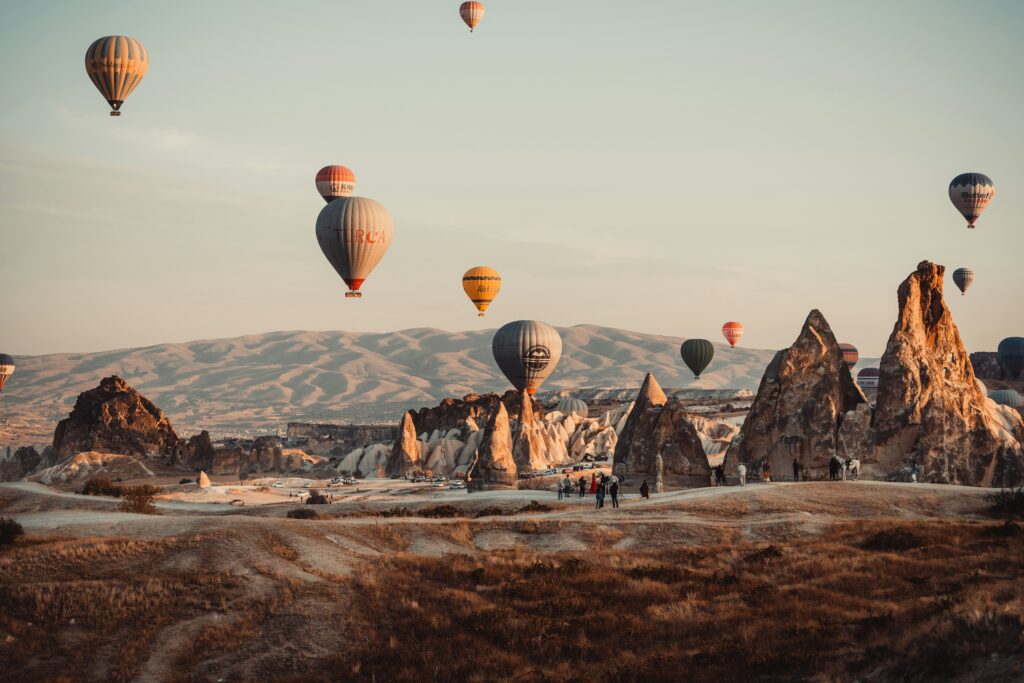
Landing in Cappadocia feels like stepping onto another planet. Cone-shaped “fairy chimneys” rise from pink and ochre valleys, carved into homes and chapels. At dawn, dozens of hot-air balloons drift silently overhead — one of travel’s most iconic sights. The Göreme Open-Air Museum holds churches carved into stone, their frescoes remarkably vivid despite centuries underground.
Beyond the postcard views, there’s depth: underground cities like Derinkuyu sheltered early Christians; the village of Uçhisar crowns a hill with panoramic views; Avanos is famous for its red clay pottery workshops. Between hikes through the Rose and Love Valleys, you’ll meet friendly locals who still press grapes and dry apricots under the Anatolian sun.
Best Time
April–October offers ideal ballooning weather and warm days. Winter snows create magical scenes but may cancel flights.
How to Get There
Fly from Istanbul to Kayseri (ASR) or Nevşehir (NAV). Shared shuttles and car rentals link airports to Göreme, Uçhisar, and Avanos.
3. Pamukkale
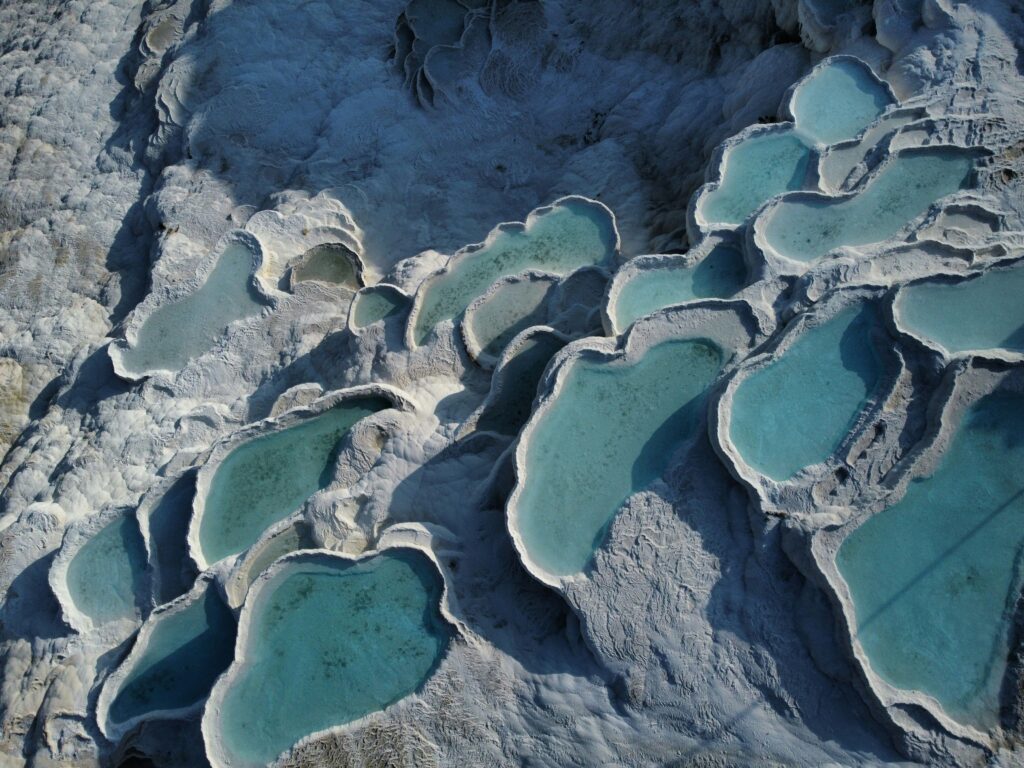
“Cotton Castle” is the translation of Pamukkale — and it fits. Terraced pools of calcium carbonate cascade down a hillside, glowing white under the sun. Warm mineral water trickles through, forming natural infinity pools. Ancient Romans built their spa city of Hierapolis above these terraces, now a UNESCO World Heritage Site. Walk the ancient streets, visit the theatre, and float among submerged columns in Cleopatra’s Pool.
Come early morning or late afternoon to avoid crowds and capture the best light. Remember: shoes are not allowed on the terraces to protect the formations — walk barefoot and feel the warmth of the earth beneath you.
Best Time
Spring and autumn for mild weather. Summer afternoons can be hot; winter brings fewer visitors and misty beauty.
How to Get There
Fly to Denizli Çardak (DNZ) then take a one-hour shuttle to Pamukkale village. Many travellers visit on day trips from Antalya or İzmir, but staying overnight gives you sunrise access to the terraces.
4. Antalya
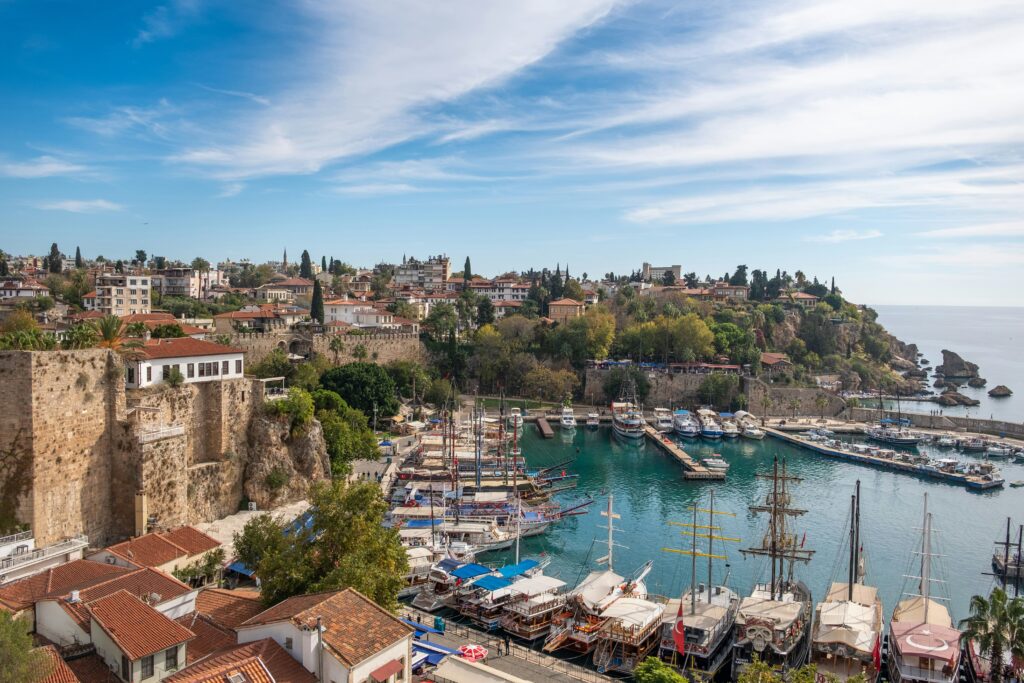
Antalya is where history meets the sea. The old town of Kaleiçi hides cobbled lanes, Ottoman mansions, and Roman gates within its walls. Step outside and you’re at the marina, watching yachts drift across the turquoise Mediterranean. A short drive leads to the ancient city of Perge, while the perfectly preserved theatre of Aspendos still hosts summer concerts.
Spend mornings swimming at Konyaaltı Beach or exploring Düden Waterfalls, then relax with a seaside dinner of grilled fish and meze. Antalya balances resort comfort with authentic Turkish life — a rare combination that keeps travellers returning.
Best Time
May–October for beach days; spring and autumn for sightseeing without the heat. Winters are mild with occasional rain.
How to Get There
Fly into Antalya (AYT). Buses, trams, and taxis connect the airport to the city. Renting a car helps explore nearby ruins and beaches.
5. Ephesus
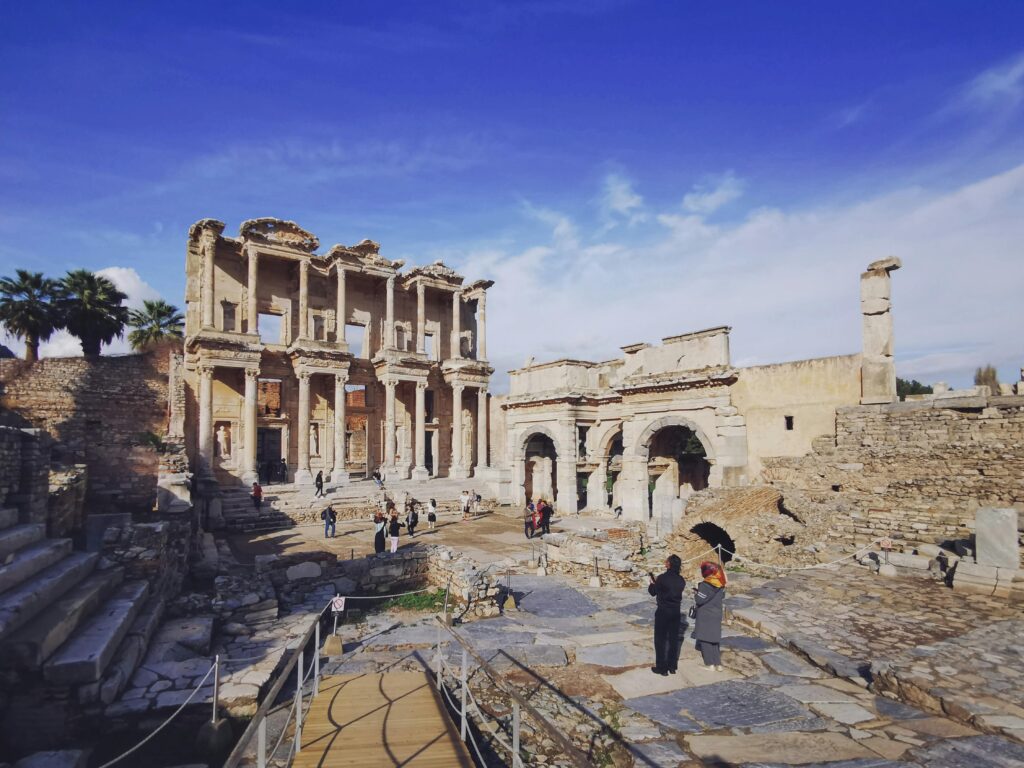
Few archaeological sites in the world rival Ephesus for scale and preservation. Once a thriving port of the Roman Empire, it now lies inland, its marble streets leading past temples, theatres, and bathhouses. The Library of Celsus remains one of antiquity’s grandest façades. Stand before its tall columns at golden hour, when the stone glows honey-coloured and almost alive.
Walk the Arcadian Way to the 25,000-seat Great Theatre, where St. Paul once preached. Nearby, the Terrace Houses reveal mosaic floors and painted walls from the city’s elite. Beyond the site, visit the House of the Virgin Mary or the Temple of Artemis — one of the Seven Wonders of the Ancient World.
Best Time
April–June and September–October. Summer midday heat is intense; arrive early or late for comfort and photos.
How to Get There
Fly to İzmir Adnan Menderes (ADB) and take a train or drive one hour south to Selçuk. Local minibuses (dolmuş) run to the Ephesus entrance and nearby Şirince village, famous for fruit wines and cobblestone charm.
6. Bodrum
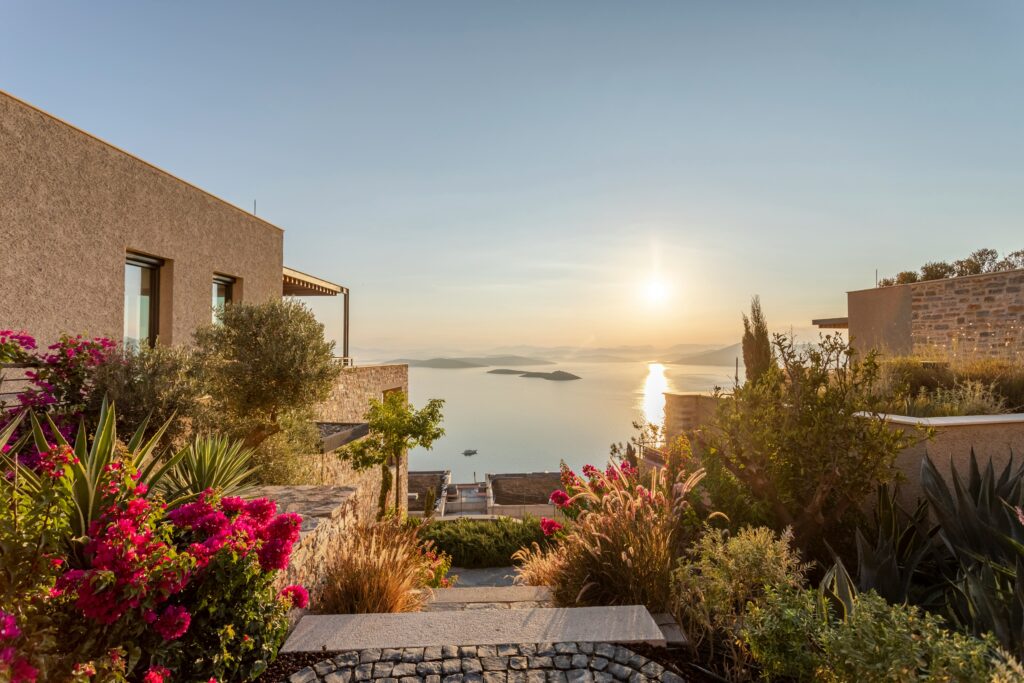
Bodrum is the Aegean at its most easygoing: whitewashed houses cascading to the harbour, bougainvillea spilling over lanes, and a sea that turns cobalt at noon. It balances chic energy with low-key beach days, and it’s as good for sailing as it is for lazy breakfasts that stretch to lunch.
Highlights
- Bodrum Castle (Castle of St. Peter) and the Museum of Underwater Archaeology.
- Sunset at the windmills on the ridge between Bodrum and Gumbet.
- Swim-and-snorkel coves around Bitez, Ortakent, and Türkbükü.
- Evening meze along the marina, fishing boats clinking at the quay.
Why Visit
Morning light hits the castle’s stone walls while gulets load fruit and water for day cruises. You can spend hours inside the museum tracing amphorae and shipwreck stories from the Bronze Age to the Ottomans, then grab a pide on the waterfront before hopping a dolmuş to a nearby cove. After dark, the town hums — not just clubs, but mellow taverns and live music in garden courtyards.
Best Time
June–September for swimming and long evenings outdoors. Shoulder seasons (May and October) are warm, quieter, and great for sailing.
How to Get There
Fly to Bodrum–Milas (BJV), 35 km from town. Frequent dolmuş minibuses cover the peninsula; renting a scooter or car makes beach-hopping easy.
7. Fethiye & Ölüdeniz
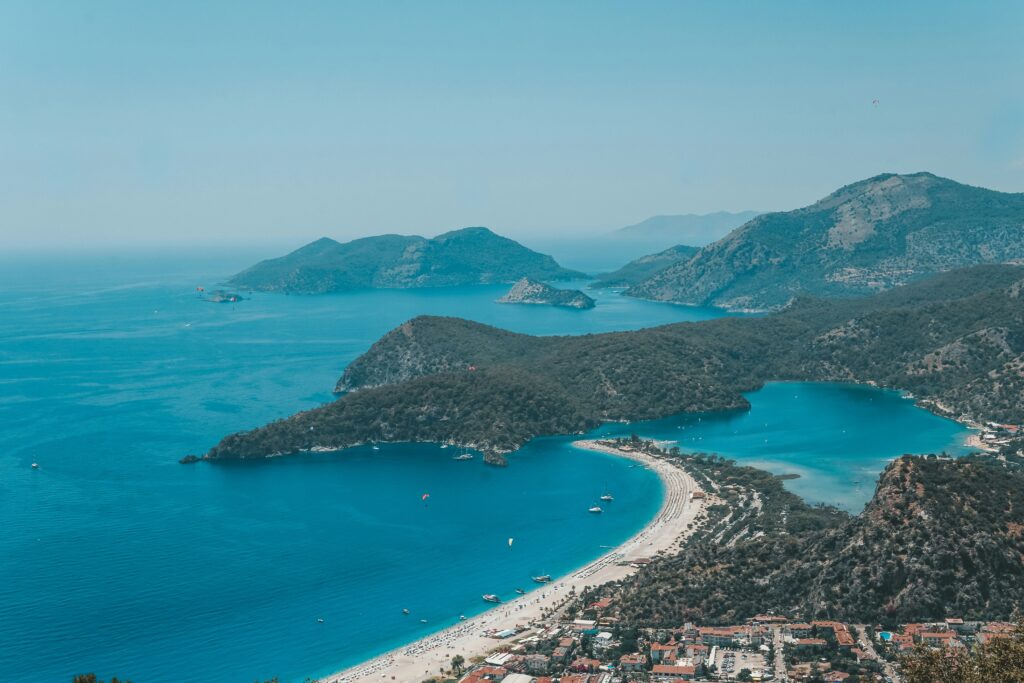
Mountains lean into the sea here, creating a coastline of pine-framed coves and painterly blues. Fethiye is a working harbour with an easy rhythm; Ölüdeniz is the famous curve of sand and lagoon that seems to glow from within. It’s a natural playground: paragliding, hiking, island-hopping, and long swims with nothing but cicadas for company.
Highlights
- Ölüdeniz Blue Lagoon and the panoramic viewpoint from Babadağ launch.
- Boat trips to the Twelve Islands (Blue Cave, Aquarium Bay, St. Nicholas Island).
- Lycian rock tombs above Fethiye and stretches of the Lycian Way.
- Kayaköy ghost village for golden-hour photography and village restaurants.
Why Visit
Take the cable car (or shuttle) up Babadağ, step to the edge, and run — you’re airborne, the lagoon a turquoise comma below. Prefer sea level? Charter a simple gulet for the day and drift between coves, lunch sizzling on deck. Back in town, browse the fish market, choose your catch, and let the restaurant grill it with lemon and olive oil. Evenings in Ölüdeniz are soft and walkable, with beach bars and ice cream stalls humming.
Best Time
April–October. Spring and autumn are ideal for hiking and paragliding; July–August is hottest and liveliest on the beach.
How to Get There
Fly to Dalaman (DLM). Shuttles and taxis reach Fethiye in about an hour; minibuses continue to Ölüdeniz, Faralya, and Kabak Valley.
8. Ankara
Calm, modern, and studious, Ankara shows another side of Turkey. It’s the administrative capital but also a centre for archaeology and the story of the Republic. Wide boulevards, leafy parks, and university cafés set the pace — a thoughtful pause between coastlines.
Highlights
- Anıtkabir, Atatürk’s mausoleum and national landmark.
- Museum of Anatolian Civilizations (Hittite sun disks, Phrygian treasures).
- Citadel district and Hamamönü’s restored Ottoman houses.
Why Visit
Start at Anıtkabir, where clean lines and ceremonial space reflect the Republic’s ideals. Then head to the museum below the citadel — it’s a masterclass in Anatolia’s deep past, from Neolithic figurines to Hittite reliefs. Afterwards, wander Hamamönü’s cobbles for craft shops and coffee. Evenings are for mezes and music in Kızılay, where students fill lively bars.
Best Time
April–June and September–October. Summers are warm; winters can be cold but museum-friendly.
How to Get There
Fly to Ankara Esenboğa (ESB). Metro and taxis connect easily to central districts (Kızılay, Ulus). Intercity high-speed trains link Ankara with Istanbul and Konya.
9. Mount Ararat
In Eastern Anatolia, Mount Ararat rises alone, snow-capped and story-laden. It’s Turkey’s highest peak and a beacon on the horizon, visible for miles across open steppe. Even if you don’t climb, the region’s stark beauty and hospitality make the journey worthwhile.
Highlights
- Ishak Pasha Palace above Doğubayazıt — a fusion of Ottoman, Persian, and Armenian styles.
- Guided treks on Ararat’s slopes (permits required; multi-day ascents).
- Wild plateau drives, tea with shepherds, and star-rich night skies.
Why Visit
Base in Doğubayazıt and head to the palace for sunset — the stone glows rose as the plains darken. Day trips roam lonely roads where flocks move like rivers and tea appears the moment you stop. Climbers set out with licensed guides, passing scree and snowfields to camps with panoramic views into Armenia and Iran.
Best Time
June–September for trekking. Shoulder months can be windy and cold; winter conditions are severe.
How to Get There
Fly to Ağrı (AJI) or Iğdır (IGD), then continue by road to Doğubayazıt. Arrange climbs through established outfitters; check current permit rules in advance.
10. Safranbolu
Safranbolu is a time capsule of the Ottoman world. Timber-framed mansions lean over cobbles, caravanserais line former trade routes, and the scent of saffron and coffee drifts from tiny shops. It’s gentle and walkable — perfect after a high-energy itinerary.
Highlights
- UNESCO-listed old town and hillside viewpoints (Hıdırlık Hill panorama).
- Cinci Han caravanserai, historical baths, coppersmith workshops.
- Local sweets and saffron-infused Turkish delight.
Why Visit
Morning light slants across white walls and red tiles. Craftspeople hammer copper until bowls sing, and tea trays rattle down alleys. Visit Cinci Han, linger in a restored mansion, then break for Turkish coffee served with lokum. At golden hour, climb to Hıdırlık Hill for the classic postcard view.
Best Time
April–October for mild days and open courtyards. Winters are quiet and photogenic after snow.
How to Get There
Buses run from Ankara and Istanbul (about 4–5 hours). The compact centre is best explored on foot; wear comfortable shoes for cobbles.
Suggested 10-Day Turkey Itinerary
This itinerary prioritizes smart connections and variety: a world-class city, a surreal landscape, thermal terraces, Mediterranean coast, and Roman antiquity — then loops you back efficiently.
| Day | Base | Plan | Notes |
|---|---|---|---|
| 1 | Istanbul | Sultanahmet core: Hagia Sophia, Blue Mosque, Basilica Cistern | Buy Istanbulkart; early starts beat lines. |
| 2 | Istanbul | Topkapı, Spice Bazaar, Galata, Bosphorus ferry at sunset | Dinner in Karaköy or Kadıköy. |
| 3 | Cappadocia | Fly to ASR/NAV; sunset at Red/Rose Valley | Stay in a cave hotel. |
| 4 | Cappadocia | Balloon ride, Göreme Museum, underground city | Pre-book balloons. |
| 5 | Pamukkale | Travel via Denizli; terraces + Hierapolis + Cleopatra’s Pool | Golden hour photos. |
| 6 | Antalya | Kaleiçi, marina, Konyaaltı Beach | Optional Perge/Aspendos day trip. |
| 7 | Antalya | Düden Falls or boat day; relaxed dinner | Swim in the afternoon. |
| 8 | Selçuk | Travel to İzmir/Selçuk; Ephesus at late afternoon | Enter at upper gate. |
| 9 | Bodrum | Castle & museum; cove swim; marina evening | Gümüşlük for dinner on the sand. |
| 10 | Istanbul | Fly back; last-minute bazaar shopping | Baklava and Turkish delight to go. |
Variation ideas: Swap Bodrum for Fethiye if you prefer hiking and lagoon views; add a day to Cappadocia for more valley walks.
Cultural Context: Traveling Turkey with Respect
Hospitality & tea: Tea (çay) is the social glue — you’ll be offered it in shops, on buses, and while asking directions. Accepting is part of the conversation; a warm “Teşekkürler” (thank you) goes far.
Food culture: Breakfast is an event (olives, cheeses, tomatoes, eggs, honey). On the coast, meze and grilled fish rule; in Anatolia, slow stews and kebabs. Try menemen at breakfast and baklava later with strong Turkish coffee.
Etiquette in mosques: Dress modestly; shoulders and knees covered. Remove shoes before entering; women may be asked to cover hair. Avoid flash photography and be respectful during prayers.
Money & tips: The Turkish lira (TRY) is standard; cards are widely accepted. Tip 5–10% in restaurants; round up for taxis; small change is appreciated for porters and guides.
Getting around: Domestic flights shorten big jumps. Intercity buses are comfortable and frequent; dolmuş minibuses knit together towns. In Istanbul, ferries are essential — ride at least once at sunset.
Useful official links: Turkey e-Visa · UNESCO Turkey · GoTürkiye.
Conclusion
From Istanbul’s ferries to Cappadocia’s balloons, Pamukkale’s terraces to Antalya’s coves, Ephesus’s marbles to Bodrum’s castle — Turkey offers a different highlight every day. The country’s magic is in the mix: ancient and modern, European and Asian, mountain and sea. Plan around the places that call you most, travel with curiosity, and the rest will follow — a full heart, a camera roll of blues and golds, and a craving for one more glass of tea.
FAQ
What is the best time to visit Turkey?
For most itineraries, April–June and September–October balance mild weather with fewer crowds. Beach trips thrive May–October, while city breaks (Istanbul, Ankara) are great year-round with museum time in winter.
Do I need a visa to visit Turkey?
Many nationalities can apply online for an e-Visa before arrival. Check eligibility and apply via the official portal: evisa.gov.tr.
Is Turkey safe for tourists?
Generally yes. Use normal city smarts in crowded places, monitor local advisories, and take licensed taxis or rideshare apps. In rural or high-altitude areas, arrange licensed guides.
How many days do I need for the top 10 places?
Plan 10–14 days for Istanbul, Cappadocia, Pamukkale, Antalya, and Ephesus comfortably. Add extra time for Bodrum or Fethiye (coast), Ankara (museums), Ararat (trekking), and Safranbolu (heritage).
What should I wear when visiting mosques?
Dress modestly with shoulders and knees covered; remove shoes before entering. Women may be asked to cover hair. Scarves are often available at major mosques.
Can I drink the tap water?
In many cities tap water is chlorinated, but most travelers prefer bottled water. Hotels and restaurants readily provide it.
What’s the best way to get around Turkey?
Domestic flights connect big jumps efficiently. Intercity coaches are reliable and comfortable; dolmuş minibuses connect towns. In Istanbul, use trams, metro, and ferries with an Istanbulkart.
Which local foods should I try?
Menemen for breakfast, pide (Turkish “pizza”), grills and kebabs, meze on the coast, baklava and künefe for dessert, and strong Turkish coffee served with a glass of water.
Do I need cash or are cards accepted?
The Turkish lira (TRY) is standard; cards are widely accepted in cities and tourist areas. Keep small cash for markets, taxis, and tips.
Are hot-air balloons in Cappadocia reliable?
Flights depend on weather and safety clearances. Book the first morning of your stay to allow a backup day if conditions cancel flights.