
If you’re searching for the best things to do in Hue, this guide delivers everything you need in one place. Hue, the historic capital of Vietnam’s Nguyen Dynasty, blends imperial architecture, riverfront scenery, royal cuisine, and a calm, reflective pace that sets it apart from bustling cities like Hanoi or Ho Chi Minh City.
This ancient city served as Vietnam’s political and cultural center from 1802 to 1945, and its legacy remains visible in every corner. From UNESCO World Heritage Sites to hidden culinary gems, Hue offers travelers an authentic glimpse into Vietnam’s imperial past.
This comprehensive guide answers the key traveler questions: what to do in Hue, what to see, and where to stay in Hue, Vietnam, with ten curated experiences that bring the city’s history and culture to life.
TL;DR: Quick Overview – Top 10 things to do in Hue
Here are the top attractions you shouldn’t miss in Hue:
- Imperial City & Forbidden Purple City (Google Maps)
- Thien Mu Pagoda (Google Maps)
- Perfume River Cruise (Google Maps)
- Tomb of Minh Mang (Google Maps)
- Tomb of Khai Dinh (Google Maps)
- Tomb of Tu Duc (Google Maps)
- Dong Ba Market (Google Maps)
- Hue’s Royal Cuisine
- Thuan An Beach (Google Maps)
- The Abandoned Waterpark (Ho Thuy Tien) (Google Maps)
1. Imperial City (Citadel) & Forbidden Purple City.
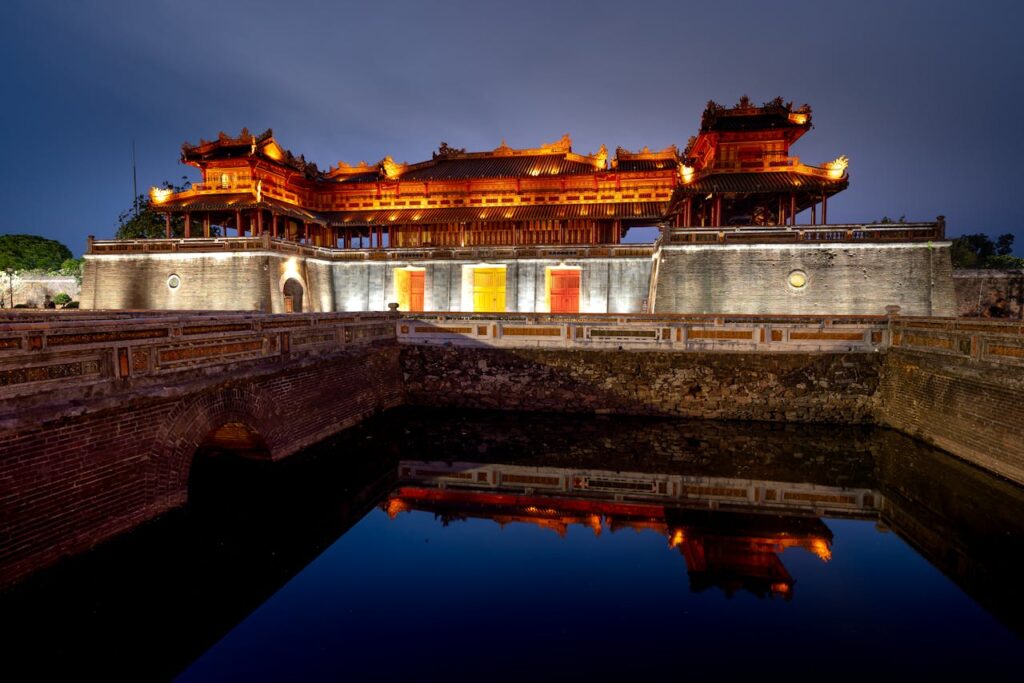
The Imperial City is the core answer to what to see in Hue. This massive walled fortress of palaces, royal halls, shrines, and courtyards mirrors the layout of Beijing’s Forbidden City, making it one of the most significant historical sites in Vietnam.
Designated as a UNESCO World Heritage Site in 1993, the Imperial City covers approximately 520 hectares and represents the pinnacle of Vietnamese royal architecture. The complex consists of three walled enclosures: the Citadel, the Imperial City, and the Forbidden Purple City, each representing different levels of imperial exclusivity.
The outer walls stretch over 10 kilometers in circumference, with ten fortified gates providing access to the royal grounds. Inside, you’ll discover a world frozen in time, where Vietnamese emperors once held court and made decisions that shaped the nation’s destiny.
Highlights
- Ngo Mon Gate: The grand southern entrance where emperors made proclamations
- Thai Hoa Palace: The throne room where coronations and important ceremonies took place
- Royal Theater: Recently restored venue for traditional court performances
- Restored mandarin buildings: Administrative quarters showcasing intricate wooden architecture
- Lotus ponds & quiet courtyards: Peaceful spaces perfect for contemplation and photography
Why Visit
This is the heart of Hue’s Nguyen Dynasty heritage. Visiting gives essential context for Vietnam’s last ruling family, their aesthetic choices, and the political events that shaped 19th and early 20th century Vietnam.
The Imperial City suffered significant damage during the Tet Offensive in 1968, but ongoing restoration efforts have brought many structures back to their former glory. Walking through these halls offers a tangible connection to Vietnam’s imperial past.
Best Time to Visit Imperial City: Morning or late afternoon to avoid the midday heat and tour groups. The golden hour light creates stunning photography opportunities.
How to Get There: The Imperial City sits on the north bank of the Perfume River. It’s easily reached by Grab, taxi, or bicycle from most hotels in central Hue. Entry fee is approximately 200,000 VND (about $8 USD), and the complex is open from 7:00 AM to 5:30 PM daily.
2. Thien Mu Pagoda
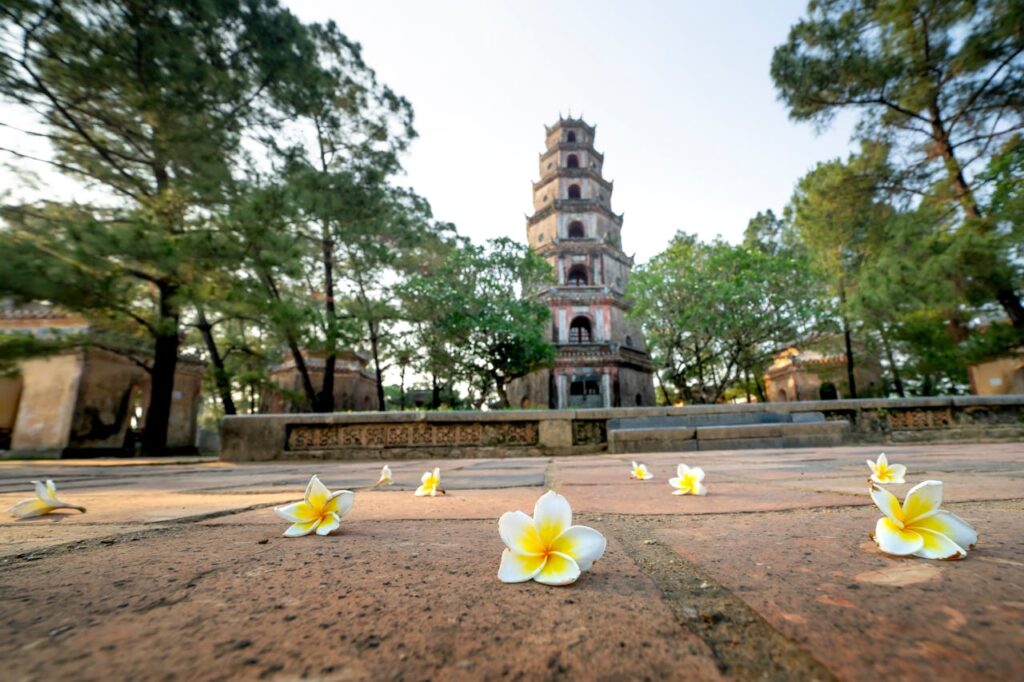
A working Buddhist monastery overlooking the Perfume River from a quiet hilltop, Thien Mu Pagoda stands as one of the most iconic religious structures in Vietnam.
Built in 1601 under the reign of Lord Nguyen Hoang, Thien Mu (which translates to “Heavenly Lady”) is the oldest religious structure in Hue. The pagoda has witnessed over four centuries of Vietnamese history, serving as both a spiritual center and a symbol of Buddhist resistance during turbulent times.
The complex gained international attention in 1963 when a monk from this pagoda drove to Saigon in a sky-blue Austin car and self-immolated in protest against religious persecution. That very car is now displayed in a building behind the main sanctuary, serving as a powerful reminder of Vietnam’s complex modern history.
Highlights
- Seven-story Phuoc Duyen Tower: Standing 21 meters tall, this octagonal tower is the symbol of Hue
- Mahayana shrines: Active worship halls with intricate Buddhist iconography
- Gardens and monastic halls: Peaceful grounds where monks continue their daily practices
- The historic Austin car: A sobering artifact from 1963
Why Visit
It’s one of the oldest and most photographed pagodas in Vietnam. The views along the river and the spiritual calm make it a serene break from the city’s busier attractions.
The pagoda complex offers insight into Vietnamese Buddhism and provides a peaceful environment for reflection. The combination of religious significance, architectural beauty, and natural setting makes this a must-visit location.
Best Time to Visit: Late afternoon for soft light and river breezes. The sunset views over the Perfume River are spectacular.
How to Get There: Taxi or Grab from central Hue (about 15 minutes). Many visitors combine this with a riverboat trip, which offers stunning approaches from the water. Entry is free, though donations are appreciated.
3. Tomb of Minh Mang
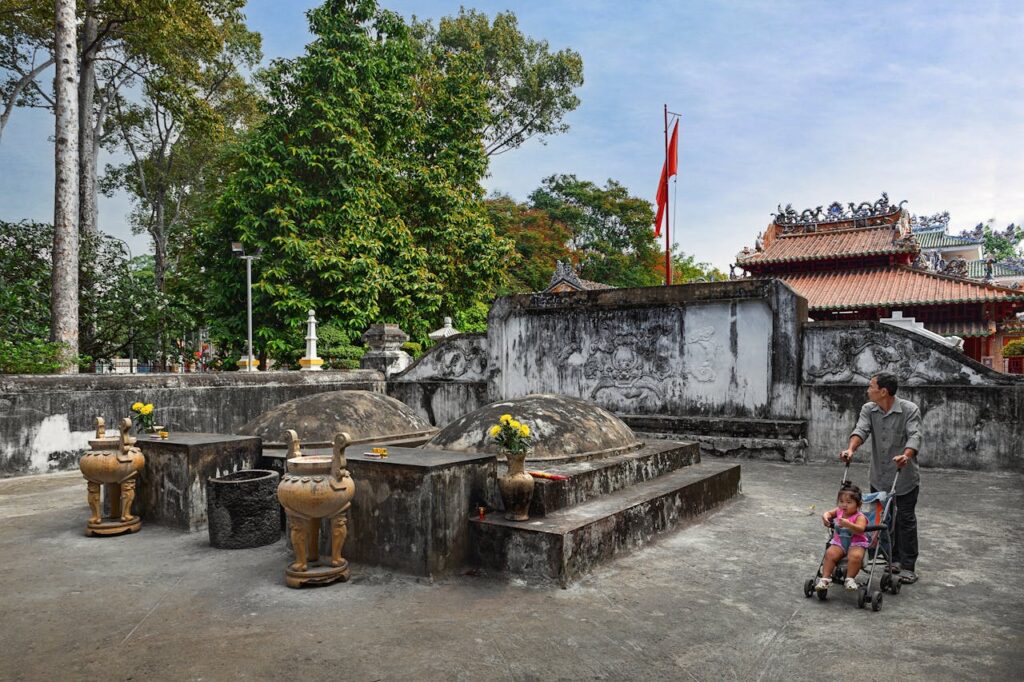
A meticulously designed complex harmonizing Confucian geometry with nature, the Tomb of Minh Mang represents the pinnacle of Vietnamese imperial burial architecture.
Emperor Minh Mang ruled from 1820 to 1841 and is remembered as one of the most powerful and conservative Nguyen emperors. Construction of his tomb began in 1840, one year before his death, and was completed by his successor, Emperor Thieu Tri, in 1843.
The complex spans 18 hectares and was designed according to strict Confucian principles, with buildings arranged along a central axis that runs from the main gate to the burial site. The symmetry is perfect, reflecting Minh Mang’s belief in order, hierarchy, and the harmony between heaven and earth.
Highlights
- Lakes and red bridges: Three crescent-shaped lakes connected by elegant covered bridges
- Pavilions arranged on a strict axial layout: Forty buildings positioned according to Confucian cosmology
- Majestic gates flanking lotus ponds: The Hien Duc Gate and its surrounding waterways create mirror-like reflections
- Stele Pavilion: Housing a stone tablet inscribed with Minh Mang’s biography and achievements
Why Visit
Minh Mang’s tomb is the most balanced and atmospheric of the imperial mausoleums, similar in significance to other top places to visit in Vietnam. It’s ideal for travelers who appreciate symmetry, photography, and tranquil landscapes.
The tomb complex feels like a sacred garden where architecture and nature exist in perfect balance. Unlike some of the more ornate tombs, Minh Mang’s resting place emphasizes restraint, proportion, and philosophical depth.
Best Time to Visit: Morning when the water is calm and reflective. The lotus flowers bloom from June to August, adding extra beauty to the ponds.
How to Get There: About 12 km from central Hue along the Perfume River. Taxi or private car is easiest (20-25 minutes). Many tour operators include this tomb in half-day or full-day itineraries. Entry fee: 150,000 VND.
4. Tomb of Khai Dinh
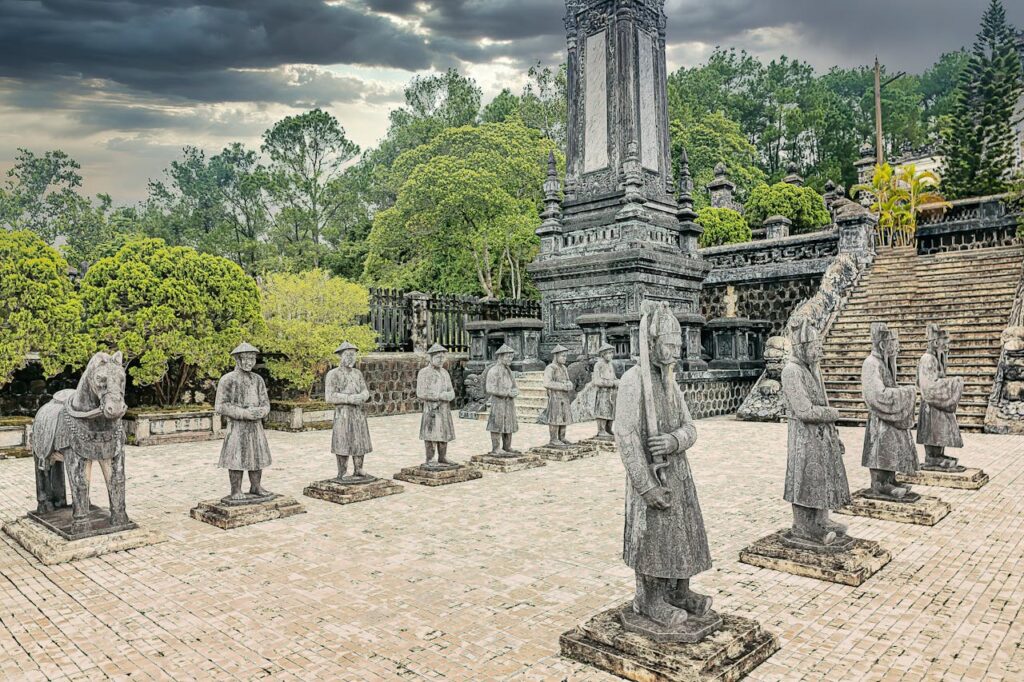
A dramatic hillside mausoleum known for its fusion of Vietnamese and European aesthetics, the Tomb of Khai Dinh stands in stark contrast to the more traditional imperial tombs.
Emperor Khai Dinh ruled from 1916 to 1925 during the French colonial period, and his tomb reflects the cultural blending of that era. Construction lasted 11 years (1920-1931) and cost so much that Khai Dinh had to increase taxes by 30%, making him unpopular with his subjects.
The tomb sits on Chau Chu Mountain, requiring visitors to climb 36 steps to reach the main courtyard and another 29 steps to enter the burial chamber. The hillside location offers panoramic views of the surrounding countryside.
Highlights
- Blackened concrete façade: Made from reinforced concrete mixed with crushed stone, creating a distinctive dark exterior
- Imperial guardian statues: Stone mandarins, elephants, and horses lining the Honor Courtyard
- Interior with glass-mosaic artwork: Elaborate decorations featuring dragons, phoenixes, and floral motifs made from porcelain and glass fragments
- Steep stairways with panoramic views: The climb rewards visitors with sweeping vistas of rural Hue
Why Visit
This tomb is visually intense and intricately decorated. Its mix of styles offers a look into Hue during the early 20th century, when Vietnam was under French influence and traditional aesthetics merged with European architectural trends.
The interior is particularly stunning, with walls covered in elaborate mosaics depicting clouds, dragons, and the “Four Seasons.” The emperor’s actual tomb lies beneath a bronze statue in the main chamber.
Best Time to Visit: Early morning to avoid heat on the steps and to have better lighting for the interior mosaics. The tomb can get crowded by late morning.
How to Get There: About 9 km from Hue (15-20 minutes by taxi or motorbike). Entry fee: 150,000 VND. Wear comfortable shoes for climbing the stairs.
5. Tomb of Tu Duc
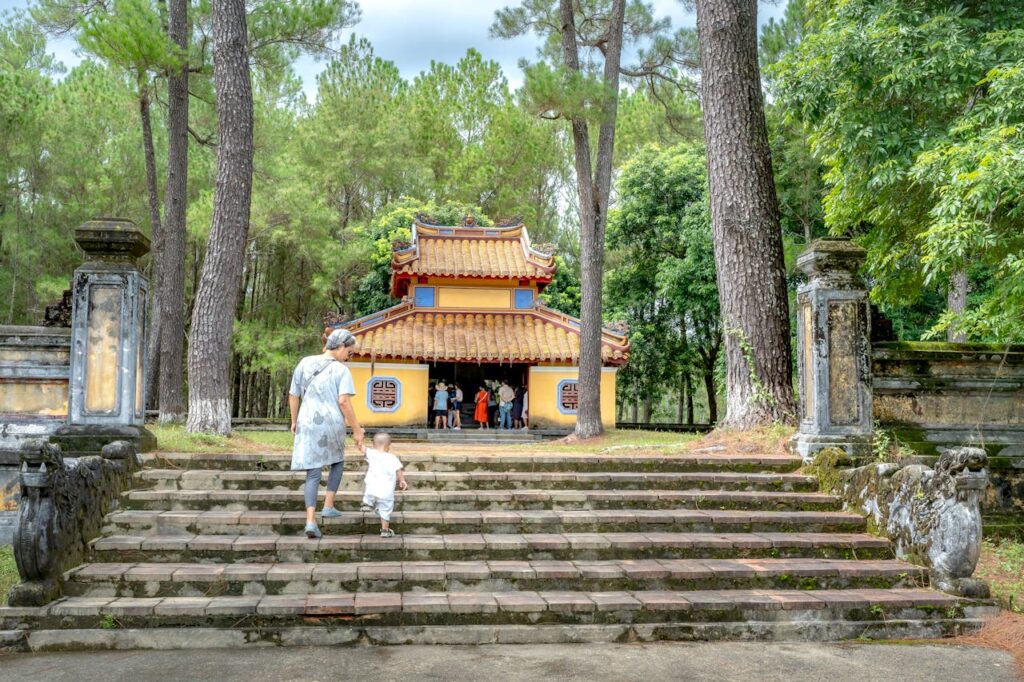
A poetic, lakeside retreat reflecting the emperor’s love of literature, art, and solitude, the Tomb of Tu Duc is perhaps the most romantic of all the imperial mausoleums.
Emperor Tu Duc ruled for 36 years (1847-1883), the longest reign of any Nguyen emperor. Unlike his predecessors, Tu Duc was more poet than warrior, and his tomb reflects this contemplative nature. He actually used this complex as a summer retreat during his lifetime, composing poetry and enjoying the natural surroundings.
The complex covers 12 hectares and includes 50 structures, though many were destroyed during various conflicts. What remains today still conveys the emperor’s refined aesthetic sensibility and love of natural beauty.
Highlights
- Pine-shaded paths: Winding walkways through gardens designed for peaceful contemplation
- Lake with lotus flowers: Luu Khiem Lake, where Tu Duc would boat and compose poetry
- Poetically named pavilions: Structures with names like “Modesty Pavilion” and “Harmony Palace”
- Xung Khiem Pavilion: A lakeside structure where the emperor would fish and write
Why Visit
Tu Duc’s tomb feels like a peaceful park rather than a burial ground. Even though it’s a royal burial site, it’s great for slow walking, photography, and learning about the emperor’s contemplative philosophy.
Interestingly, Tu Duc’s actual burial location remains a mystery. After his death, the 200 servants who buried him were beheaded to keep the location secret, presumably to prevent grave robbing.
Best Time to Visit: Late morning or golden hour. The soft light filtering through pine trees creates a magical atmosphere, especially around the lake.
How to Get There: About 6 km from Hue (10-15 minutes by taxi or bicycle). This is the closest royal tomb to the city center, making it accessible for travelers on a tight schedule. Entry fee: 150,000 VND.
6. Perfume River Cruise
A classic experience in Hue travel, especially at sunset, a Perfume River cruise provides a unique perspective on the city’s landmarks and daily life.
The Perfume River (Song Huong) gets its romantic name from the flowers that fall from orchards upstream during autumn, releasing their fragrance into the water. The river stretches approximately 80 km from the Truong Son Mountains to the sea and has been the lifeline of Hue for centuries.
Nearly all of Hue’s major attractions cluster along this river, which served as both a highway and defensive barrier for the imperial capital. Today, the river remains central to daily life, with fishing boats, cargo vessels, and tourist craft sharing the waters.
Highlights
- Traditional dragon boats: Ornately decorated vessels designed to evoke imperial river processions
- Riverside villages: Glimpses of local life along the riverbanks
- Evening lights from bridges: The illuminated Truong Tien Bridge creates stunning photo opportunities
- Thien Mu Pagoda from the water: The iconic seven-story tower viewed from the river is unforgettable
Why Visit
The Perfume River ties together nearly all major sites in Hue. A cruise gives a relaxed overview and stunning sunset panoramas, perfect after a day of walking through temples and tombs.
Many cruises include traditional music performances, adding to the romantic atmosphere. Some boats serve dinner, making this an ideal way to end a day of sightseeing while sampling local cuisine.
Best Time to Visit: Sunset cruises (typically departing around 4:00 PM) offer the best combination of comfortable temperatures and beautiful light. Clear skies are ideal for photography.
How to Get There: Boats depart near the Truong Tien Bridge on the southern riverbank. Many hotels can arrange bookings, or you can purchase tickets directly at the riverside. Prices range from 150,000 to 500,000 VND depending on the boat and inclusions.
7. Dong Ba Market
The most energetic place in Hue and the city’s central trading hub, Dong Ba Market offers an authentic taste of daily Vietnamese life.
Established in 1887 during the reign of Emperor Dong Khanh, this market has been Hue’s commercial heart for over a century. The current building was constructed in 1987 and covers approximately 16,000 square meters, making it one of the largest markets in central Vietnam.
The market operates on two levels, with the ground floor dedicated primarily to fresh produce, meat, and seafood, while the upper floor houses clothing, fabrics, and handicrafts. Outside, vendors line the streets with additional goods.
Highlights
- Local spices and dried seafood: Central Vietnam’s distinctive seasonings and preserved fish
- Kitchenware, textiles, ao dai fabric: Traditional Vietnamese clothing materials and household goods
- Food stalls selling banh beo and bun bo Hue: Authentic street food at local prices
- Conical hat workshops: Watch artisans create the iconic non la (Vietnamese conical hat)
Why Visit
This is the best spot for local snacks, souvenirs, and people-watching. It also offers insights into daily life in central Vietnam, far from the tourist-oriented shops in other areas.
The market’s food section is particularly fascinating, with vendors selling ingredients you won’t find in Western supermarkets. The spice and herb selection alone provides insight into Vietnamese cuisine’s complexity.
Best Time to Visit: Morning (6:00 AM to 10:00 AM) for the freshest food and most energetic atmosphere. The market operates until evening, but morning is when locals do most of their shopping.
How to Get There: On the north bank, close to the Citadel. Walking distance from many central hotels, or a short taxi ride from the south bank. Entry is free, and bargaining is expected.
8. Hue’s Royal Cuisine & Local Dishes
Hue’s culinary reputation is strong thanks to its royal legacy. Dishes are small, artistic, and often steamed or grilled, reflecting the refined tastes of the imperial court.
According to Vietnam’s Ministry of Culture, Hue court cuisine includes over 50 distinct dishes that were traditionally served to emperors. These dishes emphasize presentation, with chefs focusing on color, arrangement, and symbolic meaning alongside flavor.
What makes Hue cuisine unique is the influence of royal cooking techniques that filtered down to common people, creating a food culture more refined than other Vietnamese cities. The city is also known for incorporating five fundamental tastes: spicy, sour, bitter, salty, and sweet, achieving perfect balance in each dish.
Must-Try Dishes
Bun Bo Hue: Spicy beef noodle soup with lemongrass, thick vermicelli, and pork knuckle. The broth is richer and spicier than Hanoi’s pho, with a distinctive flavor from lemongrass and shrimp paste.
Banh Beo: Steamed rice cakes topped with dried shrimp, green onions, and fish sauce. These delicate cakes are served in small ceramic dishes and represent Hue’s focus on refined presentation.
Banh Khoai: Hue’s version of banh xeo (crispy pancakes), smaller and crunchier than southern versions. Filled with shrimp, pork, and bean sprouts, served with fresh herbs and peanut sauce.
Nem Lui: Lemongrass skewers of grilled pork served with rice paper, fresh vegetables, and fermented peanut sauce. Diners wrap their own spring rolls at the table.
Com Hen: Rice mixed with baby clams, peanuts, pork cracklings, herbs, and vegetables. This dish perfectly represents Hue’s ability to create complex flavors from humble ingredients.
Why Visit for Food
Hue’s food culture is distinct within Vietnam, much like the culinary traditions found in Hoi An. Chefs focus on balance, refined presentation, and complex broths that require hours of preparation.
Many restaurants still prepare dishes according to royal recipes passed down through generations. The emphasis on fresh herbs, complex spice blends, and artistic presentation makes Hue dining a unique experience.
Best Time to Enjoy: Lunch or dinner, especially at local restaurants around Nguyen Cong Tru Street and along the south bank near Pham Ngu Lao. Street food is best enjoyed in the early evening when vendors set up their stalls.
How to Get There: Most recommended restaurants cluster around the southern bank near Pham Ngu Lao walking streets. Dong Ba Market also offers excellent street food options at breakfast and lunch.
9. Thuan An Beach
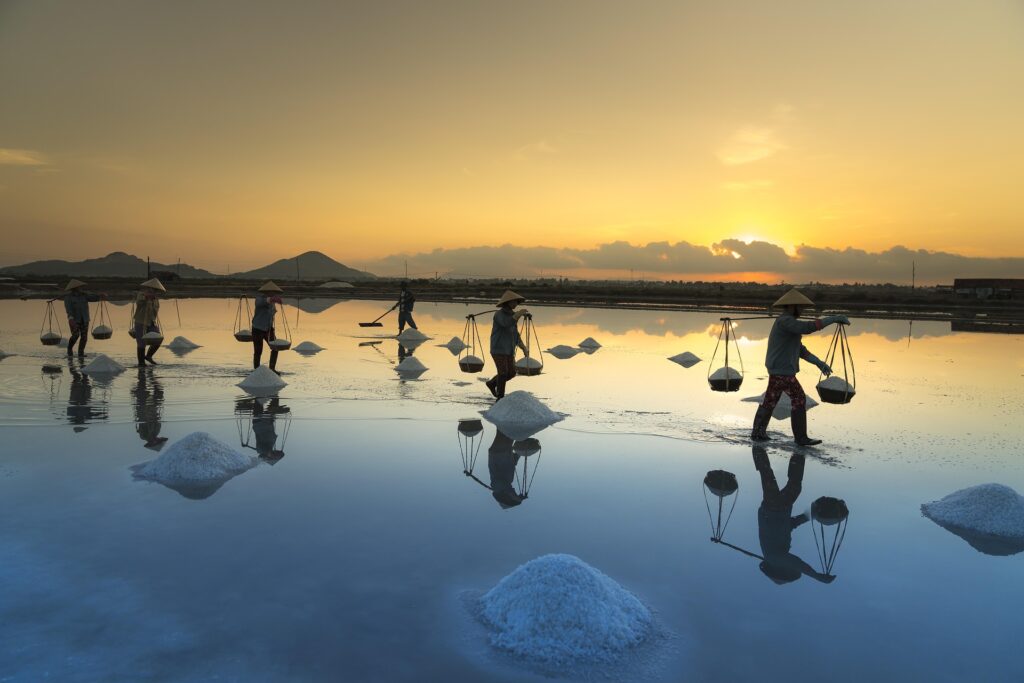
Hue isn’t just temples and palaces. Thuan An Beach provides an easy coastal escape from the city’s historical intensity.
Located at the mouth of the Tam Giang Lagoon, Thuan An stretches for several kilometers along Vietnam’s central coast. The beach remains relatively undeveloped compared to Da Nang or Nha Trang, offering a more local and authentic seaside experience.
The name “Thuan An” means “peaceful banks,” and the beach lives up to this name with its calm waters during the dry season and laid-back atmosphere year-round.
Highlights
- Wide sandy beach: Plenty of space to find a quiet spot, even on weekends
- Local seafood restaurants: Fresh catches prepared simply and deliciously at beachfront shacks
- Calm surf in dry season: Gentle waves suitable for swimming and relaxing
- Tam Giang Lagoon: The brackish water lagoon supports aquaculture and offers beautiful sunset views
Why Visit
It’s a relaxing contrast to Hue’s cultural intensity. Ideal for swimming, seafood lunches, or sunset walks after days spent exploring temples and tombs.
Local families flock here on weekends, creating a lively but authentic atmosphere. The beach offers insight into how Vietnamese people enjoy their coastline, different from the resort-dominated beaches elsewhere.
Best Time to Visit: March to August for good weather and calm seas. The rainy season (September to February) can bring rough waves and cloudy skies, though the beach has its own moody beauty during this time.
How to Get There: About 13 km from Hue (15-20 minutes by taxi or motorbike). Many travelers rent motorbikes for the day and combine beach time with stops at nearby fishing villages. No entry fee; you pay only for food and any beach chair rentals.
10. Hue Abandoned Waterpark (Ho Thuy Tien)
A surreal, photographable site that gained fame through travel documentaries and Instagram, Ho Thuy Tien represents an unusual chapter in Vietnam’s rapid development.
This water park opened in 2004 but closed just a few years later due to financial difficulties and low visitor numbers. Since then, nature has reclaimed much of the site, creating an eerie yet beautiful landscape of moss-covered slides, empty pools, and crumbling structures.
The site’s centerpiece is a three-story dragon structure with an aquarium built into its jaws. Visitors can climb inside the dragon for panoramic views of the surrounding lake and abandoned park below.
Highlights
- Dragon-shaped viewing tower: Climb through the dragon’s body to viewing platforms
- Mossy slides and lakes: Water slides slowly being consumed by vegetation
- Atmospheric, quiet spaces: An otherworldly environment perfect for urban exploration and photography
- Abandoned aquarium tanks: Empty fish tanks now filled with rainwater and algae
Why Visit
It’s unusual, eerie, and photogenic. Despite being abandoned, it represents an interesting chapter in Hue’s modern development and has become an unexpected attraction for adventurous travelers.
The park offers a stark contrast to Hue’s carefully preserved imperial heritage, showing how modern Vietnam sometimes struggles with development projects. It’s also a reminder of nature’s power to reclaim human structures.
Best Time to Visit: Morning for mist or soft light that enhances the eerie atmosphere. Avoid visiting alone, and wear sturdy shoes as some structures are unstable.
How to Get There: About 8 km southwest of Hue (15 minutes by motorbike). The park is on private land, and a small unofficial “entrance fee” of around 20,000-40,000 VND may be requested by local guards. Exercise caution when exploring, as there are no official safety measures.
Data Table: Tomb Entry Fees & Hours
| Tomb | Entry Fee (approx.) | Opening Hours | Distance from Hue Center |
|---|---|---|---|
| Minh Mang | 150,000 VND (~$6 USD) | 7:00 AM – 5:30 PM | 12 km |
| Khai Dinh | 150,000 VND (~$6 USD) | 7:00 AM – 5:30 PM | 9 km |
| Tu Duc | 150,000 VND (~$6 USD) | 7:00 AM – 5:30 PM | 6 km |
Note: Combination tickets covering multiple tombs are often available at discounted rates through tour operators or at ticket offices.
Cultural Context
Hue remains a center of imperial art, spirituality, and traditional performance. The city’s cultural identity extends far beyond its physical monuments into living traditions that continue today.
Nha nhac (Vietnamese court music) was recognized by UNESCO as an Intangible Cultural Heritage of Humanity in 2003. This sophisticated musical tradition, performed with traditional instruments, was integral to court ceremonies and religious rituals during the Nguyen Dynasty.
The city is also known for lotus-based dishes, with local chefs creating delicacies from every part of the lotus plant, from seeds to stems to flowers. Incense craftsmen in nearby villages like Thuy Xuan continue centuries-old traditions of creating aromatic incense sticks used in temples throughout Vietnam.
Regional dialects also shape the cultural identity of central Vietnam. Hue’s accent is distinct from both northern and southern Vietnamese, with unique vocabulary and tonal variations that reflect the region’s historical independence.
Travelers who slow down will notice that Hue moves at a gentler pace than other Vietnamese cities, with an emphasis on reflection, crafts, and community. The city’s Buddhist influence creates a more contemplative atmosphere compared to the commercial energy of Ho Chi Minh City or the political formality of Hanoi.
Where to Stay in Hue, Vietnam
For convenience and atmosphere, Hue’s best accommodations cluster in three distinct areas:
1. South Bank (Pham Ngu Lao / Walking Streets)
Best for: Nightlife, cafés, and restaurants
This area is ideal for first-time travelers who want easy access to dining and entertainment. The walking streets come alive in the evening with food vendors, live music, and bustling cafés. Budget hostels, mid-range hotels, and boutique guesthouses line these streets.
2. Riverside Hotels
Best for: Views and atmosphere
More premium options with river views and easy access to boat cruises. These hotels often feature rooftop bars or terraces where you can watch the sunset over the Perfume River. Many offer complimentary bicycles for exploring the city.
3. North Bank (near the Citadel)
Best for: Cultural immersion and quiet
Quieter neighborhoods close to the Imperial City. Great for photography enthusiasts who want to capture the Citadel at sunrise. This area offers a more local experience with fewer tourists and more authentic Vietnamese cafés and restaurants.
Conclusion
These top 10 things to do in Hue capture the depth of Vietnam’s former royal capital. Whether you’re exploring imperial tombs, tasting local dishes, cruising the Perfume River, or simply walking the quiet streets of the Citadel, Hue delivers a rare blend of culture, scenery, and history.
The city offers something different from other Vietnamese destinations. While Ha Long Bay showcases natural beauty and Ninh Binh combines landscapes with temples, Hue stands alone in its concentrated imperial heritage and refined cultural traditions.
This guide should help you plan exactly what to do in Hue, what to see, and where to stay in Hue, Vietnam for a meaningful and memorable trip. Take your time here. Hue rewards travelers who slow down and absorb its contemplative atmosphere rather than rushing through on a checklist-style tour.
FAQ
1. How many days do you need in Hue?
Two full days cover major sights including the Imperial City, one or two tombs, and a river cruise. Three days allow time for all the tombs, deeper food exploration, and a beach visit. If you want to experience Hue at a slower pace with time for cafés, markets, and evening walks, consider four days.
2. Is Hue worth visiting?
Absolutely. Hue offers Vietnam’s best-preserved imperial architecture, unique cuisine, and a calmer atmosphere compared to other cities. It’s essential for anyone interested in Vietnamese history and culture. The city provides a different pace and perspective that complements visits to more hectic destinations.
3. How do you get around Hue?
Taxi, Grab, bicycles, and motorbikes are the most common options. Many attractions within the old quarter are walkable. For visiting the tombs, you’ll need motorized transport. Daily motorbike rentals cost around 100,000-150,000 VND. Bicycle rentals are available for 30,000-50,000 VND per day.
4. What is Hue famous for?
Hue is famous for the Imperial City, royal tombs, bun bo Hue (spicy beef noodle soup), the Perfume River, and its role as the capital during the Nguyen Dynasty (1802-1945). The city is also known for its traditional arts, including court music, poetry, and refined cuisine.
5. Is Hue walkable?
Central areas are walkable, especially around the south bank walking streets and the Citadel complex. However, for visiting the royal tombs, Thien Mu Pagoda, and other attractions outside the center, you’ll need some form of transport. The flat terrain and relatively light traffic make cycling an excellent option for exploring the city at your own pace.