Ho Chi Minh City pulses with an energy unlike anywhere else in Southeast Asia. Motorbikes weave through wide boulevards, street vendors call out from every corner, and the aroma of pho mingles with the scent of jasmine from nearby pagodas. This sprawling metropolis, still affectionately called Saigon by locals, is Vietnam’s commercial and cultural powerhouse where French colonial architecture stands beside gleaming skyscrapers, and war history museums neighbor vibrant night markets.
What are the top attractions in Ho Chi Minh City? From the sobering exhibits at the War Remnants Museum to the underground labyrinth of Cu Chi Tunnels, from the bustling chaos of Ben Thanh Market to the serene beauty of Jade Emperor Pagoda, this city offers a remarkable blend of history, culture, and modern urban life. Whether you’re drawn to architectural landmarks, culinary adventures, or historical insights, Saigon delivers experiences that will stay with you long after you leave.
This guide pairs perfectly with our comprehensive overview of the Top 10 Places to Visit in Vietnam to help you plan your complete Southeast Asian adventure.
TL;DR: Quick Overview – Top 12 Attractions in Ho Chi Minh City
- War Remnants Museum – (Google Maps)
- Notre-Dame Cathedral Basilica of Saigon – (Google Maps)
- Saigon Central Post Office – (Google Maps)
- Independence Palace – (Google Maps)
- Ben Thanh Market – (Google Maps)
- Bitexco Financial Tower – (Google Maps)
- Nguyen Hue Walking Street – (Google Maps)
- Saigon Opera House – (Google Maps)
- Jade Emperor Pagoda – (Google Maps)
- Cu Chi Tunnels – (Google Maps)
- Bui Vien Walking Street – (Google Maps)
- Tao Dan Park – (Google Maps)
1. War Remnants Museum
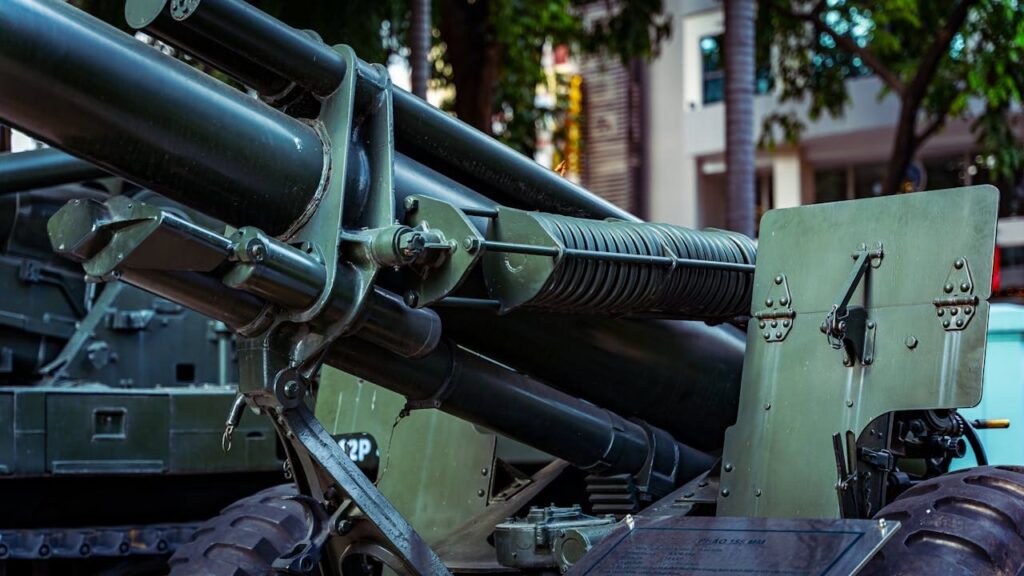
The War Remnants Museum stands as Vietnam’s most powerful and emotionally charged historical institution. Located in District 3, this museum presents an unflinching look at the Vietnam War (known locally as the American War) through photographs, military equipment, and personal testimonies that leave few visitors unmoved.
Why Visit
Understanding Vietnam’s recent history is essential to comprehending the country’s present. The museum houses eight themed rooms covering topics from historical truths and war crimes to the long-term effects of chemical warfare. Outside, you’ll find captured American tanks, helicopters, and fighter jets that once rained destruction on Vietnamese villages.
The most impactful exhibition focuses on Agent Orange and its devastating multigenerational effects. According to the Vietnamese Red Cross, approximately 3 million Vietnamese people continue to suffer health problems related to dioxin exposure decades after the war ended.
Practical Information
Best Time to Visit: Arrive when doors open at 7:30 AM to experience the exhibits before tour groups arrive. The museum becomes crowded by mid-morning, particularly during peak tourist season.
How to Get There: The museum sits at 28 Vo Van Tan Street in District 3, just a 10-minute Grab ride from the center of District 1. Entry costs 40,000 VND (approximately $1.70 USD).
Visitor Tip: Allocate at least two hours for your visit. The content is heavy, so take breaks in the peaceful courtyard garden when needed.
2. Notre-Dame Cathedral Basilica of Saigon
Rising from the heart of downtown Saigon, the Notre-Dame Cathedral’s distinctive red-brick facade has defined the city skyline since 1880. This neo-Romanesque masterpiece was constructed entirely with materials imported from France, including bricks from Marseille that have retained their vibrant color for over 140 years.
The cathedral served as a powerful symbol of French colonial presence in Indochina. Its twin bell towers reach 58 meters into the tropical sky, and the building can accommodate over 1,200 worshippers. In front stands a statue of the Virgin Mary, which locals claim shed tears in 2005, drawing thousands of pilgrims.
Current Status
Note: As of late 2024, the cathedral remains closed for extensive renovations expected to continue through 2027. The exterior can still be photographed, and the square surrounding it remains a popular gathering spot.
Combine your visit with the Saigon Central Post Office directly opposite the cathedral for a perfect colonial architecture pairing.
3. Saigon Central Post Office
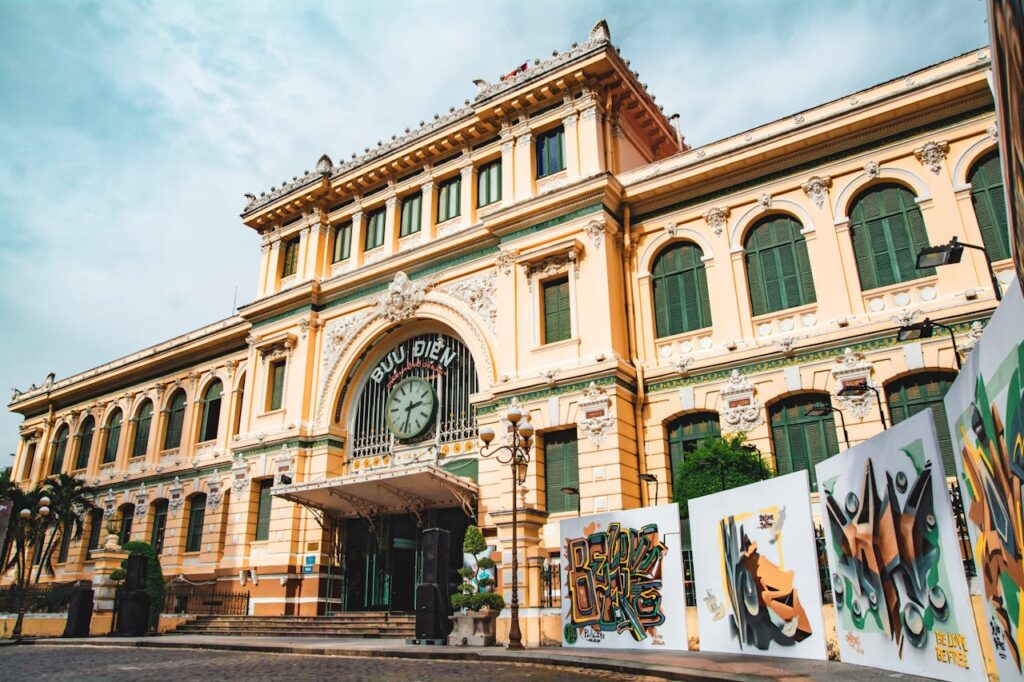
Step inside this architectural gem and you’ll feel transported to 19th-century Paris. Designed by Alfred Foulhoux and constructed between 1886 and 1891 (with contributions from Gustave Eiffel’s workshop), the Saigon Central Post Office represents one of the finest examples of French colonial architecture in Southeast Asia.
The building’s soaring vaulted ceiling features intricate green ironwork, while hand-painted maps from the 1890s adorn the walls, showing Saigon and the surrounding regions of Cochinchina and Cambodia. A large portrait of Ho Chi Minh watches over the main hall, a reminder of Vietnam’s post-colonial transformation.
Why Visit
Beyond its architectural beauty, the post office remains a fully functioning mail service. Purchase beautifully designed stamps, send postcards to loved ones, or simply admire the craftsmanship of an era when post offices were built like cathedrals to commerce and communication.
Opening Hours: Daily from 7:00 AM to 7:00 PM. Entry is free, though you’ll likely want to buy souvenirs or stamps.
4. Independence Palace (Reunification Palace)
On April 30, 1975, a North Vietnamese tank crashed through the gates of this building, effectively ending the Vietnam War. That dramatic moment transformed the Independence Palace into one of Vietnam’s most significant historical sites, preserved almost exactly as it was on that fateful day.
Originally built in 1868 as the Norodom Palace, the structure served as home and workplace for the French Governor of Cochinchina. After heavy damage in a 1962 bombing, it was rebuilt in a modernist style featuring distinct 1960s architecture with strong symbolic elements representing Vietnamese culture.
What to See
The palace offers five floors of preserved rooms including the war room with its original maps and communications equipment, the president’s private quarters, and the rooftop with a helicopter landing pad. The basement reveals a network of tunnels and telecommunications centers that coordinated military operations during the war’s final years.
Practical Details
| Information | Details |
|---|---|
| Address | 135 Nam Ky Khoi Nghia Street, District 1 |
| Opening Hours | 7:30 AM – 11:00 AM, 1:00 PM – 4:00 PM daily |
| Ticket Price | 65,000 VND (approximately $2.70 USD) |
| Audio Guide | Available in multiple languages |
| Time Needed | 1.5 to 2 hours |
5. Ben Thanh Market
If Ho Chi Minh City has a beating commercial heart, it pounds loudest inside the labyrinthine corridors of Ben Thanh Market. This iconic market has served as the city’s primary trading hub since 1914, when the French colonial administration constructed the distinctive yellow building with its prominent clock tower.
Over 3,000 stalls pack the interior, selling everything from conical hats and silk scarves to cashews, dried fruits, and aromatic Vietnamese coffee. The market’s exterior walls burst to life each evening when the famous night market begins, transforming surrounding streets into a sprawling food paradise.
Shopping Tips
Bargaining is not just accepted but expected. Vendors typically start at 200-300% above their bottom price. A friendly smile and willingness to walk away often yields the best discounts. Aim for 40-50% of the initial asking price, particularly for textiles and souvenirs.
Best times to visit: Early morning (6:00-8:00 AM) offers the most authentic local experience with fewer tourists and vendors setting up fresh produce. Late afternoon (4:00-6:00 PM) provides pleasant temperatures before the night market begins.
Food section highlights: Don’t miss the prepared food stalls in the center of the market. Try banh xeo (crispy Vietnamese crepes), goi cuon (fresh spring rolls), or sit-down pho at one of the small restaurants ringing the interior.
6. Bitexco Financial Tower & Sky Deck
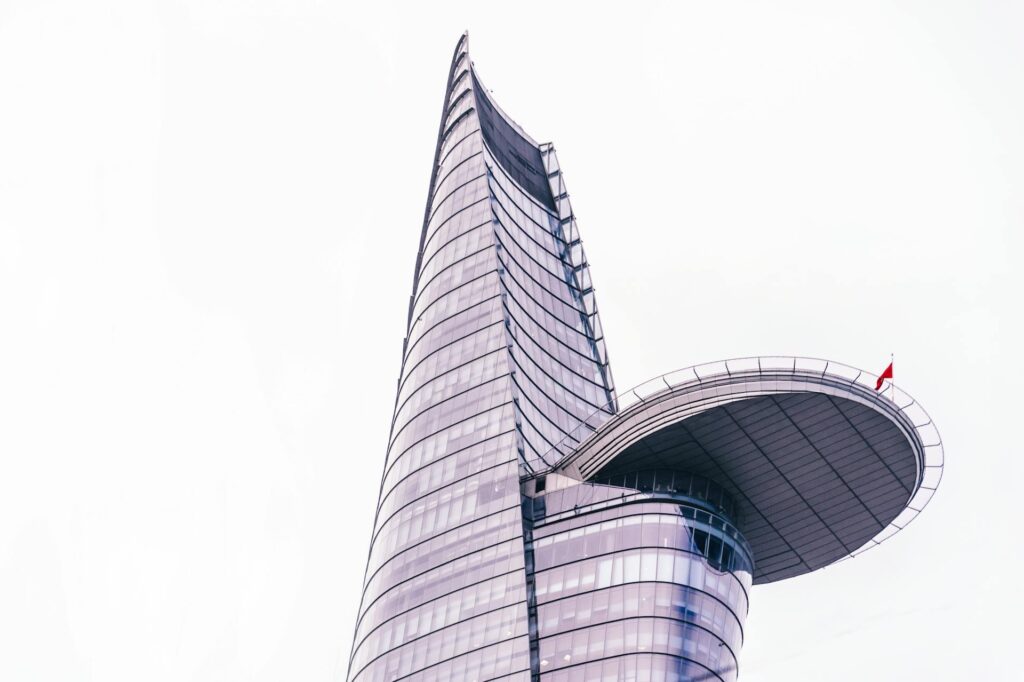
Soaring 262 meters above the city, the Bitexco Financial Tower represents modern Vietnam’s architectural ambitions. Completed in 2010, this 68-story skyscraper was designed to resemble a lotus bud, Vietnam’s national flower, though many visitors note its resemblance to Taipei 101.
The Saigon Skydeck on the 49th floor offers 360-degree views across the sprawling metropolis. On clear days, you can see all the way to the Mekong River and distant provinces. Sunset visits prove most magical, when the city transitions from daylight hustle to neon-lit evening energy.
Visitor Information
| Detail | Information |
|---|---|
| Sky Deck Hours | 9:30 AM – 9:30 PM daily |
| Ticket Price | 200,000 VND (approximately $8.50 USD) |
| Location | 36 Ho Tung Mau Street, District 1 |
| Time Recommended | 45 minutes to 1 hour |
Pro tip: Head up to EON51 Lounge on the 51st floor for cocktails and snacks with even better views. While drinks cost premium prices (cocktails around $12-15), the atmosphere and perspective justify the splurge for special occasions.
7. Nguyen Hue Walking Street
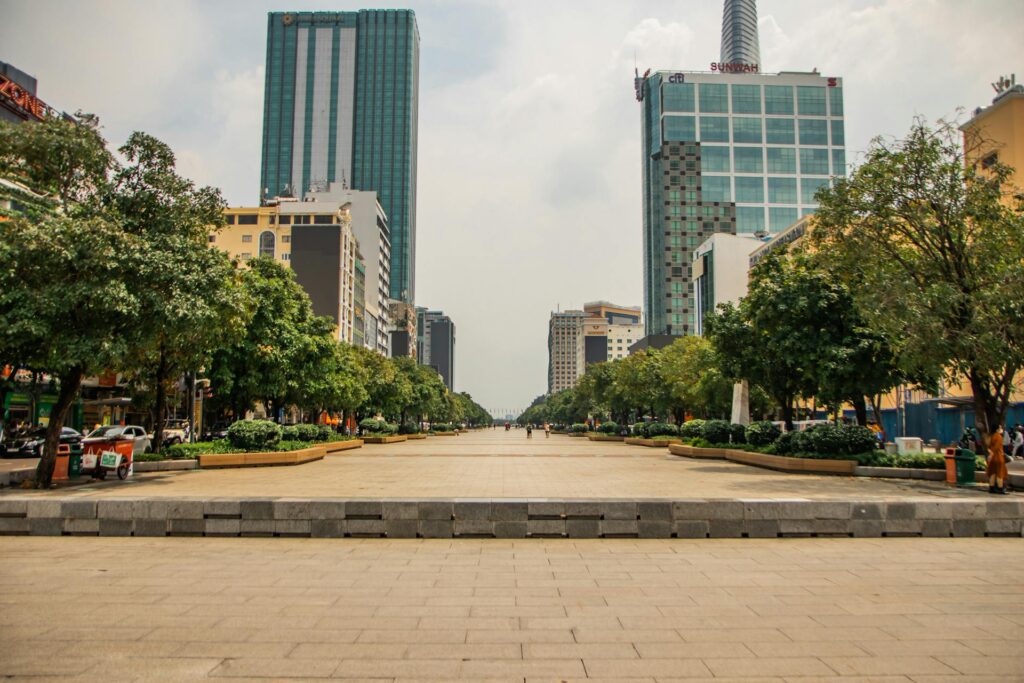
This kilometer-long pedestrian boulevard transformed from a traffic-choked artery into Saigon’s premier public space in 2015. Stretching from the Saigon River to the People’s Committee Building, Nguyen Hue Walking Street has become the city’s living room where locals and tourists mingle beneath towering office buildings.
Weekend evenings bring the street to life with street performers, light shows projected onto fountains, and families enjoying the rare car-free urban space. Coffee shops and restaurants line both sides, their outdoor seating offering perfect people-watching perches.
The street culminates at the Ho Chi Minh City People’s Committee Building, a gorgeous French colonial structure illuminated dramatically at night. This yellow and white confection, built in 1908, looks like it was transplanted directly from a Parisian arrondissement.
When to Visit
Weekday evenings (6:00-9:00 PM) offer pleasant temperatures and moderate crowds. Weekend nights transform the street into a festival atmosphere with increased Vietnam street food vendors and performances, though crowds intensify significantly.
8. Saigon Opera House (Municipal Theatre)
Completed in 1900, the Saigon Opera House stands as one of French Indochina’s most refined architectural achievements. Modeled after the Petit Palais in Paris, this 800-seat theatre features ornate relief sculptures, Gothic Revival elements, and a yellow-and-white facade that glows ethereally under evening illumination.
The building served various purposes throughout Vietnam’s turbulent 20th century, including use as the South Vietnamese National Assembly building. Today it has returned to its original purpose as a performing arts venue, hosting ballet, opera, traditional Vietnamese music, and the internationally acclaimed AO Show.
Experience the AO Show
The AO Show combines traditional Vietnamese culture with contemporary circus arts and bamboo acrobatics. The show tells the story of Vietnam’s transformation from rural society to modern nation through breathtaking physical performances. Tickets range from 630,000 to 1,260,000 VND ($26-52 USD).
Booking tip: Purchase tickets at least a few days in advance during peak season (December-February), as popular shows sell out quickly.
9. Jade Emperor Pagoda
Built by the Cantonese community in 1909, the Jade Emperor Pagoda remains one of Saigon’s most atmospheric spiritual sites. This Taoist temple, known locally as Chua Phuoc Hai, fills with swirling incense smoke, elaborate woodcarvings, and intricate statues depicting Taoist and Buddhist deities.
The main altar honors the Jade Emperor, supreme deity in Taoist cosmology, while side rooms feature the Hall of Ten Hells with graphic depictions of Buddhist hell realms and punishments. Female visitors particularly appreciate the Hall of the Women, dedicated to Kim Hoa Thanh Mau, the goddess of fertility and motherhood.
Visiting Tips
Respectful attire is essential: Cover shoulders and knees. The temple welcomes visitors but remains an active place of worship. Locals come to pray, burn incense offerings, and consult fortune tellers in the courtyard.
Best time: Early morning (7:00-9:00 AM) offers a more contemplative experience before tour groups arrive. The temple opens daily from 6:00 AM to 6:00 PM with free admission, though small donations support maintenance.
Location: 73 Mai Thi Luu Street, District 3, about 15 minutes by Grab from District 1.
10. Cu Chi Tunnels (Day Trip)
Beneath the red earth 70 kilometers northwest of Saigon lies one of the 20th century’s most remarkable engineering achievements. The Cu Chi Tunnels consist of over 250 kilometers of underground passages that sheltered Viet Cong fighters and villagers during decades of conflict.
These hand-dug tunnels featured multiple levels, connecting underground rooms used as living quarters, hospitals, weapons factories, and command centers. Some sections descended three levels deep, with the lowest reaching 10 meters underground to avoid bomb detection.
Visiting the Tunnels
Two sites welcome visitors: Ben Dinh (closer to the city but more touristy) and Ben Duoc (farther out but more authentic and less crowded). Most travelers prefer Ben Duoc for a more immersive experience.
Tour highlights include:
- Crawling through widened tunnel sections (original tunnels measured just 80cm by 120cm)
- Viewing hidden trap doors and defensive booby traps
- Watching propaganda films from the era
- Sampling cassava and tea, the tunnels’ staple foods
- Optional firing range with period weapons (controversial among visitors)
Practical Information
| Detail | Information |
|---|---|
| Distance from HCMC | 70 km (Ben Duoc) |
| Travel Time | 2-2.5 hours each way |
| Tour Duration | Half-day (4-5 hours total) |
| Entry Fee | 110,000 VND (approximately $4.60 USD) |
Important: Wear comfortable clothes you don’t mind getting dirty. The tunnels are hot, cramped, and dusty. Those with claustrophobia, back problems, or limited mobility should carefully consider whether to enter the tunnels.
Combine with: Many tours pair Cu Chi with a Mekong Delta visit for a full-day adventure exploring Vietnam’s river country.
11. Bui Vien Walking Street
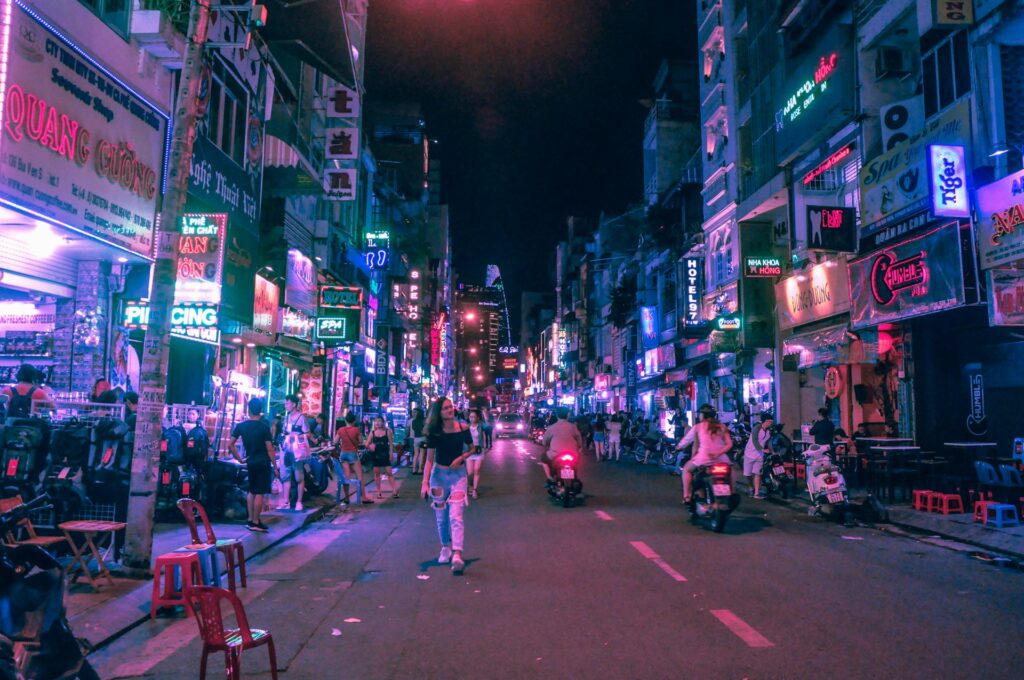
Saigon’s backpacker district explodes with energy every evening as Bui Vien transforms into a pedestrian party zone. This street in District 1 has become Southeast Asia’s answer to Bangkok’s Khao San Road, though it maintains a distinctly Vietnamese character amid the international chaos.
Street bars spill onto sidewalks with plastic stools, cheap beer towers, and sound systems pumping everything from EDM to Vietnamese pop. Food vendors weave through crowds selling everything from banh mi to exotic fruit smoothies, while tour operators hawk last-minute travel deals.
What to Expect
The atmosphere skews young and loud, attracting backpackers, gap-year travelers, and adventurous tourists seeking budget-friendly nightlife. Beer costs as little as 15,000 VND (under $1) for local brews at street-side bars.
Safety considerations: While generally safe, petty theft occasionally occurs in crowded areas. Keep valuables secure, watch your drinks, and be cautious of too-good-to-be-true tour deals. The noise level makes this area unsuitable for families with young children or light sleepers.
Best nights: Thursday through Saturday see peak crowds and energy. Wednesday offers a more manageable introduction to the scene.
12. Tao Dan Park & Turtle Lake
While Ho Chi Minh City rarely pauses, Tao Dan Park offers a green refuge where locals practice tai chi at dawn, elderly men gather for traditional bird singing competitions, and young couples escape the urban intensity. This 10-hectare park in District 1 provides glimpses into daily Vietnamese life away from tourist circuits.
The park’s most photographed feature is Turtle Lake (Ho Con Rua), a small pond dominated by a monument to Ho Chi Minh Youth Volunteers. Early morning (5:30-7:30 AM) showcases the park at its most authentically Vietnamese, with exercise groups, badminton players, and meditation practitioners.
Nearby Coffee Culture
The streets surrounding Tao Dan Park, particularly Hai Ba Trung and Nguyen Du, burst with Saigon’s famous coffee culture. Try traditional Vietnamese ca phe sua da (iced coffee with sweetened condensed milk) at local coffee shops.
Best for: Morning exercise, evening strolls, observing local life, and finding peaceful moments in a chaotic city.
When to Visit Ho Chi Minh City
The best time to visit Ho Chi Minh City runs from December through April during the dry season when temperatures remain hot but rainfall stays minimal. This period coincides with peak tourist season, bringing higher prices but also the most comfortable weather for sightseeing.
May through October brings the wet season, characterized by short but intense afternoon downpours. Don’t let this deter you; rain typically lasts 30-60 minutes, and the city actually becomes more photogenic with wet streets reflecting neon lights. Hotel and flight prices drop significantly during these months.
Weather Overview
| Month | Avg. High (°C) | Avg. Low (°C) | Rainfall (mm) |
|---|---|---|---|
| January | 32 | 21 | 15 |
| February | 33 | 22 | 5 |
| March | 34 | 24 | 10 |
| April | 35 | 26 | 50 |
| May | 34 | 25 | 220 |
| June | 32 | 24 | 330 |
| July | 32 | 24 | 315 |
| August | 32 | 24 | 270 |
| September | 31 | 24 | 335 |
| October | 31 | 24 | 270 |
| November | 31 | 23 | 115 |
| December | 31 | 22 | 55 |
Climate data source: Vietnam National Centre for Hydro-Meteorological Forecasting
Festival timing: Tet (Vietnamese New Year) typically falls in late January or February. While incredibly festive, many businesses close for a week, and prices spike dramatically.
How to Get Around Ho Chi Minh City
Ho Chi Minh City offers multiple transportation options, though the lack of a metro system (currently under construction with limited lines operating) means most visitors rely on ride-hailing apps and their own two feet.
Transportation Options
| Method | Best For | Approximate Cost |
|---|---|---|
| Grab (car) | Comfort, groups, longer distances | 30,000-100,000 VND per trip |
| Grab (bike) | Solo travelers, short distances, traffic | 15,000-40,000 VND per trip |
| Walking | District 1 exploration, short distances | Free |
| Traditional taxi | When Grab unavailable | Similar to Grab car |
| Xe om (motorbike taxi) | Adventurous travelers, negotiable | 20,000-50,000 VND (negotiate first) |
Pro tips:
- Download the Grab app before arrival and link a credit card for seamless payments
- Walking District 1’s main sights is entirely feasible; most major attractions sit within 2-3 kilometers of each other
- Avoid traditional taxis unless using reputable companies like Vinasun or Mai Linh
- Cross streets slowly and steadily; motorcycles will flow around you
Where to Stay in Ho Chi Minh City
Your accommodation choice dramatically affects your Ho Chi Minh City experience. Each district offers distinct advantages depending on your travel style and interests.
District 1: Best for First-Time Visitors
The tourist heart of Saigon puts you within walking distance of Ben Thanh Market, Notre-Dame Cathedral, and countless restaurants. Expect higher prices but maximum convenience. This area suits travelers wanting to minimize transit time and maximize sightseeing efficiency.
Budget: Hostels around Pham Ngu Lao Street ($8-15 per night) Mid-range: Boutique hotels near Dong Khoi Street ($40-80 per night) Luxury: Five-star properties like Hotel des Arts or Park Hyatt Saigon ($150-300+ per night)
District 3: Quiet and Local
Just north of District 1, this residential area offers authentic neighborhood life with lower prices and excellent local eateries. You’ll need short Grab rides to major tourist sites, but you’ll experience Saigon as residents live it.
Best for: Travelers seeking authenticity, longer stays, budget-conscious visitors
District 5 (Chinatown): Cultural and Food-Heavy
Cholon, Saigon’s Chinatown, pulses with different energy featuring Chinese temples, wholesale markets, and some of the city’s best Chinese-Vietnamese cuisine. Located farther from main tourist sites, this area rewards adventurous eaters and cultural explorers.
Best for: Food enthusiasts, cultural immersion, unique experiences
Practical Booking Tips
Book accommodation near major streets for easier Grab pickup locations. Side alleys can confuse drivers and complicate arrivals with luggage. Properties near Pasteur Street, Nguyen Hue, or Dong Khoi offer excellent access to both attractions and transportation.
Nearby Trips
Ho Chi Minh City serves as an ideal base for exploring southern Vietnam’s diverse attractions. Several worthwhile destinations lie within day-trip distance, while others merit overnight stays.
Cu Chi Tunnels
Already covered above, this half-day trip combines easily with city sightseeing. Most tours depart around 8:00 AM and return by early afternoon, leaving time for evening activities in Saigon.
Mekong Delta
Vietnam’s agricultural heartland lies just 70 kilometers southwest of Ho Chi Minh City. The Mekong Delta’s floating markets, fruit orchards, and labyrinthine waterways offer complete contrast to urban Saigon. Popular destinations include My Tho (closest), Can Tho (famous for Cai Rang floating market), and Ben Tre (coconut candy workshops).
Day trips work but feel rushed. Consider an overnight stay to experience the delta’s early morning floating markets and sunset riverside tranquility. Tours typically include boat rides through narrow canals, visits to local workshops, and tropical fruit tastings.
Can Gio Mangrove Forest
This UNESCO Biosphere Reserve sits about 40 kilometers southeast of the city across the Nha Be River. The 75,000-hectare mangrove forest offers monkey encounters, canopy walkways, and ecological education centers. The site played a strategic role during wartime and was heavily defoliated, making its recovery particularly significant.
Best for: Nature lovers, wildlife photography, escaping urban intensity. Plan for a full day including ferry crossings and forest exploration.
Vung Tau
This beach town 125 kilometers southeast offers weekend escapes for Saigon residents seeking ocean breezes and fresh seafood. While not Southeast Asia’s most pristine beach destination, Vung Tau provides accessible coastal relaxation, the giant Jesus Christ statue, and historical sites from the French colonial and American war eras.
Conclusion
Ho Chi Minh City defies simple categorization. It’s simultaneously a living war memorial and a forward-looking economic powerhouse, a French colonial time capsule and a Southeast Asian megacity hurtling toward the future. The same streets that witnessed tanks in 1975 now overflow with entrepreneurs, artists, and dreamers building modern Vietnam.
Whether you’re moved by the War Remnants Museum’s haunting exhibitions, enchanted by Notre-Dame Cathedral’s Gothic spires, overwhelmed by Ben Thanh Market’s sensory explosion, or simply mesmerized by the organized chaos of millions of motorbikes flowing through wide boulevards, Saigon leaves impressions that endure long after departure.
The city rewards curiosity and flexibility. Venture beyond the obvious tourist sites into local neighborhoods where grandmothers sell pho from sidewalk stalls, where hidden temples shelter peaceful courtyards, where coffee shops buzz with young Vietnamese professionals plotting startups and art projects. This is where Saigon’s real magic lives, in the spaces between guidebook recommendations.
Ready to explore more of Vietnam? Discover the country’s diverse landscapes and cultural treasures in our comprehensive guides to the Top 10 Places to Visit in Vietnam, from Halong Bay’s limestone karsts to Hoi An’s lantern-lit streets and Da Nang beaches. Or dive deeper into the north with our detailed breakdown of the Top 15 Things to Do in Hanoi, where ancient temples meet French quarters and street food culture reaches its zenith.
The energy, history, and relentless optimism of Ho Chi Minh City await. Pack light, embrace the chaos, and prepare for one of Southeast Asia’s most rewarding urban adventures.
FAQs
What are the must-see attractions in Ho Chi Minh City?
The absolute essentials include the War Remnants Museum for historical context, Ben Thanh Market for cultural immersion, and Cu Chi Tunnels for wartime history. Add the Independence Palace, Notre-Dame Cathedral, and Saigon Central Post Office for colonial architecture enthusiasts. Budget at least three full days to cover these highlights without feeling rushed.
Is Ho Chi Minh City safe for tourists?
Yes, Ho Chi Minh City is generally very safe for tourists. Violent crime against visitors remains rare. The main concerns are petty theft (especially bag snatching from motorbikes), tourist scams, and traffic accidents. Keep valuables secure, use reputable transportation services like Grab, and maintain normal urban awareness. Avoid displaying expensive jewelry or electronics unnecessarily, and be cautious in crowded areas.
How far are the Cu Chi Tunnels from the city center?
Cu Chi Tunnels sit approximately 70 kilometers northwest of central Ho Chi Minh City. The journey takes 1.5 to 2.5 hours depending on traffic conditions and which tunnel site you visit (Ben Dinh or Ben Duoc). Most organized tours handle transportation, departing around 8:00 AM and returning by early afternoon. Independent travelers can hire private cars or join budget tours through companies like Sinh Tourist.
What is the best time to visit Ho Chi Minh City?
December through April offers the most comfortable weather with minimal rainfall and temperatures around 25-35°C. This dry season coincides with peak tourism, meaning higher prices but optimal conditions for sightseeing. May through November brings afternoon thunderstorms but fewer crowds and better deals. The wet season shouldn’t deter you as rain typically arrives predictably in late afternoon, and mornings remain clear for activities.
What food is Ho Chi Minh City famous for?
Saigon’s culinary scene revolves around pho (beef noodle soup), banh mi (Vietnamese sandwiches), com tam (broken rice with grilled pork), and hu tieu (clear noodle soup). The city particularly excels at street food with specialties like banh xeo (sizzling crepes), goi cuon (fresh spring rolls), and cao lau (Hoi An-style noodles). Don’t miss ca phe sua da (Vietnamese iced coffee with condensed milk) and che (sweet dessert soups). District 1’s street food scene peaks around Ben Thanh Market and Nguyen Hue Street, while District 5’s Chinatown offers exceptional Chinese-Vietnamese fusion cuisine.