
Hanoi is a city where ancient pagodas stand beside French colonial mansions, where the aroma of street-side pho mingles with the honking of motorbikes, and where every narrow lane tells a thousand-year-old story. The Vietnamese capital offers a captivating blend of traditional charm and modern energy that few Asian cities can match.
What are the best things to do in Hanoi? From exploring the atmospheric Old Quarter and sampling legendary Vietnamese street food to visiting historic temples and catching traditional water puppet shows, Hanoi delivers unforgettable experiences for every type of traveler. Whether you’re drawn to history, cuisine, culture, or simply soaking in the lakeside atmosphere, this city rewards curiosity at every turn.
This guide covers both local favorites and first-timer essentials, ensuring you experience the authentic heart of Hanoi while hitting all the must-see attractions.
TL;DR: Quick Overview
- Old Quarter (Google Maps): Navigate maze-like streets filled with vendors and colonial architecture
- Hoan Kiem Lake (Google Maps): Iconic red bridge and peaceful morning tai chi sessions
- Temple of Literature (Google Maps): Vietnam’s first university with stunning Confucian design
- French Quarter (Google Maps): Colonial elegance with the Opera House and boutique cafés
- Ho Chi Minh Mausoleum (Google Maps): Pay respects at this monumental complex
- Ta Hien Street (Google Maps): Street food paradise for pho, bun cha, and beer
- Train Street (Google Maps): Watch trains pass inches from café tables
- Museum of Ethnology (Google Maps): Deep dive into Vietnam’s 54 ethnic groups
- Water Puppet Show (Google Maps): Traditional art form unique to northern Vietnam
- Hidden Cafés (Google Maps): Sip legendary egg coffee in atmospheric hideaways
- Long Bien Bridge (Google Maps): Historic sunset walk across French-era steel structure
- West Lake (Google Maps): Lakeside cycling and Vietnam’s oldest pagoda
- Dong Xuan Market (Google Maps): Shopping hub for souvenirs and local goods
- Day Trips: Escape to Ninh Binh’s karst landscapes or Ha Long Bay
- Nightlife: Rooftop bars and bustling bia hoi corners
1. Explore the Old Quarter
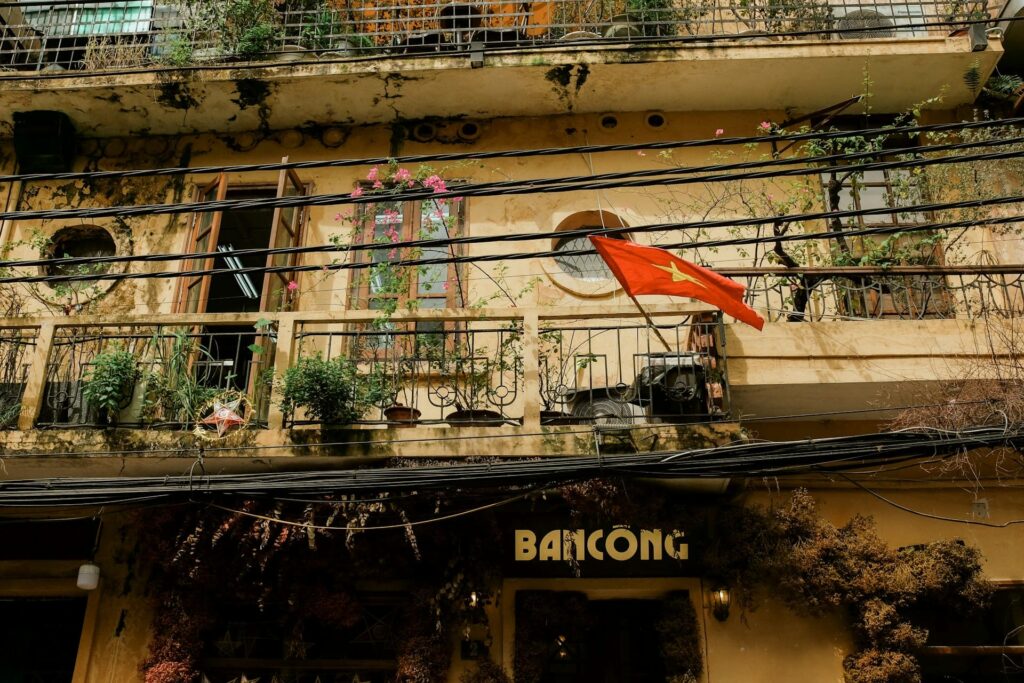
The Old Quarter is Hanoi’s beating heart, a labyrinth of 36 ancient streets where each lane was traditionally named after the goods sold there. Today, Hang Bac (Silver Street) and Hang Gai (Silk Street) still reflect their commercial heritage, though you’ll find everything from lacquerware to smartphone accessories.
Why visit? The atmosphere here is pure, undiluted Hanoi. Narrow shophouses lean into the streets, their facades barely wider than a doorway due to historical taxes based on street frontage. Local vendors balance fruit baskets on shoulder poles, motorbikes weave through pedestrians, and the scent of incense drifts from family altars. The architecture tells stories of Chinese, French, and Vietnamese influences across centuries.
Best time to visit: Early morning (6-8 AM) lets you witness the city waking up—street vendors setting up, locals practicing tai chi, and food stalls firing up their grills. Late afternoon (4-6 PM) brings cooler temperatures and golden light perfect for photography.
How to get there: The Old Quarter sits adjacent to Hoan Kiem Lake. Most visitors simply walk from their hotel, as accommodations cluster in this area. From outside the quarter, take a Grab (Vietnam’s Uber equivalent) for around 30,000-50,000 VND ($1.25-2 USD).
2. Visit Hoan Kiem Lake & Ngoc Son Temple
Hoan Kiem Lake (Lake of the Restored Sword) sits at the spiritual and geographic center of Hanoi. Legend says Emperor Le Loi returned a magical sword to the Golden Turtle God here in the 15th century. The iconic Turtle Tower rises from the lake’s center, while the scarlet Huc Bridge (Morning Sunlight Bridge) leads to Ngoc Son Temple on a small island.
The lake offers a peaceful refuge from Hanoi’s chaos. A 1.8-kilometer walking path circles the water, where locals jog, practice tai chi, and gather for evening exercise classes. Benches under shady trees provide perfect spots for people-watching.
Ngoc Son Temple honors scholar Van Xuong, military leader Tran Hung Dao, and physician La To. Inside, you’ll find preserved specimens of giant lake turtles (now extinct in Hoan Kiem Lake) and traditional architectural details. Entry costs 30,000 VND ($1.25).
Pro tip: Visit at sunrise (around 5:30-6 AM) to photograph the red bridge without crowds and watch hundreds of locals perform synchronized tai chi and aerobics. The morning light reflecting off the lake creates magical conditions for photography.
3. Discover the Temple of Literature
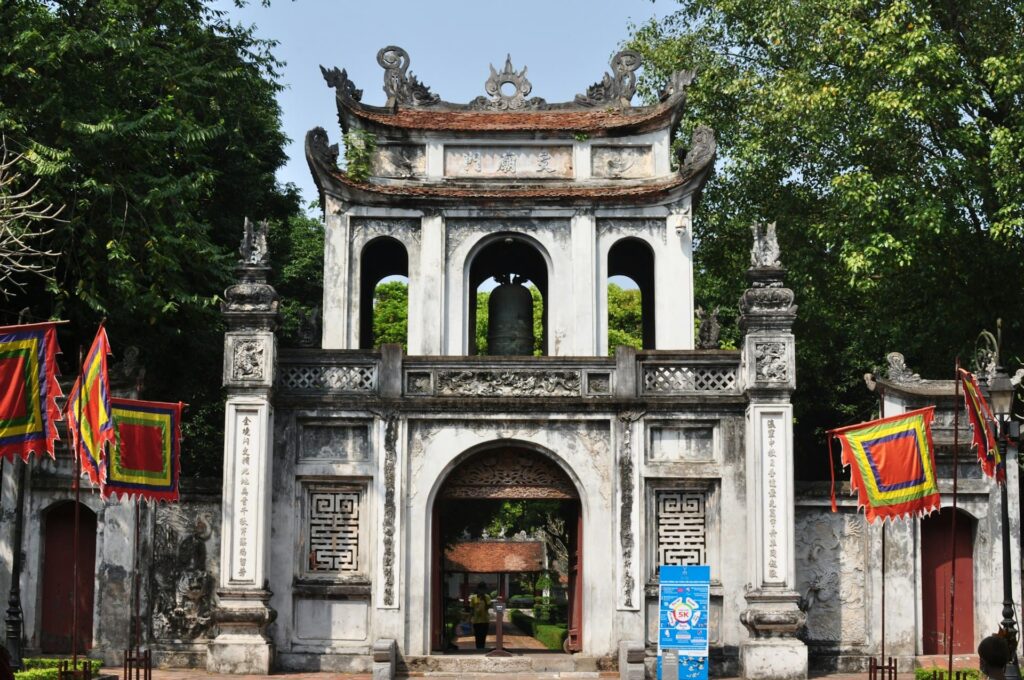
Built in 1070, the Temple of Literature (Van Mieu) served as Vietnam’s first national university, educating elite scholars for over 700 years. This Confucian sanctuary showcases traditional Vietnamese architecture across five serene courtyards, with pavilions, gardens, and the iconic Well of Heavenly Clarity.
The temple’s most precious artifacts are 82 stone stele mounted on turtle pedestals, inscribed with the names and birthplaces of doctorate graduates from 1442 to 1779. UNESCO recognizes these as documentary heritage. Walking through the courtyards, you’ll encounter ancient trees, ornate gates, and the Khue Van Pavilion, which appears on the 100,000 VND banknote.
Practical details:
- Entry fee: 30,000 VND ($1.25)
- Hours: 8:00 AM to 5:00 PM (April to October), 8:00 AM to 4:30 PM (November to March)
- Best time: Early morning for fewer crowds and better photos
What to see: The Great Middle Gate, Constellation of Literature Pavilion, the Well of Heavenly Clarity, Thai Hoc House (where classes were held), and the stone turtle stele.
4. Wander Around the French Quarter
The French Quarter showcases Hanoi’s colonial past through tree-lined boulevards and elegant architecture. Trang Tien Street leads past the iconic Hanoi Opera House, a stunning example of French colonial architecture completed in 1911 and modeled after Paris’s Palais Garnier.
This neighborhood exudes sophistication with boutique shops, art galleries, upscale cafés, and the legendary Sofitel Metropole Hotel, where Charlie Chaplin and Graham Greene once stayed. The wide streets contrast dramatically with the Old Quarter’s narrow lanes, offering a different perspective on Hanoi’s layered history.
Highlights:
- Hanoi Opera House: Admire the neoclassical facade (guided tours available)
- St. Joseph’s Cathedral: Neo-Gothic church built in 1886
- Trang Tien Plaza: Luxury shopping mall
- Metropole Hotel: Stop for afternoon tea in historic surroundings
Walking route: Start at the Opera House, stroll down Trang Tien Street to Hoan Kiem Lake, then explore Nha Tho Street for cafés and boutiques near St. Joseph’s Cathedral.
5. See the Ho Chi Minh Mausoleum Complex
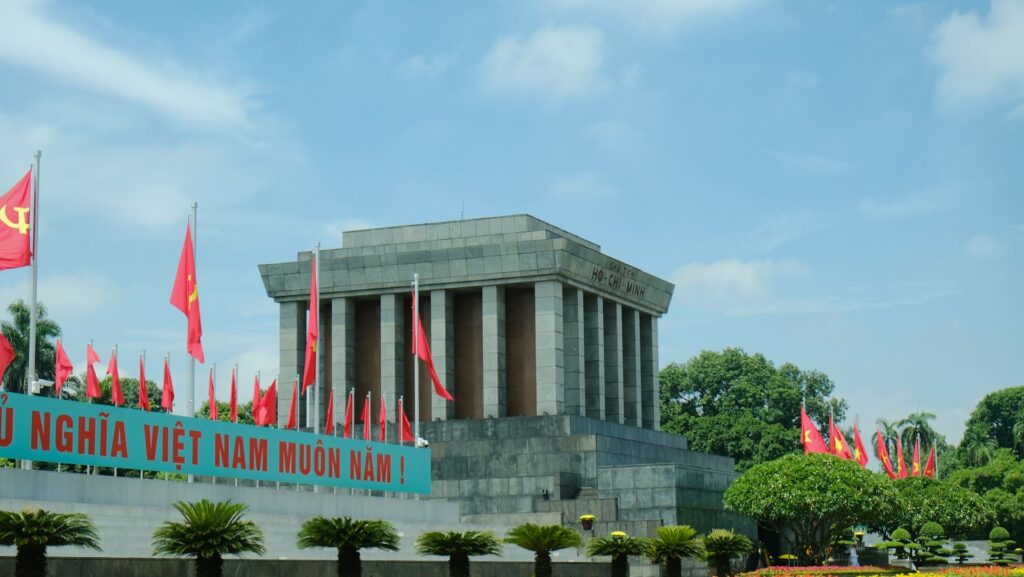
The Ho Chi Minh Mausoleum stands as Vietnam’s most significant historical site, where the preserved body of the nation’s founding father lies in state. The imposing granite structure draws both Vietnamese pilgrims and international visitors seeking to understand Vietnam’s modern history.
The complex includes several important sites: the Presidential Palace (a yellow colonial building where Ho Chi Minh refused to live), Ho Chi Minh’s Stilt House (his modest actual residence), the One Pillar Pagoda (an 11th-century Buddhist temple), and the Ho Chi Minh Museum.
Important visitor guidelines:
- Dress code: No shorts, sleeveless shirts, or sandals. Knees and shoulders must be covered
- Behavior: Maintain silence, no photography inside, hands out of pockets, no hats
- Hours: Tuesday to Thursday and weekends 8:00 AM to 11:00 AM (closed Mondays and Fridays)
- Closed: September to November for maintenance
- Entry: Free, but expect security checks and queues
Pro tip: Arrive by 7:30 AM to avoid long lines. The changing of the guard occurs hourly and is worth watching.
6. Sample Street Food on Ta Hien Street
Ta Hien Street has earned its nickname “Beer Street” for good reason. This narrow alley in the Old Quarter transforms each evening into Hanoi’s most vibrant street food scene, where plastic stools spill onto the pavement and the aroma of grilled meat fills the air.
This is where locals eat, making it an authentic introduction to Vietnamese cuisine. Order fresh bia hoi (draft beer for around 5,000-10,000 VND or $0.20-0.40 per glass), pho (rice noodle soup), bun cha (grilled pork with noodles), and nem ran (fried spring rolls).
Must-try dishes on Ta Hien:
- Bun Cha: Hanoi’s signature dish made famous when Obama dined here with Anthony Bourdain at Bun Cha Huong Lien
- Pho: Vietnam’s iconic beef or chicken noodle soup, best for breakfast
- Cha Ca: Turmeric fish with dill and noodles
- Egg Coffee (Ca Phe Trung): Creamy whipped egg yolk over Vietnamese coffee
Where locals eat:
- Bun Cha Dac Kim (1 Hang Manh Street)
- Pho Gia Truyen (49 Bat Dan Street)
- Cafe Pho Co (11 Hang Gai Street) for egg coffee with lake views
Best time: Evening (6 PM onwards) when the street comes alive, though arrive by 7 PM for seats during peak season.
7. Enjoy Hanoi Train Street
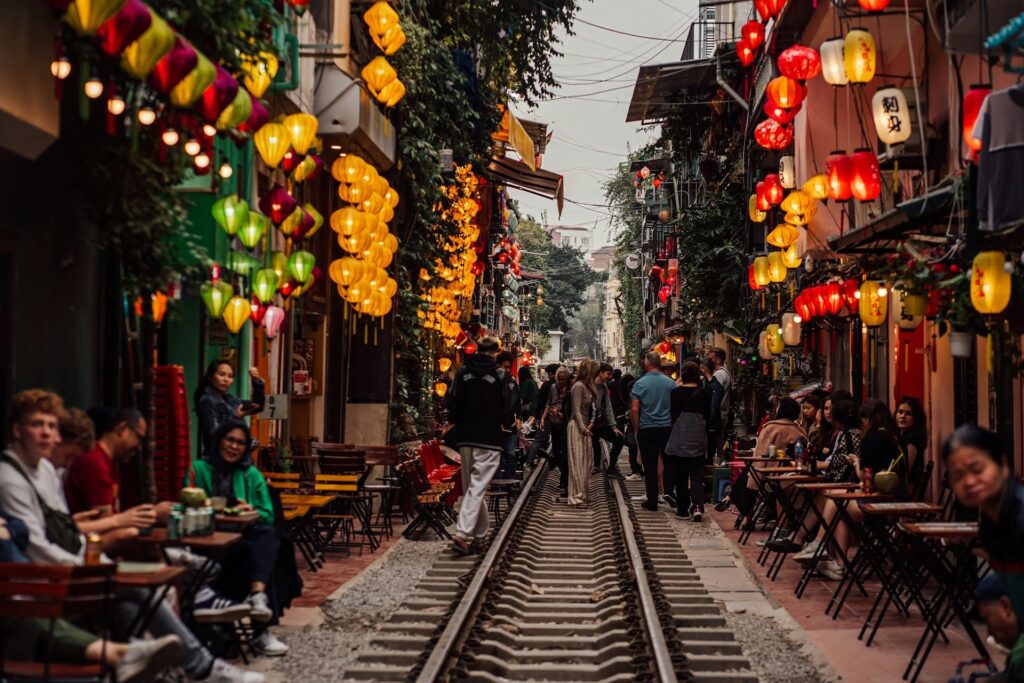
Train Street (Ngo 224 Le Duan or Phung Hung Street) became Instagram-famous for its surreal spectacle: trains passing mere inches from homes and cafés multiple times daily. Residents hang laundry, drink coffee, and live their lives on tracks that have cut through the neighborhood since French colonial times.
Current status: Train Street has faced periodic closures due to safety concerns. As of 2024, access remains restricted in some sections, but several cafés near the tracks continue operating. Always check current status before visiting.
Train schedule (approximate):
- Morning: 6:00 AM, 7:30 AM, 8:30 AM, 11:20 AM
- Afternoon: 3:20 PM, 6:00 PM, 7:15 PM, 8:30 PM, 11:00 PM
Times vary, so arrive 15-20 minutes early. Cafés along the tracks usually know the schedule and will alert customers when trains approach.
Safety first: Stand well back from the tracks. Listen to local instructions. The train passes quickly (about 30 seconds) but comes very close to buildings.
Recommended cafés:
- Jicoo The Floating Cafe
- The Note Coffee
- Loading T Cafe
8. Visit the Vietnam Museum of Ethnology
The Vietnam Museum of Ethnology offers deep insight into the country’s remarkable cultural diversity. Vietnam recognizes 54 distinct ethnic groups, and this museum brilliantly showcases their traditions, costumes, housing styles, and daily life through exhibits both indoors and in the outdoor display area.
What to see:
- Indoor exhibits: Traditional costumes, musical instruments, ceremonial objects, and detailed explanations of each ethnic group’s customs
- Outdoor area: Full-scale traditional houses from various ethnic minorities, including stilt houses, communal halls, and tombs
- Gong collection: Recognized by UNESCO as Intangible Cultural Heritage
- Water puppet performances: Weekend shows demonstrate this traditional art form
Practical information:
- Location: Nguyen Van Huyen Street (about 7 km from city center)
- Entry fee: 40,000 VND ($1.65)
- Hours: Tuesday to Sunday, 8:30 AM to 5:30 PM (closed Mondays)
- Time needed: 2-3 hours for thorough exploration
- Getting there: Grab taxi (about 80,000-100,000 VND from Old Quarter)
Pro tip: Rent the audio guide (included with ticket) for detailed context. The outdoor section can be hot, so visit mornings or late afternoons.
9. Catch a Water Puppet Show
Water puppetry (Mua Roi Nuoc) is a uniquely Vietnamese art form dating back to the 11th century in the Red River Delta. Puppeteers stand waist-deep in water behind a bamboo screen, manipulating wooden puppets using long poles and strings beneath the water’s surface. The puppets appear to glide, dance, and tell stories across the water.
Thang Long Water Puppet Theatre remains Hanoi’s premier venue, located near Hoan Kiem Lake at 57B Dinh Tien Hoang Street. Shows feature traditional stories about rural life, historical legends, and the Golden Turtle returning the sword to Emperor Le Loi.
Booking information:
- Show times: Multiple daily performances (typically 3:00 PM, 4:10 PM, 5:20 PM, 6:30 PM, 8:00 PM)
- Ticket prices: 100,000-200,000 VND ($4-8) depending on seating
- Duration: 50 minutes
- Where to book: At the theatre box office, through hotels, or online in advance
Tips:
- Book tickets 1-2 days ahead during peak season
- Arrive 15 minutes early for good seats
- Front-row seats may get splashed
- Photography without flash is usually permitted
The live traditional music accompaniment featuring drums, wooden bells, horns, and bamboo flutes adds authenticity to this mesmerizing cultural experience.
10. Sip Coffee at a Hidden Café
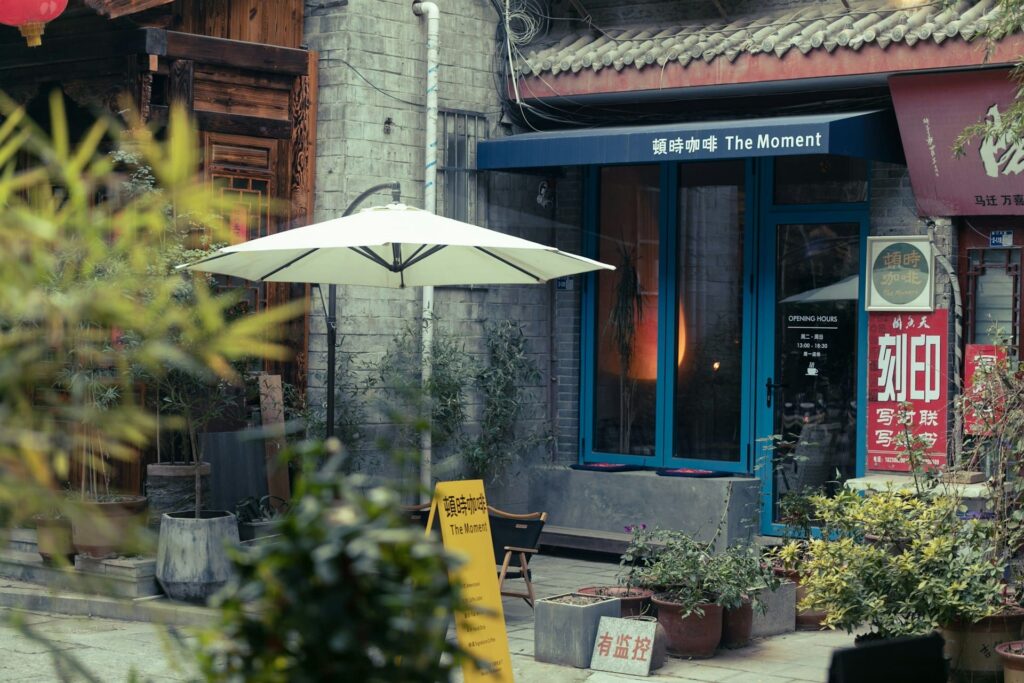
Hanoi’s coffee culture runs deep, blending French colonial influence with local innovation. The city hides remarkable cafés down narrow alleys, up staircases, and on rooftops, each offering unique atmospheres and signature brews.
Café Giang (39 Nguyen Huu Huan Street) invented egg coffee (ca phe trung) in the 1940s when milk was scarce. The recipe remains a family secret: whisked egg yolk creates a creamy, sweet foam atop strong Vietnamese coffee. The café occupies a narrow alley location up steep stairs, barely marked but perpetually busy.
Cong Caphe (multiple locations) embraces Vietnam’s wartime aesthetic with propaganda posters, military-green decor, and coconut coffee served in metal canteens. The chain successfully modernized traditional coffee culture for younger generations while maintaining authentic Vietnamese coffee quality.
Other notable cafés:
- Loading T Cafe: Rooftop views near Train Street
- Tranquil Books & Coffee: Peaceful garden setting
- Cafe Pho Co: Hidden entrance through a silk shop, stunning Hoan Kiem Lake views
- Blackbird Coffee: Specialty coffee with minimalist design
- Note Coffee: Walls covered in customer notes and wishes
Vietnamese coffee styles:
- Ca phe sua da: Iced coffee with condensed milk (the classic)
- Ca phe den: Black coffee
- Ca phe trung: Egg coffee
- Ca phe cot dua: Coconut coffee
Coffee culture note: Vietnamese coffee is traditionally strong, served with sweet condensed milk, and meant to be sipped slowly while watching street life unfold.
11. Explore Long Bien Bridge
Long Bien Bridge, a 1.7-kilometer steel cantilever bridge, stands as a testament to French colonial engineering and Vietnamese resilience. Completed in 1903 by the same firm that built the Eiffel Tower, it originally bore the name Paul Doumer Bridge.
The bridge survived American bombing during the Vietnam War (though damaged multiple times) and remains in daily use for trains, motorbikes, and pedestrians. Its weathered steel framework creates dramatic silhouettes at sunset, making it a favorite subject for photographers.
Why visit:
- Historical significance: Over 120 years old, witnessed major historical events
- Photography: Stunning sunset views over the Red River
- Local life: Watch farmers transporting goods, vendors selling produce
- Architecture: Examine French colonial engineering up close
Best experience: Walk or cycle across during late afternoon (4-6 PM). The pedestrian path runs alongside the railway tracks. Watch for trains (they pass slowly and infrequently). The Gia Lam side offers good photo opportunities looking back toward central Hanoi.
Safety note: Stay in designated walking areas. The bridge surface is uneven in places. Avoid during heavy rain.
12. Visit West Lake & Tran Quoc Pagoda
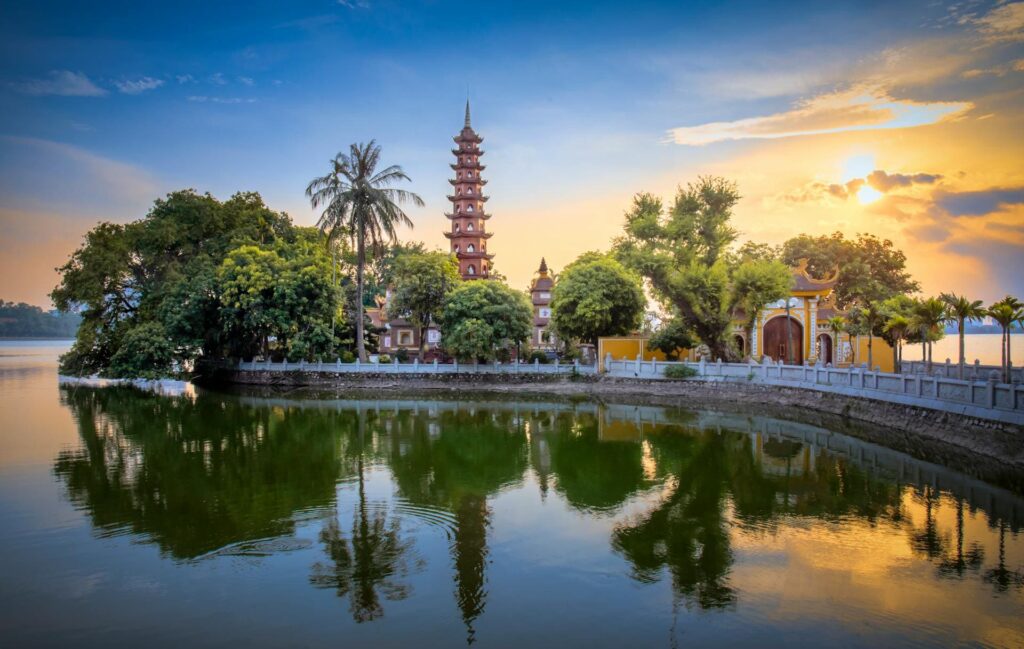
West Lake (Ho Tay) is Hanoi’s largest freshwater lake, covering 500 hectares. The area has evolved into an upscale neighborhood popular with expats and wealthy Vietnamese, featuring international restaurants, luxury apartments, and lakeside development.
Tran Quoc Pagoda, built in the 6th century, claims the title of Hanoi’s oldest Buddhist temple. Located on a small peninsula in West Lake, connected by a causeway, the pagoda features an 11-story stupa containing relics from India, presented as a gift from the Indian President in 1959.
What to do at West Lake:
- Cycle the perimeter: Rent bikes and enjoy the 13-kilometer lakeside path
- Visit pagodas: Beyond Tran Quoc, explore Quan Thanh Temple (11th century)
- Eat seafood: Numerous restaurants specialize in fish and crab
- Rent a paddle boat: Available at several points around the lake
- Watch sunset: The western shore offers beautiful evening views
Temple etiquette:
- Remove shoes before entering buildings
- Dress modestly (knees and shoulders covered)
- Speak quietly and respectfully
- Ask before photographing monks
- Don’t point feet toward Buddha statues
Getting there: West Lake is about 5 km from the Old Quarter. Take a Grab (50,000-70,000 VND) or rent a motorbike for more flexibility exploring the area.
Best time: Early morning for temple visits and peaceful atmosphere, or late afternoon for sunset and dinner by the lake.
13. Go Shopping at Dong Xuan Market
Dong Xuan Market is Hanoi’s largest covered market, a three-story maze of over 3,000 stalls selling everything imaginable. Built in 1889, this wholesale and retail market pulses with energy from early morning until evening, offering an authentic glimpse into local commerce.
What to buy:
- Ground floor: Fresh produce, meat, seafood, local snacks
- Second floor: Clothing, fabrics, shoes, bags
- Third floor: Household goods, kitchenware, souvenirs
- Surrounding streets: Electronics, handicrafts, lacquerware
Souvenirs worth buying:
- Vietnamese coffee (ground or beans)
- Silk scarves and clothing
- Lacquerware boxes and decorative items
- Conical hats (non la)
- Embroidered textiles
- Traditional lanterns
Bargaining Tips Table
| Strategy | What to Do | Expected Discount |
|---|---|---|
| Start low | Offer 40-50% of asking price | Negotiate up to 60-70% of original |
| Compare prices | Check multiple stalls first | Helps gauge fair price |
| Bundle purchases | Buy several items from one vendor | 10-20% additional discount |
| Cash ready | Show money, ready to buy | Signals serious buyer |
| Walk away | If price too high, leave politely | Often called back with better offer |
| Stay friendly | Smile, be respectful | Better deals with pleasant interactions |
Pro tips:
- Visit early morning (6-8 AM) for the freshest produce and fewer crowds
- Bring cash (many vendors don’t accept cards)
- Watch your belongings (crowded areas attract pickpockets)
- Don’t buy the first item you see (compare prices first)
- The night market (Friday to Sunday evenings) extends into surrounding streets with additional food stalls
Location: Dong Xuan Street, northern end of the Old Quarter
14. Take a Day Trip to Ninh Binh or Ha Long Bay
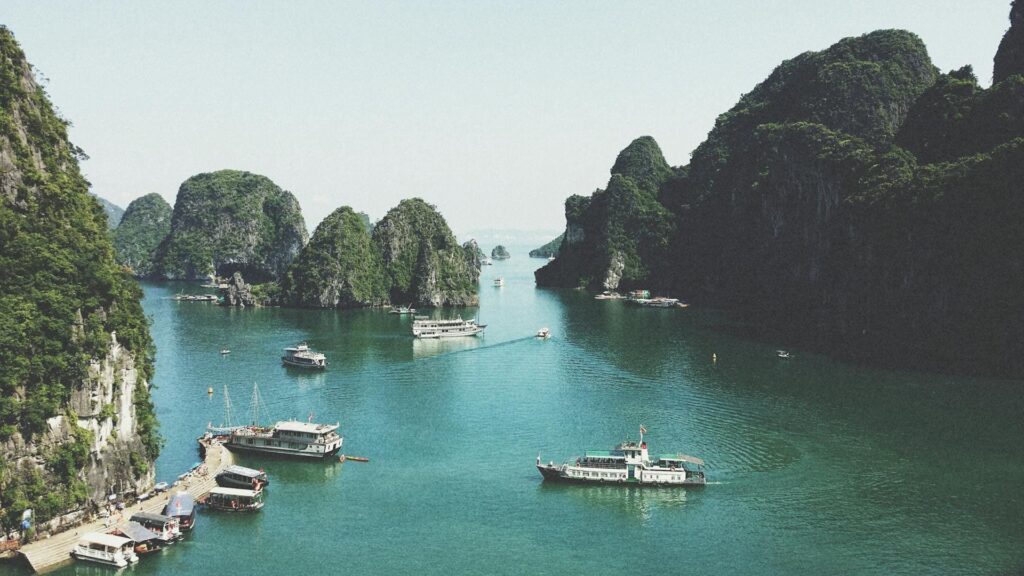
While Hanoi offers plenty to explore, two spectacular destinations make excellent day trips (though overnight stays are better if time permits).
Ninh Binh (nicknamed “Ha Long Bay on land”) features stunning karst limestone mountains rising from rice paddies and rivers. This UNESCO World Heritage site offers boat rides through cave systems, ancient temple complexes, and rural Vietnamese landscapes.
Highlights:
- Tam Coc: Boat rides through three caves (2-3 hours)
- Trang An: Larger boat tour through multiple caves and temples
- Bai Dinh Pagoda: Southeast Asia’s largest Buddhist complex
- Hoa Lu: Ancient capital ruins
- Mua Cave: 500-step climb for panoramic views
Travel time: 2 hours by car (100 km from Hanoi)
Ha Long Bay, a UNESCO World Heritage site, showcases 1,600 limestone islands and islets rising from emerald waters. The bay’s otherworldly beauty has inspired countless photographs and films.
Day trip options:
- Cruise tours: 6-8 hours including kayaking, cave visits, lunch
- Sung Sot Cave: Massive cave system
- Ti Top Island: Beach and viewpoint
- Kayaking: Through karst formations
Travel time: 3.5-4 hours by car (165 km from Hanoi)
Tour recommendations: Most visitors book organized tours (available through hotels or online). Day trip costs typically range from $25-60 USD depending on group size and inclusions. For Ha Long Bay, overnight cruises provide a better experience, allowing sunset and sunrise views.
According to Vietnam National Administration of Tourism, Ha Long Bay receives over 6 million visitors annually, making advance booking essential during peak seasons.
15. Experience Hanoi Nightlife & Rooftop Bars
Hanoi’s nightlife offers something for everyone, from sophisticated rooftop cocktails to bustling bia hoi corners where locals gather over 10-cent beers.
Best rooftop bars:
The Rooftop (Hanoi Daewoo Hotel) provides panoramic 360-degree views from the 21st floor, with craft cocktails and a sophisticated atmosphere. Dress code applies (no shorts or flip-flops).
Summit Lounge (Pan Pacific Hanoi) on the 20th floor overlooks West Lake with sunset views and live music on weekends.
Twilight Sky Bar (Soleil Boutique Hotel) combines Old Quarter views with craft cocktails and a colonial-chic design.
Bia hoi culture:
Bia hoi (fresh beer) represents authentic Hanoi nightlife. These corner establishments serve locally brewed beer delivered daily, costing just 5,000-10,000 VND ($0.20-0.40) per glass. The experience is about atmosphere, not sophistication.
Popular bia hoi corners:
- Bia Hoi Corner (Ta Hien and Luong Ngoc Quyen intersection)
- Bia Hoi Ha Noi (2 Duong Thanh Street)
- Bia Hoi Minh (49 Ly Thai To Street)
Live music venues:
- Binh Minh’s Jazz Club: Traditional and modern Vietnamese music
- The Doors: Rock and blues bands
- Tadioto: Electronic and indie music
- Polite Pub: Acoustic sets and craft beer
Nightlife areas:
- Ta Hien Street: Beer street atmosphere, backpacker-friendly
- Tay Ho (West Lake): Upscale bars and international restaurants
- Ma May Street: Trendy bars and clubs
- Trang Tien Street: Sophisticated lounges near the Opera House
Safety tips: Hanoi is generally safe, but stick to well-lit areas, watch your belongings in crowded venues, and use Grab for late-night transportation.
When to Visit Hanoi
Hanoi’s climate varies significantly by season, affecting your experience considerably.
Best times (Spring & Autumn):
March to April brings pleasant temperatures (20-25°C/68-77°F), blooming flowers, and the city awakening after winter. This is peak tourist season with higher prices and fuller accommodations.
September to November offers ideal conditions: comfortable temperatures (22-28°C/72-82°F), less rain than summer, and clear skies perfect for photography. October is considered the best single month to visit.
Summer (May to August): Hot and humid (30-35°C/86-95°F) with frequent afternoon rain showers. This is low season, meaning fewer tourists and better hotel deals, but the weather can be uncomfortable. Pack light, breathable clothing and embrace indoor attractions during the hottest hours.
Winter (December to February): Cool and sometimes chilly (13-20°C/55-68°F) with persistent drizzle and low clouds. Bring layers and a waterproof jacket. The upside: fewer tourists and atmospheric misty mornings, though some find the grey skies depressing.
Monthly Temperature & Rainfall
| Month | Avg Temp (°C/°F) | Rainfall (mm) | Travel Rating |
|---|---|---|---|
| January | 17°C / 63°F | 19mm | Medium |
| February | 18°C / 64°F | 26mm | Medium |
| March | 21°C / 70°F | 43mm | High |
| April | 24°C / 75°F | 90mm | High |
| May | 28°C / 82°F | 189mm | Medium |
| June | 30°C / 86°F | 239mm | Low |
| July | 30°C / 86°F | 288mm | Low |
| August | 29°C / 84°F | 318mm | Low |
| September | 28°C / 82°F | 265mm | High |
| October | 25°C / 77°F | 131mm | High |
| November | 22°C / 72°F | 43mm | High |
| December | 19°C / 66°F | 24mm | Medium |
Festival considerations:
- Tet (Lunar New Year): Usually January or February. Many businesses close, prices increase, but cultural celebrations are spectacular
- Perfume Pagoda Festival: February-March
- Hung Kings Temple Festival: April
How to Get Around
Hanoi offers multiple transportation options, each with advantages for different situations.
Walking: The Old Quarter and areas around Hoan Kiem Lake are best explored on foot. Narrow streets, hidden cafés, and unexpected discoveries reward those who wander. Watch for motorbikes (they often use sidewalks) and uneven pavement.
Grab: Vietnam’s equivalent to Uber dominates ride-hailing. Download the app, link a card or use cash, and enjoy fixed prices without bargaining. Most reliable and convenient for tourists.
Cyclo (pedicab): Traditional three-wheeled bicycle rickshaws offer leisurely sightseeing at 100,000-150,000 VND ($4-6) per hour. Negotiate prices clearly before starting. Best for short Old Quarter tours, not practical for longer distances.
Electric carts: Some hotels and tour companies offer electric cart tours of the Old Quarter, combining comfort with the open-air experience.
Bus: Hanoi’s public bus system is extensive and cheap (7,000-9,000 VND or $0.30) but challenging for non-Vietnamese speakers. Useful routes for tourists include bus 86 (airport to Old Quarter).
Motorbike rental: Experienced riders can rent motorbikes (100,000-150,000 VND or $4-6 per day), but Hanoi’s chaotic traffic intimidates many visitors. An international driving permit is technically required.
Estimated Transportation Costs
| Transport Method | Short Trip | Medium Trip | Long Trip | Notes |
|---|---|---|---|---|
| Grab Bike | 15,000-25,000 VND ($0.60-1) | 30,000-50,000 VND ($1.25-2) | 60,000-100,000 VND ($2.50-4) | Motorbike taxi, fastest option |
| Grab Car | 30,000-50,000 VND ($1.25-2) | 60,000-100,000 VND ($2.50-4) | 120,000-200,000 VND ($5-8) | 4-seater car, air-conditioned |
| Cyclo | 50,000 VND ($2) per 15 min | 100,000 VND ($4) per 30 min | 150,000 VND ($6) per hour | Negotiate beforehand |
| City Bus | 7,000 VND ($0.30) | 7,000-9,000 VND ($0.30-0.40) | 9,000 VND ($0.40) | Fixed routes, challenging for tourists |
| Taxi | 40,000-60,000 VND ($1.65-2.50) | 80,000-120,000 VND ($3.30-5) | 150,000-250,000 VND ($6-10) | Use Mai Linh or Taxi Group |
Pro tip: Always use reputable taxi companies (Mai Linh, Taxi Group) or Grab. Some unmetered taxis target tourists with inflated prices.
Local Foods to Try
Vietnamese cuisine is one of the world’s most celebrated, and Hanoi serves as the perfect introduction to northern Vietnamese flavors.
Pho: Vietnam’s iconic rice noodle soup reaches perfection in Hanoi. Unlike southern versions, northern pho keeps garnishes simple, letting the clear, aromatic broth shine. Order pho bo (beef) or pho ga (chicken). Locals eat it for breakfast, but it’s available all day.
Bun Cha: Grilled fatty pork served over vermicelli noodles with herbs and dipping sauce. This Hanoi specialty gained international fame when Obama and Anthony Bourdain ate it together at Bun Cha Huong Lien (now called Bun Cha Obama).
Cha Ca: Turmeric-marinated fish grilled tableside, served with dill, peanuts, and rice noodles. Cha Ca La Vong on Cha Ca Street invented this dish over 100 years ago and still serves it today.
Banh Mi: The iconic Vietnamese sandwich combines French baguettes with local fillings: pate, cold cuts, pickled vegetables, herbs, and chili. Quick, cheap (15,000-30,000 VND), and incredibly satisfying.
Egg Coffee (Ca Phe Trung): Whisked egg yolk creates a creamy, dessert-like foam atop strong Vietnamese coffee. Invented in Hanoi in the 1940s and still best enjoyed here.
Bun Bo Nam Bo: Stir-fried beef with rice noodles, fresh herbs, peanuts, and fish sauce dressing. Less soupy than pho but equally flavorful.
Banh Cuon: Delicate steamed rice rolls filled with minced pork and wood ear mushrooms, served with fried shallots and fish sauce.
Xoi (Sticky Rice): Vietnamese breakfast staple served with various toppings: mung beans, fried shallots, Chinese sausage, or shredded chicken.
Nem Ran (Cha Gio): Crispy fried spring rolls filled with pork, mushrooms, and vegetables. Dip them in nuoc cham (fish sauce with lime and chili) for the full experience.
Bun Rieu: Tomato-based crab noodle soup with fried tofu, distinctive for its bright orange color and tangy flavor profile.
Che: Vietnamese dessert soup served hot or cold, featuring beans, jellies, fruit, and coconut milk. Dozens of varieties exist, each offering different textures and flavors.
Where to Eat Like a Local
| Dish | Best Spots | Approx. Price | Best Time |
|---|---|---|---|
| Pho | Pho Gia Truyen (49 Bat Dan St) | 40,000-60,000 VND ($1.65-2.50) | Breakfast (6-9 AM) |
| Bun Cha | Bun Cha Dac Kim (1 Hang Manh St) | 50,000-70,000 VND ($2-3) | Lunch (11 AM-2 PM) |
| Cha Ca | Cha Ca La Vong (14 Cha Ca St) | 120,000-150,000 VND ($5-6) | Lunch or dinner |
| Banh Mi | Banh Mi 25 (25 Hang Ca St) | 20,000-35,000 VND ($0.80-1.50) | Anytime |
| Egg Coffee | Cafe Giang (39 Nguyen Huu Huan St) | 30,000-40,000 VND ($1.25-1.65) | Afternoon (2-5 PM) |
| Bun Bo Nam Bo | Bun Bo Nam Bo (67 Hang Dieu St) | 45,000-65,000 VND ($1.85-2.65) | Lunch or dinner |
Food safety tips: Choose busy establishments with high turnover (fresh ingredients). Look where locals eat. Bottled water is essential. Street food is generally safe in Hanoi, but start conservatively if you have a sensitive stomach.
Vegetarian options: Hanoi has numerous vegetarian restaurants, especially around the Old Quarter. Look for “com chay” (vegetarian rice) or “an chay” (vegetarian food) signs. Many Vietnamese are Buddhist and eat vegetarian on the 1st and 15th of each lunar month.
For deeper insights into Vietnamese cuisine beyond Hanoi, explore our guide to the top 10 places to visit in Vietnam, where each region offers distinct culinary traditions.
Where to Stay
Accommodation choice significantly impacts your Hanoi experience. The city offers options for every budget and preference.
Old Quarter (Recommended for First-Timers):
The Old Quarter puts you in the heart of the action within walking distance of major attractions, restaurants, and nightlife. Streets buzz with activity from dawn until late evening.
Pros: Central location, authentic atmosphere, excellent street food access, easy walking to most attractions
Cons: Noisy (motorbikes, vendors, construction), narrow streets, limited luxury options
Budget: Backpacker hostels (dorms from $5-10/night), basic guesthouses ($15-30/night)
Mid-range: Boutique hotels in restored colonial buildings ($40-80/night) offer character and modern amenities
Recommended streets: Hang Bac, Hang Gai, Ma May, Hang Trong (slightly quieter)
French Quarter (Luxury & Sophistication):
The French Quarter provides elegant colonial architecture, wider streets, upscale dining, and proximity to Hoan Kiem Lake without the Old Quarter’s intensity.
Pros: Quieter, more refined atmosphere, better luxury hotel options, beautiful architecture, excellent restaurants
Cons: Less street food, fewer budget options, can feel less authentically Vietnamese
Luxury options: Sofitel Legend Metropole Hanoi ($200-400+/night), Hilton Hanoi Opera ($120-250/night)
Mid-range: Boutique hotels near the Opera House ($60-120/night)
Tay Ho/West Lake (Long Stays & Expat Life):
The West Lake area attracts expats, long-term visitors, and those seeking a residential neighborhood feel with international restaurants, cafés, and lakeside ambiance.
Pros: Peaceful, spacious, international community, beautiful lake views, great for families
Cons: Far from Old Quarter (20-30 minute ride), requires transportation for sightseeing, less authentic Vietnamese atmosphere
Best for: Stays longer than a week, digital nomads, families, those who’ve visited Hanoi before
Serviced apartments: Available for monthly rentals ($500-1,500/month)
Ba Dinh District (Near Ho Chi Minh Mausoleum):
Ba Dinh offers a government district atmosphere with wide boulevards, parks, and proximity to major monuments.
Pros: Spacious, less chaotic, near important sites, good mid-range hotels
Cons: Feels more sterile, limited nightlife, requires transportation to Old Quarter
Best for: Culture-focused visitors, those preferring quieter neighborhoods
Booking tips:
- Read recent reviews carefully (hotels change management frequently)
- Book accommodations with free cancellation during peak season
- Confirm exact location on a map (some hotels claim “Old Quarter” when they’re actually distant)
- Many boutique hotels occupy tall, narrow buildings with stairs and no elevators
- Ask about street-facing vs. interior rooms (street-facing is noisier but often brighter)
According to Booking.com data, Hanoi hotel prices peak during October-November and March-April, with discounts of 30-50% available during summer months.
Conclusion
Hanoi rewards the curious traveler with layers of history, explosive flavors, architectural beauty, and genuine cultural encounters. From sipping egg coffee in a hidden alley café to watching the sunrise over Hoan Kiem Lake, from the controlled chaos of the Old Quarter to the serene courtyards of ancient temples, Vietnam’s capital offers experiences that linger long after you leave.
The city manages to feel both timeless and dynamic, where elderly women in conical hats sell flowers beside hipster coffee shops, where thousand-year-old pagodas stand minutes from modern rooftop bars, and where every meal becomes a memorable event.
Whether you spend three days hitting the highlights or a week diving deeper into neighborhoods and day trips, Hanoi serves as an essential chapter in any Vietnam itinerary. The best things to do in Hanoi extend beyond checking items off a list; they involve surrendering to the city’s rhythm, embracing its contradictions, and allowing yourself to be surprised.
Ready to explore more of Vietnam beyond the capital? Check out our comprehensive guide to the top 10 places to visit in Vietnam to plan your complete Vietnamese adventure, from the terraced rice fields of Sapa to the beaches of Phu Quoc.
FAQs
Q1. How many days are enough for Hanoi?
Three to four days allows you to cover the main attractions comfortably. Spend one day exploring the Old Quarter and Hoan Kiem Lake, another visiting the Temple of Literature and Ho Chi Minh Mausoleum complex, a third sampling street food and catching a water puppet show, and optionally a fourth taking a day trip to Ninh Binh or Ha Long Bay. Food enthusiasts and culture lovers could easily spend a week discovering hidden cafés, specialized museums, and neighborhood markets.
Q2. Is Hanoi safe for solo travelers?
Yes, Hanoi is generally very safe for solo travelers, including women. Violent crime against tourists is rare. The main concerns are petty theft (pickpocketing in crowded markets), taxi scams, and traffic accidents. Use reputable transportation (Grab), watch your belongings in crowded areas, and be cautious crossing streets (walk confidently and steadily so motorbikes can predict your movement). Vietnamese people are typically helpful toward foreign visitors, making solo travel straightforward even with language barriers.
Q3. What should I wear when visiting temples?
Temples and religious sites require modest dress out of respect. Cover your knees and shoulders; avoid tank tops, short shorts, and revealing clothing. Long pants or below-knee skirts work well, paired with t-shirts or blouses. Remove shoes before entering temple buildings (look for shoe racks or follow what locals do). Some sites like the Ho Chi Minh Mausoleum enforce stricter rules, prohibiting shorts, sleeveless shirts, and sandals entirely. Carrying a lightweight scarf or shawl lets you cover up quickly when needed.
Q4. How much does a trip to Hanoi cost per day?
Budget travelers can manage on $25-40 per day, covering hostel accommodation ($8-15), street food and cheap restaurants ($8-12), local transportation ($3-5), and attraction entries ($5-10). Mid-range travelers should budget $60-100 daily for boutique hotels ($40-60), sit-down restaurants and cafés ($15-25), Grab rides ($8-12), and tours ($10-20). Luxury travelers spending $150+ daily enjoy upscale hotels, fine dining, private tours, and cocktails at rooftop bars. These estimates exclude international flights and expensive day trips like Ha Long Bay cruises.
Q5. What is Hanoi famous for?
Hanoi is famous for its 1,000-year history as Vietnam’s capital, its distinctive Old Quarter with 36 ancient streets, legendary street food (especially pho and bun cha), beautiful French colonial architecture, and unique cultural experiences like water puppet shows. The city is known for Hoan Kiem Lake and its red bridge, egg coffee invention, the Ho Chi Minh Mausoleum, and its proximity to spectacular natural sites like Ha Long Bay and Ninh Binh. Hanoi also gained recognition from UNESCO as a Creative City for Design, reflecting its blend of traditional craftsmanship and contemporary creativity.