Last updated: October 2026
San Sebastián is the home of the pintxo, a small bite served on a slice of bread or a skewer, and the best way to eat here is to move from bar to bar. If you want the best pintxos in San Sebastián, aim for a short list of specialist bars rather than one big meal, ordering one or two signature bites and a small drink at each stop before moving on.
This guide covers ten bars across the Old Town (the Parte Vieja), the streets just outside it and the Gros district across the river, with a practical box for each. Further down you will find the pintxos to look out for, how ordering and paying works, food routes for one, two or three days, where to stay, getting around and budget guidance. The city’s official tourism site explains how to go for pintxos, and it is worth a read before your first round. If you are comparing Spanish food cities, our guide to the best places to eat in Barcelona shows how the Catalan tapas scene differs.
Opening days, menus and signature dishes change, and many bars close one day a week, so check each place before you go. Where details were hard to confirm, this guide says so.
Quick answer: What are the best pintxos in San Sebastián? For hot, made-to-order pintxos, try La Cuchara de San Telmo and Borda Berri. For the classics, go to Txepetxa for anchovies, Casa Vallés for the gilda and Ganbara for mushrooms and crab. Add Bar Néstor for its famous tortilla, La Viña for cheesecake, Bergara in Gros for a modern pioneer, and Zeruko and Gandarias for creative and steak pintxos.
Quick comparison: best pintxos bars in San Sebastián
| Bar | Area | Best for | Price tier |
|---|---|---|---|
| La Cuchara de San Telmo | Parte Vieja | Hot pintxos from a chalkboard | Mid-range |
| Bar Néstor | Parte Vieja | The tortilla and grilled steak | Mid-range |
| Txepetxa | Parte Vieja | Anchovy pintxos | Cheap to mid-range |
| Ganbara | Parte Vieja | Mushrooms and crab | Mid-range |
| Bar Bergara | Gros | Modern pintxos, prawn and mushroom skewer | Cheap to mid-range |
| La Viña | Parte Vieja | Basque cheesecake | Mid-range |
| Casa Vallés | Centro | The original gilda | Cheap eats |
| Bar Zeruko | Parte Vieja | Creative, playful pintxos | Mid-range |
| Gandarias | Parte Vieja | Steak pintxos | Mid-range to comfortable |
| Borda Berri | Parte Vieja | Cheese risotto and beef cheek | Mid-range |
1. La Cuchara de San Telmo
La Cuchara de San Telmo is the bar to choose if you want hot pintxos cooked to order rather than picked off a counter. It sits in a small street behind the San Telmo museum in the Old Town, and it is a good first stop because it shows how far the pintxo has moved from bread and toppings to proper small plates.
The setup is the opposite of the classic bar display. Food is not piled on the counter. Instead you read a chalkboard, order at the bar and wait for your dish to be called. Reviewers consistently recommend the beef cheek braised in red wine, the foie gras with apple compote and the risotto. These are rich and filling, so one or two between two people is plenty before you move on.
The room is small and gets crowded, so expect to stand and to share elbow room with the people next to you. That is normal here, and it is part of the atmosphere. Locals and visitors mix at the bar, and service is quick once you have caught the eye of the staff.
Pair your plate with a glass of txakoli, the lightly sparkling Basque white wine, or a small beer. Because the dishes are made to order, they arrive hot and fresh, which makes this an excellent place to try the more modern side of the city’s food scene.
If you are planning a crawl, go early. This is a place where a wait for a spot at the counter can stretch once the evening rush begins.
- How to get there: On foot in the Old Town, near the San Telmo museum.
- How long to spend: Forty-five minutes for two or three hot pintxos.
- Best time to go: Early evening, before the bar fills up.
- Tip: Order from the chalkboard rather than waiting for something to appear on the counter.
2. Bar Néstor
Bar Néstor is the pilgrimage bar, famous for a tortilla that sells out almost as soon as it appears. It is a tiny, no-frills place in the Old Town, and its reputation rests on two things: the tortilla de patata and a grilled steak that regulars order to share.
The system is the unusual part. Several guides explain that the tortilla is made in limited batches, roughly one for lunch and one for dinner, and that you put your name on an informal list when the bar opens rather than booking. Reported times vary and may have changed, so check locally on the day. If you want a slice, arrive early, add your name and then come back when you are called.
The tortilla itself is soft and loose in the middle, in the style Basque cooks prefer, and it is the main reason people queue. Many visitors also share the grilled steak, which comes with simple sides and pairs well with a glass of red wine or txakoli. Beyond that, the menu is short, and the bar’s charm is its simplicity.
Because of the sign-up system, Bar Néstor works best as an anchor for your evening rather than a quick stop. Put your name down first, then walk to nearby bars while you wait. That approach lets you combine this stop with a mini crawl through the surrounding streets.
Do not expect a comfortable seat. The room is small and busy, and the experience is about the food and the energy. Be patient, be polite and be ready to share space with strangers.
- How to get there: On foot in the Old Town; allow time to find it among the narrow streets.
- How long to spend: About an hour once your slice or steak is ready.
- Best time to go: Arrive well before opening to join the list, as reports say people start queuing early.
- Tip: Put your name down first, then explore nearby bars while you wait.
3. Txepetxa
Txepetxa is the anchovy specialist, and it is the best place to learn why Basque anchovies are nothing like the salty tinned kind. It is a small, family-run bar in the Old Town, and guides describe the family as having run it for three generations. National Geographic says it opened in 1925.
The specialty is the vinegar-marinated anchovy, plump and mild, served on a slice of bread with a choice of toppings. Guides count more than a dozen versions, from simple combinations to ones with smoked salmon, crab or sweet peppers. A classic pairing is the anchovy with a slice of smoked salmon on toasted baguette. Pick a few and share them, because each is small and the flavours differ enough to make comparing them fun.
The bar is tiny and often busy, so plan on standing at the counter. Order a small glass of txakoli or a cider if you want to follow local habit. The staff know the menu well and will happily point you to the best-selling toppings if you ask.
Sources give different street addresses for Txepetxa, with one naming Arrandegi Kalea and another Calle Pescadería, so check a current map before you go. It sits within a short walk of several other bars on this list, which makes it easy to combine with Zeruko and Ganbara.
This is a good stop if you are nervous about trying anchovies. The marinated style is fresh and gentle, and one or two pintxos is usually enough to convert a sceptic.
- How to get there: On foot in the Old Town; confirm the street on a map before you set out.
- How long to spend: Thirty to forty-five minutes.
- Best time to go: Early evening, before the crowds build.
- Tip: Order two or three different toppings to compare them.
4. Ganbara
Ganbara is the bar for mushrooms, and for a counter that looks like a still life of seasonal produce. It stands in the Old Town on a street leading from the Santa Catalina bridge, and National Geographic calls it one of the city’s oldest and best-loved pintxo bars.
The bar is known for its wild mushroom pintxos and crab dishes, and what you find depends on the season. Guides say the kitchen sources locally, so the offer changes through the year. Look for dishes built around wild mushrooms, often served warm with an egg yolk or a simple sauce, and for the crab tartlets that appear in the best-of lists.
There is also a downstairs dining area, but the draw for a pintxo crawl is the bar upstairs. Pick from the counter display or ask what is hot from the kitchen. If you cannot decide, order the mushroom dish of the day and a small glass of local white wine.
Ganbara can be crowded, particularly at weekends and in the evenings. Standing at the bar is normal, and the staff keep a running tally of what you order. This is a bar where quality ingredients matter more than clever presentation, so come hungry and keep an open mind about what is in season.
It also makes a good starting point for a longer route. Eat here early, then walk through the Old Town streets towards the harbour and the next stops. Prices are higher than at the simplest bars, so it suits a special occasion or one carefully chosen plate.
- How to get there: On foot in the Old Town, a few minutes from the Santa Catalina bridge.
- How long to spend: About forty-five minutes.
- Best time to go: Early evening or an early lunch.
- Tip: Ask what mushrooms are in season before you order.
5. Bar Bergara
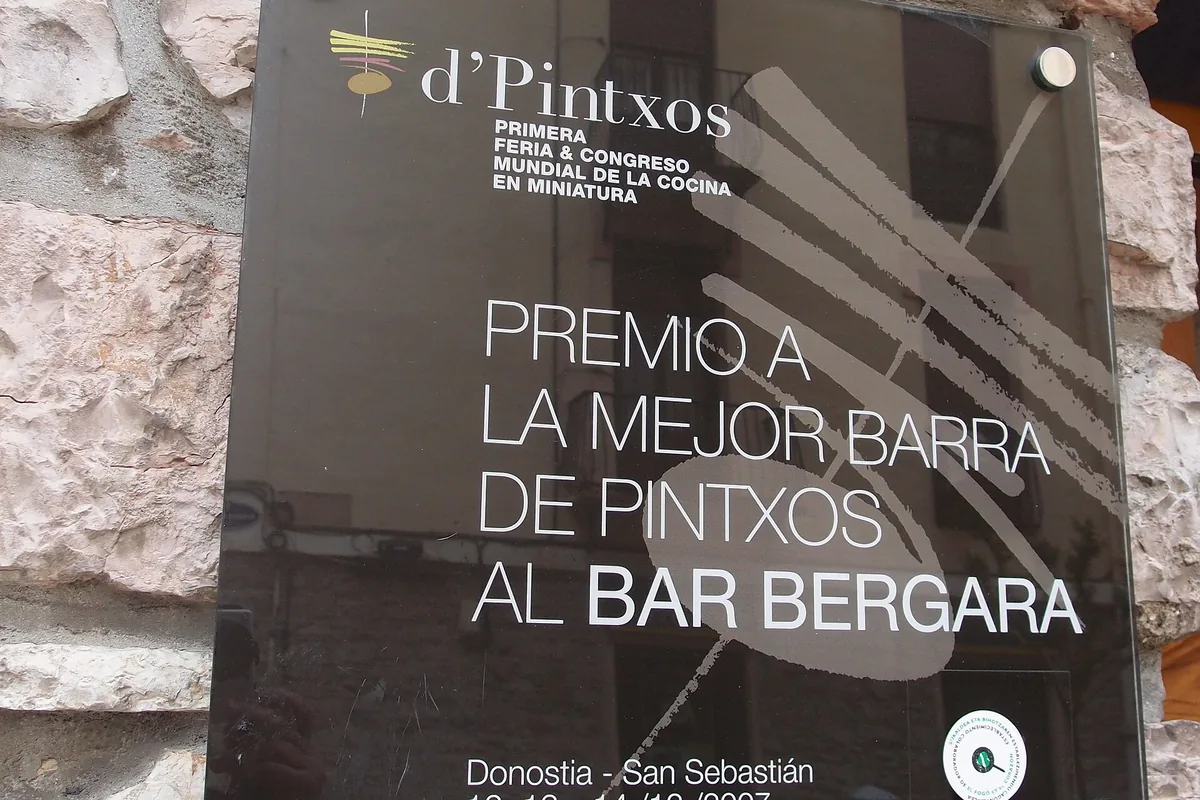
Bar Bergara in the Gros district is the place to see where modern pintxos began. National Geographic credits it with pioneering the modern pintxo in the 1980s, and it remains a favourite with people who live nearby. It is across the Urumea river from the Old Town, which makes it a good way to see a quieter side of the city.
The standout is the prawn and mushroom skewer, often listed as champi con gamba brasa. It is simple, hot and full of flavour, with the mushroom cooked until juicy and the prawn grilled alongside. Beyond that, the counter holds a long line of creative bites, and the daily choice shifts with what the kitchen has available.
Gros has a more local feel than the Old Town. There are fewer tour groups, more neighbours chatting at the bar and a relaxed pace. It is a good option if the Parte Vieja feels overwhelming or if you want a break from queues.
Bergara is busy at peak times, so expect to stand. Order a drink first, then ask for hot pintxos from the kitchen or choose from the counter. A caña or a small glass of txakoli suits the food well.
Because Gros sits next to the Zurriola beach, this stop also fits naturally into a walk along the sea. Eat at Bergara, walk to the beach and then cross the river for a final stop in the Old Town.
Check opening days before you go, as small bars here often close on one weekday and in the quiet hours of the afternoon.
- How to get there: On foot across the Urumea river from the Old Town, or by a short walk from Zurriola beach.
- How long to spend: Forty-five minutes.
- Best time to go: Early evening, when the counter is full.
- Tip: Ask for the prawn and mushroom skewer hot from the grill.
6. La Viña
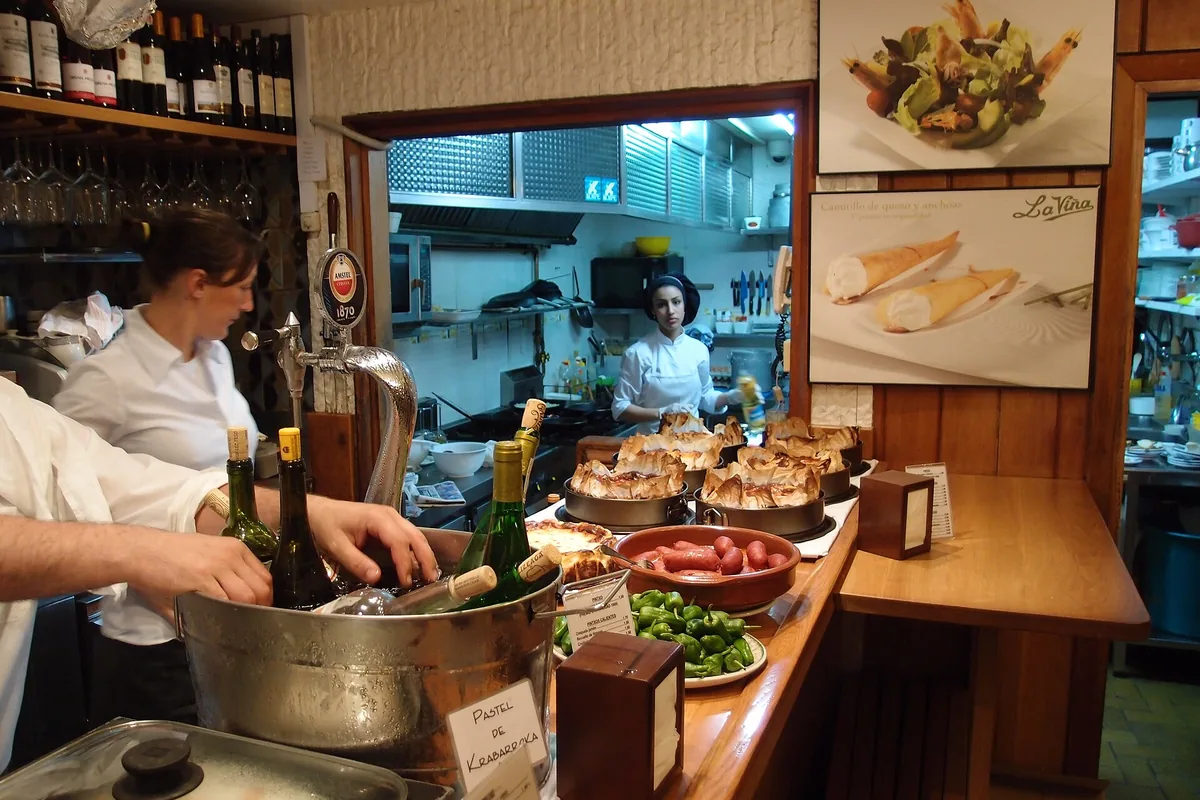
La Viña is the bar that turned a dessert into an obsession, and its Basque cheesecake is worth a stop even if you are full. It stands on Calle 31 de Agosto in the Old Town, and the city’s official tourism site says it opens every day. Sources vary on dates, but the cheesecake has been served since the 1980s or 1990s.
The cheesecake is creamy and deliberately dark on top, with a soft, almost custard-like centre and no crust. It is served by the slice with a glass of sweet wine or coffee, and it is the reason most people come. It has since been copied around the world, but eating it where it started adds to the experience.
The savoury side is worth a look too. Pintxos on the counter include ham, anchovies and small cooked dishes, and the bar has the busy, lived-in feel of a traditional taberna. Guides say it was founded in 1959 by the family that still runs it, though it is worth checking details if you plan to quote them.
La Viña gets busy, and National Geographic notes that you will likely have to queue in high season. Arrive early or late rather than at peak times. Having a slice mid-afternoon, when many other bars are closed or quiet, is a good plan.
Pair the cheesecake with a small glass of sweet white wine if you like, or stick to coffee. Because this is a dessert stop, it fits neatly at the end of a crawl or as a pause between rounds.
- How to get there: On foot on Calle 31 de Agosto in the Old Town.
- How long to spend: Thirty minutes.
- Best time to go: Mid-afternoon, to avoid the longest queues.
- Tip: Check the venue’s website for current opening hours before you go.
7. Casa Vallés
Casa Vallés is the old-school bar that claims the gilda, the skewer of anchovy, olive and pepper that has become the symbol of pintxos. It sits on Reyes Católicos, just outside the Old Town in the Centro district, and some guides date it to 1942.
Multiple sources credit the bar with inventing the gilda, though the year varies between guides. It is a simple skewer: an anchovy, a green olive and a guindilla pepper, with a sharp, salty, slightly spicy bite. It goes well with vermouth on tap, which reviewers recommend, or a cold beer.
The interior is a traditional neighbourhood bar, with hanging hams and a loyal local crowd. It feels very different from the busy Old Town bars, and that is part of the appeal. Opening hours are not clearly published, so check a current listing before you go.
Beyond the gilda, the counter has classic bites such as tortilla, croquetas and cured ham. Prices tend to be lower than in the busiest Parte Vieja bars, which makes it a good choice if you are watching the budget.
Because it sits slightly outside the main tourist circuit, Casa Vallés is calmer than the Old Town bars. Use it as a gentle start or as a breather between busier stops.
Order a gilda or two, add a small drink and take a moment to look at the room. It is a good reminder that pintxo culture is as much about the setting as the food.
- How to get there: A short walk from the Old Town towards the Centro district.
- How long to spend: Thirty minutes.
- Best time to go: Check current hours first; early evening usually suits.
- Tip: Order the gilda with a small vermouth.
8. Bar Zeruko
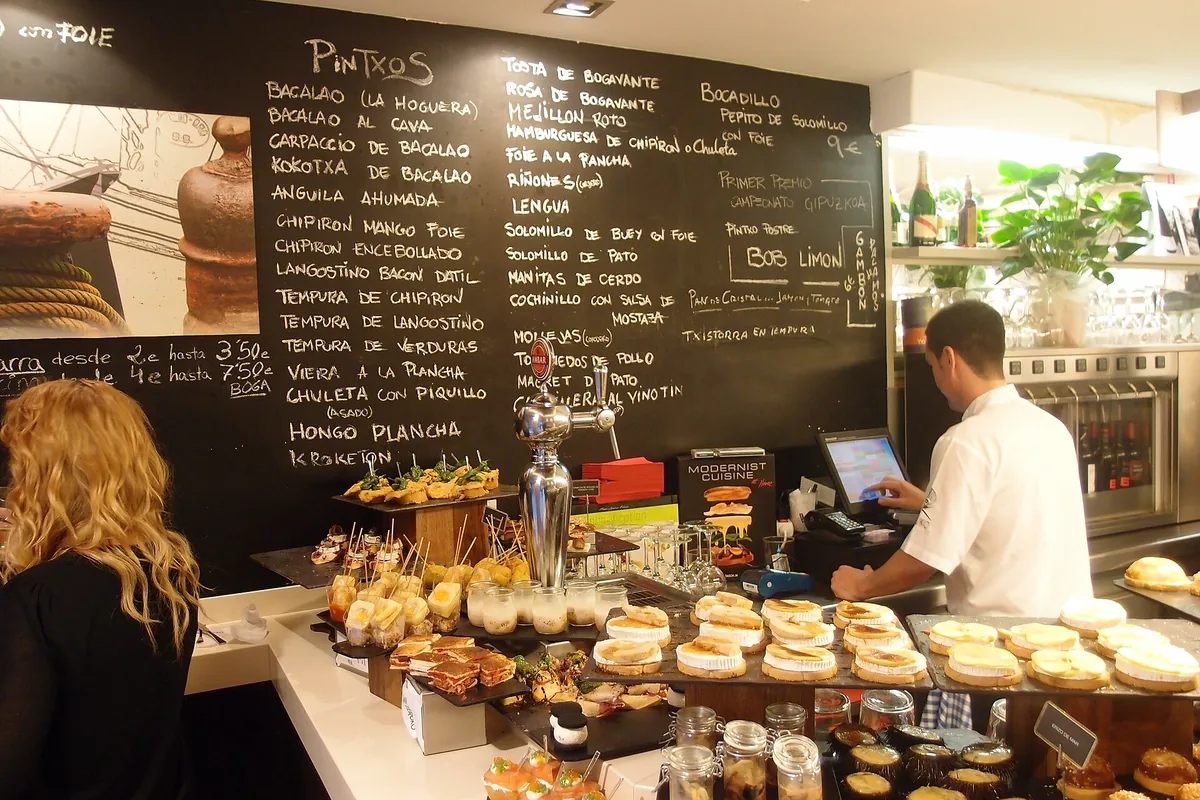
Bar Zeruko is the playful, creative stop where pintxos become small pieces of theatre. It is on Calle Pescadería in the Old Town, and older guides describe it as one of the city’s more modern bars. A recent listing describes a lively atmosphere that can get crowded.
The signature dish is the smoked cod, La Hoguera de Bacalao, which is served with a small flame so you can finish cooking it yourself. Other bites mentioned in guides include a sea urchin custard and baby eels when they are in season. These are not traditional bar snacks, so Zeruko is the place to try something different.
Some of the dishes are prepared with show-style touches, and the staff are used to explaining how to eat them. Do not be shy about asking. The menu changes, so treat any list of dishes online as a guide rather than a promise, and ask what is on offer when you arrive.
Zeruko sits among the narrow streets near the market, close to Txepetxa and Ganbara. That makes it simple to combine in a single evening, moving from classic to modern in a few minutes. It can be noisy and packed, so go with an open mind and be ready to stand.
If you are curious about the creative side of Basque cooking, this is an easy and relatively affordable way to sample it. One or two dishes are usually enough, and they make a talking point for the rest of the night.
Check current opening days, as some small bars close on a weekday.
- How to get there: On foot in the Old Town, on Calle Pescadería.
- How long to spend: Forty-five minutes.
- Best time to go: Early evening, before the crush.
- Tip: Ask the staff how to eat the dish before you start.
9. Gandarias
Gandarias is the bar for steak, and its sirloin pintxo is the one guides recommend most often. It is on Calle 31 de Agosto in the Old Town, and it has both a busy bar and a more formal dining room. Opinionated About Dining ranked it in its casual Europe list in 2024 and 2025, according to En Primeur Club.
The star of the bar is the solomillo, a slice of grilled sirloin served on bread, often with a simple garnish. Reviewers also mention pork cheek, foie gras and a risotto pintxo that suits vegetarians. If you want something heartier than the usual small bites, this is the place.
Gandarias is one of the busiest bars in the area, and opinions on service vary between friendly and slow. Expect to wait and to share the counter. If you want to sit down, the dining room is a calmer option, though it is more formal and prices are higher.
The best approach is to treat it as a main stop on a crawl. Order one steak pintxo, a drink and perhaps one other bite, then move on. Do not try to eat a full meal at the counter.
Because it is on the same street as La Viña, you can combine the two, with steak first and cheesecake after. Booking is advisable if you want a table, particularly at weekends.
A listing from 2024 gave hours of roughly eleven to midnight, but these can change, so confirm before you travel.
- How to get there: On foot along Calle 31 de Agosto in the Old Town.
- How long to spend: About an hour.
- Best time to go: Early evening, or book a table for later.
- Tip: Order the sirloin pintxo first, then decide whether you want more.
10. Borda Berri
Borda Berri is a tiny, made-to-order bar that is loved for its cheese risotto and slow-cooked beef cheek. It sits in the Old Town, and the Infatuation calls it tiny and crowded but says it serves some of the best hot pintxos in the city.
Everything comes from a chalkboard and is cooked to order. The Idiazabal risotto is the most praised dish. Reviewers say it is made with orzo rather than rice and finished with a creamy sauce of Idiazabal, the smoked Basque sheep’s cheese, which also makes it a good vegetarian option. The beef cheek is cooked in red wine until it falls apart under a fork.
Because the bar is small, service can feel chaotic. Stand where you can see the board, order clearly and wait to be called. It is walk-in only according to one listing, so there is no table to book, and the same source says it is closed on Sundays, so check before you go.
Borda Berri works well as the final hot stop in an evening. The dishes are rich, and after one or two you will have had a substantial meal. Pair them with txakoli or a small beer and take your time.
It sits within walking distance of La Cuchara de San Telmo and the other Old Town bars, so you can plan a loop that starts with hot pintxos, moves through the classics and ends here. Sources disagree on the year it opened, with 2009 and 2010 both given, but all agree it has become a modern favourite.
- How to get there: On foot in the Old Town.
- How long to spend: Forty-five minutes.
- Best time to go: Early evening, to avoid the longest waits.
- Tip: Go on a day other than Sunday and order the risotto first.
Pintxos to look out for
- Gilda: An anchovy, olive and pepper skewer, the classic first pintxo.
- Tortilla de patata: The Spanish potato omelette, often served soft in the middle.
- Anchovies (anchoas): Fresh, vinegar-marinated fillets, very different from tinned ones.
- Carrillera: Beef or pork cheek, slow cooked until tender.
- Idiazabal: Smoked sheep’s cheese from the Basque Country, used in many hot dishes.
- Txuleta: Grilled steak, usually shared.
- Basque cheesecake: Creamy, dark on top and best eaten the day you buy it.
- Txakoli: Lightly sparkling white wine, poured from height at many bars.
How ordering and paying works
The official tourism guidance describes the standard pattern: have one pintxo and one drink at each bar, then move on to the next. Cold pintxos are usually on the counter, and hot ones come from the chalkboard or kitchen. Ask for hot ones to be heated if they have been sitting out. Many bars take your name and call you when food is ready.
You generally pay at the end, and the honour system is common. Tell the bartender what you ate, and they will keep a tally. Do not pile plates as if it were a buffet, and do not take food without keeping count. Ask for a zurito, the small beer, rather than a caña, which is larger. Tipping is not expected, though rounding up is welcome for good service.
Suggested pintxos routes for 1, 2 or 3 days
- One day: Start with a gilda at Casa Vallés, walk into the Old Town for anchovies at Txepetxa, mushrooms at Ganbara and hot pintxos at La Cuchara de San Telmo. End with cheesecake at La Viña.
- Two days: On the second evening, cross the river to Bar Bergara in Gros, then return for steak at Gandarias and risotto at Borda Berri.
- Three days: Add Bar Zeruko for creative bites and put your name down at Bar Néstor early for the tortilla. Use the extra time to repeat favourites, as the best bars are worth a second visit.
Where to stay in San Sebastián
- Parte Vieja (Old Town): Best for pintxos, as most bars are a few minutes’ walk away. It is lively and noisy at night.
- Centro: Calmer, with shops and easy access to both the Old Town and the beaches.
- Gros: A local feel, close to Zurriola beach and Bar Bergara, with a relaxed pace.
Getting around

San Sebastián is compact, and the pintxos bars are best reached on foot. The Old Town is pedestrianised and small, and Gros is a short walk across the river. If you arrive by air, the Lurraldebus E21 runs between the airport and the city centre, and the Lurraldebus site has current timetables. Bilbao airport is another option, with intercity buses to the city; check times before you travel. If you are building a longer Spanish trip, you can continue to the capital with our picks for the best places to eat in Madrid.
Budget guidance
- Cheap eats: Classic counter pintxos and a small drink at bars such as Casa Vallés and Txepetxa.
- Mid-range: A crawl of four or five bars with a mix of cold and hot pintxos, which can replace a full dinner.
- Special occasion: A table at the dining room of Gandarias or Ganbara, or a longer evening with several premium plates.
Frequently Asked Questions
What are the best pintxos in San Sebastián?
The best pintxos include anchovies at Txepetxa, the gilda at Casa Vallés, mushrooms at Ganbara, hot dishes at La Cuchara de San Telmo and Borda Berri, and steak at Gandarias. Bar Néstor’s tortilla and La Viña’s cheesecake are also famous.
How many pintxos should I eat per bar?
Most locals have one or two pintxos and a small drink at each bar before moving on. This lets you visit several places in one evening without getting too full.
How do you pay for pintxos?
You usually pay at the end of your visit. Tell the bartender what you ate and they will keep a tally, and many bars use the honour system.
Do you need to book pintxos bars?
Most pintxo bars are walk-in only, so you cannot book. A few, such as Gandarias, have a dining room where booking is advisable, and Bar Néstor uses a sign-up list for its tortilla.
When is the best time to eat pintxos?
Late morning to lunchtime and early evening are popular. Many bars close in the afternoon, so check opening hours, and arrive early to avoid the longest queues.
What should I drink with pintxos?
Txakoli, the lightly sparkling Basque white wine, is the classic choice. A zurito, or small beer, and cider are also common.
Keep Exploring Spain’s Food Scene
Once you have eaten your way around the Basque Country, carry on south with our guide to the best tapas bars and restaurants in Seville for a very different style of small plates. For evenings out after the pintxos, see the best bars in Madrid, and if you are heading to the capital, our top day trips from Madrid are easy to fit around your meals.
Featured image: Photo by Basotxerri, CC BY-SA 4.0, cropped, via Wikimedia Commons