Last updated: October 2026
Madrid is a city for people who love to eat, and the best places to eat in Madrid are often the oldest: tiled taverns, family-run dining rooms and tapas counters that have served the same dishes for generations. If you want to know where to eat in Madrid, start with the classics, then add a market, a late-night churro stop and a crispy squid sandwich.
This guide covers 10 places to eat in Madrid, with a practical box for each one: how to get there, how long to allow, the best time to go and one tip. Further down you will find the dishes to try, how booking and tipping work, suggested food routes, where to stay, getting around and budget guidance. The official Madrid tourism site lists current events and food markets.
Opening days, menus and booking rules change, so check each place’s own information before you go. Madrid eats late, so lunch usually starts after two in the afternoon and dinner after nine in the evening. If you plan to carry on after dinner, our guide to the best bars in Madrid covers where to go for a drink once you have eaten.
Quick answer: Where should you eat in Madrid? For history, book Sobrino de Botín or Lhardy. For the city’s signature stew, try cocido at La Bola or Malacatín. For a lively tapas crawl, head to Casa Labra, Casa Revuelta and La Casa del Abuelo. Finish with churros at Chocolatería San Ginés.
Quick comparison: places to eat in Madrid
| Place | Area | Best for | Price tier |
|---|---|---|---|
| Sobrino de Botín | Plaza Mayor | Roast suckling pig | Special occasion |
| Lhardy | Sol and Cortes | Refined cocido | Special occasion |
| La Bola | Opera | Traditional cocido | Mid-range |
| Malacatín | La Latina | Hearty cocido | Mid-range |
| Casa Labra | Sol | Fried cod and croquettes | Cheap eats |
| Casa Revuelta | Latoneros, near Plaza Mayor | Battered cod | Cheap eats |
| Chocolatería San Ginés | Sol | Churros and chocolate | Cheap eats |
| Mercado de San Miguel | Plaza Mayor | Grazing on small plates | Mid-range |
| La Casa del Abuelo | Sol | Garlic prawns | Cheap to mid-range |
| Bar El Brillante | Atocha | Squid sandwich | Cheap eats |
1. Sobrino de Botín
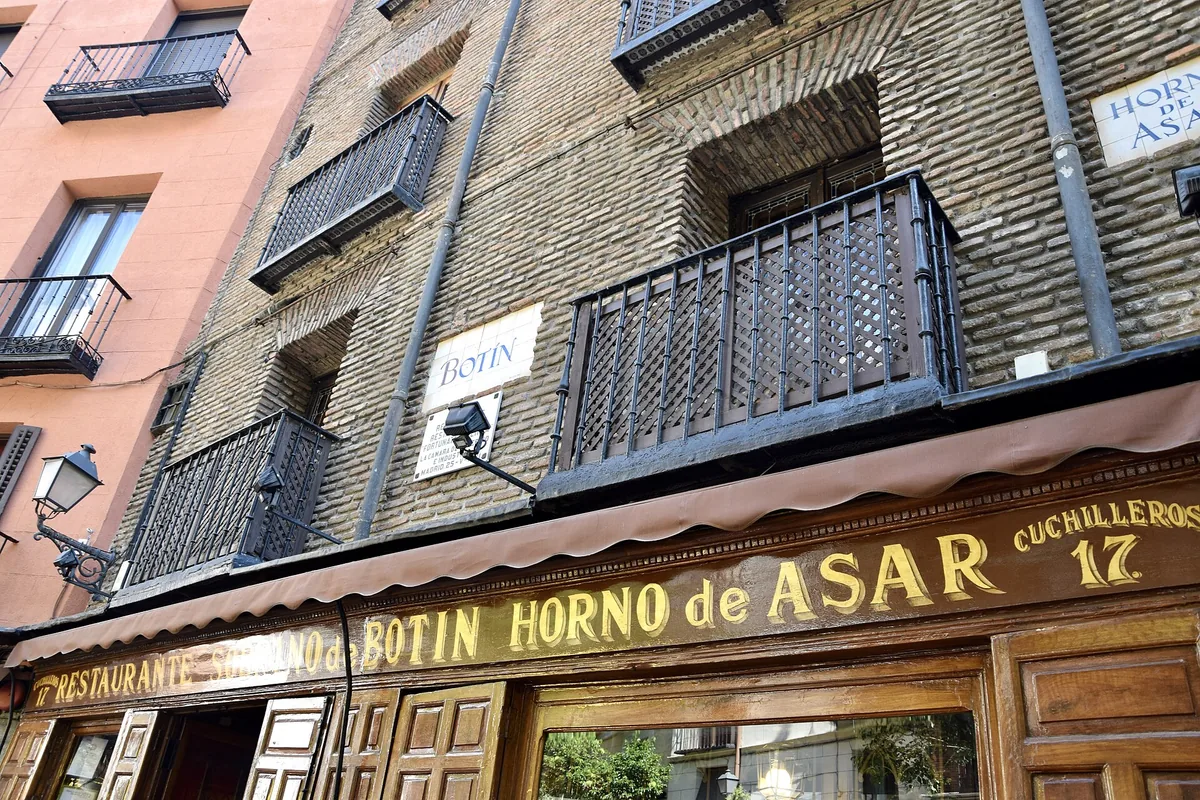
Sobrino de Botín is the most famous historic restaurant in Madrid, and it has held the Guinness World Record as the oldest restaurant in the world still in operation. It was founded in 1725 and sits in the old streets just off the Plaza Mayor, close to the Calle Cuchilleros.
The draw is the setting as much as the food. The dining rooms are on several levels, and the kitchen is built around an old wood-fired oven. The famous dishes are cochinillo asado, roast suckling pig, and roast lamb, both cooked in the old oven and served simply. Check the restaurant’s own website for the current menu and booking details.
Botín is popular with visitors, so it is not a hidden local secret, but it remains a great way to taste a traditional Castilian roast. The service is formal, the portions are generous and the experience feels special. If you want a table at a sensible hour, book ahead rather than walking in.
The restaurant sits among other old taverns on the street, so you can combine a meal with a stroll around the Plaza Mayor and the Mercado de San Miguel. Go in a group so you can share the roast and try more dishes.
- How to get there: A short walk from Sol or Ópera metro stations, or from the Plaza Mayor.
- How long to spend: One and a half to two hours for a relaxed meal.
- Best time to go: Lunch, when the dining rooms are bright and easier to book.
- Tip: Book in advance, and check whether your booking covers the lower or upper floor.
2. Lhardy
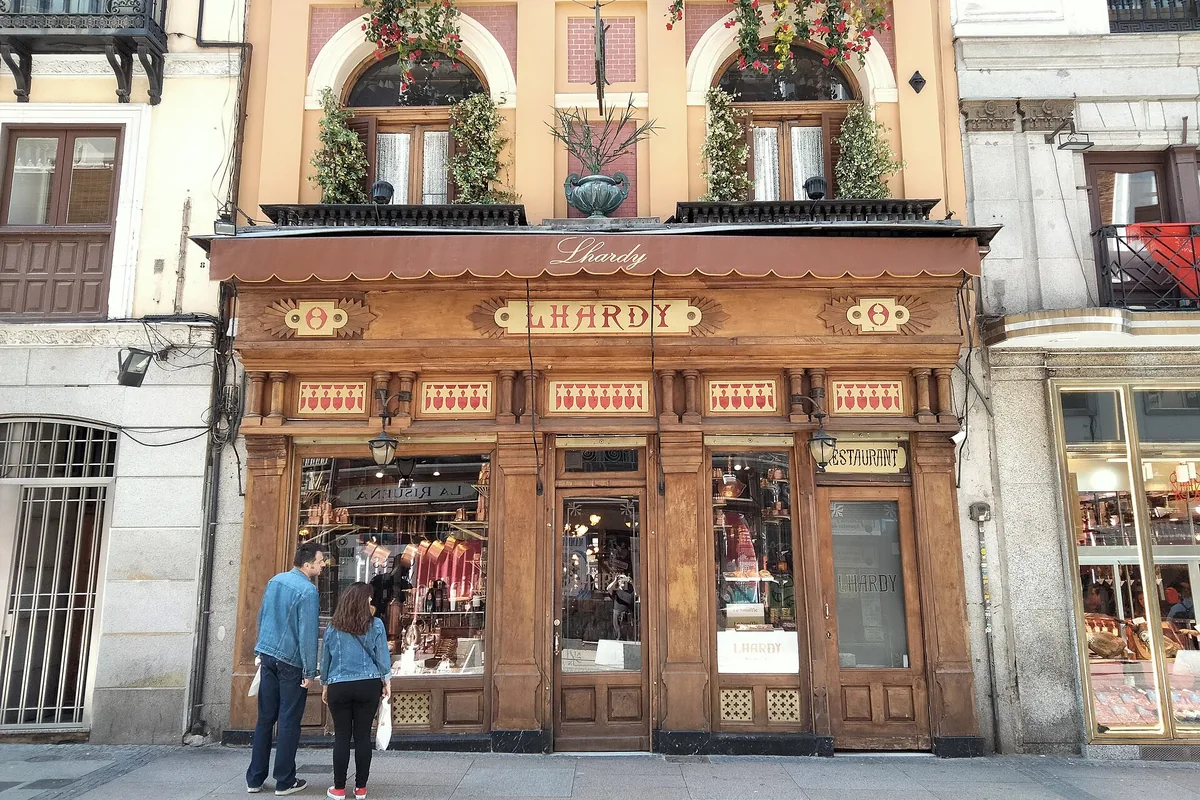
Lhardy is the most elegant place to eat in Madrid’s historic centre, a 19th century institution that opened in 1839 on the Carrera de San Jerónimo, first as a refined pastry shop. The ground floor is a delicatessen and snack counter, while the dining rooms upstairs are decorated with mirrors, red upholstery and chandeliers.
The house speciality is cocido madrileño, Madrid’s classic chickpea and meat stew, served here in a more refined style, often with the broth presented first. Guides also point to its croquettes, which you can eat at the counter downstairs. Visit the Lhardy website for current opening details and booking.
It is a good choice for a special occasion or a slow, old-fashioned lunch. The atmosphere is formal, and the prices sit at the higher end for the city, so many visitors treat it as a place for one memorable meal. If you do not want a full sit-down meal, the downstairs counter is a lighter way to get a taste of the place.
Lhardy sits close to the Puerta del Sol and the Prado, so it fits easily into a day of sightseeing. Pair it with a stroll to the nearby Plaza de las Cortes.
If you are visiting with others, order a mix of dishes to share so that everyone can taste the cocido alongside lighter plates. Check the restaurant’s information for dress expectations and any set menus on offer.
- How to get there: A short walk from Sol or Sevilla metro stations.
- How long to spend: About two hours for a full meal, or 20 minutes at the counter.
- Best time to go: Lunch, particularly on a cool day when cocido is most welcome.
- Tip: Reserve the upstairs dining rooms in advance, and ask which days the cocido is served.
3. La Bola
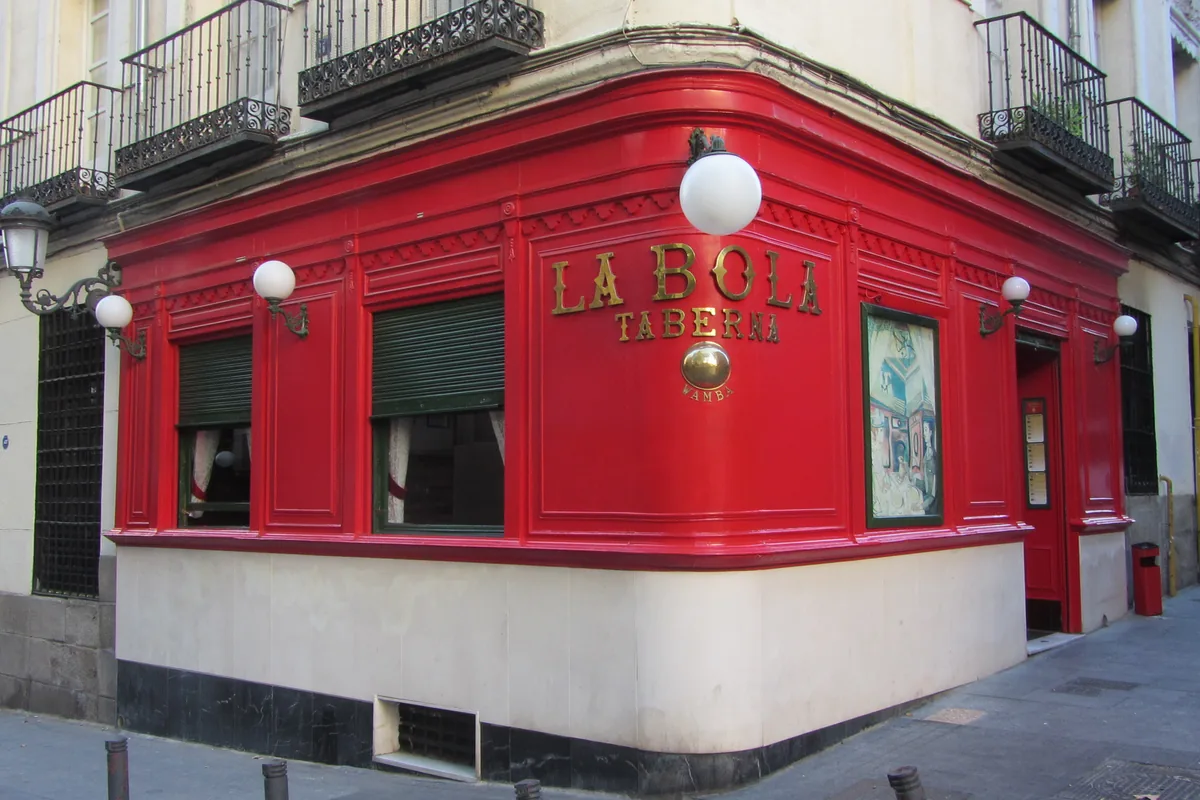
La Bola is the best place to eat cocido in Madrid if you want the full traditional ritual. The restaurant dates to 1870 and is known for cooking each portion separately in a glazed clay pot over charcoal, a method that gives the dish a distinctive depth.
The meal is served in stages. First comes the broth, often with fine noodles, then the chickpeas, vegetables and meats are served together on platters. The generous portions mean you may want to skip a starter and share dessert. It is a heavy lunch, traditionally a winter dish, so plan a light evening afterwards.
The dining rooms have the feel of an old Madrid tavern. The restaurant is family-run, and the tradition of the clay pots is a point of pride. La Bola sits close to the Royal Palace and the Plaza de España, so it works well after a morning of sightseeing.
Because the cocido is cooked to order in the traditional way, it is wise to arrive hungry and not in a hurry. Do not expect a quick meal, but do expect a very Madrid one.
If you are travelling in summer, ask whether the cocido is on the menu that day, because it is traditionally a cooler-weather dish. Even so, the restaurant is a good place to understand why the stew matters so much to Madrid’s food identity.
- How to get there: A short walk from Ópera metro station or the Royal Palace.
- How long to spend: Around two hours.
- Best time to go: Lunch on a cool day, in autumn or winter.
- Tip: Book ahead, and say if you have dietary requirements, as the dish is built around meat.
4. Malacatín
Malacatín is the neighbourhood cocido bar in La Latina, a small, busy bar and restaurant that is known for serving a hearty lunch of the stew. Guides report that it has served cocido since 1895, and its traditional atmosphere has made it a favourite with locals and visitors alike.
The bar is lively, noisy and informal. Expect a busy counter and a few tables. The cocido arrives in generous portions, with the soup served first and the chickpeas and meats following, so come hungry.
Malacatín sits in La Latina, the neighbourhood known for its Sunday market at El Rastro and for its tapas bars along the Cava Baja. After lunch, you can wander the streets, climb to the viewpoints or visit the Basilica of San Francisco el Grande nearby.
This is a lunch-focused spot, so do not plan on dinner here. If you are keen to try cocido, it is a good-value alternative to the more formal restaurants in the centre.
Pair the meal with a walk through the lanes of La Latina afterwards, because the neighbourhood is at its liveliest around lunchtime, especially at weekends. If cocido feels too heavy, other traditional dishes are usually on the menu as well, so ask what is available.
- How to get there: A short walk from La Latina or Tirso de Molina metro stations.
- How long to spend: One and a half to two hours.
- Best time to go: Lunch, ideally with a table booked in advance.
- Tip: Book ahead, and check the current opening days and which days cocido is served, as the bar is usually closed on Sundays.
5. Casa Labra
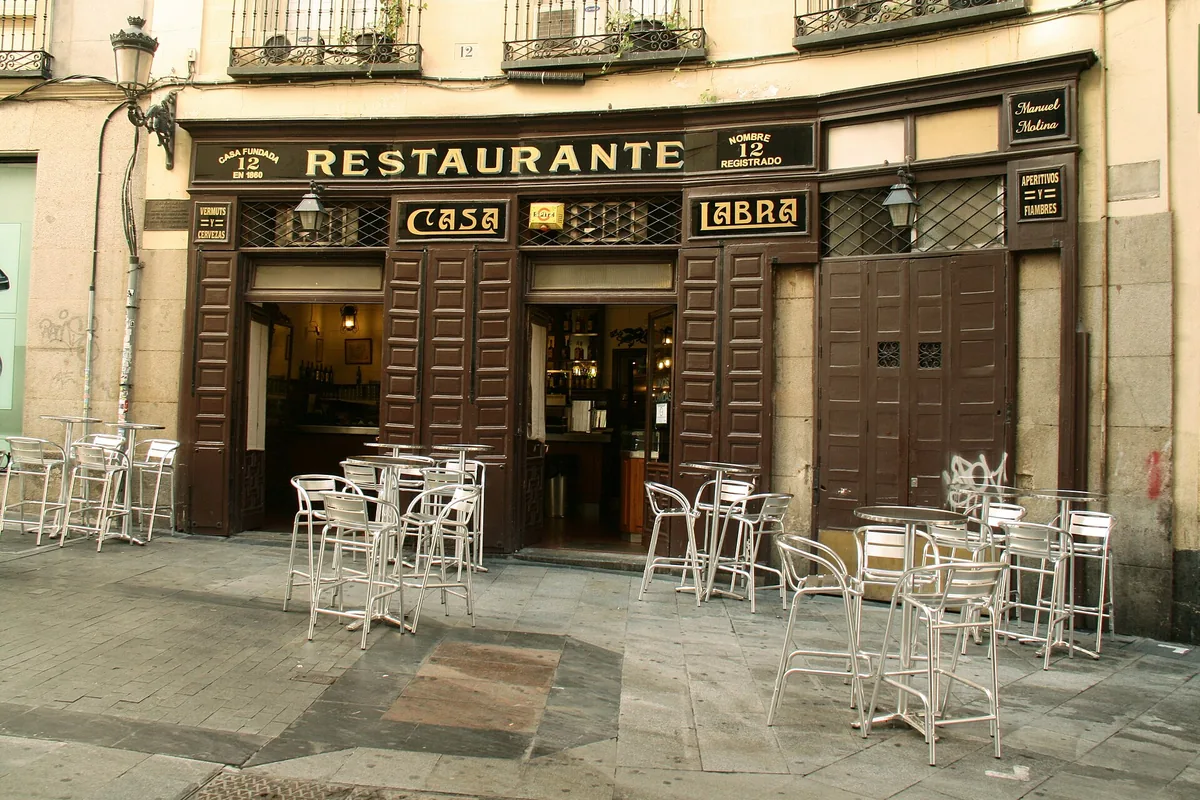
Casa Labra is the classic standing-room tavern for fried cod. It was founded in 1860 on Calle de Tetuán, a few steps from Puerta del Sol, and it is also a piece of political history: Spain’s Socialist Workers’ Party is said to have been founded in a room here in 1879.
Two items dominate the menu. The first is the tajada de bacalao, a piece of battered, deep-fried salt cod, eaten hot with a drink. The second is the croqueta de bacalao, a crisp cod croquette. You order at the counter, pay for what you eat and take it to the bar or a small table. It is simple, quick and cheap, and it has been a Madrid ritual for generations.
The place is small and very busy, so expect to queue at peak times. The best approach is to treat it as a quick stop within a wider tapas route, not a full meal. Order a caña, a small draught beer, and a couple of items, then move on.
Because it is next to the Puerta del Sol, Casa Labra is easy to fit into a sightseeing day. It pairs well with the churros at San Ginés for a very Madrid snack crawl.
If you are sensitive to fried food, order just one tajada and one croqueta to share. Both are filling, and they go well with a small glass of wine, vermouth or beer, which most people drink standing at the bar.
- How to get there: A short walk from Sol metro station.
- How long to spend: 20 to 30 minutes.
- Best time to go: Mid-afternoon, between the lunch and dinner rushes.
- Tip: Check the current opening hours, which vary between lunch and evening sessions.
6. Casa Revuelta
Casa Revuelta is the place locals send you for battered cod. It is a tiny, standing-room tapas bar on Calle de los Latoneros, near the Plaza Mayor, and its battered cod is a cult favourite in the city.
The bar is simple. Locals crowd around the counter and eat the bacalao rebozado, hot from the fryer, with a glass of wine or beer. There are also other classic tapas, but the cod is what most people come for. It is a walk-in place, so you cannot book, and it can be very busy at weekends.
Casa Revuelta works best as a short stop. Go with an appetite and a little patience, and be prepared to eat standing up. Because the cod can sell out when the bar is busy, go early in the lunchtime session if you want to be sure of a portion.
The bar is a few minutes’ walk from Casa Labra, so it is easy to compare the two. Many food lovers have a strong view on which does the best fried cod in the city, so try both and decide for yourself.
Bring some cash as a precaution, as small bars of this type may prefer it, and check payment options when you arrive. Do not expect a long menu: the appeal is a short list of well-made classics, so order the cod and perhaps one more tapa.
- How to get there: A short walk from Sol, Ópera or La Latina metro stations.
- How long to spend: 30 to 45 minutes.
- Best time to go: Early in the lunchtime session, before the cod runs out.
- Tip: Check the current opening days, as it has been listed as closed on Mondays.
7. Chocolatería San Ginés
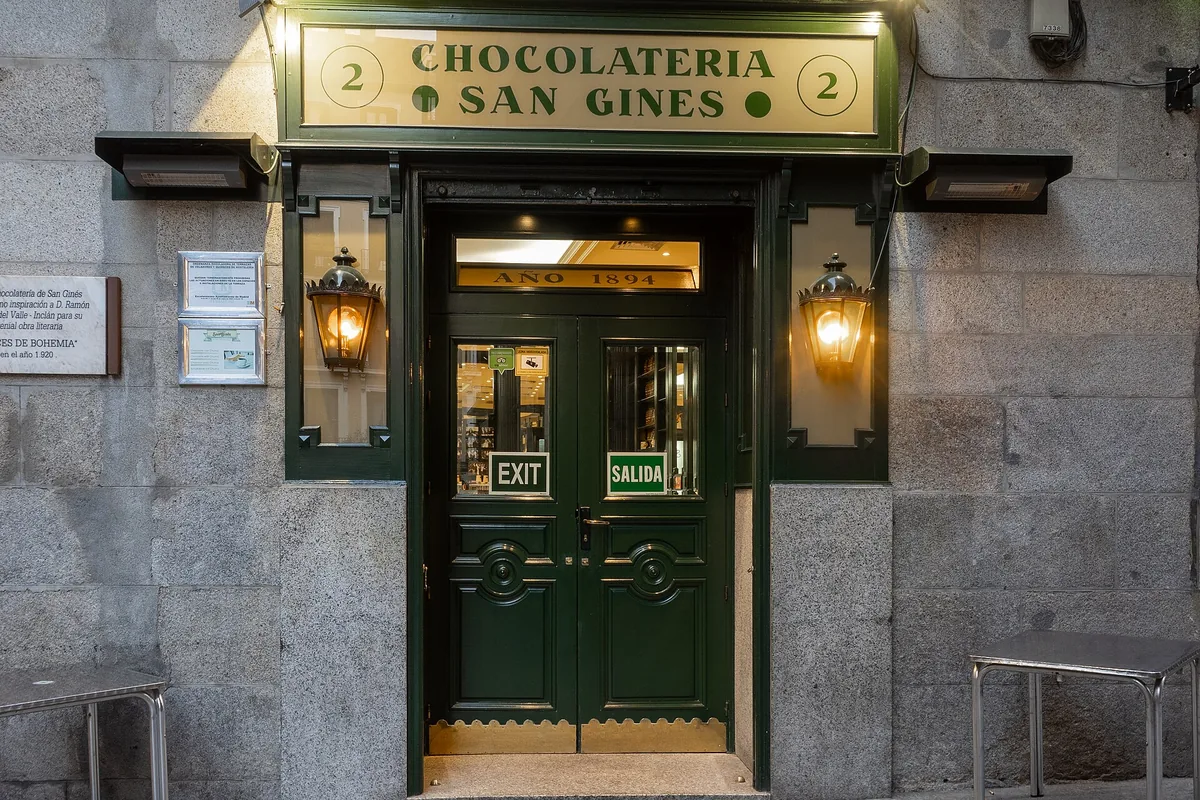
Chocolatería San Ginés is the most famous place to eat churros in Madrid. It sits in a narrow passage called the Pasadizo de San Ginés, near the Puerta del Sol, and it has been serving churros with thick hot chocolate since the late 19th century.
The order is simple. Churros are thin, crisp fried dough sticks, and you dunk them in a cup of rich, spoon-thick chocolate. Porras, a thicker version, are also on the menu. It is a classic breakfast or afternoon snack, and in Madrid it is also a traditional end to a long night out. Some sources describe the shop as open around the clock, but others say that applies only on certain days, so check the current hours.
The cafe draws a crowd of locals and tourists. It can have a queue at peak times, and it is not cheap by churro standards, but it is a quintessential Madrid experience.
San Ginés is only a few minutes’ walk from Casa Labra and the Mercado de San Miguel, so it is easy to combine into a food-focused afternoon.
Keep in mind that the chocolate here is thick and sweet, closer to a pudding than a drink, so a small portion of churros is plenty for most people. If you prefer something lighter, ask about other options on the menu.
- How to get there: A short walk from Sol or Ópera metro stations.
- How long to spend: 30 to 45 minutes.
- Best time to go: Early morning or late at night, to avoid queues.
- Tip: Share a portion if you are not very hungry, because the chocolate is rich and filling.
8. Mercado de San Miguel
The Mercado de San Miguel is the easiest place to taste many Madrid flavours in one stop. It is a covered food market near the Plaza Mayor, built in iron and glass in the early 20th century, and it opened in 1916. Today it is a gourmet food hall with dozens of stalls.
Visitors wander between counters, picking small plates such as cured ham, cheese, seafood, croquettes, olives and pastries. You can also try Spanish wines, vermouth and sherry. It is a fun place to graze, particularly if you are in a group and want to sample different things without committing to a full meal.
It is touristy and can get very crowded, and prices are higher than in a traditional bar. The best way to use it is as an introduction to Spanish flavours, or as a stop for a drink and a snack. For something more local, follow it with a meal at one of the old tavernas nearby.
The building is also beautiful, so even a short visit is worthwhile. See the market’s own website for current stalls and events.
If you want a quieter, more local food market experience afterwards, ask your hotel or the tourism office about other markets in the city, because Madrid has several neighbourhood markets that are less crowded. These are good places to see everyday produce.
- How to get there: A short walk from Sol, Ópera or La Latina metro stations, just beside the Plaza Mayor.
- How long to spend: One hour.
- Best time to go: Mid-morning or a weekday afternoon, when it is quieter.
- Tip: Walk the full market before you buy anything, so you can choose the stalls that look best.
9. La Casa del Abuelo
La Casa del Abuelo is the place for gambas al ajillo, Madrid’s sizzling garlic prawns. It is a small, old-fashioned bar on Calle Victoria, near the Puerta del Sol, and it has been serving customers since 1906.
The prawns are cooked in small clay dishes in a tiny kitchen at the front of the bar, with oil, garlic and chilli. They arrive bubbling, so use bread to mop up the oil.
The bar is small and loud, with a crowd at the counter. It is a classic, but opinions vary, with some visitors loving the atmosphere and others finding the service slow, so go with relaxed expectations. If you want to be sure of a place, check whether the bar takes bookings.
It is just a few minutes’ walk from Casa Labra and San Ginés, so you can plan a short tapas crawl through the old centre. Treat it as one stop in an evening rather than a full dinner.
Because the bar is small, go in a pair or a small group, and be ready to eat standing at the counter or perch on a stool. If the prawns are not to your taste, other tapas are usually available, so ask at the counter.
- How to get there: A short walk from Sol or Sevilla metro stations.
- How long to spend: 30 to 45 minutes.
- Best time to go: Early evening, before the dinner rush.
- Tip: Order the prawns first, then decide on a second dish while you wait.
10. Bar El Brillante
Bar El Brillante is the place to try Madrid’s bocadillo de calamares, the fried squid sandwich. It opened in the 1950s opposite Atocha station and is one of the city’s best-known bars for the sandwich.
The bocadillo is a simple snack: rings of battered squid, fried until golden and served in a crusty roll, with no sauce. It is a Madrid classic and a cheap, filling meal on the go. El Brillante is known for offering a choice of breads, so you can customise your sandwich.
The bar is open for much of the day and has a lively, no-frills feel, with a long counter, fast service and a crowd of commuters and travellers. It is a good stop before or after a visit to the nearby Prado, Reina Sofía or Retiro Park, or before catching a train from Atocha.
If you are around the Plaza Mayor instead, other bars nearby, such as Casa Rúa and La Campana, are also known for the sandwich, so you can compare and decide on a favourite.
Order at the counter and eat it straight away, ideally with a cold drink. It makes an inexpensive lunch for a day of museum visits, and it is a good stop if you are travelling through Atocha station with some time to spare.
- How to get there: Directly opposite Atocha station, with the Atocha metro station next door.
- How long to spend: 20 to 30 minutes.
- Best time to go: Lunchtime, or a mid-afternoon snack.
- Tip: Eat it fresh at the bar, because the batter is best when hot and crisp.
Madrid dishes to look out for
Cocido madrileño: the chickpea and meat stew, usually served in stages, with the broth first. Bocadillo de calamares: a roll filled with fried squid rings. Tortilla de patatas: the Spanish potato omelette, served at nearly every bar. Huevos rotos: fried eggs broken over fried potatoes, often with ham. Callos a la madrileña: a slow-cooked tripe stew. Cochinillo asado: roast suckling pig. Croquetas: creamy fried croquettes, often with ham. Gambas al ajillo: prawns sizzled in garlic and chilli. Churros con chocolate: fried dough with thick hot chocolate. Vermouth: often served on tap, especially at weekends before lunch.
Booking, tipping and opening hours
Book the famous restaurants, such as Botín, Lhardy and La Bola, as early as you can, particularly for weekends and winter cocido season. Small tapas bars such as Casa Labra, Casa Revuelta and Casa del Abuelo are usually walk-in, so be prepared to wait or stand.
Tipping is appreciated but not obligatory. Service is normally included in the price, and many people leave small change or round up the bill for good service. Opening hours in Madrid are long but vary by venue, with a break between lunch and dinner at many restaurants, so check each place’s own site. The official Madrid tourism site lists more historic restaurants.
Suggested food routes for 1, 2 or 3 days
One day: Churros at San Ginés in the morning, a tapas stop at Casa Labra, lunch at La Bola or Lhardy, and an evening snack at El Brillante or La Casa del Abuelo.
Two days: Add Botín for roast suckling pig on the second day, and the Mercado de San Miguel for a relaxed afternoon.
Three days: Spend a day in La Latina with cocido at Malacatín, then walk the nearby tapas bars and finish at Casa Revuelta for fried cod.
Where to stay in Madrid
For food lovers, the best base is the historic centre around Sol, the Plaza Mayor and La Latina, where most of these places are within walking distance. Barrio de las Letras and Huertas suit visitors who want nightlife and tapas as well as museums. Chueca and Malasaña are livelier and more modern, with trendy cafes and bars. If you want something quieter, the area around Retiro is calm and well connected.
Getting around Madrid
The centre is compact, and most of the places in this guide can be reached on foot from each other. The metro is fast and covers the whole city, and the Cercanías commuter trains connect the airport and main stations. Taxis are useful late at night. For a clear overview, see the Madrid tourism site.
Budget guidance
Cheap eats: Casa Labra, Casa Revuelta, El Brillante and San Ginés let you eat well for little, and many bars serve a small tapa with your drink. Look for the weekday set lunch, the menú del día, at traditional restaurants.
Mid-range: La Bola, Malacatín and a tapas crawl through La Latina are good value for the quality.
Special occasion: Botín and Lhardy cost more, but they offer a historic setting and a memorable meal. Comparing Spanish food cities? See where to eat in Barcelona for a very different tapas scene.
Frequently Asked Questions
Where should I eat in Madrid for the first time?
Start with a traditional spot such as Sobrino de Botín for roast suckling pig or La Bola for cocido. Add a tapas stop at Casa Labra and churros at Chocolatería San Ginés for the full Madrid experience.
What is the best traditional food in Madrid?
Cocido madrileño, the chickpea and meat stew, is the signature dish. The fried squid sandwich, battered cod and garlic prawns are other local favourites.
Do I need to book restaurants in Madrid?
Book the famous sit-down restaurants such as Botín, Lhardy and La Bola in advance. Small tapas bars are usually walk-in, so be ready to wait.
What time do people eat in Madrid?
Lunch is usually from about two in the afternoon, and dinner often starts after nine in the evening. Many kitchens close between meals, so check the venue’s hours.
Is tipping expected in Madrid?
Tipping is not obligatory, because service is normally included. Leaving a little change or rounding up for good service is common.
Where can I eat cheaply in Madrid?
Standing-room tapas bars, the squid sandwich at El Brillante and churros at San Ginés are good low-cost options. A weekday set lunch is another way to save money.
Keep Exploring Madrid and Beyond
Once you have eaten your way through the old centre, our guide to the best bars in Madrid is the natural next step for vermouth, cocktails and late-night tapas. If you are planning a longer Iberian trip, read our guide to the best places to eat in Lisbon to compare Portuguese and Spanish cooking.
Featured image: Photo by Jose Ruales on Unsplash