Last updated: October 2026
Rome takes its coffee seriously, but not in the way a specialty cafe in London or Melbourne does. Most Romans drink a quick espresso standing at a bar counter, and the best cafes in Rome are often the ones where that ritual is done perfectly, alongside a smaller group of modern roasters and brunch spots.
If you want the best cafes in Rome, start with two historic coffee bars, Sant’Eustachio Il Caffè and Tazza d’Oro near the Pantheon, then add one specialty roaster such as Faro and one pastry stop for a maritozzo. That mix gives you the city’s coffee heritage, its newer scene and its breakfast habits in a single morning.
This guide covers ten cafes across the historic centre, Prati, Pigneto and Esquilino, each with a practical box. After the list you will find a guide to Roman coffee etiquette, what to order, a plan for one, two or three days, where to stay and a budget guide. For general trip planning, the national tourism site has a helpful overview of Rome’s historic cafes, and the city’s official tourism website covers planning. Cafe details change often, so check opening days and hours before you go. Anything this guide could not confirm is marked “check before you go”.
Quick answer: What are the best cafes in Rome? For classic Roman espresso, go to Sant’Eustachio Il Caffè or Tazza d’Oro. For history, choose Babington’s Tea Room by the Spanish Steps or Caffè Canova Tadolini, and for a sweet chocolate-lined espresso near the Vatican, Sciascia Caffè. For modern specialty coffee, try Faro. For pastries and brunch, pick Roscioli Caffè, Pasticceria Regoli, Barnum Café or Necci dal 1924.
Quick comparison: best cafes in Rome
| Cafe | Area | Best for | Price tier |
|---|---|---|---|
| Sant’Eustachio Il Caffè | Near the Pantheon | A classic Roman espresso | Cheap at the bar |
| Tazza d’Oro | Near the Pantheon | Espresso and coffee granita | Cheap at the bar |
| Babington’s Tea Room | Piazza di Spagna | Afternoon tea in a historic room | Comfortable |
| Caffè Canova Tadolini | Via del Babuino | Coffee among sculptures | Mid-range to comfortable |
| Sciascia Caffè | Prati | A famous chocolate-lined espresso | Cheap to mid-range |
| Faro | Via Piave, near Porta Pia | Specialty coffee | Mid-range |
| Roscioli Caffè Pasticceria | Near Campo de’ Fiori | Pastries and espresso | Mid-range |
| Barnum Café | Near Campo de’ Fiori | Brunch and a relaxed morning | Mid-range |
| Necci dal 1924 | Pigneto | Weekend brunch in a garden | Mid-range |
| Pasticceria Regoli | Esquilino | Maritozzi | Cheap |
1. Sant’Eustachio Il Caffè
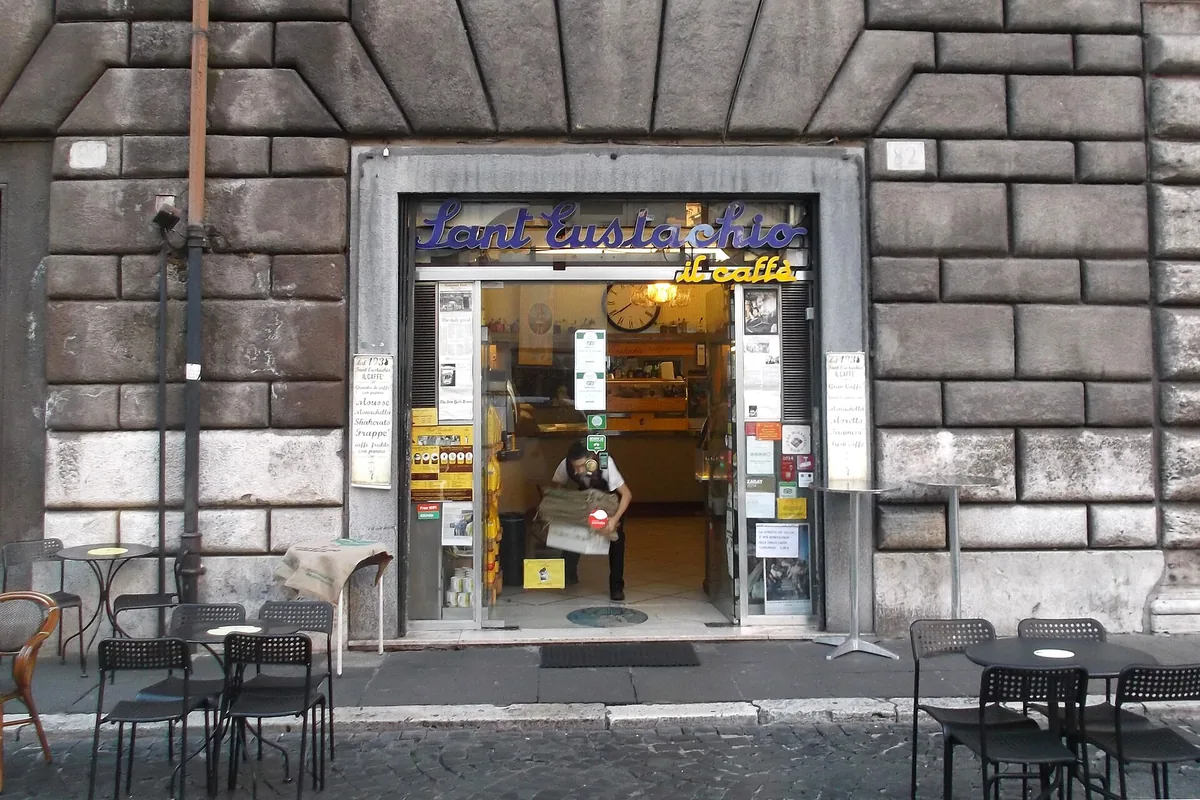
Sant’Eustachio Il Caffè is the cafe that many Romans name when asked where to find the city’s best espresso. It sits on a small square just behind the Pantheon, and it has been serving coffee since the 1930s. The cafe’s own website gives 1938 as its founding year.
The house speciality is the gran caffè, a creamy espresso that arrives sweetened. Guides explain that the barista adds sugar to the cup before pouring, so if you want it bitter you need to ask for it “amaro” before you order. The cafe is known for a particularly thick, dense crema.
The counter is busy, small and often crowded. Most customers pay at the till first, then hand the receipt to the barista. A table is usually a more expensive option, so locals tend to stand. If you want to sit, check the table prices first.
The bar also sells coffee beans, chocolate and sweets to take home, which makes it a useful stop for gifts. The space is compact, so go early or late to avoid the queue.
Because it is so popular, the cafe works best as part of a short walk. Pair it with a look inside the Pantheon and a wander through the streets towards Piazza Navona, and you have covered a good slice of the historic centre in an hour. If you are travelling with others, order a few different drinks and share sips, so that you can taste the difference between the gran caffè, a standard espresso and a cappuccino.
- How to get there: On foot from the Pantheon, about two minutes, or from Piazza Navona, about five.
- How long to spend: Ten to twenty minutes at the counter.
- Best time to go: Early morning, before the crowds arrive.
- Tip: Say “amaro” if you do not want sugar in your gran caffè.
2. Tazza d’Oro
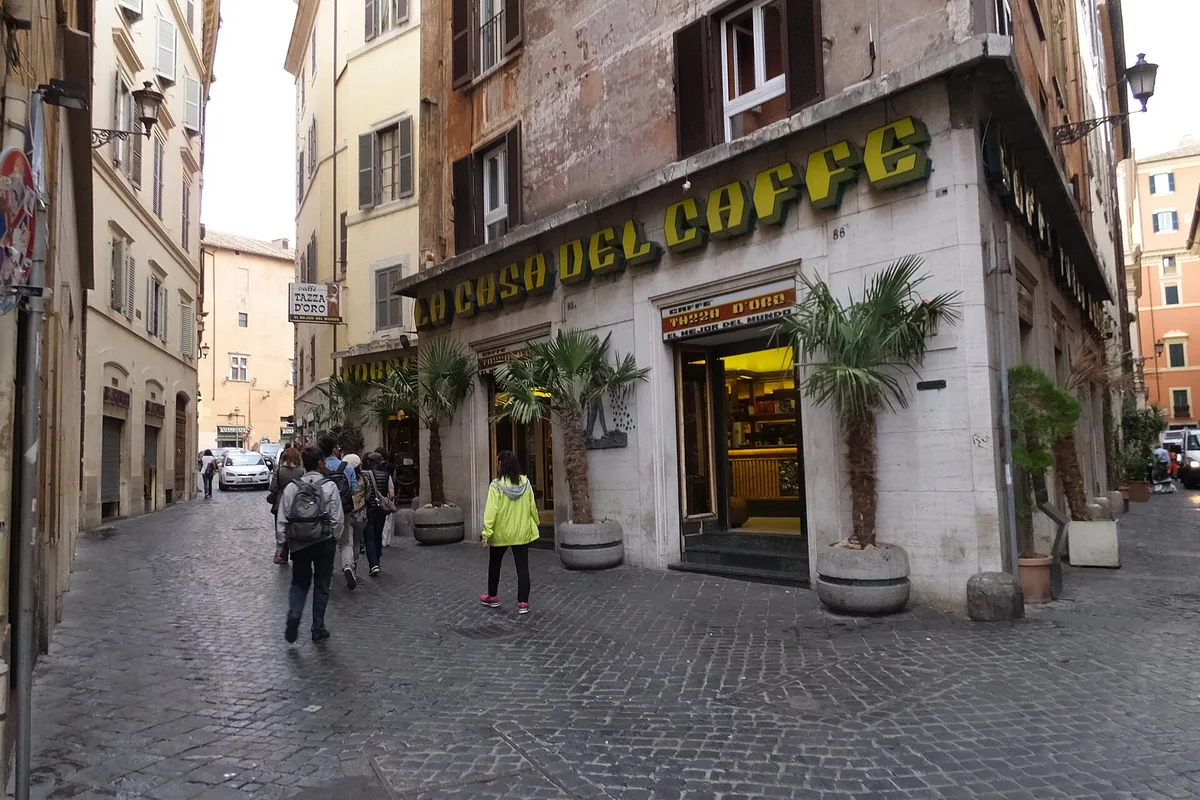
Tazza d’Oro is the other great coffee name beside the Pantheon, and it is known for rich espresso and a coffee granita. According to its own website, it was founded as a coffee roastery in 1944 and opened its bar two years later, and it still roasts its own coffee. The shop is small, with a long counter, a shelf of packaged beans and a busy atmosphere that has changed little over the decades.
Most visitors order an espresso or a cappuccino at the bar and drink it standing. The speciality is the granita di caffè, a cold, slushy coffee dessert topped with whipped cream. It is a good choice on a hot afternoon, when a hot espresso feels like too much. Hours and the seasonal availability of the granita can change, so check before you go.
Compared with Sant’Eustachio, Tazza d’Oro tends to feel more like a shop. The coffee is strong and dark, and it suits people who like a bold, bitter cup. Many Romans have a favourite between the two, and debating which is better is a local pastime.
You can buy beans, ground coffee and gift packs to take home, and the Tazza d’Oro website lists its blends. If you are visiting both cafes, drink the espresso at one and the granita at the other, then decide for yourself which you prefer.
The shop also sells packaged coffee in a range of blends, which makes it a convenient place to buy a gift before you leave. Staff are used to visitors, so asking for a recommendation is welcome. If you prefer a softer taste, try a cappuccino, and if you like a bold, bitter cup, stay with a plain espresso. Either way, drink it at the counter and watch the baristas work through the queue.
- How to get there: On foot from the Pantheon, about one minute.
- How long to spend: Fifteen to twenty minutes.
- Best time to go: A hot afternoon for the granita, or early morning for espresso.
- Tip: Visit Sant’Eustachio and Tazza d’Oro on the same walk and compare.
3. Babington’s Tea Room
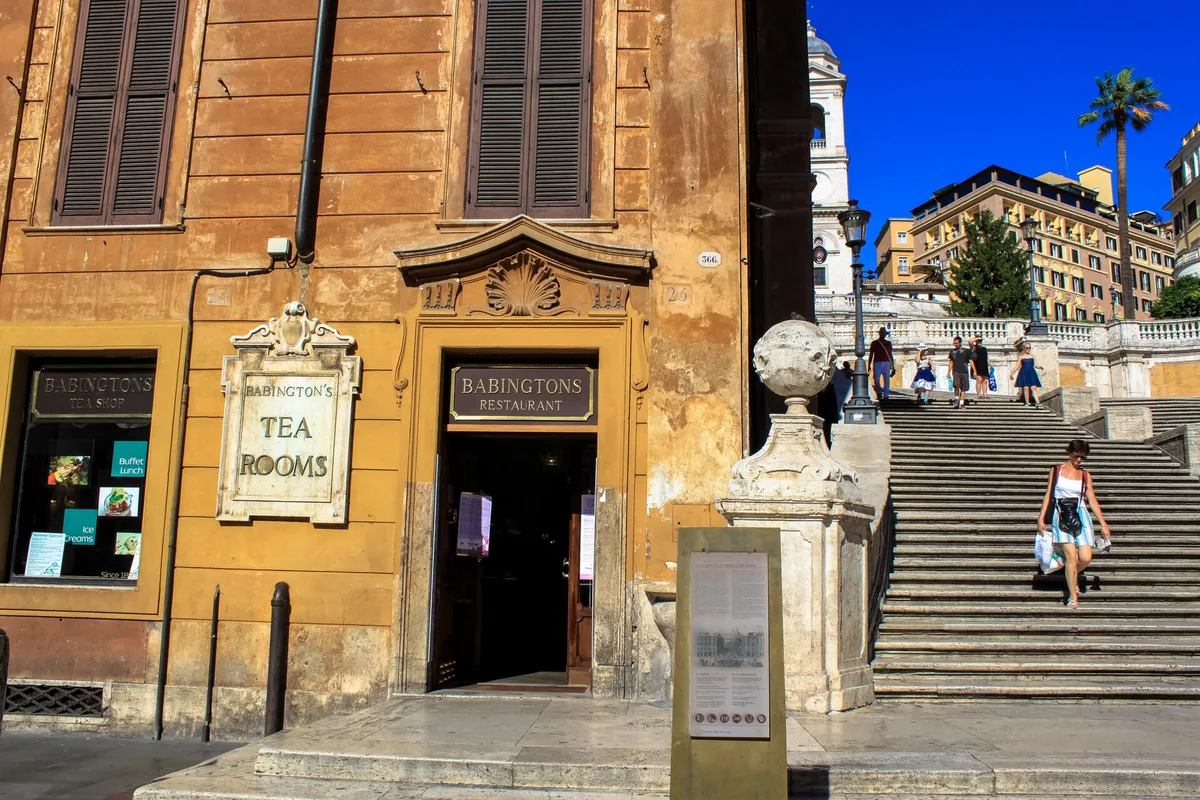
Babington’s Tea Room, at the foot of the Spanish Steps, is one of Rome’s best-known historic cafes, and it has been welcoming visitors since 1893. It was founded by two Englishwomen, Isabel Cargill and Anna Maria Babington, as a tea and reading room for the English-speaking community, and according to its own website the founders’ descendants still run it. Italy’s national tourism site lists it among Rome’s historic cafes, and it is often described as the oldest tea room in Italy.
The difference from the other historic stops on this list is the drink. Tea is the speciality, and the classic order is a cream tea with warm scones, or a fuller afternoon tea served on patterned china. Guides also mention breakfast and a weekend brunch, so it works at different times of day. The menu is built around tea, so if you want coffee, ask what is on offer.
Guides recall a long list of famous guests over the decades, including film stars who visited during the years of Rome’s dolce vita. Inside, the rooms feel calm and old-fashioned, a contrast with the crowds on the steps outside.
This is a sit-down place where you pay for the setting as well as the tea, so think of it as a treat rather than a quick stop. Check the menu and prices before you sit, and check current opening days before you go, as listings disagree.
Because it is right beside the Spanish Steps, it fits easily into a walk along Via dei Condotti towards the Pantheon, or up the steps to Trinità dei Monti. Antico Caffè Greco, the street’s famous eighteenth-century cafe, has been closed since October 2025 after a long legal dispute over its lease, so Babington’s is now the natural choice for a historic sit-down break in this corner of the city. It is a popular stop, so allow time for a wait at busy times.
- How to get there: On foot from the Spanish Steps, about one minute, or metro line A to Spagna.
- How long to spend: Forty-five minutes to an hour.
- Best time to go: Mid-afternoon for tea, or a weekday morning, when it is quieter.
- Tip: Order the cream tea if you want the house classic without a full afternoon tea.
4. Caffè Canova Tadolini
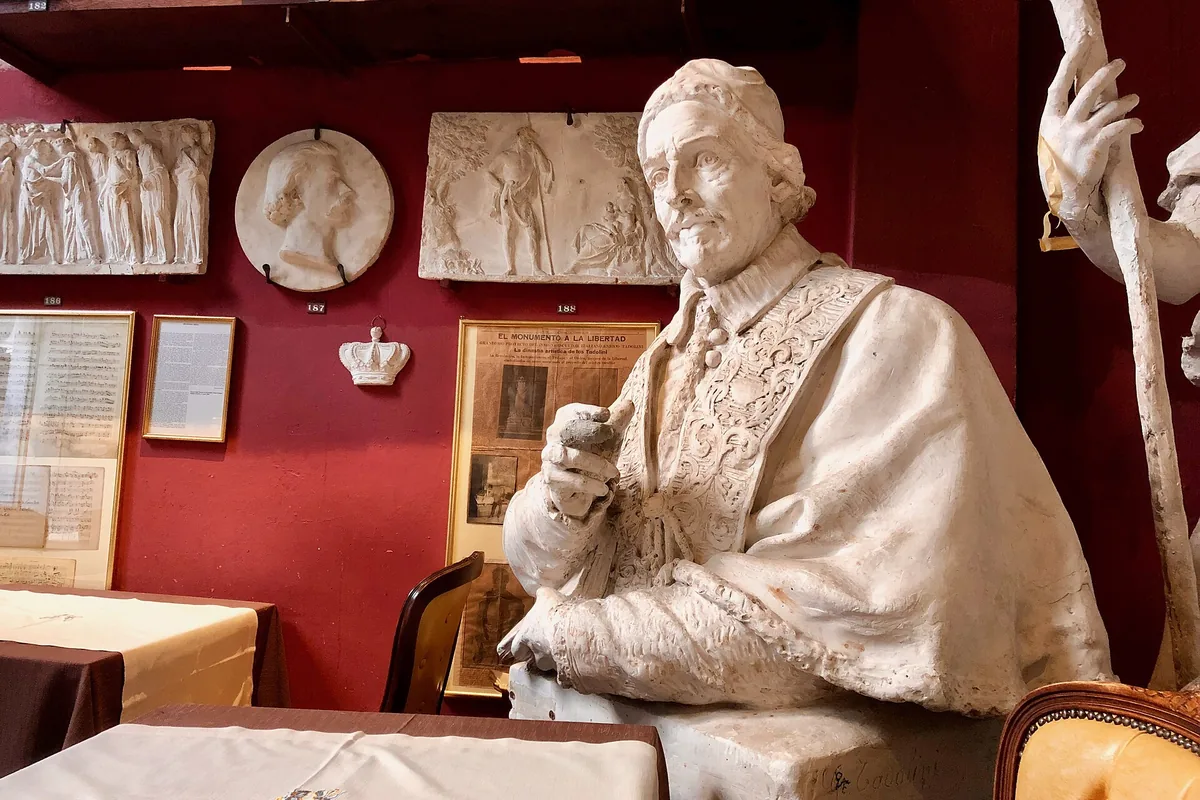
Caffè Canova Tadolini is a cafe set inside a former sculptor’s studio, where you sit among plaster casts and marble statues. The studio on Via del Babuino was left by the sculptor Antonio Canova to his pupil Adamo Tadolini in 1818, and the Tadolini family kept it until the late 1960s. It reopened to the public as a cafe and restaurant in 2003, and the rooms still look much as they did in the nineteenth century.
The sculptures are the main attraction. Tables sit between statues, models and moulds, and you can drink a coffee beside a larger-than-life figure. It feels like a small museum, and it is a popular stop for photographs. The menu includes coffee, pastries and light meals, and there is a restaurant service later in the day.
As with many atmospheric places, you pay more for the setting. Check the price list for table service before you sit down, and compare it with the bar price. The official website lists the cafe bar as open from early morning into the evening, with the restaurant running later, but hours can change, so check the Canova Tadolini website before you go.
It is close to the Spanish Steps and Piazza del Popolo, so it fits neatly into a walk between the two. Arrive early in the day for the best chance of a table among the statues.
Because the studio is also a working restaurant, the atmosphere changes through the day. Mornings are quiet and suit coffee and pastries, while lunch and dinner bring a different crowd. If you plan to eat, check the menu and prices before you are seated. The sculptures are the main draw, so take a moment to look at the details, from the plaster models to the tools that are still on display.
- How to get there: On foot from Piazza del Popolo or the Spanish Steps, about five minutes.
- How long to spend: Forty-five minutes.
- Best time to go: Mid-morning, when it is quieter and the light is good.
- Tip: Ask for a table in the room with the main sculptures.
5. Sciascia Caffè
Sciascia Caffè in Prati is a long-running neighbourhood bar famous for its espresso lined with dark chocolate. The bar on Via Fabio Massimo has operated since 1937, according to guides, while the Sciascia name dates back to 1919, and it has a loyal local following. It is a short walk from the Vatican, which makes it a handy stop after a visit.
The signature is the caffè eccellente, an espresso served in a cup coated with melted chocolate. It is sweet, smooth and a little indulgent, and it makes a good alternative to the usual cappuccino. Coffee cocktails are also mentioned in guides, so ask what is on offer.
The atmosphere is that of a traditional Roman bar rather than a trendy cafe. Customers stand at the counter, order quickly and move on. It is a good place to see how the city drinks coffee in its everyday life, away from the main tourist squares.
Prati is a calm, elegant district with wide streets and good shopping. If you are staying there, Sciascia is an easy local choice. Check opening days, as smaller neighbourhood bars may close on Sundays or in August.
Prati also has many bakeries and delis, so you can build a short food walk around the visit. After your coffee, stroll along the nearby streets or walk towards Castel Sant’Angelo, which is about a quarter of an hour away on foot. Because the clientele is mostly local, you can practise a few words of Italian. A simple ‘un caffè, per favore’ will be understood and appreciated.
- How to get there: Metro line A to Ottaviano, then a short walk.
- How long to spend: Fifteen to twenty minutes.
- Best time to go: Morning, after a visit to the Vatican.
- Tip: Order the caffè eccellente if you want something sweeter than a standard espresso.
6. Faro
Faro is one of the best-known specialty coffee bars in Rome, with carefully chosen beans and a modern approach to brewing. It is a third-wave cafe on Via Piave, near Porta Pia and north-east of the historic centre, and its full name is Faro Luminari del Caffè. It was one of the places that helped bring filter coffee and single-origin beans to a city devoted to espresso.
The menu goes beyond the usual Roman list, with filter coffee, brewing methods and drinks built around the roast of the day. The staff are happy to explain the beans, which is rare in the city. Guides also mention a savoury maritozzo, which is a modern twist on the traditional pastry.
It is a daytime cafe rather than an evening spot, and listings disagree on the exact hours, so check before you go.
If you are used to specialty coffee at home, this is the place to feel at ease. If you prefer the classic Roman style, it is a good contrast to the historic bars, and you can try both on the same day.
The cafe is a good reminder that Rome’s coffee scene is changing. Younger roasters are experimenting with lighter roasts, different brewing methods and clearer information about where the beans come from. If you enjoy comparing, order an espresso and a filter coffee from the same beans and notice the difference. Ask about buying a bag to take home, as many specialty cafes sell their own roasts for travellers.
- How to get there: About fifteen minutes on foot from Termini station, or a short bus or taxi ride from the historic centre.
- How long to spend: Thirty to forty-five minutes.
- Best time to go: A weekday morning, when it is calm.
- Tip: Ask the barista to recommend a filter coffee.
7. Roscioli Caffè Pasticceria
Roscioli Caffè Pasticceria is a bakery cafe near Campo de’ Fiori, part of the Roscioli family of food shops. It is known for pastries, cakes and coffee, and it suits anyone who wants a good breakfast without leaving the centre. The Roscioli name is linked to a bakery that guides often recommend for pizza bianca, and the cafe is a separate venue.
The display counter is the draw. Expect croissants, small cakes and seasonal pastries, plus the usual Italian coffee list. The cafe is on Piazza Benedetto Cairoli, while the Roscioli bakery is on Via dei Chiavari and the deli and wine bar on Via dei Giubbonari, so do not confuse them.
A pastry and a cappuccino make a classic Roman breakfast. If you want something savoury, ask what is available that day. Seats may be limited, and many customers eat at the counter.
Because it is near Campo de’ Fiori and the Jewish Ghetto, it fits well into a morning walk. Combine it with a visit to the market in the square, then continue on foot to the Pantheon or the river.
If you want something more than a pastry, ask about the lunch items, which may include sandwiches or small plates. The surrounding streets are lively in the morning, with market stalls and shops opening, so it is pleasant to sit near a window and watch the neighbourhood wake up. Because of its central position, it also works as a meeting point before a walking tour or a visit to the Jewish Ghetto.
- How to get there: On foot from Campo de’ Fiori, about five minutes, or bus to Largo di Torre Argentina.
- How long to spend: Twenty to thirty minutes.
- Best time to go: Morning, when pastries are freshest.
- Tip: Head for Piazza Benedetto Cairoli, because several Roscioli businesses are close together.
8. Barnum Café
Barnum Café is a relaxed brunch and coffee spot near Campo de’ Fiori that draws a mix of locals and visitors. It is on Via del Pellegrino, where it moved a few doors along from its original site into a larger space focused on brunch and specialty coffee. It is known for a laid-back feel and a menu that goes beyond the usual Italian breakfast.
Brunch is the draw, and it is popular enough that queues are common, so arriving early is wise. It is now listed as a daytime cafe, but hours may change, so check before you go.
The menu includes coffee, pastries, eggs and sandwiches, and it is a good choice if you want a longer sit-down meal rather than a quick bar stop. Seating is a mix of indoor tables and some outdoor space.
It works well as a slow start to the day or a break in the afternoon. If you have been moving quickly between sights, this is the sort of place that lets you rest. Because it is popular, go early or be prepared to wait for a table.
The space suits groups and families as well as solo travellers, because the tables are flexible and the menu has something for most tastes. Vegetarian options are usually easy to find on a brunch menu, but check the current list. If you are staying nearby, it is an easy place to return to for a quiet coffee and a laptop session, although busy weekends are not the best time for that.
- How to get there: On foot from Campo de’ Fiori, about five minutes.
- How long to spend: One hour.
- Best time to go: A weekday morning, or early on a weekend.
- Tip: Older listings give its previous address on the same street, so follow a current map.
9. Necci dal 1924
Necci dal 1924 is a historic neighbourhood bar in Pigneto, east of the centre, that has become one of the area’s favourite places for breakfast and weekend brunch. As its name suggests, it dates back to 1924, and Time Out says it began as an ice cream shop before becoming a local meeting place. Guides also link it with the film director Pier Paolo Pasolini, who was a regular in the years when he filmed in the district.
The weekend brunch is the main event, and the venue’s website lists it alongside breakfast, lunch, aperitivo and dinner. According to the venue, everything from the bread and pasta to the croissants and biscuits is made in house. Menus change through the year, so check the current one on the Necci website before you go.
The garden is the other draw. Behind the bar there is an outdoor space that the venue describes as a quiet place to read over a coffee, and on a fine morning it is one of the most relaxed brunch settings in the city. It is a good choice if you want a break from the traditional Roman bar.
Pigneto is a short metro ride from the centre, so it suits a half-day trip. The neighbourhood has a pedestrian street, Via del Pigneto, lined with bars and small restaurants, and plenty of street art in the surrounding roads. Because it is outside the main tourist zone, you will meet fewer crowds and may feel more like a local.
The bar is open from morning until late, so it also works for an aperitivo or dinner if you would rather visit later in the day. Weekends are the busiest time, so arrive early or contact the venue about booking. Leave time for a walk around the district after brunch, since the portions can be filling.
- How to get there: Metro line C to Pigneto, then a short walk. From the centre, change from line A at San Giovanni.
- How long to spend: One to one and a half hours.
- Best time to go: Weekend brunch, arriving early.
- Tip: Ask for a table in the garden if the weather is good.
10. Pasticceria Regoli
Pasticceria Regoli is an old-school bakery in the Esquilino district, often named as one of the best places in Rome for a maritozzo. The maritozzo is the city’s traditional breakfast bun, a soft, lightly sweet roll split open and filled with whipped cream. Restaurant guides regularly recommend Regoli as a traditional bakery for it.
The shop is small and simple, with pastries in the window and a quick counter service. Besides maritozzi, you will find cakes, biscuits and seasonal sweets. Eat the maritozzo fresh, with a coffee, because the cream does not keep well.
Guides list it as closed on Tuesdays, but opening days can change, so check before you go. It is also worth asking whether they sell out early, as popular items can disappear by late morning.
Esquilino is a lively, multicultural district near Termini station, which makes the bakery a convenient stop at the beginning or end of a day. It is not a place for a long sit-down, but it is a great place for a quick, traditional treat.
The maritozzo is only one reason to visit, because the display usually includes other traditional sweets that change with the season. If you are not sure what to try, ask for the speciality of the day. Esquilino is also home to a wide mix of shops and eateries, so you can combine the stop with a walk through the nearby market and the great basilica of Santa Maria Maggiore, which is a short walk away.
- How to get there: A short walk from Termini or Vittorio Emanuele metro stations.
- How long to spend: Fifteen to twenty minutes.
- Best time to go: Morning, when the maritozzi are fresh.
- Tip: Eat the maritozzo straight away, as the cream is best fresh.
Coffee terms to know in Rome
- Caffè: A single espresso, the default order.
- Caffè macchiato: An espresso with a little milk foam.
- Cappuccino: Espresso with steamed milk, usually a morning drink.
- Caffè lungo and caffè americano: A longer, weaker espresso, or one with hot water added.
- Caffè corretto: Espresso with a splash of liquor, often grappa.
- Granita di caffè: A cold, slushy coffee dessert, often served with cream.
- Banco and tavolo: The bar and the table, which often have different prices.
- Scontrino: The receipt you hand to the barista after paying at the till.
How Roman coffee etiquette works
At most Roman bars you pay at the till first, then hand your receipt to the barista and say your order. Standing at the bar is the cheapest and most local way to drink coffee. Many bars show two prices, one for standing at the counter and one for a table, and the gap can be large in tourist areas, so check the list before you sit.
Many Italians treat cappuccino as a morning drink, and sources disagree on how strict the rule is. No one will refuse you one in the afternoon, but a macchiato or espresso is more typical after a meal. Drinking quickly is normal, so do not be surprised if the cup is gone in a minute or two.
Suggested cafe plans for 1, 2 or 3 days
One day: Start with a maritozzo at Pasticceria Regoli, walk to the Pantheon for an espresso at Sant’Eustachio and a granita at Tazza d’Oro, and finish with a slow afternoon tea at Babington’s Tea Room or a coffee among the sculptures at Caffè Canova Tadolini.
Two days: On day two, try a filter coffee at Faro, then a pastry at Roscioli Caffè Pasticceria and a late brunch at Barnum Café.
Three days: Spend day three in Prati and Pigneto. Have a chocolate-lined espresso at Sciascia after the Vatican, then take the metro across the city to Necci dal 1924 for a weekend brunch or a late lunch in the garden. When the coffee hour turns into aperitivo time, pick a spot from our guide to the best bars in Rome, from classic cocktail bars to wine bars.
Where to stay for cafe lovers
Near the Pantheon puts Sant’Eustachio and Tazza d’Oro within a minute or two on foot, but it is the busiest and most expensive area. The Spanish Steps and Via del Babuino put Babington’s and Canova Tadolini on your doorstep, though hotels there are also among the city’s priciest. Campo de’ Fiori and the Ghetto are central and lively, with Roscioli and Barnum close by. Prati is calm and elegant, near the Vatican and Sciascia. Esquilino and Termini are practical for trains and metro, with Regoli nearby. Pigneto suits travellers who want a less touristy base, with Necci and metro line C close by.
Getting around
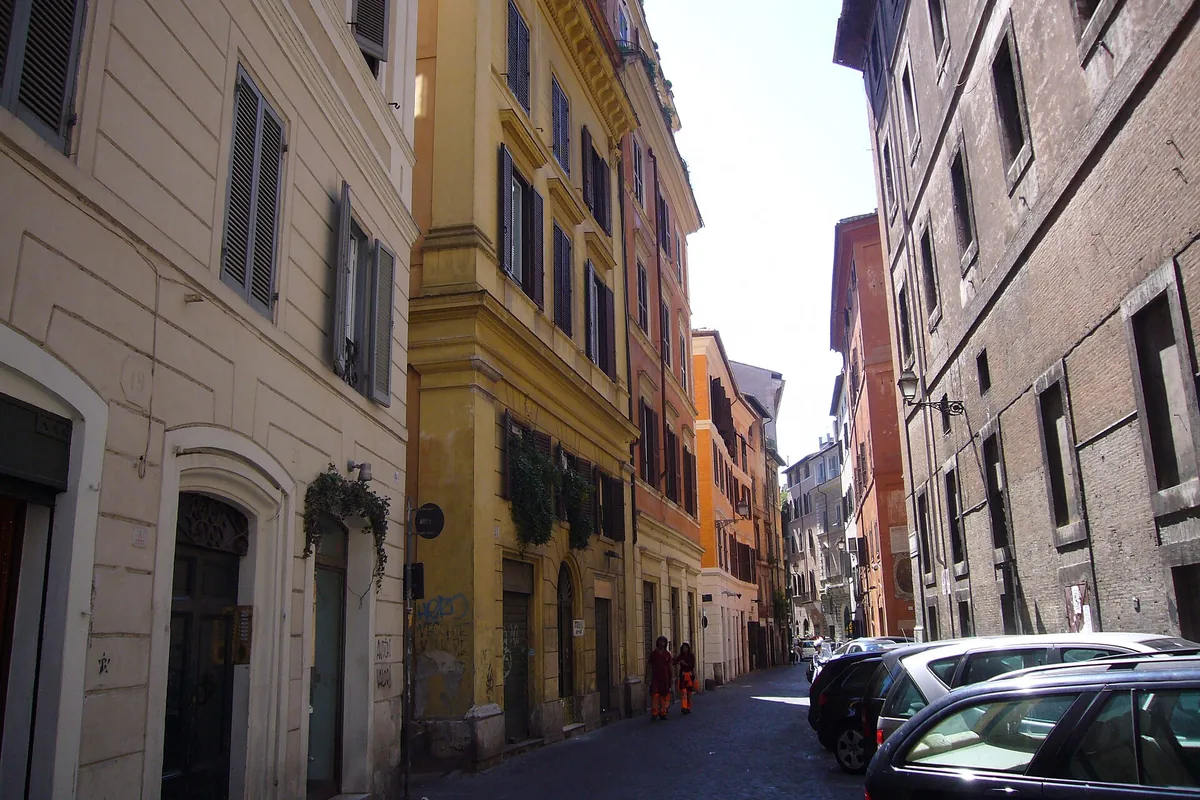
Central Rome is walkable, and the historic cafes near the Pantheon, Piazza Navona and the Spanish Steps are a short stroll from each other. Between them, metro lines A, B and C reach Termini, the Spanish Steps, Ottaviano and Pigneto, and buses and trams fill in the gaps. Check current ticket options on the ATAC website, the city’s public transport operator, and validate your ticket as instructed. For longer distances, a taxi is possible, but traffic can slow it down, so walking is often quicker.
Budget guidance
Cheap: An espresso or cappuccino at the bar, with a pastry, is one of the cheapest breakfasts in Europe. Standing at the counter keeps the cost low.
Mid-range: A brunch or a sit-down coffee and pastry at a cafe such as Barnum, Necci or Roscioli.
Special occasion: An afternoon tea at Babington’s or a table at Caffè Canova Tadolini, where you pay for the setting as well as the food and drink. Always check table prices first.
Frequently Asked Questions
Where can I find the best coffee in Rome?
Sant’Eustachio Il Caffè and Tazza d’Oro, both near the Pantheon, are the most famous choices for classic espresso. For specialty coffee, try Faro.
Is it cheaper to drink coffee standing at the bar in Rome?
Yes. Many bars have two prices, one at the counter and a higher one at a table. Standing is the cheapest and most local way to drink coffee.
Can I order a cappuccino after breakfast in Rome?
You can, and no one will stop you, though many Italians drink cappuccino only in the morning. Sources disagree on how strict the custom is, so follow your own taste.
What is the oldest cafe in Rome?
Antico Caffè Greco on Via dei Condotti, founded in 1760, is usually described as the oldest, but it has been closed since October 2025 after a legal dispute over its lease, and no reopening date had been announced when this guide was updated. Of the places in this guide, Babington’s Tea Room by the Spanish Steps, opened in 1893, has the longest history.
What should I order for breakfast in a Roman cafe?
A cappuccino with a cornetto or a maritozzo is the classic choice. Pizza bianca is another popular morning bite.
Do Roman cafes take card payments?
Most do, but small bars may prefer cash for low amounts, so carry some coins. Check before ordering if you are unsure.
Discover More of Rome and Italy
For sunset drinks after a day of espresso stops, see our pick of the best rooftop bars in Rome with views over the domes. Heading north to Tuscany next? Compare the coffee scene with our guide to the best cafes in Florence, and plan your meals there with the best places to eat in Florence.
Featured image: Photo by Jean-Pol GRANDMONT, CC BY 3.0, cropped, via Wikimedia Commons