Last updated: November 2026
The best gelato in Venice is made in small shops that churn fresh batches from real ingredients, and a handful of them are worth planning a walk around. Venice is not famous for gelato in the way Rome or Florence are, so it pays to know which counters are the real thing and which are tourist traps near the main sights.
Our list covers every part of the city, from San Marco and Rialto to Dorsoduro, Cannaregio and quieter San Polo, so you can fit a scoop into almost any route. The pairing of a short canal-side walk and a cone is half the pleasure. We have also built a free printable 3-day itinerary that links the shops into easy routes. For official visitor information, see the city’s Venezia Unica site, and if you are planning your meals around the sights, our guide to the best places to eat in Venice covers everything from cicchetti bars to sit-down dinners.
Quick answer: Where is the best gelato in Venice? The best gelato in Venice is at Gelatoteca Suso, Gelateria Alaska, Gelateria Il Doge, Gelato di Natura, Gelateria Nico, Gelateria Paolin, La Mela Verde, Bacaro del Gelato, Gelateria Ca’ d’Oro and Millevoglie da Tarcisio. For a first visit, Suso is the best for bold flavours and Nico is the best for a classic treat with a view.
Free printable itinerary
Planning a trip? Download our Suggested Gelato Plans for 1, 2 or 3 Days as a PDF: the day-by-day plan plus all 10 places with directions and map links. Print it or keep it on your phone.
Quick comparison: gelato shops in Venice
| # | Gelateria | Area | Best for | Price tier |
|---|---|---|---|---|
| 1 | Gelatoteca Suso | San Marco, near Rialto | Bold, creative flavours | Mid-range |
| 2 | Gelateria Alaska | Santa Croce | Unusual vegetable and seasonal flavours | Mid-range |
| 3 | Gelateria Il Doge | Dorsoduro | Classic flavours and dietary options | Budget to mid-range |
| 4 | Gelato di Natura | Santa Croce and other branches | Natural, seasonal flavours | Mid-range |
| 5 | Gelateria Nico | Zattere, Dorsoduro | A waterfront terrace and gianduiotto | Mid-range |
| 6 | Gelateria Paolin | Campo Santo Stefano, San Marco | A traditional piazza stop | Mid-range to premium |
| 7 | La Mela Verde | Castello | Fruit flavours near San Marco | Budget to mid-range |
| 8 | Bacaro del Gelato | Cannaregio | A small canal-side shop | Budget to mid-range |
| 9 | Gelateria Ca’ d’Oro | Strada Nova, Cannaregio | A pistachio stop on a busy route | Budget to mid-range |
| 10 | Millevoglie da Tarcisio | San Polo | Takeaway near the Frari | Budget |
1. Gelatoteca Suso
Gelatoteca Suso is the shop many visitors and guides name first when asked for the best gelato in Venice. It sits in a narrow lane between the Rialto and San Marco in the San Marco district, on Calle della Bissa, so you will often see the queue before you see the counter.
What sets Suso apart is the boldness of its flavours. Reviewers highlight combinations such as salted pistachio with dark chocolate and rich chocolate blends with fruit, and the shop gives some of its flavours names rather than plain descriptions. The texture is dense and creamy, the kind that holds on the cone as you walk through the lanes.
Because the shop is so well known, the line moves in waves. Going mid-morning or on a cooler evening usually means a shorter wait, and winter visits tend to be calmer, although some summer fruit flavours may not be available out of season. Take your cone and walk towards the Rialto Bridge, which is only a few minutes away, and find a spot on a quiet fondamenta to eat it, not on the steps of a crowded bridge.
Opening hours differ between listings, so check the current schedule on the day. Prices are in the mid-range for Venice, which is normal in a city where everything arrives by boat or on foot.
- How to get there: On foot from the Rialto Bridge or San Marco, following the yellow signs, or by vaporetto to Rialto and then a short walk.
- How long to spend: About 15 to 30 minutes, longer if the queue is long.
- Best time to go: Mid-morning, mid-afternoon or a cooler evening, to avoid the longest lines.
- Tip: Ask for two flavours that contrast, such as a nutty one and a fruit one, and ask staff what is freshest.
2. Gelateria Alaska
Gelateria Alaska in Santa Croce is the shop to visit if you want to taste something you cannot get elsewhere. It stands on Calle Larga dei Bari, a short walk from the railway station and Piazzale Roma, in a quieter, more residential part of the city.
The flavours here are adventurous and seasonal. Guides mention artichoke, fig, ginger, celery and basil alongside more traditional nuts and fruit, and the shop is known for a very natural taste with strong ingredient flavours rather than sugary sweetness. Some vegetable and herb flavours suit vegans, but check the labels at the counter if you have allergies or dietary needs.
Alaska is a small shop, and it remains a staple in most roundups of the city’s best gelato. Opening days and hours vary between listings, so check before you go.
Alaska makes an easy first or last stop if you arrive at or leave from the station, and it pairs well with a walk along the Grand Canal fondamente nearby, or towards the Jewish Ghetto in Cannaregio. A small taste before you pick often helps with the more unusual flavours.
- How to get there: About 10 minutes on foot from Venezia Santa Lucia station or Piazzale Roma.
- How long to spend: About 20 minutes.
- Best time to go: Afternoons and early evenings, when the full range of fresh flavours is out.
- Tip: Try one unusual flavour and one safe classic in the same cup, so you can compare.
3. Gelateria Il Doge
Gelateria Il Doge is a dependable crowd-pleaser at the southern end of Campo Santa Margherita. The campo is the social heart of Dorsoduro, filled with students from nearby Ca’ Foscari university, so it is a lively place to eat a cone while watching the square.
Several guides call Il Doge a top pick, and one notes that it offers better gelato, and better value, than some competitors on the same square. Reviewers mention pistachio, hazelnut, cherry, fior di latte and a chocolate and orange blend that the shop is known for. The flavours are mostly classic, made in-house, and easy to like.
It is also reported to offer dairy-free, vegan and gluten-free choices, which is helpful for groups with different needs. Reports on how many vegan flavours are available vary and seem to change with the season, so check the counter on the day. Check the shop’s own website for current details before you go.
Opinions on the shop differ. A few reviewers say it is worth a stop if you are nearby but not worth a long detour, which is fair. Combine it with a walk past the Scuola Grande dei Carmini and the Zattere to make the most of Dorsoduro. A second branch is reported near Campo San Tomà in San Polo.
- How to get there: On foot from Ca’ Rezzonico or San Tomà vaporetto stops, or about 15 minutes from the Accademia bridge.
- How long to spend: About 20 minutes, longer if you stay in the campo.
- Best time to go: Late morning or early evening, when the campo is busy but not packed.
- Tip: Check the counter for dairy-free flavours if you need them, as the choice can vary by season.
4. Gelato di Natura
Gelato di Natura is the choice if you want natural, seasonal flavours with a simple, ingredient-led approach. It is a group of shops rather than a single counter, and one of the best known sits on Campo San Giacomo dall’Orio in Santa Croce.
Guides describe the flavours as natural and seasonal, with an emphasis on quality ingredients, and several roundups place it near the top of their lists. Sources disagree about how many branches there are and when the business began, so check the shop map or a current listing for the branch nearest you.
Campo San Giacomo dall’Orio is a relaxed square away from the main tourist flow, with a church, benches and trees, so it is one of the nicest places in the city to eat a cone. The area feels like a real neighbourhood, with locals sitting out in the afternoon and children playing in the campo.
Expect fruit sorbets to follow the seasons, with the fullest range in warmer months. In winter the choice leans to nuts, chocolate and cream flavours. That is a feature of real artisan gelato, not a flaw.
If you plan a day in San Polo and Santa Croce, this makes a natural pause between the Frari and the Rialto market.
- How to get there: A short walk from the San Stae or Riva de Biasio vaporetto stops, or about 15 minutes on foot from the railway station.
- How long to spend: About 20 to 30 minutes, including time in the campo.
- Best time to go: Afternoon, when the square is calm.
- Tip: Choose a seasonal fruit flavour for the freshest taste, and check which branch is closest.
5. Gelateria Nico
Gelateria Nico is a Venetian institution on the Zattere waterfront, best known for its gianduiotto and its sunny terrace. It is in Dorsoduro, on the long promenade facing the Giudecca canal, and has served visitors and locals for generations. Sources date it to the mid-1930s, so we have left the exact year out.
The signature order is the gianduiotto, a thick block of chocolate and hazelnut gelato that is often served with whipped cream. It is rich, indulgent and more of a dessert than a snack. If you prefer something lighter, the fruit flavours and classic cream flavours are also popular.
The big draw is the setting. Nico has one of the larger outdoor terraces of its type, with views across the water to the Giudecca and the Redentore church. A seat on the terrace costs more than a cone to go, as in most Italian cafes, so check the price list if you want to sit down.
Nico works well after a morning at the Accademia or the Peggy Guggenheim Collection, or as a stop on a long walk along the Zattere. In summer the terrace fills up quickly, so go earlier or later than the usual afternoon peak.
- How to get there: Vaporetto to Zattere, then a short walk along the waterfront.
- How long to spend: 30 to 45 minutes if you sit on the terrace.
- Best time to go: Late afternoon for the light on the Giudecca, or a mild morning.
- Tip: Order your gianduiotto to go and eat it on the Zattere promenade if the terrace is full or you want to save money.
6. Gelateria Paolin
Gelateria Paolin is a traditional piazza gelateria on Campo Santo Stefano. The campo is one of the most pleasant squares in the city, wide and open, between San Marco and Dorsoduro, with a long history of outdoor cafes.
Paolin has a good reputation among guides and a long history, though sources give different founding dates, so we have not included one. The shop is a classic Venetian gelato counter with a range of traditional flavours, and it is a good place to try a straightforward cone of hazelnut, pistachio or lemon.
One guide notes that take-out prices are on the high side, which reflects the location. Sitting in the campo with a cup is a pleasant way to rest your feet, and the scene is very Venetian, with locals crossing the square and tourists heading to the Accademia bridge. Compare it with Suso and Il Doge to get a feel for the different styles.
The square also has a leaning bell tower, the Campanile di Santo Stefano, which is worth a look while you eat. In winter the shop is quieter, and the square is nicer in the afternoon sun.
Paolin works well as a rest stop between San Marco and the Accademia, when you are walking from one side of the Grand Canal to the other and want something sweet.
- How to get there: Vaporetto to Accademia or San Samuele, or about 10 minutes on foot from St Mark’s Square.
- How long to spend: About 20 to 30 minutes.
- Best time to go: Mid-afternoon, when the campo is in the sun.
- Tip: Go for a classic flavour, and check the price list before you sit in the campo.
7. La Mela Verde
La Mela Verde is a small artisan shop in Castello known for its fruit flavours and its namesake green apple gelato. It sits on Fondamenta de l’Osmarin, a quiet canal-side street a few minutes from St Mark’s Square, so it is a useful alternative to the busier counters nearby.
Guides describe the gelato as creamy and made with natural ingredients, with fruit flavours a particular strength. The green apple is the one that gives the shop its name, and it is a fresh, tangy choice on a warm day. Reviewers also mention a good range of creamy flavours such as hazelnut and pistachio.
The street is a good place to eat your gelato: it runs along a canal and the walk leads on to the Riva degli Schiavoni, the waterfront promenade, within a few minutes. This part of Castello gets less foot traffic than the main route between San Marco and Rialto.
Hours vary between listings, with some giving very late closing times. Check the current schedule, particularly in winter when many shops shorten their day.
La Mela Verde is the right choice when you are near St Mark’s Square and want something better than the shops with fixed prices and big signs in the main tourist streets. Fruit sorbets are lighter and suit warm weather well.
- How to get there: About 5 minutes on foot from St Mark’s Square, or a short walk from the San Zaccaria vaporetto stop.
- How long to spend: About 15 to 20 minutes.
- Best time to go: Afternoon or early evening in warm weather.
- Tip: Try the green apple in a small cup with a creamy flavour for balance.
8. Bacaro del Gelato
Bacaro del Gelato is a small artisan shop in Cannaregio, loved by those who prefer a short, natural menu. It is on Fondamenta della Misericordia, a long canal-side street lined with bars and restaurants, in a part of the city that locals use in the evening.
Guides praise the natural flavours and the small-batch approach, and one calls it a strong contender for the best gelato in Venice. The shop is small, so there is no big counter display, and the focus is on a limited number of flavours made with natural ingredients.
The street is a good place for a stroll. Fondamenta della Misericordia is a long, wide quay, and you can eat your gelato by the water and look at the boats. It is close to the Sacca della Misericordia, a large, quiet basin on the northern side of the city, and a short walk from the Ghetto.
Opening hours given in different listings do not agree, so check before you go. This is a good reason to have a back-up in mind, such as Ca’ d’Oro on Strada Nova, which is a short walk away.
Bacaro del Gelato suits an evening walk through Cannaregio, perhaps after an aperitivo along the Ormesini canal.
- How to get there: About 10 minutes on foot from the Ca’ d’Oro vaporetto stop, or from the Madonna dell’Orto stop.
- How long to spend: About 20 minutes.
- Best time to go: Early evening, as part of a walk through Cannaregio.
- Tip: Check that the shop is open on the day you go, as listed hours differ between sources.
9. Gelateria Ca’ d’Oro
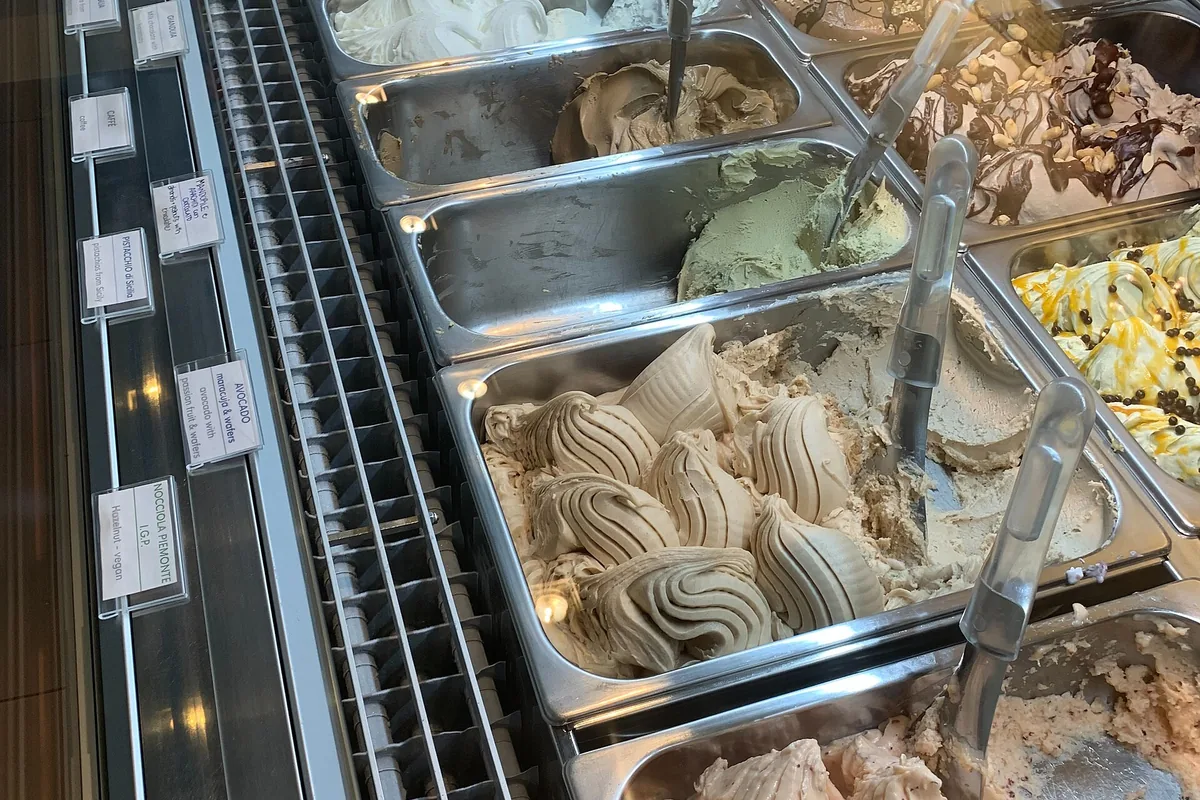
Gelateria Ca’ d’Oro is a long-running shop on Strada Nova, the busy main street of Cannaregio. It stands close to the Ca’ d’Oro palace, so it is an easy addition to a visit to the palace or the Rialto market, and it is a good stop for visitors walking between the railway station and Rialto.
Guides recommend its pistachio in particular, and the shop has a large counter with a wide range of flavours. It also serves crepes, sorbets and milkshakes, so it suits groups where not everyone wants gelato, and families with children who want a choice.
The setting is practical rather than romantic. Strada Nova is a busy street and the shop is a handy refuelling stop, not a destination for a long sit. It is a good place to pick up a cone and continue along the route towards Rialto.
Hours differ widely between sources, with one suggesting afternoon openings in the colder months, so check the day’s opening. As with all Venetian shops, the choice may be smaller in winter, when many places run on shorter hours and reduced menus.
If you have already tried Suso and Alaska, Ca’ d’Oro is a useful comparison, as it shows a more traditional, wide-menu style of gelateria. Many people in Venice use it as a convenient snack stop between sights.
- How to get there: Vaporetto to Ca’ d’Oro, then a short walk along Strada Nova, or about 15 minutes on foot from the railway station.
- How long to spend: About 15 minutes.
- Best time to go: Afternoon, when you are walking between the station and Rialto.
- Tip: Try the pistachio first, as guides single it out as the best flavour here.
10. Millevoglie da Tarcisio
Millevoglie da Tarcisio is a small takeaway gelateria in San Polo that locals and well-informed visitors use. It is on Salizada San Rocco, in the quiet area between the Frari Basilica and the Scuola Grande di San Rocco, two of the most important art stops in the city.
The listings we found describe a good range of flavours, both creamy custard types and fruit preparations, made with natural ingredients. Because coverage is thinner than for the big names, we would treat it as a local pick rather than a headline attraction, and it is one to try if you are in the area.
The best way to use it is as a sweet pause after the Frari and the Scuola Grande di San Rocco, where Tintoretto’s paintings can leave you tired in a good way. The nearby Campo San Rocco is a pleasant place to sit if the weather is good.
It is a takeaway counter, so do not expect seats. Hours and the full flavour list are not well documented online, so ask at the counter and check the opening on the day.
San Polo is less crowded than San Marco, and you can often eat your cone without a queue. That makes it a good choice for families or anyone who wants a quieter experience.
- How to get there: About 5 minutes on foot from the San Tomà vaporetto stop, or from the Frari church.
- How long to spend: About 15 minutes.
- Best time to go: After visiting the Frari or the Scuola Grande di San Rocco, in the afternoon.
- Tip: Check the opening hours on the day, as this is a small shop with limited online information.
How to Spot Good Gelato in Venice
Good gelato has a few signs you can check in seconds. Colours should look natural, so very bright green pistachio or yellow banana is a warning sign. Real pistachio tends to be a muted brownish green, and banana is greyish.
Look at how the gelato is stored. Shops that keep it in covered metal tubs, not piled high in fluffy mounds, tend to be more artisan. A short menu with seasonal fruit is a good sign, and a very long list of identical flavours to chains is not. The same flavours and labels in several shops usually mean a mass-produced base.
Texture matters too. Gelato is denser than ice cream because less air is whipped in. Many Italians prefer a cup to a cone because the cone can mask the flavour, and a small cup with two flavours gives a better test of a new shop.
Venetian Gelato Flavours to Look For
- Pistachio: The classic test of any gelateria, which should taste of nuts, not sugar.
- Fior di latte: A pure milk flavour, plain but revealing.
- Gianduiotto: Chocolate and hazelnut, a Piedmontese classic closely tied to Nico.
- Nocciola: Hazelnut, a staple at nearly every counter.
- Stracciatella: Milk gelato with fine chocolate flakes.
- Seasonal sorbetto: Lemon, fig, melon or berries, depending on the time of year.
- Savoury or vegetable flavours: Artichoke, celery or basil, mostly at Alaska.
Suggested Gelato Plans for 1, 2 or 3 Days
Day 1: San Marco, Castello and Rialto
Start near St Mark’s Square with La Mela Verde on Fondamenta de l’Osmarin, then walk through the lanes towards the Rialto. In the afternoon, join the line at Suso on Calle della Bissa and take your cone towards the Rialto Bridge. Finish with Campo Santo Stefano and Paolin if you have room, or leave it for another day.
Day 2: Dorsoduro and San Polo
Begin at Campo Santa Margherita with Il Doge, then wander along the Zattere to Nico for a gianduiotto on the terrace. After lunch, cross to San Polo and visit the Frari and the Scuola Grande di San Rocco, then stop at Millevoglie da Tarcisio on the way. The walks are short, but the area has many bridges.
Day 3: Santa Croce and Cannaregio
Start in Santa Croce with Gelateria Alaska, near the railway station, then walk to Campo San Giacomo dall’Orio for Gelato di Natura. Continue into Cannaregio along Strada Nova, passing Ca’ d’Oro, and finish with Bacaro del Gelato on Fondamenta della Misericordia in the evening.
Getting Around Venice for Gelato
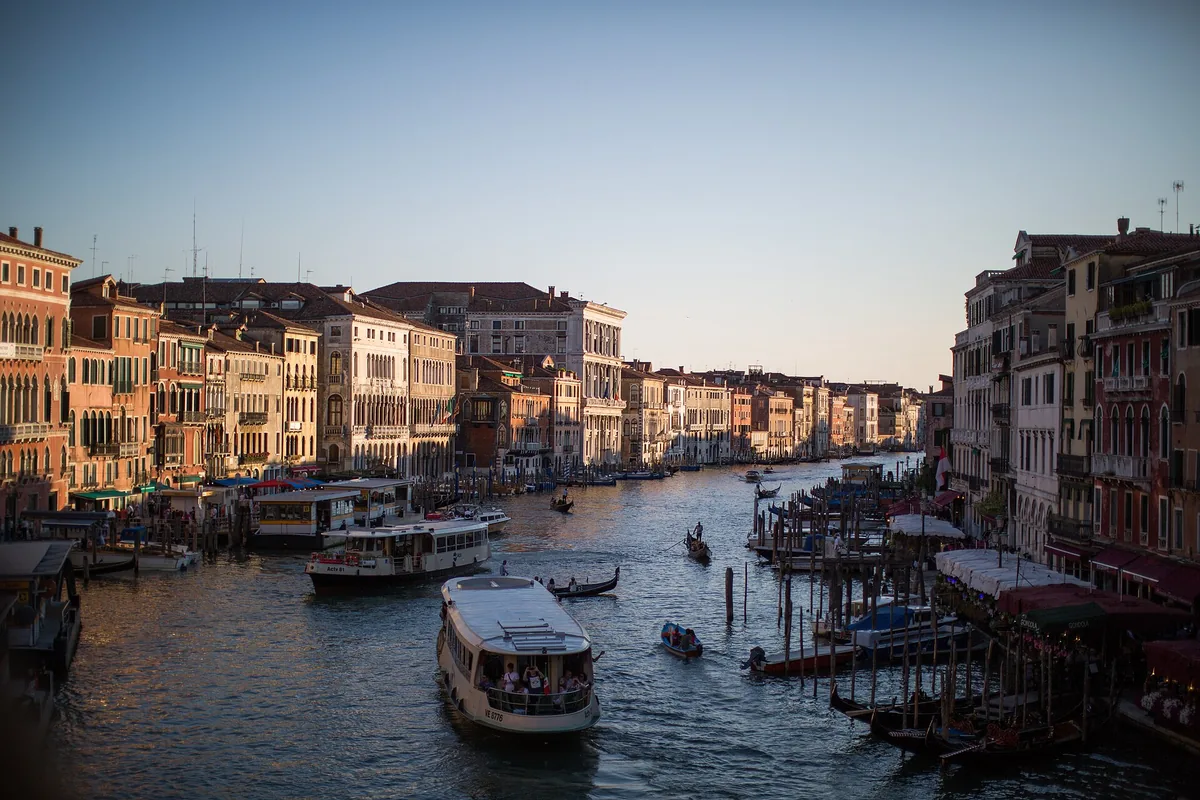
Venice has no cars, so you will walk between almost all of these shops, with a few vaporetto rides to save time. The main water bus lines run along the Grand Canal, and the official operator ACTV publishes current routes and fares. Check them before you travel, as services change by season.
Allow more time than the map suggests, as lanes are narrow and bridges add steps. Google Maps works well for walking, but signs painted on walls point to the Rialto, San Marco, Ferrovia and Accademia. Many gelato shops have only a few tables or none, so plan to eat while walking or find a bench. Local rules discourage sitting on bridges and steps to eat, so use a fondamenta or a campo instead.
Where to Stay for Gelato Lovers
- San Marco and Castello: Close to La Mela Verde, Suso and Paolin, and ideal for first-time visitors, though busy and more expensive.
- Dorsoduro: A relaxed, student-friendly area near Il Doge and Nico, with good walking routes.
- Santa Croce and San Polo: Quieter and good value, close to Alaska, Gelato di Natura and Millevoglie da Tarcisio.
- Cannaregio: A residential feel and canal-side walks, with Bacaro del Gelato and Ca’ d’Oro nearby, and easy access to the station.
Budget Guidance
- Budget: A small cone or cup from a neighbourhood shop such as Millevoglie da Tarcisio or La Mela Verde, eaten as you walk.
- Mid-range: A larger serving at Suso, Alaska or Il Doge, with a couple of flavours.
- Treat yourself: A seat on the terrace at Nico, with a gianduiotto and a view, or a cup in a campo with a coffee.
Prices change, so check the posted price list at each counter. Sitting down usually costs more than taking a cone away.
Tips for Eating Gelato in Venice
If Italy’s street-food culture is what draws you, our guide to the best street food in Rome shows how the same snack-on-the-move habit works in the capital.
- Try smaller servings of several flavours, not a single large cup.
- Carry water, as walking in the heat can be tiring.
- Expect shorter opening hours and fewer fruit flavours between late autumn and early spring.
- Always check the posted price before you order near St Mark’s Square.
- Bins are limited, so keep your napkin until you find one.
Frequently Asked Questions
Where is the best gelato in Venice?
Gelatoteca Suso, near the Rialto, is the shop most often named as the best in Venice, and Gelateria Alaska and Gelato di Natura are close behind. Tastes differ, so trying two or three is the best test.
Which Venice gelato shops are best for unusual flavours?
Gelateria Alaska in Santa Croce is known for vegetable and herb flavours such as artichoke, ginger and basil. Suso is the best for bold combinations such as salted pistachio with dark chocolate.
Is there good dairy-free or vegan gelato in Venice?
Yes. Gelateria Il Doge is reported to offer dairy-free, vegan and gluten-free flavours, and many fruit sorbets are naturally dairy-free. The range changes by season, so check the counter and ask staff about ingredients.
How much should gelato cost in Venice?
Prices are higher than in many Italian cities, and shops near St Mark’s Square tend to cost more. Check the posted price list before you order, and expect a premium for sitting in a campo or on a terrace.
Can you eat gelato on the bridges in Venice?
It is best not to sit on bridges or steps, as local rules and courtesy discourage it. Eat your gelato as you walk, or find a fondamenta, a campo or a bench.
Are Venice gelato shops open in winter?
Most are, but many shorten their hours and offer fewer fruit flavours between late autumn and early spring. Check the shop’s current opening hours before you go.
Plan Your Venice Gelato Trip
Gelato is one of the simplest pleasures of Venice, and each of these shops gives you a reason to explore a different corner of the city. If you have time for more than the lagoon, read our guide to the best day trips from Venice for easy escapes to Verona, Padua and Treviso, and see our pick of Italy’s best hidden gems for more places to eat your way through. Download the free printable itinerary, pick the day that suits your route, and check opening hours before you set out.
Featured image: Photo by This Photo was taken by Wolfgang Moroder. Feel free to use my photos, but please, CC BY-SA 3.0, cropped, via Wikimedia Commons