Last updated: October 2026
Most first trips to Italy follow the same line from Venice to Florence to Rome, and for good reason. But the country is full of towns, villages and landscapes that are just as striking and far less crowded, and several of them are easier to reach than their reputation suggests. This guide picks ten of the best hidden gems in Italy, spread from the Alps to Sicily.
If you want the best hidden gems in Italy, start with Matera for its cave dwellings, Orvieto and Civita di Bagnoregio for a classic hill-town trip from Rome, and Lecce or Ortigia for southern baroque and ancient stone. That mix gives you history, landscape and food without queueing at the headline sights.
Each of the ten places has a practical box, and after the list you will find a guide to choosing between them, a plan for one, two or three trips, where to stay, how to get around and a budget guide. For national trip planning, the official Italia.it tourism site is a useful starting point. Timetables, opening days and access rules change, so check them before you go, and anything this guide could not confirm is marked “check before you go”. Rome, Florence and the Amalfi Coast already have their own guides on this site, from food to nightlife, so they are left out here. If Florence is on your route too, plan your meals with our guide to the best places to eat in Florence.
Quick answer: What are the best hidden gems in Italy? For the best mix of culture and atmosphere, visit Matera, Orvieto, Civita di Bagnoregio, Urbino, Lecce, Spoleto, Bergamo and Ortigia. For mountains and coast, add Castelmezzano in Basilicata and Portovenere in Liguria.
Quick comparison: best hidden gems in Italy
| Place | Region | Best for | Getting there |
|---|---|---|---|
| Matera | Basilicata | Cave dwellings and sunrise views | Train or bus from Bari, or car |
| Orvieto | Umbria | A cliff-top old town | Train from Rome |
| Civita di Bagnoregio | Lazio | A village on a crumbling cliff | Bus or car via Orvieto |
| Urbino | Marche | Renaissance art | Car or bus |
| Lecce | Puglia | Southern baroque | Train or car |
| Castelmezzano | Basilicata | Mountain scenery and a zip line | Car |
| Portovenere | Liguria | A harbour near the Cinque Terre | Bus or ferry from La Spezia |
| Spoleto | Umbria | A medieval bridge and festival | Train from Rome with a bus link |
| Bergamo Città Alta | Lombardy | Walled hilltop old town | Funicular from the lower town |
| Ortigia | Sicily | Ancient Greek ruins and a seafront old town | Train or bus to Syracuse |
1. Matera
Matera is a city of cave dwellings and stone churches, carved into a ravine in Basilicata, and it feels unlike anywhere else in Italy. Its old districts, the Sassi, have been a UNESCO World Heritage Site since 1993, and many of the old caves have been turned into hotels, restaurants and cafes.
The best way to see Matera is on foot. Wander the stepped lanes of Sasso Barisano and Sasso Caveoso, climb to the cathedral for a view over the ravine, and look for the rock churches cut into the cliff on the far side. Many of these have faded frescoes, and some can be visited with a local guide. For the classic view, walk to a viewpoint at dawn or dusk, when the stone changes colour.
The Sassi were once a place of poverty and have been reborn as one of southern Italy’s most atmospheric destinations. Because it is a hill city with many stairs, it is a lot of walking, so wear comfortable shoes and take your time. The city is also known for its bread and its local dishes, which come from the surrounding Basilicata countryside.
Getting there takes planning. Ferrovie Appulo Lucane trains run from Bari Centrale via Altamura to Matera, but engineering works sometimes replace part of the line with buses, so check the Ferrovie Appulo Lucane timetable before you go. Matera Centrale station is a short walk from the edge of the Sassi, though reaching the lower lanes means many steps, and taxis are available. Driving from Bari takes around an hour.
- How to get there: Train or bus from Bari, or drive in about an hour, then walk or take a taxi from the station.
- How long to spend: Two days is ideal, one at a minimum.
- Best time to go: Spring or autumn, and early morning or evening for the best light.
- Tip: Wear flat, grippy shoes, as the lanes are steep and the stone can be slippery.
2. Orvieto
Orvieto is a town built on a volcanic rock plateau in Umbria, and it is one of the easiest hidden gems to reach from Rome. Its main sights are a Gothic cathedral with a glowing mosaic facade, a network of tunnels carved into the soft rock, and a deep well with a double staircase.
The Duomo dates from the late thirteenth century and is the main reason to visit. The facade is covered in mosaics that catch the sun, and the museum attached to the cathedral displays treasures from its construction. Orvieto’s underground tours show Etruscan cisterns, medieval pigeon lofts and tunnels cut into the volcanic stone, and they make a good choice on a rainy day.
The Pozzo di San Patrizio is a sixteenth-century well with two spiral staircases, built to supply the town with water during sieges. It was commissioned by Pope Clement VII after the Sack of Rome in 1527, each staircase has 248 steps, and the shaft is around 54 metres deep. The double design meant donkeys could go down and up without meeting.
The town is small enough to see in a day, but it is a good base for exploring the surrounding countryside and for a trip to Civita di Bagnoregio. A funicular normally links the railway station to the old town, but it has been closed for repairs since June 2026 with no reopening date set, and Busitalia shuttle buses run between the station and the old town in its place. Trenitalia sells a combined train and funicular ticket called Orvieto Link, and local buses connect the station, the well and the cathedral square, so check the current situation before you go. Orvieto is also known for its white wine and its simple, hearty food, so plan lunch at a local trattoria.
- How to get there: Train from Rome, then the funicular (or the replacement shuttle bus while it is closed) to the old town.
- How long to spend: A full day, or two with Civita di Bagnoregio.
- Best time to go: Spring or autumn, with a weekday visit to avoid day-trip crowds.
- Tip: Check whether the funicular has reopened before you travel, and follow the signs to the shuttle bus outside the station if it has not.
3. Civita di Bagnoregio
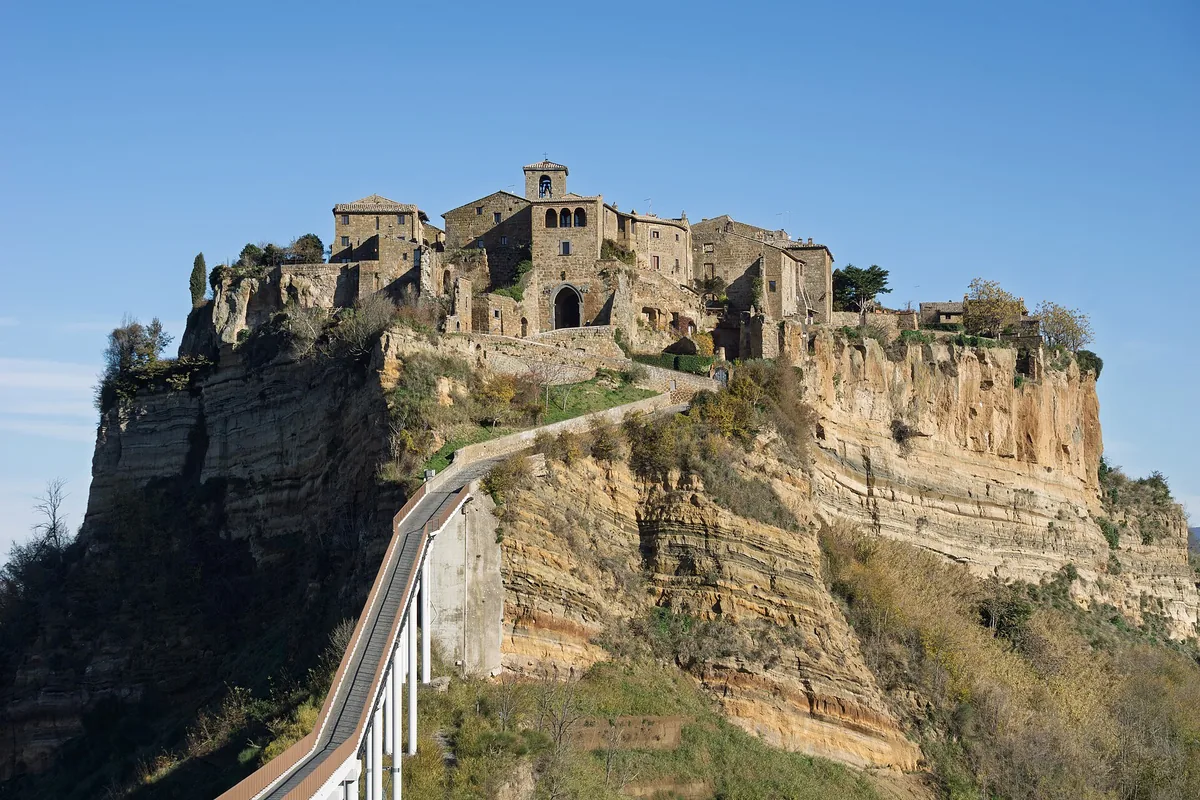
Civita di Bagnoregio is a tiny village perched on a pillar of crumbling rock, reached only by a long footbridge, and it is sometimes called the dying town. The cliff is eroding, which has left the village increasingly isolated, and a handful of people still live there.
The walk across the bridge is the highlight, because the village appears to float above a landscape of ravines and fields. Inside, there is a small main square, a church and narrow lanes, and the visit takes an hour or two. Most of the interest is the setting rather than any single sight, so it is a place for photographs, a coffee and a slow walk.
A small entry fee is charged to cross the bridge, and prices can change, so check before you go. From Orvieto, a Cotral regional bus runs to Bagnoregio and takes under an hour, with a walk of around twenty minutes or a small shuttle from there to the footbridge. Services are limited and have usually not run on Sundays, so check the Cotral website before you go. Driving takes about half an hour from Orvieto.
Civita is busiest in the middle of the day in summer, so early morning and late afternoon are quieter. It pairs naturally with Orvieto, and many visitors combine them over two days. If you have a car, Bagnoregio also has places to eat with views of the village.
- How to get there: Bus from Orvieto to Bagnoregio, then walk or shuttle to the footbridge, or drive.
- How long to spend: One to two hours in the village.
- Best time to go: Early morning or late afternoon, outside the summer midday rush.
- Tip: Check the bus timetable before you go, as Sunday services have usually not run.
4. Urbino
Urbino is a Renaissance hill town in the Marche, known for its grand ducal palace and its link to the painter Raphael. It is far from the main tourist routes, which is part of its charm, and it has a lively atmosphere because of its university.
The Ducal Palace is the main sight. It was built in the fifteenth century under Federico da Montefeltro, who shaped the palace and the town through his love of art and architecture. The palace houses the national gallery of the Marche, which has important Renaissance paintings, and the building itself is worth seeing for its courtyards and rooms.
Urbino is also a good place to wander. The old town sits on steep hills, with brick lanes, small squares and views over the countryside, and the Raphael connection gives you a reason to look for his birthplace museum.
Getting there is the hard part. Flying to Ancona and hiring a car is often the simplest option, and Urbino has no railway station, so buses are the usual public transport option. Check current timetables before you go. Because of the hills, expect steep walks and wear comfortable shoes. The surrounding region also has beaches on the Adriatic coast, so Urbino fits well into a longer trip.
- How to get there: Hire a car from Ancona, or take a bus from the coast, and check timetables first.
- How long to spend: A full day, or an overnight stay.
- Best time to go: Spring and autumn, when walking is comfortable.
- Tip: Visit the Ducal Palace early, before tour groups arrive.
5. Lecce
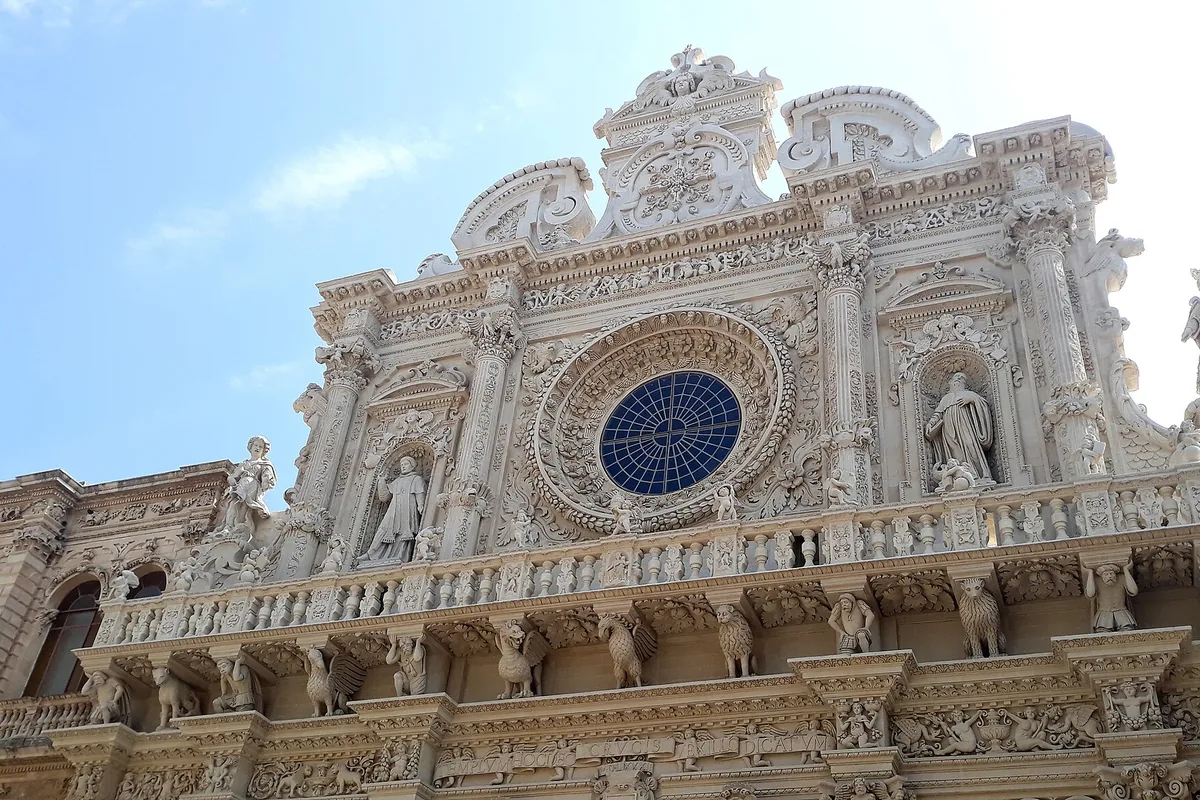
Lecce is a honey-coloured baroque city in Puglia, often called the Florence of the South, and it is far calmer than the better-known cities of the north. Its buildings are made of a soft local stone that is easy to carve, which is why the facades are so ornate.
The Basilica di Santa Croce is the showpiece, with a facade covered in carved saints, scrolls, animals and cherubs, and a large rose window. Guides describe it as the most striking church in the city, and it took well over a century to build, from 1549 to the late seventeenth century. The Piazza del Duomo is framed by golden buildings, and the cathedral was remodelled in the baroque style in the seventeenth century by the local architect Giuseppe Zimbalo.
Lecce also has Roman remains. A partly excavated Roman amphitheatre sits in the main square, and a smaller Roman theatre is a short walk away. Together with the baroque churches, they show how many layers of history the city has. The old town is compact and easy to explore on foot, with lively squares and good places to eat, including pasticciotto, a local custard pastry.
Lecce works well as a base for southern Puglia, including beaches on both coasts and nearby towns. It pairs well with Matera on a road trip through the south. Many visitors arrive by train or car, and the old town is best explored on foot, so choose a hotel close to the centre.
- How to get there: Train or car from Bari or Brindisi, then walk the old town.
- How long to spend: One to two days.
- Best time to go: Spring or autumn, to avoid the peak summer heat.
- Tip: Try a pasticciotto for breakfast, and visit the churches in the morning before it gets hot.
6. Castelmezzano
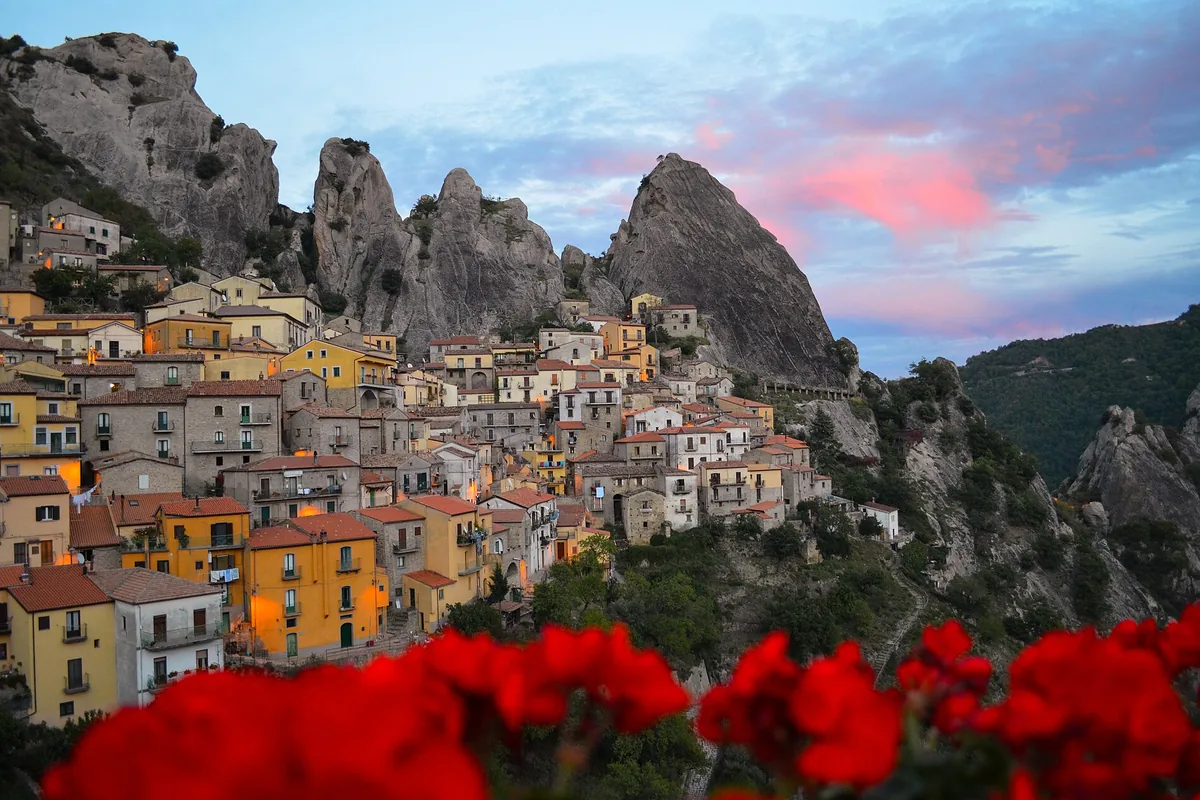
Castelmezzano is a village of stone houses clinging to a rock wall in the Lucanian Dolomites in Basilicata, and it is one of the most dramatic places in the south. Its twin village, Pietrapertosa, sits across the valley, and the two are connected by a steel-cable zip line called the Volo dell’Angelo, or Flight of the Angel.
The zip line is the draw for thrill-seekers. Riders are harnessed in a horizontal position and fly across the valley between the villages. Italia.it’s guide to the zip line says you can choose which village to start from, and a shuttle bus takes you back to where you began. Getting to the launch points involves a short uphill hike on rocky paths, so wear sturdy shoes. Booking details and conditions are on the operator’s website, so check them before you go.
If the zip line is not for you, the villages are worth visiting for their scenery alone. Castelmezzano’s lanes and stairs lead to viewpoints over jagged peaks, and Pietrapertosa has a ruined castle and steep, narrow streets. There are walking trails in the surrounding hills, including some that link the two villages.
This is a place that really needs a car. From Potenza, the usual route follows the SS407 Basentana and then winding mountain roads up to the villages, and the nearest train stations are a good distance away. Local buses are infrequent, so check timetables if you are relying on public transport. The mountain roads can be slow, so allow extra time.
- How to get there: Drive from Potenza or Matera, as public transport is limited.
- How long to spend: A half day to a full day.
- Best time to go: Spring to autumn, in good weather, as the zip line depends on conditions.
- Tip: Book the zip line ahead, and check whether it is running before you set out.
7. Portovenere
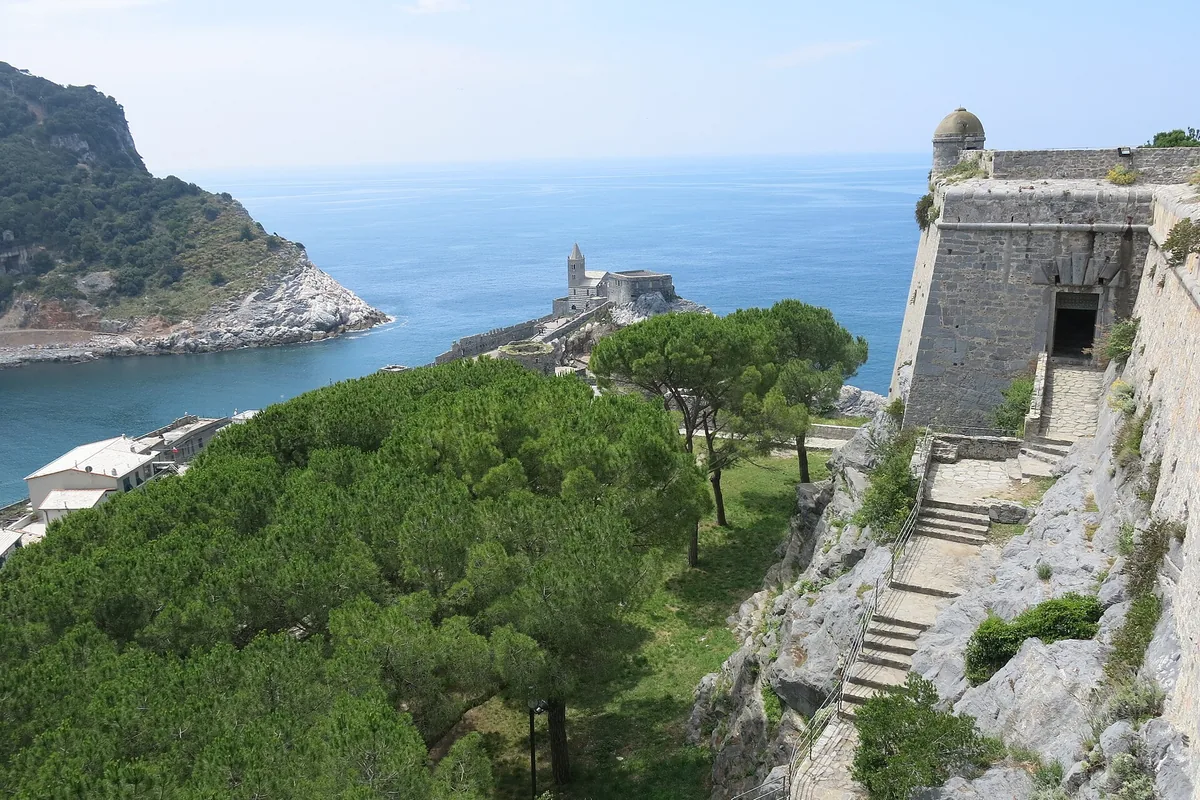
Portovenere is a colourful harbour town on the Ligurian coast, close to the Cinque Terre but much quieter, and part of the same UNESCO World Heritage listing. The listing dates from 1997 and also covers the islands of Palmaria, Tino and Tinetto.
The star sight is the Church of San Pietro, a black-and-white Gothic church on a rocky point above the sea, built in the Middle Ages on the site of a much earlier church. It stands exposed to the wind and waves, and the view from its terrace is one of the best on the coast. Nearby, Byron’s Grotto is named after the English poet, who is said to have swum across the gulf from here, though the details of the legend vary between sources.
The row of tall, pastel houses along the waterfront is the classic view of the town, and the harbour has cafes and seafood restaurants. From here, ferries run to Palmaria, the largest island in the gulf, where there are walking trails and quiet swimming spots. Ferry schedules are seasonal, with services usually running from spring to autumn, so check current timetables before you go.
Portovenere can be reached by bus from La Spezia, which is on the main railway line, and by ferry from La Spezia and some other towns on the gulf in season. It is a good alternative to the Cinque Terre for travellers who want the Ligurian coast with fewer crowds, and it works as a half-day or full-day trip.
- How to get there: Bus or ferry from La Spezia, which has train links.
- How long to spend: Half a day to a full day.
- Best time to go: Spring and autumn, when ferries run and the crowds are lighter.
- Tip: Walk out to San Pietro in the late afternoon for the best light.
8. Spoleto
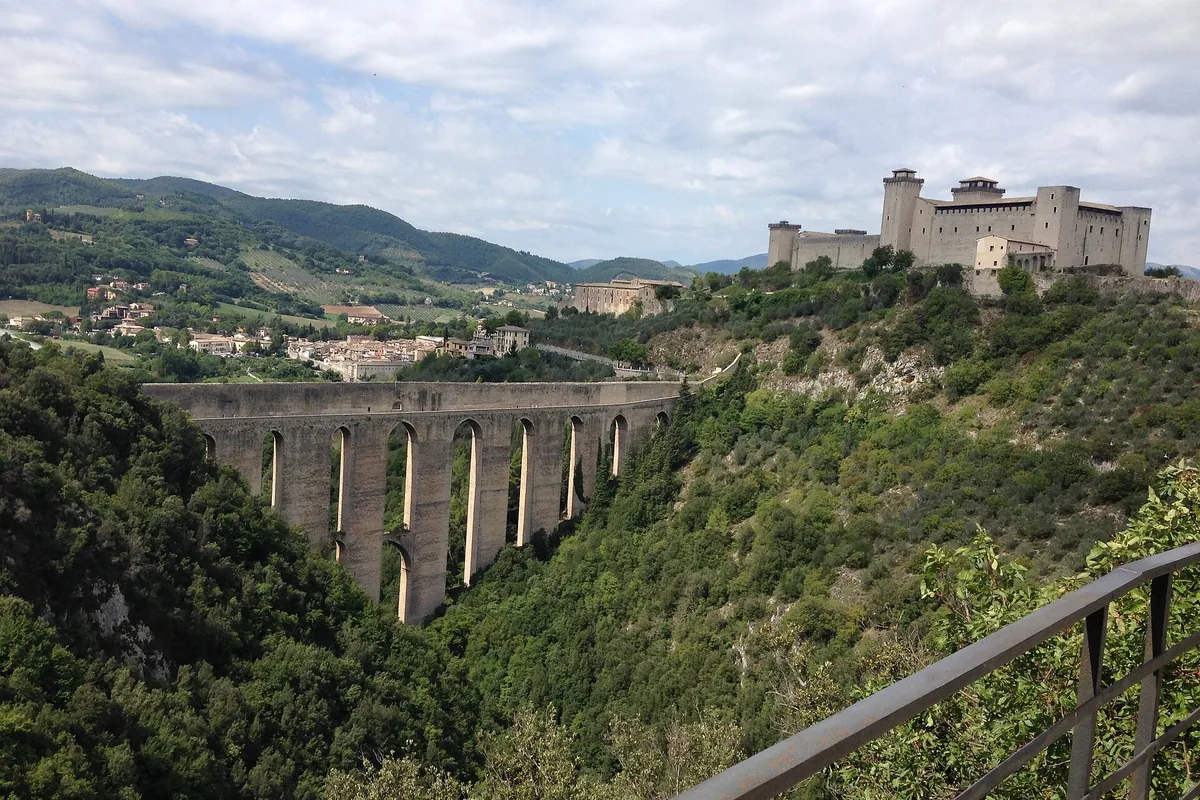
Spoleto is a medieval hill town in Umbria, known for its dramatic bridge, its fortress and its summer arts festival. It is quieter than Assisi or Perugia and has a relaxed, local feel.
The Ponte delle Torri is a medieval aqueduct bridge that links the town to Monteluco. It is about 230 metres long and around 80 metres high. A walk across it gives a view into a deep wooded gorge. The bridge sits beside the Rocca Albornoziana, a fourteenth-century papal fortress built for Cardinal Gil de Albornoz, which now houses the national museum of the duchy of Spoleto.
The Duomo has a Romanesque facade and a bell tower, and its apse frescoes are by Filippo Lippi, reportedly among his last works. The Roman theatre and other ancient remains show how old the town is. The streets between the sights are steep, so allow time and wear comfortable shoes.
Spoleto hosts the Festival dei Due Mondi, a multi-week arts festival held from late June to mid-July, with events in the cathedral square and other venues. The dates change each year, so check the festival’s official website, and book main events well ahead. At other times of the year the town is peaceful, and it is a good base for exploring Umbria.
Direct trains from Rome take roughly an hour and a quarter to an hour and three quarters, depending on the service. Trenitalia’s Spoleto Link ticket combines the train with a bus from the station forecourt towards the old town, where free escalators and walkways climb up to the sights, so check current timetables before you go.
- How to get there: Direct train from Rome, then a bus or taxi to the old town.
- How long to spend: A full day, or a night if you attend the festival.
- Best time to go: Spring, autumn or the festival period, with early booking.
- Tip: Check the festival dates before booking accommodation, as rooms fill up.
9. Bergamo Città Alta
Bergamo’s upper town, the Città Alta, is a walled hilltop old town in Lombardy that many travellers only see from the airport bus. It is one of the most rewarding stops in northern Italy, and it is easy to reach from Milan.
The old centre is enclosed by the Venetian Walls, built from 1561 by the Republic of Venice. Since 2017 they have been part of a UNESCO World Heritage listing for Venetian defence works, and they run for more than six kilometres. The walls never underwent a siege, which is one reason they are so well preserved, and you can walk along them for views over the plain.
A funicular links the lower and upper towns and arrives at Piazza Mercato delle Scarpe, so you do not have to climb. The main square, Piazza Vecchia, is framed by the Palazzo della Ragione and the Campanone civic tower. Nearby, the Basilica of Santa Maria Maggiore holds the Colleoni Chapel, dedicated to the famous commander Bartolomeo Colleoni. The official Visit Bergamo site has more detail on panoramic points and sights.
Bergamo is also known for hearty polenta dishes. Its airport is a hub for low-cost flights, so it makes a convenient first or last stop. ATB’s Airport Bus runs frequently from the airport to Bergamo railway station, and some services continue to the upper town, so check the timetable on the ATB website before you travel.
- How to get there: Train from Milan to Bergamo, then the funicular to the upper town.
- How long to spend: Half a day to a full day.
- Best time to go: Weekday mornings, or early evening for the light.
- Tip: Walk part of the Venetian Walls for views over the lower city.
10. Ortigia
Ortigia is the small island at the heart of Syracuse in Sicily, and it combines ancient Greek ruins with a lively seafront old town. It is linked to the mainland by two bridges, and it is compact enough to explore on foot in a day.
The Temple of Apollo is one of the main draws, and it is one of the oldest Doric temples in Sicily, dating from the early sixth century BC. The Duomo was originally a Greek temple to Athena, which was walled in and converted into a church, and it shows Arabic, Norman and baroque work from later periods. The Fountain of Arethusa is a freshwater spring a few metres from the sea, linked to the myth of the nymph Arethusa.
Ortigia is also a place to eat and wander. The lanes are lined with small restaurants, and there is a market where you can try local produce. The seafront walk around the island gives views over the water and is pleasant in the evening. Guided walking tours usually meet in front of the Temple of Apollo, and the cathedral ticket is often not included.
Ortigia is a popular day trip from Catania and Taormina and is easy to combine with a visit to Noto. Regional trains from Catania to Siracusa take a little over an hour, and Interbus coaches run from Catania airport, so check current timetables on the Trenitalia and Interbus websites. Staying overnight lets you enjoy the old town after day trippers leave. For help planning a longer trip, the Italia.it tourism site covers Sicily.
- How to get there: Train or bus to Syracuse, then walk across the bridge to the island.
- How long to spend: A day, or an overnight stay.
- Best time to go: Spring or autumn, and evenings in summer.
- Tip: Start at the Temple of Apollo, then walk the seafront to the Fountain of Arethusa.
How to pick the right hidden gem
Choose by region and travel style. For culture and history, pick Matera, Urbino, Lecce or Spoleto. For easy day trips from Rome, choose Orvieto, Civita di Bagnoregio or Spoleto. For mountains and adventure, go to Castelmezzano. For sea and harbours, pick Portovenere or Ortigia. For a simple stop near Milan, choose Bergamo.
If you are short of time, avoid trying to see too many places. Most of these towns are best enjoyed slowly, with an overnight stay, rather than as a rushed stop between bigger cities.
Suggested plans for 1, 2 or 3 trips
One trip from Rome: Take the train to Orvieto, then the bus to Civita di Bagnoregio the next morning. Add Spoleto if you have another day. Before or after, spend a day on the capital’s quieter corners with our guide to the best hidden gems in Rome, from the Aventine Keyhole to the layered Basilica of San Clemente.
Two trips in the south: Combine Matera and Lecce on a road trip through Basilicata and Puglia, and add Castelmezzano if you have a car and a spare day.
Three trips across the country: Add Bergamo near Milan, Portovenere on the Ligurian coast, and Ortigia in Sicily.
Where to stay
Matera is best in a cave hotel in the Sassi, but expect stairs. Orvieto works well as a base for Civita di Bagnoregio and the surrounding countryside. Urbino and Spoleto suit a night in the old town, especially during the festival. Lecce is best in the old town, close to the churches and restaurants. Portovenere offers harbour hotels, with La Spezia as a cheaper base. Bergamo is easy from either the upper or lower town, and Ortigia is the best base in Syracuse for evening walks.
Getting around
Italy’s main cities are linked by fast trains, but many hidden gems need a bus, a regional train or a car. Regional trains and buses are cheap but can be infrequent, so check timetables on the operator’s website. Hill towns often have a funicular, lift or shuttle from the station. Driving gives the most freedom in Basilicata, Marche and Umbria, but historic centres have restricted traffic zones, so park outside the walls and check local rules.
Budget guidance
Cheap: Regional trains and buses, simple lunches at local trattorias, and free sights such as walking the lanes of Matera or the walls of Bergamo.
Mid-range: A night in a small hotel in an old town, a few paid sights such as a palace or underground tour, and a sit-down dinner.
Special occasion: A cave hotel in Matera, a zip line flight over Castelmezzano or a seafood dinner by the harbour in Portovenere. Check current costs and booking rules before you go.
Frequently Asked Questions
What is the most underrated place in Italy?
Matera and Lecce are often named as underrated, because they offer striking scenery and history with fewer crowds than Rome, Florence or Venice.
Which hidden gems are easiest to visit from Rome?
Orvieto, Civita di Bagnoregio and Spoleto can all be reached from Rome with a train and, in some cases, a short bus ride. Check timetables before you go.
Is Civita di Bagnoregio worth visiting?
Yes, if you enjoy dramatic scenery. The village sits on a crumbling rock reached by a footbridge, and the setting is the main attraction. Allow an hour or two, and check whether an entry fee applies.
Do I need a car to visit hidden gems in Italy?
For some places, such as Castelmezzano and Urbino, a car is the easiest option. Orvieto, Lecce, Spoleto, Bergamo and Ortigia can be reached by train or bus.
When is the best time to visit these places?
Spring and autumn are comfortable for walking and quieter than summer. Spoleto is busiest during its summer festival, and Portovenere ferries run mainly from spring to autumn.
Are there other hidden gems near Rome?
Yes. Rome itself has many lesser-known sights, such as the Basilica of San Clemente and the Aventine Keyhole, and our separate Rome hidden gems guide covers them.
Discover More of Italy
For more of the coast, compare the villages in our guide to the best Amalfi Coast towns, or head north with our guide to the best day trips from Bologna, which covers Ravenna, Ferrara and Verona. And if you love quiet towns like these, our guide to Albania’s hidden gems covers the other side of the Adriatic.
Featured image: Photo by Maksimsokolov, CC BY-SA 4.0, cropped, via Wikimedia Commons