Last updated: November 2026
Bangkok is one of the best food cities in the world, and the best meals are often served on a pavement, in a market or from a plastic chair. The best places to eat in Bangkok include Raan Jay Fai for the famous crab omelette, Thipsamai for pad thai, Krua Apsorn for Thai home cooking, Wattana Panich for beef noodles and a cluster of Chinatown classics for curry rice, kuay jab and seafood. Many of these places have been cooking the same dishes for decades, and several have appeared in the Michelin Guide.
This guide covers ten places across the Old City, Chinatown, Victory Monument, Ekkamai and Thonglor, with a practical box for each. Further down you will find a short guide to the dishes to try, a free printable 3-day Bangkok food itinerary, getting around, where to stay and how to eat well on any budget. For independent recognition, the Michelin Guide Thailand Bib Gourmand list is a good place to check which affordable restaurants are currently listed.
Street food stalls change hours, closing days and even locations quickly, and listings often disagree. We avoid exact times and prices, and we say “check before you go” wherever we could not confirm something.
Quick answer: What are the best places to eat in Bangkok? For a once-in-a-lifetime street kitchen, go to Raan Jay Fai. For pad thai, choose Thipsamai. For Thai home cooking, try Krua Apsorn. For noodles, head to Wattana Panich, Nai Ek Roll Noodles or Victory Monument’s boat noodle alley. For Chinatown, add Jek Pui, Nai Mong Hoi Thod and T&K Seafood. Finish with mango sticky rice at Mae Varee.
Free printable itinerary
Planning a trip? Download our Suggested food plan for 1, 2 or 3 days: a 3-Day Bangkok Food Itinerary as a PDF: the day-by-day plan plus all 10 places with directions and map links. Print it or keep it on your phone.
Quick comparison: the best places to eat in Bangkok
| Place | Area | Best for | Price tier |
|---|---|---|---|
| Raan Jay Fai | Old City, Maha Chai Road | A famous crab omelette | Expensive |
| Thipsamai | Old City, Maha Chai Road | Classic pad thai | Budget to mid-range |
| Krua Apsorn | Samsen Road, Dusit | Thai home cooking and crab | Budget to mid-range |
| Wattana Panich | Ekkamai | Beef noodle soup | Budget |
| Nai Mong Hoi Thod | Chinatown | Crispy oyster omelette | Budget |
| Nai Ek Roll Noodles | Chinatown | Kuay jab in peppery broth | Budget |
| Khao Gaeng Jek Pui | Chinatown, Mangkon Road | Curry rice on plastic chairs | Budget |
| T&K Seafood | Chinatown, Phadung Dao | Late-night seafood | Mid-range |
| Boat Noodle Alley | Victory Monument | Small bowls of noodles | Budget |
| Mae Varee | Thonglor | Mango sticky rice | Budget |
1. Raan Jay Fai
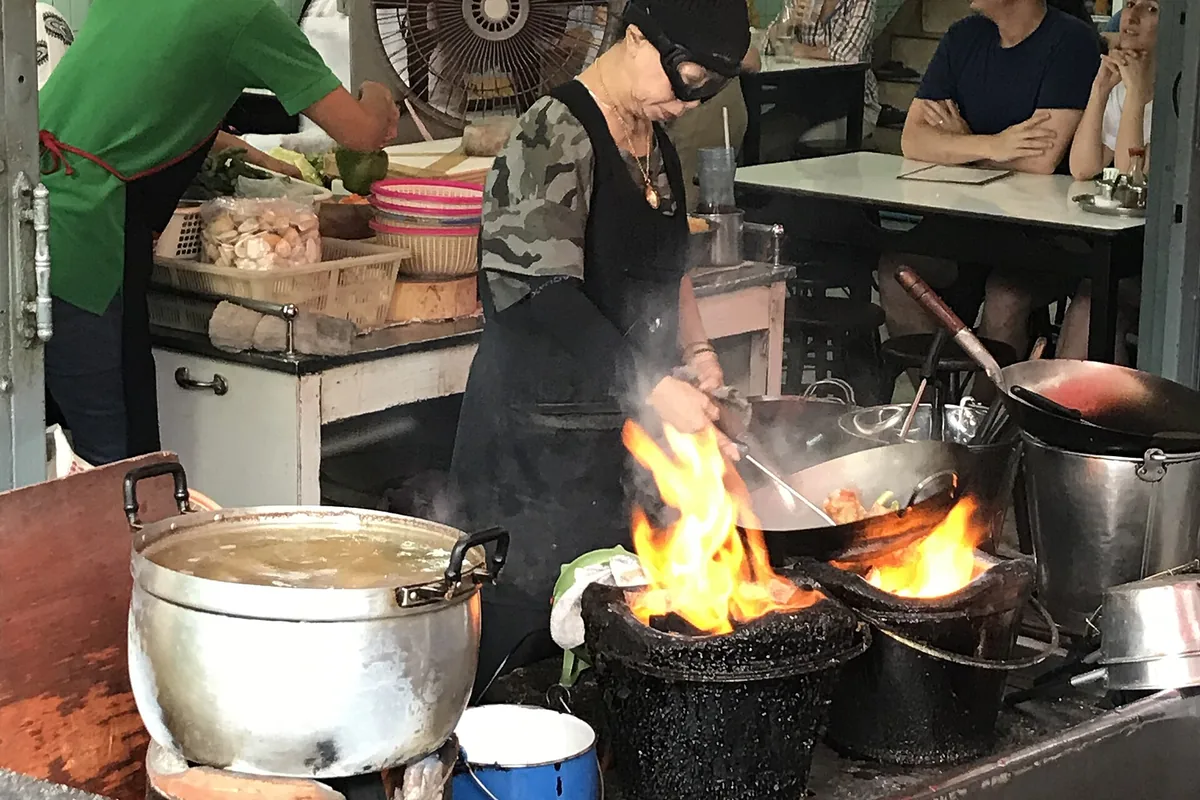
Raan Jay Fai is the most famous street kitchen in Bangkok, and it holds a Michelin star. Chef Supinya Junsuta cooks over charcoal woks in the open air on Maha Chai Road in the Old City, wearing her trademark goggles. The restaurant has held one star since the first Bangkok Michelin Guide and was listed with one star again in the Michelin Guide Thailand 2027 announcement.
The signature dish is the crab omelette, a thick, crisp parcel packed with crab meat. Other favourites include drunken noodles with seafood, and guides suggest asking about alternatives if the omelette has sold out. It is not cheap by Bangkok standards, so think of it as a special meal rather than a quick snack.
The hardest part is getting a table. The Michelin Guide listing describes a queuing system and warns that you will spend time waiting in line, though some other sources mention reservations, so check the current system before you go. Bring cash, as the Michelin Guide lists it as cash only.
Opening days and hours are limited: the Michelin Guide lists it as open Wednesday to Saturday and closed from Sunday to Tuesday, but check before you travel. If you cannot get in, the nearby streets are full of other good places, so the trip is still worth making.
- How to get there: MRT to Sam Yot or Sanam Chai, then a short taxi ride or walk to Maha Chai Road.
- How long to spend: One to two hours, plus any queue.
- Best time to go: Arrive well before the lunch rush, and check the current booking system first.
- Tip: Bring cash, order the crab omelette and check the open days before you travel.
2. Thipsamai
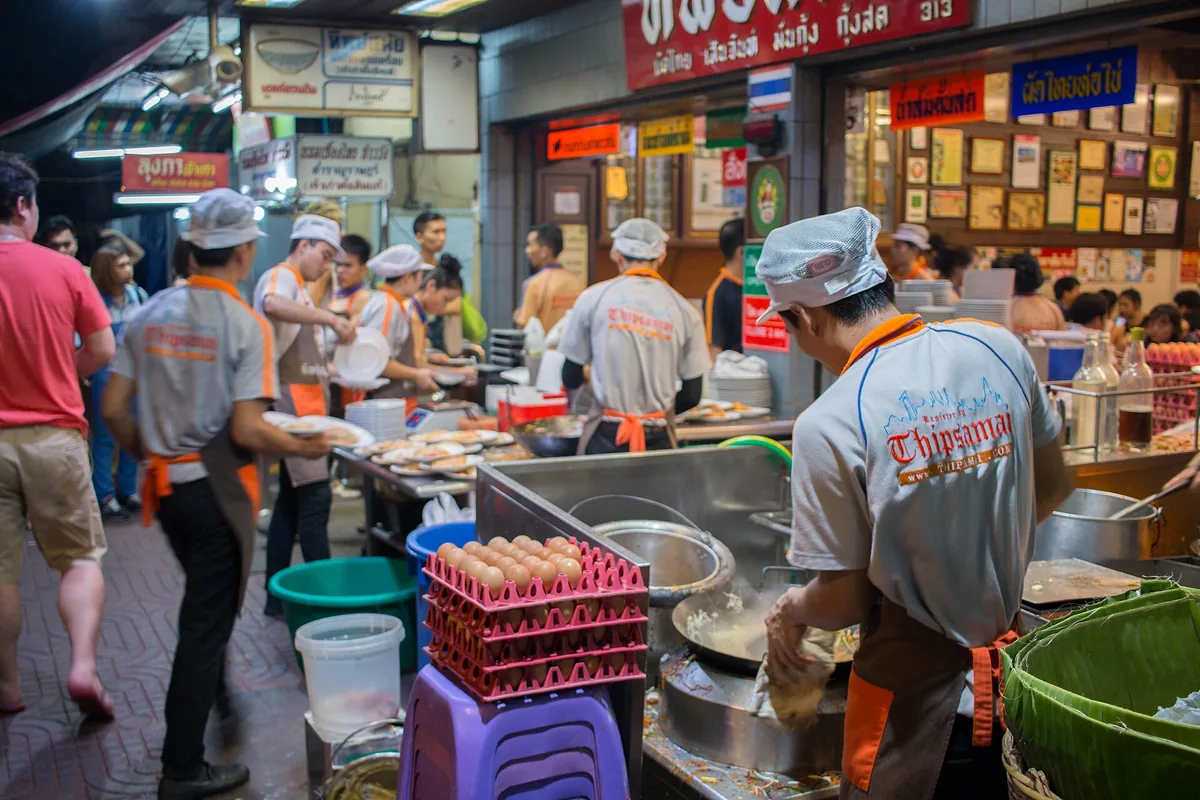
Thipsamai is the most famous pad thai restaurant in Bangkok. The original shop is at 313 to 315 Maha Chai Road, a few minutes on foot from the Giant Swing and Wat Suthat. Its own site, thipsamai.com, is the best place to check opening details.
The pad thai here is cooked over charcoal and is known for its smoky flavour and generous toppings. The version wrapped in a thin egg layer is the one many visitors queue for, and the shop is also known for fresh orange juice. Order a plate, squeeze over the lime and add the chilli and peanuts to taste.
The restaurant is cash only, according to recent guides, and the queue can be long at dinner and at weekends. A late morning or mid-afternoon visit on a weekday is usually calmer. Sources disagree on opening hours and closing days, with one recent guide listing Tuesday as the day off, so check before you go.
Thipsamai is close to Raan Jay Fai, so you can plan a day around Maha Chai Road. Have one for lunch and the other for an early dinner, and walk between them to explore the Old City.
- How to get there: MRT to Sam Yot, then a short walk or taxi ride to Maha Chai Road.
- How long to spend: One hour.
- Best time to go: Late morning or mid-afternoon on a weekday.
- Tip: Bring cash, and check the closing day, as one guide lists Tuesday.
3. Krua Apsorn
Krua Apsorn is a long-running Thai restaurant known for its crab omelette and its home-style cooking. The original branch is on Sam Sen Road in the Dusit area, at 503 to 505, and it has been listed by the Michelin Guide in recent years, reportedly as a Bib Gourmand pick. We could not confirm its current listing, so check Michelin’s site before you go.
Reviewers describe the crab omelette as fluffy and generous, and many compare it to the more famous version at Jay Fai at a much lower cost. The other dish to order is the stir-fried crab with yellow chilli, which has a mild, creamy heat. Add a simple curry, a fried fish and a plate of rice, and you have a very good lunch.
The dining room is simple and the service quick, so it is easy to eat here even if you are new to Thai food. Because the food is closer to what Bangkok families eat at home than to tourist menus, it makes a good place to try several dishes in one sitting.
Opening hours are reported to run through the day and finish in the early evening, though listings differ, so check the current times. Krua Apsorn has several branches, so make sure you go to the right one if you want the original.
- How to get there: Taxi or ride-hailing from the Old City, or a longer ride from the BTS network.
- How long to spend: One to two hours.
- Best time to go: Lunch, before the busiest hour.
- Tip: Order the crab omelette, a stir-fried crab dish and a vegetable side, and check which branch you are heading to.
4. Wattana Panich
Wattana Panich is a beef noodle shop in Ekkamai that is famous for a pot of broth that has simmered for decades. It is at 336 to 338 Ekkamai Road, and reviewers describe a huge cauldron at the entrance that has been kept going for around fifty years. It is a third-generation family business. If you prefer a lighter meal, ask for the clear soup version, and finish with a small bowl of the house dessert if there is room.
The signature bowl is beef noodle soup with tender cuts of beef and a deep, slightly sweet broth. You can choose different cuts and noodle types, and a bowl of the beef stew is a good addition. The shop is also known for its desserts and for the simple, old-fashioned dining room. It sits on a busy road lined with cafes and small restaurants, so it is easy to turn a bowl of noodles into a longer afternoon in Ekkamai.
Wattana Panich has earned recognition from food guides over the years, but we could not confirm that it is currently in the Michelin Guide, so treat any award claim with care. What is not in doubt is that it is a long-standing local favourite.
Hours are reported as daytime and early evening, and one source says it is closed on Mondays, so check before you go. It is walk-in only, and queues can form at lunch.
- How to get there: BTS to Ekkamai, then a short taxi ride or walk along Ekkamai Road.
- How long to spend: One hour.
- Best time to go: Mid-morning or mid-afternoon, to avoid the lunch rush.
- Tip: Start with a standard bowl, then add a side of stew to taste the broth in a different style.
5. Nai Mong Hoi Thod
Nai Mong Hoi Thod is a Chinatown stall famous for its crispy oyster omelette. It has been listed by the Michelin Guide as a Bib Gourmand street food pick in past years, though we could not confirm its current listing, and it is one of the best-known places for the dish in the city. The omelette is cooked on a hot griddle until the edges turn crisp, with plump oysters inside.
The contrast between a crisp outside and a soft middle is the point, and a squeeze of lime and a spoonful of chilli sauce finish it.
Chinatown is best explored in the evening, so Nai Mong Hoi Thod fits into a wider street food walk along Yaowarat Road. The stall is small and the seating limited, so be ready to share a table and eat quickly when a seat opens. Go with a friend and order one plate to share, because the portions are generous and you will want room for other Chinatown stops afterwards.
We could not confirm the exact address or current opening days from our sources, so check a current map listing before you travel. Closing days in Chinatown often differ from stall to stall, and some guides say many vendors are closed on Mondays.
- How to get there: MRT to Wat Mangkon, then a walk into the Yaowarat area.
- How long to spend: 30 to 45 minutes.
- Best time to go: Early evening, when the street food area comes alive.
- Tip: Check the address and open days before you go, and share a plate if you want to try several stalls.
6. Nai Ek Roll Noodles
Nai Ek Roll Noodles is a Chinatown shop known for kuay jab, rolled rice noodles in a peppery pork broth. It is at 442 Soi Yaowarat 9 and has been cooking since 1960, according to one guide. The Michelin Guide has listed it as a Michelin Plate pick, an honourable mention for good cooking, so check the current listing.
The dish is unusual if you have not tried it before. The noodles curl into rolls in the hot broth, and the bowl comes with crispy pork belly, pork offal and a boiled egg. The broth is spicy with pepper rather than chilli, which makes it warming and slightly sharp.
Kuay jab is rich, so a bowl for two to share is plenty if you plan to eat elsewhere afterwards. If you do not like offal, ask for a version with the crispy pork only. Some guides say the shop competes with another well-known kuay jab stall nearby, so you can compare the two if you are curious.
The shop is simple and busy, and it is better as a lunch or snack than a long dinner. Check opening hours before you go, as Chinatown shops often close in the afternoon.
- How to get there: MRT to Wat Mangkon, then a short walk to Soi Yaowarat 9.
- How long to spend: 30 to 45 minutes.
- Best time to go: Late morning or early afternoon.
- Tip: Ask for the pork without offal if you prefer a gentler bowl, and check the hours first.
7. Khao Gaeng Jek Pui
Khao Gaeng Jek Pui is a curry rice stall in Chinatown where you eat on plastic chairs on the pavement. It is on Mangkon Road, near Wat Mangkon MRT station, and it is a long-running local favourite, though we could not confirm any Michelin listing, so treat award claims with care.
The set-up is simple: choose rice and one or more curries and stews from the trays, and the staff will serve them on a plate. The dishes include rich pork stews, spicy curries and braised dishes, and the flavours are bold and homely.
It is very popular with local workers and visitors, so expect queues, and expect to share a seat. It is usually an afternoon and early evening stall rather than a breakfast spot, and one directory gives hours in that range, though we advise checking before you go.
Jek Pui is a good first stop on a Chinatown food walk, because it is cheap, quick and easy to point at what you want. Come hungry, and ask for a mix of dishes so you can taste the range. The dishes on offer change with what the cooks have made that day, so it is worth looking at every tray before you decide, and a small plate is enough if you are planning to eat again soon.
- How to get there: MRT to Wat Mangkon, then a very short walk to Mangkon Road.
- How long to spend: 30 to 45 minutes.
- Best time to go: Mid to late afternoon.
- Tip: Point at the dishes you want, and ask for a small amount of chilli if you are not used to Thai heat.
8. T&K Seafood
T&K Seafood is a lively open-air seafood restaurant at the corner of Phadung Dao Road and Yaowarat Road. It is one of the best-known late-night seafood places in Chinatown, and it spills onto the pavement in the evening. A rival restaurant sits across the lane, and guides disagree on its exact name, so check before you sit down.
Popular dishes include crab fried rice, grilled prawns and steamed fish in lime and chilli sauce. The atmosphere is noisy, bright and busy, and it works well as a group meal where you share several plates.
Seafood can be expensive if you order without checking prices, so ask the staff about the price of fish or prawns by weight before you agree. Menu prices are usually posted, and it is fine to ask to see them. Pay attention to the bill and the service charge.
Opening hours vary between sources, with some listing it from late afternoon and others from about six in the evening until after midnight. Some guides say Chinatown vendors close on Mondays or Tuesdays, so check before you go.
- How to get there: MRT to Wat Mangkon, then a walk along Yaowarat Road, or a taxi to the corner of Phadung Dao.
- How long to spend: One to two hours.
- Best time to go: Early evening, when you can get a table before the late rush.
- Tip: Ask for the price of fish and prawns by weight before ordering, and check the closing day.
9. Boat Noodle Alley, Victory Monument
Boat Noodle Alley is a canal-side row of noodle shops near Victory Monument, and it is the best place to try Thailand’s tiny bowls of boat noodles. Thais know it as the boat noodle alleyway, or the kuay teow rua alley near Wat Makok, and it is very much a local lunch spot.
Boat noodles are served in small bowls with a rich, dark broth, and the usual way to eat them is to order several bowls and compare the broths. Guides suggest starting with three to five bowls, and you can stack the empty bowls on the table as a tally. Some shops serve them with pork, others with beef, and there is often crispy pork skin on the side.
The area around Victory Monument is also known for Isan food, so you can add som tam, larb or grilled chicken from nearby vendors for a bigger meal. Cash is the safest way to pay, though it varies by shop.
The alley is busiest at lunch and in the early evening. It is easy to reach by BTS, which makes it one of the simplest food stops for a first-time visitor.
- How to get there: BTS to Victory Monument, then the skywalk and steps down to the canal-side alley.
- How long to spend: 45 minutes to one hour.
- Best time to go: Late morning to mid-afternoon on a weekday.
- Tip: Order three or four bowls at first, and try different broths and meats.
10. Mae Varee
Mae Varee is the best-known place in Bangkok for mango sticky rice. It is near Thong Lor BTS station in Thonglor, and it has been a favourite with locals and visitors for years. A 2026 guide says it has become a modern cafe space with more comfortable seating, although the details are worth checking before you go.
The classic dessert is ripe mango served with sweet sticky rice, coconut cream and crispy mung beans. It is best in mango season, when the fruit is at its sweetest, and the exact months can vary, so ask the staff what is in season. The guide also mentions a Thai tea kakigori, a shaved-ice dessert that has become popular.
Mae Varee is a good end to a day of eating in Sukhumvit and Thonglor, and it is easy to combine with a drink at one of the area’s bars. The shop has changed over time, so opening hours and menus may differ from older reviews.
One older source said the shop opened very early and closed in the evening, but another said it once ran twenty-four hours, so check before you plan around it. If the mango is out of season, you can still try the sticky rice with other toppings.
- How to get there: BTS to Thong Lo, then a short walk to the shop.
- How long to spend: 30 to 45 minutes.
- Best time to go: Afternoon or early evening, and in mango season for the best fruit.
- Tip: Ask which mango varieties are available, and check the opening hours first.
Thai dishes to try in Bangkok
- Pad thai: Stir-fried rice noodles with egg, tofu or prawns, peanuts and lime. Try it at Thipsamai.
- Crab omelette: A thick omelette filled with crab meat. Try it at Raan Jay Fai or Krua Apsorn.
- Boat noodles: Small bowls of noodles in a rich, dark broth. Try them at Victory Monument.
- Kuay jab: Rolled rice noodles in a peppery pork broth. Try it at Nai Ek Roll Noodles.
- Curry rice: Rice with a choice of curries and stews. Try it at Jek Pui.
- Hoi thod: A crispy oyster or mussel omelette, found in Chinatown.
- Mango sticky rice: Sweet sticky rice with ripe mango and coconut cream.
- Som tam: Green papaya salad, often served with grilled chicken in Isan restaurants.
Suggested food plan for 1, 2 or 3 days: a 3-Day Bangkok Food Itinerary
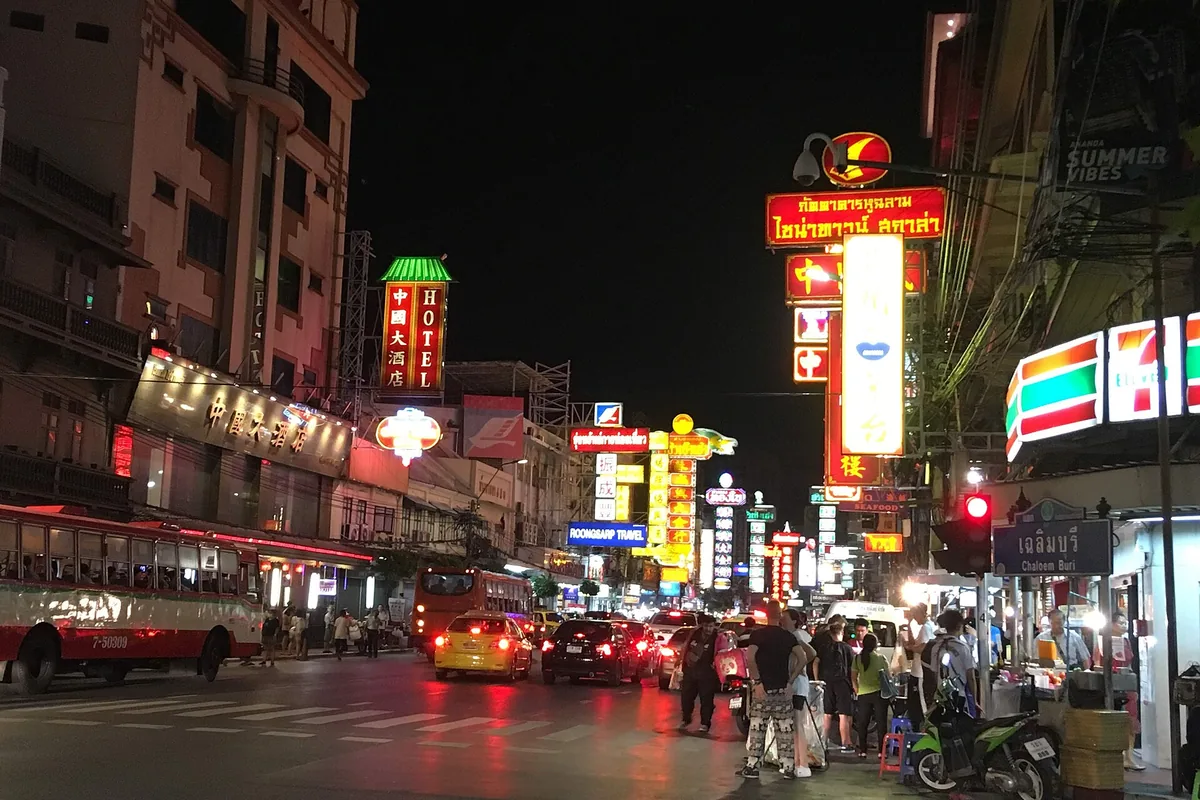
This plan groups the places by area so you spend your time eating rather than sitting in traffic. It doubles as a free printable itinerary. Share plates, eat small portions and keep a day free if a place is closed.
Day 1: The Old City and Dusit
Start late morning at Thipsamai for pad thai, which is a short walk from the Giant Swing. Move on to Raan Jay Fai on the same road if you have secured a place, or save it for another day if the queue is too long. Finish the afternoon with an early dinner at Krua Apsorn on Sam Sen Road, which is a short taxi ride away. Check the closing days for each place before you go.
Day 2: Chinatown
Begin in the afternoon with curry rice at Khao Gaeng Jek Pui on Mangkon Road. Walk into Yaowarat for kuay jab at Nai Ek Roll Noodles, then find Nai Mong Hoi Thod for the oyster omelette. Finish with a group seafood dinner at T&K Seafood on Phadung Dao Road. This is a lot of food, so share plates and skip a stop if you are full.
Day 3: Victory Monument, Ekkamai and Thonglor
Go to Boat Noodle Alley at Victory Monument for a late morning bowl of boat noodles. Take the BTS to Ekkamai for beef noodles at Wattana Panich, then finish in Thonglor with mango sticky rice at Mae Varee. This day is easy to do almost entirely by BTS.
Getting around Bangkok
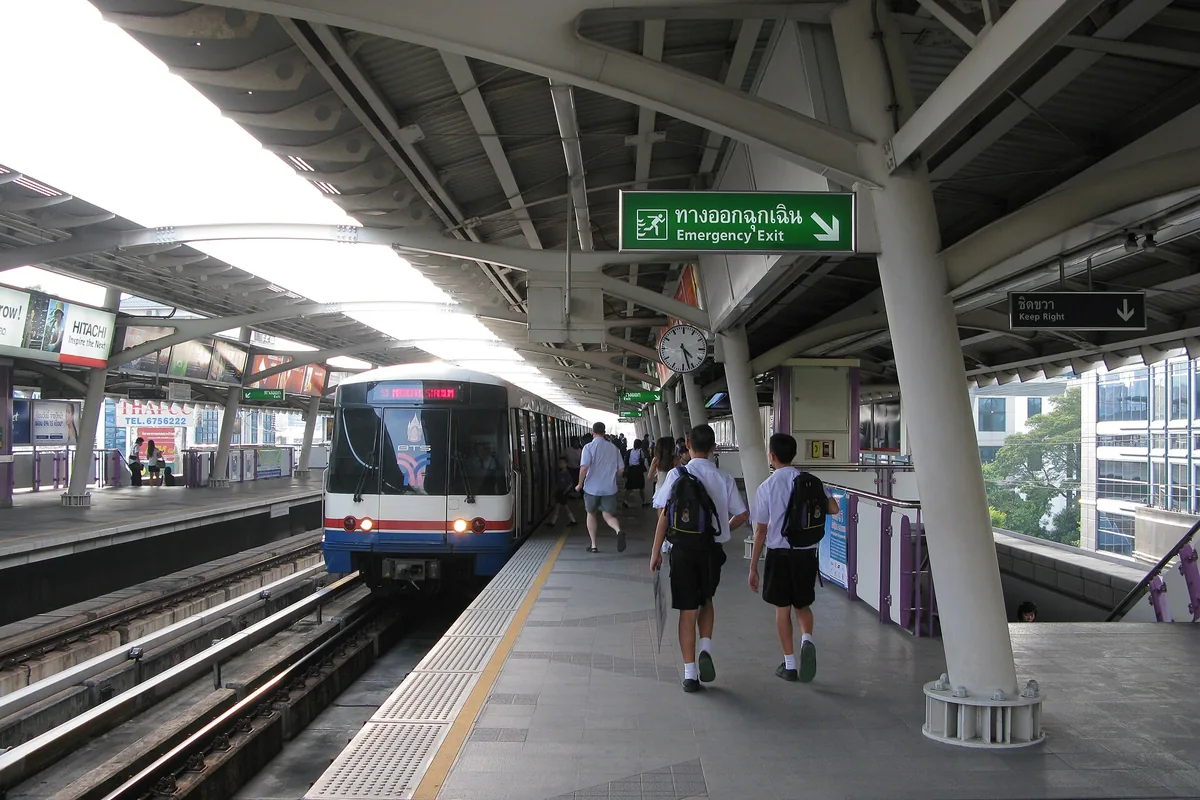
The BTS Skytrain and MRT are the quickest ways to cross the city, and they avoid the traffic that can make taxi journeys slow. The Old City and Chinatown are less well served by the BTS, so use the MRT, then a short taxi or walk. Taxis and ride-hailing apps are cheap, but check that the meter is used or the fare is agreed in the app. River boats are a pleasant option for some routes, though schedules change. For official visitor information, see the Tourism Authority of Thailand news site. If you are building a longer Thailand trip, our guide to the best Thai islands for a beach stop after the city is a good next read.
Eat early to avoid heat and crowds, carry small notes and some cash for street stalls, and keep hand sanitiser and tissues in your bag, as napkins are not always provided.
Where to stay for food lovers
- Old City (Rattanakosin): Best for Raan Jay Fai, Thipsamai and temples, though public transport is limited.
- Chinatown (Yaowarat): Best for street food and character, with fewer big hotels and easy MRT access.
- Sukhumvit and Thonglor: Best for transport, restaurants and nightlife, with the BTS on the doorstep.
- Silom and Sathorn: Best for a central base with good MRT and BTS links.
- Riverside: Best for a scenic stay, though you will rely on boats and taxis.
Budget guidance
Bangkok is one of the best food destinations for every budget, so think in tiers rather than exact prices.
- Budget: Boat noodles, curry rice, kuay jab and most street stalls.
- Mid-range: Seafood restaurants and sit-down Thai restaurants such as Krua Apsorn.
- Expensive: A meal at Raan Jay Fai, where the crab omelette is a premium dish.
To save money, eat where locals eat, order a few dishes to share rather than a full set each, and drink water or tea instead of cocktails. Ask for the price of seafood before you order.
Booking, cash and etiquette
Most street stalls do not take reservations, and several of the places here are cash only, so carry notes. Queue patiently, and do not be shy about sharing a table. Spice levels can be high, so ask for less chilli if you are not used to it. Tap water is not generally drunk in Thailand, so choose bottled or filtered water. Tipping is not required at street stalls, though small change is appreciated in restaurants, and check whether a service charge has been added.
Frequently Asked Questions
What are the best places to eat in Bangkok?
Top places include Raan Jay Fai, Thipsamai, Krua Apsorn, Wattana Panich, Nai Ek Roll Noodles, Khao Gaeng Jek Pui, Nai Mong Hoi Thod, T&K Seafood, the boat noodle alley at Victory Monument and Mae Varee for dessert.
What is the best street food area in Bangkok?
Yaowarat in Chinatown is the best-known street food area, especially in the evening. Victory Monument is also good for noodles and Isan food, and the Old City has famous restaurants such as Thipsamai.
Is it safe to eat street food in Bangkok?
Street food in Bangkok is generally safe, and most visitors eat it every day. Choose busy stalls with fast turnover, look for food cooked fresh and hot, and drink bottled or filtered water.
Do I need to book restaurants in Bangkok?
Most street stalls and noodle shops do not take bookings. Raan Jay Fai uses a queuing system according to the Michelin Guide, though some sources mention bookings, so check before you go. Seafood restaurants are usually walk-in.
When is the best time to eat in Bangkok?
Many street stalls are best at lunch or in the evening, and Chinatown is at its liveliest after dark. Avoid the hottest part of the afternoon and arrive early for popular places that run out of food.
Is Bangkok good for vegetarians?
Yes, though you need to ask. Many dishes use fish sauce or shrimp paste, so say that you do not eat meat or fish and ask for a vegetarian version. Chinatown has many vegetarian options during the annual vegetarian festival.
Plan your Bangkok trip
Bangkok food is best enjoyed slowly, with a mix of street stalls and sit-down meals. Pair it with an evening at one of the best bars in Bangkok, and check venue pages as you plan, because the best places to eat in Bangkok change quickly. Heading on through South-East Asia? Our guide to the best things to do in Hanoi covers another great food city, and our list of warm winter sun destinations can help you choose the best season to go.
Featured image: Photo by Christophe95, CC BY-SA 4.0, cropped, via Wikimedia Commons