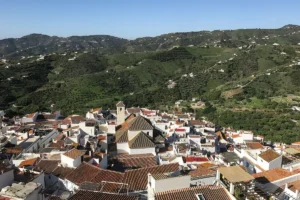
Last updated: November 2026
Vienna is a city where eating is part of the sightseeing, and the best places to eat in Vienna are the old, proud institutions: a schnitzel house, a Tafelspitz restaurant, a sausage stand, a market and the grand coffee houses. You can eat very well here without chasing the newest openings, because the classics are still the main event.
This guide covers ten places across the Innere Stadt, the Naschmarkt area, Landstrasse and the wine villages on the city edge, with a practical box for each. Further down you will find the dishes to look out for, a free printable 3-day Vienna food itinerary, getting around, where to stay and how to plan your meals. The official Vienna tourist board is a good place to check events and opening news.
Kitchens, closing days and summer seasons change, and several of these places run more than one branch. Where details were hard to confirm, this guide says “check before you go”.
Quick answer: What are the best places to eat in Vienna? For a classic schnitzel, go to Figlmüller. For boiled beef, book Plachutta. For open sandwiches and old Vienna atmosphere, try Zum Schwarzen Kameel. Add Bitzinger for a sausage stand stop, the Naschmarkt for a market lunch, Salm Bräu for beer and hearty food, Café Central or Demel for cake, a Heuriger in Grinzing for new wine and Café Bräunerhof for a quiet coffee house.
Free printable itinerary
Planning a trip? Download our 3-Day Vienna Food Itinerary as a PDF: the day-by-day plan plus all 10 places with directions and map links. Print it or keep it on your phone.
Quick comparison: the best places to eat in Vienna
| Place | Area | Best for | Price tier |
|---|---|---|---|
| Figlmüller | Wollzeile, Innere Stadt | Wiener schnitzel | Mid-range |
| Plachutta | Wollzeile, Innere Stadt | Tafelspitz (boiled beef) | Mid-range to comfortable |
| Zum Schwarzen Kameel | Bognergasse, Innere Stadt | Open sandwiches and a historic room | Mid-range |
| Bitzinger Würstelstand | Albertinaplatz | A classic sausage stand stop | Cheap |
| Naschmarkt | Wieden | A market lunch and snacks | Cheap to mid-range |
| Salm Bräu | Rennweg, Landstrasse | House beer and hearty dishes | Mid-range |
| Café Central | Herrengasse | A grand coffee house | Mid-range |
| Demel | Kohlmarkt | Cake and confectionery | Mid-range |
| Grinzing Heurigen | Döbling | New wine and a cold platter | Cheap to mid-range |
| Café Bräunerhof | Stallburggasse | A quiet traditional coffee house | Cheap to mid-range |
1. Figlmüller
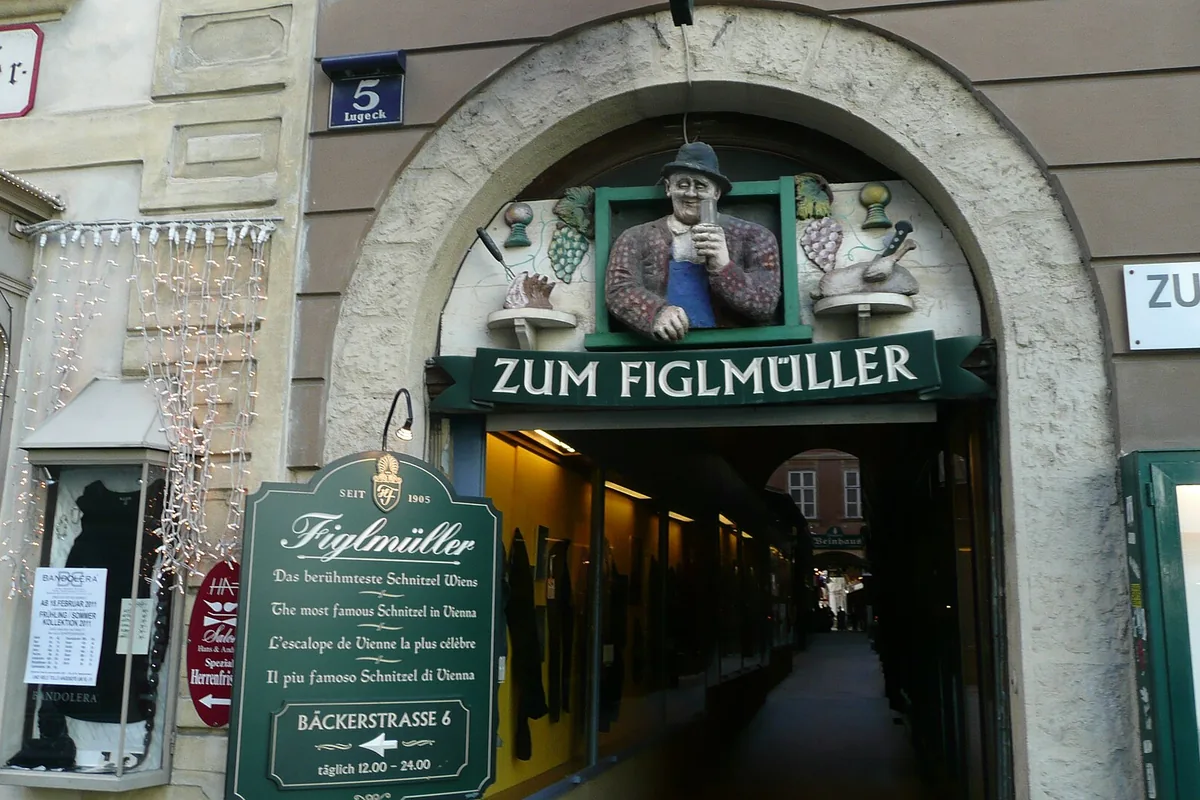
Figlmüller is the best-known place in Vienna for a Wiener schnitzel, a plate so large that it hangs over the edge. The restaurant dates from 1905, and the Wollzeile branch, a short walk from St Stephen’s Cathedral, is the one most visitors head for. The family also runs other addresses in the centre, so check which one you are booking.
The schnitzel is made of pork, beaten thin and fried until golden and crisp. Sides are simple: a potato salad is the traditional partner, and a green salad on the side keeps the plate from feeling too heavy. If you prefer veal, which is the strict definition of a Wiener schnitzel in Austria, ask what is on the menu that day, because the house speciality is the pork version.
The dining rooms are traditional and busy, with a mix of locals, groups and visitors. Service is brisk rather than leisurely, and the room fills up early in the evening. The Wollzeile restaurant is open daily, with the kitchen closing a little earlier than the dining room, so check the official Figlmüller website for current times and book ahead for dinner.
If the schnitzel is too large for you, ask whether a half portion or sharing is possible, or order a starter and a salad alongside it. A glass of Grüner Veltliner, the grape Austrians drink with almost everything, goes well with the crisp coating.
- How to get there: On foot from Stephansplatz, about five minutes along Wollzeile, or by U-Bahn to Stubentor or Stephansplatz.
- How long to spend: One to one and a half hours.
- Best time to go: An early dinner, or a weekday lunch when it is calmer.
- Tip: Book a table, and decide before you arrive whether you will share a schnitzel.
2. Plachutta
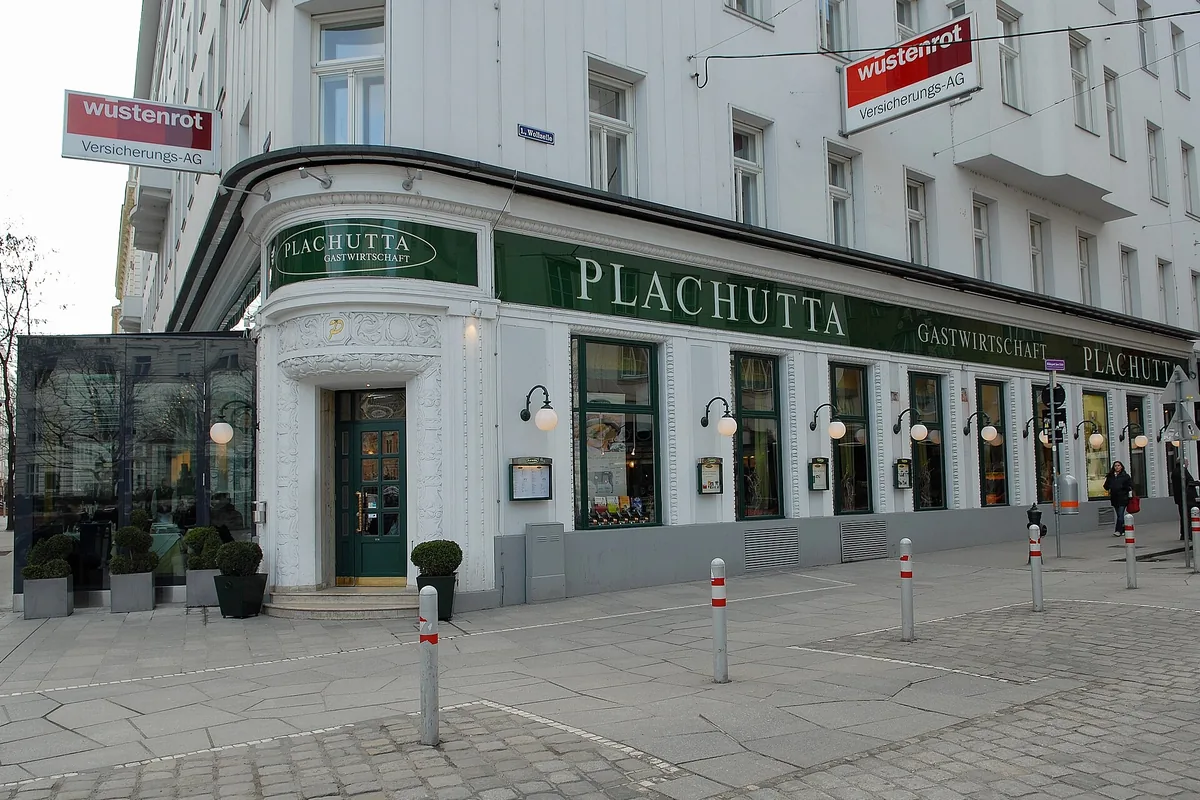
Plachutta is the place to try Tafelspitz, the boiled beef dish that became a symbol of Viennese cooking. The Wollzeile restaurant is the best-known address, and a second branch exists in Hietzing, so check which one you are booking. The official site lists the Wollzeile restaurant as open daily, but hours can change.
Tafelspitz is a cut of beef simmered gently in broth and served in a pot at the table, with the clear soup first. The classic accompaniments are horseradish with apple, a chive sauce, roast potatoes and spinach. The broth often comes with marrow on toast, which many visitors find the highlight of the meal.
Ordering is part of the experience. Plachutta serves several cuts of boiled beef, each with a different texture, and the staff will explain the differences if you ask. The dish is more of a slow, sit-down meal than a quick lunch, so it suits a relaxed lunch or a dinner when you want something comforting.
If you are travelling with someone who dislikes boiled meat, the menu also covers other Austrian dishes, so a mixed group can still eat well. Prices sit at the upper end of mid-range for Vienna, in line with the formal service and the quality of the beef.
Check the official Plachutta website for reservations and current menus. A booking is wise at weekends and during busy travel seasons.
- How to get there: On foot from Stephansplatz, or by U-Bahn to Stubentor.
- How long to spend: One and a half to two hours.
- Best time to go: A cold-weather lunch, when the broth is most welcome.
- Tip: Ask the staff which cut they recommend, and try the marrow on toast.
3. Zum Schwarzen Kameel
Zum Schwarzen Kameel is Vienna’s classic stop for open sandwiches, in a shop and restaurant with a history that goes back to 1618. It sits on Bognergasse in the Innere Stadt, a few minutes from the Hofburg. The business started as a spice shop, and the old delicatessen counter and the Art Nouveau dining room are the reason many visitors come.
The signature items are the small open sandwiches, known as Brötchen, which are piled with ham, egg salad, smoked fish or cheese. You eat them standing at the counter in the delicatessen, or sitting in the restaurant, where the menu runs from lighter dishes to full Viennese main courses. A glass of wine by the glass makes it a fine light lunch or an early evening stop.
The setting is the star. Dark wood, mirrors and period details give a sense of old Vienna that few places match. It is popular with office workers at lunch and with visitors in the afternoon, so be ready for a short wait at busy times.
The ground-floor bar and brasserie are open daily from the morning, while the upstairs restaurant, the Beletage, opens on fewer days and takes bookings. Check the official Kameel website for current times before you go.
- How to get there: On foot from the Hofburg or Graben, about five minutes.
- How long to spend: One hour for a counter lunch, longer in the restaurant.
- Best time to go: Late morning or mid-afternoon, away from the lunch rush.
- Tip: Order two or three small sandwiches and a glass of Austrian wine rather than one big dish.
4. Bitzinger Würstelstand
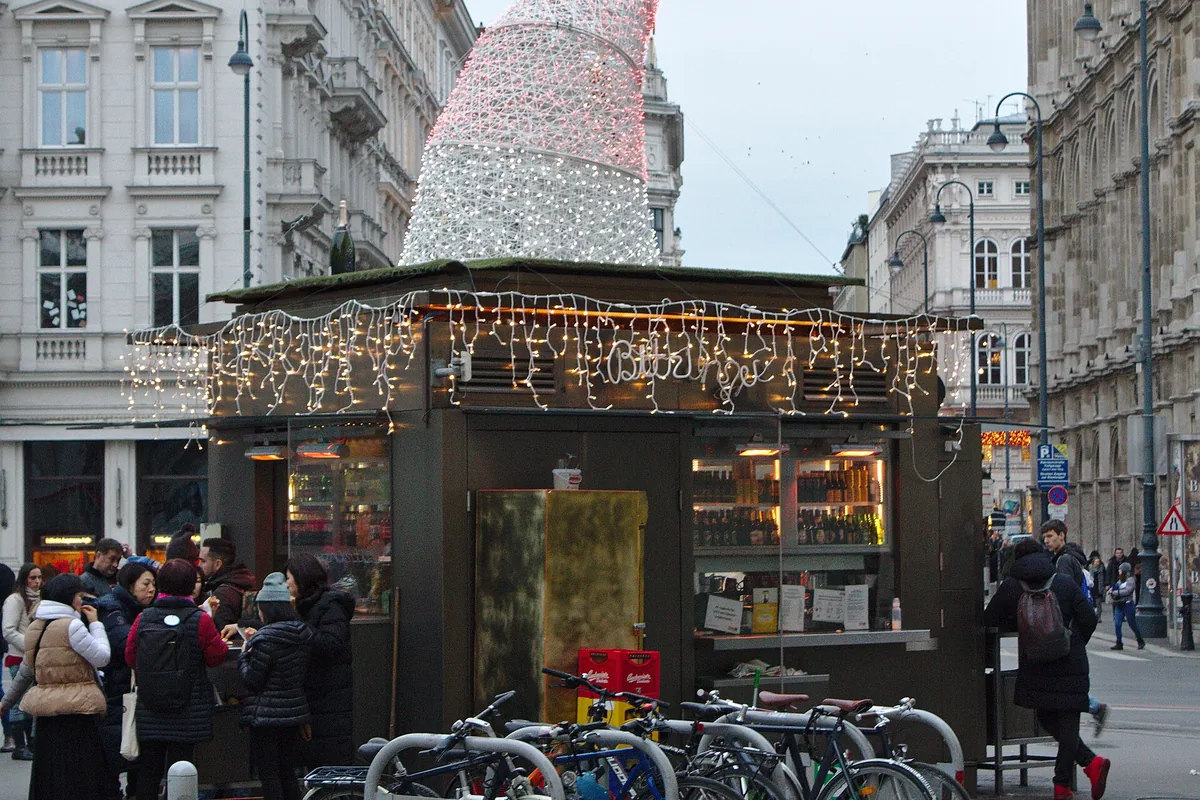
Bitzinger is the most famous Würstelstand in Vienna, and the best way to eat like a local on a small budget. The stand sits between the Albertina museum and the State Opera, so you can eat a sausage with a view of one of the city’s grandest buildings. Frommer’s calls it perhaps the most famous sausage stand in the city.
A Würstelstand is a street kiosk that sells sausages, bread, mustard and drinks, and it is a Viennese institution. Locals use them at lunchtime, after the opera and after a night out. The Käsekrainer, a sausage with melted cheese inside, is the order most guides recommend, and the Frankfurter, Burenwurst and Bosna are other classics.
Eating at a stand is simple. You order at the counter, take your plate to a standing table, and add sweet or hot mustard as you wish. A beer or a soft drink completes the meal. It is not a place for a long, quiet meal, but it is a fun way to see how Vienna eats day to day, and the prices are far lower than in the restaurants around it.
Sources list long opening hours, including late nights, but hours can change, so check before you go. If you are choosing a Würstelstand elsewhere in the city, the basic format is the same, although quality and range vary from stand to stand.
- How to get there: On foot from Albertinaplatz, or by U-Bahn to Karlsplatz or Stephansplatz and a short walk.
- How long to spend: Twenty to thirty minutes.
- Best time to go: Lunchtime, or late in the evening after a show.
- Tip: Order a Käsekrainer with a bread roll and sweet mustard.
5. Naschmarkt
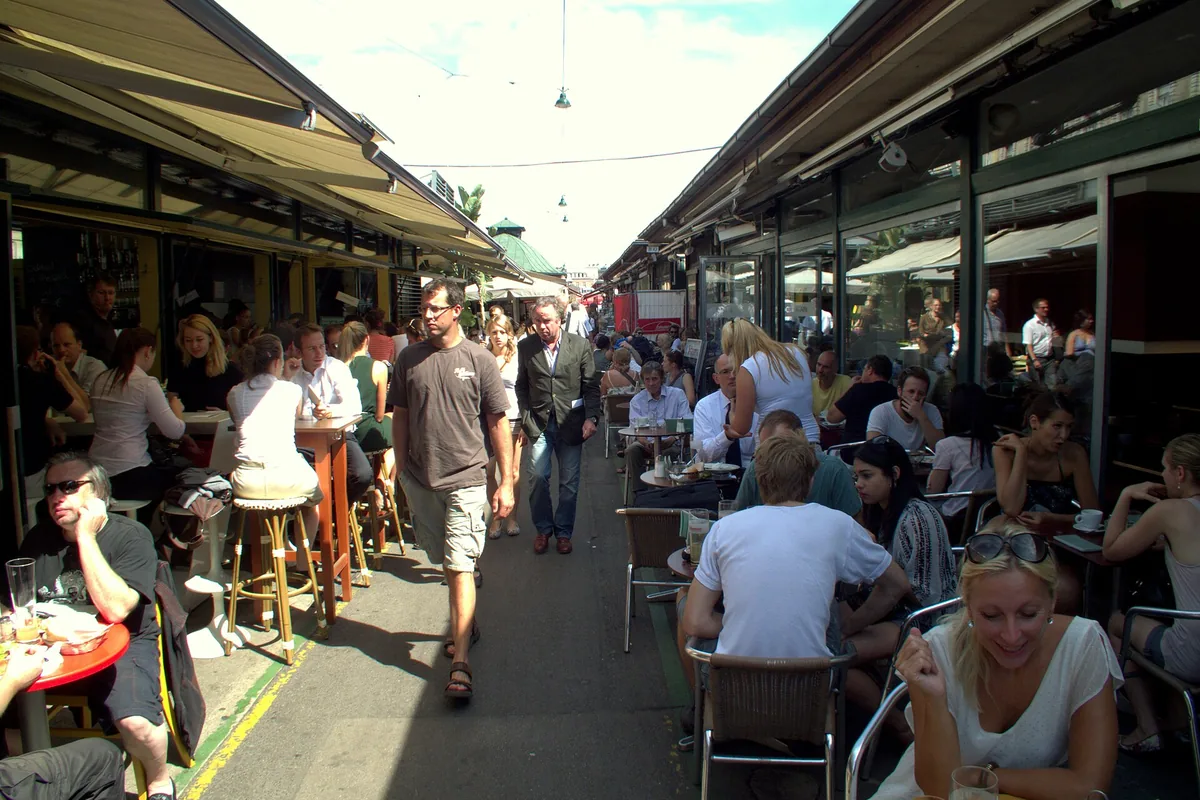
The Naschmarkt is Vienna’s best-known market, and the easiest place to graze your way through the city’s international food scene. It runs along the Wienzeile in the Wieden district, with stalls selling fruit, vegetables, spices, olives and cheese, and a long run of small restaurants and snack bars. The market was one of Vienna’s main food markets and is now as popular with visitors as with locals.
Many of the restaurants mix Austrian dishes with Middle Eastern, Turkish, Asian and Mediterranean food, which makes it a good choice for a group with mixed tastes. Local guides point to a grilled lamb stall, Umarfisch, and to Naschmarkt Deli for shakshuka and sabich, though stalls change over time, so treat them as starting points rather than fixed recommendations.
Opening days matter. The stalls are usually closed on Sunday, according to several sources, and the Saturday flea market at the end of the market runs in the morning and early afternoon. The Austrian tourist board’s Naschmarkt page lists the flea market as a Saturday event, though the opening times given by different sources vary. Check before you go.
Be aware that prices at some restaurants on the market are higher than in the shops, and that a few stalls cater mainly to tourists. Looking at the menu and the crowd before you sit down helps. Buying a few snacks from stalls and eating as you walk is an easy way to keep costs down.
- How to get there: U-Bahn U4 to Kettenbrückengasse or Karlsplatz, then walk along the market.
- How long to spend: One to two hours.
- Best time to go: A weekday late morning, or a Saturday morning if you want the flea market too.
- Tip: Walk the whole length first, then choose where to eat.
6. Salm Bräu
Salm Bräu is a brewery restaurant near the Belvedere, and the best place in Vienna to pair house beer with hearty Austrian food. It sits at Rennweg 8 in the Landstrasse district, in a historic building that was once part of a monastery. It opened as a brewery restaurant in the 1990s, and the copper brewhouse is visible from the dining area.
The beers are brewed on site and range from lighter lagers to darker styles, and the kitchen serves traditional dishes such as pork knuckle, goulash and roast meats. One listing recommends the pork knuckle for two, and portions are generally large. It is a good place to come hungry after the Belvedere gardens.
The atmosphere is relaxed and a little rustic, with long tables and a mix of locals and visitors. In summer there is outdoor seating, and the restaurant can get very busy, so booking ahead is sensible. The official site lists daily opening from late morning to late evening, but check the official Salm Bräu website for current times.
It is not a quick stop. The meals are filling, and a tasting of two or three beers can easily turn into an afternoon. Pair it with a visit to the Belvedere museum or a walk through the nearby gardens for a relaxed half day.
- How to get there: Tram D or 71 along Rennweg, or the U3 or U4 and a short walk.
- How long to spend: One and a half to two hours.
- Best time to go: After a Belvedere visit, for a late lunch or an early dinner.
- Tip: Book ahead in summer, and share a large main course.
7. Café Central
Café Central is the most famous coffee house in Vienna, and the place to experience the city’s coffee house culture at its grandest. It opened in 1876 on the ground floor of the Palais Ferstel, on Herrengasse, and later became a meeting place for writers, thinkers and politicians. High vaulted ceilings, marble columns and chandeliers set the tone.
Viennese coffee houses are about time as much as coffee. You order a drink, perhaps a Melange, which is similar to a cappuccino, and nobody hurries you. A slice of cake, a strudel or a light meal fits the setting, and the menu covers breakfast, lunch and afternoon cake.
Important: Café Central closed for a full renovation in March 2026, with reopening planned for winter 2026 and no exact date given. Until it reopens, the café runs a pop-up called Decentral at Freyung 3, a short walk away. Check the official Café Central website for the reopening date and how reservations work. Before the closure, queues were common and could be long in peak season.
Prices reflect the setting, so treat it as a treat rather than a daily coffee stop. If the queue is too long, other historic coffee houses nearby offer a similar atmosphere with shorter waits, and Café Bräunerhof on this list is one of them. Sources also differ on small historical details, so do not rely on any single date from a casual guide.
A coffee and a pastry here is one of the best ways to spend an hour in the city centre, especially on a wet or cold day.
- How to get there: On foot from Stephansplatz or Graben, or by U-Bahn U3 to Herrengasse.
- How long to spend: One hour.
- Best time to go: An early weekday morning, to avoid the queue.
- Tip: Order a Melange and a slice of cake, and take your time.
8. Demel
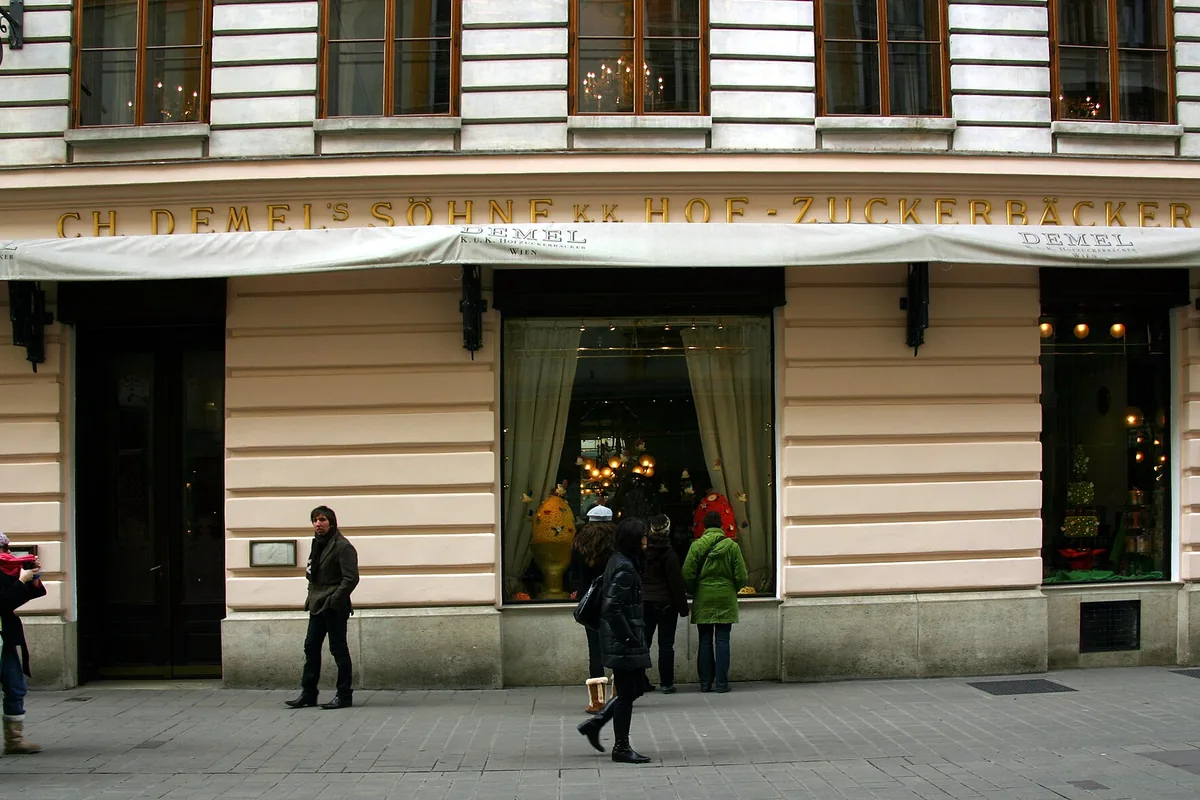
Demel is Vienna’s best-known confectioner, and the place to buy and eat cake in the grand old style. It sits on Kohlmarkt, near the Hofburg, and its windows are known for elaborate sugar and chocolate creations. Guides call it a venerated institution, and the café describes itself as Viennese confectioners since 1786.
The café side serves cakes, pastries and light dishes, and the counter sells chocolates and sweets to take away. Classic orders include an Apfelstrudel and a Sachertorte, the chocolate and apricot cake that is one of Vienna’s best-known sweets. Several cafés and hotels claim a version of the Sachertorte, so you will find different styles around the city.
The rooms are traditional, with staff in period-style uniforms and glass cabinets full of cakes. It is busy with visitors, especially in the afternoon, and you may have to wait for a table. If you only want a gift, you can buy from the counter without queuing for a table.
Check the official Demel website for opening times and the current menu, as tables are normally not reservable. Prices are higher than at an ordinary café, so think of it as an indulgence and choose one or two cakes to share.
A good way to use Demel is as the finale of a walk around the Hofburg and Graben. Buy a box of sweets for home, or sit down with a pot of coffee and a slice of something rich.
- How to get there: On foot from Graben or the Hofburg, a few minutes along Kohlmarkt.
- How long to spend: Forty-five minutes to an hour.
- Best time to go: Mid-afternoon on a weekday.
- Tip: Share two cakes, and buy a box of sweets from the counter to take home.
9. Grinzing Heurigen
A Heuriger is a wine tavern run by a grower, and the Grinzing area is the most famous place to visit one. Grinzing is a village on the northern edge of Vienna, in the Döbling district, with a cluster of Heurigen along its old streets. Other Heurigen areas include Nussdorf, Neustift am Walde, Sievering and Kahlenberg.
The format is simple. You sit at wooden tables, often in a courtyard or garden, and drink the grower’s own young wine. Food is usually a cold platter, known as a Brettljause, with cured meats, cheeses, spreads and bread, and some places have a hot buffet or a fuller restaurant menu. The wine is often a Gemischter Satz, a field blend that is a Vienna speciality.
Grinzing is the most tourist-facing area, and quality varies. One guide warns that not every place calling itself a Heuriger is a genuine grower’s tavern, so look for traditional signs and check reviews before choosing. Opening seasons vary, and many places open only for part of the year, so check the website of any Heuriger you plan to visit.
Getting there is easy but takes some time. One route is the bus from the Heiligenstadt U-Bahn station, and tram lines also serve the wider area. Check the current route and timetable on the Wiener Linien website.
A late afternoon visit gives you time to eat and drink without rushing, and the walk back downhill through the vineyards is part of the pleasure.
- How to get there: U4 to Heiligenstadt, then a bus or tram towards Grinzing; check Wiener Linien for the current route.
- How long to spend: Two to three hours.
- Best time to go: A late afternoon in spring, summer or early autumn.
- Tip: Check that the Heuriger is open before you travel, and order a Brettljause to share.
10. Café Bräunerhof
Café Bräunerhof is a traditional coffee house on Stallburggasse, a calmer alternative to the grand names nearby. It has long been known as a quiet place to read newspapers and drink coffee, in the old Viennese style. The café went through insolvency in 2025 and, according to ORF, reopened in June 2026 under new management linked to the Plachutta family and Peter Friese of Zum Schwarzen Kameel.
The reopening is recent, so check the current menu and opening times before you go. It combines the traditional coffee house atmosphere with the backing of two respected Viennese hospitality names, which is a good sign for the quality of the food and drink.
A traditional coffee house like this is a good choice for a slow breakfast, a light lunch or an afternoon pause between sights. You can expect classic coffees, cakes and simple dishes, served at your own pace. It is a good place to learn how to order, from a small black coffee to a Melange, and to see how Vienna treats its coffee houses as a kind of public living room.
Because it is less famous than Café Central or Demel, it is usually easier to get a table. It sits close to the Hofburg and the Albertina, so it fits neatly into a day of sightseeing in the old town.
- How to get there: On foot from the Hofburg or Albertina, a few minutes through the old town.
- How long to spend: Forty-five minutes to an hour.
- Best time to go: A weekday morning or mid-afternoon.
- Tip: Check current opening times first, because the reopening is recent.
Viennese dishes to look out for
- Wiener schnitzel: A thin, breaded and fried cutlet, traditionally veal, though pork versions are common.
- Tafelspitz: Boiled beef served with broth, horseradish with apple and a chive sauce.
- Käsekrainer: A sausage with cheese inside, a Würstelstand favourite.
- Gulasch: A paprika-rich stew, often served with bread or dumplings.
- Apfelstrudel: Thin pastry filled with spiced apple, best eaten warm.
- Sachertorte: A dense chocolate cake with apricot jam, served with whipped cream.
- Melange: A Viennese coffee with steamed milk, similar to a cappuccino.
- Gemischter Satz: A wine made from several grape varieties grown together, a Vienna speciality.
How Many Days Do You Need? A 3-Day Vienna Food Itinerary
Three days let you cover the classics without rushing. The plan below groups places by area, so you spend your time eating rather than travelling. It is also available as a free printable PDF.
Day 1: Old town classics
Start with coffee and cake at Café Central (or its Decentral pop-up at Freyung 3 until the café reopens), then walk to Demel for a sweet finish or a box to take home. After a morning of sightseeing, have an open sandwich lunch at Zum Schwarzen Kameel. In the evening, book Figlmüller for a schnitzel dinner on Wollzeile. Everything is within a short walk of Stephansplatz.
Day 2: Markets, sausages and boiled beef
Spend the morning at the Naschmarkt and graze through the stalls for lunch. In the afternoon, walk through the centre towards the Albertina for a sausage at Bitzinger. In the evening, book Plachutta for Tafelspitz, and finish with a quiet coffee at Café Bräunerhof.
Day 3: Beer, gardens and wine
Visit the Belvedere in the morning, then have a late lunch at Salm Bräu, which is a short walk away. Travel north in the late afternoon to a Heuriger in Grinzing for new wine and a cold platter, and return by public transport before it gets too late.
Getting around Vienna
The historic centre is compact, and many places on this list are within walking distance of Stephansplatz. For the rest, the public transport system run by Wiener Linien is efficient, with U-Bahn lines, trams and buses. The U-Bahn runs through the night on Friday and Saturday nights and before public holidays, according to the official tourism site, with night buses covering other nights. Ticket products have changed recently, so check the current options before you buy.
Trams are useful for Salm Bräu and the Ringstrasse, and the U4 is the line for the Naschmarkt and Heiligenstadt. If you plan to drink wine in Grinzing, plan your journey home in advance rather than driving.
How much does eating in Vienna cost?
Vienna is more expensive than central and eastern Europe, but it offers good value at every level. Use these tiers as a guide:
- Cheap: A sausage at Bitzinger, market snacks at the Naschmarkt, a coffee at Café Bräunerhof and a Brettljause at a Heuriger.
- Mid-range: Schnitzel at Figlmüller, open sandwiches at Zum Schwarzen Kameel, a meal at Salm Bräu and cake at Café Central or Demel.
- Comfortable: Tafelspitz at Plachutta, with wine and a coffee house visit.
To keep costs down, share large portions, eat your main meal at lunch and look for set lunch menus, which many restaurants offer on weekdays. Tap water in Vienna is of high quality, and many restaurants will bring a jug on request.
Where should you stay in Vienna?
If you are visiting in December, plan your meals around the festive stalls too, and see our guide to the best Christmas markets in Europe for how Vienna compares. For a winter break over the holidays, our guide to New Year’s Eve destinations in Europe explains what Vienna offers on the night.
- Innere Stadt: The best base for food and sights, with most places on this list within walking distance, though it is the priciest area.
- Wieden and Mariahilf: Close to the Naschmarkt, with cafés and a lively local feel.
- Landstrasse: Near the Belvedere and Salm Bräu, with good transport links.
- Leopoldstadt: A trendy, well-connected area with a growing food scene, close to the Prater.
- Döbling: Quiet and green, close to the Heurigen, but further from the centre.
What should you know before eating out in Vienna?
- Booking: Book Plachutta, Figlmüller and Salm Bräu for dinner, especially at weekends and in summer.
- Tipping: Tipping is customary. Rounding up or adding a modest percentage is normal, and you usually tell the waiter the total when you pay.
- Opening hours: Many restaurants close between lunch and dinner, and some close on Sundays or Mondays. Check before you go.
- Coffee house etiquette: Nobody will rush you, and you can stay for a long time after one coffee.
- Cash: Most places accept cards, but smaller stalls and Heurigen may prefer cash.
Combining Vienna with another Central European city? Compare the food scenes in our guide to the best places to eat in Prague and our guide to the best places to eat in Budapest, both easy rail trips from Vienna.
Frequently Asked Questions
What are the best places to eat in Vienna?
Figlmüller, Plachutta, Zum Schwarzen Kameel, Salm Bräu and the Naschmarkt are among the most often recommended. The best choice depends on whether you want schnitzel, boiled beef, light bites or a market lunch.
What traditional food should I try in Vienna?
Try Wiener schnitzel, Tafelspitz, Käsekrainer from a Würstelstand, goulash and a strudel or Sachertorte for dessert. A Melange coffee in a coffee house completes the list.
Where can I eat the best schnitzel in Vienna?
Figlmüller is the best-known place for schnitzel, and many traditional restaurants also serve it. Check whether the menu offers pork or veal, as the two differ in taste and price.
Is the Naschmarkt worth visiting for food?
Yes, as a place to browse and snack, though some restaurants cater mainly to visitors. Walk the whole market and compare menus before you sit down.
Do I need to book restaurants in Vienna?
For popular places such as Plachutta, Figlmüller and Salm Bräu, booking is wise, especially at dinner and at weekends. Cafés, stands and markets usually take walk-ins.
What is a Heuriger?
A Heuriger is a wine tavern run by a grower, serving young wine and simple food such as a cold platter. Grinzing is the most famous area, but opening seasons vary, so check before you go.
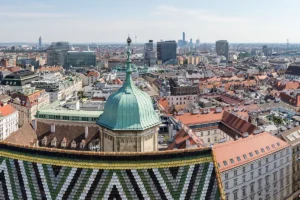
Featured image: Photo by Deror_avi, CC BY-SA 3.0, cropped, via Wikimedia Commons