Last updated: October 2026
Tokyo is so big that it’s easy to spend a whole trip without leaving the city. But some of the most memorable experiences in Japan are just an hour or two away by train: giant Buddhas and seaside shrines, hot spring towns in the mountains, lakes with views of Mount Fuji and ornate temples deep in cedar forests.
Japan’s rail network makes these trips easy, even if you don’t speak Japanese, and the Japan National Tourism Organization is a good official source for wider trip planning. This guide covers the 10 best day trips from Tokyo, each with a practical box covering how to get there, how long to spend, the best time to go and one tip. Further down you’ll find suggested plans, advice on rail passes, where to stay for easy day trips and budget guidance.
Quick answer: What are the best day trips from Tokyo? The best day trips from Tokyo are Kamakura for temples and the Great Buddha, Hakone for hot springs and Fuji views, Mount Fuji Five Lakes for close-up views of the mountain and Nikko for ornate shrines. For something shorter, try Yokohama, Kawagoe, Enoshima or Mount Takao, or head to Chichibu or Karuizawa for a quieter day. If you only have one day, choose Kamakura; with two, add Hakone or Kawaguchiko.
Quick comparison: day trips from Tokyo at a glance
| Day trip | Best for | Time each way | Main departure point |
|---|---|---|---|
| Kamakura | Temples, the Great Buddha, coast | Around 1 hour | Tokyo or Shinjuku |
| Hakone | Hot springs, lakes, Fuji views | Around 1.5 hours | Shinjuku |
| Mount Fuji Five Lakes | Close-up Fuji views | Around 2 hours | Shinjuku |
| Nikko | Ornate shrines and nature | Around 2 hours | Asakusa or Tokyo |
| Yokohama | Waterfront, Chinatown, museums | Under 1 hour | Shibuya or Tokyo |
| Kawagoe | Edo-era streets | Around 30 minutes | Ikebukuro |
| Enoshima | Island shrines and sea views | Around 1 hour | Shinjuku |
| Mount Takao | Easy mountain hike | Under 1 hour | Shinjuku |
| Chichibu | Shrines, nature and festivals | Around 80 minutes | Ikebukuro |
| Karuizawa | Mountain resort and outlet shopping | Around 1 hour by Shinkansen | Tokyo or Ueno |
Times are approximate and depend on the service you take. Check a route planner such as Japan Transit Planner or Google Maps on the day.
1. Kamakura
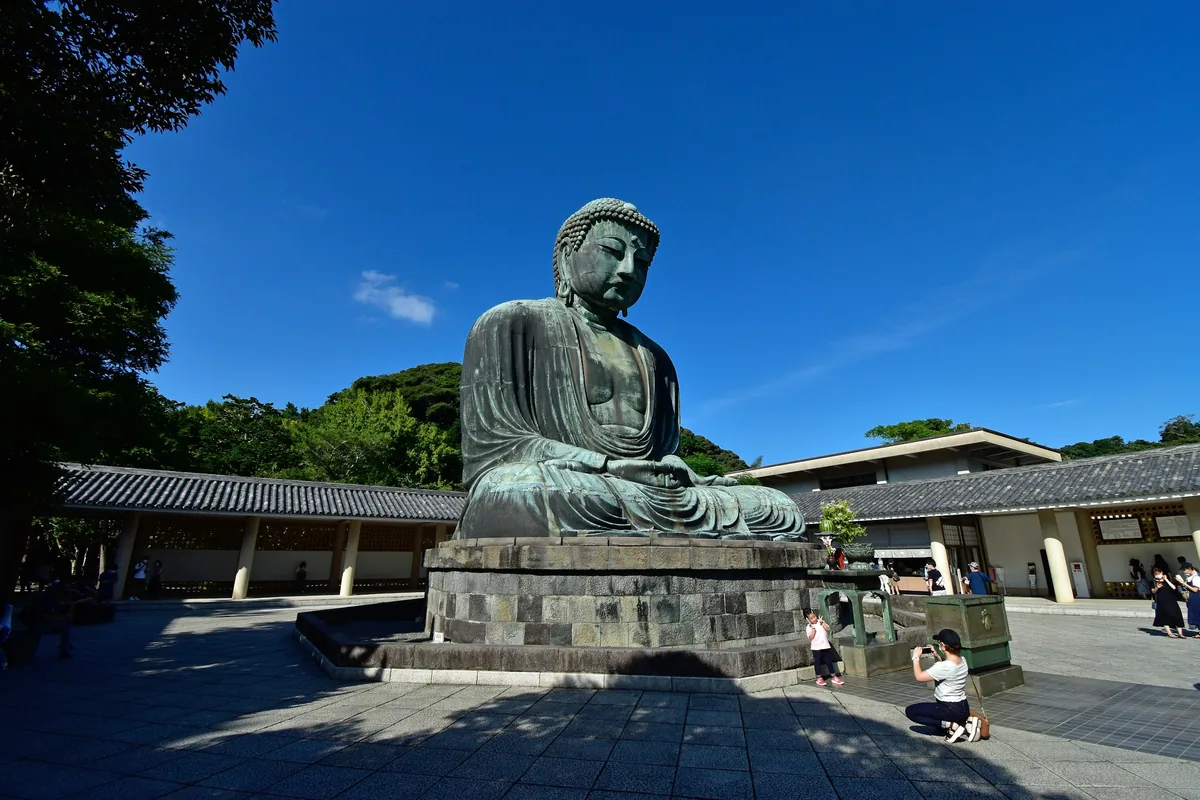
Kamakura was Japan’s seat of government for around 150 years from the late 12th century, and today it’s one of the most rewarding day trips from Tokyo. The town is packed with Zen temples and Shinto shrines, set between wooded hills and the sea.
The most famous sight is the Great Buddha (Daibutsu) at Kotoku-in, a bronze statue more than 11 metres tall that has sat in the open air since a tsunami destroyed its hall in 1498. Nearby, Hase-dera temple has a hillside garden, a huge wooden statue of Kannon and views over the bay. In the town centre, Tsurugaoka Hachimangu shrine sits at the top of a long approach lined with shops, and Komachi-dori is the place to snack on local sweets.
If you enjoy walking, hiking trails link several temples through the hills, and in June the hydrangeas at temples such as Meigetsu-in draw big crowds.
- How to get there: JR Yokosuka Line from Tokyo station to Kamakura, around an hour, with no change. The local Enoden line connects Kamakura with Hase for the Great Buddha.
- How long to spend: A full day, or combine with Enoshima.
- Best time to go: Weekday mornings; weekends and holidays are very busy.
- Tip: Start at the Great Buddha and Hase-dera before the crowds, then work your way back into town.
2. Hakone
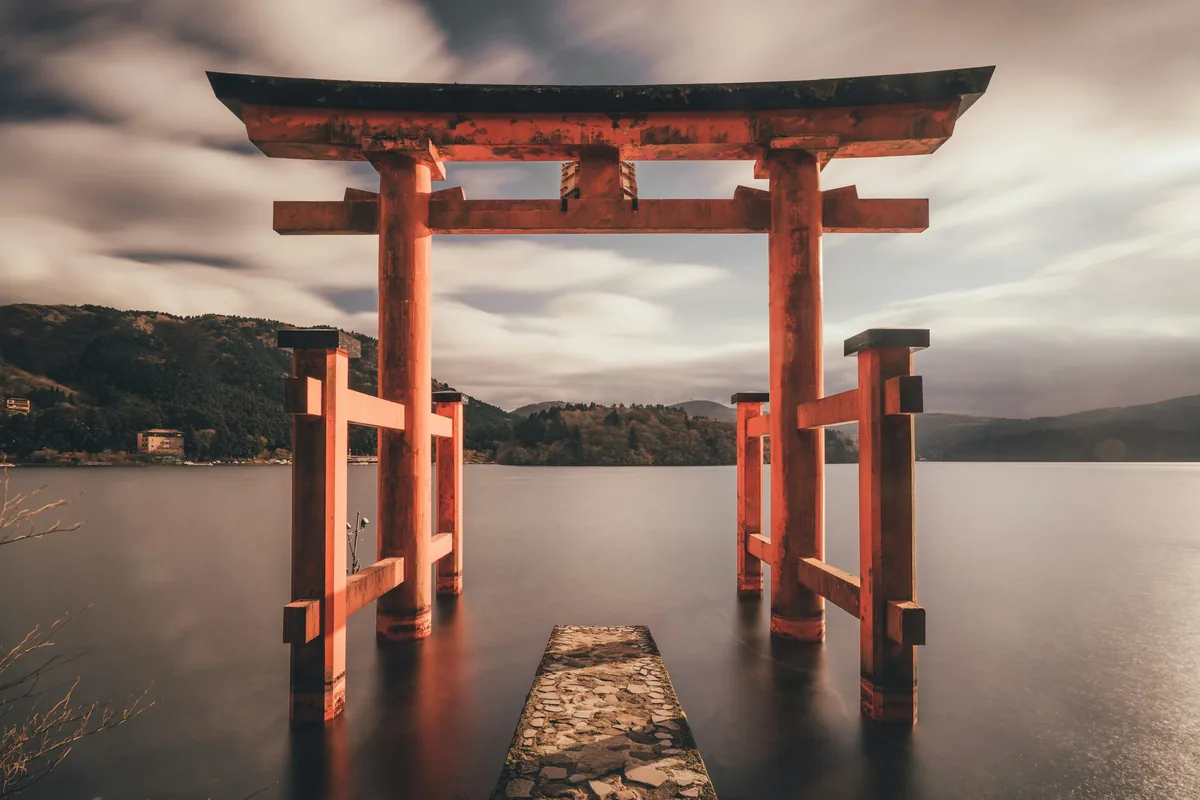
Hakone is a mountain resort famous for its hot springs (onsen), lakes and, on clear days, views of Mount Fuji. It’s an easy trip from Tokyo, and the classic way to see it is a loop using several types of transport: mountain railway, cable car, ropeway, pirate-style sightseeing boat and bus.
Highlights include Owakudani, a volcanic valley where you can see steam vents and try black eggs boiled in the hot springs, the Hakone Open-Air Museum with sculptures set in a landscaped park, Lake Ashi with its sightseeing boats, and the red torii gate of Hakone Shrine standing in the water.
Many visitors finish the day with a soak at a day-use hot spring before heading back to Tokyo. If you have more time, Hakone is one of the best places in Japan to stay a night at a traditional ryokan inn.
- How to get there: Odakyu Romancecar limited express from Shinjuku to Hakone-Yumoto, around 1.5 hours. Slower regular trains are also available, with a change at Odawara.
- How long to spend: A full day for the loop; an overnight stay is even better.
- Best time to go: Start early, as the loop takes most of the day.
- Tip: Parts of the loop, especially the ropeway, close for maintenance, bad weather or volcanic activity, with replacement buses at times. Check the Hakone transport status page on the morning you travel.
3. Mount Fuji Five Lakes (Kawaguchiko)
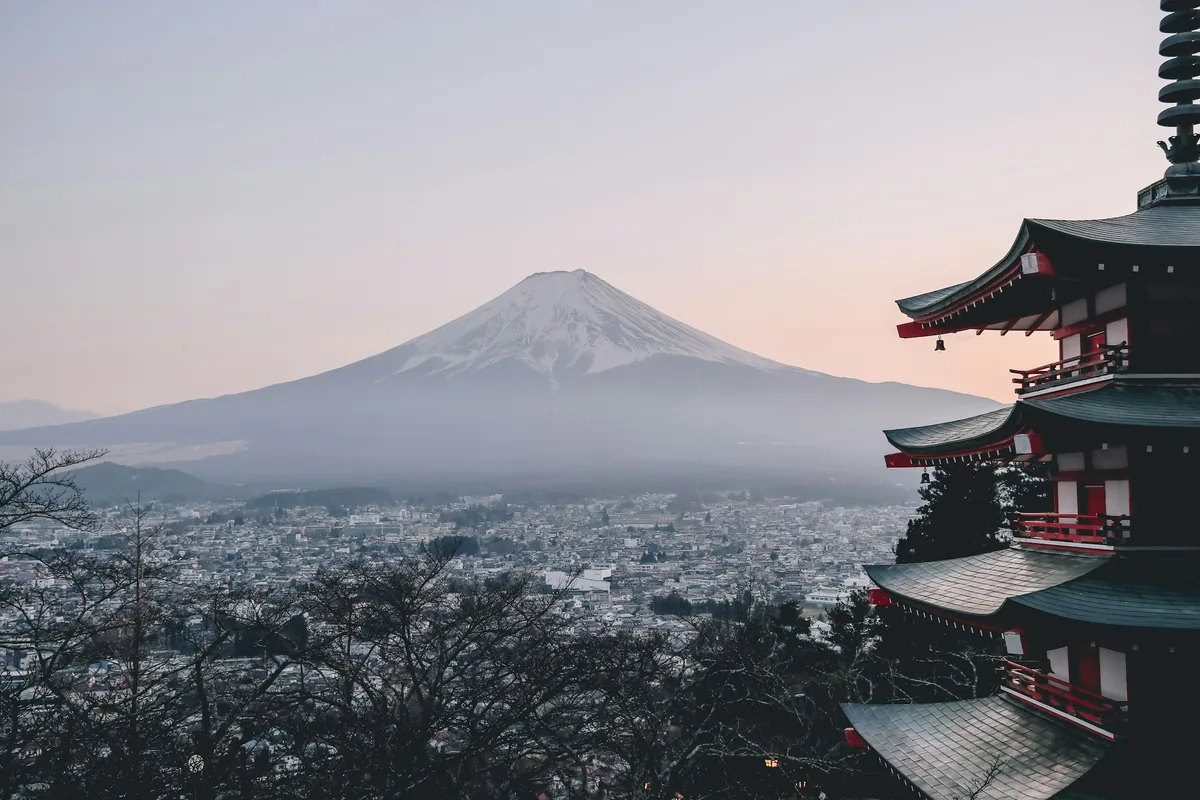
For the closest views of Mount Fuji on a day trip, head to the Fuji Five Lakes area at the mountain’s northern base. Lake Kawaguchiko is the most popular and the easiest to reach, with lakeside paths, museums and boat trips.
The most famous viewpoint is the Chureito Pagoda, a five-storey pagoda above the town of Fujiyoshida, reached by climbing around 400 steps. With Fuji behind it, especially during cherry blossom season or autumn, it’s one of the most photographed scenes in Japan. The town has brought in crowd-control measures at peak cherry blossom time, so expect long waits then and stay out of the residential streets nearby. Other highlights include the Kachi Kachi Ropeway up Mount Tenjo and the traditional thatched houses at Saiko Iyashi no Sato Nenba.
Fuji is famously shy. It’s often hidden by cloud, particularly in summer, so check the forecast and live webcams before you commit to the trip.
- How to get there: Highway buses from Shinjuku take around two hours. By train, the Fuji Excursion limited express runs direct from Shinjuku to Kawaguchiko a few times a day in around two hours (all seats reserved; check the timetable for your date), or take the JR Chuo Line to Otsuki and change to the Fujikyu Railway.
- How long to spend: A full day.
- Best time to go: Early morning, when Fuji is more likely to be clear. Late autumn and winter usually give the best visibility.
- Tip: Book highway bus seats or Fuji Excursion seats in advance at weekends and in peak seasons, as they sell out.
4. Nikko
Nikko, in the mountains north of Tokyo, is home to the UNESCO World Heritage-listed Shrines and Temples of Nikko, and it’s one of the most beautiful places in the region. Its centrepiece is Toshogu, the lavish shrine and mausoleum of Tokugawa Ieyasu, founder of the shogunate that ruled Japan for over 250 years. The buildings are covered in gold leaf, lacquer and intricate carvings, including the famous “see no evil, hear no evil, speak no evil” monkeys.
Nearby are Rinnoji temple and Futarasan shrine, as well as the red Shinkyo Bridge over the Daiya River. Further into the mountains, Lake Chuzenji and the Kegon Falls are spectacular, especially in autumn, though visiting them as well as the shrines makes for a long day.
- How to get there: Tobu limited express trains from Asakusa to Tobu-Nikko take around two hours. You can also take the Shinkansen to Utsunomiya and change for the JR Nikko Line.
- How long to spend: A full day for the shrines; longer if you add Lake Chuzenji.
- Best time to go: Arrive early. Autumn leaves in October and November are spectacular but bring crowds and traffic.
- Tip: Tobu’s NIKKO PASS World Heritage Area covers the round trip from Asakusa and the local buses around the shrines (limited express seats cost extra), so compare it with single tickets.
5. Yokohama
Yokohama is Japan’s second largest city and an easy trip from Tokyo. It was one of the first ports opened to foreign trade in the 19th century, and that history shows in its waterfront, its old Western-style buildings and Japan’s largest Chinatown.
Minato Mirai, the modern waterfront district, has a giant Ferris wheel, museums and the Red Brick Warehouse shopping and dining complex. The CupNoodles Museum is a fun stop where you can design your own instant noodle cup. Chinatown is the place for lunch, with hundreds of restaurants and food stalls. Sankeien Garden, a traditional Japanese garden with historic buildings, is a calm contrast.
Because it’s so close, Yokohama also works as an afternoon and evening trip. The waterfront is especially attractive after dark.
- How to get there: Direct trains from Shibuya, Shinjuku or Tokyo station take under an hour.
- How long to spend: Half a day to a full day.
- Best time to go: Afternoon into evening, for waterfront views at night.
- Tip: Eat your way through Chinatown at lunch, grazing on steamed buns and dumplings from street stalls.
6. Kawagoe
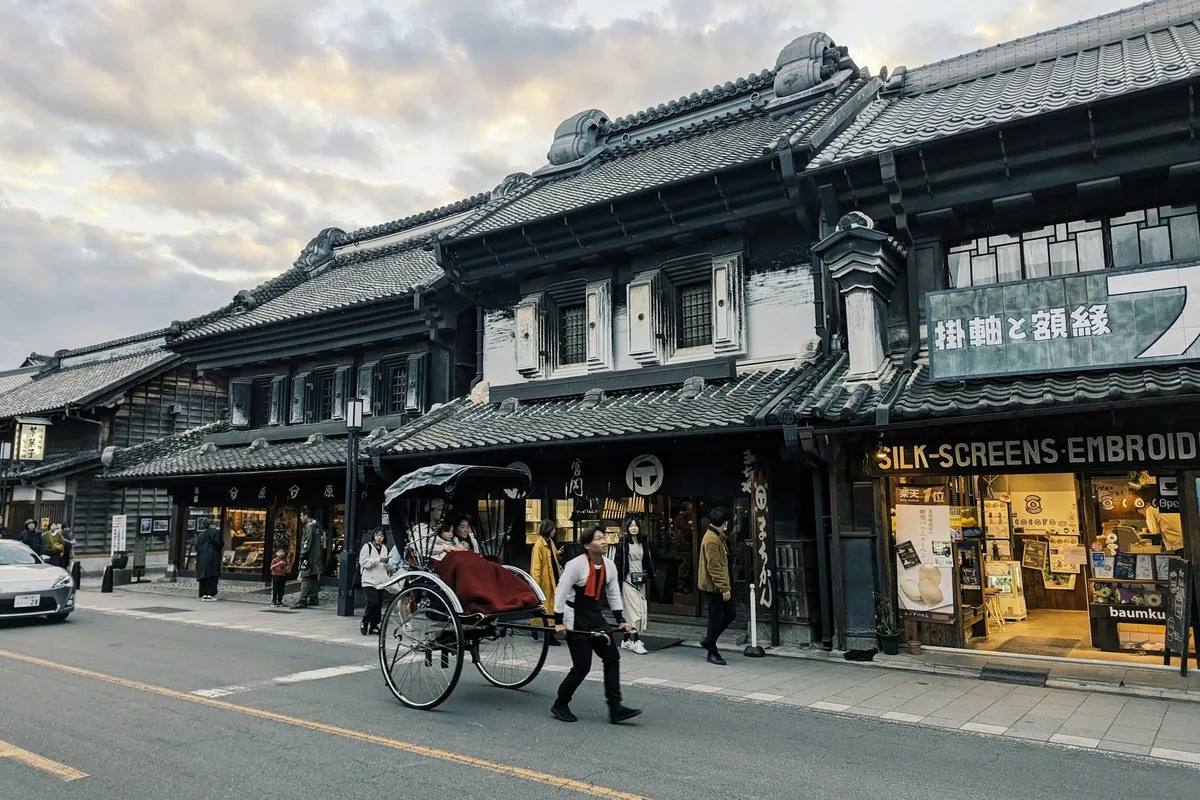
Kawagoe is known as “Little Edo” because its old merchant district preserves the feel of Edo-period Japan. The main street is lined with kurazukuri, thick-walled clay warehouses built to resist fire, and the wooden Toki no Kane bell tower has rung out the time for centuries.
The town is also famous for sweet potatoes, so expect sweet potato snacks, ice cream and sweets everywhere. Kashiya Yokocho, a small lane of old-fashioned sweet shops, is fun for children and adults alike. Kitain temple has buildings moved from Edo Castle and the Gohyaku Rakan, hundreds of stone statues each with a different expression.
Kawagoe is close, easy and relaxed, which makes it ideal if you want a taste of old Japan without a long journey.
- How to get there: Tobu Tojo Line from Ikebukuro, around 30 minutes on an express. Seibu trains from Seibu-Shinjuku to Hon-Kawagoe are another option.
- How long to spend: Half a day.
- Best time to go: Weekday mornings, as weekend afternoons get crowded.
- Tip: The old town is a walk or short bus ride from the station, so use the loop bus if you’d rather save your energy for exploring.
7. Enoshima
Enoshima is a small island just off the coast, joined to the mainland by a bridge. It’s a popular escape from Tokyo, with shrines, caves, a lighthouse observation tower and, on clear days, views of Mount Fuji across Sagami Bay.
From the bridge, a lane lined with seafood restaurants and snack stalls leads up to Enoshima Shrine, which is dedicated to Benzaiten, the goddess of music and good fortune. At the top of the island, the Sea Candle observation tower and the Samuel Cocking Garden offer wide views. On the far side, the Iwaya Caves are carved into the cliffs, though they can close in rough seas or typhoon weather, so check before you go.
Local seafood is the speciality, especially shirasu (whitebait), served raw or boiled on rice. Enoshima pairs perfectly with Kamakura, since the Enoden line connects the two.
- How to get there: Odakyu trains from Shinjuku to Katase-Enoshima, around an hour on the Romancecar and a little longer on regular trains, which may need a change. You can also reach it via Kamakura on the Enoden line.
- How long to spend: Half a day, or a full day combined with Kamakura.
- Best time to go: Late afternoon, for sunset over the sea and Fuji.
- Tip: The island is hilly. Paid outdoor escalators help on the climb up from the shrine gate.
8. Mount Takao
Mount Takao is the easiest mountain hike near Tokyo, and hugely popular with city hikers all year. It’s just under 600 metres high, and several well-marked trails lead to the summit through cedar forest, past waterfalls and up to the mountain’s Buddhist temple, Yakuo-in.
You don’t have to hike all the way, as a cable car and chairlift take you partway up. On clear days, the summit has views across the Kanto plain and, in winter, of Mount Fuji. Autumn is especially popular for the colours.
Mount Takao is a good choice if you want fresh air and nature without a long journey. Afterwards, the area around Takaosanguchi station has soba restaurants and a hot spring facility to soak your legs.
- How to get there: Keio Line from Shinjuku to Takaosanguchi, under an hour on the faster services.
- How long to spend: Half a day.
- Best time to go: Weekday mornings. Autumn weekends are extremely busy.
- Tip: Take the cable car up and walk down to save effort while still seeing the best of the trails.
9. Chichibu
Chichibu is a mountainous area north-west of Tokyo that feels a world away from the city. It’s known for its shrines, its seasonal flower fields and the Chichibu Night Festival in December, one of Japan’s most famous festivals.
In town, Chichibu Shrine has detailed carvings, and the Nagatoro area has river boat rides through a gorge with unusual rock formations. Mitsumine Shrine, high in the mountains, is atmospheric but takes longer to reach. In spring, the Hitsujiyama Park shibazakura (moss phlox) fields turn the hillsides pink.
Chichibu suits travellers who want a quieter day out, and its seasonal events give it a different character throughout the year.
- How to get there: Seibu limited express trains (Laview) from Ikebukuro to Seibu-Chichibu, around 80 minutes, according to Chichibu’s official access guide.
- How long to spend: A full day.
- Best time to go: Check what’s in season. Flower fields peak in spring, and the night festival is in early December.
- Tip: Book limited express seats in advance on busy weekends and festival days.
10. Karuizawa
Karuizawa is a mountain resort in Nagano Prefecture that has been a summer escape for Tokyo residents since the 19th century. Its cool climate, forest walks and historic churches give it a very different feel from the city, and the Shinkansen makes it surprisingly quick to reach.
Old Karuizawa Ginza is the main street, lined with cafés, bakeries and shops. Nearby is Kumoba Pond, known for its autumn reflections, and further out are the Shiraito Falls, where water spills in fine threads across a curved rock face. Right next to the station, a large outlet mall draws many visitors.
Karuizawa is a good alternative when the more famous day trips are crowded, and it’s especially pleasant in summer and autumn.
- How to get there: Hokuriku Shinkansen from Tokyo or Ueno, around an hour.
- How long to spend: A full day.
- Best time to go: Summer for cool weather; October for autumn colours.
- Tip: Rent a bike near the station for the town and Kumoba Pond, and take the local bus from the station for the Shiraito Falls.
How to pick the right day trip
- For temples and shrines: Kamakura or Nikko.
- For Mount Fuji: Kawaguchiko first, then Hakone or Enoshima on clear days.
- For hot springs: Hakone.
- For a short half-day: Kawagoe, Yokohama or Mount Takao.
- For nature and hiking: Mount Takao, Chichibu or Nikko’s Lake Chuzenji.
- For a quieter alternative: Chichibu or Karuizawa.
Suggested plans for 1, 2 or 3 days
One day: Kamakura and Enoshima together, linked by the Enoden line.
Two days: Add Hakone on day two. If the weather looks clear, swap Hakone for Kawaguchiko to maximise your chance of seeing Fuji.
Three days: Add Nikko on day three for its shrines, or Kawagoe and Yokohama if you prefer shorter trips with more time to relax in the evening.
Do you need a rail pass for day trips from Tokyo?
The nationwide Japan Rail Pass rose sharply in price in 2023, and for most visitors who are mainly staying in Tokyo it’s no longer good value for day trips alone. Many popular trips also use private railway lines, such as Odakyu to Hakone, Tobu to Nikko and Keio to Mount Takao, which the JR Pass doesn’t cover.
Instead, use an IC card such as Suica or PASMO for most journeys, and check the regional passes sold by individual railway companies, such as Odakyu’s Hakone Freepass (which can include the round trip from Shinjuku, with the Romancecar charged extra) or Tobu’s Nikko passes. Compare the cost with individual tickets before buying.
Tours versus going independently
Japan’s public transport is so reliable that most day trips are easy to do independently. Tours are most useful for Mount Fuji and the Five Lakes, where they handle the logistics and often combine several viewpoints, and for travellers who would rather not navigate transfers. Going independently gives you more flexibility to adjust plans if the weather changes.
Getting around
- IC cards: Suica and PASMO work on almost all trains, subways and buses around Tokyo, and in many convenience stores. Visitors can also use the Welcome Suica Mobile app on a smartphone.
- Limited express trains: Romancecar, Tobu’s limited expresses and Seibu Laview services need a reserved seat ticket on top of your fare. Book at the station or online.
- Shinkansen: Fastest for Karuizawa and Nikko via Utsunomiya, but more expensive.
- Route planning: Google Maps and Japan Transit Planner give accurate times and platforms.
Where to stay for easy day trips
- Shinjuku: the best base for Hakone, Mount Fuji, Mount Takao and Enoshima.
- Tokyo Station and Ginza: good for Kamakura, Yokohama and the Shinkansen.
- Ueno and Asakusa: convenient for Nikko and the northbound Shinkansen.
- Ikebukuro: best for Kawagoe and Chichibu.
Budget guidance
- Shoestring: Use regular trains rather than limited expresses, choose free sights such as shrines, hiking trails and lakeside walks, and grab lunch from convenience stores or local food stalls.
- Mid-range: Use limited express trains for comfort, buy regional passes where they save money, pay for a museum or ropeway, and have a sit-down lunch.
- Comfortable: Take the Shinkansen, join small-group tours to Mount Fuji, and add a day-use onsen or a night at a ryokan in Hakone.
Plan more of your trip to Japan
Day trips work best when your base city is sorted first. If you haven’t decided how to spend your days in the capital itself, read our guide to the top places to visit in Tokyo before you pick which excursions to add. For a wider route across the country, our round-up of the best places to visit in Japan shows how Tokyo fits with Kyoto, Osaka and beyond. And if Kyoto is next on your list, our guide to the best things to do in Kyoto explains why it deserves a proper stay rather than a rushed day trip.
Frequently Asked Questions
What is the easiest day trip from Tokyo?
Yokohama and Kawagoe are the easiest, both under an hour by train with no complicated transfers. Kamakura is also simple, with a direct JR train from Tokyo station.
Can you see Mount Fuji on a day trip from Tokyo?
Yes. Lake Kawaguchiko gives the closest views, and Hakone and Enoshima also have Fuji views on clear days. Fuji is often hidden by cloud, especially in summer, so check the forecast and webcams before you go.
Is the JR Pass worth it for day trips from Tokyo?
Usually not, if you’re only taking day trips from Tokyo. Several popular routes use private railways not covered by the pass. Compare regional passes and individual fares first.
Is Hakone or Nikko better for a day trip?
Hakone is better for hot springs, lakes and Fuji views. Nikko is better for history and ornate shrine architecture. If you can only do one, choose based on your interests and the weather.
How do you get to Kamakura from Tokyo?
Take the JR Yokosuka Line from Tokyo station directly to Kamakura, which takes around an hour. From Shinjuku, the JR Shonan-Shinjuku Line also runs to Kamakura.
Can you do Kyoto as a day trip from Tokyo?
It’s possible by Shinkansen, which takes over two hours each way, but it’s very rushed and expensive. Kyoto deserves at least two or three nights, so it’s better to stay rather than visit as a day trip. Our Kyoto guide shows what you would miss.
Featured image: Photo by Luke Stackpoole on Unsplash