Last updated: October 2026
Lisbon is one of Europe’s best bases for day trips. Within an hour you can be exploring fairy-tale palaces in the hills of Sintra or lying on a beach at Cascais, and a little further out are medieval walled towns, Roman ruins, the giant waves of Nazaré and some of Portugal’s greatest monasteries. The official Visit Portugal site is a good starting point for regional information.
This guide covers the 10 best day trips from Lisbon, with a practical box for each: how to get there, how long to spend, the best time to go and one tip. If you are spending a few days in the city first, read our guide to the best things to do in Lisbon to plan your time in town. After the list you’ll find advice on choosing, suggested plans, tours versus going it alone, getting around, where to stay and budget guidance.
Quick answer: What are the best day trips from Lisbon? The best day trips from Lisbon are Sintra for palaces, Cascais and Estoril for beaches, Évora for Roman and medieval history, Óbidos for a walled town, Arrábida and Setúbal for coast and nature, Nazaré for big waves, Tomar for the Templar convent, Coimbra for its university, Ericeira for surfing and Fátima, Batalha and Alcobaça for monasteries. Sintra and Cascais are the easiest by train and suit most first-time visitors, while Évora and Óbidos are the best choices for history and charm.
Quick comparison: day trips from Lisbon at a glance
| Day trip | Best for | Getting there | Time each way |
|---|---|---|---|
| Sintra | Palaces and gardens | Train | Around 40 minutes |
| Cascais and Estoril | Beaches and seaside town | Train | Around 40 minutes |
| Évora | Roman temple and old town | Train or bus | Around 1.5 hours or a little more |
| Óbidos | Medieval walled town | Bus | Around 1 hour |
| Arrábida and Setúbal | Beaches and nature park | Car, tour or summer shuttle bus | Around 1 hour |
| Nazaré | Fishing town and big waves | Bus | Around 1.5 to 2 hours |
| Tomar | Templar castle and convent | Train | Around 2 hours |
| Coimbra | University city | Train | Around 2 hours |
| Ericeira | Surf town and seafood | Bus | Around 1 hour or a little more |
| Fátima, Batalha and Alcobaça | Monasteries and pilgrimage site | Tour or car | Around 1.5 hours |
Times are approximate. Check CP (Comboios de Portugal) and bus timetables on the day.
1. Sintra
Sintra is the most popular day trip from Lisbon, and for good reason. This hilltop town, a UNESCO World Heritage Site, was a summer retreat for Portuguese royalty and aristocrats, who filled its forested hills with palaces, gardens and follies.
The highlights are Pena Palace, a riot of red and yellow towers on a hilltop; Quinta da Regaleira, with its mysterious Initiation Well spiralling into the ground; the ruined Moorish Castle along the ridge; and the National Palace in the town centre with its two huge conical chimneys. Monserrate Palace, a little further out, has beautiful gardens and is usually much quieter.
The key to Sintra is not trying to see everything. Pick two or three sights and book ahead: Parques de Sintra, which runs Pena, the Moorish Castle, Monserrate and the National Palace, sells Pena Palace tickets for a specific date and time slot. Accept that you’ll spend some of the day going up and down hills.
- How to get there: CP trains on the Sintra line run frequently from Rossio station (also from Oriente and Entrecampos) and take around 40 minutes from Rossio. From Sintra station, walk into town or take the Scotturb 434 circuit bus up to the Moorish Castle and Pena Palace.
- How long to spend: A full day.
- Best time to go: Arrive early, ideally on a weekday. The first hours after opening are much calmer.
- Tip: Don’t drive into Sintra. Private cars can’t reach Pena or the Moorish Castle, parking is very limited and the narrow roads near the palaces get congested.
2. Cascais and Estoril
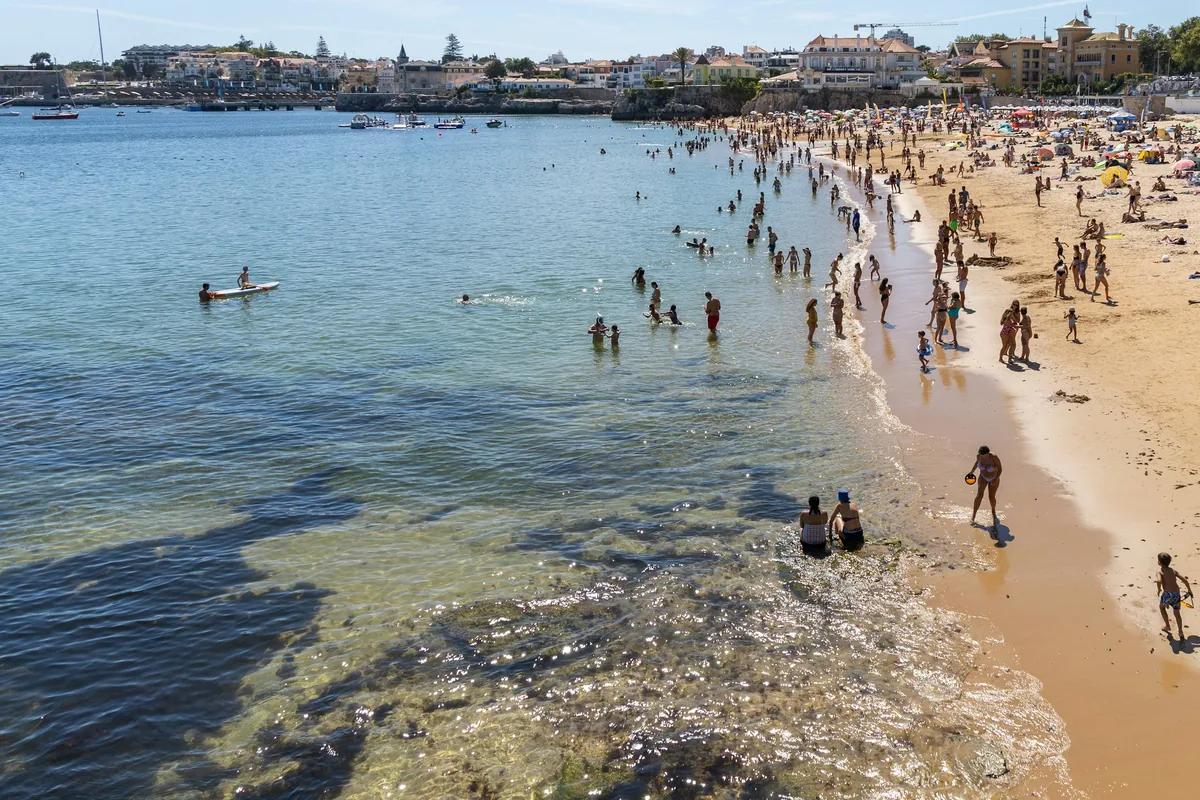
Cascais is a former fishing village that became a fashionable seaside resort, and it’s the easiest beach trip from Lisbon. The train runs along the coast, so the journey itself is part of the experience.
In Cascais, wander the old town’s lanes, stroll along the marina and relax on one of several small sandy beaches. Walk or cycle west along the coast to Boca do Inferno, a dramatic rock formation where waves crash into a collapsed cave. If you have more energy, the cycle path continues towards the wild Atlantic beach at Guincho, popular with surfers and windsurfers.
Estoril, the next stop along the line, has a long promenade, a famous casino and more beaches. You can walk between the two towns along the seafront in under an hour.
- How to get there: CP trains from Cais do Sodré station in Lisbon take around 40 minutes. The line is being modernised, so check CP for engineering works, especially in the evenings.
- How long to spend: Half a day to a full day.
- Best time to go: Afternoon on a sunny day, staying for sunset.
- Tip: Sit on the left side of the train heading out of Lisbon for river and sea views.
3. Évora

Évora, in the heart of the Alentejo region, is one of Portugal’s best-preserved historic cities and a UNESCO World Heritage Site. Its old town is enclosed by walls and full of whitewashed houses, narrow streets and grand buildings that span 2,000 years of history.
The most famous sight is the Roman Temple, its Corinthian columns standing in a square at the top of the town. Nearby, the cathedral has a rooftop you can walk across for views over the plains. The most memorable stop is the Chapel of Bones (Capela dos Ossos) inside the Church of St Francis, whose walls are lined with human bones and skulls.
The Alentejo is known for its food and wine, so take your time over lunch. If you are heading on to the south afterwards, our guide to the best Algarve beaches shows where to swim next. Hearty dishes such as pork with clams and local cheeses are regional specialities.
- How to get there: Direct Intercidades trains from Oriente, Entrecampos and Sete Rios, or express buses from Sete Rios, take around 1.5 hours or a little more. Trains are only a handful a day, so check the return times before you go.
- How long to spend: A full day.
- Best time to go: Spring or autumn. Summer in the Alentejo can be very hot.
- Tip: If you have a car, the Almendres Cromlech, a prehistoric stone circle, is a short drive from town.
4. Óbidos
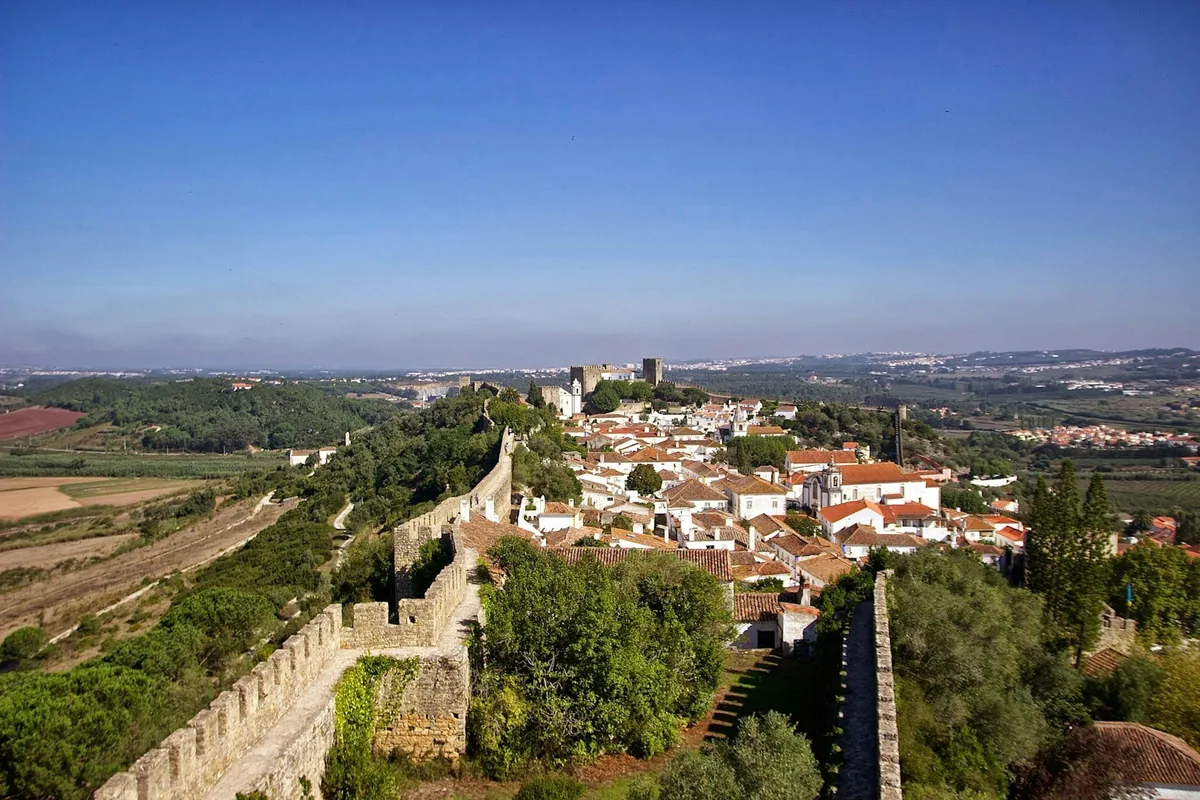
Óbidos is a picture-perfect medieval town enclosed by intact castle walls. Its cobbled lanes are lined with whitewashed houses trimmed in blue and yellow, and decorated with flowers. It’s small enough to explore in a couple of hours.
You can walk along the top of the town walls for views over the rooftops and countryside, but there are no railings, so take care. Rua Direita, the main street, is full of shops selling ginjinha, a sour cherry liqueur traditionally served in a small chocolate cup. Óbidos also hosts events through the year, including a chocolate festival and a medieval fair; check dates with the town before you go.
Because it’s compact, Óbidos combines well with Nazaré or Alcobaça on the same day if you have a car or join a tour.
- How to get there: The Rápida Verde express bus from Lisbon (Campo Grande) takes around an hour.
- How long to spend: Two to three hours, or half a day.
- Best time to go: Early morning or late afternoon, before and after the tour groups.
- Tip: Try ginjinha in a chocolate cup, then eat the cup.
5. Arrábida Natural Park and Setúbal
South of Lisbon, across the Tagus, the Arrábida Natural Park is a range of limestone hills that drop into some of the clearest water on Portugal’s coast. Its sheltered beaches, such as Portinho da Arrábida, have turquoise water that feels more Mediterranean than Atlantic.
The coastal road through the park has viewpoints at almost every bend. Setúbal, the nearest town, is known for its fish market and for choco frito, fried cuttlefish, which is served in restaurants all over town. From Setúbal you can also take boat trips to look for the bottlenose dolphins that live in the Sado estuary.
Arrábida is tricky on public transport for most of the year, and in summer the rules change. Under Setúbal council’s Arrábida sem Carros scheme, the roads to beaches including Portinho da Arrábida, Creiro, Galapos, Galapinhos, Albarquel and Figueirinha close to private cars during the day for the bathing season (roughly early June to mid-September), and shuttle buses run from Setúbal instead.
- How to get there: By car (around an hour) or on a guided tour outside the summer season. In summer, drive or take the train or bus to Setúbal and use the beach shuttle buses.
- How long to spend: A full day.
- Best time to go: Late spring or early autumn for driving the coast road; in summer, plan around the shuttle buses.
- Tip: Check the council’s current access rules and shuttle routes before you go, as they are reviewed every year.
6. Nazaré
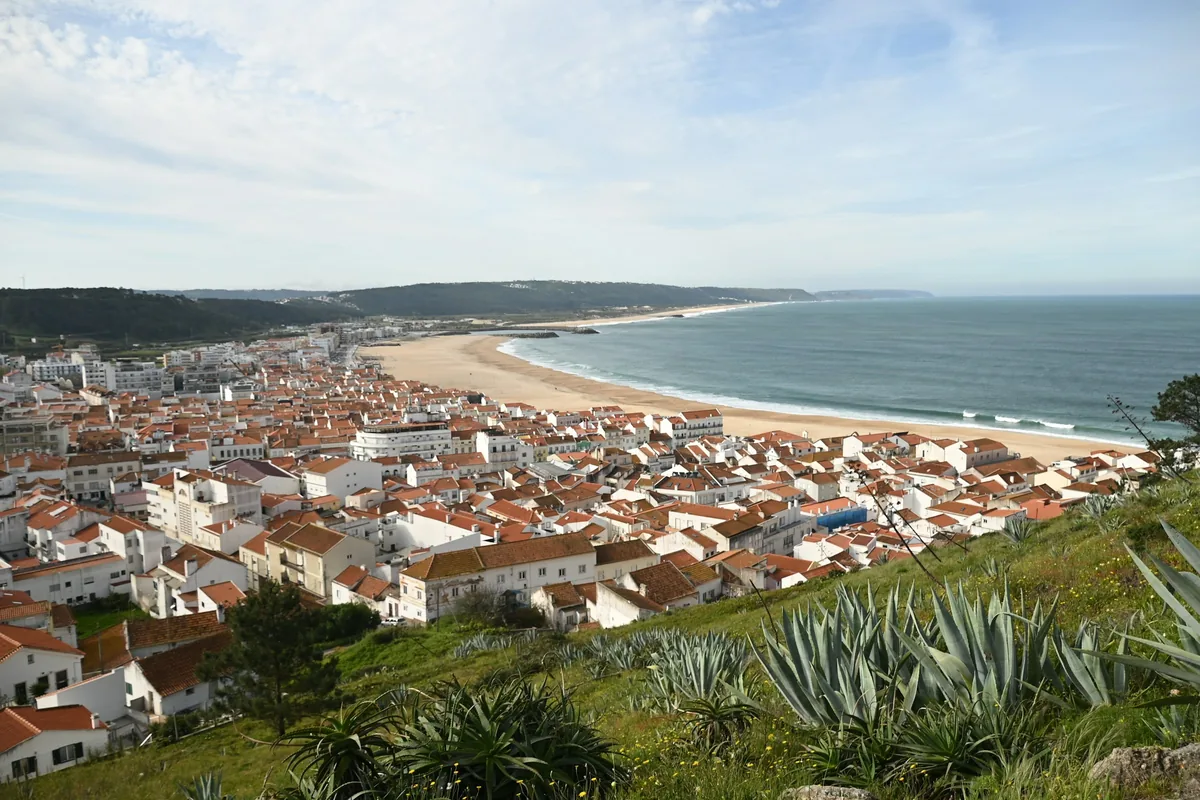
Nazaré is a traditional fishing town that has become world-famous for having some of the biggest surfable waves on the planet. In winter, an underwater canyon funnels Atlantic swells into giant waves off Praia do Norte, and the lighthouse fort above it is the place to watch the surfers.
The rest of the year, Nazaré is a classic Portuguese beach town with a long sandy beach, seafood restaurants and fishing traditions. Some older women still wear the traditional seven-layered skirts, and fish are sometimes laid out to dry on racks on the beach.
The funicular (ascensor) normally climbs from the beach to the Sítio clifftop district for views over the bay and the town. It was closed indefinitely for maintenance and safety checks in September 2025, so check with the town council before you go; a local bus links the beach and Sítio while it is out of service.
- How to get there: Rede Expressos buses from Sete Rios take around 1.5 to 2 hours.
- How long to spend: A full day.
- Best time to go: For big waves, winter, when there’s a large swell forecast. For the beach, summer.
- Tip: Big-wave days depend on the swell, so check surf forecasts before you go if that’s why you’re visiting.
7. Tomar
Tomar was once the headquarters of the Knights Templar in Portugal, and its Convent of Christ is one of the most remarkable buildings in the country. This UNESCO World Heritage Site sits inside the walls of a 12th-century castle, and at its heart is the Charola, a round Templar church with richly painted and gilded interiors.
Later additions include a famous Manueline window decorated with carved ropes, coral and nautical symbols, a reminder of Portugal’s Age of Discovery. Below the castle, Tomar’s old town is pleasant to wander, with a riverside park and a historic synagogue.
Every few years, Tomar hosts the Festa dos Tabuleiros, when women carry tall headdresses made of bread and flowers through the streets.
- How to get there: Direct CP regional trains from Santa Apolónia, calling at Oriente, take around two hours.
- How long to spend: A full day.
- Best time to go: Morning at the convent, then the old town in the afternoon.
- Tip: Wear comfortable shoes; the walk up to the castle from town is steep.
8. Coimbra
Coimbra was Portugal’s capital in the Middle Ages and is home to one of the oldest universities in Europe. The university, a UNESCO World Heritage Site, sits at the top of the hill, and its Joanina Library is one of the most beautiful libraries in the world, with gilded wooden shelves and centuries-old books.
Below the university, the old town is a maze of steep lanes and staircases. The Old Cathedral (Sé Velha) is a fortress-like Romanesque church, and the Santa Cruz Monastery is the burial place of Portugal’s first two kings. Coimbra also has its own style of fado, traditionally sung by men in academic dress.
If you want a second Portuguese city to compare with Lisbon, our guide to the best things to do in Porto covers the north. Coimbra is a longer day trip, so start early, but it’s a good choice if you want to see a lively student city as well as monuments.
- How to get there: Alfa Pendular and Intercidades trains from Santa Apolónia and Oriente take around two hours to Coimbra-B. The city-centre station closed in 2025, so Coimbra-B is now the stop, about 2 km from the centre; take a local bus or taxi and check the current connection before you go.
- How long to spend: A full day.
- Best time to go: Book a morning slot for the Joanina Library.
- Tip: Library visits run on timed tickets with limited capacity, so book in advance, especially in summer.
9. Ericeira
Ericeira is a whitewashed fishing village on the Atlantic coast that has become one of Europe’s top surf destinations. It’s part of a World Surfing Reserve, with a string of world-class breaks along the coast nearby.
Even if you don’t surf, Ericeira makes a relaxed day trip. The village has blue and white houses, small beaches beneath the cliffs and excellent seafood restaurants. Watch the surfers from the clifftops, take a beginner surf lesson or simply sit with a coffee looking out to sea.
Ericeira is also close to the vast Palace of Mafra, a UNESCO-listed palace and basilica with a magnificent library, which makes a good stop on the way.
- How to get there: Carris Metropolitana buses from Lisbon (Campo Grande) take around an hour to an hour and a quarter, depending on the route; some go via Mafra.
- How long to spend: Half a day to a full day.
- Best time to go: Afternoon, staying for sunset over the Atlantic.
- Tip: Book a lesson with a local surf school if you want to try surfing; they’ll pick the right beach for the conditions.
10. Fátima, Batalha and Alcobaça
North of Lisbon, three very different sights sit close enough to visit in a single day. Fátima is one of the most important Catholic pilgrimage sites in the world, where three shepherd children reported apparitions of the Virgin Mary in 1917. Its vast sanctuary draws huge crowds, especially around the anniversaries in May and October.
Nearby, the Monastery of Batalha is a masterpiece of Gothic and Manueline architecture, built to celebrate a Portuguese victory over Castile in 1385. Its unfinished chapels, open to the sky, are especially striking. Alcobaça Monastery, one of the first Gothic buildings in Portugal, holds the tombs of King Pedro I and Inês de Castro, the subject of one of Portugal’s great love stories. Both monasteries are UNESCO World Heritage Sites.
This trip works best by car or on a guided tour, which often adds Óbidos or Nazaré.
- How to get there: Guided tour or car. Buses connect the towns, but linking all three in one day is difficult.
- How long to spend: A full day.
- Best time to go: Avoid the main pilgrimage dates at Fátima unless you want to see them.
- Tip: Dress respectfully at Fátima, as it’s an active religious site.
How to pick the right day trip
- For palaces and gardens: Sintra.
- For beaches: Cascais, Arrábida or Ericeira.
- For history: Évora, Tomar, Coimbra and the monasteries at Batalha and Alcobaça.
- For a short half-day: Cascais or Óbidos.
- Without a car: Sintra, Cascais, Évora, Tomar, Coimbra and Ericeira are all straightforward by train or bus.
Suggested plans for 1, 2 or 3 days
One day: Sintra in the morning, then continue to Cascais for the afternoon and sunset if you have the energy. It’s a full day, so choose only one or two palaces in Sintra.
Two days: Spend day one in Sintra and day two in Évora, or on a tour combining Óbidos, Nazaré and Batalha.
Three days: Add Cascais or Ericeira for a beach day, or Arrábida if you have a car or it’s shuttle season.
Tours versus going independently
Sintra, Cascais, Évora, Tomar and Coimbra are easy by public transport. Tours are most useful for Arrábida and for combining Fátima, Batalha, Alcobaça, Óbidos and Nazaré in one day, which is hard to do by bus. Small-group tours to Sintra also save time on the hill transfers, but you’ll still need to book palace tickets.
Getting around
- Trains: CP runs trains to Sintra from Rossio, to Cascais from Cais do Sodré, and longer-distance services from Santa Apolónia and Oriente.
- Buses: Express buses to Nazaré and Évora leave from Sete Rios, and buses to Óbidos and Ericeira from Campo Grande.
- Car hire: Useful for Arrábida outside the summer restrictions, the monasteries and the coast, but avoid driving in central Lisbon and Sintra.
- Navegante card: Lisbon’s reloadable navegante card can be topped up with pay-as-you-go credit and used on the metro and on CP trains to Sintra and Cascais.
Where to stay for easy day trips
- Baixa and Chiado: central, near Rossio station for Sintra and Cais do Sodré for Cascais.
- Cais do Sodré: lively, with direct trains along the coast.
- Avenida da Liberdade: quieter and well connected by metro to the bus stations.
- Alfama: atmospheric but hilly, and a little further from the stations.
Budget guidance
- Shoestring: Use trains and buses with a navegante card where it applies, choose free sights such as beaches, town walks and viewpoints, and eat at local cafés.
- Mid-range: Pay for two or three palaces or monasteries, have a seafood lunch, and take one guided tour for the harder-to-reach places.
- Comfortable: Book private or small-group tours, hire a car for the coast and the monasteries, and add wine tastings in the Alentejo or the Setúbal peninsula.
Frequently Asked Questions
Is Sintra worth a day trip from Lisbon?
Yes. Sintra is the most popular day trip from Lisbon, with fairy-tale palaces, gardens and a Moorish castle less than an hour away by train. Go early, book timed tickets and choose two or three sights rather than trying to see everything.
Can you do Sintra and Cascais in one day?
Yes, but it’s a long day. Spend the morning in Sintra, then take the Carris Metropolitana bus via Cabo da Roca to Cascais and return to Lisbon by train along the coast. You’ll only have time for one or two palaces.
How do you get from Lisbon to Sintra by train?
Trains leave from Rossio station in central Lisbon and take around 40 minutes to Sintra. They run frequently throughout the day, and some Sintra line trains also leave from Oriente and Entrecampos.
Is Porto too far for a day trip from Lisbon?
Porto is around three hours each way by fast train, so a day trip is possible but rushed. It’s much better to spend at least two nights there.
What is the best beach day trip from Lisbon?
Cascais is the easiest, with a direct train along the coast. For more spectacular scenery, Arrábida has clear turquoise water but needs a car, a tour or, in summer, the shuttle buses from Setúbal. Ericeira is best for surfing.
Do you need a car for day trips from Lisbon?
No. Sintra, Cascais, Évora, Tomar, Coimbra and Ericeira are all easy by train or bus. A car helps for Arrábida outside summer and for combining the monasteries north of Lisbon, though tours cover these too.
Discover More of Portugal
When you are ready to plan beyond the day trips, read our guide to the best things to do in Lisbon for the city itself, our pick of the Algarve beaches for a southern coast break, or our guide to Porto for a northern city stay. For another day-trip base to compare, see our guide to the best day trips from Edinburgh.
Featured image: Photo by Dmitry Voronov on Unsplash