Last updated: October 2026
Bologna sits on one of Italy’s busiest rail corridors, which makes it a superb base for day trips. The best day trips from Bologna are Modena and Parma for food, Ravenna for Byzantine mosaics, Ferrara for Renaissance streets and Florence or Venice for a big-name city in a single day. Most of these places are an easy train ride away, so you can leave after breakfast and be back for dinner.
This guide covers 10 day trips from Bologna, each with a practical box covering how to get there, how long to spend, the best time to go and one tip. Further down you will find advice on choosing between them, suggested plans, getting around, where to stay and budget guidance. For regional planning and current events, the official Emilia-Romagna tourism site is a good starting point.
Timetables, booking rules and access fees change, so check each operator’s official site before you travel. Where we could not confirm a detail, we have said so rather than guessed.
Quick answer: What are the best day trips from Bologna? The ten best are Modena, Parma, Ravenna, Ferrara, Florence, Venice, Verona, San Marino, Dozza and Brisighella. For a first trip, pick Modena for an easy food day, Ravenna for something you cannot see anywhere else and Florence if you want a famous city with minimal planning.
Quick comparison: day trips from Bologna
| Day trip | Best for | Getting there | Time each way |
|---|---|---|---|
| Modena | Balsamic vinegar, cars and a UNESCO cathedral | Train | Under an hour |
| Parma | Ham, cheese and a graceful old centre | Train | About an hour on the fastest trains |
| Ravenna | Byzantine mosaics | Train | About an hour or a little more |
| Ferrara | Renaissance castle and cycling the walls | Train | Under an hour |
| Florence | Art and architecture | High-speed train | Under an hour on fast trains |
| Venice | Canals and a once-in-a-lifetime day | High-speed train | Under two hours on fast trains |
| Verona | Roman arena and romantic lanes | Train | About an hour on fast trains, longer on regional |
| San Marino | Hilltop fortresses and views | Train plus bus | About two hours or more |
| Dozza | A village of painted walls | Car or train plus bus | Around an hour |
| Brisighella | A medieval hill village | Train via Faenza | Around an hour |
1. Modena
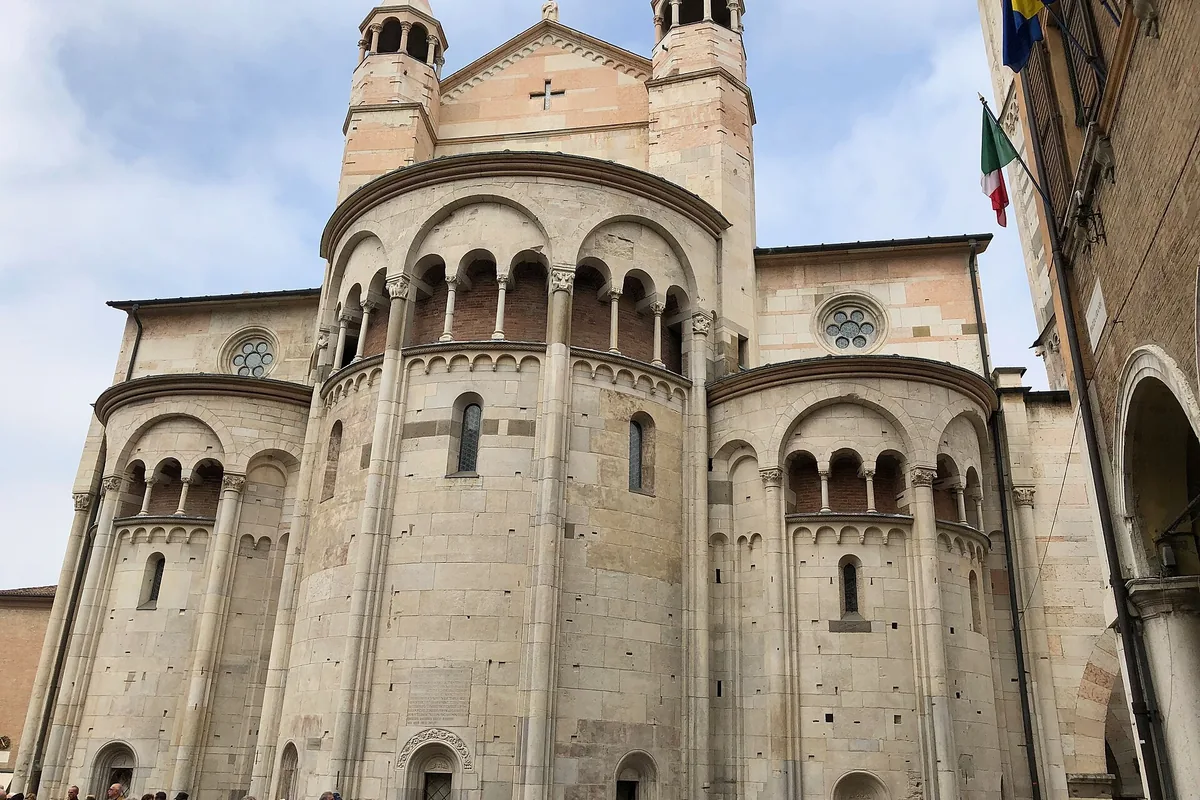
Modena is the easiest food day trip from Bologna, a compact city where traditional balsamic vinegar, tortellini and Ferrari all share a handful of streets. The old centre is flat and walkable, and the train arrives close to the heart of town.
The core of the visit is Piazza Grande, where the Romanesque cathedral and its Ghirlandina tower form part of a UNESCO World Heritage site. Climbing the tower gives the best view over the red rooftops. Nearby, the covered Mercato Albinelli is the place for cheese, cured meats and fruit, and a good spot to assemble a picnic or simply browse what Emilia-Romagna produces.
Petrolheads can add the Museo Enzo Ferrari, built around the house where the founder was born, with a striking modern gallery next door. It sits on the edge of the centre, so allow time to walk or take a short bus ride. Many acetaie, the traditional vinegar producers, run tastings in the countryside around the city, but these usually need to be booked in advance and are easier with a car or a tour.
Lunch is the real highlight. Look for fresh tortellini in broth, gnocco fritto with cured meats and a small pour of aged balsamic on Parmigiano Reggiano. Ask staff how a dish is meant to be eaten and you will usually get an enthusiastic answer.
- How to get there: Regional and faster trains run from Bologna Centrale to Modena in well under an hour, and services are frequent through the day. See Trenitalia for timetables.
- How long to spend: A full day is comfortable, or half a day if you skip the Ferrari museum.
- Best time to go: Spring and autumn are the most pleasant, and weekday mornings suit the market.
- Tip: Book any vinegar tasting or museum slot ahead and keep your biggest meal for lunch, when the traditional places are busiest and best.
2. Parma
Parma is the gentle, elegant sibling of Bologna, a city of broad squares, arcaded streets and some of the most famous food in Italy. It was named Italian Capital of Culture for 2020, extended into 2021, and the old centre still feels well kept and unhurried.
Start at the cathedral and pink marble Baptistery, a pair of medieval buildings whose interiors are covered in frescoes and carved stone. A short walk away, the huge Palazzo della Pilotta holds the National Gallery and the Teatro Farnese, a wooden Baroque theatre that was restored after wartime damage. It is one of the most atmospheric rooms in northern Italy. The riverside Parco Ducale is a pleasant place to stretch your legs between sights.
Food is the other reason to come. Parma is the home of Prosciutto di Parma and Parmigiano Reggiano, and delis around the centre sell both, with sandwiches and small plates that make an easy lunch. The surrounding countryside has cheese dairies and ham producers that offer visits, though most need advance booking and your own transport.
Parma is also tied to the composer Giuseppe Verdi, who was born nearby. Opera lovers can look for performances at the Teatro Regio during the season.
- How to get there: Fast and regional trains run from Bologna Centrale to Parma, with the quickest taking about an hour. Check Trenitalia or Italo for current times.
- How long to spend: A full day if you add a dairy or ham visit, otherwise five to six hours is enough.
- Best time to go: Spring and early autumn, when the weather suits wandering and outdoor lunches.
- Tip: Book a cheese or ham producer visit in advance and ask whether it runs in English, as many tours are small and fill up.
3. Ravenna
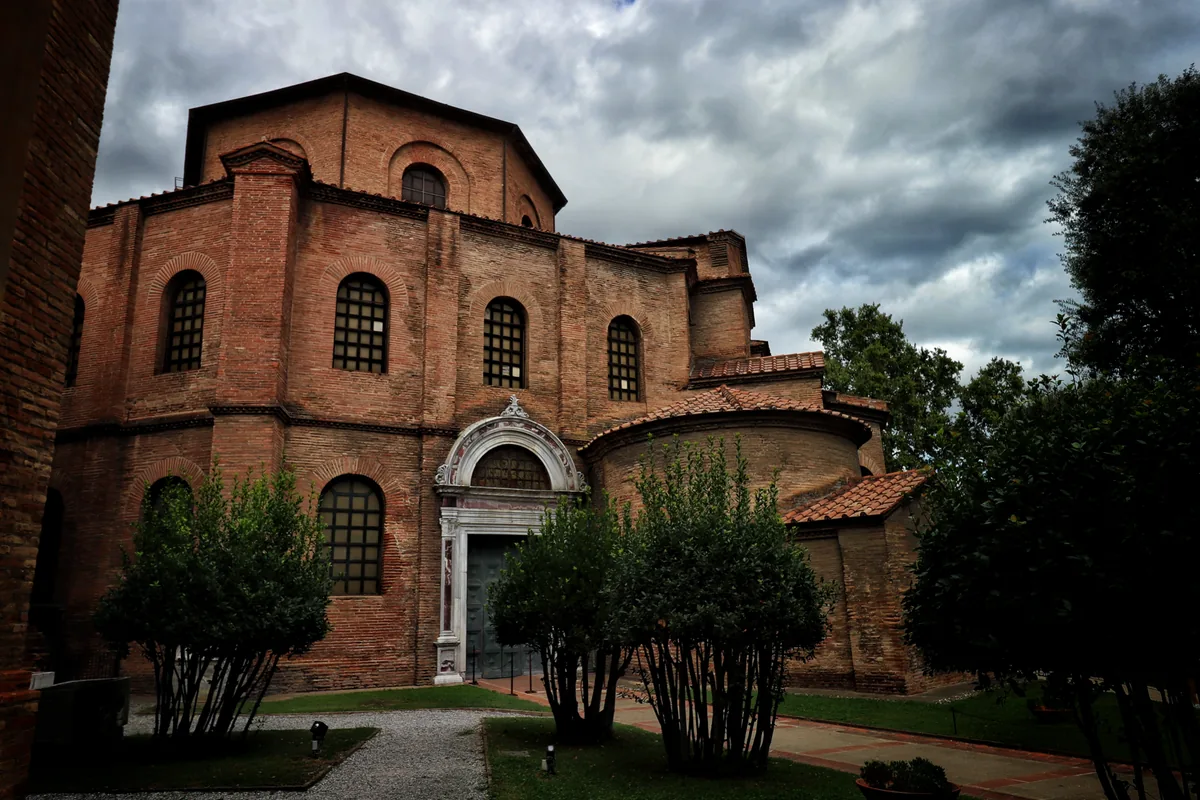
Ravenna is the day trip that feels most different from the rest of Italy, a quiet city whose churches are lined with shimmering mosaics from the age of the late Roman and Byzantine empires. Eight of its early Christian monuments are listed together as a UNESCO World Heritage site.
The headline sights are the Basilica of San Vitale, with its glittering apse and imperial portraits, and the tiny Mausoleum of Galla Placidia next door, whose deep blue vault is spangled with stars. Sant’Apollinare Nuovo has a long procession of saints in gold and white, while the Neonian Baptistery and the Archbishop’s Chapel show how varied the art could be. Further out, Sant’Apollinare in Classe is a peaceful basilica in the former port district.
The monuments are close together, so you can see several on foot, and many are covered by combined tickets sold on the ground. Some sites limit numbers, particularly the small Galla Placidia mausoleum, so check the current booking rules before you go. Ravenna is also known for the tomb of the poet Dante, a short walk from the main churches.
Leave time for a long lunch of Romagna cooking, including fresh pasta and flatbread with cured meat.
- How to get there: Direct regional trains run from Bologna Centrale to Ravenna in roughly an hour or a little more, and some services involve a change. See the UNESCO listing for background and Trenitalia for times.
- How long to spend: A full day if you want to see the main mosaics without rushing.
- Best time to go: Spring and autumn are comfortable, and weekday mornings are quieter.
- Tip: Buy a combined ticket for several monuments and check timed entry rules for the smallest sites before you arrive.
4. Ferrara
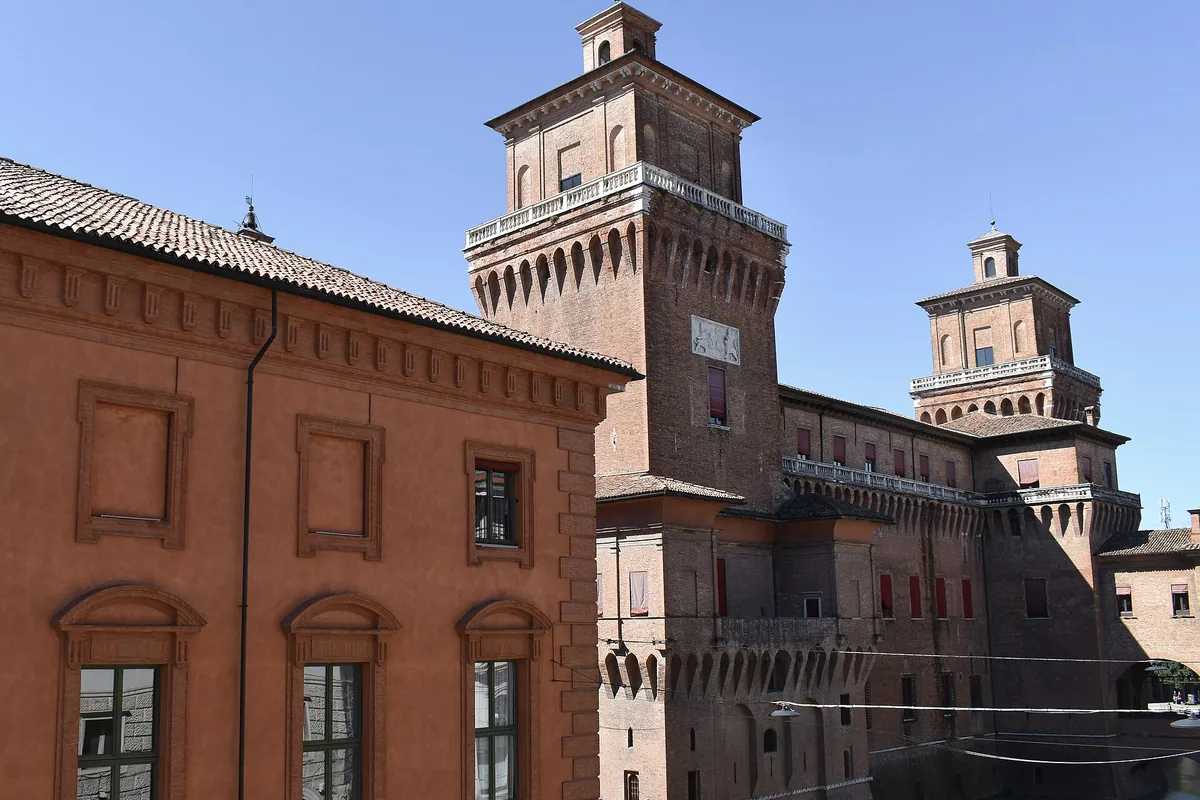
Ferrara is a Renaissance city with the calm of a market town, known for its moated castle, wide cycling culture and an almost complete circuit of old city walls. It is listed by UNESCO as an outstanding example of Renaissance urban planning.
The Castello Estense, the former seat of the Este dukes, rises straight from a moat in the middle of town and is the obvious first stop. From there, the cathedral and its striking marble front are a short stroll away, and the medieval streets around them are lined with old shops and cafes. Palazzo dei Diamanti, with its facade of diamond-shaped stones, hosts art exhibitions and is worth a look from outside even if you skip the galleries.
Ferrara’s best trick is to hire a bike and ride the top of the city walls. The circuit is mostly flat and shaded, with views down into gardens and across to the countryside, and many visitors cover a good part of it in an afternoon. Bike hire shops are easy to find near the station and in the centre.
Try the local cappellacci di zucca, pasta stuffed with pumpkin, and the dense, spiced pampepato cake, both specialities of the area.
- How to get there: Regular trains from Bologna Centrale reach Ferrara in under an hour, and the station is a bus ride or a walk of around twenty minutes from the centre. See the UNESCO listing.
- How long to spend: A full day if you cycle the walls, otherwise half a day is enough.
- Best time to go: Late spring and early autumn for cycling weather.
- Tip: Hire a bike early in the day and keep the walls for the afternoon, when the light is softer.
5. Florence
Florence is the classic big-city day trip from Bologna, reachable on a high-speed train in well under an hour. A single day will not cover everything, but it is enough for a strong first look.
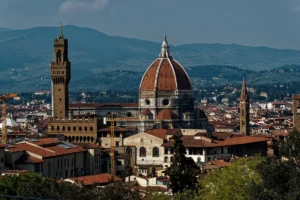
Aim for the cathedral district first. The Duomo, its bell tower and the Baptistery sit within a few steps of each other, and the dome is a highlight if you book a climbing slot. From there, walk to Piazza della Signoria and the Ponte Vecchio, then cross the river to the Oltrarno neighbourhood for lunch away from the busiest streets. Major museums such as the Uffizi and the Accademia need advance tickets, so decide in advance whether to spend your day indoors or on the streets. If you want a proper sit-down lunch, our guide to the best places to eat in Florence will help you pick somewhere good before you arrive.
Florence is a city where choice matters. If you want art, pick one museum and book it. If you prefer atmosphere, skip the queues and spend time in the squares, artisan workshops and the Boboli Gardens. The historic centre is compact and listed by UNESCO, so most sights are within walking distance of each other.
For a final stop, the viewpoint at Piazzale Michelangelo gives sweeping views of the skyline at sunset, and it can be reached on foot or by bus.
- How to get there: High-speed trains run from Bologna Centrale to Florence Santa Maria Novella in under an hour on the fastest services. Compare Trenitalia and Italo.
- How long to spend: A full day, with one booked museum or the cathedral dome as your anchor.
- Best time to go: Spring and autumn, ideally midweek.
- Tip: Book museum and dome tickets before you travel and treat everything else as a bonus.
6. Venice
Venice is a long day but a rewarding one, and the high-speed line makes it practical from Bologna. Expect to be back after dark, so plan your return train carefully.
Arrive at Santa Lucia station and step out onto the Grand Canal. Walk or take a vaporetto towards the Rialto Bridge, then wander into the quieter lanes of Cannaregio or Dorsoduro instead of following the crowds straight to St Mark’s Square. If you do visit the square, consider the basilica and the Doge’s Palace only if you have booked ahead, as queues can be long.
Venice has introduced an access fee for day visitors on selected days, and it applies to people who do not stay overnight in the historic centre. The calendar, price and exemptions are published on the city’s official portal at cda.ve.it, so check them before booking your train. You will also need the QR code to show on request.
Food is best in small bars. Try cicchetti, small snacks served with wine, in the back streets rather than on the main squares.
- How to get there: High-speed trains run from Bologna Centrale to Venice Santa Lucia in under two hours on fast services, with slower regional options. Check the Venice access fee portal and Trenitalia.
- How long to spend: A full day, with an early start and a late return train.
- Best time to go: Weekdays outside peak summer, when crowds and fee days are fewer.
- Tip: Check whether your date is a fee day before you buy a train ticket, and book Doge’s Palace entry online if you plan to go in.
7. Verona
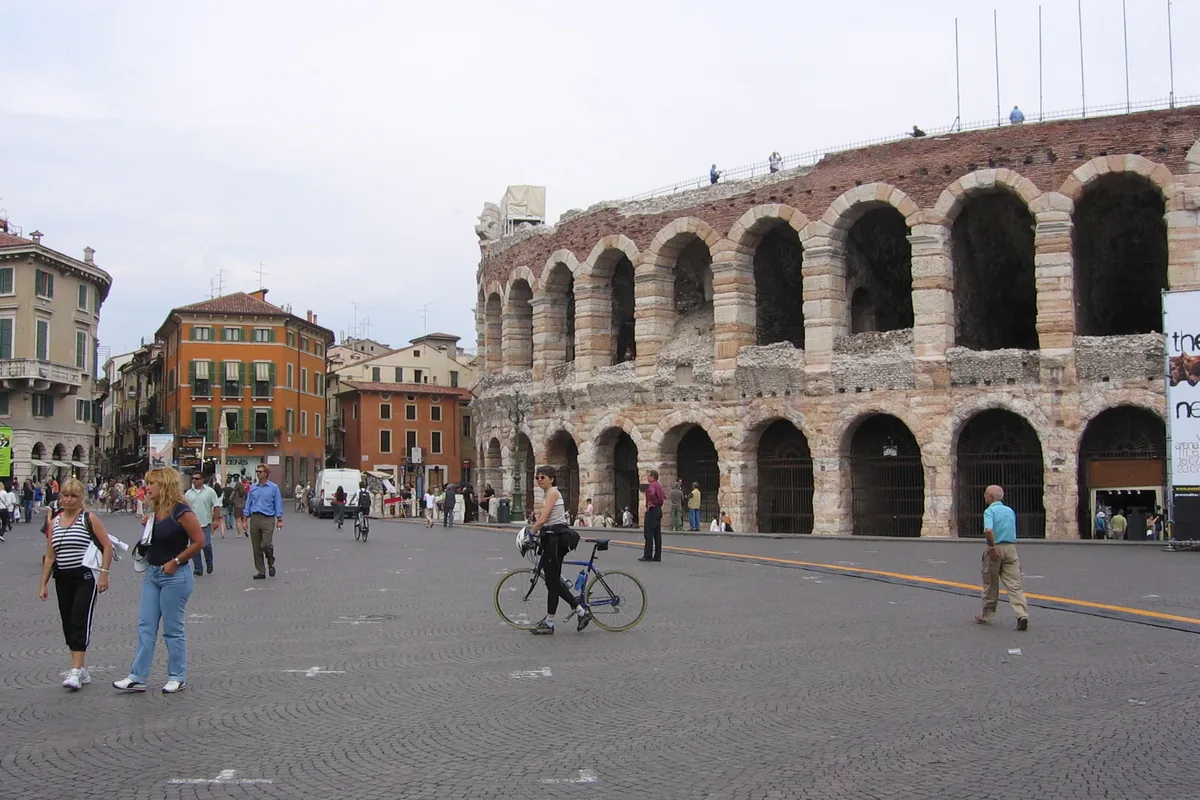
Verona is a beautiful Roman and medieval city that works neatly as a day trip, best known as the setting for Romeo and Juliet. Its historic centre is a UNESCO World Heritage site.
The Arena, a Roman amphitheatre that still hosts opera in summer, dominates Piazza Bra and is the obvious first stop. From there, the pedestrian street Via Mazzini leads towards the market squares of Piazza delle Erbe and Piazza dei Signori, lined with frescoed buildings and cafes. The Torre dei Lamberti offers views over the rooftops, and the river Adige curls around the old centre, giving good walking along its banks.
Many visitors queue for the courtyard of the so-called Juliet’s House, though it is a modern tradition rather than historical fact, and you may prefer to skip it. Castelvecchio, a medieval fortress with a museum, and the Ponte Pietra, an old stone bridge, are quieter and more atmospheric.
For lunch, try risotto with local wine, or a plate of bollito misto, a traditional boiled meat dish found in many trattorie.
- How to get there: Trains from Bologna Centrale to Verona Porta Nuova take roughly an hour on the fastest services and longer on regional trains. Check Trenitalia for times. The old centre is a short walk from the station.
- How long to spend: A full day is comfortable, or five to six hours at a push.
- Best time to go: Spring and autumn, and summer evenings if you want to catch an opera.
- Tip: If you want to see an Arena performance, check the schedule and book tickets and return trains early.
8. San Marino
San Marino is the most unusual day trip on this list, a tiny independent republic perched on a mountain with a skyline of medieval towers. Its historic centre and Mount Titano are listed by UNESCO.
There is no train station, so you travel by train to Rimini and finish the journey by bus. The route adds time, which is why San Marino suits a long day rather than a quick one. On arrival, the old town is a maze of steep lanes, souvenir shops and viewing terraces. The three towers of Guaita, Cesta and Montale sit along the ridge and can be linked on foot, with sweeping views towards the Adriatic coast on a clear day.
The old town is compact and often busy with tour groups, so go early or late in the day to enjoy it. The main fortresses charge entry, and some walkways can be steep, so wear comfortable shoes. Shops sell wine, liqueurs and stamps, and San Marino is known for its postage stamps.
Combine the trip with Rimini’s seafront if you want a stop on the coast, though this will stretch the day.
- How to get there: Take a train from Bologna Centrale to Rimini, then a bus up to San Marino. Check Trenitalia and the current bus timetable, and note the last return bus.
- How long to spend: A full day, given the transfers.
- Best time to go: Clear days in spring and autumn, when the views are best.
- Tip: Buy your bus ticket from an official outlet and confirm the last return service before you head up the hill.
9. Dozza
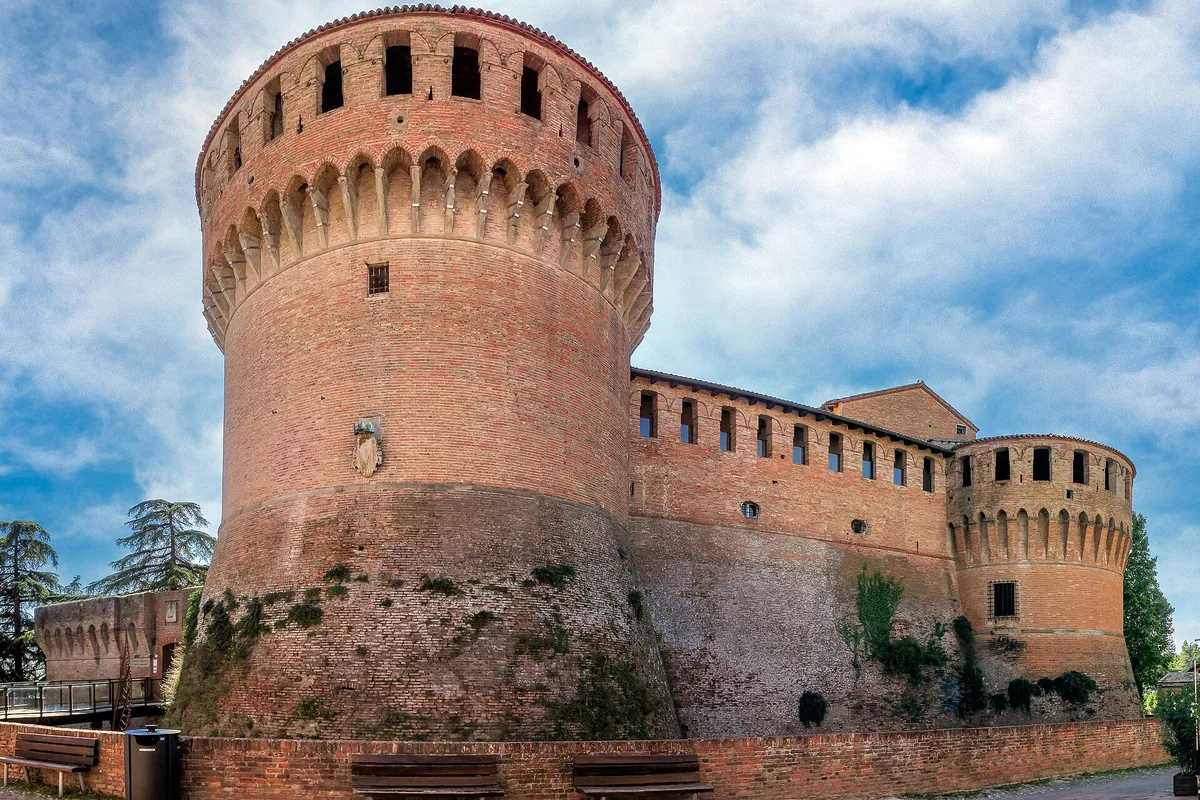
Dozza is a small hilltop village that has turned its walls into an open-air gallery, and it is one of the most charming short trips from Bologna. Murals cover the houses along its lanes, created by artists since the 1960s.
The village hosts the Biennale del Muro Dipinto, an event held every two years, usually in September, which adds new works and restores old ones. The 30th edition took place in September 2025, so the next should follow about two years later, but check the official site for confirmed dates. Between editions, you can simply stroll the streets and look for murals on doors, corners and walls.
At the top, the Rocca Sforzesca, a fortress with a museum, gives views over the hills. The village has a regional wine showcase, and a few trattorie serve local dishes in an intimate setting. It is a small place, so you can see the main sights in a couple of hours and combine it with a wine tasting or a lunch.
Because public transport is limited, many visitors reach Dozza by car, or by train to Imola and then a local bus or taxi.
- How to get there: Drive from Bologna in around an hour, or take a train to Imola and then a local bus or taxi. Check the Dozza tourism page for the latest details.
- How long to spend: Half a day.
- Best time to go: Spring and autumn, with September the busiest during the biennial.
- Tip: Check the last bus or arrange your return in advance, as services to the village are limited.
10. Brisighella
Brisighella is a postcard medieval village that most visitors to Bologna never see, set beneath three rocky hills topped with a fortress, a clock tower and a shrine. It is a calm, rewarding trip for slow travellers.
Its most famous feature is the Via degli Asini, a covered raised street that was once used by donkey carts carrying gypsum from local quarries. From there, a climb leads up to the Rocca Manfrediana, a fortress built by the Manfredi family and now home to a local history museum, and to the 19th-century clock tower. The paths are steep in places, but the views over the rooftops and the valley are worth the effort.
Brisighella sits in a gypsum landscape, and the surrounding hills are known for olive oil and wine, so lunch often includes local produce. The village also has thermal spa tradition nearby, which suits a relaxed day. Cafes and wine bars around the main square make easy places to pause between climbs, and the pace is slow enough that you can simply sit and watch village life.
Because the village is small, it pairs well with a stop in Faenza, the nearby town famous for its ceramics.
- How to get there: Take a train from Bologna Centrale to Faenza, then change for the short ride to Brisighella. Check Trenitalia for current connections.
- How long to spend: Half a day, or a full day with a stop in Faenza.
- Best time to go: Spring and autumn, when the hill walks are comfortable.
- Tip: Wear sturdy shoes for the climb and check the opening arrangements for the fortress before you go.
How to Pick the Right Day Trip from Bologna
Match the trip to what you enjoy most. Food lovers should choose Modena or Parma, which sit in the heart of Parmigiano Reggiano and cured ham country. History and art fans will love Ravenna, Ferrara or Florence. If you want a famous name on your list, Venice and Verona fit neatly into a long day.
Think about effort as well. Modena, Parma and Ferrara need little planning, while San Marino, Dozza and Brisighella reward a bit more preparation because of bus links or hills. If you are short on time, fast trains to Florence and Venice give the biggest return for a single ticket.
Suggested Plans for 1, 2 or 3 Days
One day: Take the train to Modena for a morning at the market and cathedral, followed by a long lunch. It is relaxed and food-led.
Two days: Add Ravenna on a second day for the mosaics, or swap in Parma if you would rather keep the focus on food. Both are easy by train.
Three days: Use the third day for Florence or Ferrara, depending on whether you want a big city or a quieter one. Keep San Marino, Dozza and Brisighella for a longer stay or a rental car.
Getting Around
Bologna Centrale is the main hub, with frequent regional and high-speed services in several directions. Regional trains are cheaper and cover short hops to Modena, Ferrara and Parma. High-speed trains from Trenitalia and Italo suit Florence, Venice and Verona.
For villages such as Dozza and Brisighella, a car or an organised tour saves time, though Brisighella has its own station. Always validate paper regional tickets in the machines before boarding, and check strike notices, which can affect services at short notice.
Where to Stay in Bologna
Staying near Bologna Centrale makes early departures simple, with many hotels within a short walk of the station. The historic centre around Piazza Maggiore has more atmosphere and plenty of restaurants but is a longer walk or bus ride from the station. Quieter neighbourhoods to the north and west offer good value and still connect easily by bus.
Budget Guidance
Regional trains keep costs low for Modena, Parma, Ferrara and Ravenna, and booking ahead for high-speed services to Florence and Venice is cheaper than buying on the day. Budget tiers work best: low for regional rail and self-guided walking, mid for a booked museum or tasting plus a sit-down lunch, and higher for private tours, hire cars or vinegar and cheese producer visits. Eating a main meal at lunch and a lighter dinner back in Bologna helps stretch a day’s budget.
Frequently Asked Questions
What is the best day trip from Bologna?
Modena is the best all-round choice, thanks to its short train ride, compact centre and excellent food. Florence is the best pick if you want a major city and are happy to book tickets in advance.
Can you visit Florence as a day trip from Bologna?
Yes. High-speed trains reach Florence in under an hour, so you can see the cathedral district and one museum and return the same evening. Book museum tickets before you travel.
Is Venice a good day trip from Bologna?
It is possible and popular, but it makes for a long day. Check whether your date falls on a Venice access fee day before you go, and plan your return train carefully.
How do you get to San Marino from Bologna?
San Marino has no train station, so travel by train to Rimini and take a bus up the hill. Confirm the last return bus before you start the climb.
Which day trip from Bologna is best for food?
Modena and Parma are the strongest choices. Modena is known for balsamic vinegar and tortellini, while Parma is famous for Parmigiano Reggiano and Prosciutto di Parma.
Do you need a car for day trips from Bologna?
No for the main towns, since Modena, Parma, Ravenna, Ferrara, Florence, Venice and Verona are all on rail lines. A car helps for Dozza and for dairy or vinegar visits in the countryside.
Discover More of Italy
Bologna is a rewarding base for the whole of northern Italy, and these day trips only scratch the surface. If you are heading south afterwards, our guide to the best Amalfi Coast towns shows where to base yourself, and our list of the best bars in Rome is handy for a final night out. For that drink with a view, our pick of the best rooftop bars in Rome covers terraces looking out over St Peter’s and the Pantheon. Planning a wider trip? Browse the top places to see in Europe for more ideas, or see our top 10 day trips from Lisbon for another easy-to-plan city break.
Featured image: Photo by Ввласенко, CC BY-SA 3.0, cropped, via Wikimedia Commons