Last updated: October 2026
Krakow is one of the easiest bases in Europe for day trips, with salt mines, mountains, pilgrimage towns and river gorges all within a few hours. The best day trips from Krakow are Wieliczka Salt Mine for an easy half day, Zakopane for mountain air, Ojców National Park for gentle walking and Auschwitz-Birkenau for a sombre but important history visit. The rest of this list adds quieter options for travellers who have already seen the headline sights.
This guide covers 10 day trips from Krakow, each with a practical box covering how to get there, how long to spend, the best time to go and one tip. Further down you will find advice on choosing between them, suggested plans, getting around, where to stay and budget guidance. For regional planning and current events, the official Lesser Poland tourism site is a good starting point.
If you are building a wider trip, our guide to the top places to see in Europe shows where Poland fits among the continent’s best destinations.
Timetables, booking rules and seasonal closures change, so check each operator’s official site before you travel. Where we could not confirm a detail, we have said so rather than guessed.
Quick answer: What are the best day trips from Krakow? The ten best are Auschwitz-Birkenau, Wieliczka Salt Mine, Zakopane, Ojców National Park, a Dunajec river raft, Wadowice, Kalwaria Zebrzydowska, the painted village of Zalipie, Bochnia Salt Mine and Tyniec Abbey. For a first visit, pick Wieliczka for something easy, Zakopane for scenery and Auschwitz-Birkenau if you want to understand the region’s history.
Quick comparison: day trips from Krakow
| Day trip | Best for | Getting there | Time each way |
|---|---|---|---|
| Auschwitz-Birkenau | History and remembrance | Train, bus or tour | Under 2 hours |
| Wieliczka Salt Mine | An easy underground half day | Train, bus or tour | Under an hour |
| Zakopane | Mountains and Polish highland culture | Train, bus or tour | About 2 hours or more |
| Ojców National Park | Gentle walks and a Renaissance castle | Car, bus plus walk or tour | Under an hour |
| Dunajec River Gorge | A calm raft ride through limestone cliffs | Tour or car | About 2 hours |
| Wadowice | Pope John Paul II and cream cake | Bus | Under 2 hours |
| Kalwaria Zebrzydowska | A UNESCO pilgrimage landscape | Train, bus or tour | About an hour |
| Zalipie | Folk-art painted cottages | Car or tour | Around 1.5 hours |
| Bochnia Salt Mine | A quieter alternative to Wieliczka | Train | Under an hour |
| Tyniec Abbey | A short escape along the Vistula | City bus or bike | About 30 minutes |
1. Auschwitz-Birkenau Memorial and Museum
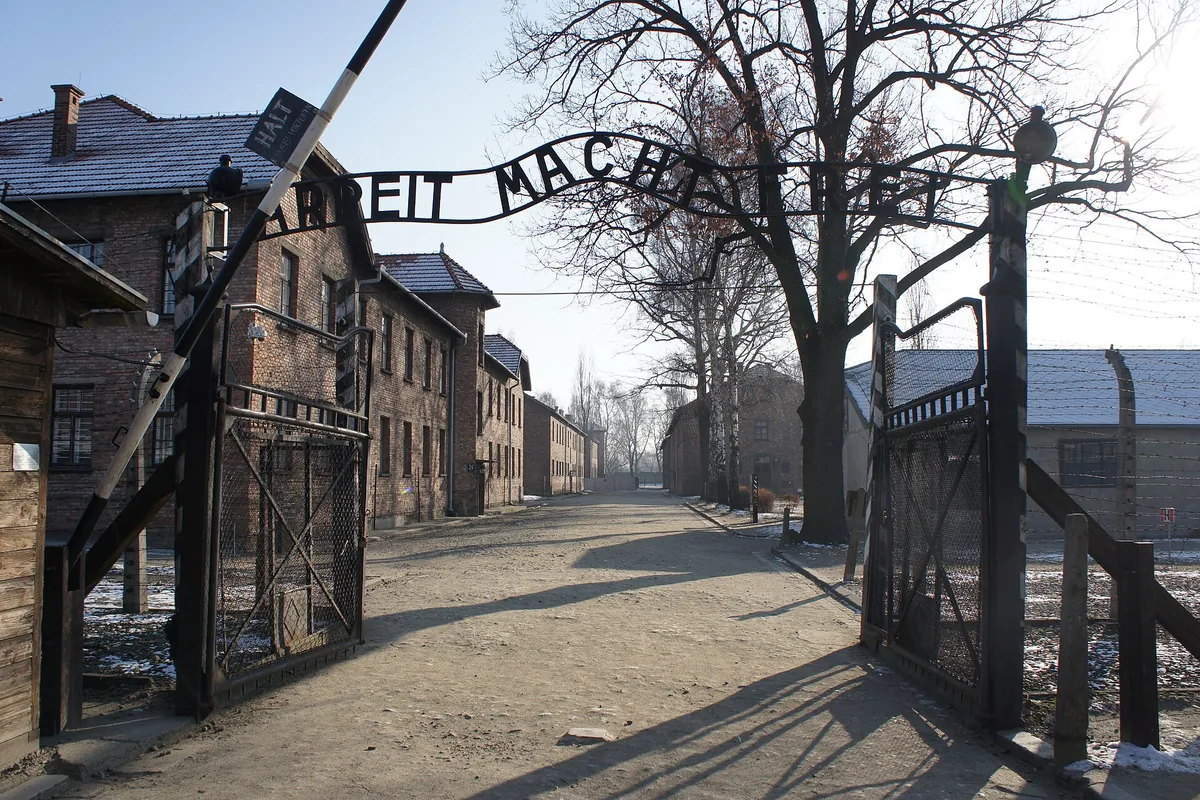
Auschwitz-Birkenau is the most significant historic site within reach of Krakow, and a visit is a sobering lesson in the Holocaust rather than a leisure outing. The Memorial and Museum in Oświęcim preserves the former Nazi German concentration and extermination camp, split between Auschwitz I and the much larger Birkenau site a short distance away.
Visits are tightly managed. Entry cards are booked online through the official site, no tickets are issued at the gate, and the name on your booking must match your ID. Some limited free passes for visiting without an educator are released at set times, but guided tours are the better choice for most visitors, since the guide explains what you are looking at. Tours are usually offered in several languages, and busy months sell out well ahead, so book early.
The official guidance recommends the Memorial for visitors aged 14 and over, and the rules cover bags, clothing and behaviour on site, so read them before you go. Allow time for security checks on arrival. Many visitors find the experience heavy, so plan a quiet evening afterwards rather than a packed schedule.
You can do this trip independently, by tour with hotel pickup, or combined with Wieliczka on an organised full-day tour, though the two make a very long day.
- How to get there: Take a train or bus from Krakow to Oświęcim, or book an organised tour with transfers. Check the official Memorial site for booking and arrival advice.
- How long to spend: Allow most of a day including travel, as the guided visit alone takes several hours.
- Best time to go: Weekday mornings are calmest, and spring and autumn are more comfortable than peak summer.
- Tip: Book online as early as you can, bring photo ID and wear comfortable shoes for long stretches outdoors.
2. Wieliczka Salt Mine
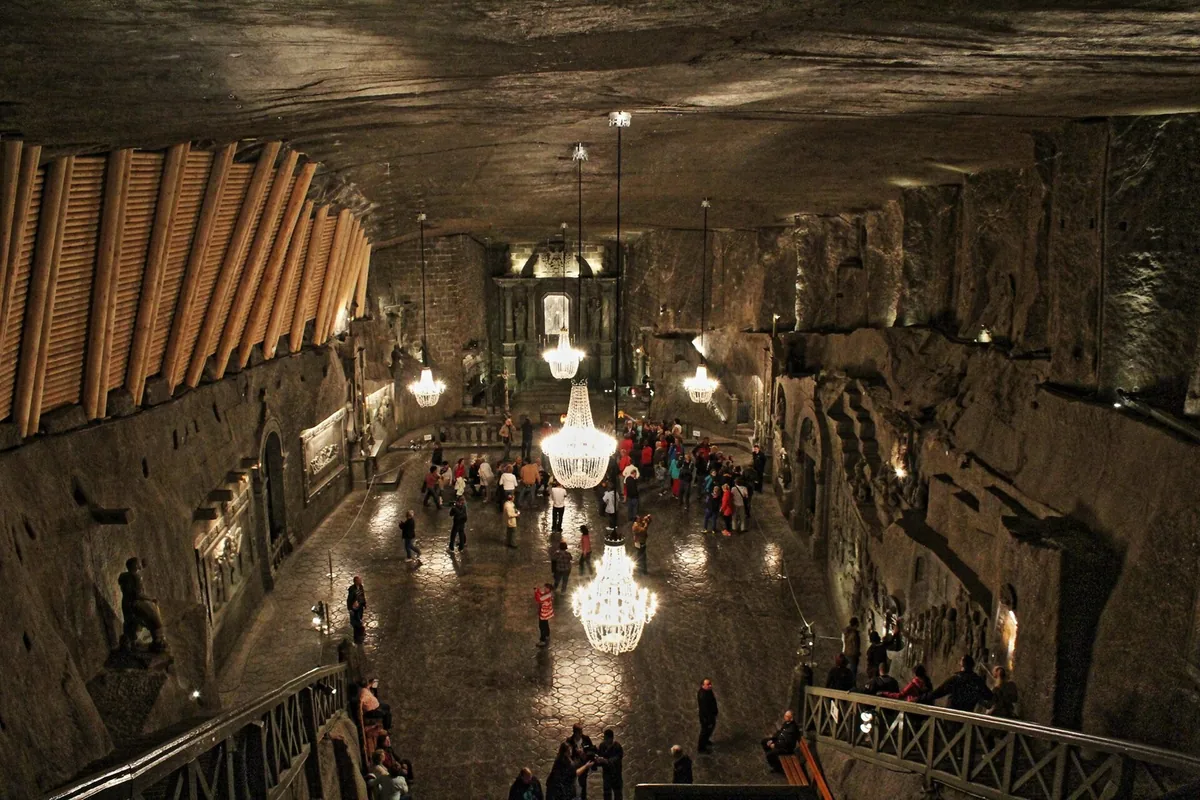
Wieliczka Salt Mine is the easiest and most popular day trip from Krakow, a working-heritage site that has turned centuries of salt mining into a guided walk through chambers, lakes and chapels carved in rock salt. It is part of the UNESCO World Heritage site known as the Royal Salt Mines of Wieliczka and Bochnia.
The standard Tourist Route is a guided walk with many steps down and a lift back up. Highlights include the St Kinga’s Chapel, a huge underground church with chandeliers and reliefs all sculpted from salt, along with sculpted figures, timber supports and brine lakes. Guides tell the story of the miners and the technology they used, and the tour is available in several languages. Tours run in groups, so you follow a set pace and cannot wander freely.
Booking ahead matters, particularly in summer, because slots for your preferred language can sell out days in advance. The mine stays cool all year, so bring a light jacket even on a hot day. There are also longer, more adventurous routes, such as the Miners’ Route, if you want something more hands-on and have already done the main one.
Because it sits just outside Krakow, Wieliczka pairs well with another stop in the same day, such as a late lunch in town, or Bochnia on a separate occasion for contrast.
- How to get there: Take a regional train or bus from Krakow to Wieliczka town, then follow signs to the mine entrance. Organised tours with transfers are also widely sold.
- How long to spend: Allow three to four hours including travel and queueing.
- Best time to go: Any time of year works, since the temperature underground stays steady. Early weekday slots are quietest.
- Tip: Book your slot on the official Wieliczka site and wear shoes with grip, as the steps can be damp.
3. Zakopane and the Tatra Mountains
Zakopane is the best day trip from Krakow for mountain scenery, a highland town at the foot of the Tatras with wooden villas, craft shops and trailheads right on its doorstep. Locals call it Poland’s winter capital, but it works year round.
Start on Krupówki, the lively main street, then move on to the quieter lanes where you can see the local wooden “Zakopane style” houses. Try oscypek, the smoked sheep’s cheese sold from stalls, and grilled with cranberry sauce. For views, the cable car from Kuźnice to Kasprowy Wierch is the classic choice in good weather, while the funicular up Gubałówka gives a panorama over the town and the peaks. Both close for servicing at certain times of year, usually after the summer and winter seasons, and in poor weather, so check the operator’s website (PKL) before you go.
The main limit is the distance. The fastest trains and buses take about two hours each way, and slower services take longer, so this is a long day. If you want to hike properly, stay overnight instead. Tatra National Park trails are well marked, but mountain weather changes fast.
A full-day Zakopane tour from Krakow is an alternative if you do not want to handle timetables. Zakopane is also one of the best snowy escapes in the region, so see our guide to the top winter destinations in Europe if you are visiting in the colder months.
- How to get there: Take the fastest direct train or a bus from Krakow to Zakopane, or join a guided tour. Compare options on PKP Intercity and local bus sites.
- How long to spend: A full day, with an early start. Overnight is better if you want to hike.
- Best time to go: Summer for hiking, autumn for clear views and winter for snow, with spring being the least reliable for lifts and trails.
- Tip: Check lift status and the mountain forecast the day before, and carry a waterproof layer.
4. Ojców National Park and Pieskowa Skała Castle
Ojców National Park is the best easy nature escape near Krakow, Poland’s smallest national park, packed with white limestone cliffs, caves and a wooded valley that is a pleasant change from the city. It sits only a short drive north of Krakow.
The most famous sights are the Hercules’ Club (Maczuga Herkulesa), a limestone pillar standing near Pieskowa Skała Castle, and the castle itself, a Renaissance residence on a rocky hill that now houses a branch of the National Museum in Krakow. The castle grounds and arcaded courtyard are worth the visit even if you skip the interiors. Beyond that, short, well-marked trails lead to caves and viewpoints, and the village of Ojców has a small ruined castle and a few cafés.
Public transport here is limited, so the simplest approach is a rental car, taxi or organised tour. Some visitors take a bus towards the area and walk the final stretch, but timetables are thin, so check carefully and have a backup plan for the return.
This trip suits families and anyone who prefers walking to museums. Wear proper shoes, as the paths are rocky and can be slippery after rain. Some park attractions need a ticket, while the trails are free.
- How to get there: Drive about 40 minutes or join a half-day tour. Buses run towards the area, but check the park’s official information and timetables first.
- How long to spend: Half a day to a full day, depending on how much walking you plan.
- Best time to go: Spring to early autumn, with autumn colours especially attractive.
- Tip: Visit the castle early in the day, then walk the valley trails in the afternoon.
5. Dunajec River Gorge Rafting
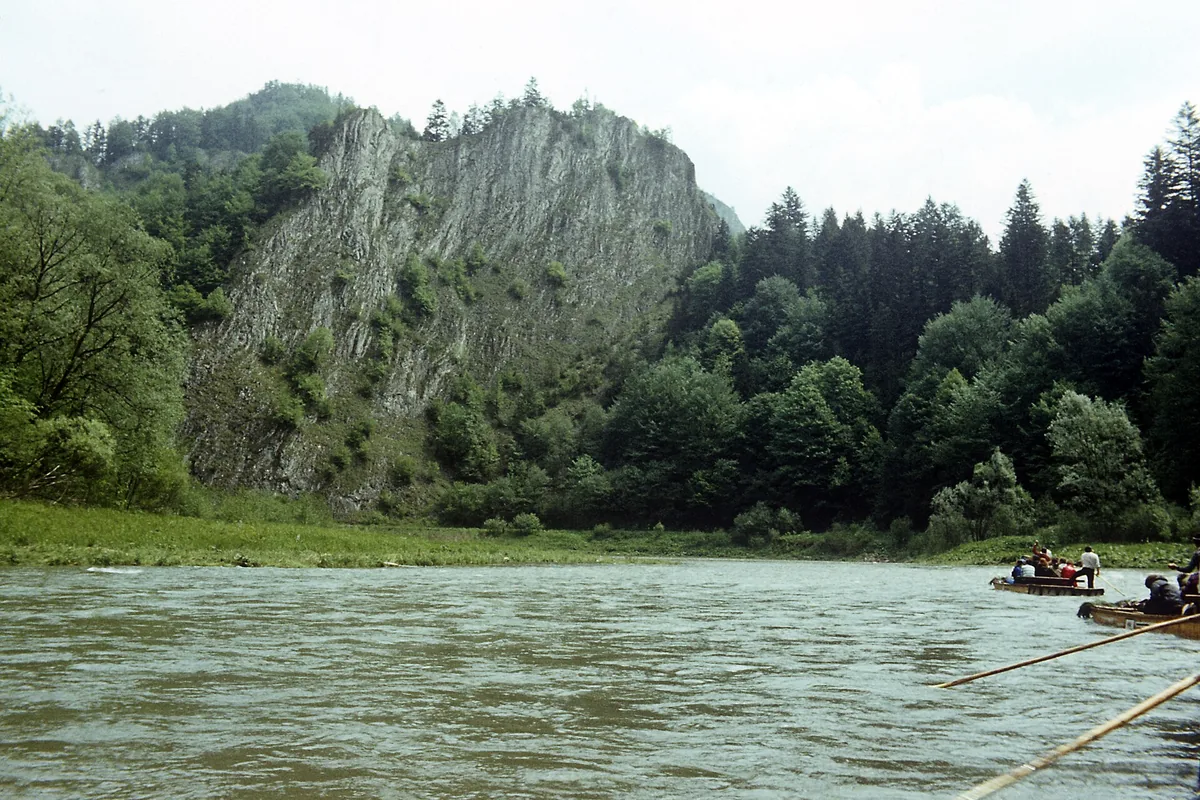
Rafting through the Dunajec River Gorge is the most relaxed adventure within reach of Krakow, a calm, scenic float between steep limestone walls in the Pieniny Mountains on the Polish and Slovak border. It is a traditional experience, with rafts poled by local boatmen in folk dress.
The trip runs from the Sromowce area down towards Szczawnica, taking roughly two to three hours depending on conditions. It is not whitewater, so there is no need for experience, and the pace leaves plenty of time to look at the cliffs and the forested ridges. Boatmen share stories and jokes along the way in Polish, and some will offer a few words in English.
The main constraint is the season and the distance. Rafting usually runs from spring to the end of October, and trips do not run on certain holidays, so check the official Lesser Poland guide. The drive from Krakow is roughly two hours each way, so most visitors book a full-day tour with transport, which makes this a long day. A rafting trip is also easy to combine with a stop in Zakopane or Nowy Targ on an overnight stay instead.
Water levels matter. After storms or heavy spring melt, trips can be cancelled or altered, so keep your plans flexible.
- How to get there: Book an organised tour from Krakow, or drive to the Sromowce area. Public transport requires several changes.
- How long to spend: A full day, including the drive each way.
- Best time to go: Summer and early autumn, in the morning to avoid crowds.
- Tip: Wear light layers and shoes that can get a little damp, and bring a rain jacket.
6. Wadowice
Wadowice is the best small-town day trip for anyone interested in Pope John Paul II, since it is the town where Karol Wojtyła was born and grew up. The main square is compact and easy to walk, and the main sights sit within a few minutes of each other.
The key stop is the Family Home of John Paul II, now a modern museum that tells his life story in the building where he lived as a child. It is a multimedia experience rather than a traditional house museum, so allow time to move through it at your own pace. Next door on the square stands the Basilica of the Offering of the Blessed Virgin Mary, where he was baptised.
Then do what almost every visitor does and try a kremówka, the local cream cake the Pope famously mentioned liking. Several cafés on the square serve it.
Wadowice combines well with Kalwaria Zebrzydowska, since the two are close together. Many guided religious tours link them in one day.
- How to get there: Buses leave Krakow’s main bus station frequently, and the journey takes a little over an hour. Walk to the square from the bus station. Check the museum’s website for visiting details.
- How long to spend: Half a day, or a full day if you add Kalwaria Zebrzydowska.
- Best time to go: Weekday mornings are quieter, and spring and autumn are comfortable.
- Tip: Dress modestly if you plan to go inside the basilica, with shoulders and knees covered.
7. Kalwaria Zebrzydowska and Lanckorona
Kalwaria Zebrzydowska is the best day trip from Krakow for a peaceful, spiritual landscape, a UNESCO-listed pilgrimage complex of chapels and paths scattered across wooded hills. It dates from the early 17th century and has drawn pilgrims ever since, especially during Holy Week.
The centrepiece is the Bernardine monastery and basilica, with a network of walking trails linking dozens of small chapels. Even if you are not religious, the setting is atmospheric, and the paths are a good way to stretch your legs. Check the UNESCO listing for background on why the site is protected.
Not far away, Lanckorona is a small village known for its old wooden houses and a ruined castle on the hill, with a handful of cafés and craft workshops. It is a good lunch stop and feels very different from the busy tourist trail. Public transport links to Lanckorona are limited, so a car or tour makes this part simpler.
Trains stop at Kalwaria Zebrzydowska Lanckorona station, but some services leave from Kraków Płaszów rather than Kraków Główny, so check the departure station in the timetable before you travel. A tour is the stress-free alternative.
- How to get there: Take a regional train or bus towards Kalwaria Zebrzydowska, or combine it with Wadowice on a guided tour. Confirm the departure station first.
- How long to spend: Half a day for the basilica and a short walk, or a full day with Lanckorona.
- Best time to go: Spring to autumn. Holy Week and major church festivals are atmospheric but very busy.
- Tip: Wear sturdy shoes, as the trails between chapels can be uneven and muddy.
8. Zalipie, the Painted Village
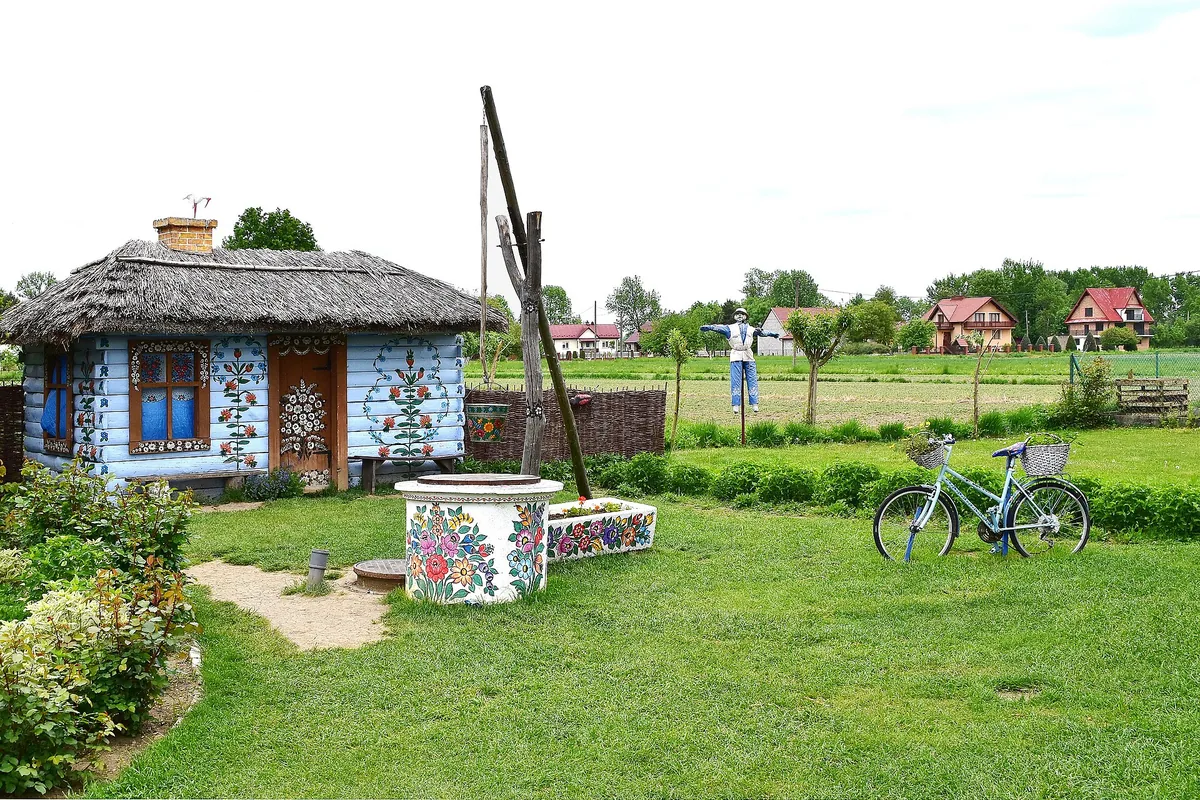
Zalipie is the most charming folk-art day trip from Krakow, a rural village where cottages, wells, barns and even doghouses are covered in colourful painted flowers. The tradition began as a way to cover soot stains from old stoves and grew into a village-wide art form.
The best place to start is the Felicja Curyłowa Farmstead Museum, named after the villager who became the best-known painter of the tradition. Its guided visit takes you through a few of the decorated houses, although the museum visit is usually led in Polish, so ask beforehand or book a tour with an English-speaking guide. Elsewhere in the village you can walk or cycle between painted farmsteads, the church and the old well.
Zalipie is spread out and public transport is poor, so a car or an organised tour is the practical way to visit. Guides also help you find the best-painted houses. Many of the houses are private homes, so view them from the road and be respectful.
Events and repainting dates vary from year to year, so check with local tourist information if timing matters to you.
- How to get there: Drive about 1.5 hours east, or take a guided tour from Krakow. Public transport is not convenient.
- How long to spend: Half a day is enough, with a stop in nearby Tarnów if you have time.
- Best time to go: Late spring and summer, when the gardens are in flower.
- Tip: Start at the museum, then explore on foot, and keep to public paths around private homes.
9. Bochnia Salt Mine
Bochnia Salt Mine is the quieter alternative to Wieliczka, one of the oldest salt mines in Europe and part of the same UNESCO World Heritage listing. It attracts far fewer visitors, so the experience feels calmer and more personal.
Visits are guided. The main tourist route includes underground chambers, a chapel carved in salt and a ride on a small underground train, and you can add a short boat ride across a saltwater-filled chamber as an optional extra. For something more demanding, the Old Mountains expedition goes through narrow galleries and over ladders, and is best for confident, active visitors. Different routes and add-ons are sold separately, so choose carefully before you book on the official tourist route page.
Bochnia is also easy to reach by train, which makes it a good independent day trip. The mine entrance is about a 1.5 km walk from the station, or you can take a taxi. The town itself has a pretty old market square, so leave time for a coffee afterwards.
If you can only do one salt mine, Wieliczka is the larger and more famous. Choose Bochnia if you want fewer crowds, or if you have already done Wieliczka and want something different.
- How to get there: Take a train from Krakow to Bochnia, about 30 to 45 minutes, then walk or take a taxi to the mine.
- How long to spend: Half a day including the tour and travel.
- Best time to go: Any season, since the temperature underground stays cool and steady.
- Tip: Book the route you want in advance, and bring a warm layer.
10. Tyniec Abbey
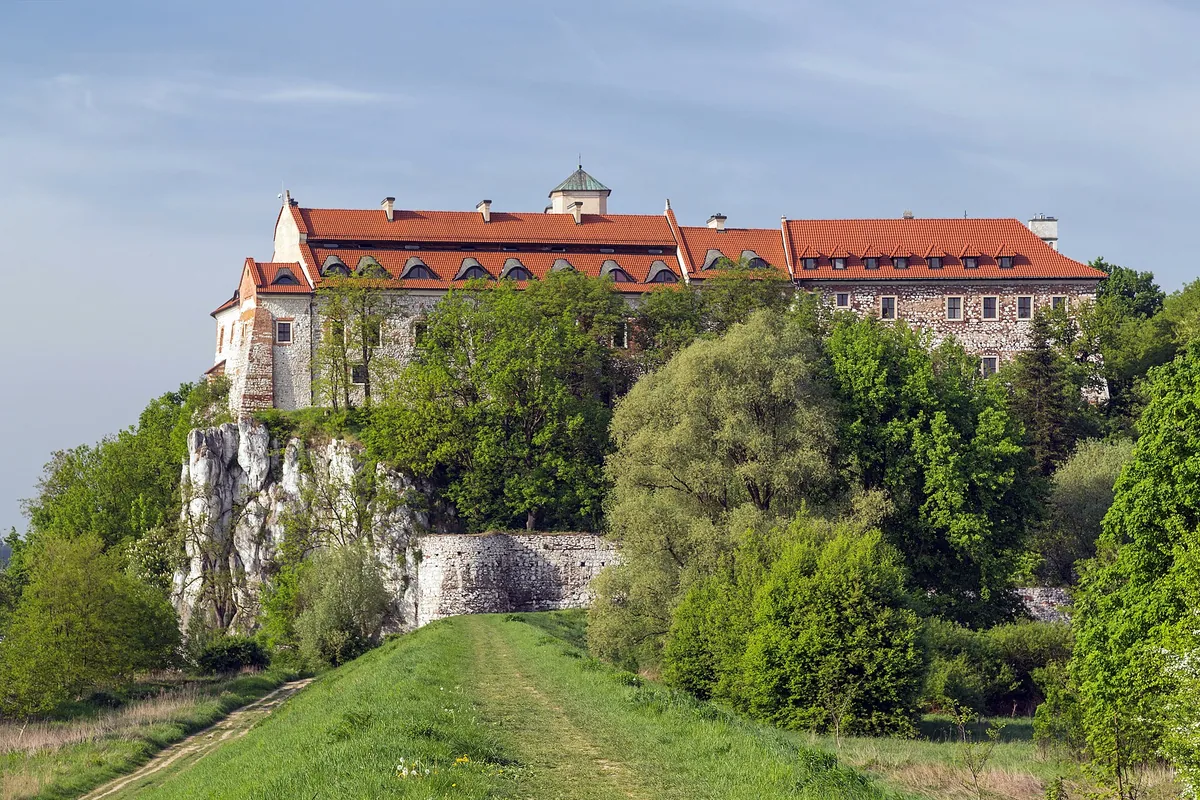
Tyniec Abbey is the easiest escape from the city, an 11th-century Benedictine monastery on a limestone cliff above the Vistula, reached in about half an hour from the centre. It is a living monastery rather than a museum, which gives it a quiet, reflective atmosphere.
The abbey church and cloister can be visited, and the complex has a small museum, a café and a shop selling products made by the monks. Some areas are only open on guided visits, and visitors are asked to dress modestly. The terrace and the views over the river are a highlight in clear weather.
The simplest way to get there is by city bus from near Grunwald Bridge, which drops you a short walk from the abbey. Cyclists can follow the signposted riverside path along the Vistula, which makes a lovely half-day ride from the Old Town. Check the abbey’s official website for current visiting details, Mass times and tours.
Tyniec works well as a short, relaxed trip on a day when the weather is unsettled, or as a morning outing before an afternoon in the city. It pairs well with a bike ride, since the route is flat and easy.
- How to get there: Take city bus 112 from near Grunwald Bridge, or cycle along the Vistula path from Wawel.
- How long to spend: Two to three hours, or half a day with a bike ride.
- Best time to go: Spring to autumn, with clear days best for the river views.
- Tip: Check Mass and tour times before you go, and dress modestly.
How to Pick the Right Day Trip from Krakow
Choose by interest and energy. For history, pick Auschwitz-Birkenau or the salt mines. For scenery, pick Zakopane, Ojców or the Dunajec. For something quiet and unusual, Zalipie, Kalwaria Zebrzydowska and Tyniec are all far less crowded than the headline sights.
Think about distance honestly. Wieliczka, Bochnia, Tyniec and Ojców are close enough for a relaxed half day. Zakopane, Zalipie and the Dunajec Gorge are long days, so consider a guided tour or an overnight stay. Avoid combining two heavy sights in one day, particularly Auschwitz-Birkenau, which many people find emotionally draining.
Suggested Plans for 1, 2 or 3 Days
- One day: Wieliczka Salt Mine in the morning, then back to Krakow for the evening.
- Two days: Auschwitz-Birkenau on day one, then Zakopane or Ojców National Park on day two.
- Three days: Add Wadowice with Kalwaria Zebrzydowska on a third day, or the Dunajec Gorge as a full-day tour. Mix busy and quiet days so you do not tire.
Getting Around
Krakow has good rail and bus links to the nearest destinations, including Wieliczka, Bochnia and Oświęcim. Compare options on the national rail operator PKP Intercity and the regional operator’s website, and use a journey-planner app for current times. Buses are often faster for Wadowice and Zakopane.
For rural spots such as Zalipie, Ojców and Lanckorona, a hire car or an organised tour saves a lot of time. Always check the return time, since last departures can be early in smaller places.
Where to Stay in Krakow
The Old Town is walkable and close to the main station and bus station, so it is the easiest base for train day trips. Kazimierz, the old Jewish quarter, is livelier in the evenings and a short walk away. Podgórze, across the river, is quieter and often better value. If your plan centres on Zakopane or the Tatras, an overnight stay in Zakopane itself is worth considering.
Budget Guidance
- Shoestring: Use regional trains and buses, walk the free trails at Ojców, Tyniec and Kalwaria Zebrzydowska, and bring a packed lunch.
- Mid-range: Combine public transport with one or two paid attractions, such as a salt mine or the Wadowice museum, and eat at local cafés.
- Comfortable: Book guided tours with hotel pickup for the longer trips, and add the rafting, a lift ride or an underground boat trip.
Admission and transport costs change, so check each official site before you book.
Frequently Asked Questions
What is the best day trip from Krakow?
Wieliczka Salt Mine is the best all-round choice, since it is close, easy and memorable. Zakopane is the best for scenery, and Auschwitz-Birkenau is the most important for history.
Can you visit Auschwitz without a tour?
Yes, but entry is booked online for a set time slot, and you need a booking in your name with photo ID. Guided tours are recommended since the guide explains the site, and limited free passes without an educator are released at set times on the official website.
How far is Zakopane from Krakow?
It is roughly 100 km by road, and the fastest trains and buses take about two hours each way. Slower services take longer, so check the timetable and consider staying overnight.
Which day trips from Krakow work without a car?
Wieliczka, Bochnia, Oświęcim, Wadowice and Zakopane all have train or bus links, and Tyniec is reachable by city bus. Zalipie, Ojców and Lanckorona are easier by car or tour.
Can you combine two day trips in one day?
Short ones, yes. Wadowice and Kalwaria Zebrzydowska are close together and often combined. Avoid pairing Auschwitz-Birkenau with another major sight, as the day is long and demanding.
When is the best time to take day trips from Krakow?
Late spring to early autumn gives the best weather and the widest choice, including Dunajec rafting. Autumn is excellent for walks in Ojców and the mountains, while winter suits Zakopane, though some seasonal services stop.
Discover More of Krakow
Krakow rewards a few days of slow exploring alongside these trips, so mix them with time in the Old Town and Kazimierz. If you are continuing across Central Europe, read our guide to the best places to eat in Prague and our guide to the best places to eat in Budapest to plan your meals. For another city base with easy escapes, see our guide to the best day trips from Amsterdam. Check each official site for current booking rules before you set off.
Featured image: Photo by Ingo Mehling, CC BY-SA 4.0, cropped, via Wikimedia Commons