Last updated: November 2026
Budapest has two coffee cultures that sit side by side. There are the grand coffee houses of the late 19th century, with marble, mirrors and cake trolleys, and there is a newer wave of specialty coffee bars that has grown since the early 2010s. The best cafes in Budapest let you enjoy both: a flat white from a small roastery in the morning and a slice of cake under a chandelier in the afternoon.
This guide covers ten cafes across the city centre, with a practical box for each. Further down you will find a free printable 3-day Budapest cafe itinerary, a short glossary of Hungarian cakes and coffee orders, and advice on getting around and where to stay. The official Budapest tourism website is useful for current events and opening details. If you are planning meals as well as coffee, pair this with our guide to the best places to eat in Budapest.
Cafes change owners, hours and menus often, so this guide avoids exact times and prices. Where we could only find a single source, we say “check before you go”.
Quick answer: What are the best cafes in Budapest? For specialty coffee, try Espresso Embassy, Madal Café, Fekete, Tamp & Pull or Kontakt. For atmosphere, choose Gerlóczy Café, Centrál Kávéház or the New York Café. For cake and history, go to Café Gerbeaud or Auguszt.
Free printable itinerary
Planning a trip? Download our 3-Day Budapest Cafe Itinerary as a PDF: the day-by-day plan plus all 10 places with directions and map links. Print it or keep it on your phone.
Quick comparison: the best cafes in Budapest
| Cafe | Area | Best for | Price tier |
|---|---|---|---|
| Espresso Embassy | Basilica area, District V | Specialty espresso and training-led baristas | Mid-range |
| Madal Café | Several central branches | Third-wave coffee in a roomy space | Mid-range |
| Fekete | Múzeum körút, near Kálvin tér | Filter coffee in a courtyard | Mid-range |
| Tamp & Pull | Czuczor utca, District IX | A pioneer of Budapest specialty coffee | Cheap to mid-range |
| Kontakt | Röser udvar, off Károly körút | A quiet courtyard stop | Mid-range |
| Gerlóczy Café | Gerlóczy utca, District V | Breakfast and a Parisian feel | Mid-range |
| Centrál Kávéház | Károlyi utca, District V | A literary coffee house | Mid-range to comfortable |
| New York Café | Erzsébet körút, District VII | The famous grand interior | Comfortable |
| Café Gerbeaud | Vörösmarty tér, District V | Cake with a 19th-century backdrop | Comfortable |
| Auguszt Cukrászda | Central and Buda branches | A family confectionery since 1870 | Cheap to mid-range |
1. Espresso Embassy
Espresso Embassy is the cafe to choose if you want the most serious cup of coffee in central Budapest. It sits at Arany János utca 15 in the fifth district, a few minutes’ walk from St Stephen’s Basilica. It is a small, modern room built around the coffee itself, and it has a reputation for training and employing award-winning baristas.
The menu focuses on espresso and filter coffee, with a rotating choice of beans and a short list of pastries and light bites. Baristas are happy to explain the difference between brewing methods, so it is a good place to try something you would not usually order. If you normally drink a milky coffee, ask for a recommendation and be open to a lighter, fruitier roast.
Seating is limited, and the shop is busiest in the middle of the morning, when office workers and visitors arrive together. Listings give different opening hours for weekdays and weekends, with later starts on Saturday and Sunday, so check before you go and plan around the shorter weekend hours.
Its location makes it an easy first stop on a sightseeing day. You can take a coffee here and then walk to the Basilica, the Danube promenade or the shopping streets without needing transport.
Prices are in line with a good specialty cafe in a European capital, which means more than a quick supermarket coffee but fair for the quality. If you want to take beans home, ask which ones the baristas are currently enjoying.
- How to get there: On foot from St Stephen’s Basilica, about three minutes, or by metro to Bajcsy-Zsilinszky út and a short walk.
- How long to spend: Thirty to forty-five minutes.
- Best time to go: Early morning on a weekday, before the queue builds.
- Tip: Ask the barista to choose a filter coffee for you and tell them what flavours you like.
2. Madal Café
Madal Café is one of the pioneers of specialty coffee in Budapest, and its larger branches are a comfortable place to sit for an hour. The brand runs several cafes, with listings in the Ferenciek tere area, on Király utca and near Parliament on Alkotmány utca. The motto on its materials is “Good Coffee. Good Karma.”
The beans are roasted by its own roaster, Beyond Within, and the shop also runs a barista training academy called Campus. That means the baristas tend to be well trained, and the espresso is consistent from one branch to the next. The menu runs from espresso and filter to milk-based drinks, with cakes and light food.
One guide describes the Király utca branch as the largest, which makes it a good choice if you want a table for a group or need to sit and work for a while. The Parliament-area branch is a handy stop if you are visiting the riverside sights. Because there are several branches, check which one is nearest to your plans, and check before you go for current hours.
Madal suits visitors who want reliable coffee without much fuss. It is a good first coffee of the day, and it is also a sensible place to recover in the middle of an afternoon of walking.
If you are visiting Budapest for several days, it is worth trying more than one branch, because each has its own feel, from a busy city-centre room to a quieter neighbourhood spot.
- How to get there: Metro to Ferenciek tere (M3) for the central branch, or tram or on foot for the others.
- How long to spend: About an hour.
- Best time to go: Mid-morning on a weekday, when it is calmer.
- Tip: Pick the branch that is closest to your route, as the style differs between locations.
3. Fekete
Fekete, whose name means “black” in Hungarian, is a courtyard cafe known for its filter coffee. Guides place it at Múzeum körút 5, near Kálvin tér, tucked into a courtyard just off a busy boulevard. The setting is plain and Scandinavian in feel, with simple furniture and a calm mood.
The focus is on brewed coffee, and one guide calls it one of the best places in the city for filter. There is also food, and the same source praises the brunch. That combination makes it a good choice if you want a slower morning than a quick espresso at the counter.
The courtyard position means you will not find it by walking past, so look for the entrance and follow the signs. It is close to the Hungarian National Museum, the university area and the antique shops of Múzeum körút, which makes it a good stop on a cultural walk through the centre.
Most of the detailed guides we found for Fekete date from a few years ago, and we could not confirm its current hours, menu or whether the courtyard operates all year. Check before you go, and look at the cafe’s own channels for a recent update before you make a special trip.
If Fekete is closed or full, you are only a short walk from several other good options in this guide, including Madal Café and Tamp & Pull, so you will not be stuck for a good coffee nearby.
- How to get there: On foot from Astoria or Kálvin tér, a few minutes, or by metro to Kálvin tér (M3 or M4).
- How long to spend: Forty-five minutes to an hour.
- Best time to go: A weekday morning.
- Tip: Try a filter coffee rather than an espresso, as that is the house strength.
4. Tamp & Pull
Tamp & Pull is one of the original specialty coffee shops in Budapest, and it still feels like a small neighbourhood room. One guide describes it as open since 2012 and tucked onto a quiet side street, and another credits it with helping to start the city’s specialty coffee scene. Listings place a branch at Czuczor utca 3 in the ninth district.
It is a good place to get a feel for the early days of Budapest’s coffee revival. The room is simple, the focus is on the coffee, and the staff are happy to talk about what is in the grinder. Espresso and filter drinks are the core of the menu, with a few snacks to go with them.
Guides disagree on how many locations the cafe runs and where they are, with some listing other addresses on different streets. The Czuczor utca branch is also described as having no wifi, so it is better for a conversation or a quiet coffee than for working on a laptop. Check before you go to confirm the address and opening hours.
Because it sits slightly off the main tourist streets, it is calmer than the cafes beside the Basilica. That makes it a pleasant place to rest after a busy morning, and a good reminder that some of the best food and drink in a city is found a street or two away from the busiest areas.
Pair it with a visit to the Great Market Hall or a walk by the river, since both are close by.
- How to get there: On foot from the Great Market Hall or the Danube, about ten minutes.
- How long to spend: Thirty to forty-five minutes.
- Best time to go: Morning or early afternoon.
- Tip: Leave the laptop in your bag and enjoy the conversation.
5. Kontakt
Kontakt is a calm courtyard cafe that has been serving specialty coffee since 2014. It sits in the Röser udvar courtyard off Károly körút, near the edge of the old Jewish Quarter. Guides give the address as Károly körút 22, so look for the passage and walk through to the yard.
Kontakt is a good example of how Budapest’s courtyards hide the best cafes. The street outside is busy, but once you walk inside, the sound drops and you find a small, relaxed room with a few outdoor tables. It suits a slow morning coffee, a catch-up with friends or a quiet break between sights.
One guide warns that it is not the place to order an Americano, which reflects its focus on espresso and other drinks that show off the beans. Ask the staff what they would recommend and follow their lead. Food is usually light, with pastries or small plates rather than a full menu.
We could not find recent reports on its current opening hours, so check before you go. It is also worth confirming whether the courtyard seating is open in cold weather. In the warmer months, the outdoor tables are one of the nicest places in the centre to sit with a coffee.
Kontakt is close to the Jewish Quarter and the main synagogue area, so it combines well with a walk through the streets around Dohány utca and a visit to the ruin bars at night.
- How to get there: On foot from Astoria or Deák Ferenc tér, about five to ten minutes.
- How long to spend: About forty-five minutes.
- Best time to go: Mid-morning, or a warm afternoon for the courtyard.
- Tip: Order a drink that suits the beans, rather than a large milky coffee.
6. Gerlóczy Café
Gerlóczy Café is a French-style cafe in the heart of the fifth district, and one of the nicest places in the centre for breakfast. It sits at Gerlóczy utca 1, at the corner of Gerlóczy and Vitkovics streets. A statue of Károly Kammermayer, the first mayor of Budapest from 1873, stands in front of it, and the building has a turn-of-the-century look.
The cafe describes itself as a traditional French-style cafe, serving coffee, hot food and cakes, and one guide says it opened in 2004. It was reported to have reopened in early 2022 after a closure, so it is worth checking its current status before you visit. A terrace gives you a place to sit outside when the weather is good.
The menu runs from breakfast to dinner, so it is an easy choice for any time of day. Guides praise the breakfast, and the room has a Parisian feel with a calm mood, high ceilings and neat tables. It is a good place to sit with a newspaper or a notebook.
Hours are given as daily from early morning to late evening in one listing, but this may be out of date, so check before you go. Because it is a restaurant as well as a cafe, booking ahead is wise for a weekend brunch or an evening meal.
It is a short walk from Deák Ferenc tér, so it works well as a start or end to a day in the central streets.
- How to get there: On foot from Deák Ferenc tér, about three minutes.
- How long to spend: About an hour for breakfast.
- Best time to go: A weekday morning.
- Tip: Book a table for weekend brunch, and ask for the terrace in good weather.
7. Centrál Kávéház
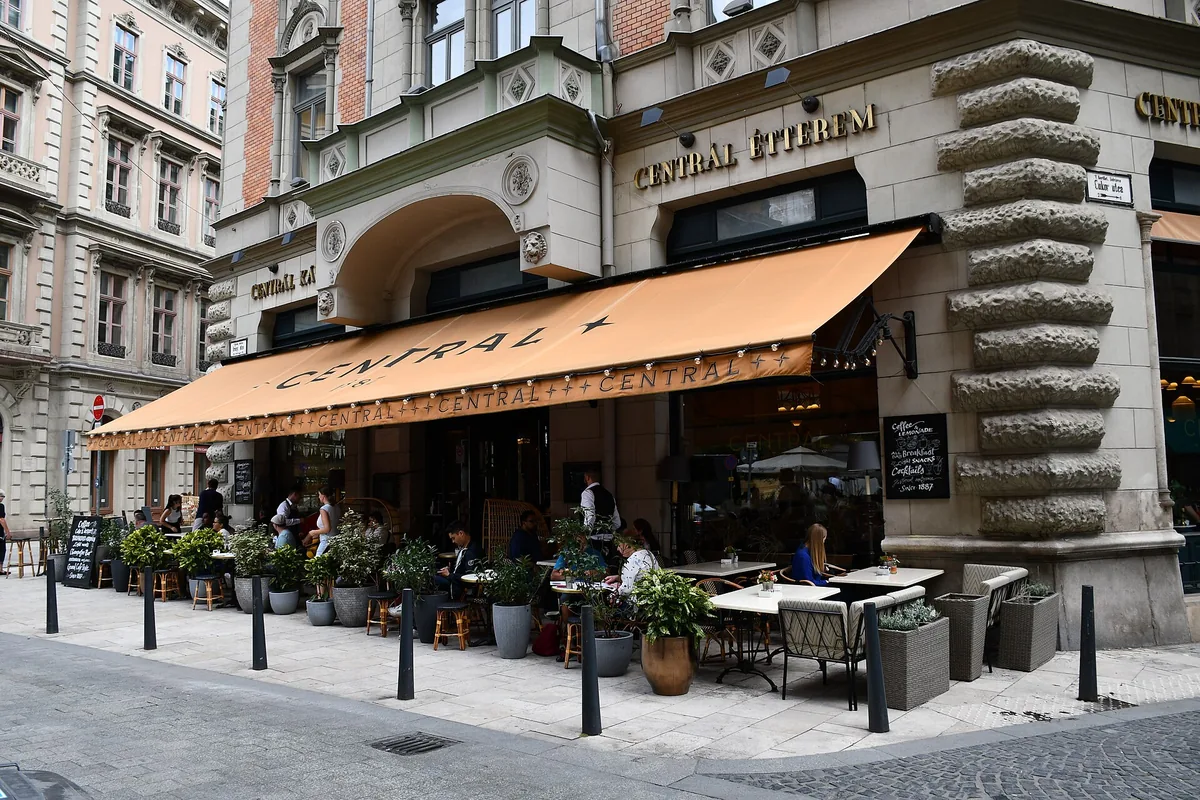
Centrál Kávéház is the grand coffee house where Hungarian writers used to meet, and it has been restored to full style. It stands at Károlyi utca 9, at the junction of Károlyi, Irányi and Cukor streets, and opened in 1887. Writers including Endre Ady, Dezső Kosztolányi and Mihály Babits are named as regulars, and the literary magazines A Hét and Nyugat held meetings here.
The cafe closed during the pandemic and reopened in April 2022 after a full renovation, now trading as Centrál Grand Cafe & Bar. It had changed owners several times over the previous twenty years, so it is a good idea to treat older reviews with caution. The room is tall and elegant, with long windows, dark wood and a mood that suits a slow cup of coffee and a piece of cake.
The menu covers coffee, cakes, breakfast and fuller meals, so you can stay for a long afternoon. The coffee house tradition in Budapest is about taking your time, so do not be in a hurry. Order something small, read a book and watch the room.
Because it is a grand cafe, prices are higher than at a specialty coffee shop, but they are generally lower than the most touristy spots on the Danube. We did not find any news for 2025 or 2026 about the cafe, so check before you go for current hours and any booking rules.
It sits near the Ferenciek tere area and the Váci utca shopping street, so it is easy to combine with other sights.
- How to get there: On foot from Ferenciek tere (M3), about three minutes.
- How long to spend: One to two hours.
- Best time to go: An afternoon on a weekday.
- Tip: Choose a cake and a black coffee, and take your time over both.
8. New York Café
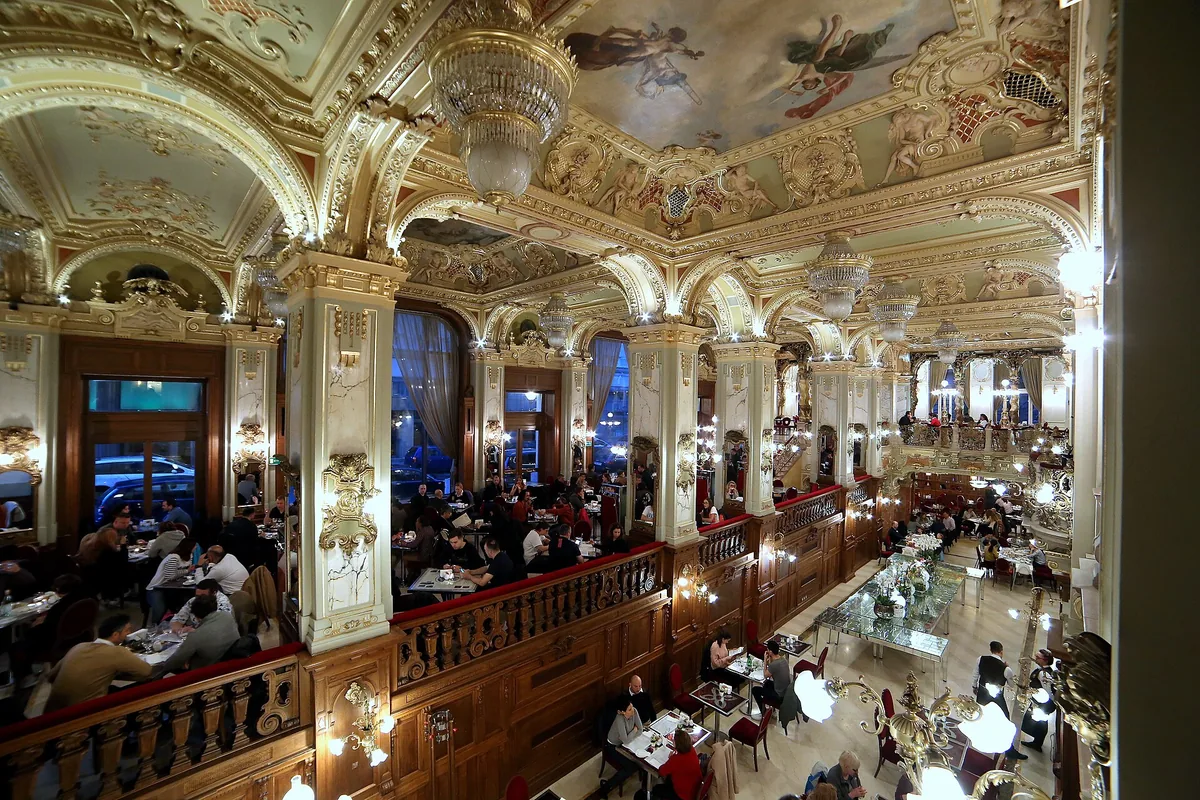
The New York Café is the most famous coffee house in Budapest, and a visit is as much about the interior as the coffee. It stands at Erzsébet körút 9 to 11 in the seventh district, in a building constructed in the early 1890s for an insurance company. Several sources give the opening date as 1894, and the interior has been restored in a rich Italian-Renaissance style with gilded columns, frescoes and chandeliers.
It was a meeting place for writers and artists, and a well-known story says that a writer threw the door key into the Danube so the doors would never close. Some sources say the key story has been moved to a later date, so treat it as a legend. What is certain is that the room is spectacular, and it is one of the most photographed interiors in the city.
Be ready for a queue at busy times, and for prices that are among the highest in this guide. You are paying for the setting rather than the coffee. Sources differ on which hotel operator currently runs the building, so check the current name and booking arrangements before you go.
A good way to enjoy it is to go early on a weekday, order a coffee and a cake, and sit for an hour rather than eating a full meal. One 2026 listing gives long opening hours, from early morning until late, but hours may have changed.
- How to get there: Tram 4 or 6 along the Grand Boulevard to Blaha Lujza tér, then a short walk, or metro to Blaha Lujza tér (M2).
- How long to spend: One to two hours.
- Best time to go: Early on a weekday, to avoid the queue.
- Tip: Check whether you can book a table before you go, and arrive early if you cannot.
9. Café Gerbeaud
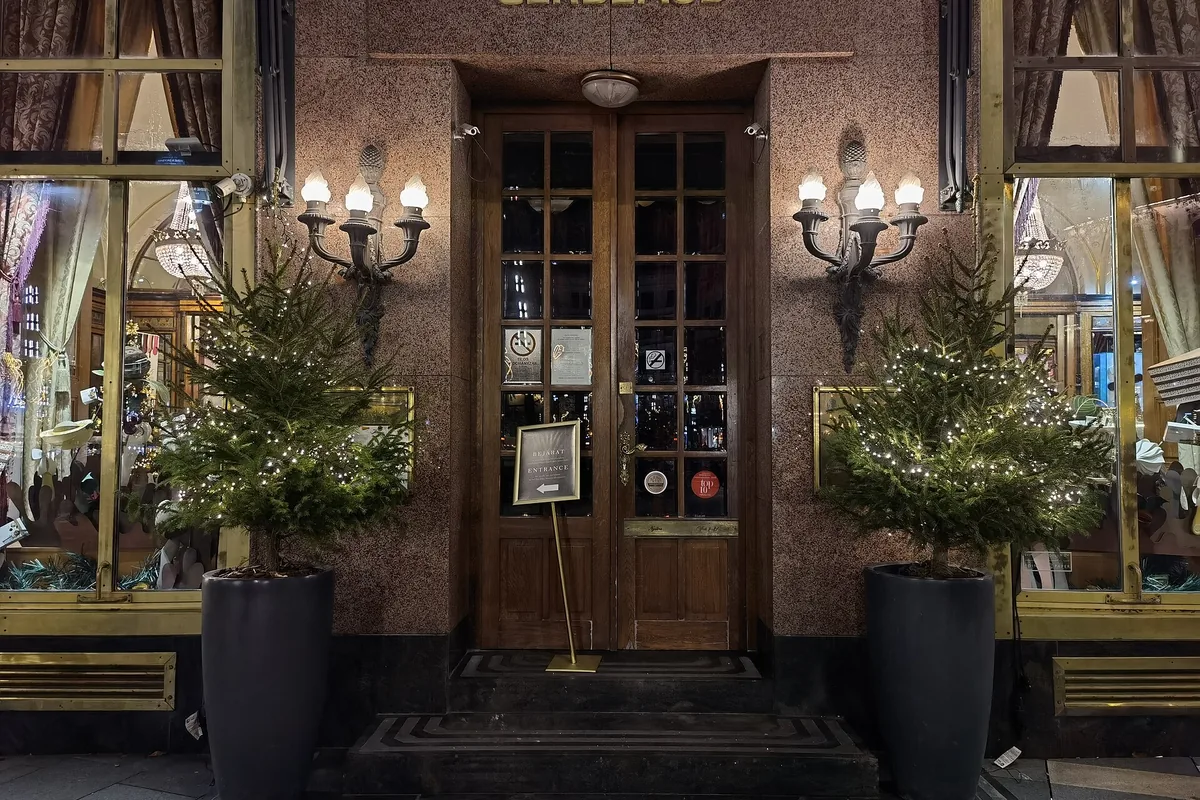
Café Gerbeaud is the most famous cake shop in Budapest, with a history that goes back to 1858. It stands on Vörösmarty tér, the central square at the end of Váci utca. Most sources credit the pastry chef Henrik Kugler with opening the shop in 1858 and moving it to the square in 1870, though some details of the building and ownership history differ between sources.
The shop was later associated with the Swiss confectioner Emil Gerbeaud. In 1948 it was renamed Vörösmarty after the poet Mihály Vörösmarty, and it regained its historic name in 1984. That long story is part of the appeal, and the official Gerbeaud history page is a good place to read more.
The classic order is a slice of the house cake with a coffee or hot chocolate. Ask for the Zserbó cake, a layered Hungarian sweet with apricot jam, walnuts and chocolate, if you want to try something local. The interior is grand, and there is a terrace on the square in warm weather.
Gerbeaud is busy and touristy, and prices reflect its location. That does not make it a bad choice, since the quality is steady and the setting is part of the experience. If you want a more local, cheaper cake stop, Auguszt is the next entry.
It also sits beside the Vörösmarty tér Christmas market in winter, so it is a good place to warm up in December.
- How to get there: Metro to Vörösmarty tér (M1), directly outside.
- How long to spend: About an hour.
- Best time to go: Mid-afternoon on a weekday.
- Tip: Share a slice or two between you, so you can try more than one cake.
10. Auguszt Cukrászda
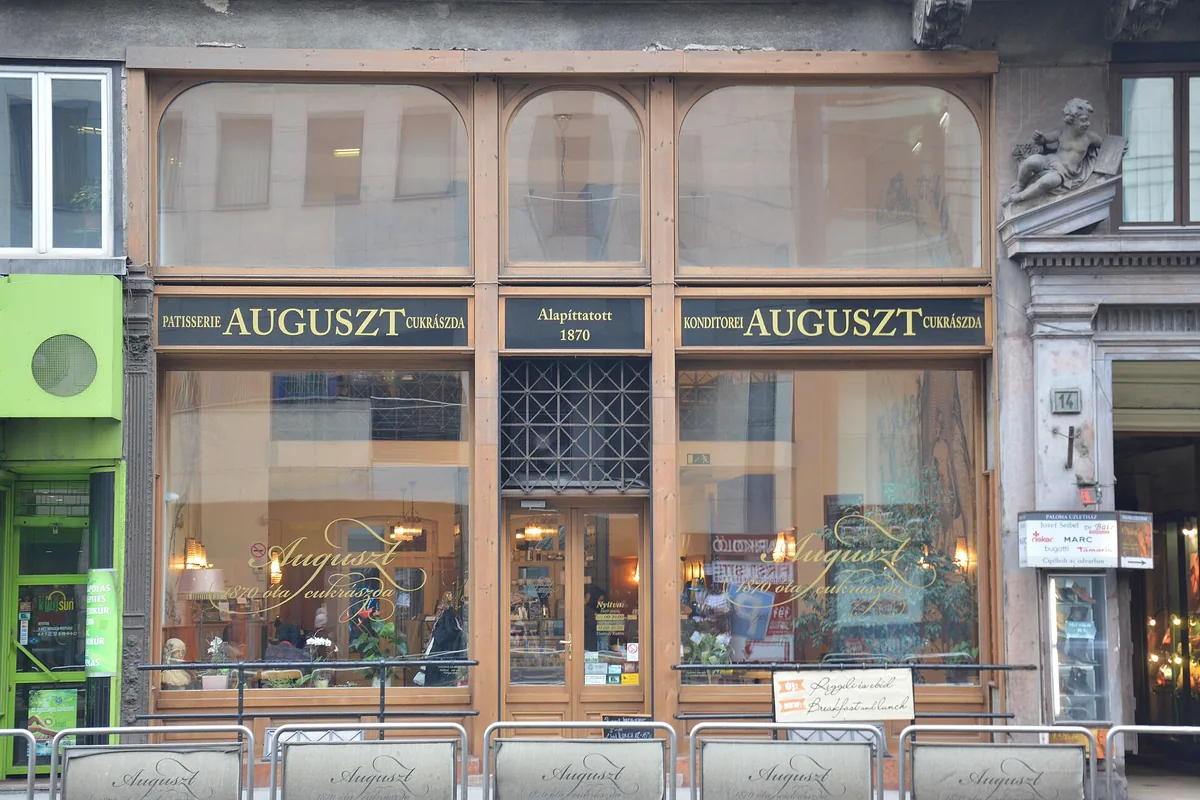
Auguszt Cukrászda is a family confectionery with roots in 1870, and it is the best place to taste classic Hungarian cakes without the crowds. Sources describe it as the oldest confectionery dynasty in the country, and one calls it the second oldest sweet shop in Budapest after Gerbeaud. Its packaging gives the founding year as 1870.
After the family lost the business in the post-war years, it reopened with a shop on Fény utca in the second district, and that branch is still a family operation. Listings also mention a central shop in the fifth district, on Kossuth Lajos utca, but only listing sites mention it, so check the current address before you go.
The display cases hold classic Hungarian cakes and small pastries, such as Dobos torte, Eszterházy torte and Rákóczi túrós. These are the kind of cakes your Hungarian host might serve at home. Prices are lower than at the grand cafes, and the mood is more local than touristy.
One source says the shops are closed on Sundays and Mondays (a recent guide lists the Fény utca shop as open Tuesday to Saturday), but this may have changed, so check before you go. Taking cake away is easy, which makes it a good choice for a picnic by the river.
Because it is a confectionery rather than a full cafe, plan it as a short stop, perhaps after a market visit or before a walk. It pairs well with a coffee from one of the specialty shops earlier in this list.
- How to get there: Tram or metro to the nearest stop for your chosen branch, then a short walk.
- How long to spend: Thirty to forty-five minutes.
- Best time to go: Weekday afternoon.
- Tip: Ask which cake is freshest, and take a second slice to eat later.
Coffee and cake to look out for in Budapest
- Eszpresszó: A small old-style coffee bar, often with cakes and spirits, found across the city.
- Dobos torte: A sponge cake layered with chocolate cream and topped with a hard caramel layer.
- Eszterházy torte: A walnut and cream cake with a fondant top, named after a noble family.
- Zserbó: A layered cake of pastry, apricot jam, walnuts and chocolate.
- Flat white and filter: Standard orders at the specialty coffee shops, usually made with a light roast.
- Kávé: Usually means a small espresso. Ask for a “hosszú kávé” if you want it longer.
How Many Days Do You Need? A 3-Day Budapest Cafe Itinerary
Three days give you time to try both the specialty coffee bars and the grand coffee houses without rushing. Each day groups cafes by area so you spend more time sipping than travelling. It is also available as a free printable PDF.
Day 1: Specialty coffee in the centre
Start at Espresso Embassy near the Basilica for a first espresso, then walk to Madal Café on Király utca for a second, longer stop. In the afternoon, head to Kontakt in its courtyard, and finish with a walk through the Jewish Quarter. Everything is within about fifteen minutes on foot.
Day 2: Courtyards and a pioneer
Begin at Fekete for a filter coffee in its courtyard on Múzeum körút. Walk south towards the river, stopping at the Great Market Hall, and have an afternoon coffee at Tamp & Pull. In the evening, a short tram ride takes you back to the centre for dinner.
Day 3: Grand coffee houses and cake
Spend the morning at Gerlóczy Café for breakfast, then walk to Centrál Kávéház for a literary-style coffee. Move on to Café Gerbeaud on Vörösmarty tér for cake, and take the metro or tram to the New York Café on the Grand Boulevard for a late afternoon visit. Add Auguszt on another day if you want an extra cake stop.
Getting around Budapest
The cafes in this guide are mostly in the fifth and seventh districts, and you can reach most of them on foot. The M1 metro line, the oldest on the continent, runs under Andrássy út, and the M2, M3 and M4 lines cross at Deák Ferenc tér and Kálvin tér. Trams 4 and 6 run along the Grand Boulevard.
The public transport operator is BKK, and its official website has tickets, maps and journey planning. Ticket types and rules change, so check the current options before you buy. Walking is the best way to find the courtyards and side streets, so wear comfortable shoes.
How much does a cafe day in Budapest cost?
Budapest remains good value compared with most western European capitals, though the grand cafes charge a premium. Use these tiers as a guide:
- Cheap: Tamp & Pull, Auguszt and a pastry from a market stall.
- Mid-range: Espresso Embassy, Madal Café, Fekete, Kontakt and Gerlóczy Café.
- Comfortable: Centrál Kávéház, the New York Café and Café Gerbeaud.
To keep costs down, visit the grand cafes for cake rather than a full meal, and spend the rest of the day at specialty coffee shops. Check menus and any service charge before you order.
Where should you stay in Budapest?
- District V (Belváros and Lipótváros): The best base for cafes, close to the Basilica, Váci utca and the river, though prices are higher.
- District VII (Jewish Quarter): Lively, with ruin bars and street food, and close to Kontakt and the New York Café.
- District VI (Terézváros): Calmer and close to the Opera and Andrássy út.
- District VIII (Palace Quarter): Often better value, with good transport to the centre.
- Buda side: Quieter, with views of the river and easy access by tram.
If you are also drinking your way through the city, see our guide to the best cafes in Prague for another coffee house capital a short train ride away.
What should you know before a cafe trip in Budapest?
- Service charge: Many cafes add a service charge to the bill, so check before you tip on top.
- Opening hours: Hours vary between weekdays and weekends, and some cafes close one or two days a week. Check before you go.
- Queues: The grand cafes can be busy at weekends and in summer, so go early or book where possible.
- Payment: Most cafes accept cards, but carry a little cash for small shops.
- Courtyards: Several cafes hide in courtyards, so look for the entrance passage.
Frequently Asked Questions
What are the best cafes in Budapest?
Espresso Embassy, Madal Café, Fekete, Tamp & Pull and Kontakt are among the best for specialty coffee. Centrál Kávéház, the New York Café and Café Gerbeaud are the best known grand coffee houses.
Where can I find specialty coffee in Budapest?
The fifth district has the greatest concentration, with Espresso Embassy and Madal Café close to the Basilica and Király utca. Kontakt and Fekete are hidden in courtyards nearby.
Is the New York Café worth the queue?
For the interior, yes, as it is one of the most beautiful rooms in the city. Go early on a weekday and treat it as a place for coffee and cake rather than a full meal.
What cake should I try in Budapest?
Try Dobos torte, Eszterházy torte or Zserbó. Auguszt and Café Gerbeaud both serve classic Hungarian cakes.
How much should I tip in a Budapest cafe?
Many cafes add a service charge, so check the bill first. If none is added, rounding up or leaving a modest percentage is normal.
Do I need to book a cafe in Budapest?
For most specialty coffee shops, no. For the grand cafes and for brunch at the weekend, booking where possible saves a wait. Check each cafe’s own channels.
Discover More of Central Europe
Budapest pairs well with other coffee house cities. Compare the evening scene in our guide to the best bars in Vienna for your evenings, or plan a longer coffee trip with our guide to the best cafes in Lisbon.
Featured image: Photo by Random photos 1989, CC0, cropped, via Wikimedia Commons