Last updated: November 2026
The best food in Spain is not one cuisine but a collection of regional ones, from Galician octopus and Valencian rice to Andalusian cold soups and Madrid stews. Eating well here means knowing which dish belongs to which place, and ordering it where it is done properly.
This guide covers ten dishes worth seeking out, with where each is at its best, how it is usually served and what to watch for. You do not need to book anything fancy: most of these are bar and market staples, and many are cheap. If you are choosing a city to eat in, our guides to the best places to eat in Madrid and where to eat in Barcelona show where to try these dishes. We have also put together a free printable 3-day food itinerary, so you can turn the list into a plan. For general trip information, see the official Spain tourism site.
Quick answer: What are the best foods to try in Spain? The best foods to try in Spain are jamón ibérico, tortilla de patatas, paella valenciana, pulpo a feira, salmorejo and gazpacho, pimientos de Padrón, croquetas, gambas al ajillo, cocido madrileño and churros con chocolate. If you only try three, make them jamón, tortilla and a proper paella.
Free printable itinerary
Planning a trip? Download our Suggested Food Plan: 3 Days in Spain as a PDF: the day-by-day plan plus all 10 places with directions and map links. Print it or keep it on your phone.
Quick comparison: foods to try in Spain
| # | Dish | Home region | Best for |
|---|---|---|---|
| 1 | Jamón ibérico | Salamanca, Extremadura, Andalusia | Cured ham lovers |
| 2 | Tortilla de patatas | All of Spain | A cheap, filling bar snack |
| 3 | Paella valenciana | Valencia | Rice dishes |
| 4 | Pulpo a feira | Galicia | Seafood fans |
| 5 | Salmorejo and gazpacho | Andalusia | Hot summer days |
| 6 | Pimientos de Padrón | Galicia | Sharing with a drink |
| 7 | Croquetas | All of Spain | Comfort food |
| 8 | Gambas al ajillo | Andalusia and beyond | Garlic and prawns |
| 9 | Cocido madrileño | Madrid | A hearty winter meal |
| 10 | Churros con chocolate | Madrid and beyond | Breakfast or a late snack |
1. Jamón Ibérico
Jamón ibérico is the food most people picture when they think of Spain, and the real thing is worth the fuss. It is cured ham from Iberian pigs, sliced thinly by hand and eaten on its own or with bread. The best is rich, nutty and almost sweet, with fat that melts as soon as it hits your tongue.
Quality varies enormously, and labels matter. There are four protected designations of origin for Iberian ham: Guijuelo in Salamanca, Dehesa de Extremadura, Jabugo (covering the Sierra de Aracena area of Huelva) and Los Pedroches in Córdoba. Colour-coded seals show the type: black for acorn-fed 100% Iberian, red for acorn-fed ham from crossbred Iberian pigs (50% or 75% Iberian) and green for field-fed animals. Cheaper hams sold simply as “jamón serrano” are a different product, and while pleasant, they are not the same experience.
To try it without overspending, order a small plate (a media ración) at a specialist bar or ham shop and ask what the cut is. A hand-carved plate with a glass of dry sherry or a light red is a classic pairing. Shops will often vacuum-pack slices to take home, which makes a good souvenir if your airline allows it. Check the rules for bringing meat products into your home country before you buy.
Avoid ham that has been pre-sliced and left sitting out, as it dries and loses its flavour.
- How to get there: Ham bars and delis are in every Spanish city, with the finest producers around Salamanca, Extremadura and the Sierra de Aracena in Huelva.
- How long to spend: About 30 to 45 minutes for a plate and a drink.
- Best time to go: Any time of year, as an aperitivo before lunch or dinner.
- Tip: Look for the seal colour on the leg, and ask for the carver to cut by hand.
2. Tortilla de Patatas
Tortilla de patatas is Spain’s most beloved bar snack, a thick omelette of eggs and slowly cooked potato. It is served in wedges, warm or at room temperature, and it appears on almost every counter in the country, usually next to a basket of bread. Done well, it is soft and creamy in the middle, with a lightly golden outside.
The great Spanish argument is whether it should contain onion. One side, the concebollistas, say yes. The other, the sincebollistas, say it should be only eggs, potatoes, oil and salt. Polls have shown most Spaniards lean towards onion, but the figures differ between surveys and the debate never ends. Some bars cook both versions, which lets you settle it yourself. The history of the dish is also disputed, and sources offer several different origin stories, so we leave that question open.
Order a slice (a pincho de tortilla) with a small beer or a coffee, or try it as a sandwich called a bocadillo de tortilla. In some cities, such as Granada and León, bars bring a free tapa with each drink, which can make for one of the best-value meals in Europe, though the custom varies by city and bar.
Look for a tortilla that is slightly wobbly in the middle. If it is cooked completely firm, it has probably been sitting for a while.
- How to get there: Available in almost every bar and cafe in Spain.
- How long to spend: About 20 to 30 minutes.
- Best time to go: Mid-morning, lunchtime or as an evening tapa.
- Tip: Ask whether it is “con cebolla” or “sin cebolla” before you order.
3. Paella Valenciana
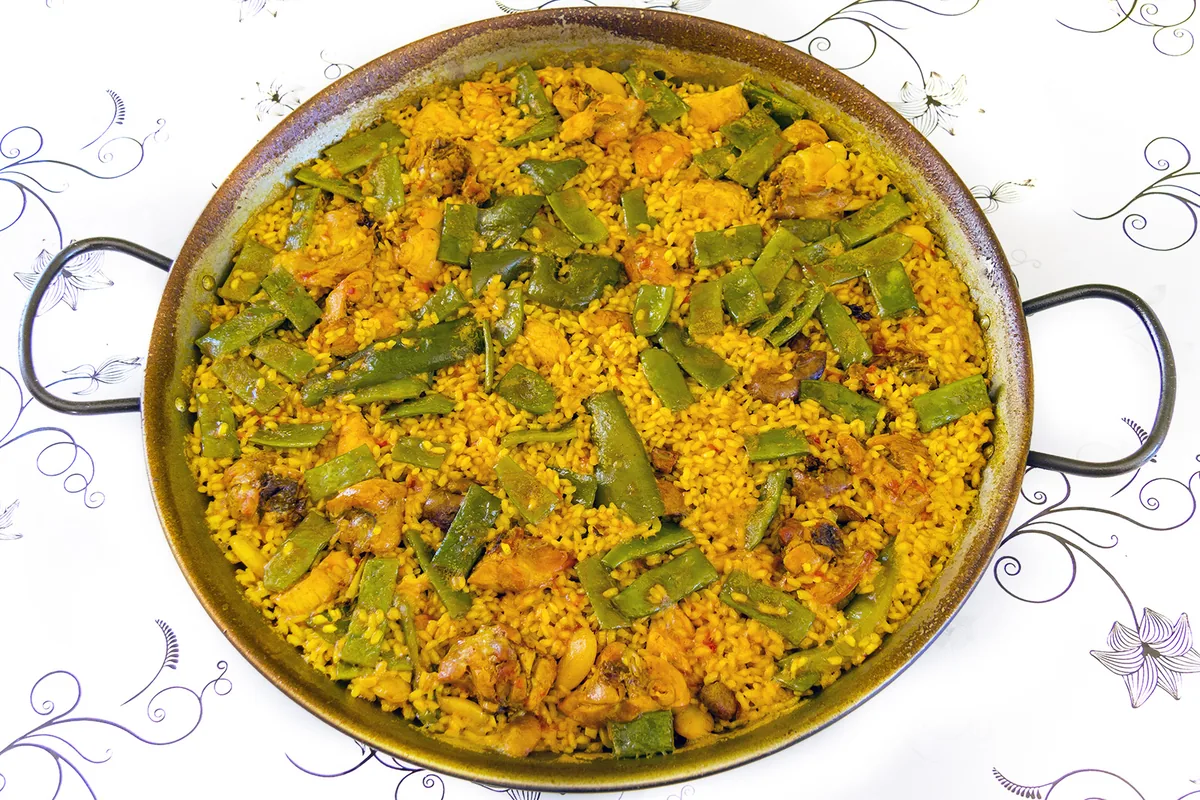
Paella valenciana is a rice dish from Valencia, and the original is very different from the seafood version served in tourist restaurants. The traditional recipe is made with chicken, rabbit, green beans, a large flat white bean called garrofón, tomato, saffron, olive oil and water, cooked in a wide, shallow pan. Seafood is not part of the classic recipe, which surprises many visitors.
The rice matters as much as anything. Valencian paella uses short-grain rice, often the bomba variety, grown around the Albufera lagoon, where rice can carry the protected Arroz de Valencia designation (it covers several varieties, not only bomba). Cooks aim for a thin crust at the bottom of the pan called the socarrat, which is toasted and slightly crunchy and is considered the best part. Sources disagree on a few ingredients, with some including snails or rosemary, so recipes vary from family to family.
Paella is traditionally a lunchtime dish, often eaten on Sundays, and good restaurants cook it to order for two or more people, so it takes time. A tell-tale warning sign is a menu with large photos and a paella ready in minutes. The official Visit Valencia guide explains the dish and its traditions.
If you prefer seafood, look for “arroz del señorito” or “paella de marisco” as a separate dish, and enjoy it as a different but equally valid rice dish.
- How to get there: Best eaten in Valencia city or in the villages around the Albufera, reachable by bus or taxi.
- How long to spend: One to two hours for a leisurely lunch.
- Best time to go: Lunchtime, ideally booked a day ahead.
- Tip: Order for a minimum of two and ask if it is made fresh.
4. Pulpo a Feira
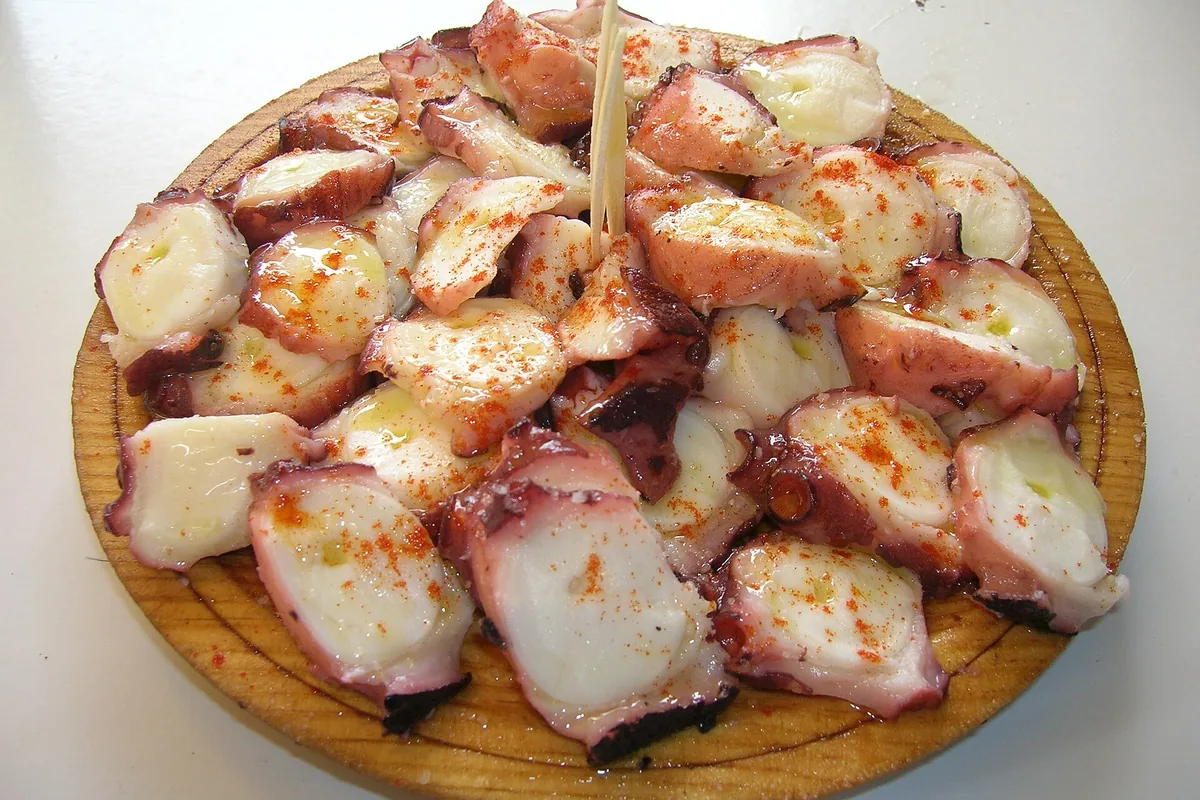
Pulpo a feira is Galicia’s famous boiled octopus, and it is a simple dish that depends entirely on freshness and technique. The octopus is boiled until tender, cut into rounds with scissors and served on a wooden plate. It is then dressed with coarse salt, paprika and a generous drizzle of olive oil. Some places serve it on boiled potatoes, while the strictest versions leave them out.
The name refers to the fairs (feiras) where it was traditionally cooked in large copper pots. The towns of Melide and O Carballiño are especially associated with it, and Melide’s octopus restaurants, called pulperías, are a familiar stop for pilgrims on the Camino de Santiago. O Carballiño holds a big octopus festival, the Festa do Polbo, usually on the second Sunday of August, though you should check the date before planning around it.
The best way to enjoy it is with bread and a glass of local white wine, such as Ribeiro or Albariño. Order a portion to share, as it is rich and filling. The texture should be tender with a slight bite, and the paprika can be sweet or hot, so ask which you are getting.
Away from Galicia, the dish appears on many menus, but quality varies, so be selective. Look for places with high turnover, where the octopus comes out of the pot fresh.
- How to get there: Best in Galicia, with Melide an easy stop between Santiago de Compostela and Lugo.
- How long to spend: About an hour.
- Best time to go: Lunchtime, when the cooking is at its freshest.
- Tip: Ask for “pulpo á feira” and a plate of bread to mop up the oil.
5. Salmorejo and Gazpacho
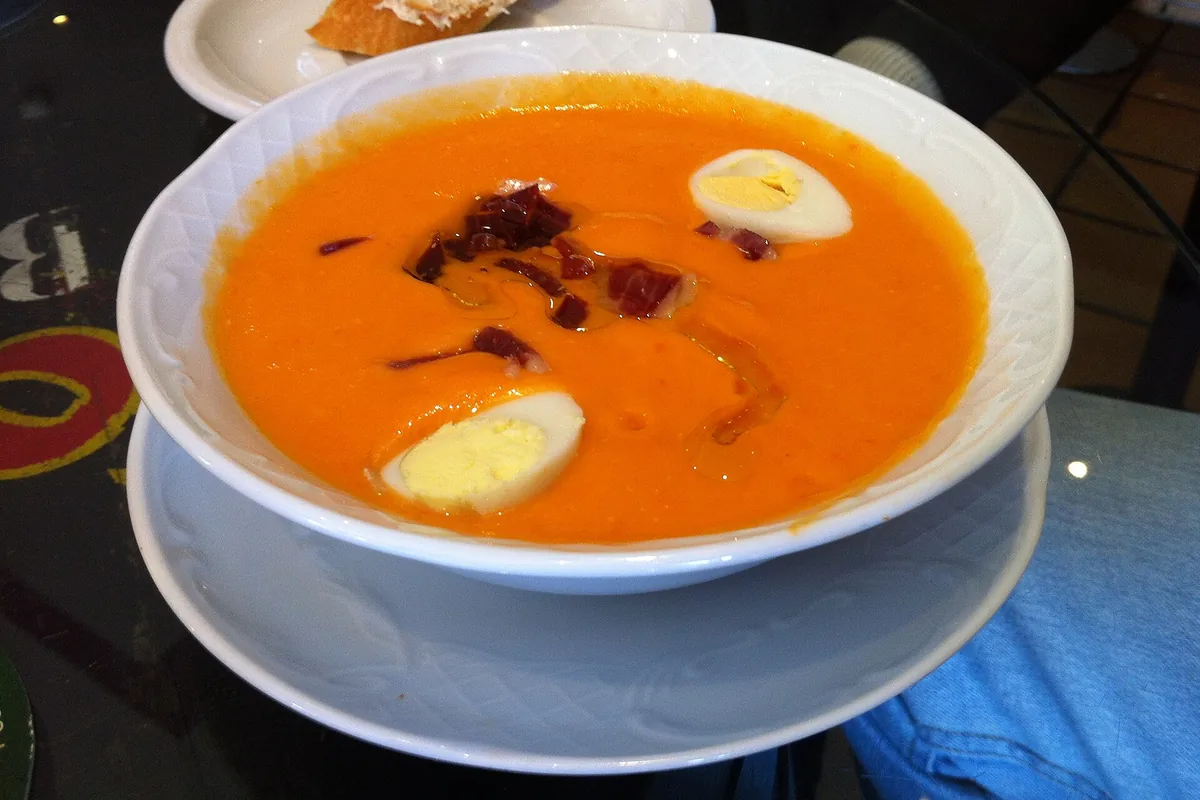
Salmorejo and gazpacho are Andalusia’s cold tomato soups, and they are the most refreshing dishes in Spain on a hot day. They look alike but are quite different. Gazpacho is thin and sharp, made from tomatoes with cucumber, pepper, onion and usually vinegar, and often drunk from a glass. Salmorejo, from Córdoba, is thicker and creamier, made mainly from tomato, bread, garlic and olive oil, and eaten with a spoon.
Salmorejo is normally topped with chopped hard-boiled egg and cured ham. Recipes disagree on details such as whether vinegar belongs in it, so versions vary between restaurants. Córdoba even has a brotherhood dedicated to protecting the traditional recipe, which shows how seriously locals take it.
These soups are at their best from late spring through summer, when tomatoes are ripe and temperatures soar. In winter you may find them less often, though many bars serve them all year. They are usually inexpensive starters and are easy to order even with limited Spanish. Vegetarian travellers should check the toppings, as salmorejo often comes with ham. Both soups are served cold, so they also work well as a light lunch when the heat makes a heavy meal unappealing, and a spoonful of good olive oil on top is part of the pleasure.
For a recipe and background, see the Olive Oils from Spain page on salmorejo.
- How to get there: Available across Andalusia, with Córdoba the home of salmorejo.
- How long to spend: About 30 minutes as a starter.
- Best time to go: Summer lunchtimes.
- Tip: Ask for it “sin jamón” if you do not eat pork.
6. Pimientos de Padrón
Pimientos de Padrón are small green peppers fried in olive oil and sprinkled with sea salt, and they are a Galician favourite. They arrive in a heap on a small plate and are eaten by hand, stalk and all. The famous saying is that some are hot and some are not, because heat varies from pepper to pepper, so every bite is a small gamble.
The authentic ones carry the protected name Pemento de Herbón, grown in an area around Padrón, Dodro and Rois in A Coruña and Pontecesures and Valga in Pontevedra. The season runs from late spring into October, and the peppers are best in summer. Out of season, you may still see them on menus, but they are often imported or from other regions. The Foods and Wines from Spain page explains the protected designation.
Order them with a cold beer or a crisp white wine, and share them as a first tapa. They are quick to cook, simple and inexpensive, and they are a great introduction for anyone nervous about trying new dishes. In Galicia you will often see them served alongside octopus or grilled fish, which makes them an easy way to start a longer seafood meal.
Do not expect them to be spicy overall. Most are mild, with perhaps one in several having a kick, so they suit most palates.
- How to get there: Common in bars across Spain, best in Galicia and in summer.
- How long to spend: About 20 minutes as a snack.
- Best time to go: Summer, for the freshest peppers.
- Tip: Eat them while hot and drink water or beer if you hit a spicy one.
If you enjoy small plates like these, our guide to the best tapas bars in Seville lists more places to share a table of dishes.
7. Croquetas
Croquetas are crumb-coated fritters filled with a creamy béchamel, and in Spain they are treated as a serious craft. A good one has a crisp, thin crust and a molten, silky centre, usually flavoured with ham, chicken, salt cod, mushrooms or blue cheese. They are served in small groups as a tapa, ration or part of a set menu.
The most classic version is croquetas de jamón, made with cured ham. Many Spanish cooks regard their grandmother’s recipe as the benchmark, and restaurants often put them on the menu with pride. Other flavours reflect the region: seafood versions are common along the coast, while inland you may find stew-based fillings made from leftover meat.
Order a small portion first, as they are filling and you will want to try other dishes. They are best eaten immediately while hot, so watch out for the molten centre. Because they are deep fried, they can be heavy, so balance them with something fresh, like a salad or tomato.
If you are visiting Madrid, Barcelona or San Sebastián, you will find specialist croqueta bars as well as traditional bars. Check current opening details on each venue’s own website, as small places change hours often. For the northern take on bar snacks, read our guide to the best pintxos in San Sebastian before you go. A mixed plate lets you compare a few fillings side by side, which is the best way to find your favourite.
- How to get there: Available in tapas bars and restaurants nationwide.
- How long to spend: About 30 minutes.
- Best time to go: Lunchtime or early evening, with a drink.
- Tip: Ask what the filling is, as the menu name may not tell you.
8. Gambas al Ajillo
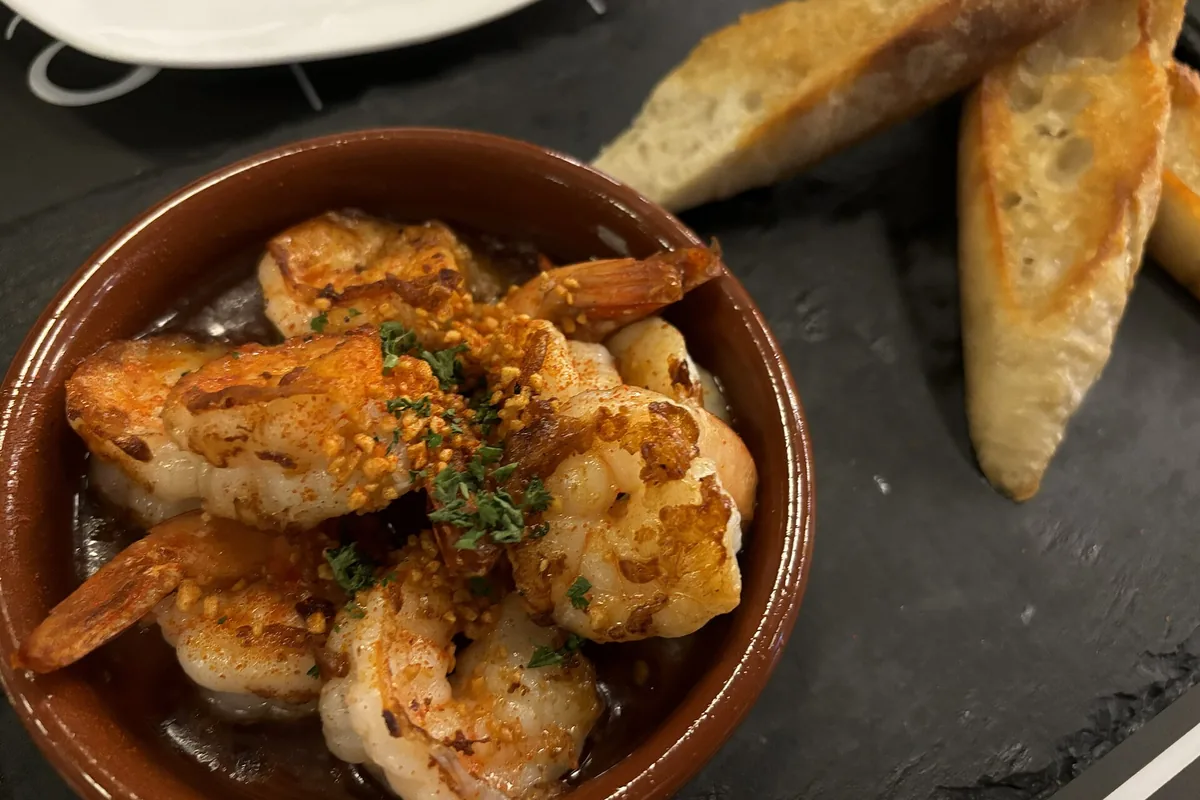
Gambas al ajillo is prawns sizzling in garlic and olive oil, and the smell alone will draw you into the bar. It arrives in a small clay dish, still bubbling, with slices of garlic and often a dried chilli. The prawns are cooked in moments, so they stay juicy.
The point of the dish is the oil. Bread is not an optional extra here, it is the best part, as you use it to mop up the garlicky juices. The dish is found throughout Spain, from Andalusia to the north, and in some bars it is a house speciality. In some places the chilli is mild, in others sharp, so ask if you are sensitive.
Because it is served so hot, wait a moment before touching the dish, and use a fork for the prawns and a piece of bread for the oil. Peeling is part of the fun, and many visitors enjoy the mess. Pair it with a dry white wine or a cold beer.
Price varies by the quality of the prawns, with larger Spanish prawns costing more than smaller ones. Ask about the origin if it matters to you, and check whether the dish is made with fresh or frozen prawns. In coastal towns, fresh versions are easier to find.
- How to get there: Common in tapas bars and seafood restaurants across Spain.
- How long to spend: About 30 to 45 minutes.
- Best time to go: Lunchtime or early evening.
- Tip: Order extra bread, and be careful as the dish arrives very hot.
9. Cocido Madrileño
Cocido madrileño is Madrid’s signature stew, a hearty meal of chickpeas, meat and vegetables served in stages. The broth usually comes first, often with noodles, followed by the chickpeas and vegetables, then the meats, which can include beef, chicken, pork belly and chorizo. It is a feast, built for cold weather and a long lunch.
Traditionally the dish is eaten in three courses, called vuelcos, and the order is part of the ritual. Restaurants that specialise in it, often old-fashioned places in the city centre, serve it at lunchtime, and many offer it only on certain days of the week, so check ahead. It is a heavy meal, so plan a light dinner or a walk afterwards.
Cocido is best from autumn to early spring, when the weather suits it. In summer it is less common, though a few places keep it on the menu year round. Portions are usually generous and good for sharing, even though it is typically ordered per person. If you are travelling as a group, ask about the size.
Because every cook has their own version, quality varies. Choose a restaurant with a reputation for traditional cooking, and read recent reviews from reliable sources before booking.
- How to get there: Served in traditional restaurants across Madrid, usually in the central districts.
- How long to spend: Around two hours.
- Best time to go: Lunchtime, from autumn to spring.
- Tip: Book ahead and check which days the restaurant serves cocido.
10. Churros con Chocolate
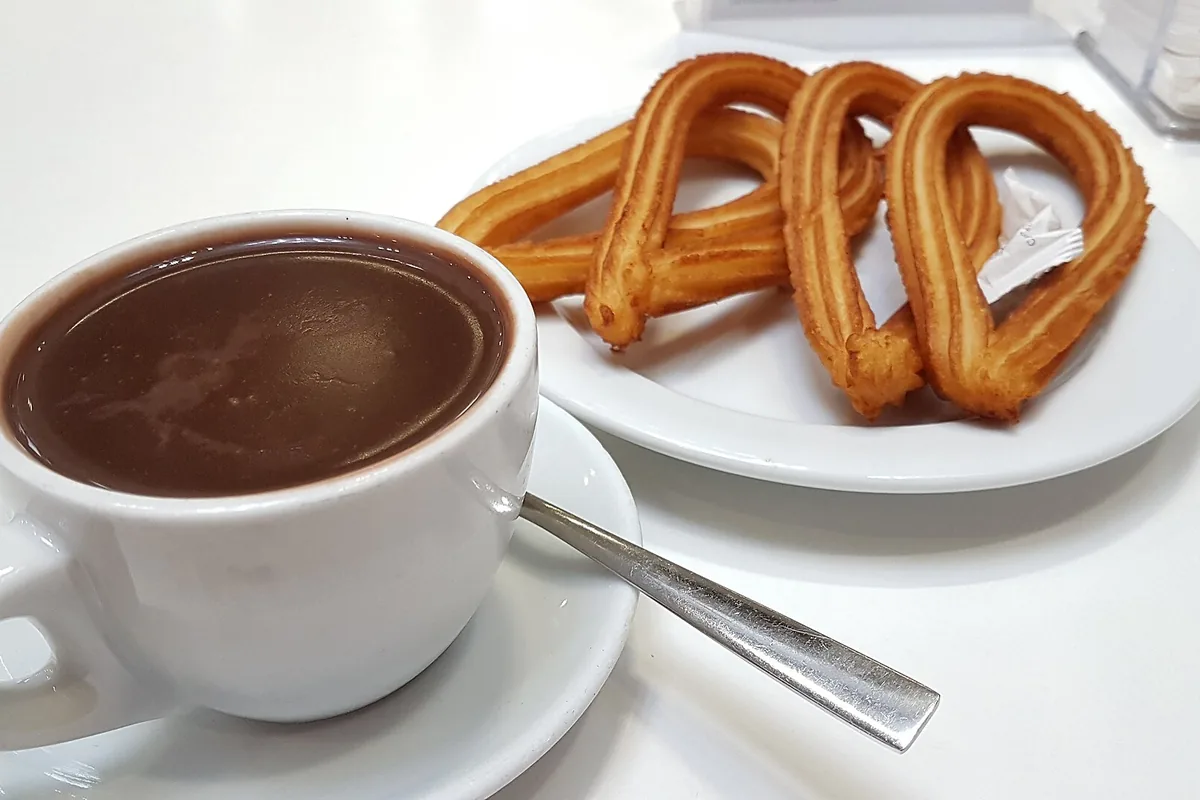
Churros con chocolate are fried dough sticks dipped in thick hot chocolate, and they are Spain’s best-loved sweet treat. The churros are crisp outside and soft inside, and the chocolate is closer to a pudding than a drink, thick enough to coat a spoon. It is a breakfast, a late-night snack and an afternoon pick-me-up, all in one.
Madrid is strongly associated with the dish, but you will find it everywhere, from market stalls to old chocolaterías. There are two shapes: thin, curly churros and thicker, ring-shaped porras. Both are traditionally eaten fresh from the fryer, so look for places with a queue and a steady stream of hot batches.
Spanish chocolate is different from the sugary drinks served elsewhere. It is often made without much sugar, so the cocoa flavour shines. Dip the churros into the cup and drink what is left with a spoon. It pairs well with a small black coffee.
Because it is heavy, share a portion between two. Many chocolaterías are open late into the night, which makes this a good end to an evening out. Check each venue’s own website for current hours, as these change. If you are visiting in winter, a cup of hot chocolate is the perfect way to warm up after a day of sightseeing, and the portions are generous enough to count as a small meal.
- How to get there: Found in chocolaterías and cafes across Spain, especially in Madrid.
- How long to spend: About 30 minutes.
- Best time to go: Breakfast, mid-afternoon or late at night.
- Tip: Eat the churros as soon as they arrive, while still crisp.
How to Choose What to Try First
Start with what suits your appetite. For a cheap first taste, tortilla de patatas and croquetas are easy. For something special, jamón ibérico and a proper paella are worth the extra. For seafood, try pulpo a feira in Galicia and gambas al ajillo anywhere on the coast. For hot weather, salmorejo or gazpacho. For a big, warming meal, cocido madrileño. And for a sweet finish, churros con chocolate. Because many dishes are regional, you will eat best by ordering what each place does best.
Suggested Food Plan: 3 Days in Spain
Day 1: Madrid classics
Begin with churros con chocolate for breakfast, then move to a tapas lunch with tortilla and croquetas. If the weather is cool, swap the tapas lunch for a booked table at a traditional restaurant serving cocido madrileño. In the evening, order a plate of jamón ibérico with a glass of sherry.
Day 2: Valencia rice and sea
Take a fast train from Madrid to Valencia, check in and head for a long lunch of paella valenciana, ideally booked in advance. In the afternoon, walk through the city, and in the evening have a light tapas dinner with gambas al ajillo.
Day 3: Andalusian summer
Travel to Córdoba or Seville by train. Order salmorejo for lunch, with chopped egg and ham, and follow it with a plate of tortilla. In the evening, a last round of croquetas and pimientos de Padrón closes the trip. If you prefer the north, swap this for Galicia and a plate of pulpo a feira in Melide.
Getting Around Spain for Food
Spain has an excellent high-speed rail network between Madrid, Valencia, Córdoba and Seville, so you can eat your way across the country without a car. Book tickets ahead on Renfe, as popular services sell out. Within cities, metros and buses are cheap and frequent. Rural areas, such as Galicia’s octopus towns, are easier with a hire car, but regional buses and trains also serve Santiago de Compostela and Melide, so check timetables. If you want to add a side trip from Valencia after your paella lunch, our guide to the best day trips from Valencia has easy ideas.
Where to Stay for Food Lovers
- Madrid, near Sol or La Latina: Close to traditional bars, ham shops and chocolaterías.
- Valencia, near the old town: Handy for markets and rice restaurants.
- Córdoba or Seville centre: Walkable for tapas and cold soups, and our guide to the best places to eat in Seville helps you pick where.
- Santiago de Compostela: A good base for Galician seafood and day trips to octopus towns.
Budget Guidance
Spain is one of the better-value countries for eating. A tortilla slice, croquetas or pimientos de Padrón sit in the budget tier, while jamón ibérico, gambas and a proper paella are mid-range to upper. Many bars include a free small tapa with a drink in some regions, though the custom varies, so check locally. Set lunch menus (menú del día) are usually the best-value hot meal, so look for them on weekdays.
Eating Etiquette and Tips
Spanish mealtimes are late, with lunch often after two and dinner after nine in the evening. Many kitchens close between lunch and dinner, so plan snacks. Tipping is modest, and a small amount is plenty if service was good. Standing at the bar is often cheaper than sitting at a table. If you have allergies or dietary needs, learn a few key phrases and ask carefully, as many traditional dishes contain pork, eggs or shellfish.
Frequently Asked Questions
What are the best foods to try in Spain?
The best foods to try in Spain include jamón ibérico, tortilla de patatas, paella valenciana, pulpo a feira, salmorejo and gazpacho, pimientos de Padrón, croquetas, gambas al ajillo, cocido madrileño and churros con chocolate.
What is the national dish of Spain?
Spain has no single official national dish. Paella and tortilla de patatas are the two most commonly named, though both are regional in origin and debated.
Is paella made with seafood?
Not the traditional Valencian version, which uses chicken, rabbit and beans. Seafood paella is a popular variation, but it is a different dish.
What is the difference between gazpacho and salmorejo?
Gazpacho is thin and made with tomato, cucumber, pepper and onion, while salmorejo is thicker and creamier, made mainly with tomato, bread, garlic and olive oil.
When do Spaniards eat dinner?
Dinner is usually late, often after nine in the evening. Many restaurants do not open for dinner until then, so plan tapas to bridge the gap.
Is Spanish food spicy?
Generally no. Spanish cooking uses plenty of garlic, paprika and olive oil, but most dishes are mild. A few, such as some pimientos de Padrón, can surprise you with heat.
Plan Your Spanish Food Trip
Spain rewards curiosity at the table. Use the free itinerary above to link the best dishes with the places that do them well, check restaurant opening days before you go, and keep an open mind about what a tapa can be. For official visitor information, see the Spain tourism site.
Featured image: Photo by David Adam Kess, CC BY-SA 4.0, cropped, via Wikimedia Commons