Last updated: November 2026
The best hidden gems in Spain are not remote islands or secret beaches. They are small walled towns, hillside villages and Renaissance streets that most visitors skip on the way between Madrid, Barcelona and the Costa del Sol. Each one has a real sense of place, and none needs more than a day to enjoy.
Spain rewards anyone willing to leave the main tourist circuit. This guide covers ten places spread across Aragon, Asturias, Catalonia, Andalusia, Castile, the Basque Country and Extremadura, chosen because they are distinctive, walkable and still feel local. We have also put together a free printable 3-day itinerary that links several of them into a realistic trip. For wider planning, the official Spain tourism site is a good starting point.
Quick answer: What are the best hidden gems in Spain? The best hidden gems in Spain are Albarracín, Cudillero, Besalú, Úbeda and Baeza, Pedraza, Laguardia, Guadalupe, Aínsa, Frigiliana and La Alberca. If you only have time for one, Albarracín is the most dramatic, while Úbeda and Baeza suit anyone who loves architecture.
Free printable itinerary
Planning a trip? Download our Suggested Itinerary: 3 Days of Hidden Gems in Spain as a PDF: the day-by-day plan plus all 10 places with directions and map links. Print it or keep it on your phone.
Quick comparison: hidden gems in Spain
| # | Gem | Region | Best for |
|---|---|---|---|
| 1 | Albarracín | Aragon | Medieval streets and dark skies |
| 2 | Cudillero | Asturias | Coastal village views |
| 3 | Besalú | Catalonia | Romanesque bridge and history |
| 4 | Úbeda and Baeza | Andalusia | Renaissance architecture |
| 5 | Pedraza | Castile and León | A walled village near Madrid |
| 6 | Laguardia | Basque Country | Wine cellars |
| 7 | Guadalupe | Extremadura | A royal monastery |
| 8 | Aínsa | Aragon | Pyrenean views |
| 9 | Frigiliana | Andalusia | A white village with Moorish roots |
| 10 | La Alberca | Castile and León | Mountain village heritage |
1. Albarracín
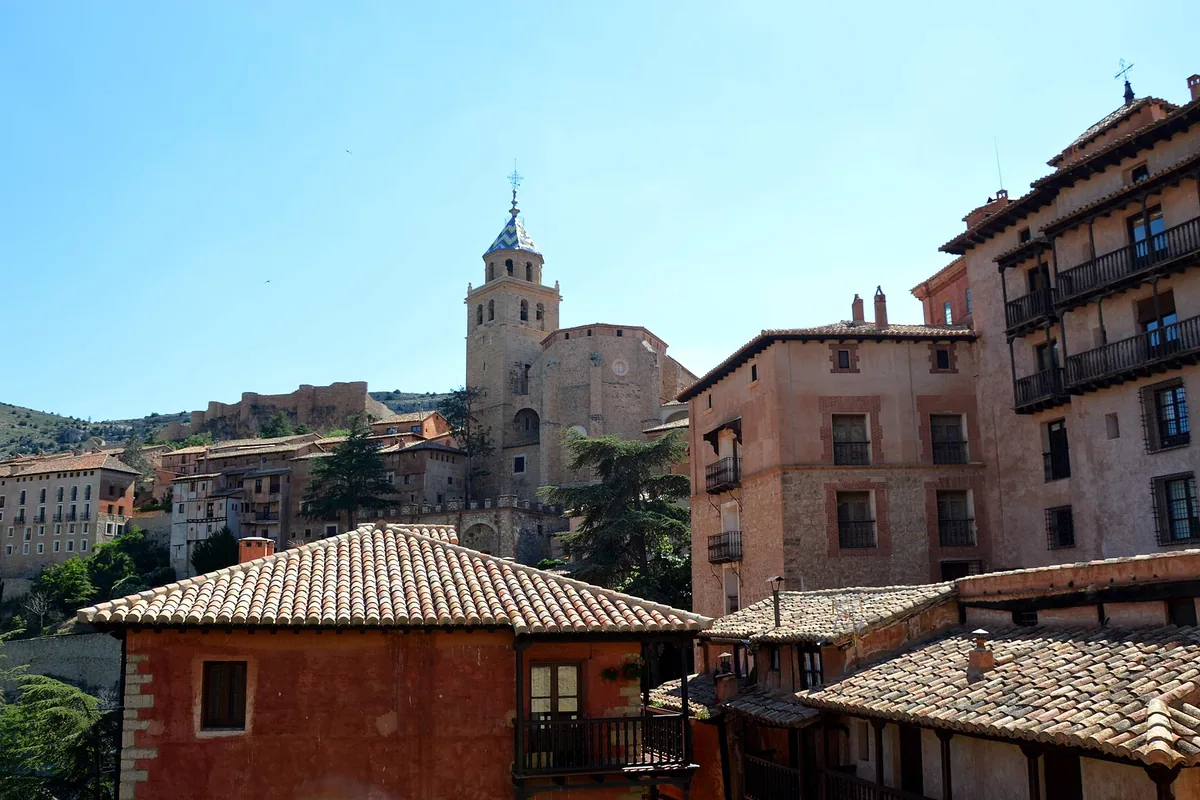
Albarracín is the hidden gem that most often surprises first-time visitors. This hill town in the province of Teruel is built in warm, reddish tones and wrapped by a bend of the Guadalaviar river, with old defensive walls climbing the ridge above the rooftops. It sits high up in the Sierra de Albarracín, so the air feels crisp even in summer.
The town is best explored slowly on foot. Narrow cobbled lanes lead past timber-framed balconies, small squares and a cathedral, and the walls give long views over the roofs to the rocky hills around. Walking up to the castle area is the easiest way to understand how the whole town hangs on its ridge. There are also small museums, and the surrounding natural park has hiking routes for anyone who wants more than a stroll.
The Sierra de Albarracín has been recognised as a Starlight Tourist Destination, so clear nights are worth staying for. Many visitors come only as a day trip, but sleeping in town means you see it after the crowds leave, when the streets are quiet and the stone glows under lamp light.
Because the town is high up and quite far from the main cities, it is best reached by car, usually via the city of Teruel. Winters can be cold, so pack layers if you visit outside summer. Read more about the town on the Los Pueblos Más Bonitos de España site.
- How to get there: By car from Teruel, around half an hour. Public transport is limited, so check local bus options before you go.
- How long to spend: A half day for the old town, or an overnight stay to enjoy the evenings.
- Best time to go: Spring or early autumn for hiking, or clear nights for stargazing.
- Tip: Wear flat, grippy shoes, as the old streets are steep and uneven.
2. Cudillero
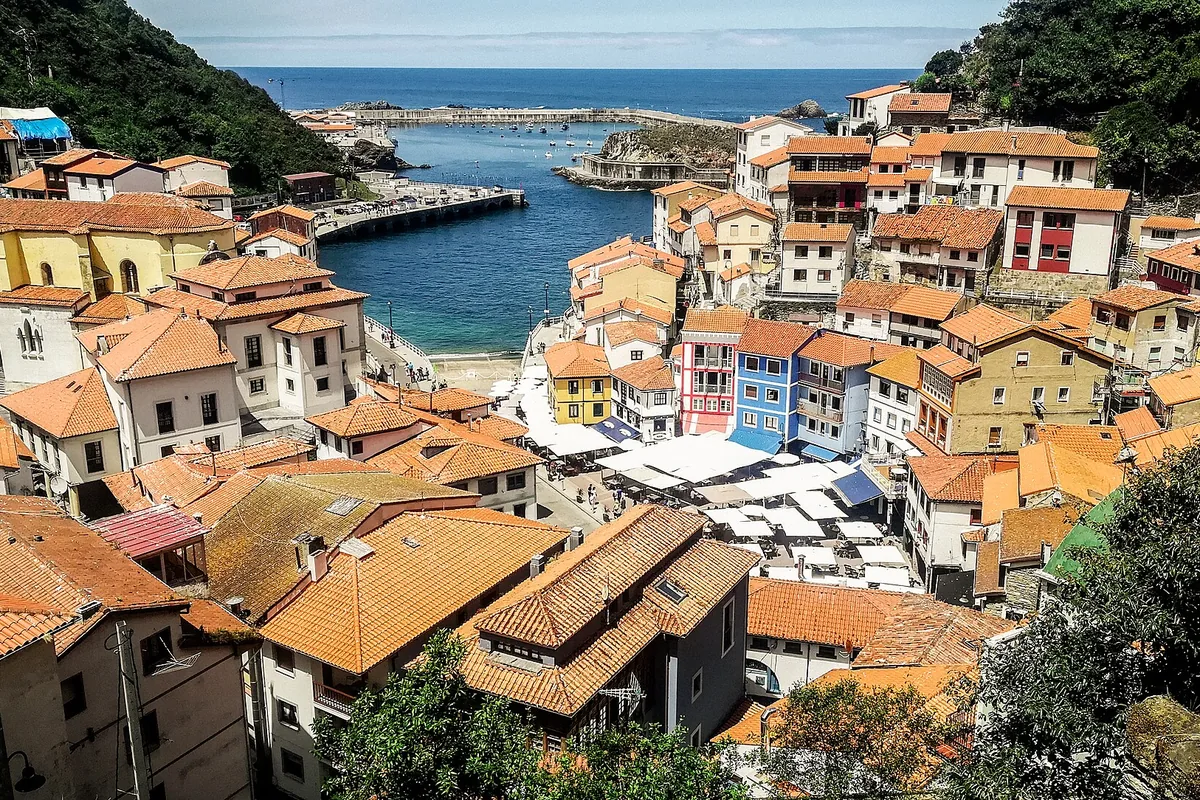
Cudillero is a fishing village that looks as though it was poured into a natural amphitheatre above the sea. Colourful houses stack up the hillside around a small harbour on the Asturian coast, and nearly every lane ends with a view of boats, rooftops or the Cantabrian Sea. It feels more like a stage set than a working port, yet fishing is still part of daily life here.
The best way to see it is to start at the harbour and then climb. Several viewpoints reward the effort, including Cimadevilla, La Garita and La Atalaya, and a walking route links them with the lighthouse. Each shows the village from a different angle, and together they take only a short while to visit. Back at the water, seafood restaurants line the harbour, and Asturian cider is the local drink to try. Look at the official Turismo Asturias page for visitor information.
The village is also known for a quirky local festival, L’Amuravela, held around the feast of St Peter at the end of June, when a speech in the local dialect pokes gentle fun at the year’s events. It is one of the more distinctive small-town traditions in northern Spain, and a good reason to time a visit for early summer.
Cudillero is easy to combine with other Asturian coastal stops, and the nearest train station, at Villademar, is a short taxi or bus ride away. The village is small enough that two to three hours covers it, though staying overnight is far more relaxed once the day visitors leave.
- How to get there: By car from Avilés in roughly half an hour, or by narrow-gauge train to Villademar station and then a taxi or local bus. Check Renfe and ALSA timetables.
- How long to spend: Two to three hours, or longer if you walk the viewpoint route.
- Best time to go: Spring or autumn for fewer crowds.
- Tip: Park at the edge of the village and walk in, as the lanes are narrow and steep.
3. Besalú
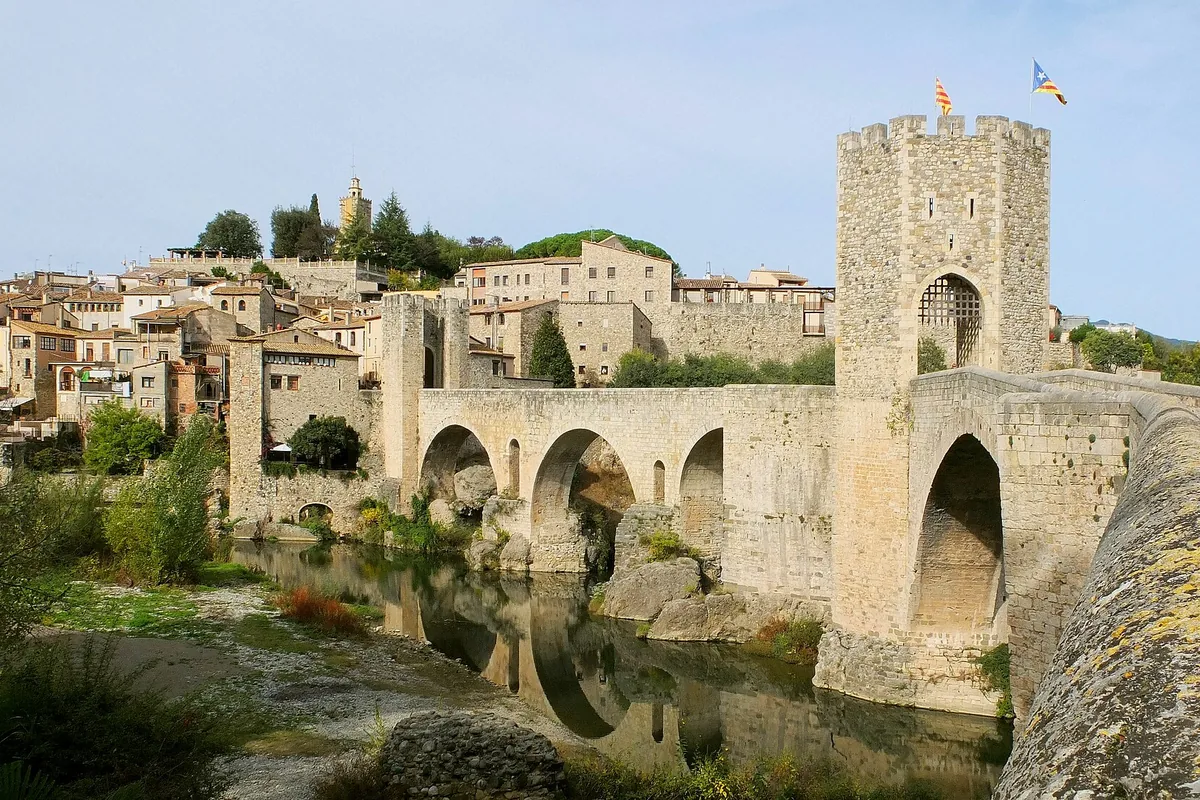
Besalú is a small medieval town in Catalonia, and its Romanesque bridge is one of the most photographed in the region. The fortified bridge crosses the Fluvià river with a gateway at its midpoint, and it welcomes you into a compact old town that feels untouched by the Costa Brava crowds only an hour or so away.
Beyond the bridge, the main draw is history. Besalú has a medieval Jewish ritual bath, known as a mikveh, which is one of the few of its kind found on the Iberian Peninsula. Sources differ on how rare it is, so treat it as a notable rather than unique survival. Seeing the interior usually needs a guided visit organised through the tourist office. The monastery of Sant Pere and the arcaded main square are free to admire from outside, and the lanes between them are lined with small shops and cafes.
The town sits in the Garrotxa area, close to the volcanic natural park, so many visitors pair the two. Together they make an easy day from Girona, with history in the morning and a gentle walk among extinct volcano cones in the afternoon.
Besalú is much smaller than Girona or Barcelona, so a short visit is enough. Aim to arrive early or late in the day, when the light on the stone bridge is at its best and tour groups have thinned out. Free parking is usually available near the bridge, but check signs on busy weekends.
- How to get there: By car from Girona in about half an hour, or by regional bus with a change if needed. Check timetables.
- How long to spend: Two to three hours, longer if you add the volcanic park.
- Best time to go: Spring or autumn, early in the day.
- Tip: Ask the tourist office about guided visits to the mikveh and the monastery interior.
4. Úbeda and Baeza
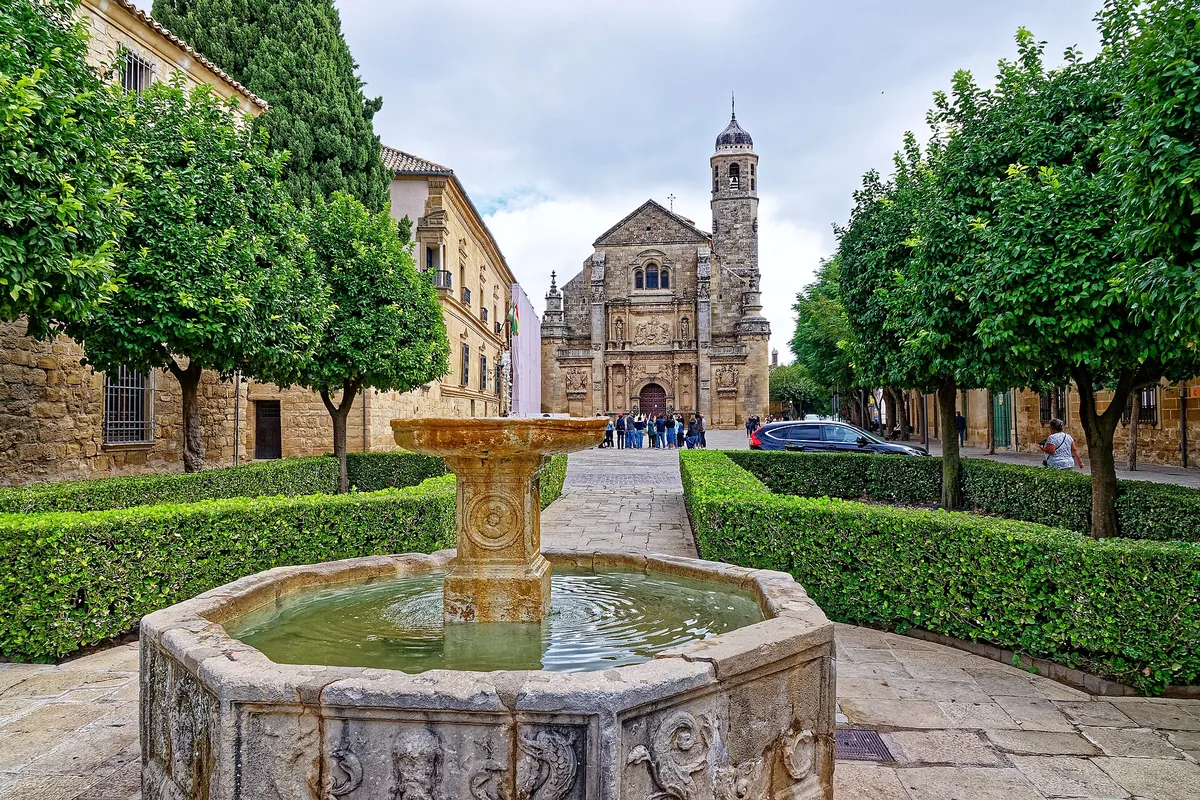
Úbeda and Baeza are two small Andalusian cities with one of the finest sets of Renaissance buildings in Spain. Together they were inscribed on the UNESCO World Heritage list in 2003 as the Renaissance Monumental Ensembles of Úbeda and Baeza. They sit in the province of Jaén, a region better known for olive groves than for tourism, which is exactly why they feel undiscovered.
In Úbeda, head for Plaza Vázquez de Molina, where the Sacred Chapel of the Saviour and neighbouring palaces form a harmonious stone square. The old town around it is full of mansions, church towers and quiet corners. Baeza, a few kilometres away, is smaller and calmer, with the area around Plaza del Pópulo and Calle San Francisco making a lovely short walk. The two towns are close enough to visit in one day, with Úbeda needing more time.
The surrounding countryside is covered with olive trees, and the province is one of the world’s biggest olive oil producers. Many local restaurants serve dishes finished with the region’s picual oil, so it is worth tasting plain oil with bread. The official UNESCO listing gives the background to the site.
Opinions on the two towns vary a little, with some visitors loving the architecture and others finding a short stop enough. If you enjoy buildings and quiet streets, they are a rewarding detour between Granada and Córdoba or Madrid and the south.
- How to get there: By car from Jaén or Granada, or by bus to Úbeda and a short local bus or taxi to Baeza. Check timetables before you go.
- How long to spend: A full day for both, or half a day for Úbeda alone.
- Best time to go: Spring and autumn, as summers are very hot.
- Tip: Start in Baeza in the morning and finish in Úbeda, where the evening light suits the main square.
5. Pedraza
Pedraza is a walled village in the province of Segovia that has barely changed in centuries, and it is an easy escape from Madrid. Its arcaded Plaza Mayor is the heart of the place, with only a few streets leading in, and the whole village sits on a rocky outcrop with long views over the Castilian countryside.
The castle is the main landmark. In the 1920s the painter Ignacio Zuloaga bought it and restored parts of it as a studio and exhibition space, and it has housed a museum linked to him. The castle was reported to have changed hands recently, so check that it is open before you go. Sources give slightly different years for the purchase, so we have not tied the story to one date. Walking the village wall and looking out over the fields is free and takes only a short time. Cars are restricted inside, which keeps the lanes quiet.
Pedraza is known for roast lamb and suckling pig, served in stone restaurants around the square, and for evening candlelit concerts held on summer Saturdays in July. Check the current dates before planning around them, as event details change. The official Spain tourism page for Pedraza has more background.
Although Pedraza is small, it fills with weekend visitors from Madrid, so a weekday or an early start is a better choice. Staying overnight gives you the village almost to yourself once the day trippers have gone.
- How to get there: By car from Madrid in roughly an hour and a half, or combine with Segovia by bus and taxi.
- How long to spend: Two to three hours, or a night.
- Best time to go: Weekdays in spring or autumn.
- Tip: Check the castle’s seasonal opening days before you set out.
6. Laguardia
Laguardia is a walled hilltop town in the Rioja Alavesa wine region, and what makes it special lies beneath your feet. Almost every old house has its own cellar, known as a calado, and many are linked into an underground maze. Some are still used to make wine, and several can be visited.
Above ground, the town is compact and photogenic. Stone gateways lead into narrow streets and a main square, with church towers and the vineyards of the Basque Country stretching out below. The Ysios winery, outside the walls, is a separate stop worth knowing about for its striking wave-shaped architecture designed by Santiago Calatrava.
A visit to one of the cellars is the highlight. Tours usually include a short walk through the underground rooms and a tasting. Booking ahead is wise, especially at weekends, as tours can fill quickly. A few cellars also run themed visits with costumed guides, which are good fun if you like a bit of theatre. If you dislike tight spaces, check the layout first.
Laguardia works well as a day trip from Bilbao, Vitoria-Gasteiz or Logroño, and it also makes a relaxed base for a couple of nights if you enjoy wine. If you are continuing along the Basque coast, our guide to the best pintxos in San Sebastian is a tasty next stop. Drivers should plan for a designated driver or a taxi, as many tastings involve several pours.
- How to get there: By car from Vitoria-Gasteiz or Logroño, about three quarters of an hour. Public transport is limited, so check local bus services.
- How long to spend: Half a day for the town and one cellar visit.
- Best time to go: Autumn during the grape harvest, or spring.
- Tip: Book cellar tours in advance and confirm languages on the winery website.
7. Guadalupe
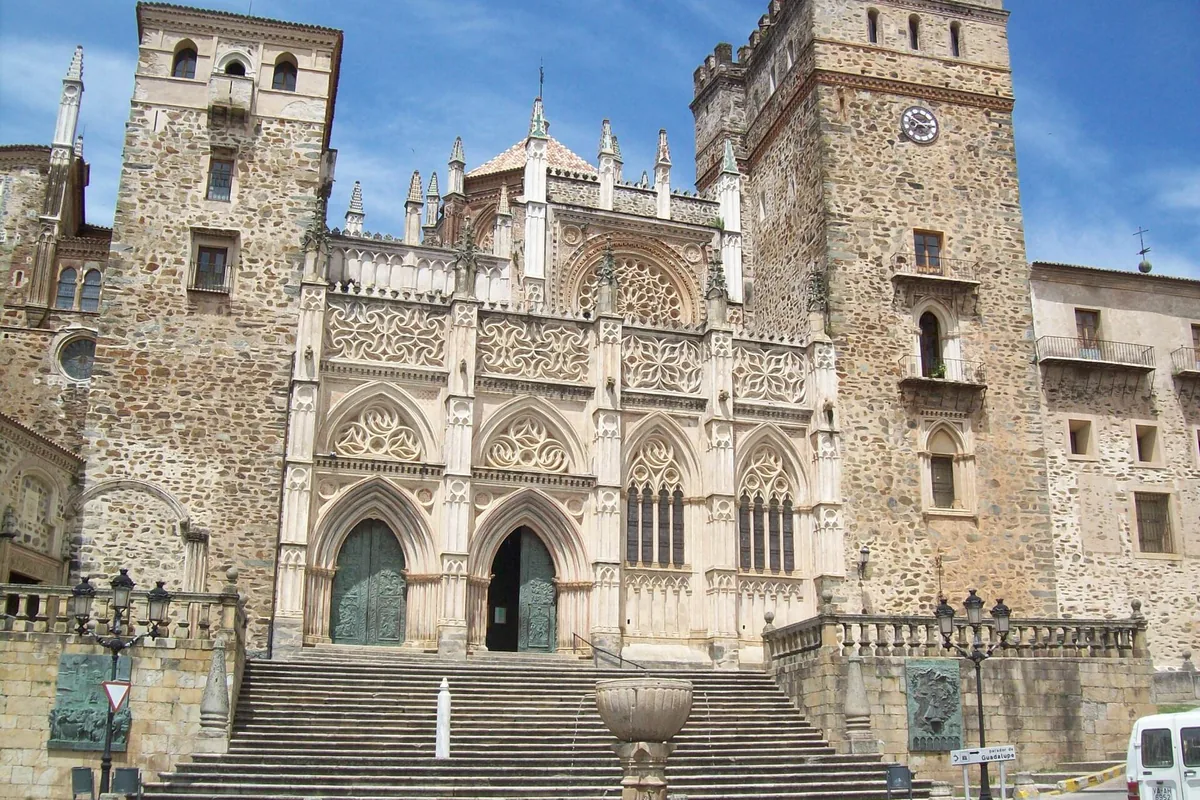
Guadalupe is a quiet town in Extremadura built around one of Spain’s most important monasteries. The Royal Monastery of Santa María de Guadalupe, a UNESCO World Heritage site, rises above the town square, and its fortress-like walls give you a sense of how powerful this place once was, as a pilgrimage centre and a favourite of Spain’s monarchs.
The basilica can usually be entered freely, where visitors see the statue of the Virgin of Guadalupe on the altar. The rest of the monastery, including the cloister, is visited on a guided tour only, with tickets bought on site. Tours have often been run in Spanish, with other languages less certain, so check the official website before you travel. Photography rules inside are strict, and the cloister is the main area where photos are usually allowed.
Around the monastery, the town is a tangle of whitewashed lanes, craft workshops and small cafes. Local copper work is a traditional craft, and the area is also known for its regional food, including hearty stews. The setting in the foothills of the Sierra de Guadalupe is lovely, and a short drive reveals mountain views.
Guadalupe is far from Spain’s main tourist routes, which is why it still feels authentic. Most visitors come from Cáceres, Trujillo or Mérida, and some arrive as pilgrims. The monastery closes for a midday break, so plan your hours around it.
- How to get there: By car from Cáceres or Trujillo, roughly an hour and a half. Public transport is limited.
- How long to spend: Half a day.
- Best time to go: Spring or autumn, when it is mild.
- Tip: Buy your guided tour ticket early in the day, and check current languages and times before you travel.
8. Aínsa
Aínsa is a medieval village in the Pyrenees, perched on a rock where two rivers meet. The old town centres on a large porticoed square, the Plaza Mayor, whose arches date back centuries and which is considered one of the finest medieval squares in Spain. Beside it stands the castle, with views towards the mountains.
The old town is made of two main streets, Calle Mayor and Calle de Santa Cruz, that lead up to the square. Cars are limited in the historic core, so park outside the walls and walk in. The Pyrenean Fauna Ecomuseum in the castle is a nice short visit if you enjoy wildlife, and a few small shops sell local honey, cheese and crafts.
Aínsa is also a handy gateway for the Ordesa and Monte Perdido area. Many visitors base themselves here and take a day to hike or drive to Torla and the national park, then return for dinner in the square. The setting looks especially atmospheric at dusk, when the stone glows under street lamps.
Sources date the castle and square slightly differently, so we have avoided precise years. The old town has been protected as a historic site since the 1960s, but check the official local tourism page for current details.
- How to get there: By car from Huesca or Barbastro, or by bus. Check timetables, which can be limited.
- How long to spend: Two to three hours, or overnight if combining with Ordesa.
- Best time to go: Late spring to early autumn.
- Tip: Park outside the walls to avoid the narrow, cobbled lanes.
9. Frigiliana
Frigiliana is a white village in the hills above the Costa del Sol, and it is among the prettiest in Andalusia. Its old Moorish quarter, known as the Barribarto, keeps the original maze-like layout of steep, narrow lanes. Blue ceramic tiles, geraniums on the walls and whitewashed houses make it one of the most photogenic places in the area.
Walking is the whole point. Follow the cobbled lanes uphill, stop at the viewpoints and look back towards the sea, which is visible on a clear day. Tiled panels along the streets tell the story of the village’s past, and a ruined castle at the top can be reached with a short climb. No tickets are needed to enjoy the old quarter, so it suits a relaxed morning. The Andalucía tourism blog on Frigiliana has more background.
Frigiliana is close to Nerja, so it is easy to combine with a beach afternoon. In early May the village hosts a festival linked to its sugar cane honey, but dates can change, so check before planning around it.
Compared with busier white villages, Frigiliana gets crowded at midday in high season, so arrive early or stay for the evening, when the day trippers leave and the lanes turn quiet.
- How to get there: By bus from Nerja, which is a short ride, or by car. Check current timetables.
- How long to spend: Two to three hours.
- Best time to go: Spring or autumn, early in the morning.
- Tip: Wear comfortable shoes with grip, as the lanes are steep.
10. La Alberca
La Alberca is a mountain village in the Sierra de Francia, and it was the first place in Spain to be declared a historic-artistic site, in 1940. Terminology varies slightly between sources, but the 1940 date is consistent. The village sits high up, over a thousand metres above sea level, and its half-timbered houses with granite ground floors and wooden balconies feel genuinely rural.
The streets are narrow and uneven, centred on a small main square with a stone cross, and the buildings are decorated with carved wooden beams and old inscriptions. The village is surrounded by woodland and the Las Batuecas-Sierra de Francia natural park, so hiking is a big part of the appeal. Popular routes include the walk to the Ermita de San Marcos.
Food is also a highlight. The area is known for cured pork products and hearty mountain dishes, which taste best after a walk. Local shops sell regional sausages, honey and crafts.
La Alberca is quite out of the way, which is a good thing. Salamanca is the usual base, about an hour away, and driving is by far the most practical way to get here, as public transport is limited. For wider ideas, see the official Castilla y León tourism site.
- How to get there: By car from Salamanca in about an hour. Public transport is limited.
- How long to spend: A half day, or a night to explore the park.
- Best time to go: Spring and autumn, as winters can be cold.
- Tip: Bring layers, as the village sits high in the mountains.
How to Choose the Right Hidden Gem
Think about the kind of trip you want. For medieval streets, pick Albarracín, Besalú or Pedraza. For coast and sea views, choose Cudillero. For architecture, go for Úbeda and Baeza or Guadalupe. For wine, Laguardia is the one. For mountains and hiking, pick Aínsa or La Alberca, and for a white village near a beach, Frigiliana is easiest. Most of these places are best reached by car, so factor in hire cars and driving distances when you plan.
Suggested Itinerary: 3 Days of Hidden Gems in Spain
Day 1: Castile from Madrid
Head north from Madrid to Pedraza in the morning, walk the square and castle area, and have lunch in the village. In the afternoon, continue to Segovia or return to Madrid. If you prefer a longer trip, overnight in Pedraza.
Day 2: Andalusian Renaissance
Base yourself near Jaén or Granada. Spend the morning in Baeza, then drive a short distance to Úbeda for lunch and an afternoon in the Plaza Vázquez de Molina. In the evening, try a tapas bar and local olive oil. For more ideas on what to order across the south, see our guide to the best places to eat in Seville.
Day 3: Coast and white village
Travel to Nerja and spend the morning in Frigiliana’s old quarter. Return to the coast for a beach afternoon. If you would rather head north, swap this for Cudillero on the Asturian coast, with the viewpoints in the morning and seafood by the harbour at lunch.
Getting Around Spain’s Hidden Gems
Most of these places are best reached by hire car, as rural bus services are limited and run less often at weekends. Spain’s long-distance trains and buses connect the main cities, so a common approach is to take a train to a regional hub, such as Teruel, Girona, Jaén, Salamanca or Cáceres, and hire a car from there. Check operator timetables on Renfe before you travel. Roads in mountain areas can be slow, so allow extra time, and avoid driving after wine tastings.
Where to Stay
- Teruel or Albarracín: Overnighting in town gives you the stars and the quiet streets.
- Jaén, Úbeda or Baeza: A good base for the Renaissance towns and olive country.
- Nerja: Handy for Frigiliana and the beaches.
- Salamanca: A sensible base for La Alberca and the Sierra de Francia.
- Vitoria-Gasteiz or Logroño: Best for Laguardia and the Rioja Alavesa.
Budget Guidance
Smaller towns tend to be budget to mid-range compared with big cities, especially for food and rooms. The biggest cost is usually car hire and fuel, so share the driving where you can. Many of the best experiences are free, including walking Albarracín, Frigiliana and Aínsa. Guided visits to places like Guadalupe or a Laguardia cellar are paid, so check current costs on official websites.
Booking and Practical Tips
Book cellar tours in Laguardia and guided monastery visits in Guadalupe ahead where possible. Many small-town shops close for a long midday break, so plan lunch around it. Spanish dinners are late, so restaurants may not open until the evening, and our list of the best places to eat in Madrid is useful if you start or end your trip in the capital. Learn a few Spanish phrases, as English is less widely spoken in rural villages. Always check opening days before you set out, particularly in winter.
Frequently Asked Questions
What are the best hidden gems in Spain?
The best hidden gems in Spain include Albarracín, Cudillero, Besalú, Úbeda and Baeza, Pedraza, Laguardia, Guadalupe, Aínsa, Frigiliana and La Alberca. Each offers a distinctive local character away from the main tourist routes.
Which hidden gem in Spain is closest to Madrid?
Pedraza is the easiest to reach from Madrid, at around an hour and a half by car. It is also easy to combine with Segovia, and our guide to the best day trips from Madrid covers more options in the same direction.
Do I need a car to visit hidden gems in Spain?
For most of them, yes. Public transport to small towns can be limited, so hiring a car gives the most flexibility. Frigiliana, which has a bus link from Nerja, is one exception.
When is the best time to visit hidden gems in Spain?
Spring and autumn are best, with mild weather and fewer crowds. Summers can be very hot in the south, and winters cold in the mountains.
Are these hidden gems good for a day trip?
Several work as day trips, including Pedraza from Madrid, Besalú from Girona and Frigiliana from Nerja. Others, such as Albarracín and Guadalupe, are better with an overnight stay.
Can I see more than one in a single trip?
Yes. The itinerary above links Castile, Andalusia and the south coast, and you can adapt it to Aragon, Catalonia or the north depending on where you are flying in.
Plan Your Spanish Escape
Spain’s hidden gems are best enjoyed slowly, with time to wander and eat. Use the free itinerary above to link a few together, check opening days and tour languages before you go, and save the larger cities for another trip. For official visitor information, see the Spain tourism site.
Featured image: Photo by Quintin Soloviev, CC BY 4.0, cropped, via Wikimedia Commons