Last updated: October 2026
Lisbon is a city of seven hills, yellow trams, tiled facades and sweeping views over the Tagus River. It’s one of Europe’s sunniest capitals, with a relaxed pace, excellent food and a long history as the starting point of Portugal’s great voyages of discovery.
Much of the centre was rebuilt after the great earthquake of 1755, which is why the grand, grid-like streets of the Baixa sit beside the medieval tangle of Alfama. That mix of old and new is a big part of the city’s charm, and most of the best sights are within walking distance of each other.
The city is compact but steep, so comfortable shoes are a must. This guide covers the top 10 things to do in Lisbon, from classic sights to local experiences, with practical tips on getting there, how long to allow and when to go. The official Visit Lisboa site is useful for opening times and the Lisboa Card, which includes public transport and free or discounted entry to many museums.
Quick answer: What are the best things to do in Lisbon? Explore Alfama and São Jorge Castle, see Belém’s UNESCO-listed monuments, ride Tram 28, watch the sunset from a miradouro, hear live fado and take a day trip to Sintra. Allow at least three days.
Top 10 Things to Do in Lisbon at a Glance
| # | Thing to do | Best for |
|---|---|---|
| 1 | Get Lost in Alfama | Old-town atmosphere |
| 2 | Ride Tram 28 | Classic sightseeing |
| 3 | Explore Belém | Monuments |
| 4 | Taste the Original Pastel de Nata | Food lovers |
| 5 | Watch the Sunset from a Miradouro | Sunsets |
| 6 | Hear Fado in a Traditional Venue | Culture |
| 7 | Eat at the Time Out Market | Trying local dishes |
| 8 | Browse LX Factory | Shopping and design |
| 9 | Visit the Oceanário de Lisboa | Families |
| 10 | Take a Day Trip to Sintra | A day trip |
1. Get Lost in Alfama
Alfama is Lisbon’s oldest neighbourhood, a maze of steep lanes, staircases and tiny squares that largely survived the great earthquake of 1755. Washing hangs from balconies, the smell of grilled sardines drifts out of small tascas, and tiled facades glow in the late afternoon light.

At the top of the hill stands São Jorge Castle, a Moorish fortress with walls you can walk along for some of the best views in the city. Wander down through Alfama to Lisbon Cathedral (the Sé), one of the oldest buildings in the city, and stop at the viewpoints of Santa Luzia and Portas do Sol on the way.
The best way to see Alfama is simply to put the map away. Its alleys were laid out long before cars, so dead ends and hidden stairways are part of the fun, and you’re never more than a few minutes from a café or a viewpoint.
- Getting there: Tram 28 or Tram 12 to Largo das Portas do Sol, or walk uphill from Baixa or Santa Apolónia metro station.
- Time needed: Half a day, including the castle.
- Best time to go: Early morning, before tour groups arrive, or late afternoon for warm light on the rooftops.
- Insider tip: On Tuesdays and Saturdays, the Feira da Ladra flea market fills Campo de Santa Clara at the eastern edge of Alfama.
2. Ride Tram 28
Tram 28 is Lisbon’s most famous tram route, rattling through Graça, Alfama, Baixa, Chiado and Estrela in vintage yellow carriages from the 1930s.
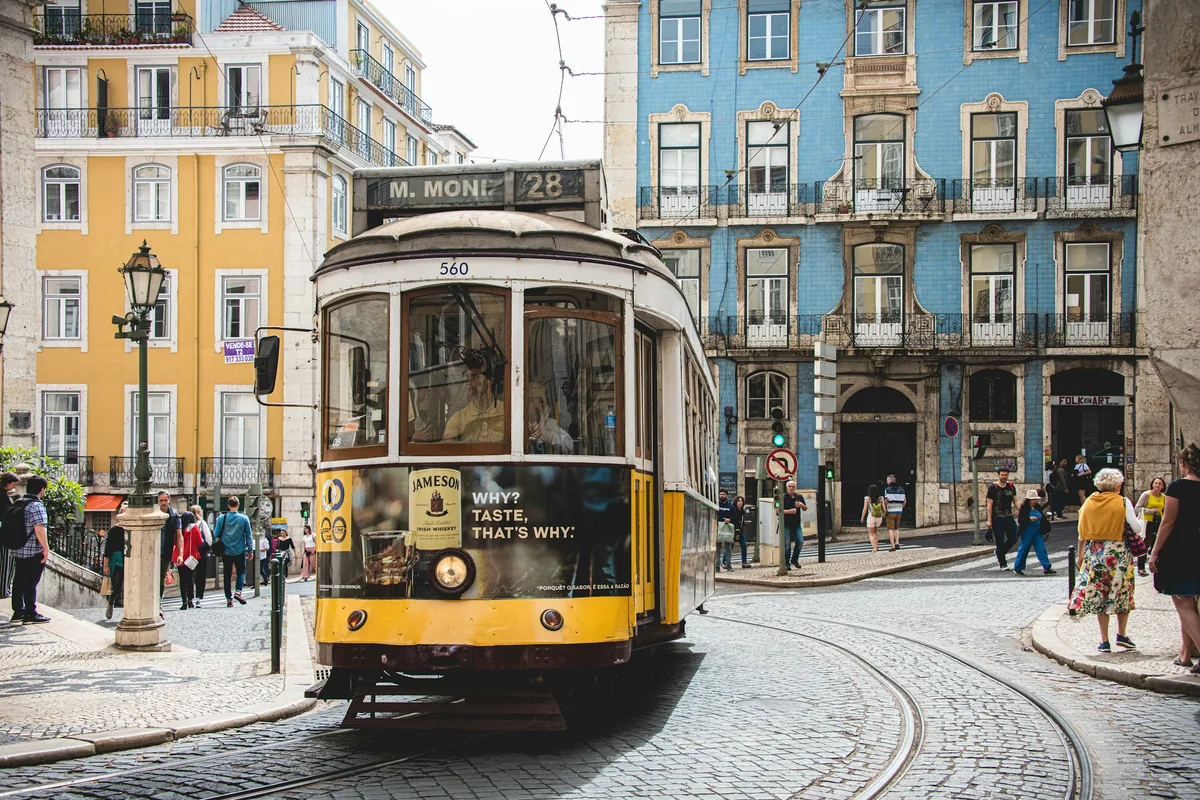
It’s a fun way to see several neighbourhoods in one go, squeezing through streets so narrow you could almost touch the shop windows. The route runs between Martim Moniz and Campo de Ourique, passing many of the sights in this guide.
It gets extremely crowded, especially in summer. Board early in the morning at the Martim Moniz end for the best chance of a seat, and keep an eye on your belongings, as pickpockets work this route.
- Getting there: Martim Moniz metro station (Green Line) is beside the first stop.
- Time needed: Around an hour for the full route, longer at busy times.
- Tickets: Use a Viva Viagem card or the Lisboa Card. Tickets bought on board cost more.
- Insider tip: Tram 12 runs a shorter loop through Alfama and Baixa in the same vintage carriages, and is usually much quieter.
3. Explore Belém
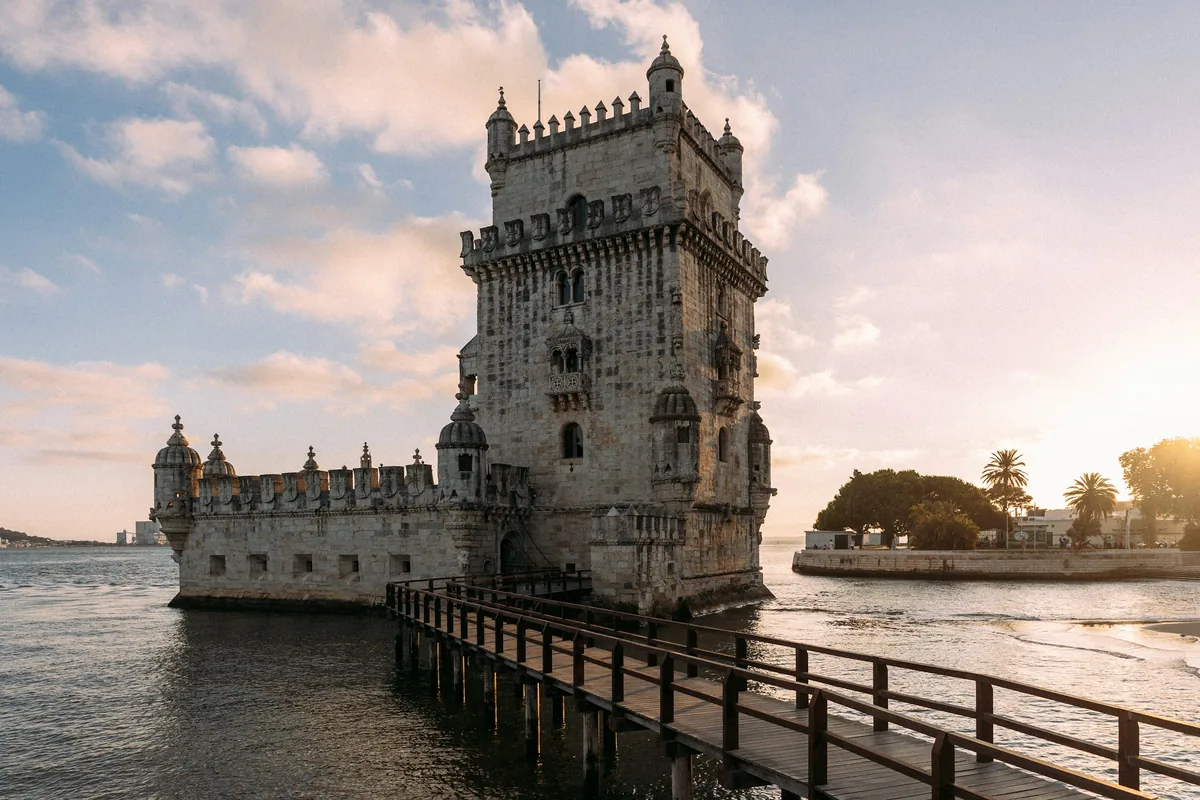
Belém is home to two of Lisbon’s most important monuments: the Jerónimos Monastery and the Belém Tower, both part of a UNESCO World Heritage Site celebrating Portugal’s Age of Discovery.
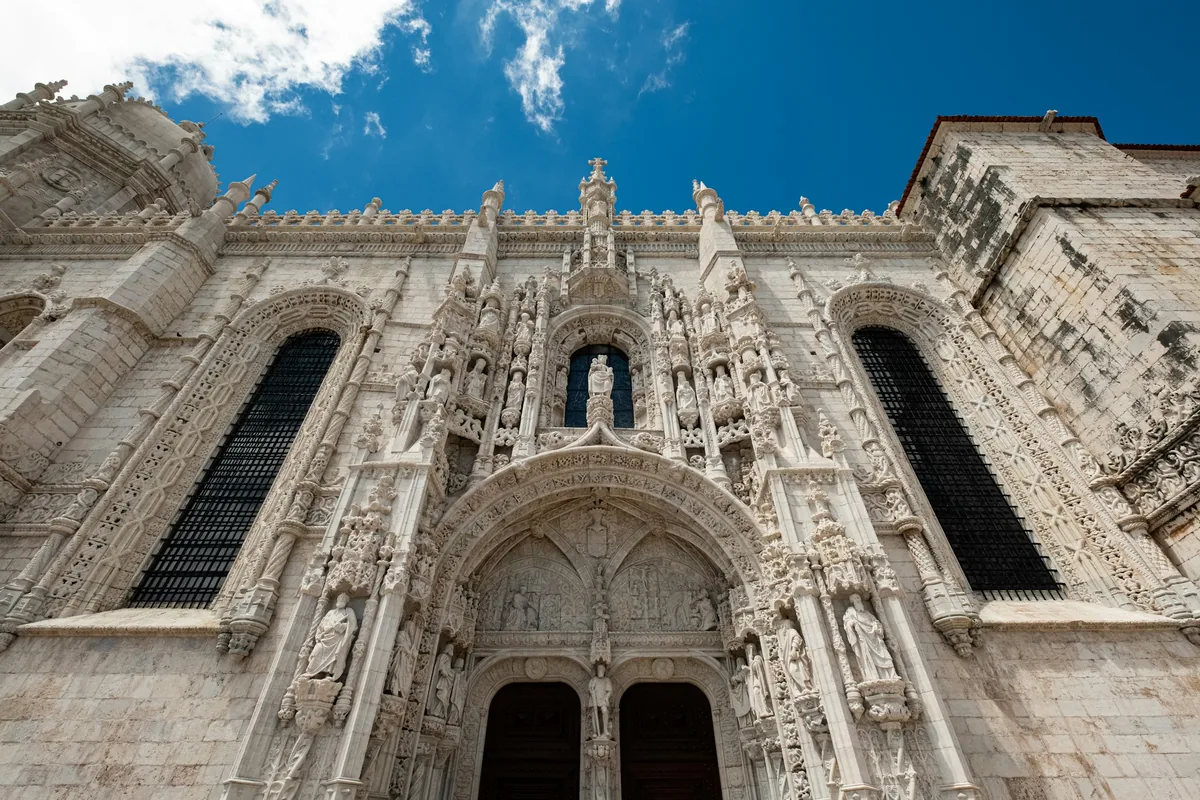
The monastery’s cloister is a masterpiece of the ornate Manueline style, with stone carved into ropes, shells and sea creatures. It also holds the tomb of the explorer Vasco da Gama.
A short walk along the river, the Belém Tower once guarded the entrance to Lisbon’s harbour. Between the two stands the Monument to the Discoveries, which shows Henry the Navigator leading other explorers toward the river. Look down at the giant compass rose and world map set into the pavement in front of it.
- Getting there: Tram 15E from Praça da Figueira or Praça do Comércio, or a short train ride from Cais do Sodré to Belém station.
- Time needed: At least half a day, or a full day with LX Factory and MAAT.
- Tickets: Book the monastery and tower online where possible, and check opening days before you go, as many monuments close one day a week.
- Insider tip: The monastery’s church is free to enter, so you can still see Vasco da Gama’s tomb if the cloister queue is long.
4. Taste the Original Pastel de Nata
The pastel de nata, a custard tart with crisp, flaky pastry, is Portugal’s most famous treat. In Belém, the historic Pastéis de Belém bakery has made its version since 1837, using a recipe said to come from the monks of the Jerónimos Monastery next door.

Expect a queue, but it moves fast, and there are large seating rooms inside. Eat them warm with a sprinkle of cinnamon and icing sugar. Elsewhere in the city, Manteigaria is a favourite with locals, and you’ll see the tarts coming out of the oven through its shop window.
A good pastel de nata has a slightly caramelised, almost blistered top and pastry that shatters when you bite into it. Order one with a bica, Lisbon’s name for a short, strong espresso, and you’ll be eating breakfast like a local.
- Time needed: Half an hour.
- Best time to go: Mid-morning on a weekday, when the Belém queue is shortest.
- Good to know: Use the takeaway counter at Pastéis de Belém if you’re in a hurry. It’s usually quicker than waiting for a table.
5. Watch the Sunset from a Miradouro
Lisbon’s miradouros, or viewpoints, are among the best free things to do in the city. Locals gather at them in the evening with a drink from a kiosk to watch the sky change colour over the rooftops and the river.

Top choices include Miradouro da Senhora do Monte, one of the highest viewpoints in the city, Miradouro da Graça, with a café under pine trees, Miradouro de Santa Luzia, framed by tiles and bougainvillea, and Miradouro de São Pedro de Alcântara, a garden terrace near Bairro Alto looking across to the castle.
For the sunset itself, Miradouro de Santa Catarina faces west over the river and the 25 de Abril Bridge, and has a relaxed, young crowd on warm evenings.
- Getting there: Tram 28 stops close to Graça and Santa Luzia. Santa Catarina is a short walk from Chiado.
- Time needed: An hour or so, ideally with a drink.
- Best time to go: Arrive about an hour before sunset to find a good spot.
- Insider tip: Senhora do Monte is a steep climb but much less crowded than Santa Luzia and Portas do Sol.
6. Hear Fado in a Traditional Venue
Fado is Portugal’s soulful traditional music, listed by UNESCO as Intangible Cultural Heritage. Its songs of longing and loss are usually sung by a single voice, accompanied by a classical guitar and the twelve-string Portuguese guitar.
The best places to hear fado are small restaurants in Alfama and Bairro Alto, where singers perform between courses. Many have a minimum spend. Stay quiet during performances, as it’s considered disrespectful to talk while someone is singing.
Look out for fado vadio nights, when amateur singers, often locals, take turns to perform in tiny bars. They’re informal, cheaper than dinner shows and often the most moving. The Fado Museum in Alfama is a good introduction to the history of the music before you go.
- Time needed: An evening.
- Tickets: Book a table ahead at the better-known fado houses, especially at weekends.
- Good to know: Most fado houses serve dinner first, so performances often start later in the evening.
- Insider tip: Fado from Coimbra, sung by men in student capes, has a different style. Lisbon fado is more personal and raw.
7. Eat at the Time Out Market
The Time Out Market in Cais do Sodré brings dozens of Lisbon’s best chefs and food stalls together under one roof. It’s a convenient way to try Portuguese dishes like the bifana (a garlicky pork sandwich), bacalhau (salt cod) and grilled octopus.
The market opened in 2014 inside the Mercado da Ribeira, a 19th century market hall. Stalls are chosen by the editors of Time Out Lisbon, so the quality is consistently good, and you can order from several kitchens and share at long communal tables.
It’s busy at lunch and dinner, so go mid-afternoon for an easier time finding a seat. Afterwards, explore the bars on the nearby “Pink Street” (Rua Nova do Carvalho), which comes alive after dark.
- Getting there: Cais do Sodré metro (Green Line) and train station are across the road.
- Time needed: An hour or two.
- Best time to go: Mid-afternoon, or early evening before the dinner rush.
- Insider tip: The traditional produce market in the other half of the building still trades in the mornings, and is a good place for fruit and local cheese.
8. Browse LX Factory
LX Factory is a creative hub in a former 19th century industrial complex under the 25 de Abril Bridge. Its old warehouses are filled with independent shops, design studios, cafés, restaurants and street art.
Don’t miss Ler Devagar, a bookshop set in an old printing hall, with books stacked to the ceiling and a bicycle sculpture flying overhead. On Sundays the complex hosts the LX Market, with stalls selling crafts, vintage clothes and local design.
It’s on the way to Belém, so the two combine well in one day. Go in the late afternoon and stay for dinner, as several restaurants and bars have terraces with views of the bridge.
- Getting there: Tram 15E or a bus to Alcântara, or the train from Cais do Sodré to Alcântara-Mar.
- Time needed: One to two hours.
- Best time to go: Sunday for the market, or a weekday afternoon for a quieter visit.
9. Visit the Oceanário de Lisboa
The Oceanário is one of the largest aquariums in Europe, built for Expo 98 in the modern Parque das Nações district. Its huge central tank holds sharks, rays, shoals of fish and a giant sunfish, and is surrounded by smaller habitats representing different oceans.
It’s a great choice for families or a rainy day. The building sits on the water, and the walkways let you see the central tank from several levels, so even young children get a good view.
Afterwards, ride the cable car along the river or walk along the waterfront promenade towards the Vasco da Gama Bridge, one of the longest bridges in Europe. Parque das Nações feels very different from the old town, with wide open spaces and modern architecture.
- Getting there: Oriente metro station (Red Line), then a ten-minute walk.
- Time needed: Two to three hours.
- Tickets: Buy online to skip the ticket queue, especially at weekends and in school holidays.
10. Take a Day Trip to Sintra
Sintra is a hilltop town of fairytale palaces and forested gardens, about 40 minutes from Lisbon by train. The whole cultural landscape is a UNESCO World Heritage Site.

The colourful Pena Palace is the star, but don’t miss the mysterious wells and tunnels of Quinta da Regaleira, the ruined Moorish Castle on the ridge and the elegant gardens of Monserrate Palace.
The palaces are spread across steep hills, so plan your route. Most visitors manage two or three in a day. If you have a car or join a tour, you can add Cabo da Roca, the westernmost point of mainland Europe, on the way back.
- Getting there: Trains run from Lisbon’s Rossio station to Sintra. A circuit bus links the station with the palaces.
- Time needed: A full day.
- Tickets: Book palace tickets online in advance, as Pena Palace uses timed entry.
- Best time to go: A weekday morning outside July and August, when Sintra is at its most crowded.
More Things to Do in Lisbon
Bairro Alto is the city’s nightlife hub, where people drink in the narrow streets outside tiny bars. It’s quiet by day and busy until late at night.
MAAT, the Museum of Art, Architecture and Technology, is a striking riverside building in Belém with a walkable roof and good views of the river.
The Calouste Gulbenkian Museum has an outstanding art collection, from ancient Egypt to the Impressionists, set in peaceful gardens.
The National Tile Museum tells the story of azulejos, the painted tiles you see all over the city, inside a former convent.
Take the ferry to Cacilhas from Cais do Sodré for a cheap river crossing with a great view back over the city.
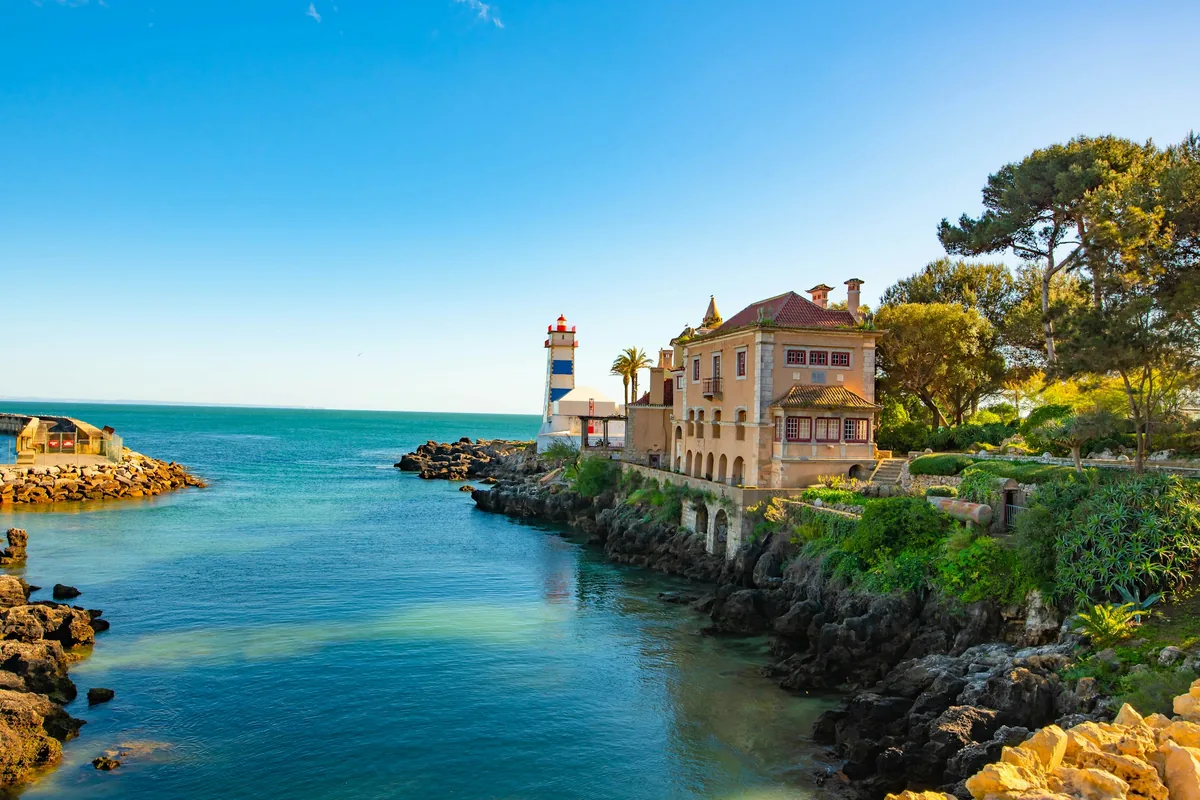
Cascais is a seaside town 40 minutes away by train, perfect for a beach afternoon, a walk to the Boca do Inferno cliffs and seafood by the harbour.
How Many Days Do You Need? A 3-Day Lisbon Itinerary
Three days is the sweet spot for a first visit, with two days in the city and one in Sintra. Here’s a simple plan that groups nearby sights together, so you spend less time on hills and more time enjoying them.
Day 1: Alfama, the Castle and Baixa
Start early at São Jorge Castle, then wander down through Alfama to the Sé and the viewpoints of Santa Luzia and Portas do Sol. In the afternoon, explore the Baixa and the riverside Praça do Comércio. End the day with dinner and fado in Alfama.
Day 2: Belém, LX Factory and Sunset
Take Tram 15E to Belém for the Jerónimos Monastery, the Belém Tower and a warm pastel de nata. Stop at LX Factory on the way back, then catch the sunset from Miradouro de Santa Catarina before an evening in Bairro Alto.
Day 3: Sintra
Catch an early train from Rossio, visit Pena Palace first and then Quinta da Regaleira. Head back to Lisbon in the late afternoon. With a fourth day, add Cascais or the Oceanário.
Getting Around Lisbon
Lisbon is best explored on foot, with public transport for the longer hops. The metro has four colour-coded lines and is quick and cheap. The Red Line runs to the airport.
Trams are part of the experience, though they can be slow and crowded. Tram 28 and Tram 12 cover the old town, and Tram 15E is a modern line to Belém. Buses fill in the gaps, and trains from Rossio and Cais do Sodré reach Sintra and Cascais.
Funiculars and the Santa Justa Lift help you up the steepest hills. Services were suspended for safety inspections after a serious accident on the Glória funicular in 2025, so check which are running before you rely on them.
Get a Viva Viagem card at any metro station and top it up with credit (“zapping”). It works on the metro, trams, buses, ferries and trains to Sintra and Cascais. Taxis and ride-hailing apps are widely available and reasonably priced.
How Much Does a Trip to Lisbon Cost?
Lisbon is cheaper than most Western European capitals, though prices have risen in recent years. Accommodation is usually the biggest expense, especially in summer and in central neighbourhoods.
You can keep costs down easily. Many of the best things to do in Lisbon are free, including the miradouros, wandering Alfama and the riverside, and the monastery church in Belém. Look for the prato do dia (dish of the day) at lunchtime in local restaurants, which is often excellent value.
If you plan to visit several museums and use public transport a lot, the Lisboa Card can save money. Compare it with the sights on your list before you buy. Note that bread, olives and other small dishes placed on the table at the start of a meal (the couvert) are charged if you eat them.
When Is the Best Time to Visit Lisbon?
Spring and autumn are the best times to visit Lisbon. March to June and September to October bring warm, sunny weather without the peak summer crowds and prices.
July and August are hot and busy, though cooled by sea breezes. Winter is mild and quieter, with more rain but plenty of sunny days. In June, the city celebrates the Santos Populares, with grilled sardines, music and street parties in Alfama. The Visit Portugal site has details on festivals and events.
What Should You Know Before Visiting Lisbon?
Wear good shoes. Lisbon’s hills and slippery cobbled pavements (calçada) are hard work in sandals, especially after rain.
Watch your belongings. Lisbon is a safe city, but pickpockets target crowded trams, viewpoints and busy streets in Baixa.
Ignore street sellers. In Baixa and Bairro Alto you may be offered “drugs” that are usually harmless fakes. Simply walk on.
Tipping is not expected. Rounding up the bill or leaving a little extra for good service is appreciated but optional.
Tap water is safe to drink, and card payments are accepted almost everywhere, though small cafés may prefer cash for small amounts.
Where Should You Stay in Lisbon?
Baixa and Chiado are the most central areas, flat by Lisbon standards and close to the river, shops and main transport links. They’re ideal for first-time visitors.
Alfama offers charm and fado on your doorstep, but expect steep hills and narrow lanes that taxis can’t always reach. Bairro Alto is lively and best for those who want nightlife right outside the door, though it can be noisy until late.
Príncipe Real is a stylish, quieter neighbourhood with gardens, independent shops and good restaurants. Avenida da Liberdade is the city’s grand boulevard, lined with upmarket hotels and close to the metro.
Cais do Sodré is handy for trains to Cascais and Belém and has a busy nightlife. Belém is calm and close to the monuments, but further from the centre. Wherever you stay, check how many stairs and hills lie between your hotel and the nearest tram or metro stop.
Frequently Asked Questions
How many days do you need in Lisbon?
Three days covers the main sights plus a day trip to Sintra. Add a fourth for Cascais, the Oceanário or more relaxed exploring.
Is Lisbon expensive?
Lisbon is cheaper than most Western European capitals, though prices have risen in recent years. Free viewpoints, lunchtime set menus and public transport help keep costs down.
What is Lisbon famous for?
Lisbon is famous for its trams, hills, painted tiles, custard tarts, fado music and its role in Portugal’s Age of Discovery.
Is Lisbon a walkable city?
Yes, the centre is compact and most sights are within walking distance, but the hills are steep. Use trams, the metro and lifts to save your legs on the biggest climbs.
Is Lisbon safe for tourists?
Lisbon is one of the safest capitals in Europe. The main risk is pickpocketing on crowded trams and at busy viewpoints, so keep valuables secure.
Can you visit Sintra and Cascais in one day?
It’s possible by car or on a tour, but it makes for a rushed day. Sintra deserves a full day on its own, and Cascais is easy to visit separately by train.
Fall for Lisbon
Lisbon is easy to love: sunny, walkable and full of character. Spend your days exploring its neighbourhoods and your evenings at a miradouro, and you’ll understand why so many visitors return.
Continuing your Portugal trip? Porto is three hours north by train, and our guide to the best things to do in Porto, from the Ribeira to port cellars makes it an easy add-on. For beach time, head south to the Algarve’s best beaches. Visiting at New Year? Lisbon is one of our favourite European cities for New Year’s Eve, with fireworks over the Tagus.
Featured image: Photo by André Lergier on Unsplash