Last updated: October 2026
The best day trips from Valencia are the Albufera lagoon, Roman Sagunto, hilltop Xàtiva and the cliff city of Cuenca, and all four work without a car. Valencia is one of the easiest bases in Spain for day trips: regional trains fan out along the coast and inland, and a high-speed line reaches Cuenca in about an hour.
Some are quick wins for a free afternoon, such as the lagoon and Sagunto, while Peñíscola and Alicante are longer days that need an early start. Timetables change, so check the operator: Renfe covers the trains, and the Visit Valencia bus guide covers city buses. If you are building a longer Spain trip, our guide to the best day trips from Madrid covers the capital’s easy escapes by train.
Quick answer: What are the best day trips from Valencia? The ten best are the Albufera lagoon, Sagunto, Xàtiva, Cuenca, Peñíscola, Requena, Gandia, Cullera, Alicante and Montanejos, but the first four are the easiest and most rewarding. If you only have one day, choose Cuenca for dramatic scenery or Xàtiva for a big castle with few crowds.
Quick comparison: day trips from Valencia
| Day trip | Best for | Getting there | Time each way |
|---|---|---|---|
| 1. Albufera and El Palmar | Nature and rice dishes | City bus | Under an hour |
| 2. Sagunto | Roman history | Regional train | Under an hour |
| 3. Xàtiva | A huge hilltop castle | Regional train | About an hour |
| 4. Cuenca | Clifftop scenery | High-speed train | About an hour |
| 5. Peñíscola | A seaside fortress | Train plus local bus | Around two hours or more |
| 6. Requena | Wine and caves | Train or bus | About an hour |
| 7. Gandia | Borgia history and beach | Regional train | About an hour |
| 8. Cullera | Beach and castle views | Regional train | Under an hour |
| 9. Alicante | A full-day city break | High-speed train | Around two hours or a little more |
| 10. Montanejos | Warm springs and walks | Car or guided tour | Around an hour and a quarter |
1. Albufera and El Palmar
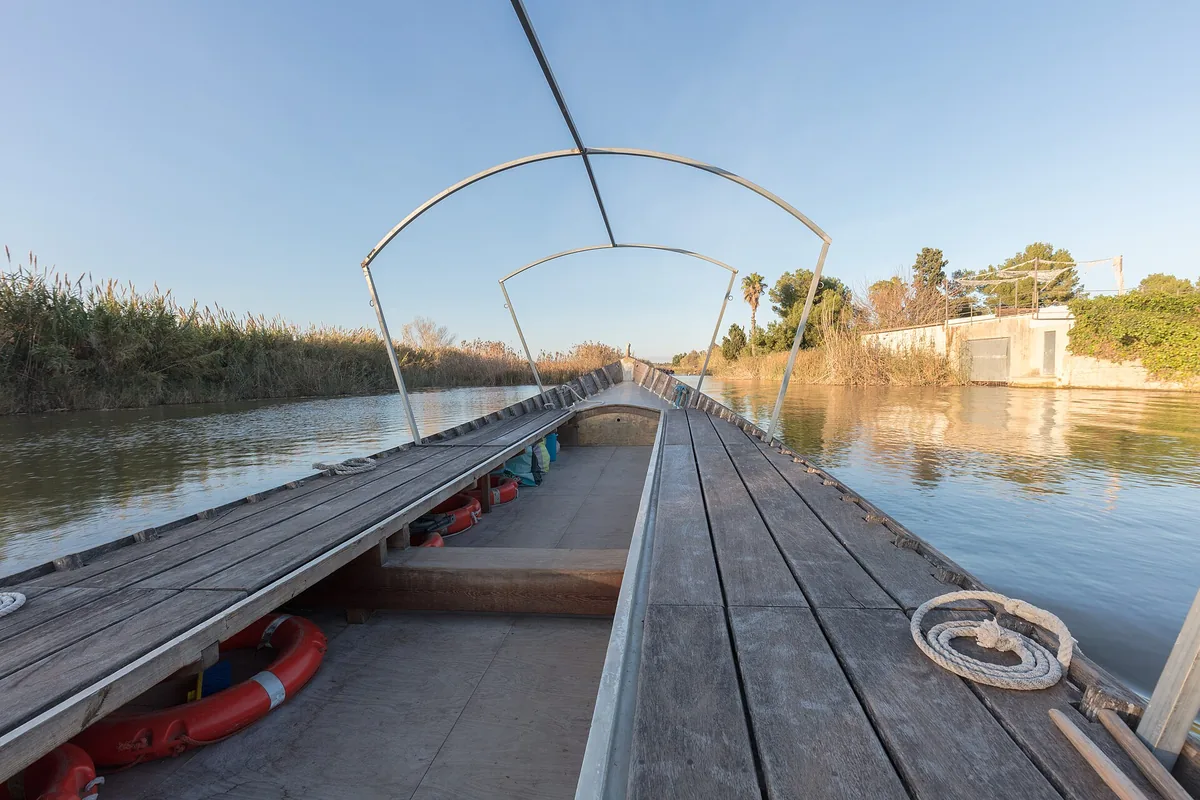
The Albufera is the nearest and easiest escape from Valencia, a freshwater lagoon fringed by rice fields just south of the city. It is protected as a natural park, and it is where paella was born, so the village of El Palmar on its edge is the place to try rice dishes cooked the traditional way.
The classic outing is a short boat trip across the lagoon, ideally in the evening when the light turns the water gold. Boats run from the jetties at El Palmar. Birdwatchers will find herons, egrets and other waterbirds, and the flat lanes between the paddy fields suit walking and cycling.
El Palmar is also the best place for arroz a banda and other rice dishes, which many restaurants serve in the traditional way. Rice is often cooked to order, so treat lunch as the main event.
Rice is a big part of the local food scene, and our guide to the best places to eat in Barcelona shows how Catalan cooking compares if you continue up the coast. Public buses from the city centre reach the park and El Palmar, but sources disagree on which EMT line stops where (lines 24 and 25 both serve the area), so check the current line and stop on the EMT Valencia app or the Visit Valencia bus guide before you set off.
- How to get there: City bus from central Valencia, EMT lines 24 or 25 (check which stops at El Palmar), or a short taxi or car ride south.
- How long to spend: Half a day, including a boat trip and a long lunch.
- Best time to go: Late afternoon for sunset, or spring and autumn when it is cooler.
- Tip: Agree the boat trip length and what is included before you step on board, and book lunch ahead at weekends.
2. Sagunto
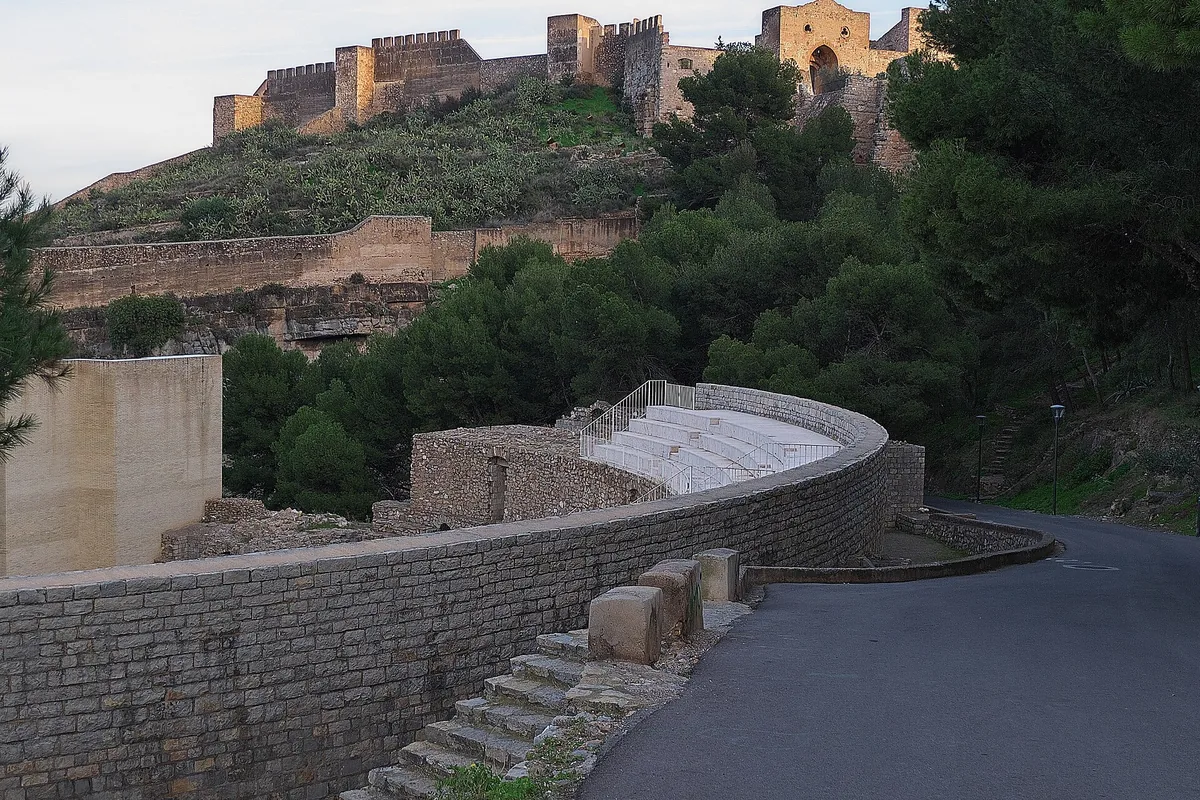
Sagunto is the best-value history trip from Valencia, a small town beneath a long hilltop fortress with a Roman theatre on its slope. The castle stretches for almost a kilometre along the ridge, and its walls show Iberian, Roman, Muslim and Christian layers, so it rewards slow wandering rather than a quick look.
The Roman theatre is the headline. It is one of the best preserved in Spain, and it is still used for summer performances, which gives the stone seating a living feel rather than a museum one. Below it, the compact old town has narrow lanes, the remains of the Roman forum and small museums that explain the town’s long story. The climb to the castle is steady rather than hard, and the views over the plain and the sea make it worth the effort.
Regional Cercanías trains run from Valencia Nord to Sagunto regularly, and the ride is well under an hour. The station is a walk from the old town, so wear comfortable shoes for the cobbles. Check the opening arrangements for the theatre and castle before you go, as they can change. The regional tourism site comunitatvalenciana.com has a visitor guide to the town.
- How to get there: Cercanías regional train from Valencia Nord, then a walk or short local bus into the old town.
- How long to spend: Three to four hours for the theatre, old town and castle.
- Best time to go: Spring or autumn, as the castle has little shade in summer.
- Tip: Visit the castle first while you have energy, then drop down to the theatre and lunch.
3. Xàtiva
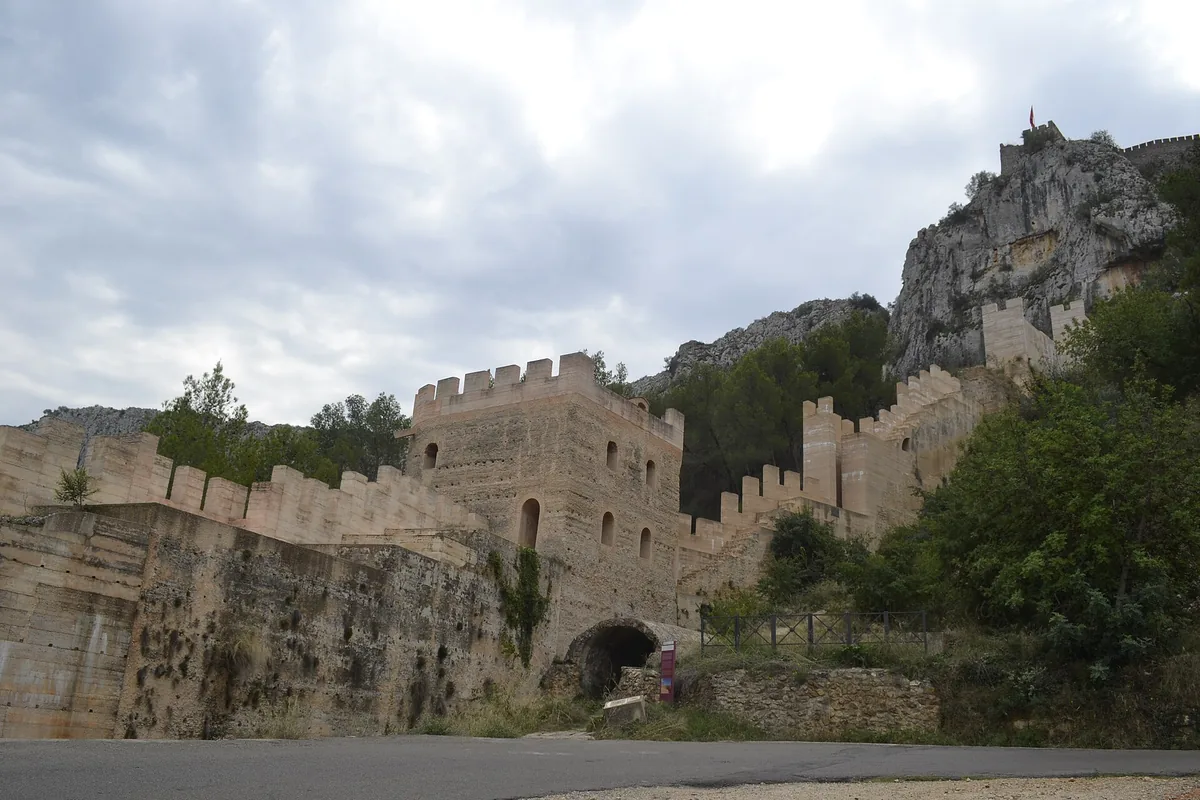
Xàtiva is the castle day trip for people who want space and views without the crowds. The town sits below two hilltops crowned by a vast fortress, and the old centre is full of churches, fountains and shady squares, so it feels like a proper working town rather than a tourist set.
The castle is the main event. It runs along a ridge above the town and gives wide views over the surrounding valley, so allow time for the walk up and for exploring the different sections. Back in the centre, the collegiate church, the fountains and the fine arts museum make for an easy stroll.
The Cercanías C2 line runs from Valencia Nord about every half hour at busy times, and the ride is roughly an hour or a little less depending on the service. The station sits a short distance from the old town, so you can walk, although the castle climb is best tackled early in the day or late in the afternoon in summer. Tickets for the castle can often be bought online or on arrival, so check the official Xàtiva tourism pages for current details.
- How to get there: Cercanías C2 regional train from Valencia Nord, then a walk into town.
- How long to spend: A full day is comfortable, or half a day if you focus on the castle.
- Best time to go: Spring and autumn, with an early start in summer.
- Tip: Wear grippy shoes, as the castle paths are steep and uneven in places.
4. Cuenca
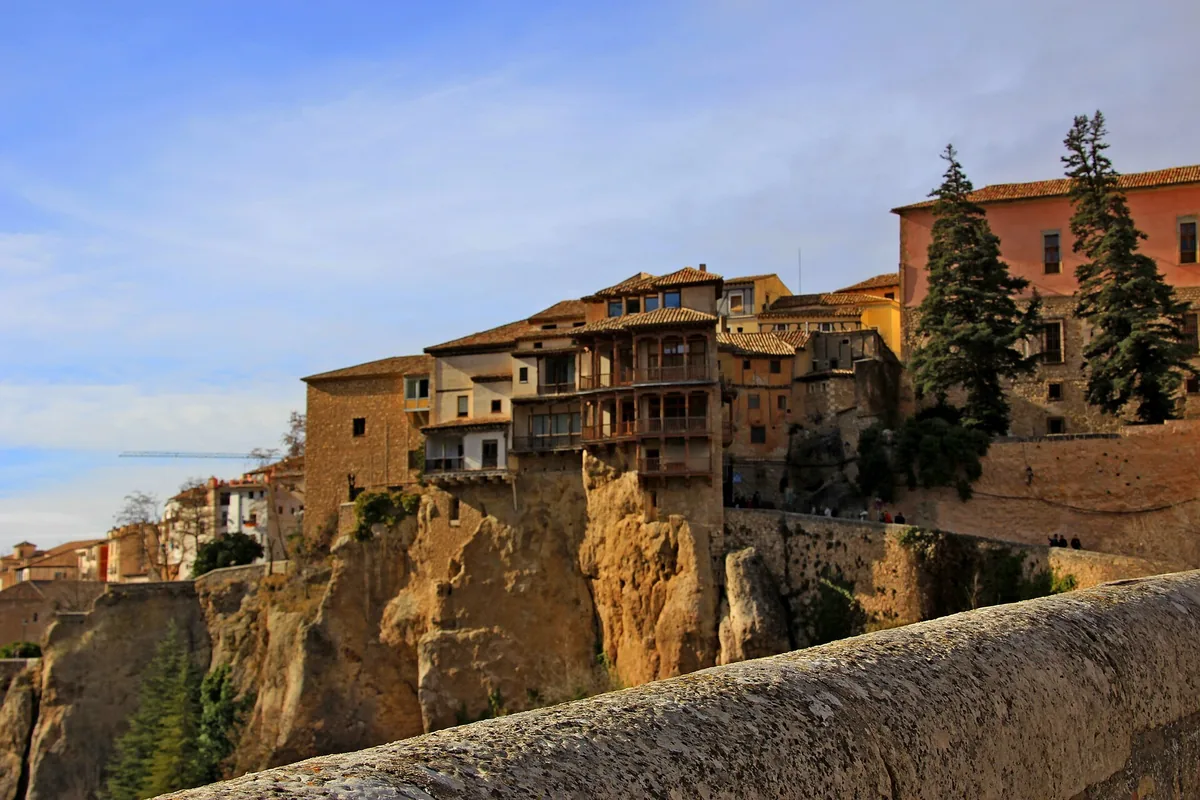
Cuenca is the most dramatic day trip from Valencia, a medieval city perched between two deep gorges with houses that seem to hang over the cliffs. It is a UNESCO World Heritage Site, and the setting is as impressive as anything in central Spain. The Spanish national tourism board has a good overview.
The high-speed train from Valencia takes about an hour, which makes Cuenca a surprisingly easy day out. The catch is that the station, Cuenca Fernando Zóbel, sits well outside the old town, so you need a local bus or taxi to reach the historic centre. Allow extra time for the transfer.
Once in the old town, the highlights are the Plaza Mayor and cathedral, the viewpoints over the gorges and the famous hanging houses. The streets are steep and cobbled, but everything is compact, and the viewpoints reward every climb. The old cathedral and the narrow lanes around the main square are worth a slow loop between viewpoints.
It can be cold and windy even in spring, so pack a layer.
- How to get there: High-speed train from Valencia Joaquín Sorolla to Cuenca Fernando Zóbel, then a local bus or taxi into the old town.
- How long to spend: A full day, to enjoy the viewpoints and a long lunch.
- Best time to go: Spring and autumn, when the weather is mild and the light is soft.
- Tip: Book your train tickets ahead for weekends and holidays, and check the return times before you commit to a late lunch.
5. Peñíscola
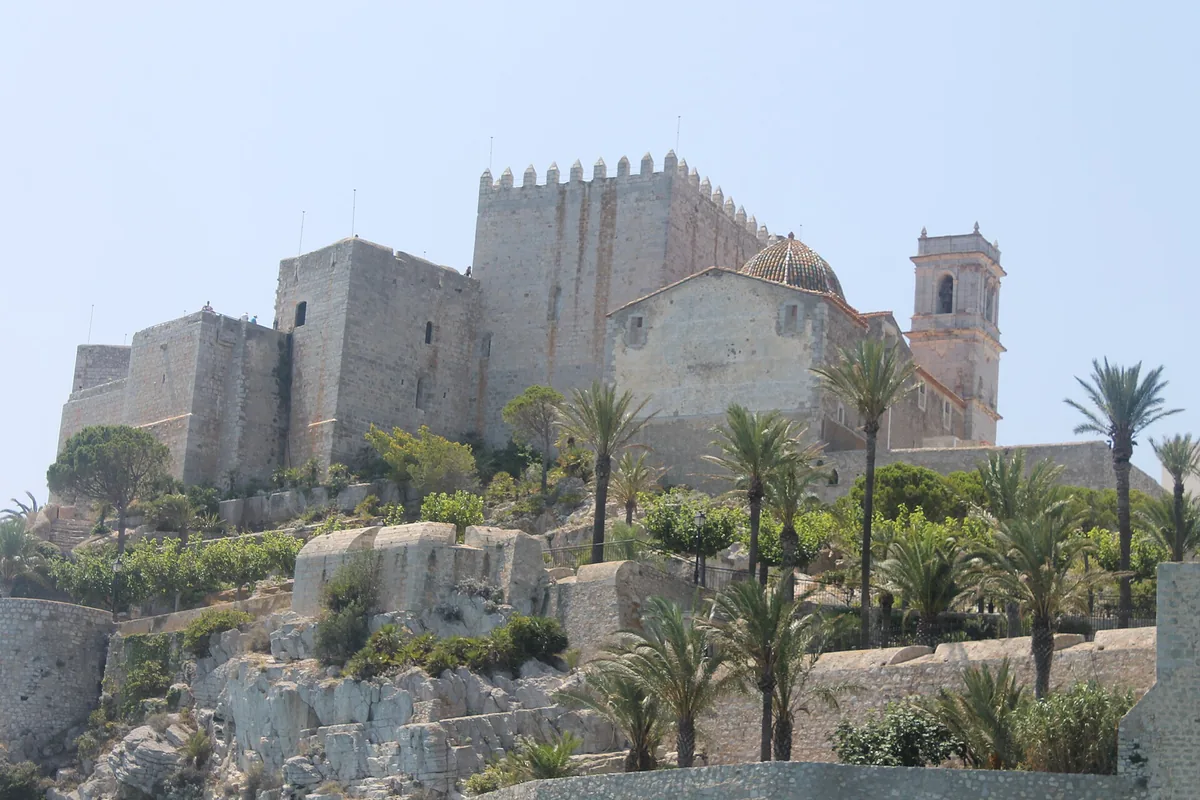
Peñíscola is the best seaside fortress on this list, a walled old town on a rocky headland with a castle that rises straight from the sea. It is popular for good reason, and it works as a long but rewarding day trip.
The castle and old town are the focus. You can walk the narrow white lanes, climb to the castle for views along the coast and wander the sea walls. The long sandy beach on the north side is good for a swim in warm weather.
The journey needs planning. Trains from Valencia Nord run to the Benicarló-Peñíscola station, which is several kilometres from the town, so you then need a taxi or local bus to the old town. Journey times vary widely by service, from under two hours to a little over two, so check Renfe before booking. Driving takes a little under an hour and a half in good traffic. It is a long day with the transfers, so start early and leave yourself time for the return. Out of season the town is calmer and the walls are easier to enjoy. If you like coastal towns, our guide to the Algarve beaches in Portugal is a good next step for a Mediterranean-style beach holiday.
For visitor information, see the regional tourism site comunitatvalenciana.com. Check castle access details before you go.
- How to get there: Train from Valencia Nord to Benicarló-Peñíscola, then a local bus or taxi into town. Driving is the simplest option.
- How long to spend: A full day, including the transfers.
- Best time to go: Late spring or early autumn, when it is warm but not crowded.
- Tip: Check the last train back before lingering over dinner.
6. Requena
Requena is the wine day trip, a hilltop town in the heart of the inland vineyards. The area is known for the Bobal grape, and the old quarter, the Barrio de la Villa, has narrow streets, old walls and a tower that is the main survivor of the Moorish castle.
Under the old quarter lie cellars and caves, some of which can be visited, and they give a good sense of the town’s long winemaking tradition. The old centre is compact enough to see on foot in a few hours. If you want to visit wineries in the surrounding countryside, you will need a car or a pre-arranged tour, as they are spread out.
Regional trains and buses run from Valencia, and a separate high-speed station, Requena-Utiel, sits several kilometres from the town, so you will need a taxi or transfer from there. Bus frequency can be low, so check the timetable carefully and plan the return journey before you leave.
If you plan to taste wine, pre-book a winery visit, as many take visitors by appointment. Check the visiting arrangements for the caves before you travel.
- How to get there: Regional train or bus from Valencia, or by car for winery visits.
- How long to spend: A full day if you add a winery visit, half a day for the old town only.
- Best time to go: Autumn, during the grape harvest season, or spring.
- Tip: Book winery visits in advance and plan transport so the driver does not need to taste.
7. Gandia
Gandia combines Borgia history with a long sandy beach, so it suits a mixed day with something for everyone. The town is closely linked to the Borgia family, and its main landmark is the Palau Ducal, the ducal palace in the historic centre.
The palace mixes Gothic, Renaissance and Baroque features, and it is usually visited on a guided tour. The regional tourism site comunitatvalenciana.com has an overview, but check the visiting arrangements, as tour times can vary. The rest of the old town is easy to cover on foot, with small squares and cafes.
The beach is a short distance from the town centre and is wide and gently sloping, which makes it a good pick for families, though it gets busy on summer weekends. A palace visit in the morning and a beach lunch is the easiest plan.
Regional Cercanías trains serve Gandia, and the journey is about an hour. The beach is separate from the town, so check how to reach it, as the local transport options can change between seasons. A taxi or local bus is the simplest way to link the two parts of the day.
- How to get there: Regional train from Valencia Nord to Gandia, then a local bus or taxi to the beach.
- How long to spend: A full day with palace and beach.
- Best time to go: Late spring and early autumn for warm sea and quieter sands.
- Tip: Check the palace tour times first, then plan the beach around them.
8. Cullera
Cullera is the easy beach day trip, with a castle for views when you want a break from the sand. The town sits at the mouth of the Júcar river, with a rocky hill and a castle rising above the sea and the rice fields.
The beaches here are broad and well equipped, and the town is lively in summer. A short climb to the castle and the viewpoint gives a sweep of the coast, the river and the Albufera plain. Check the current access arrangements for the castle before you go, as they can change.
Cullera is a good choice if you want something simpler than a full cultural day: swim, eat rice or seafood for lunch and climb to the viewpoint before the train back. It gets crowded on peak summer weekends, so go midweek if you can.
Regional trains serve Cullera from Valencia, and the journey is under an hour. The station is a walk or short taxi ride from the main beach areas, so check the distances before you set off. For visitor information, see the regional tourism site comunitatvalenciana.com.
- How to get there: Regional train from Valencia, then a walk or short taxi ride to the beach.
- How long to spend: Half a day to a full day, depending on how long you want on the sand.
- Best time to go: Late spring and September, for warm water and fewer people.
- Tip: Go midweek in July and August, and pack shade and water for the castle climb.
9. Alicante
Alicante is the full-day city break from Valencia, a livelier and more southern-feeling port city with a castle on a rocky hill above the old town. It is the longest trip here by train, so it suits an early start.
The main sight is the Castillo de Santa Bárbara, which overlooks the city and the sea. You can reach the top on foot, by road, or by a lift from near the Postiguet beach, and entry to the castle grounds is normally free, though the lift has a fare. Opening hours and lift times change by season, so check the Alicante council site before you go. Down below, the old quarter, Santa Cruz, is a maze of colourful lanes, and the waterfront promenade is lined with palms and cafes. The city beach is close to the centre, so a swim is easy to fit in.
Direct trains from Valencia take roughly two and a quarter hours or a little more, depending on the service, and more than one operator runs the route, so compare options before you book. Because of the travel time, this works best as a long day, or you could consider an overnight stay.
Alicante is also known for its rice dishes and seafood, so plan a long lunch. If you are short of time, Cullera or Gandia may be a better fit.
- How to get there: Direct train from Valencia, checking which station each service uses.
- How long to spend: A full day, ideally with an early start.
- Best time to go: Spring and autumn, as summer is very hot.
- Tip: Book train tickets ahead and check the last return departure.
10. Montanejos
Montanejos is the wild-swimming day trip, a small mountain village in Castellón province known for its warm spring. Water from the Fuente de los Baños spring stays pleasantly warm all year, and it feeds natural pools in a green river valley, which makes it a rare winter swim as well as a summer one.
Most visitors come for the springs and the walks around them. Trails follow the river and the gorge, and short routes lead to viewpoints and waterfalls, so you can combine a soak with an easy hike. The village itself is small and quiet, with a few cafes and restaurants serving simple mountain food. Do not expect big sights: the draw is the water and the scenery.
Public transport is limited, so this is best done by car, which takes roughly an hour to an hour and a half from Valencia depending on traffic, or on a guided day trip with transport included. Summer weekends can be very busy, and access to the Fuente de los Baños is usually controlled with a paid, capped entry at busy times such as summer and Easter, and buying online ahead is advised, so check the town hall’s official pages before you go and avoid the hottest hours on hiking routes. Bring water shoes and a towel.
For regional visitor information, see comunitatvalenciana.com.
- How to get there: By car, or a guided day trip with transport from Valencia.
- How long to spend: A full day with a soak, a walk and lunch.
- Best time to go: Spring and autumn, or midweek in summer to avoid the crowds.
- Tip: In summer and at Easter, expect a capped, paid entry to the springs and book online ahead if you can.
How to pick the right day trip from Valencia
With half a day, choose the Albufera, Sagunto or Cullera. For a castle and a historic town, pick Xàtiva. For dramatic scenery, go to Cuenca. Peñíscola and Alicante are longer days for early starters, and Requena and Montanejos suit slower country days with a car. In summer favour the coast and the lagoon, and save hilltop castles for spring and autumn.
Suggested plans for 1, 2 or 3 days
One day: Xàtiva for the castle, or Cuenca for a bigger scenic day.
Two days: Sagunto in the morning and the Albufera in the evening, then Cuenca or Xàtiva on day two.
Three days: Add a coastal day at Gandia or Cullera, and keep a longer trip such as Peñíscola or Requena for the third.
Getting around
Regional trains leave from the Estació del Nord and high-speed trains from Joaquín Sorolla, so check which station your train uses. Renfe sells tickets, and booking ahead is wise for popular services. City buses reach the Albufera, and a car is the practical choice for Montanejos and the wineries around Requena. Taxis help where the station sits outside town, as at Cuenca and Peñíscola.
Where to stay in Valencia
Stay near the Estació del Nord and the old town for easy regional trains. The area around Joaquín Sorolla suits high-speed trips such as Cuenca. Seafront districts suit beach lovers but sit further from the stations. Book early for spring festivals and summer weekends. Planning to see more of the country? Read our guide to the best places to visit in Barcelona before you add a second Spanish city, or browse the best places to see in Europe for wider inspiration.
Budget guidance
Shoestring: Regional trains, city buses, a picnic and free sights such as the Albufera paths and Sagunto’s old town.
Mid-range: Add a boat trip, a restaurant lunch and a few paid entrances.
Comfortable: Hire a car or join a small-group tour, book winery visits and stay overnight in Alicante or Peñíscola.
Frequently Asked Questions
What is the best day trip from Valencia?
Cuenca is the most dramatic, and Xàtiva is the easiest big-castle day. Both can be done by public transport in a day.
What is the easiest day trip from Valencia without a car?
The Albufera and Sagunto are the easiest, as both are reached by public transport in well under an hour from the city.
Can you visit Cuenca from Valencia in one day?
Yes, the high-speed train takes about an hour each way, so a full day in Cuenca is realistic. Allow extra time to get between the station and the old town.
Are there beach day trips from Valencia?
Yes, Gandia and Cullera are both reached by regional train, and Peñíscola is a longer trip with a fortress as well as a beach.
Is Peñíscola doable as a day trip from Valencia?
It is doable but long, because the station is outside the town. Start early and check the last return train.
Which Valencia day trips are best in summer?
Choose the coast and the Albufera in summer, and save hilltop castles like Xàtiva and Sagunto for the cooler morning or for spring and autumn.
Featured image: Photo by Julián Monrabal, CC0, cropped, via Wikimedia Commons