Last updated: October 2026
Albania’s real magic lies beyond its beaches, in remote mountain valleys, Ottoman stone towns, natural hot springs and lakes that look like Norwegian fjords. Many of these places see only a fraction of the visitors of similar spots elsewhere in Europe.
Getting to some of them takes effort, with winding roads and simple guesthouses, but that’s part of the adventure. This guide covers the top 10 hidden gems in Albania, from the Accursed Mountains in the north to ancient ruins in the south.
If you’re still planning your first visit, start with our overview of why you should plan an Albania holiday.
Quick answer: What are the best hidden gems in Albania? Our top 10 are Theth, The Valbona to Theth Hike, Lake Komani Ferry, Gjirokastër, Berat, Benja Thermal Baths, Osumi Canyon, The Blue Eye (Syri i Kaltër), Lin and Lake Ohrid and Apollonia. Theth and the Valbona Pass hike for mountains, the Lake Komani ferry for scenery, Gjirokastër and Berat for Ottoman architecture, and the Benja Thermal Baths for a natural hot spring soak.
Top 10 Hidden Gems in Albania at a Glance
| # | Destination | Best for |
|---|---|---|
| 1 | Theth | Mountain scenery |
| 2 | The Valbona to Theth Hike | Hikers |
| 3 | Lake Komani Ferry | Scenic boat trips |
| 4 | Gjirokastër | Ottoman architecture |
| 5 | Berat | History and wine |
| 6 | Benja Thermal Baths | Natural hot springs |
| 7 | Osumi Canyon | Rafting and canyons |
| 8 | The Blue Eye (Syri i Kaltër) | Natural wonders |
| 9 | Lin and Lake Ohrid | Lakeside calm |
| 10 | Apollonia | Ancient ruins |
1. Theth
Theth is a remote village in the Albanian Alps, also known as the Accursed Mountains, surrounded by jagged peaks and deep green valleys. Until recently, reaching it meant a rough mountain track, though the road is now paved.
Highlights include the Blue Eye of Theth, a cold turquoise pool reached on foot, the Grunas waterfall and the “lock-in tower” (kulla), where men once took refuge during blood feuds. Stay in a family guesthouse and enjoy home-cooked meals made with local produce.
The small stone church of Theth, with the mountains rising behind it, is one of the most photographed places in Albania. Many visitors use the village as a base for day hikes, and guesthouse owners are happy to share routes and arrange guides.
- Getting there: The paved road from Shkodër takes around two to two and a half hours by car or minibus.
- Time needed: Two to three days.
- Good to know: Some guesthouses close outside the summer season, so check before visiting in spring or autumn.
- Insider tip: The walk to the Blue Eye of Theth takes a few hours, so start early and take water and snacks.
Best time: June to September.
2. The Valbona to Theth Hike
The hike over the Valbona Pass between Valbona and Theth is one of the most famous day walks in the Balkans. It takes most people six to eight hours and climbs to around 1,800 metres.
The route passes through beech forests and high meadows with views of rugged limestone peaks. Guesthouses can arrange luggage transfers between the two valleys. The hike is part of the longer Peaks of the Balkans trail, which crosses into Montenegro and Kosovo.
The trail climbs steadily from the Valbona Valley through forest to the pass, then drops steeply down towards Theth. In summer, small cafés along the route sell drinks and simple food, which is a welcome break on a long day.
- Getting there: Most hikers reach Valbona via the Lake Komani ferry and a minibus from Fierzë.
- Time needed: A full day of six to eight hours of walking.
- Good to know: The path is well used in summer, but it’s steep and rocky, so wear proper hiking boots.
- Insider tip: Start early to avoid walking uphill in the midday heat.
Best time: late June to September.
3. Lake Komani Ferry
The ferry across Lake Komani is one of the most scenic boat journeys in Europe, winding for around two to three hours through a narrow reservoir lined with steep cliffs.
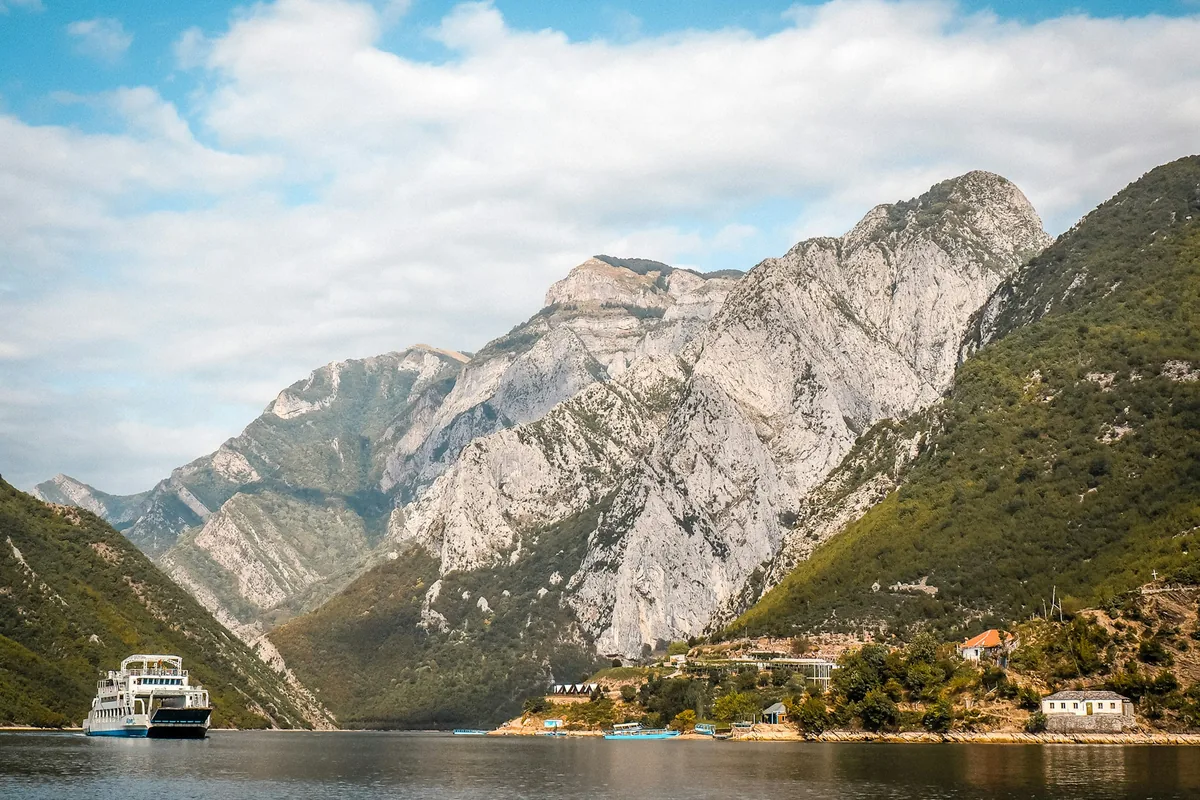
Many travellers combine it with the Valbona to Theth hike as a loop from Shkodër. The water is a deep green and the canyon walls feel like a fjord. Book ahead in summer, as places fill up.
The boats are simple, but the scenery is extraordinary, with cliffs rising straight from the water and tiny farms clinging to the slopes. Some ferries carry cars, which makes it possible to include the journey in a road trip.
- Getting there: Early morning minibuses run from Shkodër to the ferry at the Koman dam.
- Time needed: A full day, including the transfers at each end.
- Insider tip: Sit on the upper deck for the best views, and bring a jacket, as it can be cool on the water in the morning.
Best time: May to October.
4. Gjirokastër
Gjirokastër is a UNESCO-listed hill town known as the “City of Stone” because of its grey stone roofs and fortified Ottoman houses. A huge castle sits above the town, with views across the Drino Valley.
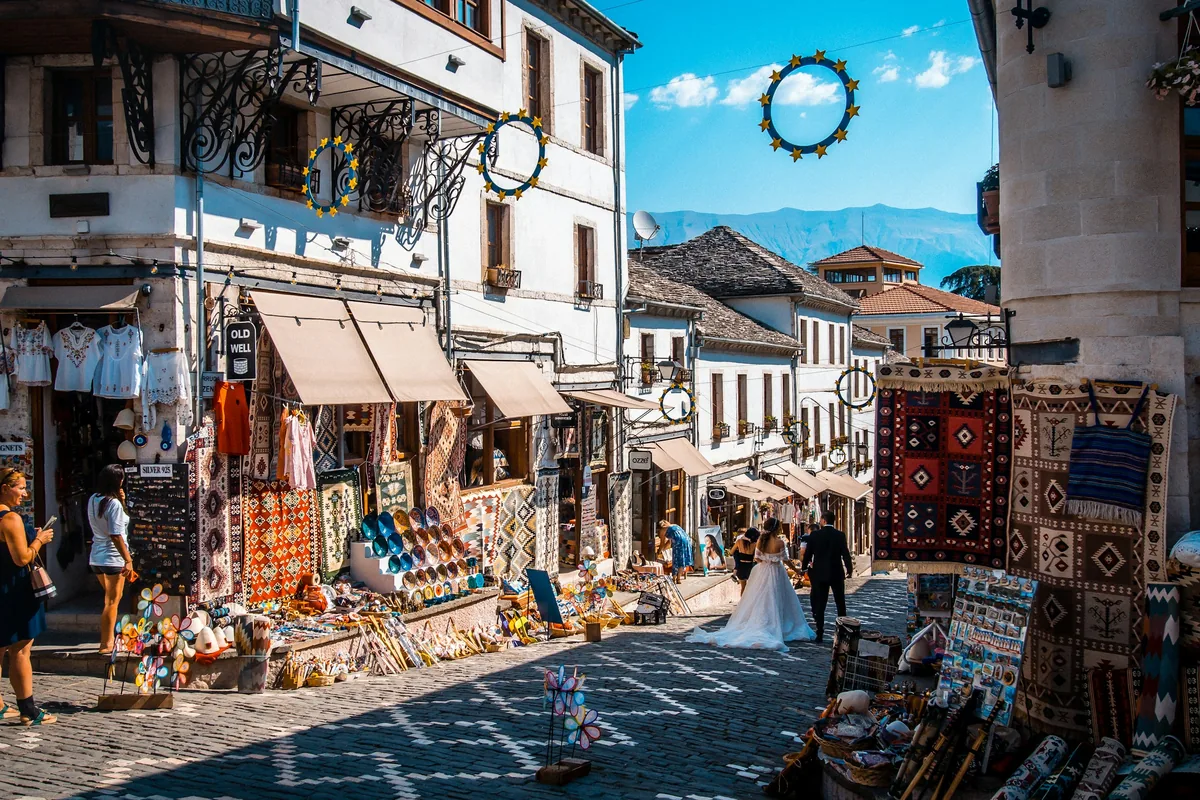
Inside the castle, you’ll find a military museum and an old US Air Force plane. Visit the Skenduli House, a beautifully preserved Ottoman home, and explore the cobbled Old Bazaar. The town was the birthplace of writer Ismail Kadare.
Below the castle, a Cold War tunnel built for the communist government is now open to visitors. The town’s traditional houses, like the Zekate House, show how wealthy Ottoman-era families lived, with separate rooms for guests and family. Try qifqi, local rice balls flavoured with herbs.
- Getting there: Buses run from Tirana in around four hours and from Sarandë in around an hour.
- Time needed: One to two days.
- Insider tip: Stay overnight in a restored stone guesthouse in the old town for the best atmosphere.
Best time: April to October.
5. Berat
Berat is called the “City of a Thousand Windows” thanks to the rows of white Ottoman houses that climb the hillside above the Osum River. Along with Gjirokastër, it’s part of a joint UNESCO World Heritage Site.
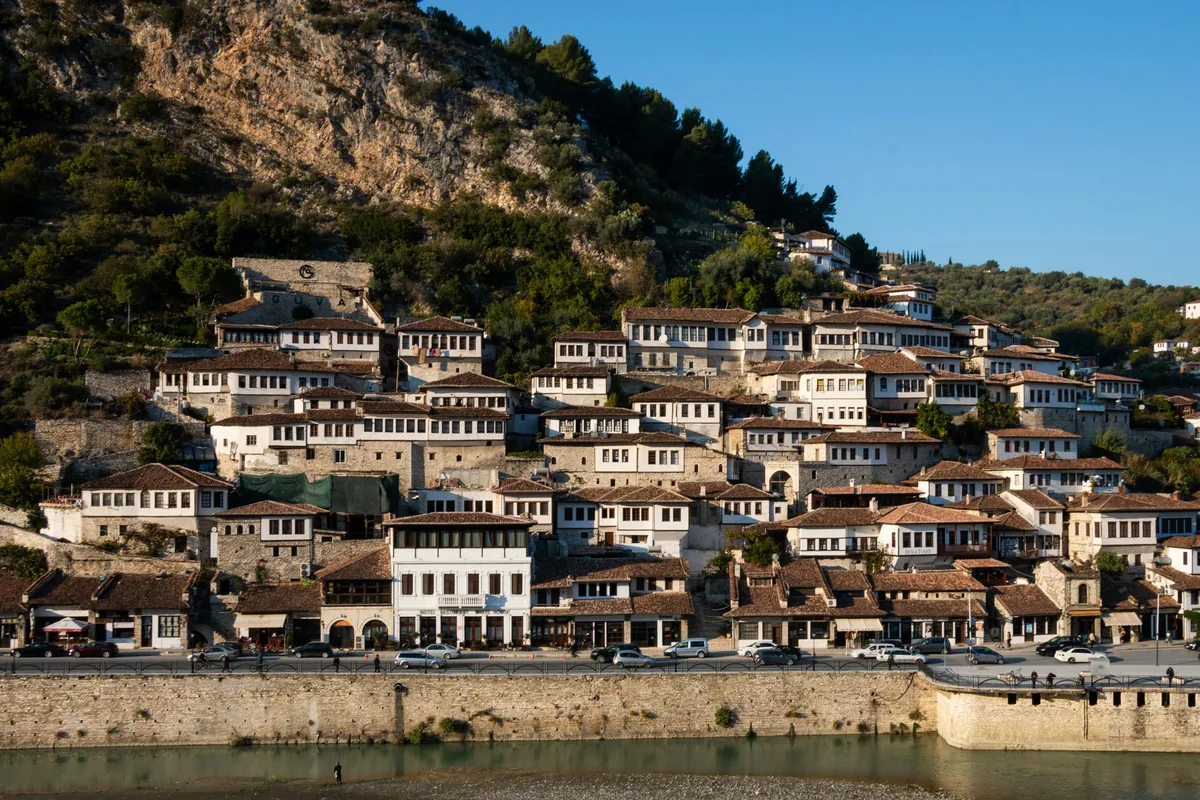
The castle on the hill is still lived in, with churches, cobbled lanes and small family homes inside the walls. Don’t miss the Onufri Museum, with its icons by a 16th century master painter. The town is also surrounded by vineyards producing local wine.
The town’s two historic quarters, Mangalem and Gorica, face each other across the Osum River and are linked by an old stone footbridge. In the evening, locals stroll along the riverside promenade, and the lit-up houses are beautiful after dark.
- Getting there: Buses run from Tirana in around two and a half hours.
- Time needed: One to two days.
- Insider tip: Stay in a guesthouse inside the castle walls for a quiet night and wonderful views.
Best time: April to October.
6. Benja Thermal Baths
The Benja Thermal Baths near Përmet are a series of natural hot spring pools beside the Lengarica River. The water is warm and sulphurous, said to be good for the skin.
An old Ottoman stone bridge arches over the river nearby, making it one of the most photogenic spots in the country. It’s free to visit, and you can combine a soak with a walk into the Lengarica Canyon.
The stone arch over the river is known as the Kadiu Bridge, and the walk up the canyon behind it leads to quieter pools and dramatic rock walls. Përmet, the nearby town, is a good place to stay and is known for its local food.
- Getting there: The baths are a short drive from Përmet, which is around an hour and a half from Gjirokastër.
- Time needed: Half a day.
- Insider tip: Go early in the morning or late afternoon, when there are fewer people in the pools.
Best time: all year, but especially spring and autumn.
7. Osumi Canyon
Osumi Canyon near Çorovodë stretches for around 13 kilometres, with walls rising up to 80 metres high. It’s one of Albania’s most impressive natural sights.
In spring, when the water level is higher, you can go rafting through the canyon. In summer, the river is low enough to hike in parts. Viewpoints along the road above offer dramatic views without getting wet.
Nearby, the Bogova waterfall is reached on a short, pretty walk through the woods and makes a refreshing stop on a hot day. Local operators in Çorovodë run rafting trips when the river is high enough.
- Getting there: Çorovodë is around one and a half to two hours from Berat by road.
- Time needed: Half a day to a full day.
- Good to know: Rafting depends on water levels and usually runs in spring.
Best time: spring for rafting, summer for hiking.
8. The Blue Eye (Syri i Kaltër)
The Blue Eye is a natural spring near Sarandë where crystal-clear water bubbles up from a deep pool of vivid blue. The depth of the spring has never been fully measured.
It’s one of Albania’s more popular natural sights, but it’s still worth the trip. Swimming has been restricted in recent years to protect the spring, so check the rules on arrival. Arrive early to see it before the tour buses. It’s a short drive from Saranda, so combine it with a day on the Albanian Riviera’s best beaches near Ksamil.
A short walk through the woods leads from the car park to the spring, which sits in a shady clearing surrounded by trees. A small entrance fee is usually charged at the site.
- Getting there: The Blue Eye is around 30 to 40 minutes by car from Sarandë.
- Time needed: One to two hours.
- Good to know: Swimming in the spring is not allowed, so come to look rather than to swim.
Best time: spring and autumn, or early mornings in summer.
9. Lin and Lake Ohrid
Lin is a small village on a peninsula jutting into Lake Ohrid, one of the oldest and deepest lakes in Europe. The lake is shared with North Macedonia.
The village has an early Christian church with mosaics, and the water is clear and calm for swimming. Fresh trout and the local Ohrid fish called koran are served in lakeside restaurants. It’s a quiet alternative to the busier Macedonian side of the lake.
Lake Ohrid’s natural and cultural heritage, including the Albanian shore, is protected as a UNESCO World Heritage Site. The lake’s clear water and old churches make it a peaceful place to spend a few days.
- Getting there: Lin is around 20 minutes from Pogradec and two and a half hours from Tirana by car.
- Time needed: One to two days.
- Insider tip: Try the local koran trout at a lakeside restaurant.
Best time: June to September.
10. Apollonia
Apollonia is an ancient Greek city founded in the 6th century BC near today’s Fier, once an important centre of learning visited by figures from across the ancient world.
The site includes a restored temple facade, the remains of a small theatre and a Byzantine monastery that now houses a museum. It’s much quieter than ancient sites in Greece or Italy, so you may have parts of it to yourself.
Walk up to the hill above the site for views over the plain to the sea. The monastery at the centre of the site has a lovely courtyard and church, and the museum displays statues and finds from the ancient city.
- Getting there: Apollonia is near Fier, around two hours from Tirana and an hour from Berat.
- Time needed: Two to three hours.
- Insider tip: Combine Apollonia with Berat or the drive south to the coast.
Best time: spring and autumn.
More Hidden Gems in Albania
Voskopojë was once a thriving 18th century trading town, and today it’s a quiet mountain village with frescoed Orthodox churches.
Shkodër is a laid-back lakeside city with Rozafa Castle and a cycling culture. It’s the main gateway to Theth and Lake Komani.
Përmet is a pleasant town known for its rose gardens, local raki and preserves made from fruit.
What Should You Know Before Exploring Albania’s Hidden Gems?
Rent a car or use local minibuses. Called furgons, minibuses connect most towns but rarely run to a timetable. A car gives you more freedom.
Stay in guesthouses. In the mountains, family-run guesthouses are the main accommodation and often include dinner and breakfast.
Bring cash. Remote villages rarely accept cards. Carry Albanian lek.
Allow extra travel time. Mountain roads are slow. A distance of 100 km can easily take three hours.
Check seasonal access. Some mountain areas are snowbound from November to May. The official Albania tourism site is a good starting point for planning.
A 10-Day Albania Itinerary Through the Hidden Gems
Ten days lets you combine the mountains, the stone towns and the south in one loop from Tirana.
Days 1 to 4: The Albanian Alps
Travel from Tirana to Shkodër, take the Lake Komani ferry to Valbona, hike the Valbona Pass to Theth and spend a night in the village before returning to Shkodër.
Days 5 to 6: Berat and Osumi Canyon
Drive to Berat for a night in the old town, then visit the Osumi Canyon and the Bogova waterfall.
Days 7 to 10: Përmet, Gjirokastër and the Blue Eye
Soak in the Benja Thermal Baths near Përmet, explore Gjirokastër’s castle and bazaar, and finish at the Blue Eye before heading to the coast.
Getting Around Albania’s Hidden Gems
A hire car gives you the most freedom, especially for places like Benja, Osumi Canyon and Apollonia. Roads have improved a lot in recent years, and the road to Theth is now paved, but mountain routes are still slow and winding.
Without a car, use furgons, the shared minibuses that connect most towns. They leave when full rather than to a timetable, so ask locally for departure points and times.
How Much Does a Trip to Albania Cost?
Albania is one of the most affordable countries in Europe to travel in. Family guesthouses, often including a home-cooked dinner and breakfast, offer excellent value, and meals in local restaurants are cheap.
The main costs are car hire and fuel. Entry fees to castles, museums and natural sites are usually low.
Where Should You Stay?
Family-run guesthouses are the heart of travel in rural Albania. In Theth and Valbona, most accommodation is in guesthouses with shared meals, while Berat and Gjirokastër have boutique hotels in restored Ottoman houses.
For the south, Përmet makes a good base for the Benja Thermal Baths, while Gjirokastër is ideal for the Blue Eye and the drive to the coast.
Frequently Asked Questions
What is the most beautiful place in Albania?
Many travellers rate Theth and the Valbona Valley as the most beautiful, thanks to their dramatic mountain scenery.
Is Albania safe for independent travel?
Albania is generally considered safe for travellers, with very friendly locals. Take care on mountain roads and when hiking.
How many days do you need to explore Albania?
Ten to fourteen days lets you combine Tirana, the mountains, the stone towns and the coast.
Do you need a guide for the Valbona to Theth hike?
Not usually in summer, when the trail is well marked and busy. In spring and autumn, or in bad weather, a local guide is a good idea.
When is the best time to visit Albania’s mountains?
June to September, when the mountain roads and guesthouses are open and the hiking trails are clear of snow.
Go Beyond the Beach
Albania rewards travellers who venture inland, with mountain villages, stone towns and natural wonders that feel untouched.
Starting in the capital? Most trips begin in the capital, so start with our guide to the best things to do in Tirana, from Skanderbeg Square to Bunk’Art. Love finding places off the tourist trail? We use the same approach in our guide to the UK’s best lesser-known places, if you’re planning a trip closer to home.
Featured image: Photo by Adventure Albania on Unsplash