Last updated: October 2026
Where to eat in Barcelona comes down to a simple mix: a market for fresh produce and quick bites, a tapas bar or two, and one old restaurant that shows you the city’s history on a plate. The best places to eat in Barcelona are rarely fancy. They are counters, standing bars, bustling dining rooms and stalls where the food does the talking.
This guide picks ten places across the old town, El Born, Poble-sec and Barceloneta. Each entry has a short practical list, and the sections after them cover plans, dishes, budgets and FAQs. If you are still planning the rest of your days, our guide to the best places to visit in Barcelona shows what to see between meals, and the official Barcelona tourism site lists current events and openings.
Quick answer: Where should you eat in Barcelona? Start with a market such as the Boqueria or Santa Caterina, then add tapas at Cal Pep, Quimet & Quimet or La Cova Fumada. For a sit-down meal with history, choose Can Culleretes or Los Caracoles, and finish with a drink at Els Quatre Gats.
Quick list: where to eat in Barcelona
| Place | Area | Best for | Price tier |
|---|---|---|---|
| Mercat de la Boqueria | La Rambla | Fresh produce and counter bites | Budget to mid |
| Mercat de Sant Antoni | Sant Antoni | Market food and the Sunday book market | Budget |
| Cal Pep | El Born | Seafood tapas at the bar | Mid to high |
| Quimet & Quimet | Poble-sec | Montaditos and tinned seafood | Budget to mid |
| La Cova Fumada | Barceloneta | Bombas and local lunch | Budget to mid |
| Bar Cañete | Raval | Classic tapas | Mid |
| Can Culleretes | Gothic Quarter | Old-school Catalan cooking | Mid |
| Els Quatre Gats | Gothic Quarter | A modernist cafe stop | Mid |
| Los Caracoles | Gothic Quarter | Snails and rotisserie classics | Mid |
| Mercat de Santa Caterina | El Born | A calmer market lunch | Budget to mid |
1. Mercat de la Boqueria
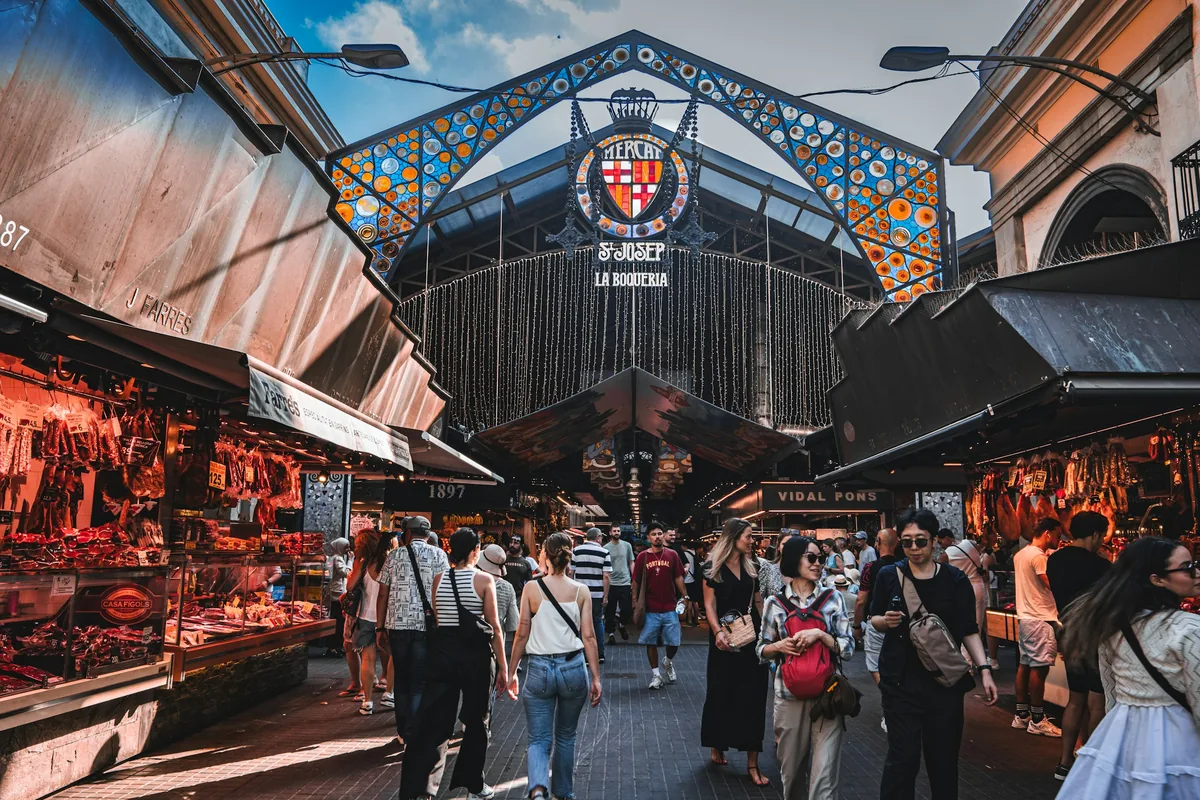
The Boqueria is Barcelona’s most famous food market and the easiest place to see the city’s produce in one go. It sits just off La Rambla and is packed with stalls selling fruit, seafood, cured meats, nuts and sweets. Small counters let you sit and eat what the traders are cooking, and the choice is huge.
It is also very busy, with crowds of visitors for much of the day. Walk past the first few stalls at the entrance and look deeper into the market, where the counters are often better value and the pace is calmer. The market is closed on Sundays, and hours change on holidays, so check the official Boqueria website before you go.
Treat it as a tasting stop rather than a full meal. Grab a fresh fruit juice, a few slices of ham, a paper cone of fried seafood or a plate at a counter, then move on to somewhere quieter for lunch. If you would rather avoid the crowds, Santa Caterina, covered later in this guide, offers a similar mix with more room.
Go with an empty stomach and a sense of curiosity, and you will find plenty to try without a plan.
- How to get there: La Rambla 91, Ciutat Vella, a short walk from Liceu station (L3).
- How long to spend: One to two hours.
- Best time to go: Early in the day, before the biggest crowds arrive.
- Tip: Skip the front stalls, and carry a little cash for small purchases.
2. Mercat de Sant Antoni
Mercat de Sant Antoni is the best market for combining a local food stop with a browse. The building reopened after a long restoration, and today its stalls sell fresh food alongside a few eateries, with a separate section for clothes and other goods. It feels like a neighbourhood market, where residents shop for the week, so you will see more everyday shopping than souvenir hunting.
On Sundays the area around it hosts a large second-hand book market, with stalls selling books, comics, stamps and other collectables. If you are in town on a Sunday, it is a lovely way to spend a slow morning, followed by a bite to eat nearby.
The market is well placed for a food crawl through the streets of Sant Antoni and Poble-sec, where bars and bakeries are easy to find. Come hungry and graze, picking up cheese, cured meats and fruit from the counters, then settle at one of the small eateries inside.
It is also a good choice if you want somewhere calmer than the Boqueria. The crowds here are mostly locals, and prices at the stalls are generally easier on the wallet.
- How to get there: Carrer de Comte d’Urgell 1, Sant Antoni, close to Sant Antoni station (L2).
- How long to spend: One to two hours.
- Best time to go: A Sunday morning for the book market, or a weekday for food.
- Tip: Check the market’s official schedule before you travel, as the stalls vary by day.
3. Cal Pep
Cal Pep is a tiny tapas bar in El Born that many people consider among the best in the city. It sits on a corner of Plaça de les Olles and is run by chef and owner Pep Manubens. The bar is the draw: you perch on a stool, point at what looks good and let the cooks send out plates of seafood and small dishes to share.
Cal Pep does not take reservations for the bar, only for the tables in the dining room, so the bar can mean a wait. Book a table well in advance if you want a guaranteed seat, or go with time to spare and be prepared to queue. The official website has booking details and current opening days.
The menu is Mediterranean tapas and larger dishes best shared, so come with friends and order a few things at a time. Prices sit higher than at the standing bars, but the quality of the seafood and the lively counter make it a treat.
It is not open every day of the week, and lunch tends to be the busiest service. Check before you go, and keep an open mind about what the cooks suggest.
- How to get there: Plaça de les Olles 8, El Born, a short walk from Barceloneta or Jaume I stations (L4).
- How long to spend: One to two hours.
- Best time to go: Lunch, with a table booked in advance.
- Tip: Ask the staff what is freshest and order in small rounds.
4. Quimet & Quimet
Quimet & Quimet is a standing-room-only bodega in Poble-sec, famous for montaditos, small bites served on slices of bread. The business traces its roots to 1914, when the family sold wine from a village near Montserrat, and it has stayed in the family across four generations. Space is very tight, and the walls are lined with bottles from floor to ceiling.
You stand at a narrow counter and choose from a long list of toppings. Many of the ingredients come from tins, such as mussels, sardines and tuna, and Spanish conservas are of a very high standard. The cheeses are fresh and good, and a glass of wine or vermouth finishes the plate nicely.
It is first come, first served, with no reservations, so expect a short wait at busy times. The mix of tiny space and big flavour is part of the fun, and it is a good stop on a Poble-sec bar crawl. Pair a plate here with a stroll up towards Montjuïc, or follow it with another bar on the same street.
Opening days and hours are limited and listed differently across sources, so check before you go and arrive early to avoid disappointment.
- How to get there: Carrer del Poeta Cabanyes 25, Poble-sec, a short walk from Paral·lel station (L2 and L3).
- How long to spend: 30 to 60 minutes.
- Best time to go: Early in the service, before it fills up.
- Tip: Be ready to stand and chat with whoever is next to you.
5. La Cova Fumada
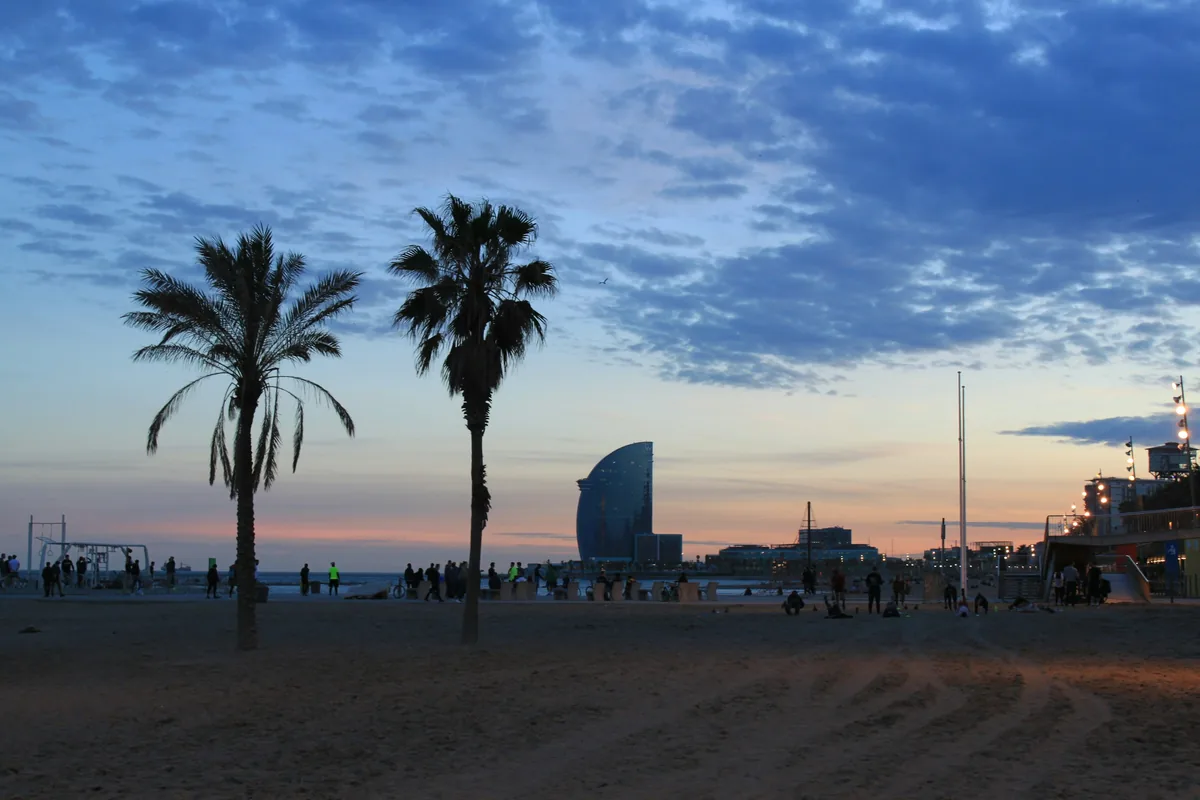
La Cova Fumada is the local legend in Barceloneta, known as the birthplace of the bomba. The bomba is a potato and meat croquette with a spicy kick, and this family-run bodega has been serving since 1944. There is no sign on the door, just the noise of conversation and the smell of grilled seafood.
The bodega is open mostly for breakfast and lunch, on limited days, and does not take reservations. Queues often form outside before it opens, so arrive early if you want to eat without a long wait. It is closed on Sundays, and the hours listed online vary, so check before you go.
Order a bomba, then add grilled seafood and a few other plates to share. Food here is simple and honest, and the room is full of locals, which is a good sign. It is a short walk from the beach, so you can combine lunch with a stroll along the seafront afterwards.
Because the opening pattern is unusual, plan the rest of your day around it rather than trying to squeeze it in. If it is closed, Barceloneta has plenty of other bars and seafood places nearby.
- How to get there: Carrer del Baluard 56, Barceloneta, a short walk from Barceloneta station (L4).
- How long to spend: One to two hours.
- Best time to go: A weekday late morning, arriving before the queue builds.
- Tip: Confirm the open days online, as it is not open every day.
6. Bar Cañete
Bar Cañete is a classic tapas bar in the Raval, a good choice if you want the full counter-and-stool experience. Staff work the bar and the open kitchen, and you can watch plates being prepared as you wait. The menu centres on traditional tapas and seafood, and it is easy to build a meal from small dishes.
It is close to the Liceu metro stop, so it is simple to combine with a visit to the Boqueria or the old town. Sit at the bar if you can, as that is where the energy is and where the staff can recommend what is fresh that day.
The bar tends to be busy at the usual Spanish meal times, so aim for the edges of lunch or dinner to avoid the longest waits. It is closed on Sundays, and hours differ between sources, so check before you go.
Prices are in the middle range for central Barcelona, so it works well for a long, relaxed tapas lunch or a light dinner. Order a few dishes at a time and share, as is the custom here, rather than ordering everything at once.
If you want a counter experience that feels more traditional than modern, this is a dependable choice, and the surrounding streets are worth a wander afterwards.
- How to get there: Carrer de la Unió 17, Raval, a short walk from Liceu station (L3).
- How long to spend: One to two hours.
- Best time to go: Early lunch or early evening.
- Tip: Order in rounds so the food arrives hot.
7. Can Culleretes
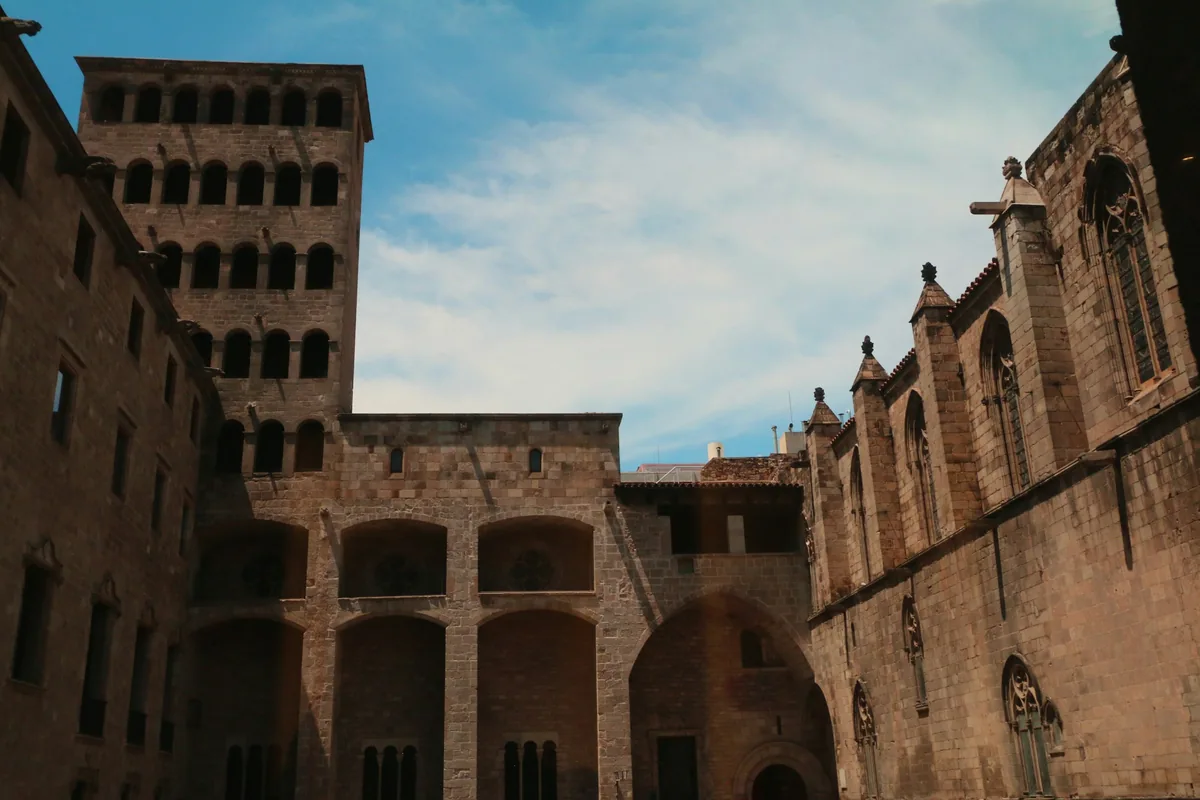
Can Culleretes is the classic choice for a traditional Catalan sit-down meal. It has been serving since 1786, and is widely described as Barcelona’s oldest restaurant. It began as a dessert and hot chocolate shop and was taken over by the Regàs family in 1890, and it is still family run. The city council’s page on Can Culleretes lists it among the city’s historic businesses.
The menu is Catalan cooking at its most familiar. Cannelloni is the best-selling dish, and you will see plates of it moving through the dining rooms, especially at weekends. The rooms are old-fashioned and a little crowded, which is part of the charm.
This is a good place to bring family or a group, as portions are generous and dishes are easy to share. It sits on a narrow street in the Gothic Quarter, a short walk from the Boqueria, so it works as a lunch stop on a day of sightseeing.
Book ahead for busy times, and expect a lively, noisy room rather than a quiet dinner. If you are curious about older Barcelona and how locals eat when they dress up a little, this is a straightforward introduction. It also pairs well with an afternoon exploring the nearby lanes and squares of the Gothic Quarter.
- How to get there: Carrer d’en Quintana 5, Gothic Quarter, a short walk from Liceu station (L3).
- How long to spend: One to two hours.
- Best time to go: Lunch, with a table booked in advance.
- Tip: Order the cannelloni to share as a starter.
8. Els Quatre Gats
Els Quatre Gats is the best place to stop for a coffee, a drink or a light meal in a famous modernist setting. The cafe opened in June 1897 in Casa Martí, a modernista building by Josep Puig i Cadafalch. It became a meeting place for artists, including Pablo Picasso, whose first solo exhibition was held here around 1900, along with Ramon Casas and Antoni Gaudí.
It closed in 1903 because of financial difficulties, then was reopened and restored in 1989. Today it is a cafe, bar and restaurant with an interior that keeps much of its old character. Treat it as a pause in a day of sightseeing rather than a destination for a big meal, as it is popular and the food is secondary to the setting.
It sits near the Gothic Quarter and the Palau de la Música, so it fits neatly into a walking route. A coffee or a vermouth at a table with a view of the room is enough for many visitors, and you can eat something small if you are hungry.
Expect a mix of visitors and locals, and a pace that is more relaxed than at the bars. Hours differ between sources, so check before you go.
- How to get there: Carrer de Montsió 3, Gothic Quarter, a short walk from Urquinaona station (L1 and L4).
- How long to spend: 45 to 90 minutes.
- Best time to go: Mid-afternoon, for a quieter table.
- Tip: Look at the room’s decor as well as the menu, as the setting is the main attraction.
9. Los Caracoles
Los Caracoles is a restaurant on Carrer dels Escudellers whose roots go back to 1835. It was founded by the Bofarull family, who still run it, and it is one of the city’s longest-running restaurants. As the name suggests, snails are the famous dish, alongside suckling pig, bouillabaisse, rice dishes, salt cod and shellfish.
The atmosphere is loud, busy and theatrical, with a rotisserie at the front and a warren of small dining rooms behind. Order the snails if you are curious, as this is where Barcelona locals bring visitors who want to try them. If snails are not for you, the menu has plenty of other classics to choose from.
It is usually open every day, though you should check holiday hours, and it tends to fill up at lunch and dinner, so book ahead if you want a table at a particular time. It is a good place for a long lunch or an early dinner, and it is close to the Ramblas, so it fits easily into a day around the old town.
Because it has been around so long, it is a restaurant with a clear identity: traditional, unfussy and proud of it. Treat it as part of the sightseeing as much as a meal.
- How to get there: Carrer dels Escudellers 14, Gothic Quarter, a short walk from Drassanes or Liceu stations (L3).
- How long to spend: One to two hours.
- Best time to go: Lunch or early evening, with a table booked.
- Tip: Share a few dishes so you can try snails and a rice dish together.
10. Mercat de Santa Caterina
Mercat de Santa Caterina is the best market for a calm lunch with a view of Barcelona’s most colourful roof. It opened in 1848 as the city’s first covered market and was renovated in 2005 by the architects Enric Miralles and Benedetta Tagliabue. The wavy roof is covered in ceramic tiles in many colours, and it is easy to spot from the street.
Inside you will find around sixty stalls and traders selling fresh food, plus places where you can sit and eat. It is calmer than the Boqueria, and a good choice if you want to see how a market works without the crowds. The official market website has the current opening times.
The market is closed on Sundays, and hours vary by day and in summer, so check before you go. It sits at the edge of El Born, so you can combine it with Cal Pep, the Picasso Museum area and the lanes of the old town.
Pick up a few things to taste, then sit down for a proper lunch at one of the counters. The market’s design makes it a pleasant stop even if you only want a coffee and a look around.
- How to get there: Avinguda de Francesc Cambó 16, El Born, near Jaume I station (L4).
- How long to spend: One to two hours.
- Best time to go: A weekday late morning, when the stalls are busy but not crowded.
- Tip: Look up at the roof from the outside and inside, as the view changes.
How to pick the right place to eat in Barcelona
- Markets and quick bites: Boqueria, Sant Antoni or Santa Caterina.
- Tapas at the bar: Cal Pep, Bar Cañete or Quimet & Quimet.
- Local and simple: La Cova Fumada.
- Old Barcelona: Can Culleretes, Los Caracoles or Els Quatre Gats.
Dishes to look out for in Barcelona
- Pa amb tomàquet: Bread rubbed with tomato and olive oil.
- Bomba: A potato and meat croquette with a spicy sauce, linked to Barceloneta.
- Montaditos: Small bites served on slices of bread.
- Conservas: High-quality tinned seafood served as tapas.
- Cannelloni: A Catalan favourite, and the best-selling dish at Can Culleretes.
- Caracoles: Snails, the signature dish at Los Caracoles.
- Vermut: Vermouth, often served as an aperitif.
Suggested food plans for 1, 2 or 3 days
Day 1: Old town classics
Start at the Boqueria, then have tapas at Bar Cañete and an afternoon coffee at Els Quatre Gats. Finish with dinner at Los Caracoles.
Day 2: El Born and Barceloneta
Visit Santa Caterina for a market stop, have lunch at Cal Pep and head to Barceloneta for La Cova Fumada the next morning if it is open.
Day 3: Poble-sec and Sant Antoni
Browse Sant Antoni, then eat montaditos at Quimet & Quimet. Finish with a traditional meal at Can Culleretes.
Where to stay for the best food
- Gothic Quarter and Raval: The most central base, close to many places in this guide.
- El Born: Lively, with Cal Pep and Santa Caterina on your doorstep.
- Sant Antoni and Poble-sec: Local and food-focused, with great bars.
- Barceloneta: Near the beach, with traditional seafood restaurants.
Getting around Barcelona
Barcelona’s metro and buses are run by TMB, and most places in this guide are in the central zones and within a short walk of a metro station. Use the official TMB website for lines, tickets and current services. Much of the old town is best explored on foot, and our list of the top places to visit in Barcelona helps you group sights and meals by neighbourhood.
Budget guidance for eating in Barcelona
- Cheap eats: Market counters, montaditos and bars with standing room.
- Mid-range: Tapas bars and traditional restaurants.
- Special occasion: Cal Pep, if you order plenty of seafood.
Booking, tipping and mealtimes
Book restaurants such as Can Culleretes and Los Caracoles for busy times, and expect bars like Quimet & Quimet and La Cova Fumada to be first come, first served. Meals in Spain tend to start later than in the UK, with many kitchens busy well into the evening. Tipping is modest, and rounding up a bill is usual. Opening hours change often, so check each venue before you go.
Frequently Asked Questions
Where can I eat the best tapas in Barcelona?
Cal Pep, Bar Cañete and Quimet & Quimet are three well-known options, each with a different style. Cal Pep suits seafood, Quimet & Quimet suits montaditos and Bar Cañete suits classic tapas.
What is the oldest restaurant in Barcelona?
Can Culleretes dates from 1786 and is widely described as the city’s oldest restaurant. Los Caracoles, with roots in 1835, is also one of the city’s longest-running restaurants.
Is the Boqueria worth visiting?
Yes, for the atmosphere and the produce, but treat it as a tasting stop. Go early and look past the stalls at the entrance for better value.
Do I need to book restaurants in Barcelona?
For sit-down places such as Can Culleretes and Los Caracoles, booking is wise at busy times. Standing bars and market counters are usually first come, first served.
What time do people eat in Barcelona?
Meals tend to start later than in the UK, so lunch and dinner both run later. Check opening times for each venue before you plan your day.
Is Barcelona expensive for eating out?
It can be affordable if you eat at markets, standing bars and tapas counters. Sit-down meals at historic restaurants sit in the mid range.
Eat Your Way Around More of Europe
Barcelona is only one stop on a food-led trip. For another city built around markets and local cooking, read our guide to the best places to eat in Berlin, and if you are adding Portugal to the route, see our guide to the best things to do in Lisbon for sights between meals. For wider inspiration, our round-up of the top places to see in Europe is a good place to start.
Featured image: Photo by Henrique Ferreira on Unsplash