Last updated: October 2026
Budapest is a wonderful city for food lovers who like hearty, flavourful cooking, and the best food in Budapest ranges from market stalls to fine dining. Hungarian food is built on paprika, slow-cooked meat, fresh bread and sour cream, and it’s at its best in steaming bowls of goulash, rich stews and deep-fried lángos smothered in garlic and cheese. Alongside the classics, a new wave of chefs has turned Budapest into one of Central Europe’s most exciting dining cities, while its grand cafés recall the city’s golden age at the turn of the 20th century.
This guide covers 10 of the best places to eat in Budapest, with a practical box for each: how to get there, how long to allow, the best time to go and one tip. Further down you’ll find Hungarian dishes to try, suggested food routes, where to stay, getting around and budget guidance.
Restaurants change often, so check opening days and booking policies on each venue’s website, and use Visit Budapest, the city’s official tourism site for current visitor information. If you’re planning a wider trip, our guide to the top 10 places to see in Europe shows where Budapest fits among the continent’s best city breaks. See Visit Budapest, the city’s official tourist information site, for current visitor advice. If you enjoy planning a trip around food, our guides to where to eat in Berlin and where to eat in Copenhagen are good next steps for another city break.
Quick answer: Where are the best places to eat in Budapest? For first-timers, start with the Great Market Hall, lángos at Karaván, goulash at Gettó Gulyás and cheap Hungarian classics at Frici Papa. Add Hungarikum Bisztró, Mazel Tov, Bors GasztroBár, Borkonyha, Stand and a grand café such as New York Café or Gerbeaud. If you only have one day, combine the market, a Jewish Quarter lunch and goulash for dinner.
Quick answer: Where are the best places to eat in Budapest? The best food in Budapest is found at the Great Market Hall, Karaván, Gettó Gulyás, Frici Papa, Hungarikum Bisztró, Mazel Tov, Bors GasztroBár, Borkonyha, Stand and the grand cafés New York Café and Gerbeaud. For a first visit, start with goulash at Gettó Gulyás, lángos at Karaván and cake in a grand café, then book Borkonyha or Stand for a special meal.
Quick list: where to eat in Budapest
| Place | Area | Best for | Price tier |
|---|---|---|---|
| Great Market Hall | District IX, by the Liberty Bridge | Market food and paprika | Cheap |
| Karaván | Jewish Quarter | Street food and lángos | Cheap |
| Gettó Gulyás | Jewish Quarter | Goulash and stews | Cheap to mid-range |
| Frici Papa | Jewish Quarter | Budget Hungarian classics | Cheap |
| Hungarikum Bisztró | Lipótváros | Traditional home cooking | Mid-range |
| Mazel Tov | Jewish Quarter | Middle Eastern food in a ruin garden | Mid-range |
| Bors GasztroBár | Jewish Quarter | Soups and baguettes | Cheap |
| Borkonyha | Near St Stephen’s Basilica | Wine and modern Hungarian food | Special occasion |
| Stand | Near the Opera, District VI | Fine dining Hungarian cuisine | Special occasion |
| New York Café or Gerbeaud | City centre | Coffee and cake in grand surroundings | Mid-range |
1. Great Market Hall (Központi Vásárcsarnok)
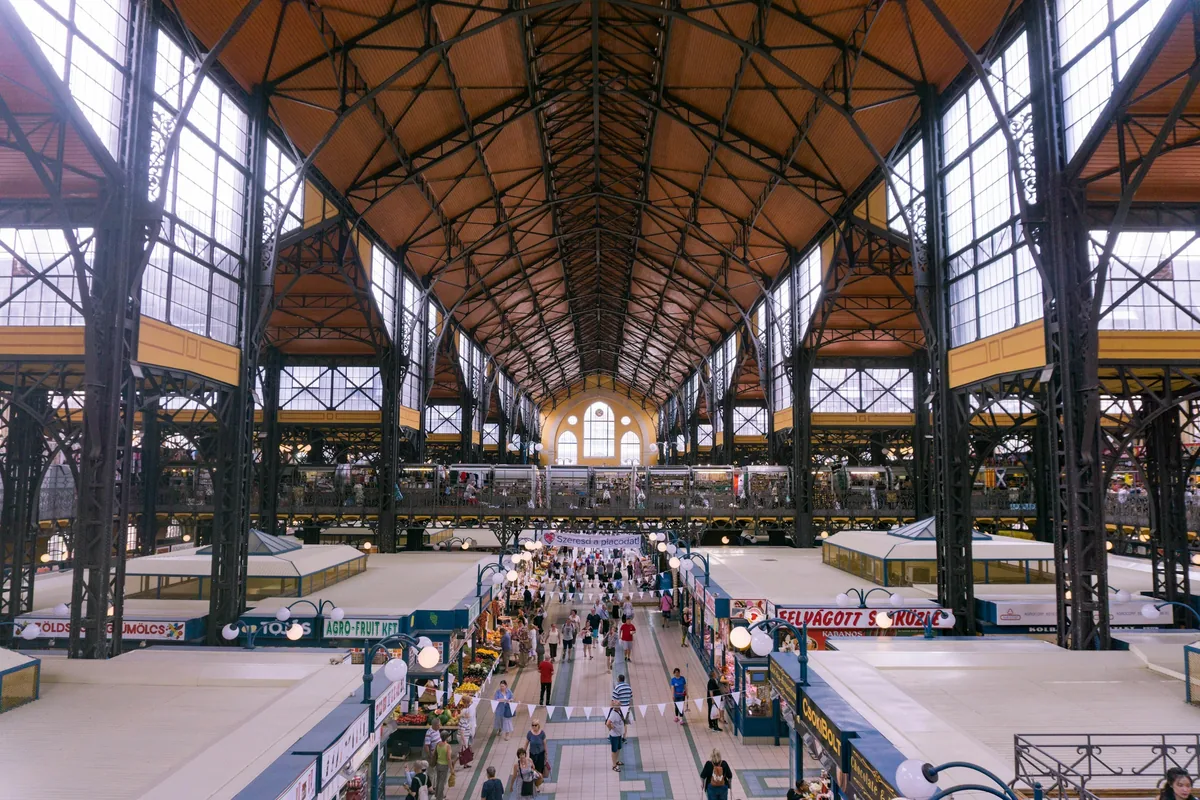
The Great Market Hall is Budapest’s largest and most beautiful indoor market, housed in a 19th-century building with a colourful tiled roof and a soaring iron interior. It’s a great place to see the ingredients behind Hungarian food.
On the ground floor, stalls sell paprika in every strength, strings of dried peppers, salami, sausages, cheese and fresh produce. Upstairs, food counters serve lángos, stuffed cabbage, sausages and other Hungarian dishes to eat at standing tables, along with handicrafts and souvenirs.
It’s popular with tourists, so prices for souvenirs can be higher than elsewhere, but the food is good value and the building itself is worth seeing.
- Getting there: At the Pest end of the Liberty Bridge, by Fővám tér metro (M4) or trams 2, 47 and 49.
- Time needed: About an hour.
- Best time to go: Weekday mornings. Sunday hours are short and many stalls close, and it shuts on public holidays, so check the market’s official opening hours before you go.
- Insider tip: Buy paprika here to take home; look for vacuum-packed bags, which travel better.
2. Karaván
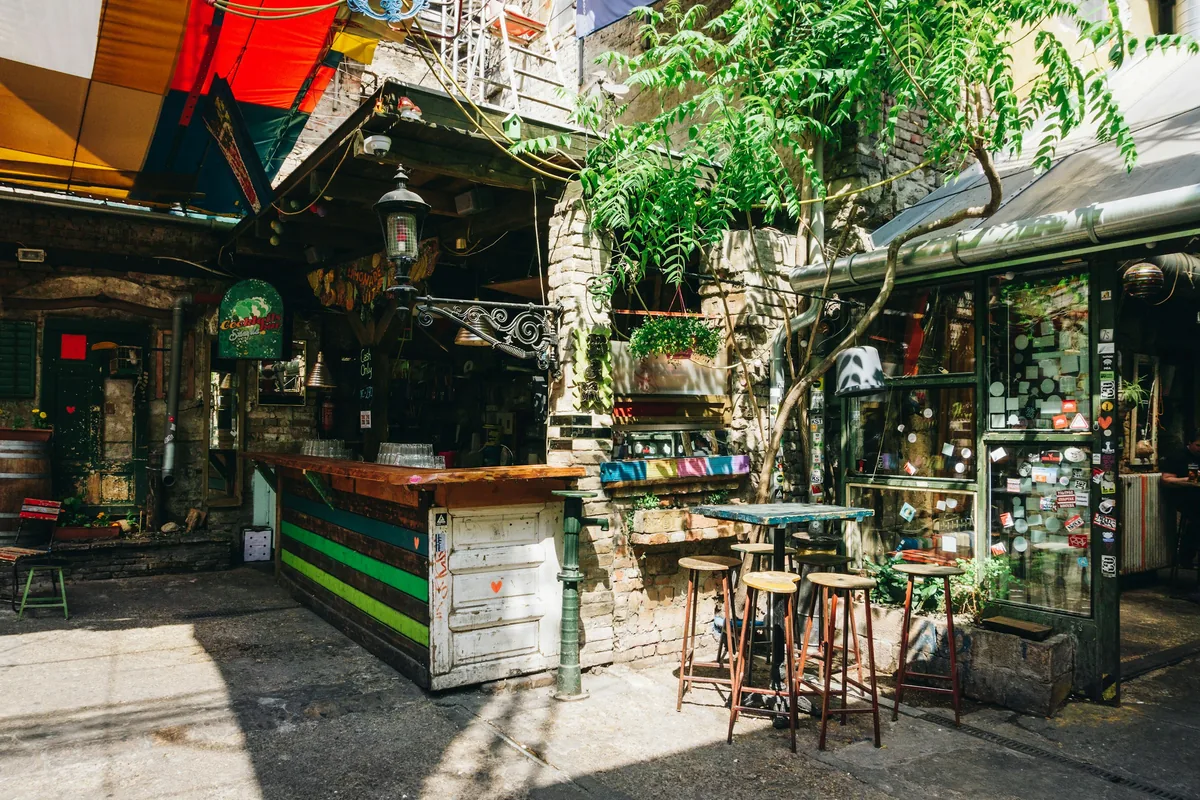
Karaván is an outdoor street food court in the heart of the Jewish Quarter, right next to Szimpla Kert, Budapest’s most famous ruin bar. Food trucks and stalls serve everything from burgers and Mexican food to Hungarian specialities.
The highlight for many visitors is lángos, a deep-fried flatbread traditionally topped with garlic sauce, sour cream and grated cheese. It’s simple, filling and perfect after an evening in the ruin bars. You’ll also find chimney cake (kürtőskalács), a spiral of sweet dough baked on a spit and coated in sugar or cinnamon.
- Getting there: On Kazinczy utca in the Jewish Quarter (District VII), a short walk from Astoria or Deák Ferenc tér.
- Time needed: 30 to 45 minutes.
- Best time to go: Evening, before or after visiting the ruin bars.
- Insider tip: Share a lángos with a friend; they’re bigger and richer than they look.
3. Gettó Gulyás
Gettó Gulyás is a small, popular restaurant in the Jewish Quarter that focuses on Hungarian classics done well. As the name suggests, goulash is the star, served as a soup rather than a thick stew, the way Hungarians eat it.
The menu also features other comforting dishes, such as paprika chicken (csirkepaprikás) with dumplings, beef stew (pörkölt) and stuffed cabbage. The setting is cosy and informal, and it’s a good place to try several Hungarian dishes in one sitting.
- Getting there: In the Jewish Quarter, walkable from Astoria and Deák Ferenc tér.
- Time needed: About an hour.
- Best time to go: Dinner; book ahead for evenings.
- Insider tip: Order goulash soup to start and paprika chicken as a main to compare two Hungarian classics.
4. Frici Papa
Frici Papa is a no-frills restaurant serving traditional Hungarian food at very reasonable prices. It’s popular with students and locals as well as visitors, and it’s a reliable place for a filling meal without a big bill.
The menu is long and covers all the classics: goulash, paprika chicken, schnitzel, stuffed peppers, fried cheese and pasta with cottage cheese and bacon (túrós csusza). Portions are generous and the atmosphere is busy and unpretentious.
- Getting there: On Király utca in District VII, near Oktogon and the Jewish Quarter.
- Time needed: About an hour.
- Best time to go: Lunch or early dinner.
- Insider tip: Ask about the daily menu, which is often the best value.
5. Hungarikum Bisztró
Hungarikum Bisztró is a small, family-run restaurant near the Parliament building that serves home-style Hungarian cooking. It’s warm and welcoming, with a menu of dishes that taste like they come from a Hungarian grandmother’s kitchen.
Expect goulash, paprika chicken, stuffed cabbage, chicken soup and desserts such as somlói galuska, a layered sponge cake with chocolate sauce and cream. The small size means it fills up quickly, so it’s worth planning ahead.
It’s a good choice after a visit to the Parliament or a walk along the Danube.
- Getting there: In Lipótváros (District V), a short walk from the Parliament and Kossuth Lajos tér.
- Time needed: An hour to an hour and a half.
- Best time to go: Dinner, booked in advance.
- Insider tip: Save room for somlói galuska, a classic Hungarian dessert.
6. Mazel Tov
Mazel Tov is set in a beautifully restored ruin building in the Jewish Quarter, with a leafy, light-filled courtyard full of plants and string lights. It serves Middle Eastern and Israeli-inspired food, such as hummus, shakshuka, grilled meats and shawarma, ideal for sharing.
The atmosphere is one of the best in the city, especially in the evening when the courtyard glows. It’s popular, so book ahead or arrive early, particularly at weekends.
- Getting there: On Akácfa utca in the Jewish Quarter.
- Time needed: An hour and a half.
- Best time to go: Dinner, or weekend brunch.
- Insider tip: Order several mezze-style dishes to share across the table.
7. Bors GasztroBár
Bors GasztroBár is a tiny, quirky counter in the Jewish Quarter famous for creative soups and toasted baguettes. The menu changes daily and is written on a board, with inventive flavour combinations and some unusual names.
There’s very little seating, so most people eat standing up or take their food away. It’s quick, cheap and very good, which makes it a favourite for lunch or a late snack.
- Getting there: On Kazinczy utca, close to Karaván and Szimpla Kert.
- Time needed: 20 to 30 minutes.
- Best time to go: Lunch or early evening; expect a queue.
- Insider tip: Try a soup and a baguette together; the combination is what Bors is known for.
8. Borkonyha
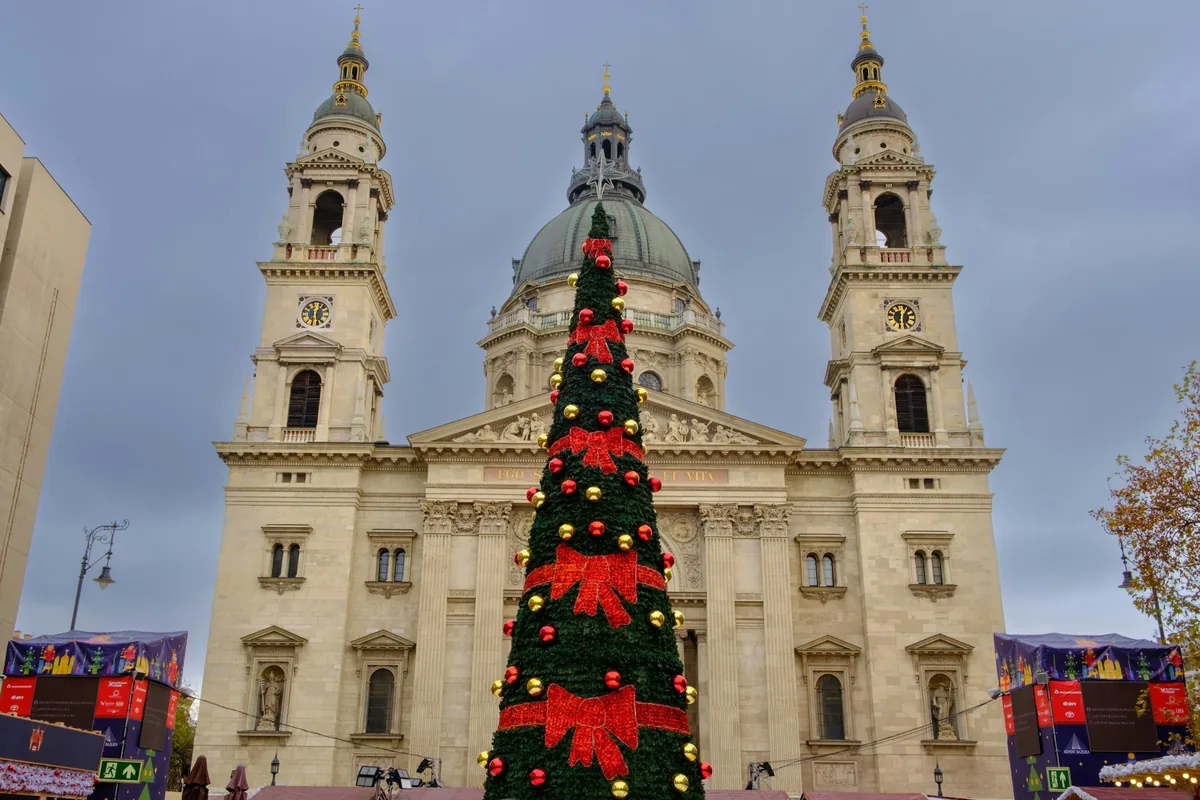
Borkonyha, whose name means “wine kitchen”, is one of Budapest’s most celebrated restaurants for modern Hungarian food and wine. The menu changes regularly and uses seasonal Hungarian ingredients in refined, creative dishes, and the wine list is a showcase of Hungarian producers, with many available by the glass.
It’s a good place to discover Hungarian wines beyond the famous Tokaji, such as reds from Villány and Eger and whites from the shores of Lake Balaton.
- Getting there: Near St Stephen’s Basilica in District V.
- Time needed: Two hours.
- Best time to go: Dinner, booked ahead. Check the website for current service days and hours.
- Insider tip: Ask the staff to pair a Hungarian wine with each course.
9. Stand
Stand is one of Budapest’s top fine dining restaurants, known for elevating traditional Hungarian dishes with modern technique. Its chefs reimagine Hungarian classics in elegant tasting menus.
It’s a special occasion restaurant, and it’s one of the best places to see how far Hungarian cuisine has come. Book well in advance.
- Getting there: On Székely Mihály utca in District VI, close to the Hungarian State Opera and a short walk from Oktogon.
- Time needed: Two to three hours.
- Best time to go: Book the earliest available date as soon as possible.
- Insider tip: Check the current menu and booking terms on the restaurant’s website, as these change seasonally.
10. New York Café or Gerbeaud
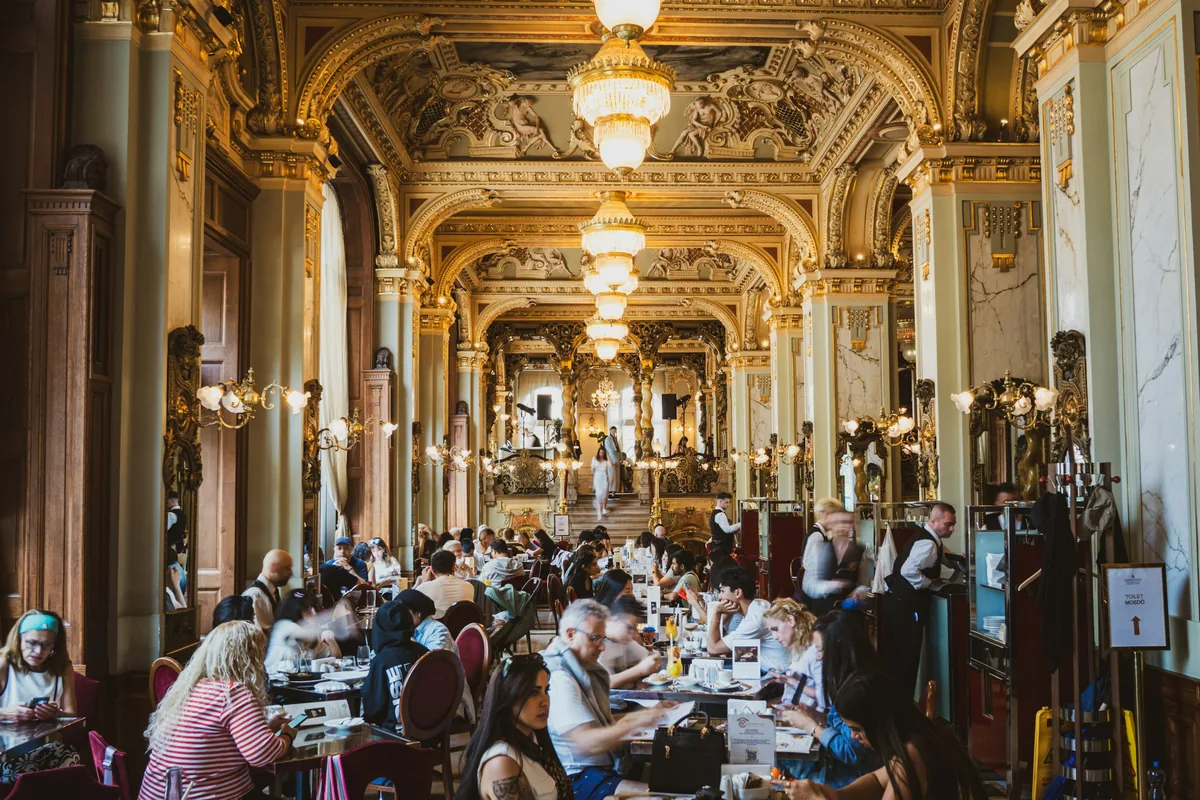
Budapest’s grand coffee houses date to the late 19th century, when they were meeting places for writers, artists and politicians. Two of the most famous are perfect for coffee and cake.
The New York Café, inside a grand hotel, is often called one of the most beautiful cafés in the world, with gilded columns, frescoes and chandeliers. Café Gerbeaud, on Vörösmarty tér, has been serving cakes since the 19th century and is known for its pastries and its traditional Gerbeaud slice, layered with walnuts, apricot jam and chocolate.
Both are popular with visitors and prices reflect the setting, but they’re an essential Budapest experience. Try a Dobos torte, a sponge cake layered with chocolate buttercream and topped with caramel.
- Getting there: New York Café is on Erzsébet körút; Gerbeaud is on Vörösmarty tér, at the end of the M1 metro line.
- Time needed: 45 minutes to an hour.
- Best time to go: Weekday mornings or mid-afternoon to avoid the longest queues.
- Insider tip: At New York Café, go early to avoid the queue outside.
Hungarian dishes to try
- Gulyás (goulash): a paprika-spiced beef soup with vegetables, eaten as a soup rather than a stew.
- Pörkölt: a thick meat stew with paprika and onions.
- Csirkepaprikás: paprika chicken in a creamy sauce, usually served with nokedli (small dumplings).
- Töltött káposzta: stuffed cabbage rolls with sour cream.
- Halászlé: a spicy fisherman’s soup made with river fish.
- Lángos: deep-fried flatbread topped with garlic, sour cream and cheese.
- Kürtőskalács: chimney cake, a spiral of sweet dough baked over coals.
- Dobos torta and somlói galuska: two classic Hungarian desserts.
- Pálinka and Unicum: fruit brandy and a famous herbal liqueur.
Suggested food routes for 1, 2 or 3 days
One day: Start with breakfast at the Great Market Hall, then explore the Jewish Quarter with lunch at Bors GasztroBár. Have dinner at Gettó Gulyás and finish with lángos at Karaván after a drink at a ruin bar.
Two days: Add coffee and cake at the New York Café or Gerbeaud, then dinner at Hungarikum Bisztró near the Parliament.
Three days: Book a special meal at Borkonyha or Stand, and spend time in Mazel Tov’s courtyard for brunch or dinner.
Where to stay for food lovers
- Jewish Quarter (District VII): at the heart of the food and nightlife scene, with ruin bars and street food.
- Lipótváros (District V): central and elegant, near the Parliament, the Basilica and the Danube.
- Around Andrássy út (District VI): lively and well connected, with plenty of restaurants nearby.
- Buda Castle area: quieter and atmospheric, but further from most restaurants.
Getting around
Budapest has a good metro system, trams and buses. Tram 2 runs along the Danube on the Pest side and is a scenic tram route. The centre of Pest is walkable, and most of the places in this guide are close to each other.
Budapest also makes an easy stop on a wider trip, so see our guide to the top places to see in Europe for ideas on where to go next. For up-to-date timetables and visitor information, check the official sources: Visit Budapest and BKK (Budapest public transport).
Booking, tipping and eating habits
- Booking: Book ahead for popular restaurants and fine dining, especially at weekends. Borkonyha has a booking page on its official website, and the New York Café website has current details for the café.
- Service charge: Many restaurants add a service charge to the bill, often around 10 to 15 percent. Check your bill before adding a tip.
- Tipping: If service isn’t included, a tip of around 10 percent is customary. Tell the server the total you want to pay rather than leaving cash on the table.
- Currency: Hungary uses the forint. Cards are widely accepted, but carry some cash for markets and small stalls.
Budget guidance
- Cheap eats: market food, lángos, soups, street food and daily lunch menus.
- Mid-range: traditional Hungarian restaurants, ruin-garden restaurants and grand cafés.
- Special occasion: modern Hungarian and fine dining restaurants with wine pairings.
Lunch menus (napi menü) offered by many restaurants on weekdays are some of the best value meals in the city. Visiting in winter? See our roundup of the top Christmas markets in Europe for festive markets, and for another food-led city break, our guide to the best places to eat in Barcelona is a good comparison.
Frequently Asked Questions
What food is Budapest famous for?
Budapest is famous for goulash, paprika chicken, stuffed cabbage, lángos and chimney cake, along with its grand cafés and cakes such as Dobos torte.
Is eating out in Budapest cheap?
Budapest is good value compared with Western European capitals, especially at markets, street food stalls and with weekday lunch menus. Prices have risen in recent years, particularly in tourist areas.
Do you tip in Budapest restaurants?
Check whether a service charge has been added. If not, a tip of around 10 percent is customary for good service.
What is lángos?
Lángos is a deep-fried flatbread, traditionally topped with garlic sauce, sour cream and grated cheese. It’s a popular street food, sold at markets and food courts.
Is the Great Market Hall worth visiting?
Yes. It’s Budapest’s largest market and a beautiful building, and it’s a great place to buy paprika and try Hungarian street food upstairs. Sunday opening is limited and it closes on public holidays, so check the official hours first.
Where to eat goulash in Budapest?
Gettó Gulyás, Frici Papa and Hungarikum Bisztró all serve traditional goulash. Remember that in Hungary, goulash is a soup rather than a thick stew.
Discover More of Europe’s Food and Festive Cities
If you enjoy eating your way around a city, read our guide to the best places to eat in Berlin or our pick of the top places to eat in Copenhagen for more ideas. Visiting in winter? Budapest is one of the highlights in our guide to the top Christmas markets in Europe, and our top winter destinations in Europe will help you plan the rest of your trip.
Featured image: Photo by Ervin Lukacs on Unsplash