Last updated: October 2026
The best day trips from Madrid are Toledo and Segovia, followed by Ávila, El Escorial and Aranjuez, and every one of the ten places below can be reached by train or bus in roughly two hours or less. Madrid sits in the middle of Spain’s high plateau, so medieval walled cities, royal palaces and mountain trails are all close, and most are on the rail network.
This guide covers ten of the best day trips from Madrid, with a practical box for each one: how to get there, how long to spend, the best time to go and a tip. Further down you will find advice on picking the right trip, suggested plans for one to three days, getting around, where to stay and budget guidance. For events and current details, the official Madrid tourism site is a good place to start. If you also want a night out when you are back in the capital, our guide to the best bars in Madrid is a good way to end a day trip.
Timetables, closing days and ticket rules change, so check the operator or the site’s own page before you go. Train times below are typical bands, not promises, and the national rail operator Renfe has the current schedules.
Quick answer: What are the best day trips from Madrid? The ten best are Toledo, Segovia, Ávila, El Escorial, Aranjuez, Alcalá de Henares, Cuenca, Salamanca, Chinchón and the Sierra de Guadarrama. For a first visit, choose Toledo or Segovia: both are about half an hour away on a fast train and both are World Heritage cities.
Quick comparison: day trips from Madrid
| Day trip | Best for | Getting there | Time each way |
|---|---|---|---|
| Toledo | History and viewpoints | Fast Avant train from Atocha | About 35 minutes |
| Segovia | Roman aqueduct and castle | High-speed train to Guiomar, then bus | About 30 minutes, plus bus |
| Ávila | Medieval city walls | Regional or Avant train | Under two hours |
| El Escorial | Royal monastery | Cercanías train or bus | About an hour |
| Aranjuez | Palace and gardens | Cercanías train | Under an hour |
| Alcalá de Henares | Cervantes and a university town | Cercanías train | About 40 minutes |
| Cuenca | Hanging houses and gorges | High-speed train, then bus | About an hour |
| Salamanca | Golden stone and a grand square | Alvia train | About 1.5 hours |
| Chinchón | Plaza Mayor and anise | Bus from Conde de Casal | About an hour |
| Sierra de Guadarrama | Hiking and mountain air | Cercanías train or bus | Around an hour |
1. Toledo
Toledo is the classic day trip from Madrid, a hilltop city wrapped by the River Tagus that is crammed with centuries of Christian, Jewish and Muslim history. The whole historic centre is a UNESCO World Heritage Site, listed on the UNESCO World Heritage website, and the compact old town is best explored on foot.
Start at the Gothic cathedral, then follow the narrow lanes towards the Alcázar, the fortress that dominates the skyline and now houses the Army Museum. Toledo is often called the city of three cultures because it holds both churches and former synagogues, among them Santa María la Blanca and the Sinagoga del Tránsito, which houses the Sephardic Museum. The monastery of San Juan de los Reyes adds a late Gothic cloister.
For the best views, cross the old Puente de Alcántara or walk the road on the far side of the river to look back over the whole city. Toledo is also known for marzipan, so look for the sweet shops and convents that sell it, and for damascene metalwork, the gold inlay on dark steel.
The streets are steep and paved with stone, so wear comfortable shoes. Many sights charge entry, so choose a few rather than trying to see everything in one day.
- How to get there: Fast Avant train from Madrid Puerta de Atocha, about 35 minutes, then a short bus or taxi up from Toledo station.
- How long to spend: A full day, with time to wander as well as visit sights.
- Best time to go: Spring and autumn, or a weekday, to avoid midsummer heat and weekend crowds.
- Tip: Book your train seats in advance at weekends and holidays, when Avant services fill up.
2. Segovia
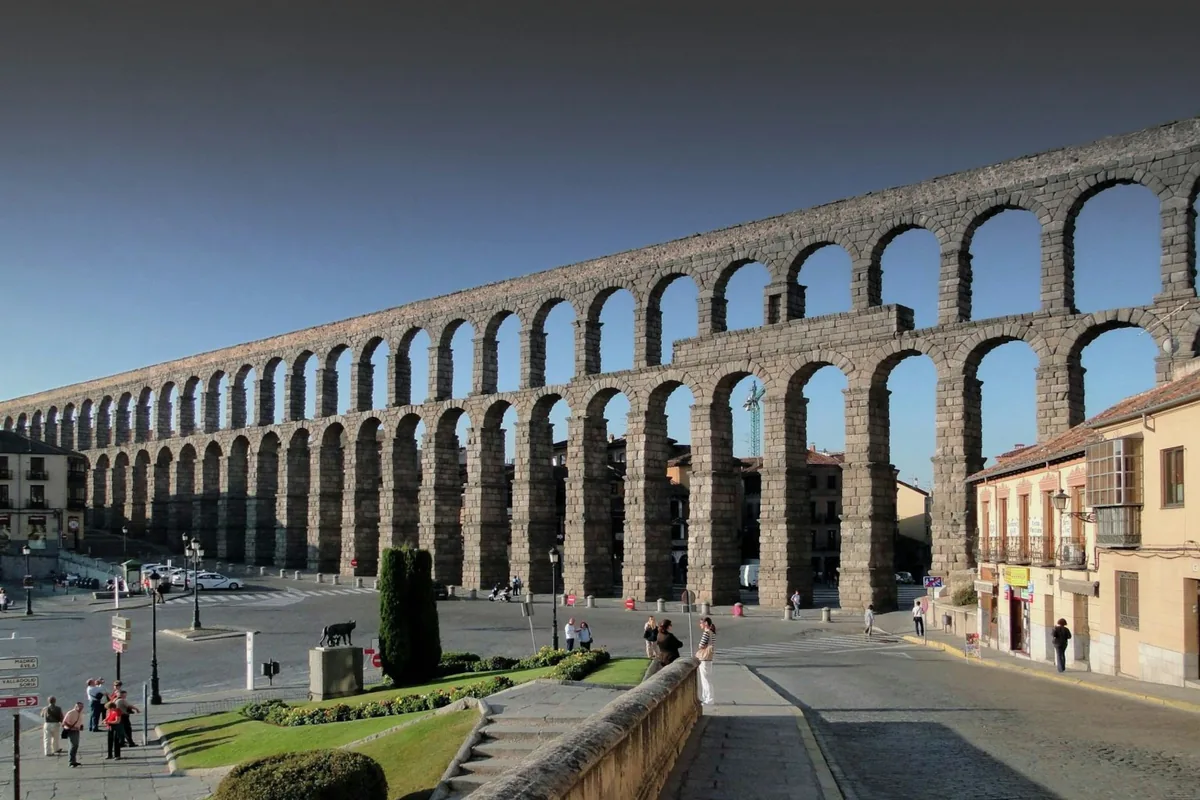
Segovia is the best day trip from Madrid for first-time visitors who want a famous landmark, because its Roman aqueduct is one of the best-preserved in Europe. The granite arches stand almost 30 metres high at their tallest, and they were built without mortar. The old town and aqueduct are listed on the UNESCO World Heritage website.
From the aqueduct, walk uphill along the old streets to the Plaza Mayor and the Gothic cathedral, sometimes called the lady of Spain’s cathedrals for its elegant spires. At the far end of town stands the Alcázar of Segovia, a castle on a rocky ridge above two rivers. It is often said to have inspired fairy tale castles, and its turrets and towers certainly look the part.
Segovia is also a food destination. The famous dish is cochinillo asado, roast suckling pig, usually served in traditional restaurants in the old town. A softer choice is the local bean stew made with large white beans, and the town’s sponge cake dessert, ponche segoviano, is a good sweet finish.
The fast train stops at the Segovia-Guiomar station, which is outside the centre, so factor in the connection. A city bus links the station with the aqueduct area, or you can take a taxi.
- How to get there: High-speed train from Madrid to Segovia-Guiomar, about 30 minutes, then a city bus or taxi into town.
- How long to spend: A full day, or a half day if you only want the aqueduct, cathedral and Alcázar.
- Best time to go: Spring or autumn; Segovia is high up and can be cold in winter.
- Tip: Book a restaurant for lunch in advance, especially at weekends, if you want to try roast suckling pig.
3. Ávila
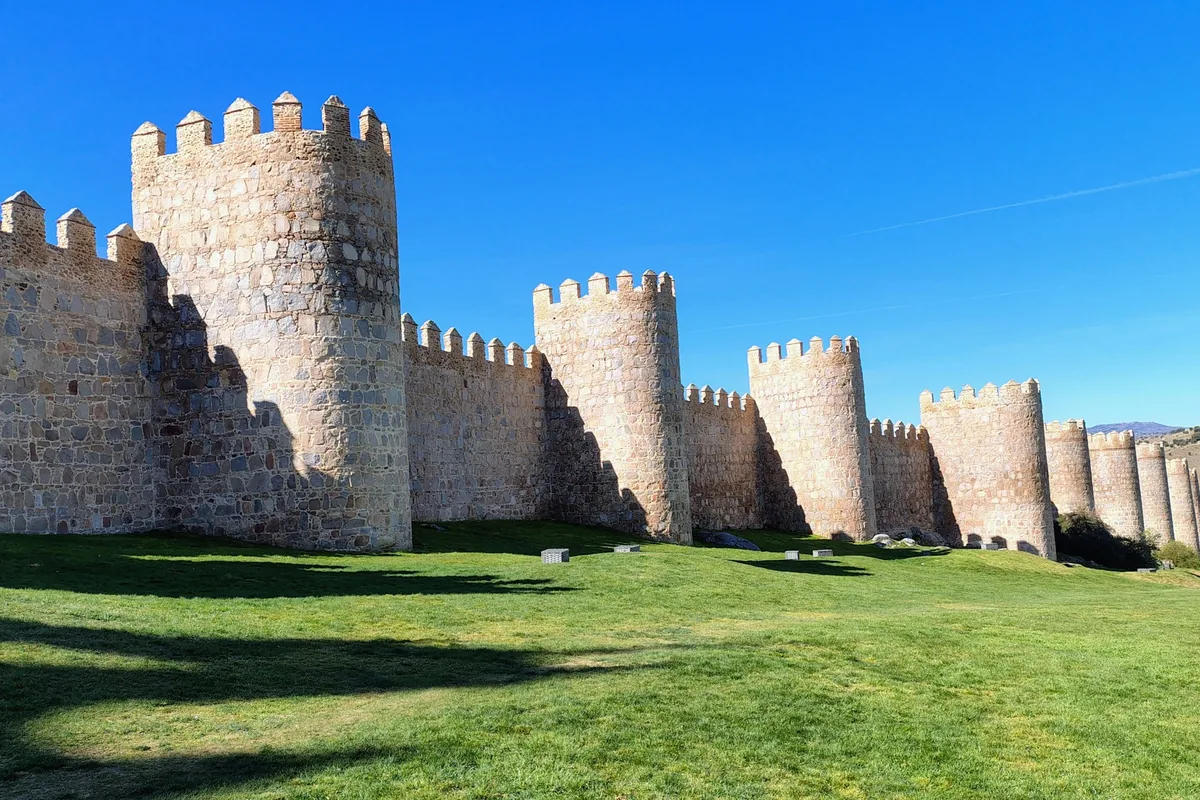
Ávila is the best day trip from Madrid for medieval walls, because its 11th century ramparts are among the most complete in Europe. The walls run for about 2.5 kilometres and are punctuated by dozens of towers and several gates. The old town and its churches outside the walls are a UNESCO World Heritage Site.
You can walk along sections of the city walls for views over the roofs and out to the plain, and the lanes inside the walls are quiet and easy to explore. The cathedral is built into the wall itself, so its apse works as part of the fortification, and the Romanesque Basilica de San Vicente, just outside the gate, is well worth a look.
Ávila is closely linked with Saint Teresa, who was born here in 1515. The convent built on her birthplace is a place of pilgrimage, and the local sweet, yemas de Santa Teresa, is an egg yolk confection you will see in every pastry shop. For a hearty lunch, try the local beef, which is famous across Spain.
For the best photographs, take a short walk or taxi ride to the Cuatro Postes viewpoint, from where the whole walled city is visible at sunset. Ávila stands at around 1,100 metres above sea level, so it is noticeably cooler than Madrid.
- How to get there: Train from Madrid Chamartín or Príncipe Pío (Renfe), usually taking well under two hours; the station is a short walk from the walls.
- How long to spend: Half a day to a full day.
- Best time to go: Spring and early autumn; winter mornings can be very cold.
- Tip: Walking the walls needs a paid ticket, and winter hours are shorter, with a Monday closure out of season, so check the current arrangements on the Ávila tourism site before you travel.
4. El Escorial
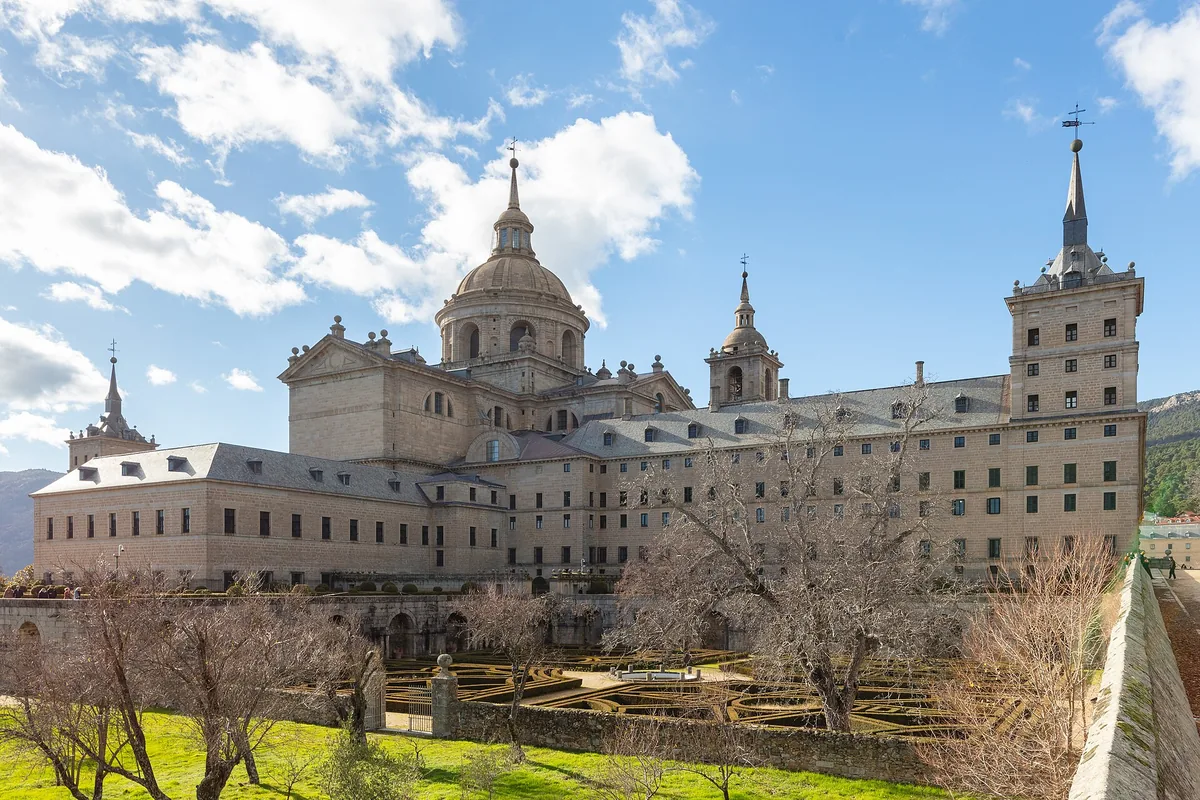
El Escorial is the best day trip from Madrid for royal history, a vast monastery and palace complex that Philip II built in the second half of the 16th century. The Royal Site of San Lorenzo de El Escorial is a UNESCO World Heritage Site and is managed by Patrimonio Nacional, which is the place to check opening days and tickets.
The complex combines a monastery, a basilica, a royal palace, a library and the Royal Pantheon, the burial place of Spanish kings. Its austere granite architecture, designed by Juan Bautista de Toledo and completed by Juan de Herrera, is a deliberate contrast to the more decorated palaces of later centuries. The painted Hall of Battles and the Royal Library are particular highlights.
The village of San Lorenzo de El Escorial sits in the foothills of the Sierra de Guadarrama, so it is cooler than Madrid in summer. After the monastery, walk through the gardens and the village for lunch, or head into the surrounding woods for a short walk.
The monastery is a short walk or local bus ride from the train station in El Escorial town, so allow time for the connection. Guided visits can add depth, because the building is rich in symbolism.
- How to get there: Cercanías train from Madrid, or the regional bus from Moncloa interchange, both taking roughly an hour; check Renfe for the current line.
- How long to spend: Half a day to a full day, depending on how much you see inside.
- Best time to go: A weekday morning, when the complex is quieter; summer is pleasantly cool here.
- Tip: The monastery is usually closed on Mondays, so plan for another day and check the current opening days on the Patrimonio Nacional website, where you can also book tickets.
5. Aranjuez
Aranjuez is the best day trip from Madrid for gardens and a royal palace, a former spring residence of the Spanish court set on the banks of the Tagus. The wider Aranjuez Cultural Landscape is a UNESCO World Heritage Site, and Patrimonio Nacional has the details for planning the Royal Palace visit.
The palace is the main sight, with richly decorated rooms such as the porcelain room, but the gardens are just as good. The Jardín del Príncipe is a huge landscaped garden that stretches along the river, and the Jardín de la Isla is a smaller, formal garden with fountains. The Casa del Labrador and the royal barges are other sights, but check what is open before you go.
Aranjuez is famed for its strawberries and asparagus, both of which feature in restaurants in spring. A heritage steam train service known as the Strawberry Train usually runs on selected weekend dates in spring and autumn from Madrid’s railway museum, so check the dates if you want to travel in style.
The station is about a 20 minute walk from the palace, which makes this an easy, flat day trip with plenty of shade from the gardens.
- How to get there: Cercanías C-3 train from Atocha, taking under an hour.
- How long to spend: A full day if you want the palace and gardens at an easy pace.
- Best time to go: Spring, for the greenery and the strawberry and asparagus season.
- Tip: Buy tickets in advance for the palace at busy weekends, and visit the gardens first thing in summer.
6. Alcalá de Henares
Alcalá de Henares is the best day trip from Madrid for literary history, because it is the birthplace of Miguel de Cervantes, author of Don Quixote. The university and historic precinct are a UNESCO World Heritage Site, and the city is easy to reach on the commuter network.
Begin on the long Calle Mayor, an arcaded street lined with cafes and shops that runs through the heart of the old town. The Museo Casa Natal de Cervantes recreates a house of Cervantes’s period and is a good introduction to the writer’s life. Nearby, the University of Alcalá, founded by Cardinal Cisneros at the end of the 15th century, has a Plateresque façade and a beautiful Paraninfo, the ceremonial hall where Spain’s top literary prize, the Cervantes Prize, is presented each year.
Alcalá is a lively university town, so there is a youthful feel and plenty of places for a relaxed lunch. The local tradition of small tapas with each drink makes it easy to graze your way through the bars around the central squares.
Because it is so close to the capital, Alcalá is a good choice if you have only half a day or are travelling with children. It is also a calmer alternative to the more famous heritage cities on a busy weekend.
- How to get there: Cercanías train from Atocha or other central stations, around 40 minutes.
- How long to spend: Half a day to a full day.
- Best time to go: Spring and autumn; the Cervantes Prize ceremony takes place in April, when the town is especially busy.
- Tip: Check the opening arrangements for the Cervantes house museum and the university’s guided visits before you go.
7. Cuenca
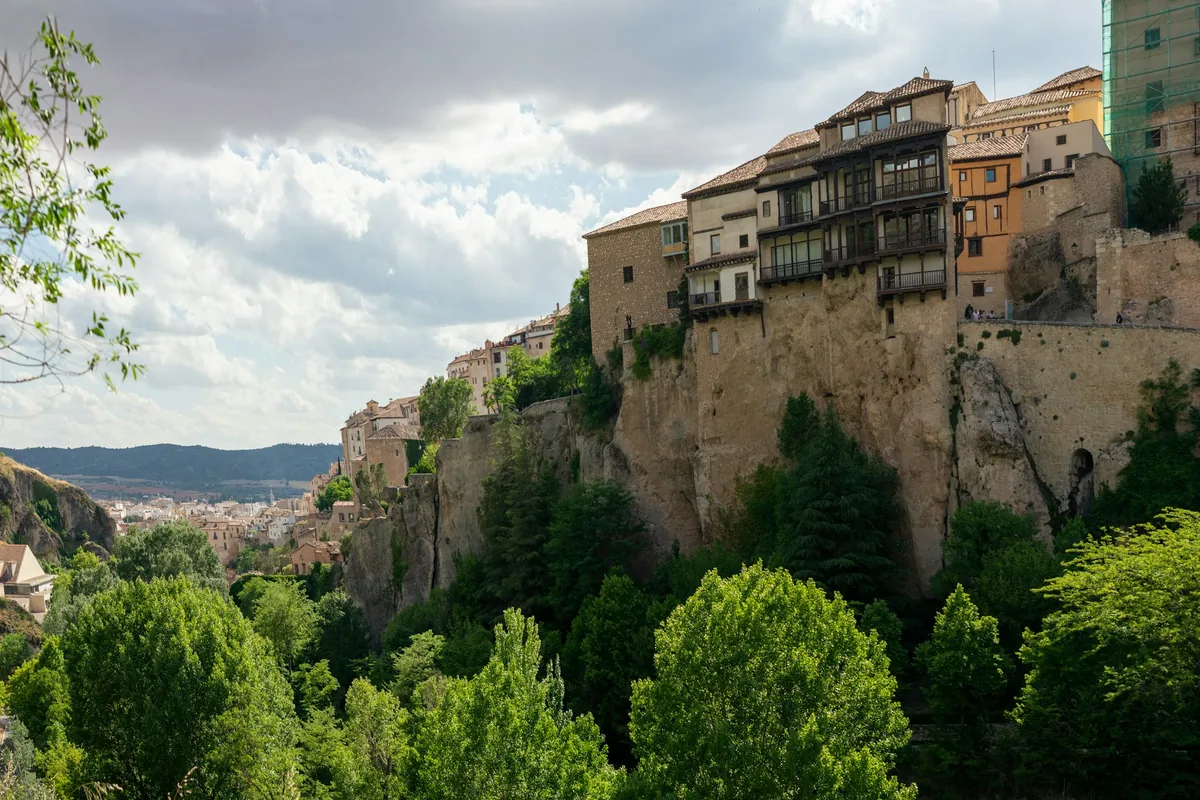
Cuenca is the best day trip from Madrid for dramatic scenery, a walled town perched on a rocky spur between two river gorges. Its historic walled town is a UNESCO World Heritage Site, and Spain’s official tourism site has more background on the town.
The headline sight is the Casas Colgadas, the hanging houses, whose wooden balconies overhang the Huécar gorge. One of them houses the Museum of Spanish Abstract Art, founded by the painter Fernando Zóbel, which is a surprising and excellent museum for a small town. Cross the Puente de San Pablo, the footbridge over the gorge, for views back towards the houses and the old town.
The Gothic cathedral sits on the Plaza Mayor, and the lanes around it have small cafes and shops. For a local meal, look for morteruelo, a rich game pâté-style dish, and resolí, the sweet local liqueur. The steep old town makes for a good walk, so wear sturdy shoes.
The fast train stops at Cuenca’s Fernando Zóbel station, which is a few kilometres from the old town, so you will need a bus or taxi for the last leg. If you have a car or join a tour, the rock formations of the Ciudad Encantada nature area are also nearby.
- How to get there: High-speed train from Madrid Atocha or Chamartín, about an hour, then a city bus or taxi up to the old town.
- How long to spend: A full day, with a morning train and an evening return.
- Best time to go: Spring or autumn; the old town is hilly and hot in midsummer.
- Tip: Check the last train back to Madrid before you plan your evening.
8. Salamanca
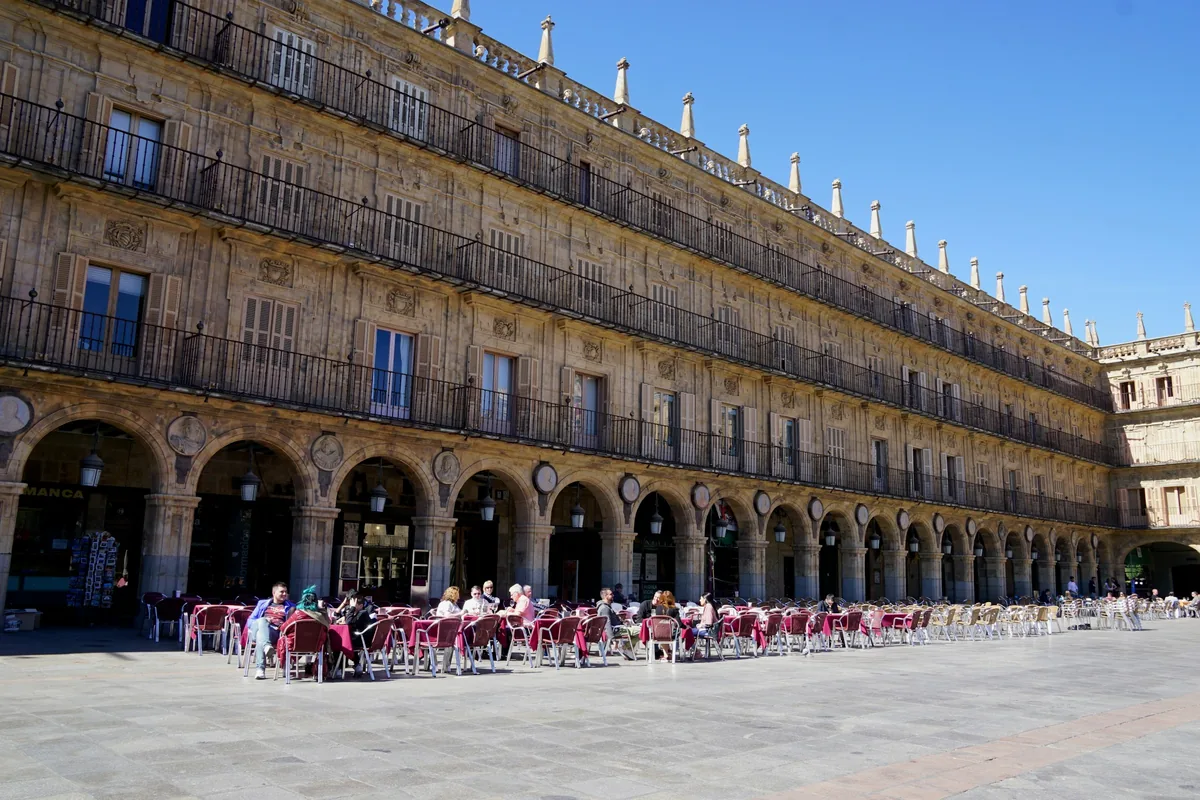
Salamanca is the best day trip from Madrid for a grand historic city with a student buzz, and it is far enough away that it works best with an early start. The golden sandstone old town is a UNESCO World Heritage Site.
The centrepiece is the Plaza Mayor, a vast Baroque square lined with arcades that is usually described as one of the most beautiful in Spain. Close by, the University of Salamanca, founded in 1218, has a richly carved façade, and visitors traditionally try to spot the small frog hidden in the stonework. Opposite, the Casa de las Conchas is decorated with hundreds of carved shells.
Salamanca has two cathedrals side by side, the Old Cathedral and the New Cathedral, and you can climb for views over the rooftops. The Convento de San Esteban and the art nouveau Casa Lis museum are good additions if you have time.
Food here is hearty. Look for jamón ibérico, local cured meats and hornazo, a savoury pie traditionally eaten around Easter. Student-run bars keep prices reasonable, and the squares fill up in the evening.
Trains arrive at the main station, which is a walk from the centre, but the city is compact and easy to explore on foot.
- How to get there: Alvia train from Madrid Chamartín, around 1.5 hours.
- How long to spend: A long full day; consider staying overnight if you want a slower pace.
- Best time to go: Spring and autumn; winters are cold and summers can be hot.
- Tip: Book the first train out and the last convenient train back, and check Renfe for days when services are reduced.
9. Chinchón
Chinchón is the best day trip from Madrid for a small-town atmosphere, a village known for its extraordinary Plaza Mayor. The irregular square is surrounded by timber balconies on several levels, and it has long been used for festivals, plays and, historically, bullfights.
Order a drink on one of the terraces and watch life go by. Behind the square, the Church of Nuestra Señora de la Asunción is associated with the painter Goya, whose brother was a priest here, and the town’s old streets climb gently around it. A former Augustinian convent has been converted into a parador hotel, a pleasant place for a coffee.
Chinchón is famous for its anís, an aniseed spirit, which you can taste in local shops and bars. It is also known for garlic, sopas de ajo, the garlic soup, and roast meats served in traditional restaurants around the square. Lunch is the main event here, so arrive hungry.
The village is small enough to see in a morning, which makes it a good pairing with a nearby trip, or an easy day if you want to avoid long travel. It is popular with Madrid residents at weekends, so go midweek if you can.
- How to get there: Interurban bus 337 from Plaza de Conde de Casal in Madrid, about 45 minutes to an hour.
- How long to spend: Half a day, including lunch.
- Best time to go: A weekday, or a spring or autumn weekend lunchtime.
- Tip: Check the bus operator’s timetable, which varies at weekends, and book lunch if you want a table on the square.
10. Sierra de Guadarrama (Cercedilla)
The Sierra de Guadarrama is the best day trip from Madrid if you want fresh air and a hike, because the mountains begin on the city’s doorstep. The area is protected as a national park, and the high point, Peñalara, rises above 2,400 metres.
A good base for walkers is the village of Cercedilla, which has regular transport from the capital and several marked trails. The Camino Schmid, created in 1926, is a classic route that climbs through pine forest towards the Navacerrada pass, and the stone-paved Calzada Romana leads up into the forest above the village. Routes vary in length and difficulty, so choose one that suits your fitness.
In summer the mountains are cooler than the city, and in winter there can be snow on the higher ground. Weather can change fast, so take layers, water and a map. Wildfire restrictions sometimes limit access in dry summer weather, so check the national park’s information before you go.
Note that the mountain railway above Cercedilla, towards Navacerrada and Cotos, has been closed for engineering works since 2024, with reopening expected around the end of 2026, so do not plan around it without checking the current status on Renfe’s site.
- How to get there: Cercanías train to Cercedilla, or bus 684 from Moncloa interchange, around an hour; check Renfe for the current line.
- How long to spend: A full day for a proper walk; a half day for a gentle route.
- Best time to go: Late spring and early autumn, for comfortable temperatures.
- Tip: Download or print your route in advance, because mobile signal can be patchy in the forest.
How to pick the right day trip from Madrid
Choose by the kind of day you want. For history, pick Toledo, Segovia or Ávila. For royal sites and gardens, choose El Escorial or Aranjuez. For scenery and something different, Cuenca is the standout, and for fresh air, head for the Sierra de Guadarrama.
Distance matters too. Toledo, Segovia, Alcalá and Aranjuez are the easiest if you want a short journey and more time on the ground. Salamanca and Cuenca are longer days that reward an early start. If you are travelling with children or an older relative, the shorter trips are usually the most relaxed.
Suggested plans for 1, 2 or 3 days
One day: Toledo or Segovia. Take a morning train, see the cathedral and one major sight, have a long lunch and return in the evening.
Two days: Pair a historic city with a royal site. Spend one day in Segovia and another at El Escorial or Aranjuez, or split the days between Toledo and Alcalá de Henares.
Three days: Add a longer trip. Try Toledo on day one, Ávila or Segovia on day two, and Salamanca or Cuenca on day three. You can also fit a lazy lunch in Chinchón or a mountain walk in the Sierra de Guadarrama on a lighter day.
Getting around
Most day trips use Madrid’s rail hubs. Atocha serves Toledo, Aranjuez and Alcalá de Henares as well as the high-speed lines, while Chamartín serves Ávila, Salamanca and trains to the north. Buses leave from interchanges such as Moncloa and Plaza de Conde de Casal.
Fast trains need a reserved seat, so book in advance for weekends and holidays. Commuter Cercanías trains are cheaper and more flexible, with no seat reservation. Check Renfe for current timetables and the correct station for each trip, and allow time for the local bus or taxi from stations that sit outside the old town, such as Segovia-Guiomar and Cuenca.
Where to stay in Madrid for day trips
Choose a base near the station you will use most. The area around Atocha and the Retiro suits trips to Toledo, Aranjuez and Alcalá. Chamartín and the northern business district suit Ávila and Salamanca, while Moncloa and the west side are handy for buses to El Escorial and the Sierra de Guadarrama.
The centre, around Sol and Gran Vía, has the widest choice of hotels and good metro links to every station, which is why many visitors simply stay there. For an evening in the city itself, see our guide to the best bars in Madrid. If you plan one of the longer trips, such as Salamanca or Cuenca, consider spending a night in the destination.
Budget guidance
Shoestring: Choose Cercanías trains and buses, pack a picnic and focus on the free streets and viewpoints in Toledo, Ávila, Alcalá and Chinchón.
Mid-range: Add a fast train to Segovia or Cuenca, pay for one or two main sights, and enjoy a traditional lunch.
Comfortable: Book reserved seats, guided visits at El Escorial or Aranjuez, a long lunch of roast suckling pig in Segovia and, if you like, an overnight stay in Salamanca.
Many sights have free or reduced entry for some groups or at certain times, so check each official site before you pay.
Frequently Asked Questions
What is the best day trip from Madrid?
Toledo is the most popular choice, and it is a short fast train ride from Atocha. Segovia is a close second, thanks to its Roman aqueduct and castle.
Which day trips from Madrid can I do by train?
Toledo, Segovia, Ávila, El Escorial, Aranjuez, Alcalá de Henares, Cuenca, Salamanca and Cercedilla all have train options. Chinchón is easiest by bus. Check Renfe for current services.
Can I visit Toledo and Segovia in one day?
It is possible but rushed, because the two cities are in different directions and need separate train journeys. You will see more by giving each its own day.
What is the closest day trip to Madrid?
Alcalá de Henares and Aranjuez are among the closest by train, taking well under an hour. Toledo and Segovia are also quick by fast train.
Do I need to book day trips from Madrid in advance?
Fast trains and popular sights such as the Aranjuez and El Escorial palaces are best booked ahead, especially at weekends and in spring. Check each official site for current rules.
Are guided tours worth it?
Tours save time on logistics, which helps if you want to see several places in one day. Independent travel by train is usually cheaper and gives you more freedom.
Discover More of Spain and Europe
Once you have picked your Madrid day trips, see where to eat in Barcelona if Spain’s east coast is next on your list. For another capital with easy excursions, read our guide to the best day trips from Lisbon, and for wider inspiration try our top Christmas markets in Europe if you are planning a winter break. Staying in the capital for a few nights? Our guide to the best places to eat in Madrid helps you plan meals around your excursions.