Last updated: October 2026
Prague has two coffee cultures that sit side by side: grand, chandeliered coffee houses from the early 1900s, and small specialty roasters that serve filter coffee in a few seats. If you want the best cafes in Prague, start with the historic coffee houses such as Café Savoy, Café Louvre and Café Slavia, then add a specialty stop such as Místo or Onesip Coffee. Most of the best cafes are within walking distance of each other, and many are along tram lines, so you can fit several into one day.
This guide covers ten cafes, each with a practical box. Further down you will find how to pick between them, a free printable 3-day Prague cafe itinerary, where to stay, getting around and budget guidance. For wider trip planning, the official Prague tourism website is a good starting point, and if you want a full meal as well, our guide to the best places to eat in Prague covers restaurants and traditional Czech food.
Cafes change faster than monuments. Opening hours, addresses and menus move between seasons, so this guide avoids exact times and prices. Where something could not be confirmed, it says so, so check before you go.
Quick answer: What are the best cafes in Prague? For a classic Art Nouveau coffee house, go to Café Savoy in Malá Strana or the Kavárna Obecní dům in the Municipal House. For literary history, choose Café Louvre or Café Slavia, and for a Cubist interior, visit Grand Café Orient. For serious specialty coffee, go to Místo in Dejvice, Můj šálek kávy in Karlín or Onesip Coffee in the Old Town.
Free printable itinerary
Planning a trip? Download our 3-Day Prague Cafe Itinerary as a PDF: the day-by-day plan plus all 10 places with directions and map links. Print it or keep it on your phone.
Quick comparison: best cafes in Prague
| Cafe | Area | Best for | Price tier |
|---|---|---|---|
| Café Savoy | Malá Strana | An ornate ceiling and pastries | Mid-range |
| Café Louvre | Nové Město | Literary history | Mid-range |
| Café Slavia | Old Town (Národní) | Views of the National Theatre | Mid-range |
| Kavárna Obecní dům | Old Town | Art Nouveau grandeur | Mid-range to comfortable |
| Grand Café Orient | Old Town | A Cubist interior | Mid-range |
| Café Imperial | Nové Město | Ceramic tiles and mosaics | Mid-range to comfortable |
| Kavárna Místo | Dejvice | Specialty coffee and brunch | Mid-range |
| Můj šálek kávy | Karlín | Roastery coffee and brunch | Mid-range |
| Onesip Coffee | Old Town | A tiny espresso bar | Cheap to mid-range |
| EMA Espresso Bar | Nové Město | A quick, quality espresso | Cheap to mid-range |
1. Café Savoy
Café Savoy is the most elegant coffee house in Prague to many visitors, with a neo-Renaissance ceiling, tall windows and a pastry counter. It sits on Vítězná in Malá Strana, a short walk from the river, and it first opened in 1893.
The room is the attraction. A painted ceiling, glass chandeliers and bentwood chairs give it the feel of a grand Viennese cafe. It is run by the Ambiente restaurant group, and its pastries and cakes are baked daily, so you can order them alongside coffee or take them away.
Savoy is busy at breakfast and brunch, especially at weekends, and a reservation is sensible if you want a table at a peak time. For a quieter visit, go on a weekday morning or mid-afternoon, when you can have the room almost to yourself. Check the official Café Savoy site for current booking rules, as they can change by season.
It is a good first stop for a visit to Malá Strana, since Petřín hill, the Lennon Wall and the river are all within walking distance. The coffee is dependable rather than adventurous, so choose it for the setting and the cake.
- How to get there: Tram to Újezd, then a short walk along Vítězná.
- How long to spend: One to two hours, longer for a full breakfast.
- Best time to go: A weekday morning, before the brunch crowd arrives.
- Tip: Book ahead for weekend brunch, and sit near the windows for the best light on the ceiling.
2. Café Louvre
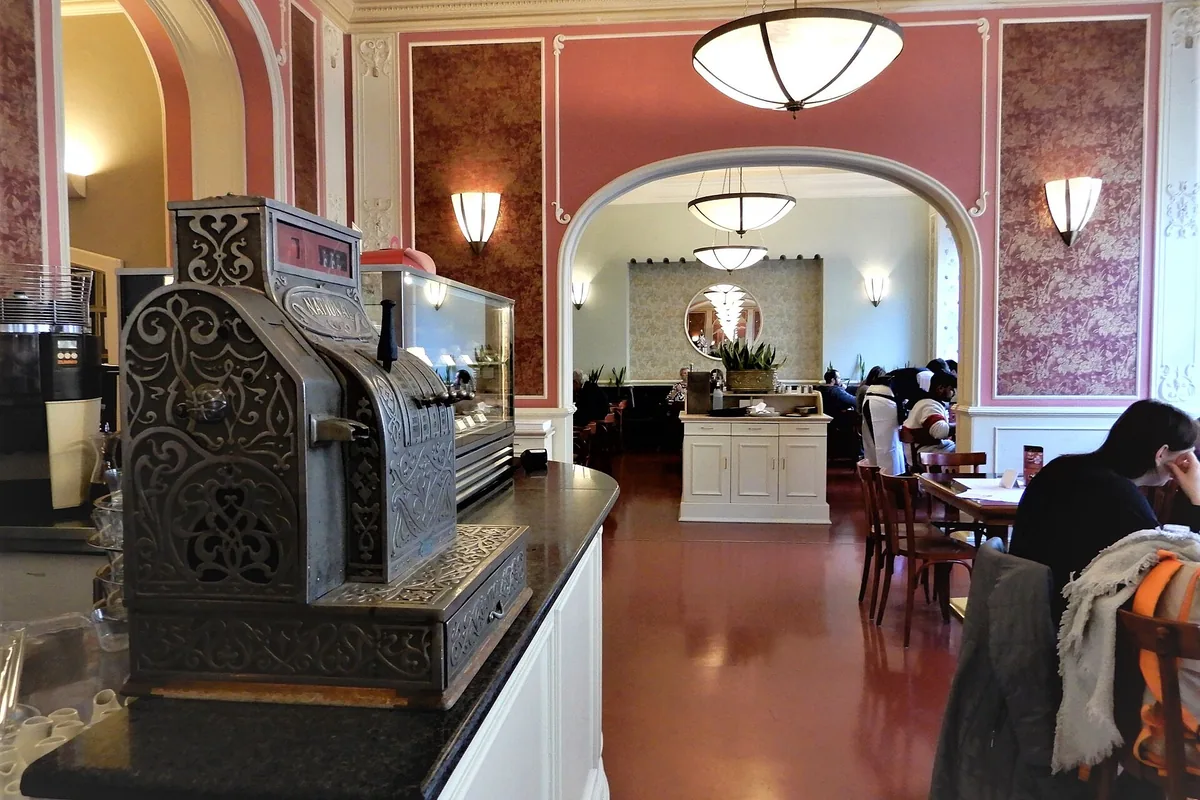
Café Louvre is one of the great survivors of Prague’s early twentieth-century cafe scene, and it is still popular with locals. It opened in 1902 on the first floor of a building on Národní třída (then called Ferdinand Avenue), and its high windows and long rooms feel more Viennese than French.
The cafe is known for its literary and scientific past. Franz Kafka belonged to a philosophical discussion circle that met here from 1902, and Albert Einstein is associated with the cafe during his years in Prague. The Czechoslovak PEN Club also held its founding meeting here in 1925, with the writer Karel Čapek as its first chairman. The communists nationalised it in 1948, and it was restored and reopened in 1992, so what you see today is a careful revival rather than an untouched original.
The menu runs from breakfast to dinner, with coffee, cakes, light meals and traditional Czech dishes, and the atmosphere is relaxed, not formal. Details of the history and current opening arrangements are on the Café Louvre website.
Because it is a large, busy cafe, it is useful when other places are full. It is also a good stop between the National Theatre and Wenceslas Square.
- How to get there: Tram or Metro to Národní třída, a short walk from the station.
- How long to spend: One to two hours for coffee and cake, longer for a meal.
- Best time to go: Mid-morning or mid-afternoon, which are calmer than lunch.
- Tip: Look at the window seats, which give a view over the street and a sense of how the cafe worked as a meeting place.
3. Café Slavia
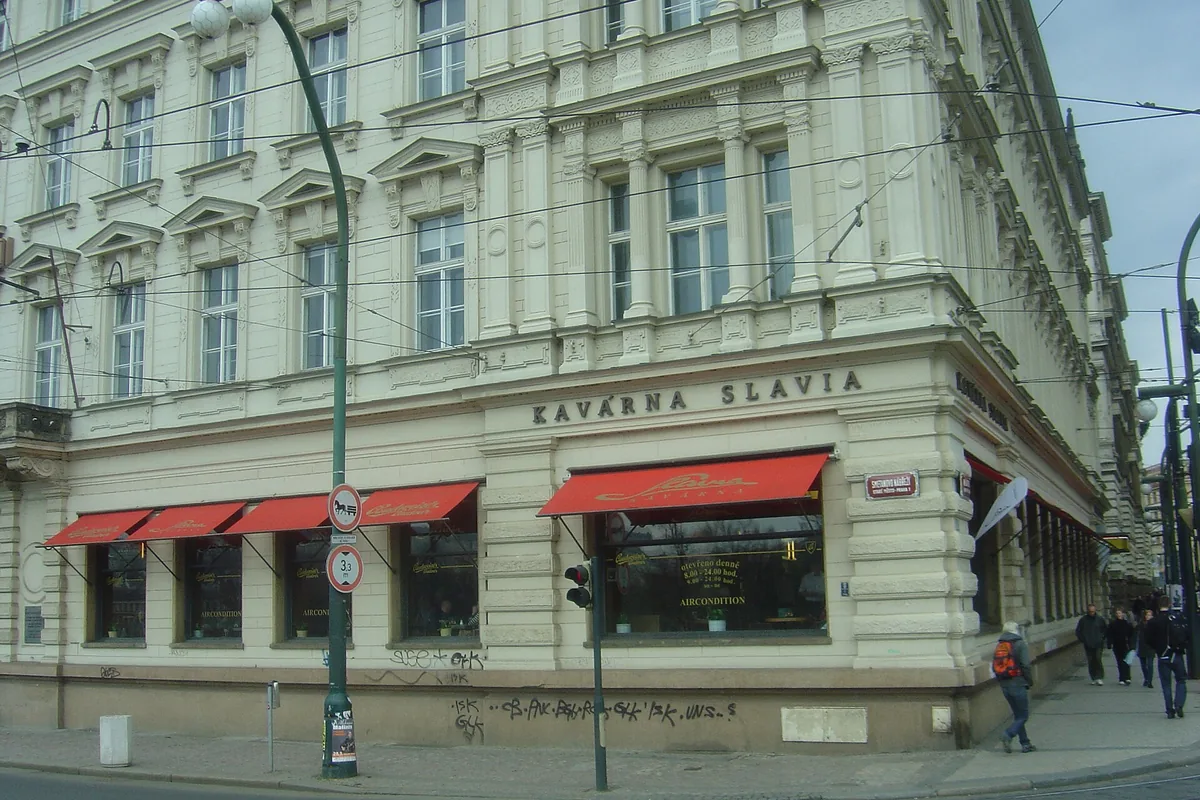
Café Slavia is the cafe most associated with Prague’s artists and dissidents, and it has the best view of the National Theatre. It opened in 1884 on the corner of Národní and Smetanovo nábřeží, opposite the theatre, and was built as a meeting place for writers, actors and artists.
The large windows look over the river and the theatre, and the room has the soft furniture and chandeliers of an older era. Writers, actors and political figures are all part of its history, and it is often named as a favourite of Václav Havel. It serves coffee, cakes and meals, and it is a pleasant place to sit for an hour when the weather is wet.
The view is the main reason to go, so ask for a window table if you can. The coffee is standard, and the pastries are a good match for a slow afternoon. As with other famous cafes, the busiest times are around lunch and in the early evening, so mid-afternoon on a weekday is easier.
Slavia works well with a walk along the river, a visit to the National Theatre or a short trip across the Legion Bridge. Check the Café Slavia website for current opening arrangements before you go.
- How to get there: Tram to Národní divadlo, then a short walk to the river.
- How long to spend: One to two hours.
- Best time to go: A weekday afternoon, ideally with a window table.
- Tip: Arrive just before the National Theatre crowd for a better chance of a view table.
4. Kavárna Obecní dům
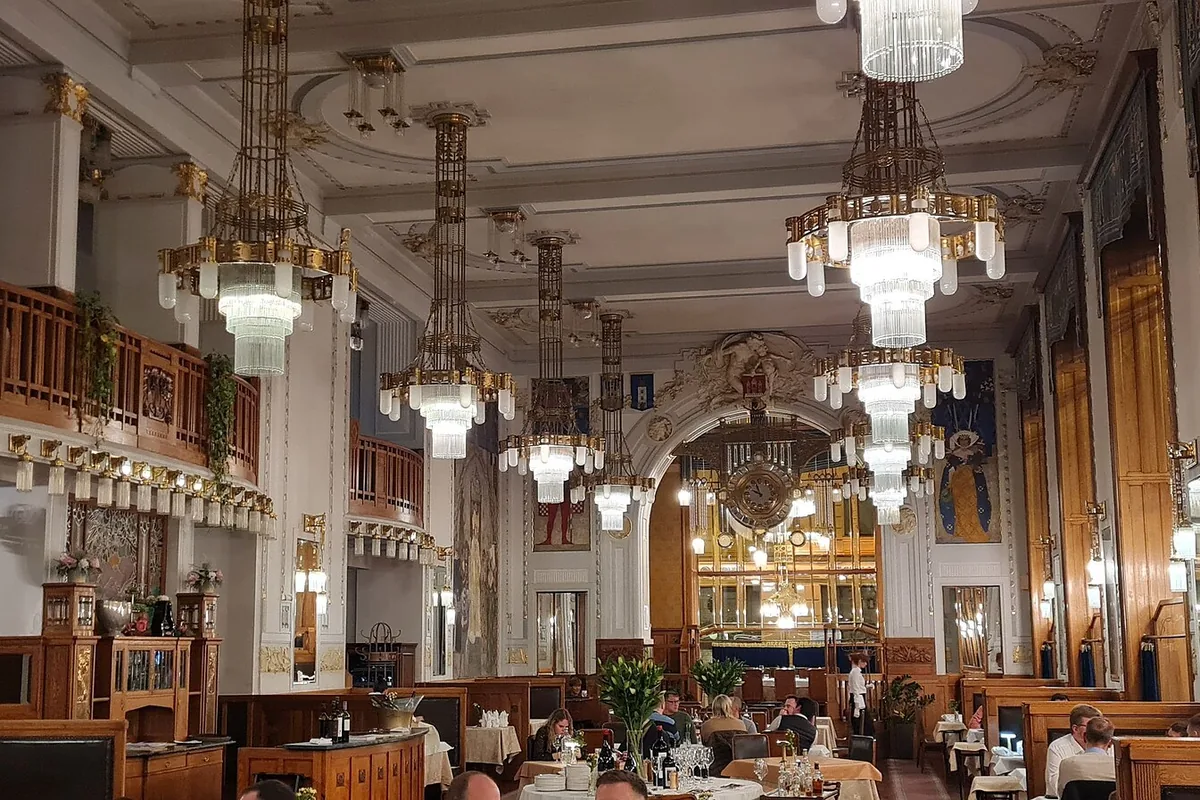
The Kavárna Obecní dům is one of the grandest cafe interiors in Prague, set on the ground floor of the Art Nouveau Municipal House. The building was built between 1905 and 1912, and Czechoslovak independence was declared here in 1918, so the cafe sits in a landmark in its own right.
Inside, antique-style chandeliers, mahogany tables and a decorative fountain give a sense of Prague’s grand cafe era in the early twentieth century. A cake trolley and a long list of coffee drinks make it a classic place for a late-morning break. Food is generally seen as secondary to the setting, so this is a place to come for a coffee and a slice of something sweet.
Because the building is so popular, the cafe is busy, especially in the afternoon and on weekends. The Municipal House also offers guided tours of its main rooms, which are worth considering if you want to see the Smetana Hall and other interiors. Check the cafe’s official website for current opening arrangements and booking rules.
The cafe is next to the Powder Tower and the start of the Royal Way, so it fits easily into a walk through the Old Town. Choose it when you want a sense of occasion and do not mind paying a premium for the room.
- How to get there: Metro to Náměstí Republiky, then a one-minute walk.
- How long to spend: One hour for coffee and cake, or two with a tour.
- Best time to go: Early morning, before the tour groups arrive.
- Tip: Combine the visit with a tour of the Municipal House, which is sold separately.
5. Grand Café Orient
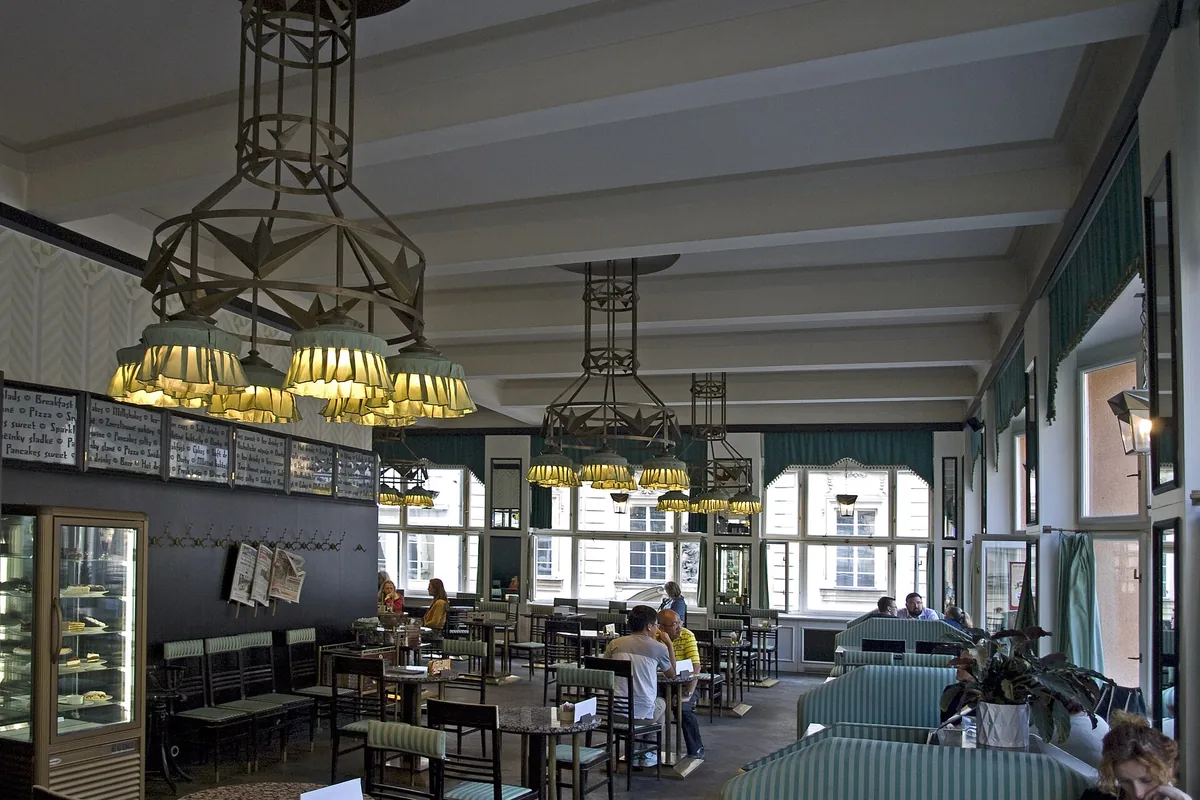
Grand Café Orient is widely described as the only Cubist cafe in the world, and it is one of the most unusual interiors in Prague. It is on the first floor of the House of the Black Madonna on Ovocný trh, a Cubist building designed by Josef Gočár and completed in the early 1910s.
The cafe opened with the building but closed in the 1920s as Cubism fell out of fashion. After the space had been used as offices, a restoration in the 2000s brought it back, using old black-and-white photographs to recreate the original Cubist furniture and lighting.
Two upper floors of the building house the Czech Cubism exhibition of the Museum of Decorative Arts in Prague, so you can combine the cafe with a short museum visit. Check the official Prague tourism listing for the museum for current opening arrangements, as the museum is usually closed on Mondays.
Orient is smaller than Savoy or the Municipal House, so a table is easier to find outside the busiest hours. It is also close to the Powder Tower and Old Town Square, which makes it a convenient stop on a walk through the centre.
- How to get there: Metro to Náměstí Republiky, then a short walk along Celetná.
- How long to spend: One hour for coffee, or two with the museum.
- Best time to go: A weekday morning, when the room is calm and the light is good.
- Tip: The claim to be the only Cubist cafe in the world comes from travel guides, so enjoy it as a local boast rather than a verified record.
6. Café Imperial
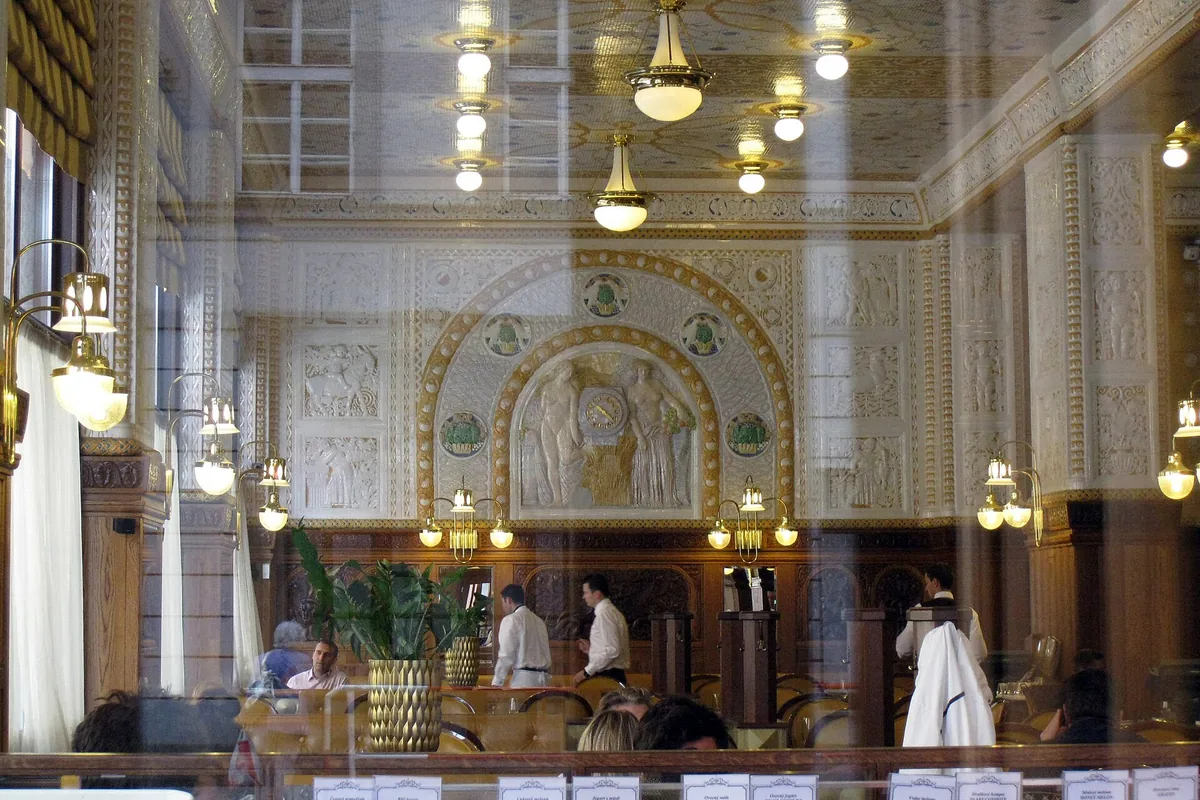
Café Imperial is the cafe to visit for tiles, with ceramic walls, mosaic pillars and a mosaic ceiling that make it feel like a decorated hall. It is on Na Poříčí in Nové Město, in the same building as the Hotel Imperial, and it has operated since 1914.
The tiled walls and pillars survived a renovation that updated the furniture and menu. The interior uses white and brown ceramics, with Art Nouveau figures such as a hunter and a stag among the patterns. The cafe names Franz Kafka among its past customers, and the composer Janáček is often said to have been a regular too, although that is harder to confirm.
The menu mixes Czech and European dishes, and the cafe is open for breakfast, lunch and dinner. Coffee and cake are good for a break, but this is also one of the better cafes in this guide for a full meal. Booking is sensible for lunch and dinner, and the Café Imperial website takes online reservations and suggests booking well ahead.
Na Poříčí is a busy shopping street rather than a tourist lane, so the cafe gets a good mix of locals and visitors. It is a short walk from the Municipal House and Grand Café Orient, so the three together make a good day of historic interiors.
- How to get there: Metro to Náměstí Republiky, then a short walk along Na Poříčí.
- How long to spend: One to two hours, or longer for a meal.
- Best time to go: Mid-morning, when the cafe is calm and the light shows the tiles.
- Tip: Look up at the ceiling and the pillars before you sit down, as the mosaics are the main attraction.
7. Kavárna Místo
Kavárna Místo is one of the best specialty cafes in Prague, set in a ground-floor space on Bubenečská street in the residential district of Dejvice. It is run by the Prague specialty coffee roaster Doubleshot, and it is known for careful filter coffee and a good breakfast menu.
The room is bright, with a Nordic feel and a mix of tables where locals work and meet. Coffee is the focus, with espresso drinks and hand-brewed filter coffees made from beans roasted by the same team. Breakfast and brunch dishes are popular, and the kitchen also serves lunch and dinner, so it can be a full meal as well as a coffee stop.
Dejvice is away from the main tourist area, so a visit here gives you a feel for everyday Prague. The district has wide streets and the Stromovka park nearby. Check the Doubleshot website for booking, and the cafe is worth the tram ride on a day when you want to be away from the centre.
Details of the menu and opening arrangements change with the season, so check the Doubleshot website before you go. Místo’s sister cafe, Můj šálek kávy, is in Karlín and makes a natural pair for a second day.
- How to get there: Metro to Dejvická, then a short walk or tram ride.
- How long to spend: One to two hours.
- Best time to go: A weekday morning for brunch, or mid-afternoon for a quieter coffee.
- Tip: Order a filter coffee to see what the roasters can do, rather than defaulting to a flat white.
8. Můj šálek kávy
Můj šálek kávy, which means “my cup of coffee”, is an early third-wave cafe on Křižíkova street in Karlín, run by the Doubleshot roasters. Karlín is a former industrial district that has become one of the most lively neighbourhoods in Prague for cafes and restaurants.
The cafe is known for house-roasted espresso, filter coffee and a popular brunch. The coffee is the draw, and the staff are used to explaining the beans and the brewing methods, so it is a good place to try something new. The menu changes with the season, so look at what is on the board before ordering.
Karlín is easy to reach from the centre, and a visit combines well with a walk along the river and a look at the new buildings along the main street. There are other good cafes and bakeries nearby, so you can make a morning of the district.
Opening arrangements vary, so check the Můj šálek kávy website before you set out. Weekends are busy and the cafe takes bookings for weekdays only, so book a weekday table or arrive early at the weekend.
- How to get there: Metro to Křižíkova, then a short walk along Křižíkova street.
- How long to spend: One to two hours.
- Best time to go: A weekday morning, when the room is calm.
- Tip: Combine it with Místo on the same day for a comparison of the same roaster in two settings.
9. Onesip Coffee
Onesip Coffee is a tiny espresso bar in the Old Town, and it is often named by baristas as one of the best coffee stops in Prague. It sits on a quiet street near the Convent of St Agnes, a short walk from Old Town Square, and has only a handful of seats.
The focus is the drink. The small team serve espresso and filter coffee made from carefully sourced beans, and the pace is slower than a chain, so expect to wait for a table at busy times. It is a good place to try a coffee on its own, without pastries or a full menu.
Because it is small, Onesip is better for a short stop than for a long sit. It is also a good place for conversation with the staff if you want to learn about the beans on offer. The street is calm, which makes a change from the crowds around the main square.
The bar is on Haštalská, and it has a sister cafe on Mánesova in Vinohrady. Check the Prague tourism listing or a map for current opening arrangements, and treat it as a quick stop rather than a fixed point in your day.
- How to get there: Walk from Old Town Square, or take the Metro to Náměstí Republiky and walk.
- How long to spend: 20 to 40 minutes.
- Best time to go: Mid-morning on a weekday, to avoid a wait for a seat.
- Tip: Order a single-origin espresso or filter coffee and ask which beans are on offer that day.
10. EMA Espresso Bar
EMA Espresso Bar is a lively, central stop for a quick, high-quality espresso, and it is one of the best-known specialty coffee names in Prague. Its first bar opened on Na Florenci in 2013, near Masarykovo nádraží station, and the business now roasts its own coffee as Alf&Bet.
The style is relaxed and local, with a counter and a few tables. It is better for a fast espresso or flat white than a long meal, and it is a good option when you want a reliable coffee between sights.
The original bar on Na Florenci is the most central branch and the one to aim for, and there are newer branches in Karlín, Libeň and Holešovice. Check the EMA website for current opening arrangements. It is a useful choice for a morning start before a day in the centre.
EMA is a good counterpoint to the grand cafes in this guide. If you have spent the morning in a chandeliered room, a short stop at a counter lets you compare the two coffee styles. It also works well as a quick stop on the way to the station or a tram, and it is easy to pair with a stroll through nearby Nové Město streets.
- How to get there: Metro to Náměstí Republiky or Florenc, then a short walk to Na Florenci.
- How long to spend: 20 to 40 minutes.
- Best time to go: Early morning, for a coffee before a day of sightseeing.
- Tip: If you are staying in Karlín, the branch in Palác Karlín saves a trip into the centre.
How to pick the right Prague cafe
Start with what you want from the visit. For atmosphere and history, choose Café Savoy, Café Louvre, Café Slavia, the Municipal House or Grand Café Orient. For specialty coffee, choose Místo, Můj šálek kávy, Onesip or EMA.
Next, think about where you will be. In the Old Town, the Municipal House, Grand Café Orient and Onesip are all close together. In Malá Strana, Café Savoy is the obvious choice, and near Národní třída you have Louvre and Slavia within a few minutes of each other.
Finally, think about timing. The historic cafes are busiest at weekends and at lunch, so go on a weekday morning or mid-afternoon. The small specialty bars are better for a quick stop, and the roastery cafes in Dejvice and Karlín are a good choice if you want brunch.
Suggested cafe plans for 1, 2 or 3 days
You can taste the best of Prague’s cafe scene in three days by grouping the stops by area. The itinerary below is also available as a free printable PDF from the download box near the top of this guide.
Day 1: Old Town and Nové Město
Start with coffee and cake at the Kavárna Obecní dům, then walk along Celetná to Grand Café Orient for a look at the Cubist interior. Stop at Onesip Coffee for an espresso, then take the Metro or walk to Café Imperial for lunch and a look at its tiles.
Day 2: Malá Strana and the river
Begin with breakfast at Café Savoy, then spend the late morning in Malá Strana or on Petřín hill. In the afternoon, walk along the river to Café Slavia for a view of the National Theatre, then continue to Café Louvre for coffee and cake. Finish with a coffee at EMA if you want a final espresso.
Day 3: Dejvice and Karlín
Take the Metro to Dejvice for brunch at Kavárna Místo, then walk in the nearby parks. In the afternoon, travel to Karlín for coffee at Můj šálek kávy and a walk through the district. Both cafes are run by the same roasters, so you can compare the two.
Where to stay for Prague cafes
For the most cafes on foot, stay in the Old Town or Nové Město, where the Municipal House, Grand Café Orient, Café Imperial, Café Louvre and Onesip are all close together. The area is lively and busy, so ask for a quiet room if you are a light sleeper.
For a calmer base with river views, choose Malá Strana, where Café Savoy is nearby and the streets are quiet in the evening. For a local feel and easy Metro access, Karlín and Dejvice are good choices, with cafes, restaurants and good transport links.
If you plan to visit the specialty roasters, a hotel near a Metro line makes it easier to reach Dejvice and Karlín without changing trains.
Getting around Prague
Prague has an efficient public transport network of Metro, trams and buses, and most of the cafes in this guide are close to a stop. Use the Prague public transport website for routes, tickets and timetables.
The Old Town and Nové Město are easy to explore on foot, and the distances between the historic cafes are short. For Dejvice and Karlín, a Metro or tram ride is the easiest way, and both are a short journey from the centre.
Cobbled streets and hills can be tiring, so wear comfortable shoes, especially if you plan a long day of cafe visits. In winter, trams can be crowded and the pavements slippery, so allow extra time. If you are visiting in December, our guide to the best Christmas markets in Europe covers the Prague market on Old Town Square, a short walk from several of the historic cafes here.
Budget guidance
For a lower spend, choose the small espresso bars such as Onesip and EMA, where a single coffee is the whole visit. A bakery pastry or a simple breakfast keeps costs down, and many cafes offer a lunch special on weekdays.
At the middle level, a coffee and cake at Café Savoy, Café Louvre, Café Slavia or Grand Café Orient is a reasonable treat. Prices are higher than at a local cafe because you are paying for the setting, so one drink and a slice of cake is often better value than a full meal.
For a special occasion, the Municipal House and Café Imperial suit a longer visit, especially if you book a table for lunch or dinner. Brunch at Místo or Můj šálek kávy sits in between, with good quality and a relaxed atmosphere.
Frequently Asked Questions
What is the best cafe in Prague?
For atmosphere, Café Savoy and the Kavárna Obecní dům are the most elegant. For specialty coffee, Místo in Dejvice and Můj šálek kávy in Karlín are the strongest choices, and Onesip Coffee is the best small espresso bar in the Old Town.
Which Prague cafes have the most history?
Café Louvre, opened in 1902, has links to Kafka and Einstein, and Café Slavia, opened in 1884, was a meeting place for artists and dissidents. Café Savoy first opened in 1893, and Grand Café Orient is known for its Cubist design.
Do you need to book a cafe in Prague?
Booking is a good idea for brunch at Café Savoy, for brunch at Místo (check the Doubleshot website for booking) and weekday brunch at Můj šálek kávy (which does not take weekend bookings), and for lunch or dinner at Café Imperial. Small espresso bars such as Onesip and EMA do not usually need a booking.
Is coffee expensive in Prague?
Coffee in Prague is generally cheaper than in many other European capitals, although grand historic cafes charge more for the setting. Small espresso bars are the best value for a quick drink.
What is the best area for cafes in Prague?
The Old Town and Nové Město have the most historic cafes in a small area. Karlín and Dejvice are the best districts for specialty roasters and brunch.
What is the best time to visit a cafe in Prague?
A weekday morning is the calmest time, especially at the historic cafes. Mid-afternoon is also quieter, while weekends and lunchtimes are the busiest.
Discover more of Prague
Once you have your coffee stops planned, round out your evenings with our guide to the best pubs in Prague, where Czech beer takes over from coffee.
If you are collecting coffee houses across Europe, compare Prague’s grand interiors with the historic cafes in our guide to the best cafes in Rome, and its roasters with the specialty coffee spots in our guide to the best cafes in Copenhagen.
Featured image: Photo by HoremWeb, CC BY-SA 4.0, cropped, via Wikimedia Commons