Last updated: October 2026
Tapas are less a meal than a way of spending an evening in Seville, moving from bar to bar and ordering a plate or two at each. If you are looking for the best tapas bars in Seville, start with the historic taverns around Santa Cruz and the cathedral, then cross the river to Triana for counters where the city’s own families eat. The best places are small, loud and a little cramped, which is part of the appeal.
This guide covers ten tapas bars, each with a practical box. Further down you will find how to pick between them, a free printable 3-day Seville tapas itinerary you can download, a short guide to dishes, getting around, where to stay and budget guidance. For wider trip planning, the city’s official Seville tourism site is a good place to begin, and if you want sit-down meals as well as bar snacks, our guide to the best places to eat in Seville covers restaurants, markets and cafes.
Bar details change quickly: hours, closing days and menus all move with the seasons. This guide avoids exact opening times and prices on purpose. Where something could not be confirmed, it says so, so check the venue before you go.
Quick answer: What are the best tapas bars in Seville? For history, go to El Rinconcillo, which dates to 1670, and Las Teresas in Santa Cruz. For the classics, try Bodega Santa Cruz Las Columnas and Bar Giralda. For modern cooking, Eslava and Vinería San Telmo. For a local, standing-room evening, cross to Triana for Casa Cuesta, Las Golondrinas and La Blanca Paloma.
Free printable itinerary
Planning a trip? Download our Suggested tapas plans for 1, 2 or 3 days as a PDF: the day-by-day plan plus all 10 places with directions and map links. Print it or keep it on your phone.
Quick list: the best tapas bars in Seville
| Bar | Area | Best for | Price tier |
|---|---|---|---|
| 1. El Rinconcillo | North of the cathedral | A historic tavern and classic tapas | Budget to mid-range |
| 2. Bodega Santa Cruz Las Columnas | Santa Cruz | Pringá montaditos, chalked bills | Budget |
| 3. Bar Giralda | Near the cathedral | A huge menu in a former bathhouse | Budget to mid-range |
| 4. Las Teresas | Santa Cruz | Hanging hams and jamón ibérico | Mid-range to higher |
| 5. Vinería San Telmo | Edge of Santa Cruz | Creative tapas and a strong wine list | Mid-range |
| 6. Bar Alfalfa | Alfalfa | Fusion tapas, popular with locals | Budget to mid-range |
| 7. Eslava | San Lorenzo | Award-winning modern Andalusian tapas | Mid-range |
| 8. Casa Cuesta | Triana | A historic Triana tavern | Mid-range |
| 9. Las Golondrinas | Triana | A standing-room counter | Budget |
| 10. La Blanca Paloma | Triana | Stuffed aubergines and fried fish | Budget to mid-range |
1. El Rinconcillo
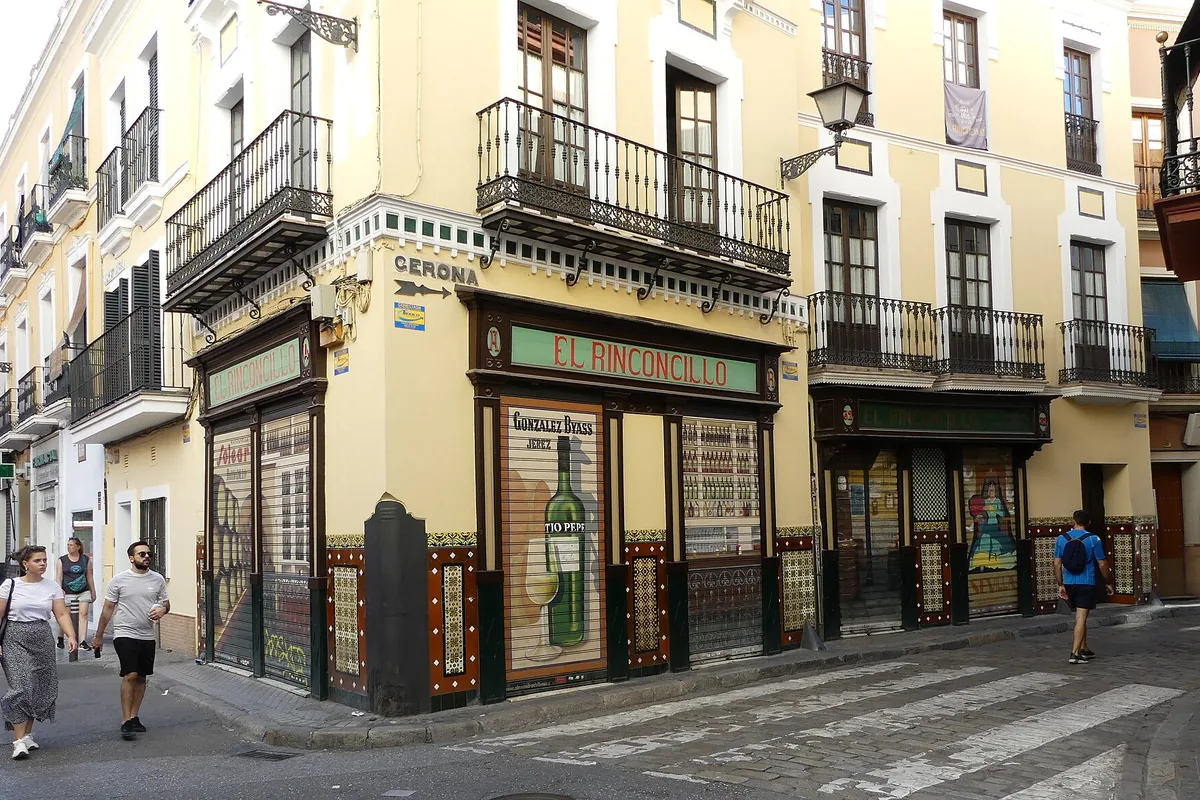
El Rinconcillo is the bar to visit if you only have time for one historic tavern. Local sources consistently date it to 1670, and the bar’s own website calls it the oldest bar in Seville (some histories point to older taverns, so treat “oldest” as its own claim). It sits on Calle Gerona, north of the cathedral, and keeps the layout of an old grocery and tavern, with tiled walls, hanging hams and a long wooden bar where staff total your order in chalk.
The menu is a catalogue of Sevillian classics. Espinacas con garbanzos, spinach stewed with chickpeas and spices, is the signature plate and a good test of what traditional Seville cooking is about. Other staples include jamón, cured meats and cheese, fried fish and small stews, all served in portions that suit sharing. The bar is also known for its manzanilla and sherry, which are the natural drinks to order.
You can eat standing at the bar, which is the most traditional way, or ask for a table in the adjoining room. The standing area gets crowded at lunch and in the early evening, particularly at weekends, so be ready to wait a few minutes. Tourists and locals share the space, and it has a reputation for being busy for good reason.
The venue has its own official website with its current details, which is worth checking for opening days and booking information. A visit here is as much about the room as the food, so plan to stay long enough to look around at the old tiles, barrels and photographs.
- Getting there: On Calle Gerona, a ten to fifteen minute walk north of the cathedral.
- Time needed: Forty-five minutes to an hour.
- Best time to go: Mid-morning or mid-afternoon, between the main meal rushes.
- Insider tip: Order the espinacas con garbanzos first, then pick a sherry that suits it.
2. Bodega Santa Cruz Las Columnas
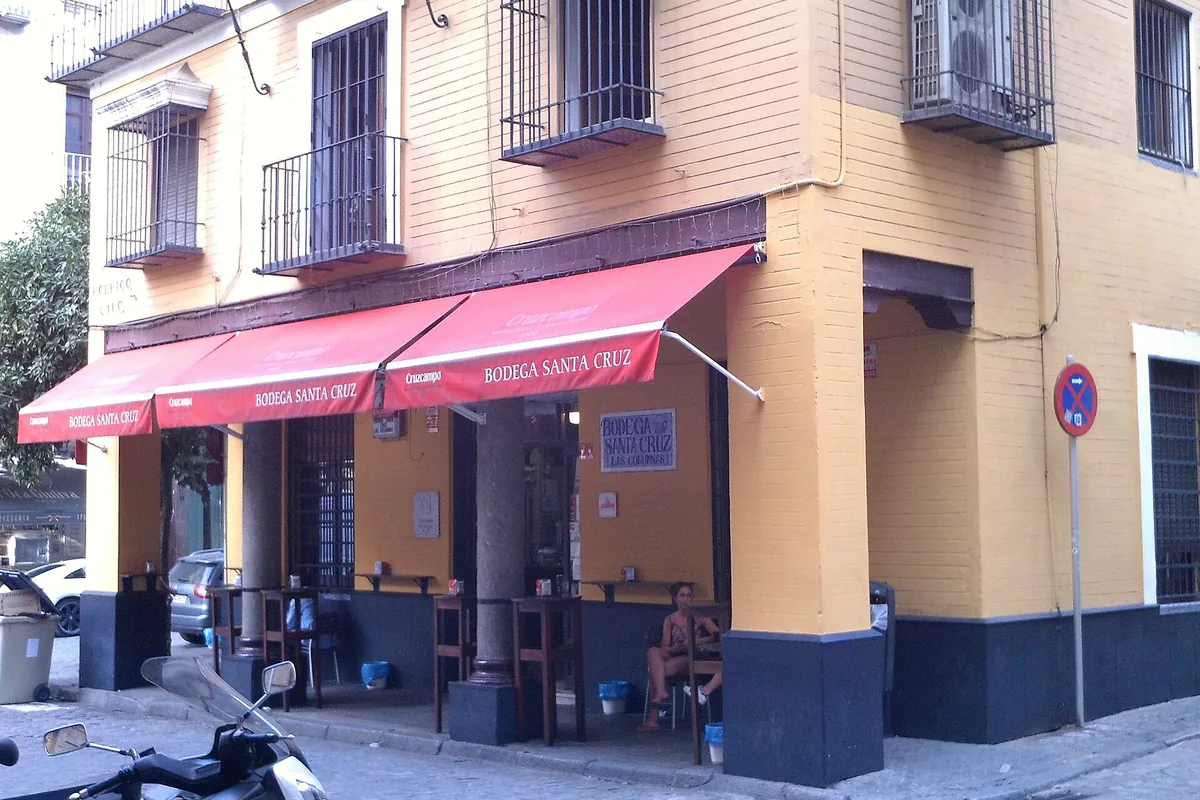
Las Columnas is a tiny, lively corner bar in Santa Cruz that works as an introduction to Seville’s tapas habits. Guides describe it as a kiosk-sized bar just up the road from the cathedral, on one of the neighbourhood’s cobbled streets. Locals and visitors crowd the pavement outside, glasses in hand, and the bar’s chalkboard is part of the show.
The traditional order is a montadito de pringá, a small bread roll filled with slow-cooked meat, which is a classic Seville bar snack. Another favourite is solomillo al whisky, pork tenderloin in a garlicky whisky sauce, which appears on many local menus and is done well here. Staff chalk your bill directly on the wooden bar, a custom that survives in a few of Seville’s older bars.
It is cheap by central Seville standards, and one recent guide says you can cover a whole small crawl here for very little. That makes it a good first stop for anyone on a budget, and a sensible place to try several local dishes without committing to a full meal.
The bar is small, so expect to eat standing up, and expect to share the pavement with other customers. It is busiest in the evening and at weekends. A good tactic is to arrive early, order two or three plates, and then move on to another bar rather than staying for a long session.
Because Santa Cruz is a popular area, it can feel crowded in peak season, and the bar’s popularity means a short wait is common. The atmosphere is relaxed and friendly, and staff are used to visitors who do not speak Spanish.
- Getting there: On a cobbled street in Santa Cruz, a few minutes on foot from the cathedral.
- Time needed: About 45 minutes.
- Best time to go: Mid-afternoon or early evening, before the main crowd arrives.
- Insider tip: Order one montadito de pringá and the solomillo al whisky, then ask the staff for a drink suggestion.
3. Bar Giralda
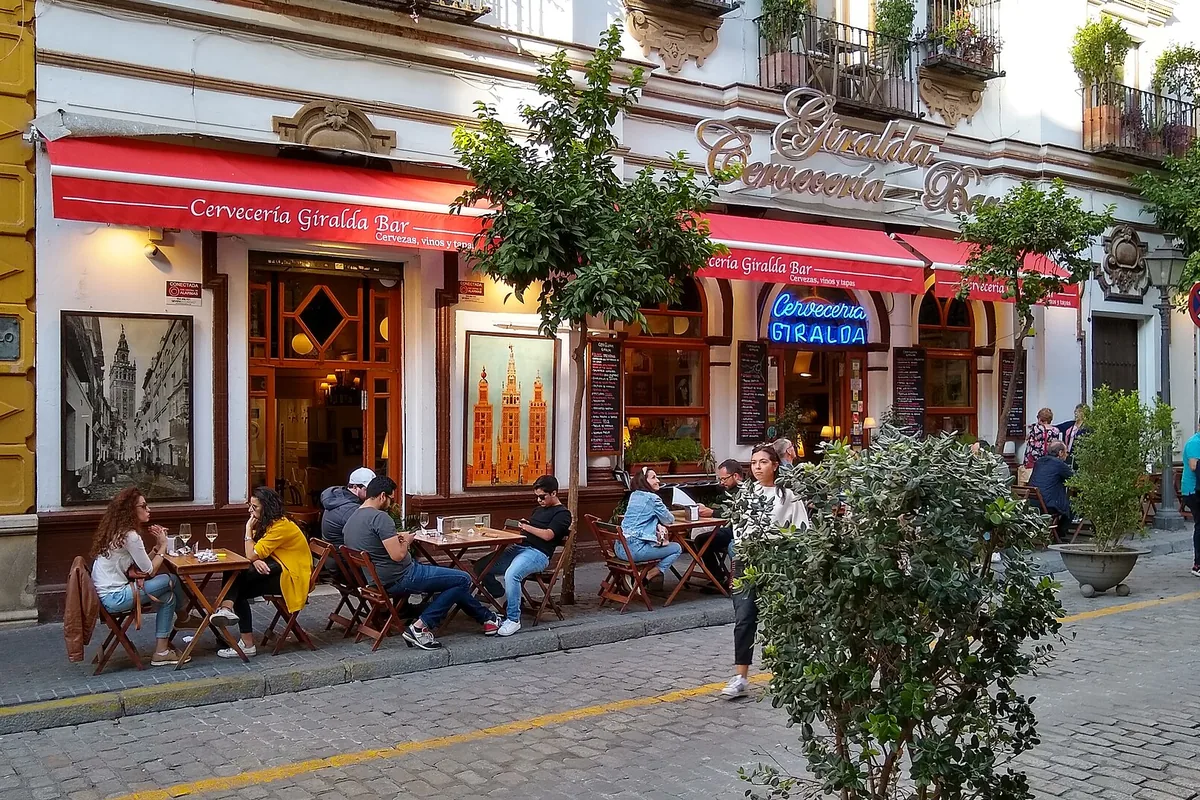
Bar Giralda is one of Seville’s best-known tapas bars, and its building is part of the draw. It is housed in a former Moorish bathhouse near the cathedral, and the vaulted interior gives it a different feel from the tiled taverns elsewhere in the city. It has a large menu, which makes it a good option for groups who want to order plenty of different plates.
The dish that guides most often recommend is espinacas con garbanzos, the same spinach and chickpea tapa found across the city, so it is interesting to compare versions with El Rinconcillo. The menu also covers fish, cured meats, stews and vegetarian options, and the bar is open to both quick snacks and longer sittings.
Because it is close to the cathedral, it is one of the easier bars to reach if you are sightseeing, and it works as a lunch or mid-afternoon stop. The room is large enough to usually find space, though it can be busy at peak times, and the service is quick and used to visitors.
The history of the building is worth a few minutes. Seville’s Moorish heritage runs through the city, from the cathedral’s bell tower, which began life as a minaret, to the Alcázar, and a tapas bar in an old bathhouse is a small, edible reminder of that. Look up at the arches while you wait for your order.
As with other busy central bars, it is sensible to check current opening times and whether tables can be reserved, particularly on weekends and during festivals. If you want a quieter visit, go in the late afternoon.
- Getting there: A short walk from the cathedral, on one of the streets of the old centre.
- Time needed: About an hour.
- Best time to go: Late morning or mid-afternoon.
- Insider tip: Order the espinacas con garbanzos and compare it with the same dish elsewhere.
4. Las Teresas
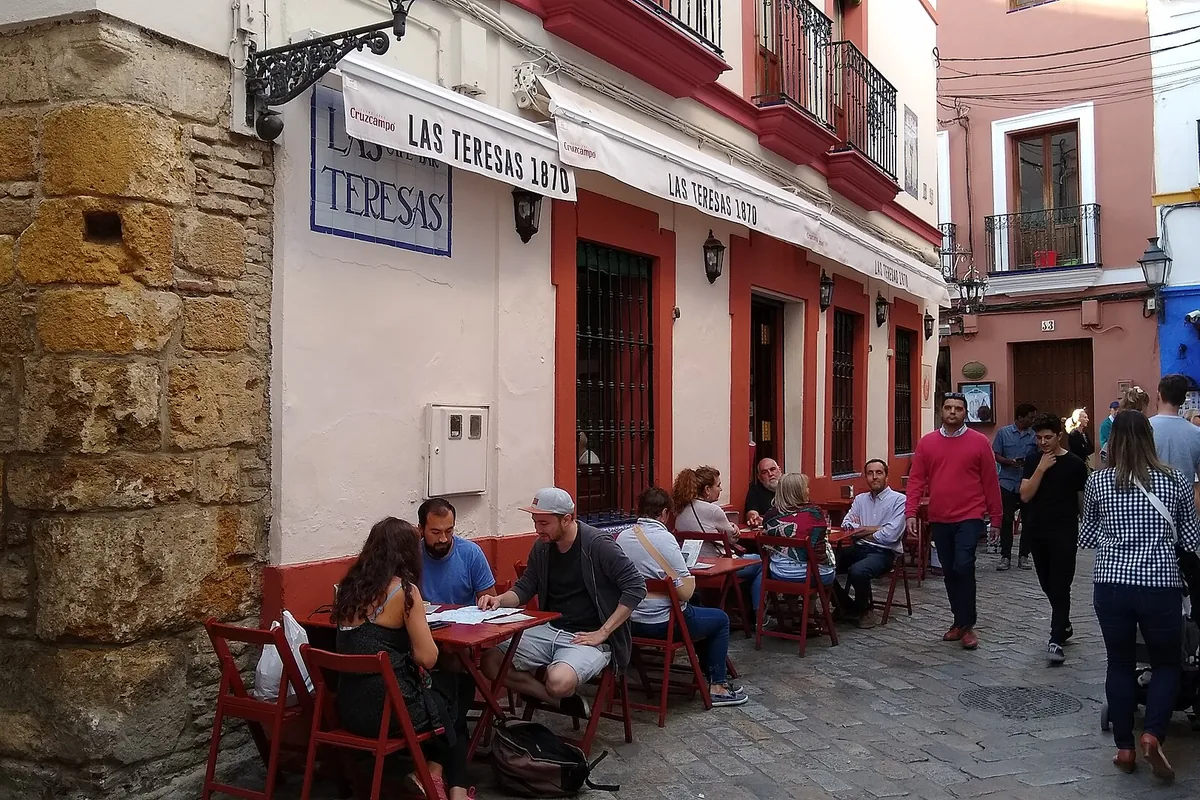
Las Teresas is the bar for jamón, and its ceiling full of hanging hams is one of Santa Cruz’s most recognisable sights. It stands on Calle Santa Teresa, in the narrow streets of Santa Cruz, and sources date it to 1870, when it began as a grocery shop. The bar still looks like an old grocer’s, with hams, bullfighting memorabilia and tiled walls.
The signature order is jamón ibérico, carved to order by the person behind the bar. Carving ham is a respected skill in Andalusia, and watching it done well is part of the experience. Other tapas include cured meats, cheese and simple hot dishes, and the drinks list covers sherry, wine and beer.
It is more expensive than many of the other bars in this guide, particularly if you order top-grade ibérico, so decide in advance whether you want a few slices to share or a larger plate. The quality is the reason for the price, and a small portion is enough for most people as part of a longer crawl.
The bar has a long history of attracting well-known visitors, and El Español reports that politicians and writers have drunk here over the decades. El Español also reports that a documentary about its 150-year history premiered in December 2023.
The room is small, and tables are limited, so expect to stand at the bar at busy times. It is worth coming at a quieter hour if you want to see the staff carve and talk about what is on offer. If you prefer a seat, check whether tables can be reserved.
- Getting there: On Calle Santa Teresa, in the heart of Santa Cruz, a few minutes on foot from the cathedral.
- Time needed: About 45 minutes.
- Best time to go: Early evening, before dinner.
- Insider tip: Share one plate of ibérico between two people, and add something simpler so the budget lasts.
5. Vinería San Telmo
Vinería San Telmo is the place for a more creative take on tapas, with a wine list that gets as much praise as the food. It is on Paseo Catalina de Ribera, on the edge of Santa Cruz and close to the gardens, so it is easy to combine with a walk through the old Jewish quarter. Guides describe the cooking as fusion-leaning but also strong on the traditional.
Reviewers mention dishes such as squid ink spaghetti, croquettes, a Spanish omelette and goat cheese stacks, along with desserts made in-house. The menu changes, so check what is on offer, and treat these as examples of the style rather than a fixed list. The bar is known for a good selection of wines by the glass, which makes it an easy place to try a few local ones.
The room is small, with only around ten simple tables, so it gets busy, and booking or arriving early is sensible. In warm weather, outdoor seating makes it more pleasant, and many people prefer to sit outside in the evening. Service is described as friendly and efficient, and prices are generally seen as fair for the quality.
San Telmo is a good choice if you want to balance the all-traditional bars on this list with something more modern. It works well as a mid-crawl stop, or as a place to sit down properly if your feet are tired from the cobbles.
Because it is popular, the best way to avoid a wait is to arrive when it opens for the evening. If you are a group of more than three or four, check whether it takes bookings, as the space is limited.
- Getting there: On Paseo Catalina de Ribera, on the edge of Santa Cruz and a short walk from the gardens.
- Time needed: About an hour.
- Best time to go: Early evening, or mid-afternoon for a quieter table.
- Insider tip: Ask for a glass of local wine to go with the tapa you choose, and book for groups.
6. Bar Alfalfa
Bar Alfalfa is a small, always busy tapas bar with a mix of Andalusian and international influences. Reviews describe a fusion menu with Asian and Italian touches, and one notes that the owner’s Italian background shows in some dishes. The Andalusian vegetarian bruschetta is repeatedly recommended, and it is a good example of how this bar plays with local ingredients.
The room is small and plain, and it is usually crowded with locals, so you should expect to share space and wait for a spot at the bar. That is a good sign: it suggests a place popular with people who live here, rather than one that depends only on passing visitors. The area around Plaza de la Alfalfa is a lively part of the centre, so it is easy to find other bars nearby if you have to wait.
It is a good choice if you want a break from heavy fried food and cured meats, because the menu includes lighter and vegetarian-friendly plates. It also suits groups who have different tastes, since the range is broader than at the traditional taverns.
Arrive early if you want a seat, particularly on weekends. The bar tends to fill up around the usual dinner time, and the service is quick but busy. Prices are modest by central standards, and a few plates are enough for a light meal.
Because the menu changes, check what is on offer when you arrive, and ask the staff for advice if you are unsure. It is also worth confirming current opening days before you set out, as small bars sometimes close on one or two days a week.
- Getting there: In the Alfalfa area, a short walk from the cathedral and the Plaza del Salvador.
- Time needed: About 45 minutes.
- Best time to go: Early evening, before the dinner rush.
- Insider tip: Try the vegetarian bruschetta, and check the opening days before you go.
7. Eslava
Eslava is the tapas bar for modern Andalusian cooking, and it is one of the most talked-about in the city. It stands on Calle Eslava, in the San Lorenzo area, away from the main tourist streets. Sources describe it as one of Seville’s most awarded tapas bars, with a menu that takes classic ideas and makes them more refined.
Its best-known dish is an egg served over a boletus mushroom sponge cake, which won first prize at Seville’s Boca de Todos tapas competition in 2010, according to Time Out. Other dishes mentioned by guides include honey-glazed ribs and the whisky tenderloin. The bar’s own official website lists its current menu and opening details, so check it before you plan your visit.
Counter spots are generally first come, first served, so expect to queue shortly before the doors open at lunch and dinner. That can be a bother, but it is also a mark of how popular it is. The room is small and loud, so it suits a lively, social meal rather than a quiet conversation.
Eslava is a good way to see how Seville’s tapas culture has developed in recent years. It sits comfortably alongside the old taverns, because it uses familiar flavours but adds more precise technique. If you are visiting for a few days, plan one modern stop like this alongside the historic bars.
Opening days vary, and sources suggest the bar closes on Monday and for part of Sunday, so check before you go. The San Lorenzo area is also home to other bars and a good local market, so it is worth exploring on foot.
- Getting there: In San Lorenzo, a fifteen to twenty minute walk north of the cathedral.
- Time needed: About an hour, plus time in the queue.
- Best time to go: Arrive just before opening at lunch or dinner.
- Insider tip: Go early for the counter, and check the closing days on the official site.
8. Casa Cuesta
Casa Cuesta is a long-running Triana tavern that mixes tiles, bullfighting memorabilia and traditional cooking. It stands on Calle Castilla, near the Triana bridge, and sources say it has been serving the neighbourhood since 1880. It began as an inn selling wines from the nearby Aljarafe countryside, and later became a haunt for artists, poets and bullfighters.
The interior has carved wooden counters, decorative tiles and flamenco and bullfighting memorabilia on the walls. Guides recommend dishes such as tuna with garlic, cod with tomato and oxtail stew, along with steak and pork or beef cheeks. Some of the recipes are said to date back to the early twentieth century, which gives the menu a traditional feel.
It is more of a sit-down tavern than a standing-room bar, so it suits a slower, more substantial tapas meal. The back room is popular at the weekend, and booking ahead for Sunday lunch, which is the local main event, is sensible. Hours differ between sources, so check the current times before you go.
Because Triana is across the river from the historic centre, a visit here also gives you a chance to see a different side of the city. The neighbourhood has a strong local identity, with its own traditions in pottery, flamenco and food, and many Sevillians say they prefer eating here to the centre.
The walk from the cathedral to Triana takes about twenty minutes, and crossing the river on foot is part of the experience. After your meal, walk along the riverside street, Calle Betis, for views back towards the city.
- Getting there: On Calle Castilla in Triana, near the bridge, about twenty minutes on foot from the cathedral.
- Time needed: One to two hours.
- Best time to go: Sunday lunch for the local atmosphere, with a booking.
- Insider tip: Book the back room in advance for a weekend, and check the current hours.
9. Las Golondrinas
Las Golondrinas is the standing-room counter that shows how locals eat in Triana. Guides list two locations, one on Calle Antillano Campos and one on Calle Pagés del Corro, and both are described as reliable for demanding diners. One source calls it a standing-room-only counter, which sums up the style: you wait for a spot, order from the staff and eat with your plate on the bar.
The menu covers Andalusian classics, with plenty of fried fish, cured meats and small stews. The two sites share a reputation, though each has its own feel, so it is worth asking which one is closer to where you are staying. Because it is a neighbourhood bar, prices are lower than in the historic centre, and visitors often comment on how good the value is.
The best way to enjoy it is to treat it as part of a longer walk through Triana. Start with a coffee or a drink on Calle Betis, visit the market at Mercado de Triana, and then come here for tapas. Pair it with Casa Cuesta for contrast, as one is a seated tavern and the other is a busy bar.
Expect it to be crowded at lunch and in the evening, particularly at weekends. If you cannot find space at the counter, wait a few minutes, as turnover is usually quick. Staff are used to visitors, though a few phrases of Spanish help.
Because details vary between the two sites, check which one is open and when. Local businesses sometimes change their hours with the seasons, and the smaller site may close on one day a week.
- Getting there: In Triana, a short walk from the bridge, at either the Antillano Campos or Pagés del Corro site.
- Time needed: About 45 minutes.
- Best time to go: Lunchtime or early evening, outside the weekend peak.
- Insider tip: Order two or three plates at a time and keep moving, as the counter fills quickly.
10. La Blanca Paloma
La Blanca Paloma is a well-loved Triana bar, known for stuffed aubergines and fried fish. It is on Calle San Jacinto, one of Triana’s main streets, a short walk from the river. A Barceló guide describes it as a legendary spot, and it has a loyal local following that includes families and groups of friends.
The menu leans on traditional home cooking. Stuffed aubergines are the dish most often mentioned, and fried fish, which Seville does better than almost anywhere in Spain, is the other highlight. Portions are generous and suit sharing, so it works well for a group that wants to try several plates without spending a lot.
San Jacinto is a long street with plenty of shops, cafes and bars, so you can combine a visit here with a wander through the neighbourhood. It is also close to Mercado de Triana, which is a good place to see local produce before you eat. A guide to the area suggests that the streets around the market are the core of the neighbourhood’s food scene.
It is a good final stop for a tapas crawl, because the atmosphere is relaxed and the food is filling. If you have already eaten at several bars, it is a place where you can slow down and finish with something simple.
As with other local bars, opening days may vary, and the venue may close for part of the year, so check before you set out, and note that some recent reports mention a change of ownership. It is also sensible to avoid peak times if you want a seat, as small groups can fill the room quickly on weekends.
- Getting there: On Calle San Jacinto in Triana, about fifteen minutes on foot from the Triana bridge.
- Time needed: About an hour.
- Best time to go: Lunchtime or early evening on a weekday.
- Insider tip: Share the stuffed aubergines and a plate of fried fish, and check the opening days first.
How to pick the right tapas bar in Seville
The best bar depends on how you want to eat. If you want history, choose El Rinconcillo and Las Teresas. If you want an easy introduction to local snacks, Las Columnas and Bar Giralda are near the cathedral and simple to find. If you prefer modern cooking, go to Eslava or Vinería San Telmo. For a local atmosphere away from the centre, cross the river to Casa Cuesta, Las Golondrinas and La Blanca Paloma.
It also helps to think about timing. Spanish dinner starts late, but tapas bars fill from early evening, so arrive at the beginning of the evening for a seat. Aim for two or three plates at each place and then move on, rather than ordering a full meal in one bar. That way you can try several styles in a single night.
Suggested tapas plans for 1, 2 or 3 days
These plans use only places from the ten above. The distances are short, and a free printable version is a good way to keep the route handy.
Day 1: Santa Cruz classics
Begin with a montadito de pringá at Bodega Santa Cruz Las Columnas, then walk the narrow streets to Las Teresas for a small plate of jamón. Continue to Bar Giralda near the cathedral for the spinach and chickpea tapa, and finish with an evening glass of wine at Vinería San Telmo. All four are within a few minutes on foot, so you can take it slowly.
Day 2: Old taverns and modern cooking
Start at El Rinconcillo for a late lunch with a sherry. Spend the afternoon in the Alfalfa area, then try Bar Alfalfa for a lighter fusion plate. In the evening, queue early at Eslava in San Lorenzo, and finish with a walk back through the old centre.
Day 3: Across the river in Triana
Cross the bridge in the morning and walk through the area around the market. Eat lunch at Casa Cuesta, ideally with a booking, then spend the afternoon on Calle Betis by the river. In the early evening, move on to Las Golondrinas for counter tapas and finish at La Blanca Paloma for stuffed aubergines and fried fish.
Seville tapas dishes to look out for
- Espinacas con garbanzos: Spinach and chickpeas with cumin and garlic, found at El Rinconcillo and Bar Giralda.
- Montadito de pringá: A small roll filled with slow-cooked meat, the signature of Las Columnas.
- Solomillo al whisky: Pork tenderloin in a garlic and whisky sauce, a Seville staple.
- Jamón ibérico: Cured ham, best ordered in a small portion at a specialist like Las Teresas.
- Pescaíto frito: Fried fish, a classic of Seville and Triana bars.
- Cola de toro: Oxtail stew, a traditional dish at older taverns such as Casa Cuesta.
- Manzanilla and fino: Dry sherries that suit fried fish and ham.
Getting around Seville
The historic centre, Santa Cruz, Alfalfa and the cathedral area are compact and easy to walk, and most of the bars on this list are within twenty minutes of each other. Triana is across the river and reached on foot over the bridge, which takes about twenty minutes from the cathedral.
For longer distances, the city has a tram, a metro and buses. Check Tussam, the city’s bus operator, for current routes and timetables, and use taxis late at night. In summer, plan walks for the morning and evening, as the middle of the day can be very hot.
Wear comfortable shoes, as the old streets are cobbled and uneven. Tapas bars are often crowded, so carrying only what you need makes it easier to move around. If you are travelling on through Spain, our guide to the best pintxos in San Sebastian shows how bar-hopping works in the Basque Country, and our guide to the best bars in Madrid covers the capital’s taverns and cocktail bars.
Where to stay for Seville tapas
- Santa Cruz and the cathedral area: The best base for first-time visitors, with several of the most famous bars within a short walk. It can be busy and noisy in peak season.
- Alfalfa and the centre: Lively and well connected, with plenty of bars and good restaurants nearby.
- San Lorenzo and the Alameda: More local, with a modern food scene, and often better value.
- Triana: A quieter, more neighbourhood-focused base, close to the market and the riverside, and a good choice if you want to eat where locals eat.
Budget guidance
- Shoestring: Standing at Las Columnas and Las Golondrinas, sharing montaditos and a few plates, keeps costs low.
- Mid-range: A mix of El Rinconcillo, Bar Giralda, Vinería San Telmo and Casa Cuesta suits most visitors.
- Special occasion: Jamón ibérico at Las Teresas and a modern tasting at Eslava are the main splurges, so choose one or two.
Check current prices at each bar, as they change. Tipping is modest in Spain, and rounding up the bill or leaving small change is the usual approach.
Frequently Asked Questions
What are the best tapas bars in Seville?
The best tapas bars in Seville include El Rinconcillo, Bodega Santa Cruz Las Columnas, Bar Giralda and Las Teresas for the classics, Eslava and Vinería San Telmo for modern cooking, and Casa Cuesta, Las Golondrinas and La Blanca Paloma in Triana.
What is the oldest tapas bar in Seville?
El Rinconcillo is usually described as the oldest bar in Seville, and sources date it to 1670. The bar’s own website makes the same claim.
What should I order in a Seville tapas bar?
Try espinacas con garbanzos, a montadito de pringá, solomillo al whisky and a plate of fried fish. Pair them with a dry sherry such as manzanilla or fino.
Do I need to book tapas bars in Seville?
Most tapas bars do not take bookings and work on a first come, first served basis. Booking ahead is wise at Casa Cuesta for weekend lunch, and small bars like Vinería San Telmo fill quickly, so arrive early or check ahead.
When is the best time to eat tapas in Seville?
Bars are busiest around lunch and in the evening. Arrive early in the evening for a better chance of a space, or go in the mid-afternoon for a quieter visit.
Is Triana worth visiting for tapas?
Yes. Triana is where many locals eat, and guides note that prices are lower than in the historic centre. Casa Cuesta, Las Golondrinas and La Blanca Paloma are good places to start.
Discover More of Spain
Once you have eaten your way around Seville, plan a trip to the neighbouring city with our favourite day trips from Granada, or swap Andalusian bars for the capital’s markets and restaurants in our guide to the best places to eat in Madrid. If you are planning more Spanish nights out, our guide to the best bars in Malaga covers the coast.
Featured image: Photo by Marta from Madriz, Sevilla, España Sur, CC BY 2.0, cropped, via Wikimedia Commons