Last updated: November 2026
Czech food is hearty, comforting and built around meat, sauce and dumplings, and Prague is the easiest place to try it all in one trip. If you are wondering what to eat in Prague, the answer is a short list of dishes that families have cooked for generations and that most pubs still serve with pride.
If you only have time for a few plates, eat svíčková, a proper pub goulash and something sweet from a koláče bakery. That covers the national favourite, the classic beer-hall meal and the everyday pastry. This guide covers ten foods, where visitors usually find them and how to order, and it includes a free printable 3-day food itinerary at the end.
For general planning, the city’s official Prague tourism website and the national Czechia tourism site are good places to start. Restaurants change often, so check opening days and booking rules before you go. Anything this guide could not confirm is marked “check before you go”. If you want places rather than dishes, see our guide to the best places to eat in Prague.
Quick answer: What are the best foods to try in Prague? Start with svíčková (marinated beef in a creamy sauce with dumplings), roast pork with dumplings and cabbage, and goulash. Add fried cheese, roast duck, kulajda soup, potato pancakes, pickled cheese, open sandwiches and koláče for the full picture.
Quick comparison: best foods to try in Prague
| Food | Type | Best for | Price tier |
|---|---|---|---|
| Svíčková | Main | The national favourite | Mid-range |
| Vepřo knedlo zelo | Main | Roast pork, dumplings and cabbage | Cheap to mid-range |
| Guláš | Main | A classic pub meal | Cheap to mid-range |
| Smažený sýr | Main | Vegetarians and late snacks | Cheap |
| Pečená kachna | Main | A Sunday-lunch feast | Comfortable |
| Kulajda | Soup | A creamy dill and mushroom soup | Cheap to mid-range |
| Bramboráky | Street food | Crisp potato pancakes | Cheap |
| Nakládaný hermelín and utopenci | Beer snack | Eating with a pint | Cheap |
| Chlebíčky | Snack | Open sandwiches for lunch | Cheap |
| Koláče | Pastry | A sweet break | Cheap |
1. Svíčková
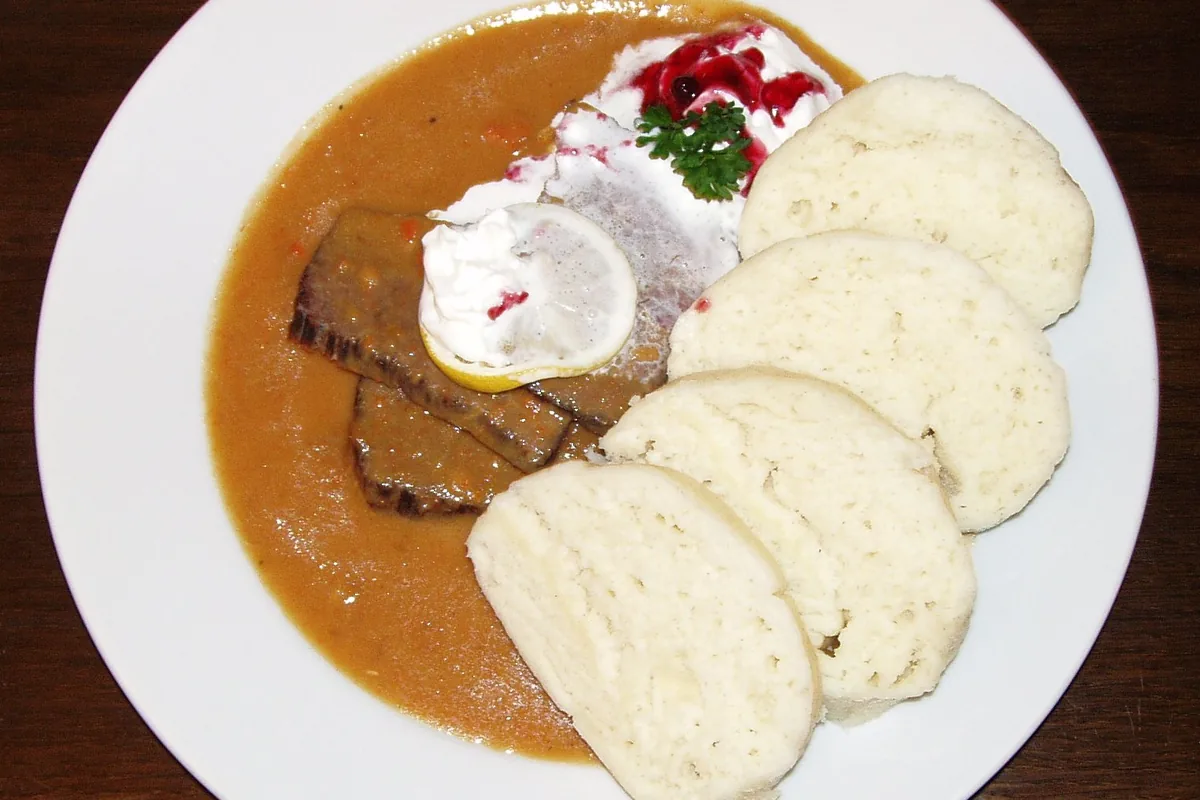
Svíčková is the dish Czechs most often call their national favourite, and it is the one to order first. Beef sirloin is marinated, roasted and sliced, then served in a smooth sauce of root vegetables and cream, with bread dumplings on the side. Traditionally it comes with a spoonful of cranberries, a slice of lemon and a dollop of whipped cream, which look odd but balance the richness.
Every kitchen has its own recipe, so the sauce can be sweet, tangy or peppery depending on where you eat. A good version has tender meat, a velvety sauce with no lumps and dumplings that soak it up without turning heavy.
Guides to the city often name Lokál Dlouhá in the Old Town, the neighbourhood pub U Kroka near Vyšehrad and the more upscale Vikárka near Prague Castle for a careful version. Café Imperial is another frequent suggestion if you want a grand setting. Menus and booking rules change, so check before you go.
Order it for lunch and skip a starter. Portions are generous, and the dumplings are meant to be eaten with the sauce, not left on the side of the plate.
- How to get there: Lokál Dlouhá is a short walk from Old Town Square; most other pubs are on a tram or metro line.
- How long to spend: One to one and a half hours for a relaxed lunch.
- Best time to go: Lunch on a weekday, when menus are good value and tables are easier to find.
- Tip: Ask for the sauce to be served on the side only if you dislike creamy dishes; most locals eat it as it comes.
2. Vepřo knedlo zelo
Vepřo knedlo zelo means roast pork, dumplings and sauerkraut, and it is the plate most Czechs would name as everyday comfort food. The pork is roasted until the skin and edges are crisp, the dumplings are sliced from a steamed loaf and the cabbage is braised with caraway until it turns soft and tangy.
The three parts are meant to be eaten together. The sharp cabbage cuts through the fat of the pork, and the dumplings carry the gravy. It is simple food, but a kitchen that gets the crackling and the cabbage right has usually done everything else well too.
Traditional beer halls and brewery restaurants are the natural home for it. U Fleků on Křemencova, a historic brewery and pub in the New Town, is repeatedly named for traditional plates and is popular with visitors. The Strahov Monastery Brewery near the castle is another common suggestion. Both can be busy, so check booking rules before you go.
Expect a filling plate that will cover lunch and much of the evening. If you want to try more dishes, share it or order it as your only course of the day.
You will also see versions with duck or smoked meat in place of pork, which are worth trying if you already know the classic.
- How to get there: U Fleků is a short walk from Karlovo náměstí metro; Strahov is a walk uphill from the castle area or a tram ride.
- How long to spend: About an hour.
- Best time to go: Weekday lunch, when kitchens are quieter than at weekends.
- Tip: Order a half-litre of local lager alongside; the bitterness is part of the pairing.
3. Guláš
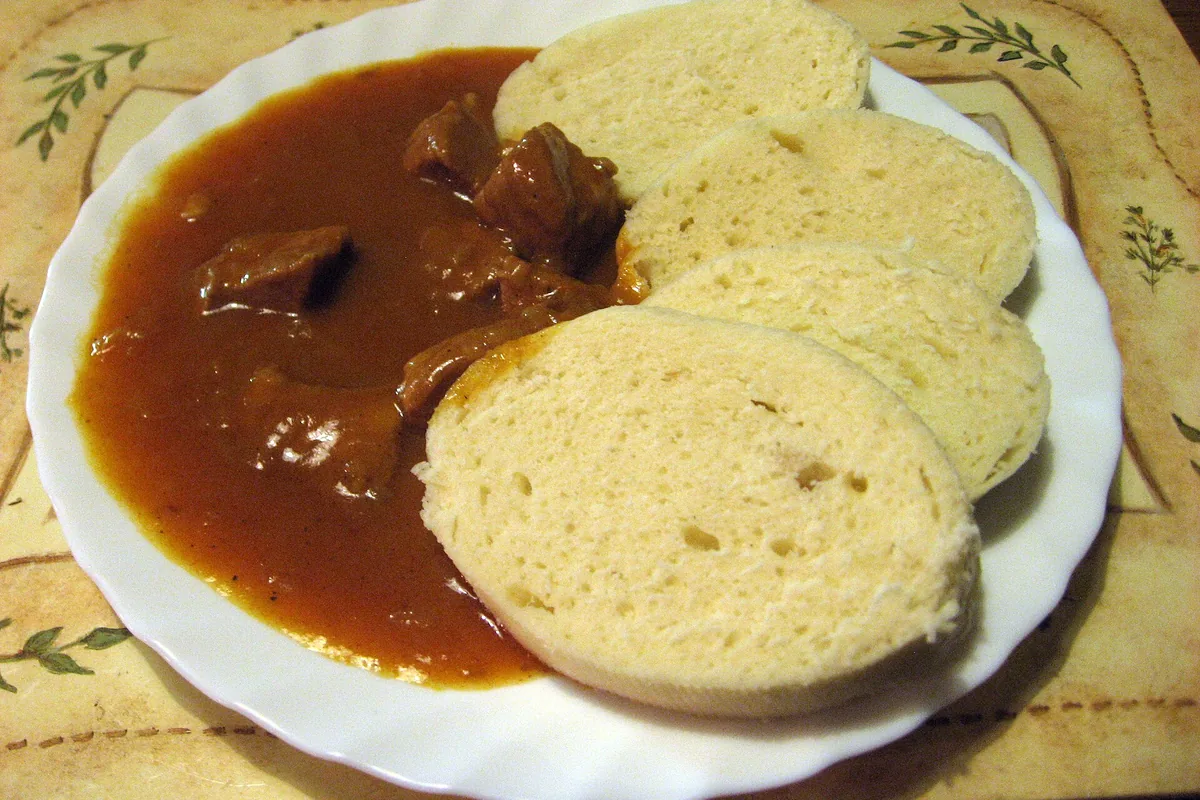
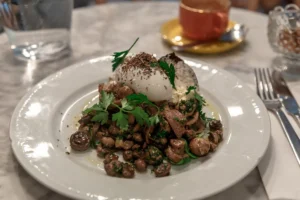
Czech goulash is a thick, paprika-rich beef stew served with bread dumplings, and it is a reliable first meal in any pub. It differs from the Hungarian version: the sauce is thicker, made with plenty of onion, and it is usually eaten with sliced dumplings rather than from a bowl on its own.
Most pubs offer beef goulash as a lunch special, and the best versions use slow-cooked cuts that fall apart under a fork. The onion should be almost melted into the sauce, and the dumplings should be soft enough to mop it up.
Lokál Dlouhá has been listed with a beef goulash on its menu in recent guides, and traditional beer halls such as U Fleků also serve it. Menus rotate, so check before you go. Many pubs also sell a smaller portion of goulash as a beer snack, which is a cheap way to try it.
Variations to look for include goulash with chopped raw onion on top, goulash served in a bread bowl and a spicier version sometimes called pivní guláš, made with beer. Venison and pork goulash also appear on menus in autumn and winter.
If a kitchen offers goulash served with potato pancakes instead of dumplings, that is a good sign it cooks from tradition rather than for tourists.
- How to get there: Most central pubs are within walking distance of the Old Town and New Town.
- How long to spend: About an hour.
- Best time to go: Cold days, when it tastes best, and weekday lunchtimes for the best value.
- Tip: Ask whether the dumplings are bread or potato; most places use bread dumplings, which suit the sauce better.
4. Smažený sýr
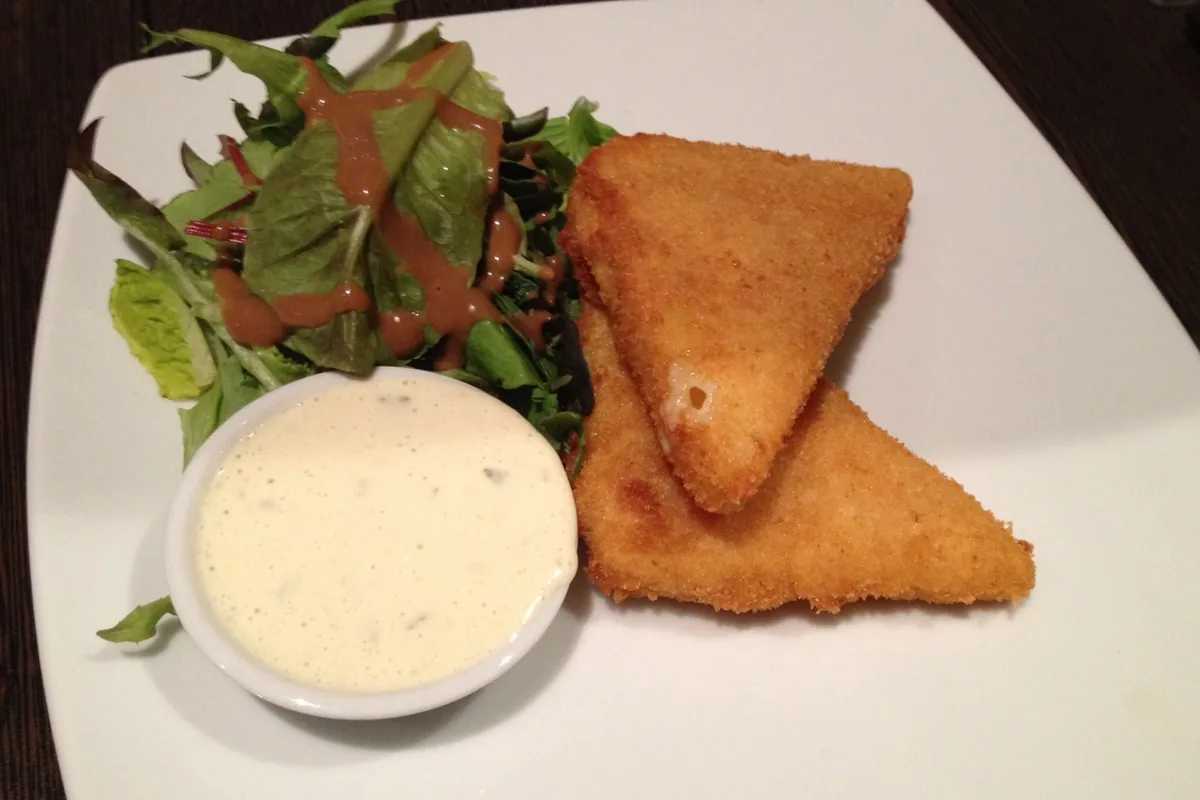
Smažený sýr is breaded and fried cheese, and it is the dish Czechs reach for when they want a cheap, filling and meat-free meal. A thick slice of mild cheese is coated in breadcrumbs, fried until golden and served with chips or boiled potatoes and tartare sauce. It sounds simple, and it is, which is why it works.
The best versions have a crisp coating, a molten centre and no greasy aftertaste. It is on almost every pub menu and many lunch canteens, so you rarely need to search for it.
Vegetarians will find it one of the few traditional Czech mains without meat. It is also popular as a late-night snack, and you will see it served in a bun in street food stalls as a fast takeaway.
We could not confirm a single standout venue, so the safest approach is to try it at an ordinary pub or lunch spot. If the cheese comes from a freezer and the coating is thin and pale, order something else next time; a good pub will make it fresh.
Pair it with a lager, and consider a small side salad to cut through the richness. Some places also offer a smoked cheese version, which has a deeper flavour and is worth trying.
For late evenings, head to a pub in the Old Town or Vinohrady, where the kitchen often stays open after other restaurants have closed. Check before you go.
- How to get there: Available across the city; look at any local pub away from the main squares.
- How long to spend: Under an hour.
- Best time to go: Lunch or a late supper after a day of walking.
- Tip: Ask for it with tartare sauce, which is the standard accompaniment.
5. Pečená kachna
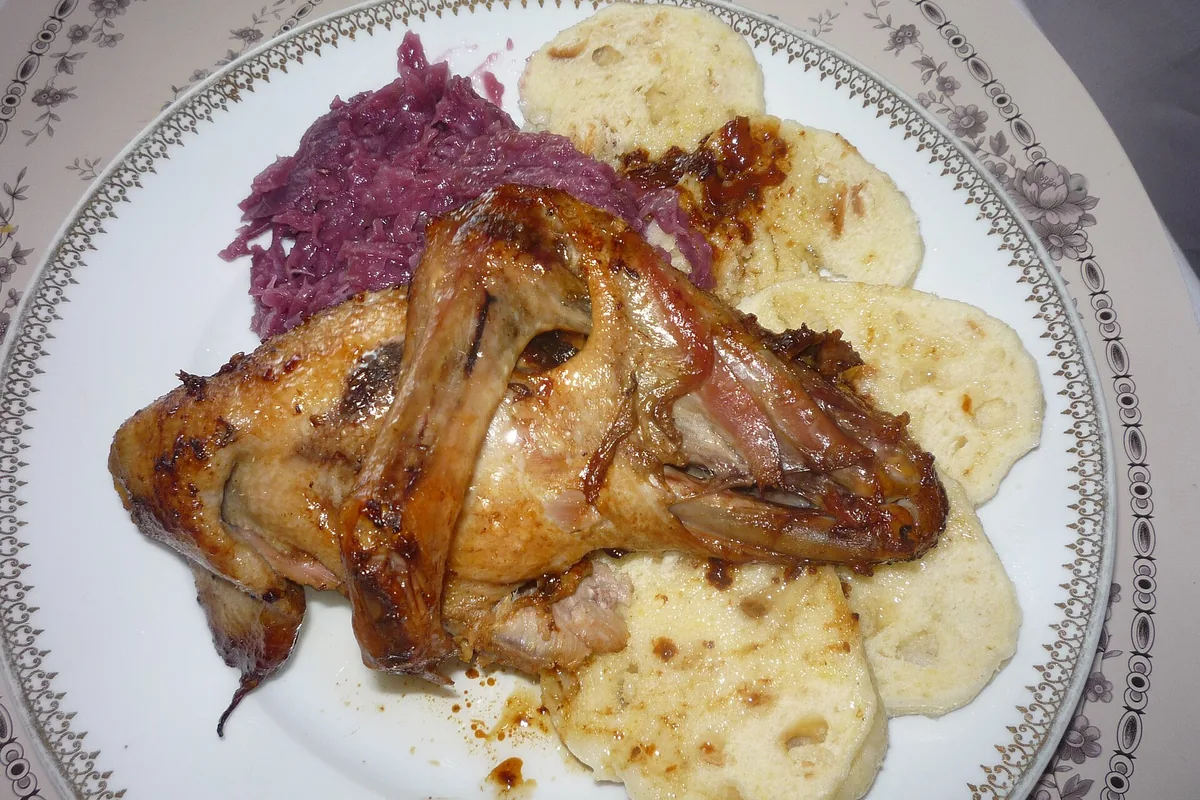
Roast duck is the Czech feast dish, traditionally served on Sundays and holidays with red cabbage and dumplings. The duck is roasted slowly until the skin is crisp and the meat is tender, then served in generous portions with braised red cabbage and both bread and potato dumplings.
Order it when you are hungry and have time. The meal is rich, and a half duck is enough for two people if you add a starter. Many restaurants cook duck in advance and need notice for a whole bird, so book ahead if you want one.
U Modré kachničky, which has branches in Malá Strana and the Old Town, is known for its duck and game dishes, often served with plum or walnut sauces. It is smart casual and popular, so booking is wise, and its opening status should be checked before you go. Traditional pubs and beer halls also offer duck at weekends, often at a lower price.
If you want to try game, look for duck with wild berries or with a fruit sauce. Many Czech kitchens pair poultry with sweet and sour flavours, such as cranberries or apples.
A good duck has crisp, dry skin and meat that is moist rather than stringy. If the skin is soft and pale, the kitchen has probably reheated it.
- How to get there: U Modré kachničky is in Malá Strana near Charles Bridge; the Old Town branch is a short walk from Old Town Square.
- How long to spend: One and a half to two hours.
- Best time to go: Weekend lunch, when roast duck is traditionally served.
- Tip: Share a portion and add a starter, unless you are very hungry.
6. Kulajda
Kulajda is a creamy soup of potato, mushroom and dill, topped with a poached egg and finished with a splash of vinegar. It originated in South Bohemia and has become a staple on Czech menus, especially in autumn and winter, when the mushrooms are in season.
The tang of the vinegar cuts through the cream, and the dill gives the soup its fresh, green character. A good bowl is thick but not heavy, with soft potato, earthy mushrooms and a soft egg that breaks into the broth.
Café Imperial in the New Town is the venue most often named for a polished version, set in a grand hall with decorated ceramic tilework. It serves modern takes on Czech classics, and its menu changes, so check before you go. You will also find kulajda at many pubs and traditional restaurants, usually as a starter.
Soup is a normal part of a Czech lunch, and many restaurants offer a soup of the day at a low price as part of a lunch menu. If you want to try several Czech dishes without ordering a huge meal, soup plus a snack is a good plan.
Other soups worth knowing include česnečka, a garlic soup served with croutons and cheese, and bramboračka, a potato and mushroom soup that is a little lighter than kulajda.
- How to get there: Café Imperial is a short walk from Náměstí Republiky metro and tram stops.
- How long to spend: Thirty to forty-five minutes for a bowl, longer with a full lunch.
- Best time to go: Autumn or winter, when mushrooms are in season.
- Tip: Eat it hot and stir the egg through gently to thicken the broth.
7. Bramboráky
Bramboráky are crisp potato pancakes flavoured with garlic and marjoram, and they are one of the most satisfying cheap snacks in Prague. Grated raw potato is mixed with flour, egg, garlic and herbs, then fried in a flat pan until golden and lacy at the edges.
They are served in several ways: as a side with goulash, rolled around a filling of smoked meat or cabbage, or on their own as a quick bite. At Christmas markets and in autumn, stalls often sell them hot in paper, which makes them a good warming snack.
A good bramborák is crisp outside and soft inside, with a clear garlic flavour and no heavy oil. Avoid any that sit under a heat lamp for hours; they should be fried fresh.
We did not confirm a single best venue, so look for them at traditional pubs and restaurants, and at seasonal markets. They sometimes appear on menus as “bramborák with smoked meat”, a popular main in its own right.
If you are vegetarian, ask for the plain version with garlic and a side of sauerkraut or a salad. If you eat meat, try the filled version, usually with smoked pork.
They are also a natural match for a beer, because the garlic and salt invite another sip. For a snack that you can eat standing up, this is hard to beat.
- How to get there: Pubs and markets across the city; no single location.
- How long to spend: Fifteen to thirty minutes.
- Best time to go: Cold days and Christmas market season.
- Tip: Eat them straight from the pan; they soften quickly.
8. Nakládaný hermelín and utopenci
Pickled cheese and pickled sausage are the classic Czech beer snacks, and they are far better than they sound. Nakládaný hermelín is a soft, Camembert-style cheese marinated in oil with onion, chilli, peppercorns and bay leaf. Utopenci, which means “drowned men”, are sausages pickled in vinegar with onion and spices.
Both are served cold with fresh bread and a pint. The cheese becomes creamy and slightly spicy, and the sausage has a sharp, vinegary bite. They suit people who like strong flavours and a long evening in a pub.
Lokál Dlouhá is praised in guides for its pickled cheese. U Kroka near Vyšehrad is recommended for a rich version, and U Fleků is also named. For utopenci, the Strahov Monastery Brewery is a common recommendation, and Zlý časy in Nusle is a cheaper beer bar suggestion. Check menus before you go, since snacks change.
Order them to share. A plate of pickled cheese and bread is a good first stop on a pub crawl, and it pairs better with lager than with a heavy dark beer.
If the idea of pickled sausage puts you off, start with the cheese. The marinade gives it a smooth, rich flavour that many first-timers enjoy.
For more places to drink, see our guides to the best pubs in Prague and the best bars in Prague.
- How to get there: Lokál Dlouhá is in the Old Town; U Kroka and Zlý časy are a short tram or metro ride from the centre.
- How long to spend: About an hour with a beer.
- Best time to go: Early evening, before the dinner rush.
- Tip: Eat with plenty of bread to soak up the oil.
9. Chlebíčky
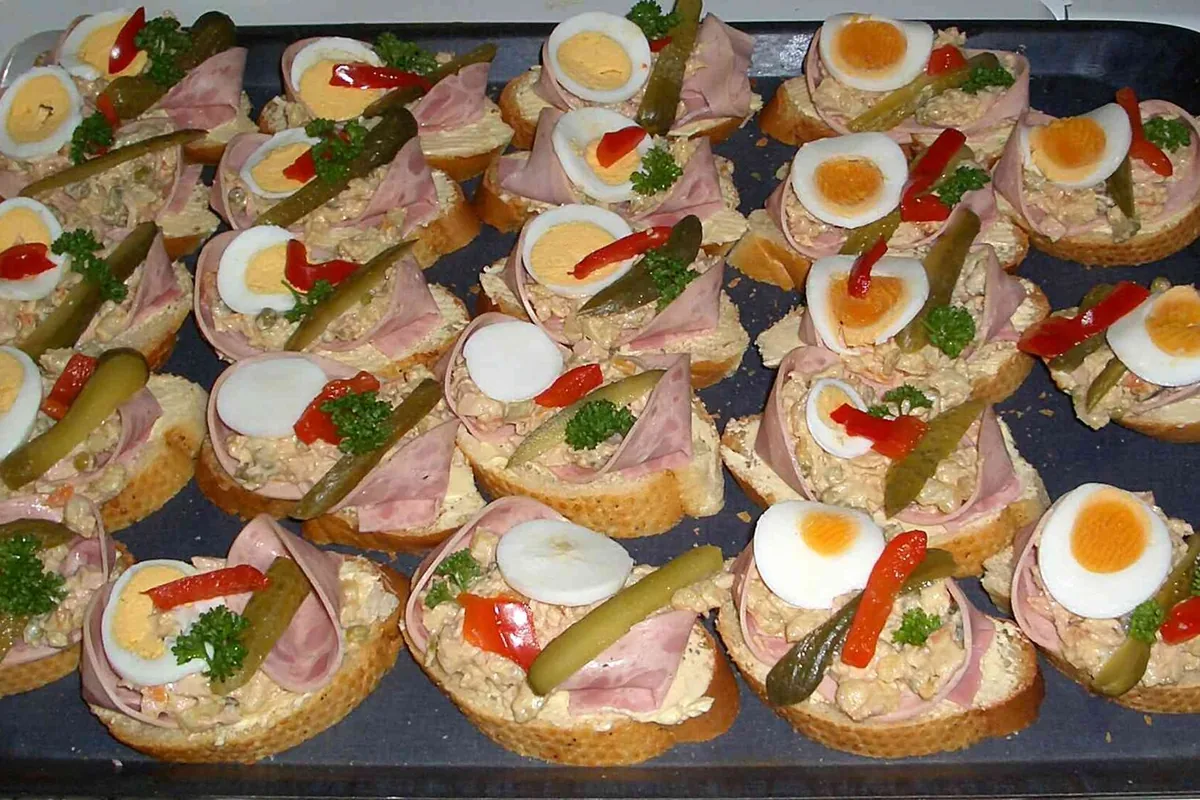
Chlebíčky are small open sandwiches on white bread, topped with potato salad, ham, egg, pickles or cheese, and they are the best light lunch in Prague. They have been a Czech tradition since the early twentieth century and appear at delis, bakeries, cafés and parties.
A traditional chlebíček has a base of mayonnaise-dressed potato salad or a spread, topped with ham, hard-boiled egg and a slice of gherkin. Modern versions use smoked fish, roast beef or vegetables, and cafés often serve them as an elegant snack.
Eska in Karlín is a Michelin-listed restaurant and bakery known for modern Czech cooking, and guides mention its chlebíčky. Cukrárna Myšák, a historic pastry shop on Vodičkova, has also been listed with a chlebíček on its breakfast menu. Opening times differ between sources, so check before you go.
Pair one or two with a coffee for a light, cheap meal. They are small, so most people order two or three, and they are best eaten fresh, so avoid any that look dry at the edges.
Try one with ham and egg and another with a fish or vegetable topping to compare the old and new styles. Many delis also sell them by weight or by the piece.
For more places to stop for coffee and a snack, see our guide to the best cafes in Prague.
- How to get there: Eska is in Karlín, a short tram or metro ride from the centre; Myšák is near Wenceslas Square.
- How long to spend: Thirty to forty-five minutes.
- Best time to go: Late morning or lunch.
- Tip: Order two or three different toppings and share them.
10. Koláče
Koláče are round yeast pastries with a sweet filling, and they are the most popular Czech bakery treat. The dough is soft and slightly enriched, and the centre holds poppy seed, curd cheese, plum jam or fruit, often topped with crumbly streusel.
Traditionally koláče were baked for weddings and festivals, and each region has its own style. In Prague you will find them in bakeries, supermarkets and cafés, but the best come from small bakeries that bake in the morning.
Kus Koláče on Korunní in Vinohrady is a bakery often named by pastry guides for its koláče. It tends to sell out, so go early. Other bakeries across the city also make them, and a food writer or local will usually have a favourite. Opening times are not fixed, so check before you go.
You will also see trdelník, the sugared chimney cake sold on tourist streets. Despite the signs, it is not a traditional Czech pastry; most food writers trace it to Hungarian and Slovak roots, and it arrived in Prague in recent decades. Koláče are a better taste of local baking.
Try more than one filling. Poppy seed is the classic, curd cheese is gentle and plum is the sweetest.
Some pastry shops also sell a larger version called frgál, which is a big, flat koláč with a generous topping, and is worth looking for if you have a sweet tooth.
- How to get there: Kus Koláče is in Vinohrady, reachable by tram from the centre.
- How long to spend: Fifteen to thirty minutes.
- Best time to go: Morning, when bakeries are fully stocked.
- Tip: Buy two or three different fillings and share them.
Czech food terms to know
- Knedlíky: dumplings, usually sliced from a steamed loaf. Bread dumplings (houskové) suit sauces; potato dumplings (bramborové) suit roast meat.
- Hospoda or pivnice: a pub, usually serving food and Czech lager.
- Hotovky: ready meals, the cooked dishes of the day at a lunch spot.
- Denní menu: the lunch menu, usually a soup and a main at a lower price.
- Pivo: beer. Ask for “světlé” (light) or “tmavé” (dark).
- Zelí: cabbage, usually braised and slightly sour.
- Omáčka: sauce, the heart of many Czech mains.
- Řízek: a breaded cutlet, similar to schnitzel, often served with potato salad.
Booking, tipping and eating times in Prague
Popular restaurants fill quickly, especially at weekends, so book ahead for dinner. Pubs often keep tables for walk-ins, but busy brewery restaurants are best booked.
Tipping is common: rounding up or adding a modest amount to the bill is normal. Check whether a service charge is already included, and be wary of bills that include items you did not order. Always check the bill, and ask for a receipt.
Czechs eat lunch early and often by the main meal of the day. Many restaurants offer a cheaper lunch menu on weekdays, which is the best-value way to eat Czech food. Evening menus are larger and more expensive, and some kitchens close earlier than you might expect, so check before you go.
Suggested food plans for 1, 2 or 3 days
You can eat well in Prague in a single day, but three days lets you cover the full list at a relaxed pace. These plans use only places and dishes from this guide.
Day 1: Pub classics in the Old Town
Start with a late breakfast of koláče from a bakery, then walk to the Old Town. Have svíčková or goulash for lunch at Lokál Dlouhá or a similar pub. In the afternoon, cross Charles Bridge and walk through Malá Strana. For dinner, try the pickled cheese and a pint at a traditional pub, followed by smažený sýr if you are still hungry.
Day 2: Grand cafés, soups and roast duck
Begin with chlebíčky and coffee at Cukrárna Myšák near Wenceslas Square. For lunch, head to Café Imperial for kulajda and a Czech main. Spend the afternoon in the New Town and Vyšehrad. Book dinner at U Modré kachničky for roast duck, or at a beer hall for vepřo knedlo zelo.
Day 3: Neighbourhood bakeries and brewery food
Take a tram to Vinohrady for koláče at Kus Koláče, then walk through the neighbourhood. Have lunch in Karlín at Eska, where chlebíčky and modern Czech dishes are on the menu. In the afternoon, go up to the Strahov Monastery Brewery for utopenci and a beer with a view. Finish with bramboráky at a pub or market, depending on the season.
Where to stay for food lovers
The Old Town and New Town put you within walking distance of most pubs, cafés and beer halls, and they suit a first visit. Malá Strana is quieter and close to the castle, with good traditional restaurants. Vinohrady is residential, with bakeries, wine bars and a local feel, and Karlín has modern restaurants and a growing café scene. All four are well connected by tram and metro.
Getting around
Prague is compact, and the centre is walkable. The metro, trams and buses share one ticketing system, and tickets can be bought at machines or through the official transport app. Trams are the best way to reach Vinohrady, Karlín and Vyšehrad. Check the Prague public transport website for current tickets and routes. Cobbled streets are tiring in the wrong shoes, so wear comfortable ones.
Budget guidance
Prague is generally good value for food. Cheap means pub snacks, bakery treats and lunch menus. Mid-range covers a main course and a beer at a traditional restaurant. Comfortable means dinner at a well-known restaurant with a starter and a drink. Lunch menus on weekdays are the best saving, and ordering tap beer rather than bottled or imported drinks keeps costs down. Always check the bill for added charges.
Frequently Asked Questions
What is the national dish of the Czech Republic?
Svíčková is widely considered the national dish. It is marinated beef sirloin in a creamy vegetable sauce, served with bread dumplings, cranberries and whipped cream. Roast pork with dumplings and cabbage is a close second.
Is Czech food vegetarian-friendly?
Traditional Czech food is meat-heavy, but there are good vegetarian options. Smažený sýr (fried cheese), bramboráky without meat, kulajda (check for any meat stock) and dumplings with mushroom sauce are common. Ask staff if you are unsure, as stock and lard are widely used.
Is trdelník a traditional Czech dessert?
No, trdelník is not a traditional Czech pastry. Most food writers link it to Hungarian and Slovak recipes, and it only became common in Prague in recent decades. For a local sweet, try koláče or fruit dumplings instead.
Do I need to book restaurants in Prague?
Book for dinner at popular restaurants, especially on weekends. Pubs and cafés often take walk-ins, but brewery restaurants and well-known places can fill up. Check the venue’s booking page or call ahead.
How much should I tip in Prague?
Tipping a small amount, or rounding up the bill, is normal. Check whether a service charge is already included. Always check the bill carefully before paying.
What is the best time of year to eat Czech food in Prague?
Autumn and winter suit the heavier dishes best. Goulash, kulajda and roast duck are at their most comforting in the cold, and Christmas markets add seasonal snacks. Spring and summer are good for beer gardens and lighter lunches.
Discover More of Prague
Now that you know what to eat, plan where to go next. If you want to work off the dumplings, our guide to the best day trips from Prague shows castles, towns and countryside within easy reach of the city.
Featured image: Photo by Mihael Grmek, CC BY-SA 3.0, cropped, via Wikimedia Commons