Last updated: October 2026
The best food in Singapore is found in its hawker centres, the open-air food halls where Chinese, Malay, Indian and Peranakan cooking sit side by side, with a handful of restaurants worth adding for chilli crab and Peranakan dishes. Hawker culture is so central to daily life that UNESCO added hawker culture in Singapore to its list of intangible cultural heritage in 2020, and several hawker stalls hold Michelin awards.
This guide picks ten places to eat across the city: five hawker centres, three specialist stalls and shops, and two sit-down restaurants. Each one has a practical box with the nearest MRT station and the best time to go, and after the list you will find a glossary of dishes, the rules of hawker centre etiquette, eating plans for one, two or three days, where to stay and a budget guide. For wider trip planning, the official Visit Singapore website is a good place to start. Stalls change hands and hawker centres close for regular cleaning, so check before you go.
Quick answer: Where can you find the best food in Singapore? Start at the hawker centres: Maxwell Food Centre for chicken rice, Lau Pa Sat for satay, Tiong Bahru Market, Old Airport Road Food Centre and Tekka Centre in Little India. Add Hill Street Tai Hwa Pork Noodle, Song Fa Bak Kut Teh and Zam Zam for single famous dishes, and book Jumbo Seafood for chilli crab and Candlenut for Peranakan cooking.
Quick comparison: best places to eat in Singapore
| Place | Area | Best for | Price tier |
|---|---|---|---|
| Maxwell Food Centre | Chinatown | Hainanese chicken rice | Cheap |
| Lau Pa Sat | Central Business District | Satay in the evening | Cheap to mid-range |
| Tiong Bahru Market | Tiong Bahru | A neighbourhood hawker breakfast | Cheap |
| Old Airport Road Food Centre | East (Dakota) | Fried noodles and local favourites | Cheap |
| Tekka Centre | Little India | Biryani, prata and Indian dishes | Cheap |
| Hill Street Tai Hwa Pork Noodle | Lavender | Michelin-starred bak chor mee | Cheap |
| Song Fa Bak Kut Teh | Clarke Quay | Peppery pork rib soup | Cheap to mid-range |
| Zam Zam | Kampong Gelam | Murtabak | Cheap |
| Jumbo Seafood (Riverside Point) | Clarke Quay | Chilli crab by the river | Special occasion |
| Candlenut | Dempsey | Peranakan cooking | Mid-range to special occasion |
1. Maxwell Food Centre
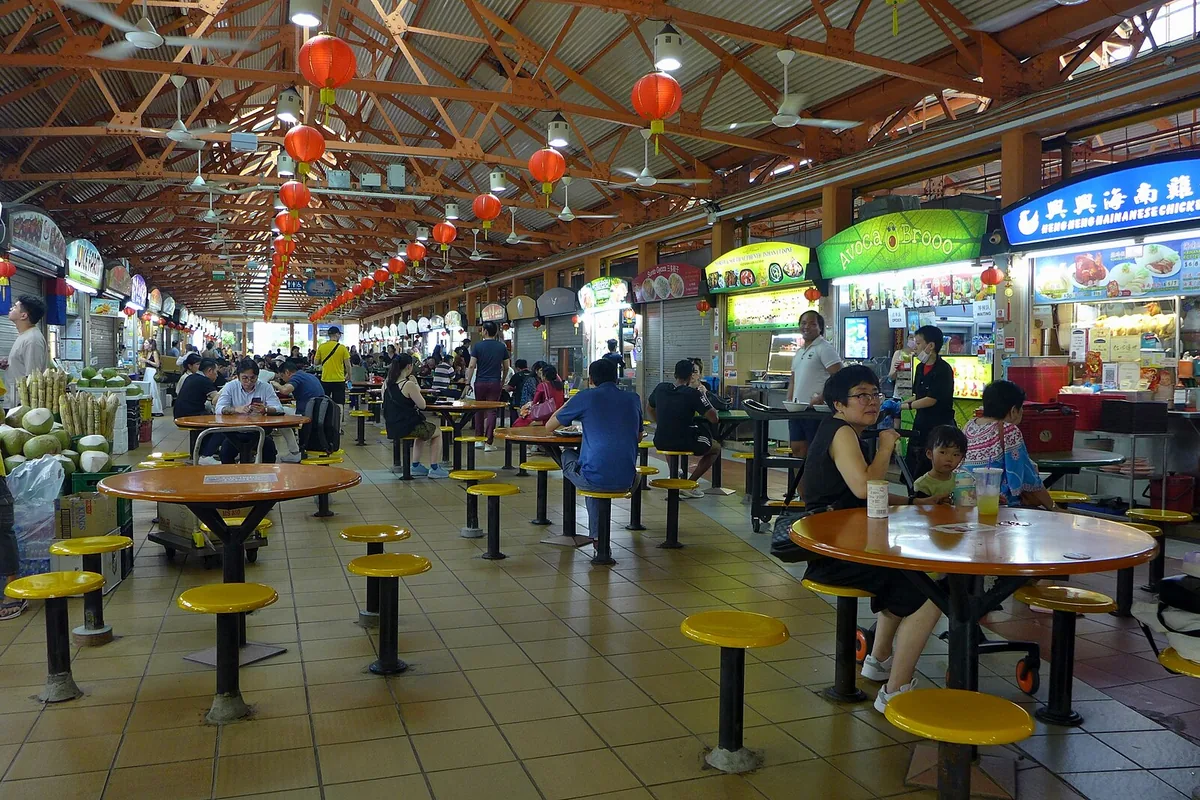
Maxwell Food Centre in Chinatown is the easiest first stop for visitors, and it is home to Tian Tian Hainanese Chicken Rice, the stall most often named when people talk about the best food in Singapore. It is a compact, busy hawker centre on the edge of Chinatown and Tanjong Pagar, with rows of stalls under one roof and shared tables in the middle.
Tian Tian has been recognised in the Michelin Guide’s Bib Gourmand list, which highlights good food at moderate prices, and it appears again in the 2026 selection. The dish is simple: poached chicken, rice cooked in chicken stock with ginger and pandan, and a chilli and ginger sauce on the side. Expect a queue at lunchtime, although it usually moves steadily. Another chicken rice stall in the same centre also draws a following, and comparing the two is a popular game.
Beyond chicken rice, Maxwell has stalls selling porridge, fish soup, rojak, popiah and fried snacks, so it works well for a group that wants to share several dishes. Stalls open and close over time, so look for the ones with steady local queues rather than relying on any old list.
The centre is close to the Buddha Tooth Relic Temple and the shophouse streets of Chinatown, which makes it a natural lunch stop on a sightseeing day. Tian Tian usually closes one day a week, so check its current opening days before you go if it is your main reason to visit.
- How to get there: Maxwell MRT station on the Thomson-East Coast Line is next to the centre, and Chinatown MRT is a short walk away.
- How long to spend: 45 minutes to an hour, plus any queue.
- Best time to go: Late morning, before the office lunch rush.
- Tip: Order chicken rice at Tian Tian, then share dishes from two or three other stalls at the same table.
2. Lau Pa Sat
Lau Pa Sat is a Victorian cast-iron market hall in the middle of the financial district, and in the evening the street beside it turns into Satay Street, one of the most atmospheric places to eat in Singapore. The building dates from the 1890s and is a national monument, and its octagonal hall and clock tower stand out among the surrounding office towers.
Inside, the hall works like any hawker centre, with stalls selling noodles, rice dishes and snacks from across the region. The main draw, though, comes after dark. According to the Lau Pa Sat website, Satay Street sets up on Boon Tat Street every evening, starting a little earlier at weekends, when the road closes to traffic and satay carts grill skewers of chicken, beef, mutton and prawns over charcoal. Tables fill the street, and the smoke and noise are part of the experience.
Satay is served with a peanut sauce, cucumber, onion and ketupat, compressed rice cakes. Order a mixed set to share, and add a plate of chicken wings or stingray from the barbecue stalls if you want more. The carts are known for pushing their offers to passers by, so take a moment to compare menus and confirm what you are ordering before it is cooked.
Lau Pa Sat is a convenient dinner stop after a walk around Marina Bay, which is a short stroll away. Drinks are usually ordered from stalls in and around the hall rather than from the satay carts themselves.
- How to get there: Downtown MRT (Downtown Line) or Telok Ayer MRT are a few minutes away on foot, and Raffles Place MRT is close too.
- How long to spend: One to one and a half hours.
- Best time to go: After dark for Satay Street, or a weekday lunch for the hall.
- Tip: Agree the number of skewers and the total before your order goes on the grill.
3. Tiong Bahru Market
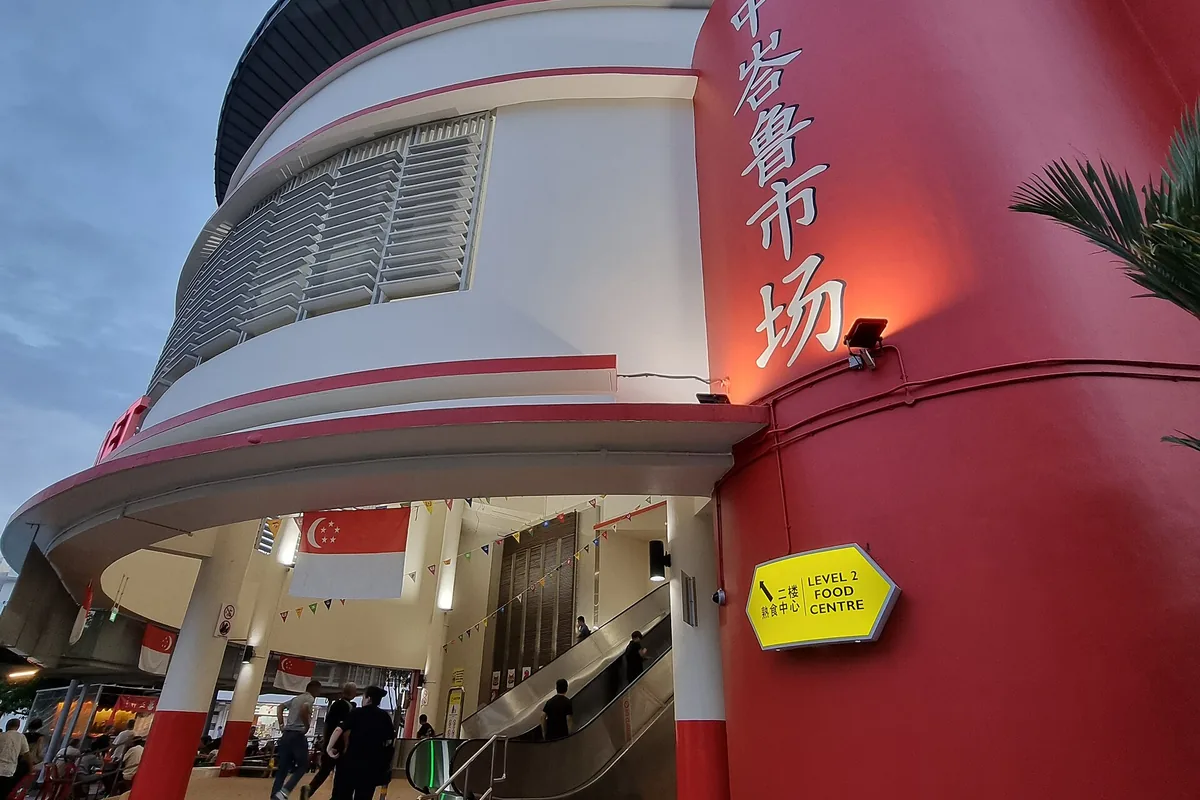
Tiong Bahru Market is the hawker centre to visit for a relaxed breakfast in one of Singapore’s most charming neighbourhoods. The food centre sits above a wet market, and the area around it is known for its 1930s Art Deco public housing, independent cafes and bookshops, so it rewards a slow morning on foot.
The market has several stalls listed in the Michelin Guide’s 2026 Bib Gourmand selection, including Hong Heng Fried Sotong Prawn Mee, Koh Brother Pig’s Organ Soup and Tiong Bahru Hainanese Boneless Chicken Rice. Beyond those, it is a good place to try chwee kueh, soft steamed rice cakes topped with preserved radish, which are a classic local breakfast. Arrive early, because some stalls sell out and close before lunch.
Tiong Bahru has a quieter, more residential feel than the hawker centres in the city centre, and it is a good choice for travellers who want to see where locals eat on a normal day. The wet market downstairs is busiest early in the morning, and it is worth a look for the tropical fruit and produce alone.
The market reopened in July 2025 after a three-month renovation and, like all hawker centres, closes for short periods of cleaning during the year. The National Environment Agency publishes hawker centre information and cleaning schedules, so check before you plan a trip across town around it.
- How to get there: Tiong Bahru MRT (East-West Line) is around a ten-minute walk away, and Outram Park MRT is also within walking distance.
- How long to spend: One hour, or a morning with a walk around the estate.
- Best time to go: Early to mid-morning, when every stall is open.
- Tip: Combine breakfast with a walk around the Art Deco blocks and a coffee at one of the neighbourhood cafes.
4. Old Airport Road Food Centre
Old Airport Road Food Centre is one of the largest and best-loved hawker centres in Singapore, and it is where many locals send visitors who want to eat away from the tourist trail. It takes its name from the old Kallang Airport nearby, and it has well over a hundred food stalls under one roof.
The 2026 Michelin Bib Gourmand list includes three stalls here: Lao Fu Zi Fried Kway Teow, Nam Sing Hokkien Fried Mee and To-Ricos Kway Chap. That makes it a strong place to try fried noodles, with char kway teow (flat rice noodles fried with egg, cockles and dark soy sauce) and Hokkien mee (noodles fried with prawns and squid in a rich stock) both well represented. Plan to share several dishes, because portions are modest and the choice is huge.
Beyond the Michelin names, the centre is known for satay, rojak, lor mee, carrot cake and a range of desserts and drinks. With so many stalls, the simplest approach is to walk one full loop before choosing, and to look for long queues of local diners at lunchtime.
The centre reopened in October 2024 after a four-month renovation, with new seating and upgraded facilities. Some stalls close on certain days or sell out early, so check the stall you most want to try before you travel out.
- How to get there: Dakota MRT on the Circle Line is a short walk away; Mountbatten MRT is also nearby.
- How long to spend: One to one and a half hours.
- Best time to go: Weekday lunch or early dinner, when most stalls are open.
- Tip: Pick a table first, then split up so each person queues at a different stall.
5. Tekka Centre
Tekka Centre in Little India is the best hawker centre in the city for Indian food, from biryani and dosa to roti prata and fish head curry. It is a working market as well as a food centre, with a wet market, food stalls and clothing and textile shops on the floor above, so it gives a lively, unpolished view of daily life in the neighbourhood.
The food stalls cover South Indian, North Indian and Indian Muslim cooking, along with Malay and Chinese stalls. Biryani is the dish most visitors come for, with fragrant rice, slow-cooked meat and a side of curry or pickle. Thosai (dosa), crisp fermented rice and lentil pancakes served with chutneys, are a good lighter option, and a pulled tea, teh tarik, is the classic drink to finish.
Tekka Centre is busy at breakfast and lunch, and it is at its most atmospheric at weekends, when Little India fills with shoppers. It is a cheap and filling place to eat before or after exploring the temples, spice shops and colourful shophouses of Serangoon Road.
The centre had a three-month renovation in 2023 and, like other hawker centres, it closes for short cleaning periods during the year, so check before you go. Many stalls are halal or vegetarian, which makes it a good choice for mixed groups.
- How to get there: Little India MRT (North East Line and Downtown Line) is right across the road.
- How long to spend: 45 minutes to an hour.
- Best time to go: Breakfast or lunch, and weekends for the full Little India atmosphere.
- Tip: Eat with your right hand if you want to follow local custom, or ask for cutlery, which most stalls provide.
6. Hill Street Tai Hwa Pork Noodle
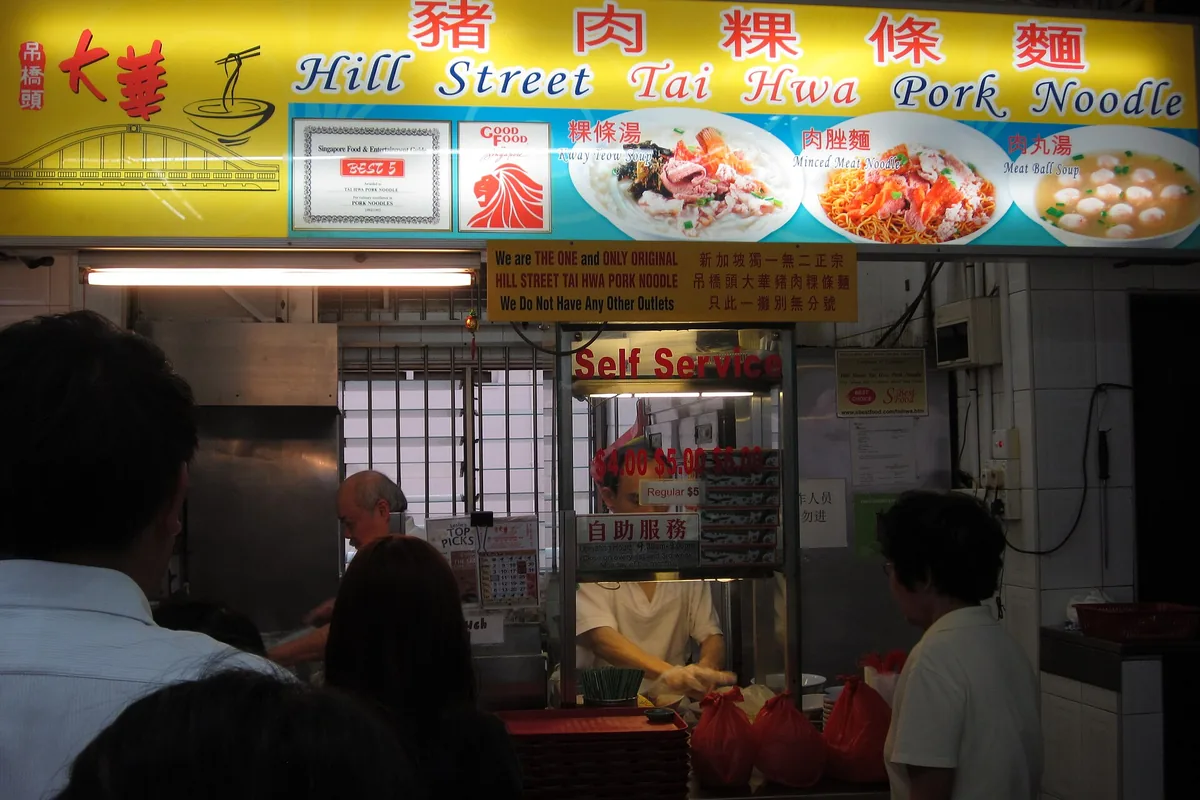
Hill Street Tai Hwa Pork Noodle is the bak chor mee stall that became famous for holding a Michelin star, and it remains on the star list in the 2026 Michelin Guide Singapore. Bak chor mee is a Teochew noodle dish of springy noodles tossed in a vinegar and chilli dressing, topped with minced pork, sliced pork, liver, meatballs and crisp lard.
The stall sits in an eating house on Crawford Lane, between Lavender and Kampong Gelam, rather than in a large hawker centre. The menu is short: dry noodles or soup, in different sizes. Most people order the dry version, which is the one known for its balance of tangy vinegar and chilli. The queue is part of the visit, and the Michelin Guide lists the stall as worth queueing for, partly because each bowl is cooked to order.
The dining area can be warm, and there is roadside seating, so dress for the heat. A number of other pork noodle shops use similar names, including one run by a relative of the owner, so make sure you are at the Crawford Lane stall if you want the Michelin-starred original.
It works well as a mid-morning meal or late lunch combined with a walk through Kampong Gelam, which is a short stroll away. The stall usually closes one day a week, so check its current opening days before you go.
- How to get there: Lavender MRT (East-West Line) is around a ten-minute walk away, and Bugis MRT is also within walking distance.
- How long to spend: 20 minutes to eat, plus a queue that can run to an hour or more.
- Best time to go: Mid-afternoon on a weekday, when the queue is usually shortest.
- Tip: Order the dry version and add extra vinegar or chilli to taste.
7. Song Fa Bak Kut Teh
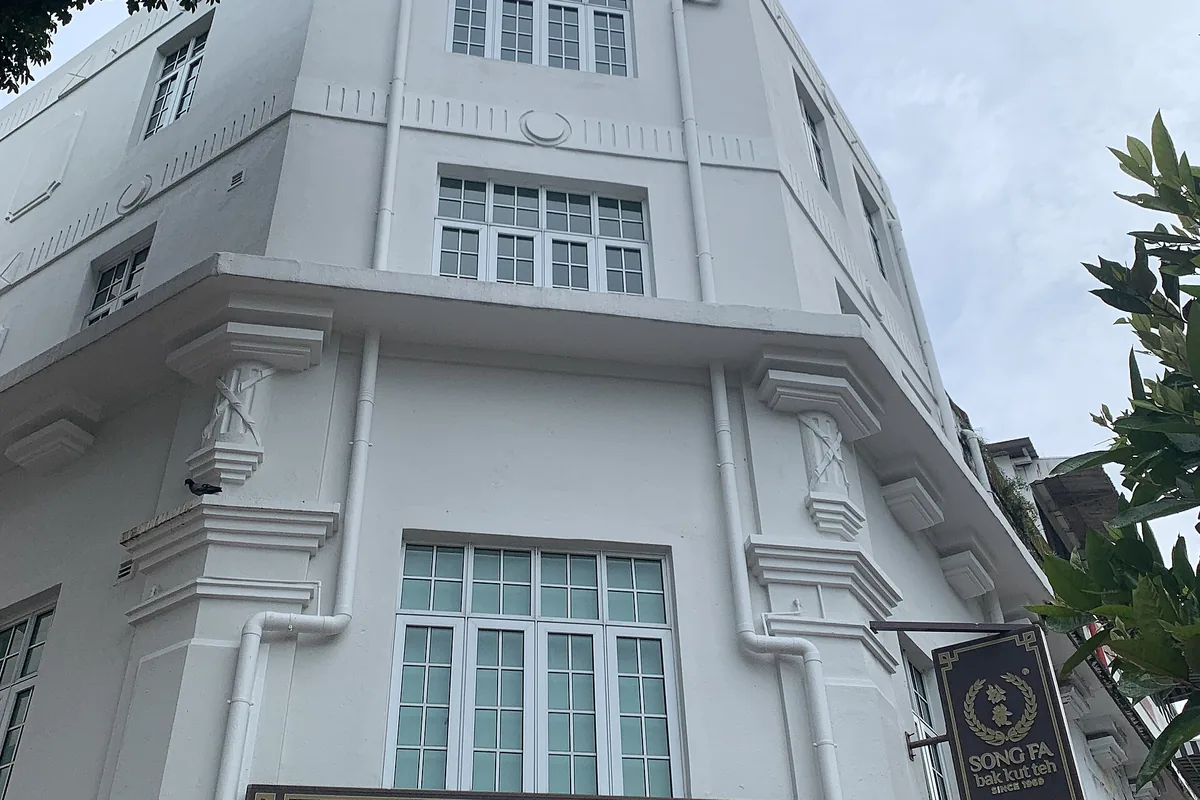
Song Fa Bak Kut Teh is the best-known name for bak kut teh in Singapore, a peppery pork rib soup that is especially good on a rainy day. The business began as a pushcart in 1969, and its New Bridge Road shop is in the Michelin Guide’s 2026 Bib Gourmand selection.
Singapore’s style of bak kut teh is the Teochew version, with a clear, garlicky broth sharpened by plenty of white pepper, rather than the darker, herbal style found in parts of Malaysia. The soup arrives with tender pork ribs, and staff are known for topping up the broth while you eat. Order a side of youtiao, fried dough sticks that soak up the soup, along with braised dishes such as pig’s trotter or salted vegetables, and rice.
Many diners pair the meal with Chinese tea, which suits the rich soup. The shop is often busy at lunch and dinner, and the queue can stretch along the pavement, but turnover is fast because the menu is short and the soup is served quickly.
Song Fa has several branches around Singapore, but the New Bridge Road shop near Clarke Quay is the most convenient for visitors and the one listed by Michelin. Details of branches and opening times are on the Song Fa website, so check before you go.
- How to get there: Clarke Quay MRT (North East Line) is a couple of minutes away on foot.
- How long to spend: 45 minutes.
- Best time to go: Breakfast or mid-afternoon, between the meal-time rushes.
- Tip: Ask for a broth top-up rather than ordering a second bowl.
8. Zam Zam
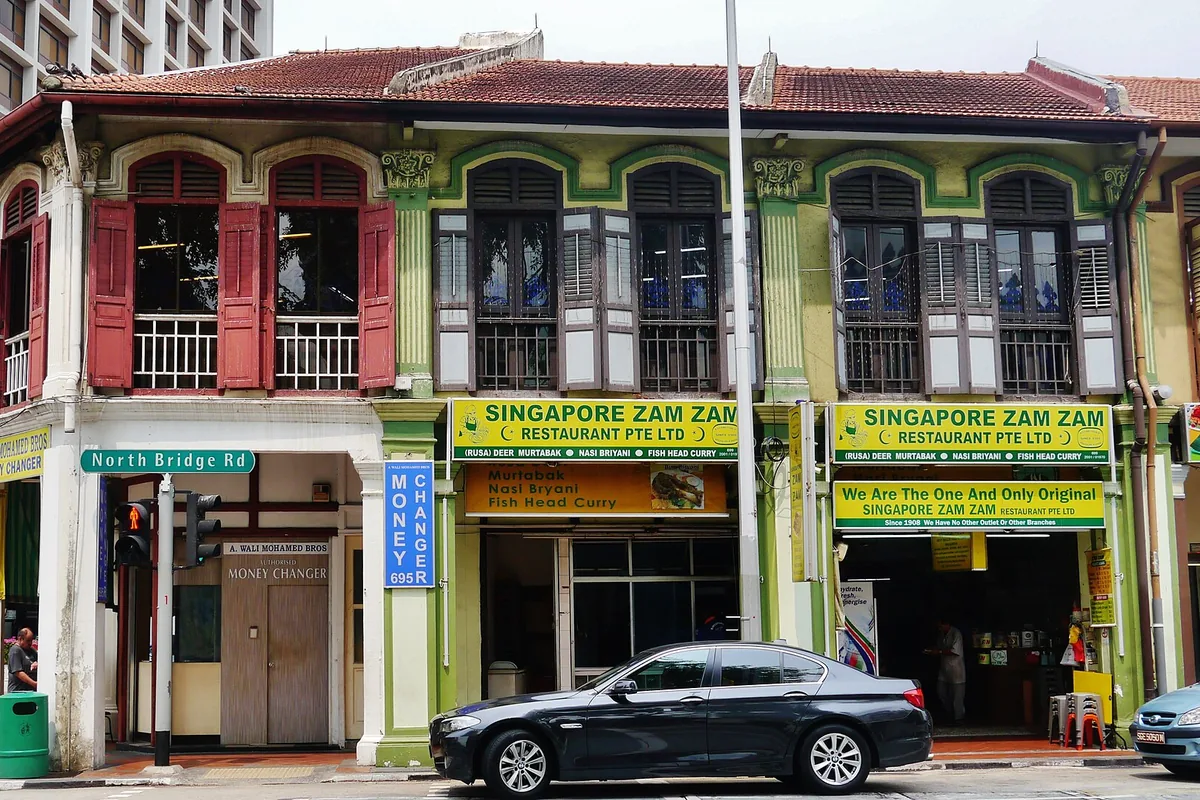
Zam Zam is one of the oldest restaurants in Singapore, serving murtabak opposite the Sultan Mosque in Kampong Gelam since 1908. Murtabak is a stuffed, pan-fried bread filled with minced meat, egg and onion, and it is served in wedges with a bowl of curry for dipping.
The restaurant is Indian Muslim and halal, and you can watch the cooks at the front stretching and folding the dough on a large hotplate. Choose mutton for the classic version, or chicken or beef. Sizes are usually listed on the menu, and the larger ones are made for sharing. The menu also includes biryani, roti prata and teh tarik, but the murtabak is the reason to come.
Zam Zam is a busy, no-frills shophouse restaurant, and service is quick. It makes a good meal before or after exploring Kampong Gelam, the historic Malay and Arab quarter, with the Sultan Mosque, Arab Street and the boutiques and murals of Haji Lane all within a few minutes’ walk.
The restaurant is reported to open from morning until late, although listings differ on exact hours, so check before you go. Kampong Gelam can be especially busy in the evenings and during Ramadan, when the area often hosts a bazaar and the restaurants fill up after sunset.
- How to get there: Bugis MRT (East-West Line and Downtown Line) is around a five to ten-minute walk away.
- How long to spend: 45 minutes.
- Best time to go: Late morning or mid-afternoon, before the evening crowds.
- Tip: One medium murtabak is plenty for two people with a drink each.
9. Jumbo Seafood (Riverside Point)
Jumbo Seafood is the restaurant group most associated with chilli crab, Singapore’s national dish, and its Riverside Point branch by Clarke Quay is the most convenient for visitors. Chilli crab is a whole mud crab cooked in a sweet, tangy, lightly spicy tomato and chilli sauce, thickened with egg.
The sauce is the best part, and the dish is traditionally served with mantou, small fried or steamed buns, for mopping it up. Black pepper crab is the other signature, with a drier, punchier coating, and many groups order one of each. Other dishes worth adding include cereal prawns, fried rice and stir-fried greens. Reviewers often describe Jumbo’s chilli crab as fairly mild, which suits travellers who are less used to spicy food.
Crab is priced by weight and by season, so ask the price of the crab you choose before it is cooked, and expect this to be one of the most expensive meals of a trip. A crab of a kilo or so is usually enough for two people with sides. The restaurant has riverside seating, which is a pleasant spot for dinner as the lights come on along the Singapore River.
Booking is strongly advised, especially for dinner and at weekends. Jumbo has several other branches in the city, so check you have booked the Riverside Point restaurant if that is the one you want.
- How to get there: Clarke Quay MRT (North East Line) is a short walk away; Fort Canning MRT is also nearby.
- How long to spend: One and a half to two hours.
- Best time to go: Dinner, ideally with a riverside table booked in advance.
- Tip: Order extra mantou for the sauce, and ask for a bib and wet wipes.
10. Candlenut
Candlenut is the world’s first Michelin-starred Peranakan restaurant, and it is the best place in Singapore for a polished introduction to Peranakan cooking. Peranakan, or Straits Chinese, cuisine blends Chinese ingredients with Malay spices and techniques, and it is one of the most distinctive cuisines in the region.
Chef-owner Malcolm Lee cooks family recipes alongside more modern dishes, and the restaurant keeps its star in the 2026 Michelin Guide Singapore. According to the Candlenut page on the COMO website, the menu includes his mother’s chicken curry, blue swimmer crab curry and babi buah keluak, pork cooked with the black, earthy nut that gives Peranakan cooking its signature flavour. The Ah-Ma-Kase menu, a set of dishes chosen by the kitchen, is the easiest way to taste widely, and an à la carte menu is also available.
The restaurant is part of the COMO Dempsey complex in Dempsey, a leafy former army barracks now filled with restaurants, galleries and shops. It is a relaxed, bright dining room, so it suits a celebration lunch as much as a dinner.
Reservations are taken through the restaurant’s online booking system, and it is wise to book ahead for dinner and weekends. Desserts such as kueh salat, a layered coconut and pandan cake, are worth saving room for.
- How to get there: Taxi or ride-hailing is easiest; Napier MRT on the Thomson-East Coast Line is around 15 minutes away on foot.
- How long to spend: Two hours.
- Best time to go: A weekday lunch is often easier to book than dinner.
- Tip: Combine lunch with a walk in the Singapore Botanic Gardens, which are next to Dempsey.
Singapore dishes to try
- Hainanese chicken rice: Poached chicken with fragrant rice cooked in stock, served with chilli, ginger and dark soy.
- Satay: Grilled skewers of marinated meat with peanut sauce.
- Char kway teow: Flat rice noodles fried with egg, cockles, Chinese sausage and dark soy sauce.
- Hokkien mee: Yellow and rice noodles fried with prawns and squid in a seafood stock, served with lime and sambal.
- Bak chor mee: Minced pork noodles in a vinegar and chilli dressing.
- Bak kut teh: Pork rib soup with garlic and white pepper.
- Laksa: Rice noodles in a spicy coconut curry broth with prawns and cockles.
- Murtabak: Stuffed, pan-fried bread with minced meat and egg.
- Roti prata: Flaky flatbread served with curry.
- Chilli crab: Mud crab in a sweet, tangy chilli and tomato sauce.
- Kaya toast: Toast with coconut jam and butter, eaten with soft-boiled eggs and coffee for breakfast.
- Chendol: Shaved ice with coconut milk, palm sugar and green rice flour jelly.
Hawker etiquette, booking, tipping and opening hours
Hawker centres: Find a seat before you order, especially at lunch. A packet of tissues on a table means the seat is reserved, a local habit known as “chope”. Order and pay at each stall; some bring the food to your table, while others ask you to wait. Many stalls accept cashless payment, but not all, so carry some cash. Returning your tray and crockery to the return stations is expected, and the NEA enforces tray return at hawker centres.
Opening hours: Every stall sets its own hours, and many close one day a week or sell out early. Hawker centres also close for a few days at a time for cleaning, and the dates are published in advance. Check before you go.
Booking: Hawker stalls do not take bookings. For restaurants such as Jumbo Seafood and Candlenut, book ahead online or by phone, especially for dinner and weekends.
Tipping: Tipping is not customary in Singapore. Most restaurants add a service charge and GST to the bill, which menus usually show as “++” after the prices. There is no service charge at hawker stalls.
How to pick where to eat
If you only have time for one hawker centre, choose Maxwell for convenience or Old Airport Road for choice. For a single famous dish, go to the specialist: Hill Street Tai Hwa for bak chor mee, Song Fa for bak kut teh, Zam Zam for murtabak. Keep restaurants for the dishes hawkers cannot easily do, such as whole crabs and a full Peranakan meal, and match each meal to the area you are sightseeing in that day.
Suggested eating plans for 1, 2 or 3 days
One day: Have bak kut teh at Song Fa for a late breakfast, chicken rice at Maxwell Food Centre for lunch while exploring Chinatown, and dinner at Satay Street at Lau Pa Sat after a walk around Marina Bay.
Two days: Start day two at Tiong Bahru Market, then spend the afternoon in Kampong Gelam with a murtabak at Zam Zam and noodles at Hill Street Tai Hwa. Finish with chilli crab at Jumbo Seafood by the river.
Three days: On day three, have breakfast at Tekka Centre in Little India, lunch at Candlenut after the Botanic Gardens, and an early dinner at Old Airport Road Food Centre. For drinks afterwards, our guide to the best bars in Singapore has ideas in Chinatown, Tanjong Pagar and Marina Bay.
Getting around
Singapore’s MRT network reaches almost every place on this list, and most entries are within a short walk of a station. You can tap in and out with a contactless bank card or a stored-value card; check the current options on the Land Transport Authority’s public transport pages. Buses fill the gaps, and taxis and ride-hailing apps are widely used and convenient for Dempsey. The city is hot and humid all year, so plan short walks between air-conditioned stops and carry water.
Where to stay for food lovers
Chinatown and Tanjong Pagar put Maxwell Food Centre and Lau Pa Sat within walking distance, with plenty of hotels in restored shophouses. Clarke Quay and the riverside are close to Song Fa and Jumbo, and well connected by MRT. Kampong Gelam and Bugis suit travellers who want Zam Zam and Hill Street Tai Hwa on the doorstep. Little India is a good-value base near Tekka Centre. Marina Bay is the most expensive area, but it is close to Lau Pa Sat and the city’s main sights.
Budget guidance
Cheap eats: Hawker centres are the best value in the city. A plate of chicken rice, a bowl of noodles or a murtabak with a drink costs very little, and you can eat very well on a tight budget.
Mid-range: A meal at Song Fa with sides, a satay feast at Lau Pa Sat or a casual restaurant meal sits in this tier.
Special occasion: Chilli crab at Jumbo Seafood and a set menu at Candlenut are the splurges on this list. Crab is priced by weight, so ask before ordering, and remember service charge and GST are added at restaurants.
Frequently Asked Questions
What is the best food in Singapore?
The dishes most often recommended are Hainanese chicken rice, chilli crab, laksa, satay, char kway teow and bak kut teh. You can try most of them cheaply at hawker centres such as Maxwell Food Centre, Old Airport Road and Lau Pa Sat.
What is the most famous hawker centre in Singapore?
Maxwell Food Centre and Lau Pa Sat are the best known among visitors, thanks to Tian Tian chicken rice and Satay Street. Old Airport Road and Tiong Bahru Market are just as highly rated by locals.
Is hawker food in Singapore safe to eat?
Yes. Hawker stalls are licensed and regulated by the National Environment Agency, and hawker food is eaten daily by most Singaporeans. Choosing busy stalls with a steady turnover is a sensible habit anywhere.
Do you tip in Singapore?
Tipping is not expected. Restaurants usually add a service charge and GST to the bill, and hawker stalls do not expect a tip.
Do hawker stalls accept cards?
Many stalls accept cashless payments such as QR code payments, and some take cards, but others are cash only. Carry some cash in small notes to be safe.
What is the national dish of Singapore?
Chilli crab and Hainanese chicken rice are both widely described as national dishes. Try chicken rice at Maxwell Food Centre and chilli crab at a seafood restaurant such as Jumbo Seafood.
Discover Singapore
Singapore’s hawker centres are the best introduction to eating in Southeast Asia, and the region has plenty more to taste. If Singapore is one stop on a longer trip, our guide to Vietnam’s best street food cities shows where to find the next great noodle bowl, and our pick of the best places to visit in Thailand is a good next step for planning a route north. Heading on to Japan? Our guide to where to eat in Osaka covers the city’s street food and market stalls.
Featured image: Photo by kallerna, CC BY-SA 4.0, cropped, via Wikimedia Commons