Last updated: November 2026
Tokyo has more serious bars than almost any city on earth, from six-seat counters run by one bartender to wooden alleys where every doorway is a different world. The best bars in Tokyo include Bar BenFiddich and Bar High Five for cocktails, Golden Gai for tiny themed bars, the New York Bar for a skyline view and Beer Hall Lion Ginza for a taste of 1930s Tokyo. The rest of our list adds Bar Trench, Gen Yamamoto, two of the city’s best known drinking alleys and a craft beer bar that helped start Japan’s craft beer scene.
Tokyo bars are small, polite and often particular about how they work. Many have only a handful of seats, some do not take walk-ins, and most add a seating charge, so a little planning goes a long way. We avoid exact prices and opening hours here because both change often, and we say “check before you go” wherever listings disagree. You will find a free printable 3-day Tokyo bar itinerary further down. If you are still planning your days, start with our guide to the best places to visit in Tokyo and use this list for the evenings. For official visitor information, see the Japan National Tourism Organization and GO TOKYO.
Quick answer: What are the best bars in Tokyo? The best bars in Tokyo are Golden Gai, Bar BenFiddich, Bar High Five, Bar Trench, Gen Yamamoto, the New York Bar, Nonbei Yokocho, Omoide Yokocho, Beer Hall Lion Ginza and Beer Club Popeye. For a first night, start with Golden Gai. For the best cocktails, book a serious counter such as Bar High Five or Gen Yamamoto. For something relaxed and historic, choose Beer Hall Lion Ginza.
Free printable itinerary
Planning a trip? Download our 3-Day Tokyo Bar Itinerary as a PDF: the day-by-day plan plus all 10 places with directions and map links. Print it or keep it on your phone.
Quick comparison: the best bars in Tokyo
| Bar | Area | Best for | Style |
|---|---|---|---|
| Golden Gai | Shinjuku | Tiny themed bars | Alley bar crawl |
| Bar BenFiddich | Nishi-Shinjuku | Herbal, creative cocktails | Cocktail counter |
| Bar High Five | Ginza | Classic cocktails | Cocktail counter |
| Bar Trench | Ebisu | Absinthe and classics | Small cocktail bar |
| Gen Yamamoto | Azabu-Juban | A tasting of seasonal cocktails | Tiny cocktail counter |
| New York Bar | Shinjuku | A skyline view | Hotel bar |
| Nonbei Yokocho | Shibuya | A lantern-lit drinking alley | Alley bars |
| Omoide Yokocho | Shinjuku | Smoky grills and cheap drinks | Alley izakaya |
| Beer Hall Lion Ginza | Ginza | A historic beer hall | Beer hall |
| Beer Club Popeye | Ryogoku | Craft beer on tap | Craft beer bar |
1. Golden Gai
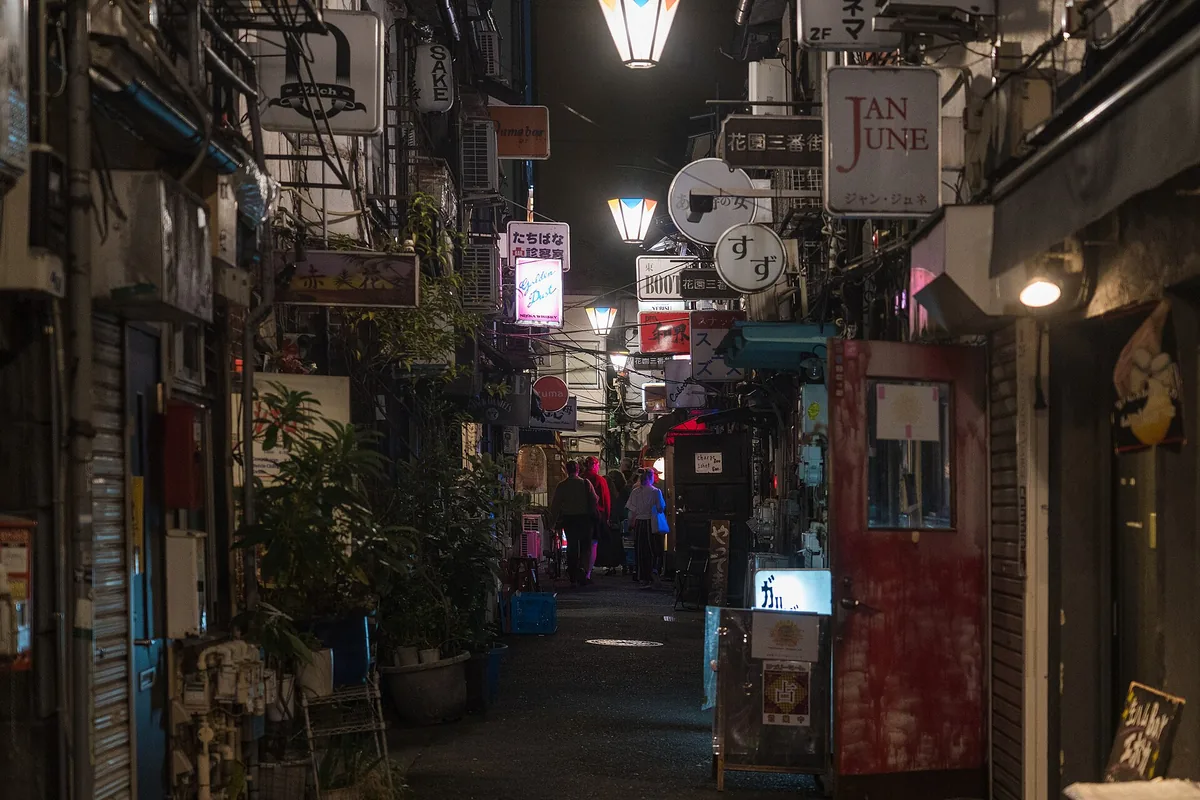
Golden Gai is the best place in Tokyo to start a night of bar hopping. This block of six narrow alleys in Shinjuku holds a few hundred tiny bars, many with room for fewer than ten people, and each has its own theme: film, jazz, punk, manga, horror, rock or just a friendly owner and a shelf of whisky. The wooden buildings survived the redevelopment that swept most of the city, which is why the area feels like a film set from the 20th century.
Most bars charge a seating or cover charge, often per person, and some are regulars-only or turn away visitors when seats are limited. A growing number have signs in English and welcome visitors, and these are the easiest choice on a first night. Look for a sign that lists the charge, and do not be embarrassed to walk on if a bar does not suit you. Guides often suggest choosing two or three bars and staying for a drink or two in each, rather than trying to see them all, because the charge adds up quickly.
Many bars are cash only, so bring enough, and ask before taking photos inside because some bars do not allow them. The alleys are narrow and noisy at the weekend, and the area is best from the evening onwards. Keep your voice down when you leave, since people live and work nearby.
If you would rather skip the cover charge, ask at the door whether it applies before you sit down. Staff are used to the question.
- How to get there: JR, Tokyo Metro or Toei stations in Shinjuku, then a walk to Kabukicho. Shinjuku-sanchome is the closest station for many routes, so check a map app.
- How long to spend: Two to three hours, across two or three bars.
- Best time to go: From early evening, on a weeknight if you want a quieter alley.
- Tip: Carry cash, ask about the cover charge before you sit, and respect any no-photo signs.
2. Bar BenFiddich
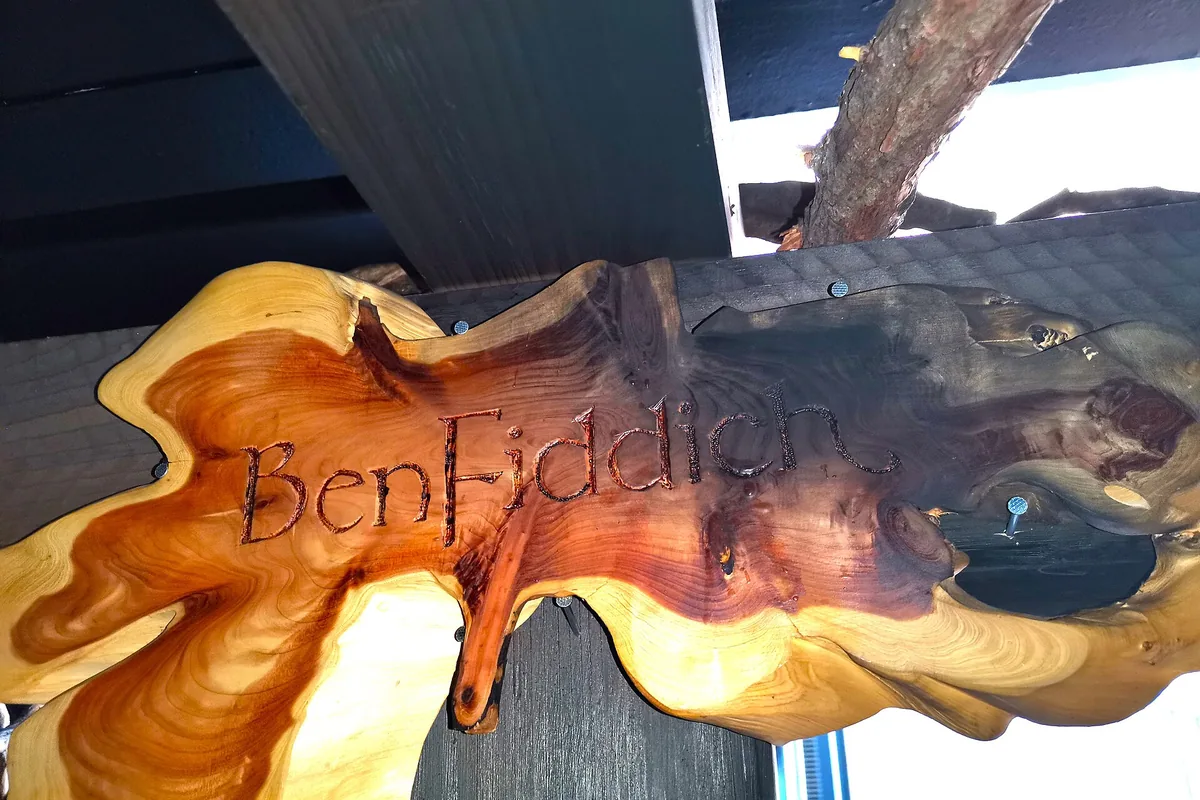
Bar BenFiddich is the best bar in Tokyo for creative, herb-driven cocktails. It is a tiny counter bar in a Nishi-Shinjuku building run by bartender Hiroyasu Kayama, who is known for making his own tinctures and using herbs and botanicals, some grown on a family farm. It has appeared on the World’s 50 Best Bars list in recent years, and the 2026 list included two Tokyo bars, so it remains one of the city’s best known cocktail addresses.
The style is closer to an apothecary than a typical bar. Drinks are built from fresh ingredients, infusions and house bitters, with absinthe and spirits poured in a precise, almost theatrical way. If you do not have a favourite, ask the bartender for a drink based on a flavour you like, such as citrus, smoke or bitter herbs, and let them decide. Tell them if you want something lighter, because many drinks are strong.
Seating is very limited. The bar takes reservations through its official online booking page, where each month’s dates are usually released around the 20th of the previous month, and it says walk-ins may not be possible because booked guests come first. Opening days can be irregular, so check the schedule as well. Expect a seating charge and a calm, quiet atmosphere, and treat the counter with respect: no loud groups and no flash photography.
It sits in a business district rather than a nightlife area, so it is worth pairing with a walk through Shinjuku afterwards. Allow time for two drinks, which is usually enough to enjoy the style.
- How to get there: A short walk from Shinjuku Station’s west side, or the Nishi-Shinjuku area stations. Check the exact route in a map app.
- How long to spend: One to two hours.
- Best time to go: Early in the evening, when it is quieter and the bartender has time to talk.
- Tip: Check booking rules and the closed day before you go, and describe the flavours you like.
3. Bar High Five
Bar High Five is the best bar in Tokyo for classic cocktails made with precision. It is a basement bar in Ginza run by Hidetsugu Ueno, who is known for his precise technique and hand-carved ice and has long been one of the city’s best known bartenders. The bar has featured on the World’s 50 Best Bars and Asia’s 50 Best Bars lists many times, and cocktail fans often describe it as essential Tokyo.
The menu is short or sometimes absent. The usual way is to tell the bartender what spirit and flavour you like, and he builds a drink from there. Classics such as the martini, the gimlet and the Japanese whisky highball are made with care and balance, so if you want to understand Tokyo’s cocktail style, this is a good place. The room is small, dark and quiet, with a long counter and a serious but friendly mood.
Booking rules have changed over the years, and sources disagree on whether reservations are taken, so check before you go. Expect a seating charge, and arrive earlier in the evening if you plan to walk in, since seats are few. Ginza is a smart district, so dress neatly. Phones should be on silent, and photos of the bar and the staff may not be welcome.
The area around the bar is full of other small bars, so it is a good base for a Ginza evening. After a drink here, consider the historic beer hall nearby for a more relaxed second stop.
- How to get there: Ginza Station (Tokyo Metro), then a short walk. Look for the building entrance and stairs to the basement.
- How long to spend: One to two hours.
- Best time to go: Early evening, soon after opening, when seats are easier to find.
- Tip: Ask for a classic cocktail made your way, and check whether the bar takes bookings.
4. Bar Trench
Bar Trench is the best bar in Tokyo for absinthe and old-fashioned cocktails. It is a small, atmospheric bar in Ebisu with a dark interior, candlelight and a shelf of bottles, including a large range of absinthe, and it has appeared on Asia’s best bars lists for many years. It has the feel of a speakeasy without trying too hard, and it is popular with both local bartenders and visitors.
The drinks mix classic recipes with creative twists, and the house absinthe drip is a good place to start if you are curious about the spirit. If absinthe is not for you, the bartenders are happy to make a gin, whisky or rum cocktail. The room is small, so the best way to enjoy it is to sit at the counter and talk to the bartender. Expect a seating charge and a relaxed but focused atmosphere.
Guides say Bar Trench has long worked as a walk-in bar and does not take reservations, which means arriving early or being ready to wait. Hours vary by source, so check before you go. Ebisu is a good area for a relaxed evening, with many restaurants and izakaya nearby, so you can eat first and drink afterwards.
Because it is small, large groups may struggle. Keep to two or three people for the best experience, and be patient at busy times. The bar is generally best at the start of the week, when it is quieter.
- How to get there: JR or Tokyo Metro Ebisu Station, then a short walk. Check the route in a map app.
- How long to spend: One to two hours.
- Best time to go: Early evening, or early in the week.
- Tip: Try an absinthe drip if you are curious, and go with one or two friends rather than a group.
5. Gen Yamamoto
Gen Yamamoto is the best bar in Tokyo for a quiet, seasonal cocktail tasting. It is a tiny counter in the Azabu-Juban area with just a handful of seats, run by Gen Yamamoto himself, who builds drinks around seasonal Japanese produce such as fruit and vegetables. Many guides describe the experience as a tasting menu in cocktail form, with several small drinks that follow the seasons.
The bar is calm and serious, and the appeal is in watching the bartender work. Do not expect a long list of options. Instead, you choose a tasting set or a few drinks and let him lead. Guides say reservations are needed, often a week or more in advance, so plan ahead and check the official site for the current way to book. It is not the place for a large group or a loud night.
Because the cocktails depend on seasonal produce, the menu changes through the year, so each visit is different. Drinks are made with care, and there is little or no food, so eat beforehand. Expect a seating charge and a higher total than a casual bar, so treat it as a special evening. Arrive on time, since there are few seats.
Azabu-Juban is a pleasant neighbourhood to explore before or after, with small shops and restaurants. It is a more relaxed alternative to the busy districts of Roppongi and Shinjuku.
- How to get there: Azabu-Juban Station (Tokyo Metro or Toei), then a short walk. Check the route in a map app.
- How long to spend: About 90 minutes.
- Best time to go: A booked early evening slot, before dinner or as a late aperitif.
- Tip: Book well ahead, arrive on time and eat beforehand.
6. New York Bar, Park Hyatt Tokyo
The New York Bar is the best bar in Tokyo for a skyline view. It sits high in the Shinjuku Park Tower, in the Park Hyatt Tokyo, and gained wide fame as a setting in the film Lost in Translation. The hotel reopened in December 2025 after a 19-month renovation, and the New York Grill and Bar on the 52nd floor was restored rather than replaced, so the room still has big windows over the city and live music on many evenings.
This is a place for a slow drink rather than a wild night. The dress style is smart casual, the lighting is low and the music is live on many nights, when a cover charge may apply on top of the drinks and service charge, so check before you go. The cocktails are good and the whisky list is strong, but the main reason to come is the view, which is best on a clear evening when the city lights stretch to the horizon.
The hotel says the New York Bar does not take reservations, so arrive early or expect to wait for a window seat. Guests under 20 are not admitted, even with an adult, and the hotel may apply dress rules, so check before you go. Because the hotel has been renovated, details such as hours, seating and music may differ from older guides.
It is also a good option if the weather is poor or you want a comfortable end to a day of sightseeing. Use it for one drink, and then move on to a smaller bar in Shinjuku.
- How to get there: JR, Tokyo Metro or Toei stations in Shinjuku, then walk to Shinjuku Park Tower, or use the hotel shuttle if available. Check the route.
- How long to spend: One to two hours.
- Best time to go: Just before sunset, so you see the view in daylight and then at night.
- Tip: Dress smartly, check the cover charge and arrive early, since the bar does not take bookings.
7. Nonbei Yokocho
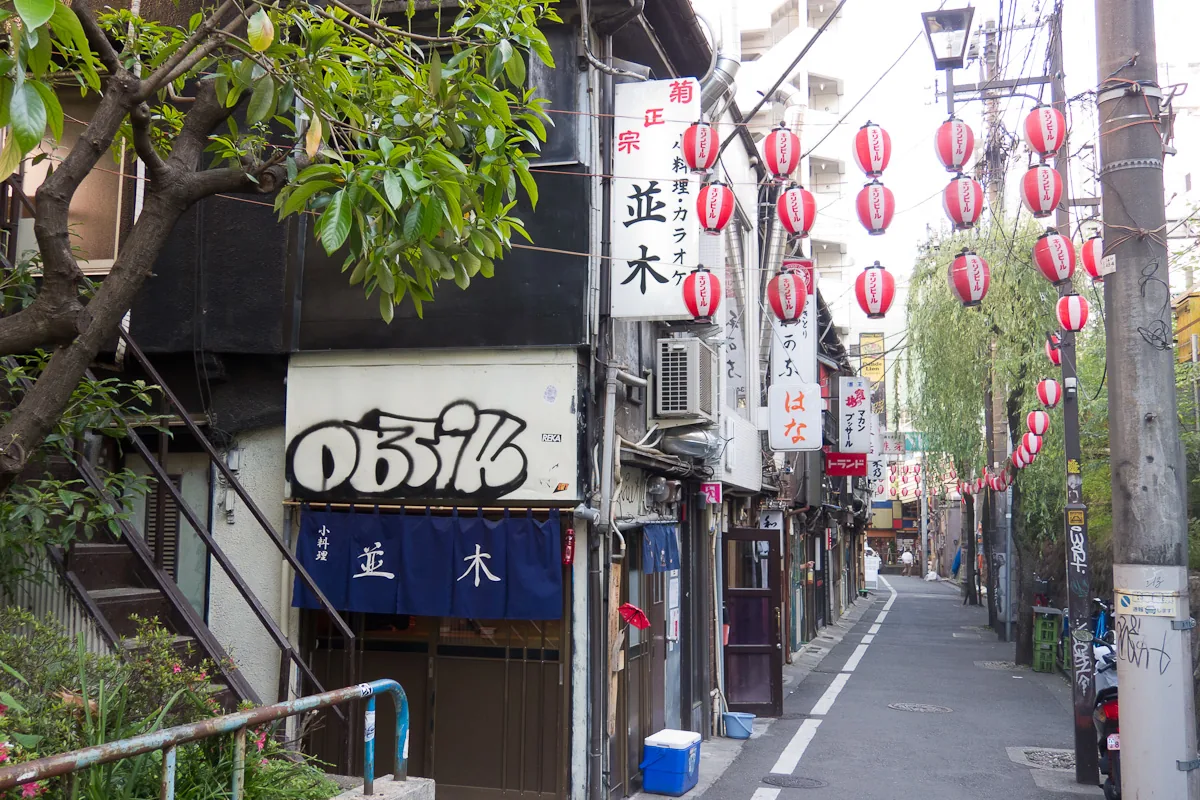
Nonbei Yokocho is the best place in Tokyo for a quiet alley of tiny bars in Shibuya. The name means “drunkards’ alley”, and it is a small lane of narrow bars and snack bars close to Shibuya Station, with lantern-lit signs and doors only wide enough for a few people at a time. It is far smaller than Golden Gai and much quieter, which makes it a good choice if you want atmosphere without the crowds.
The bars here are usually small, with a counter, a handful of stools and an owner who knows the regulars. Some welcome visitors and some are for locals, so look for signs that show a menu or the cover charge. As elsewhere, expect a seating charge, and be ready to leave if a bar is full. Cash is useful, since some bars do not take cards.
Because the alley is short, it works well as a first or last stop in a night around Shibuya rather than a whole evening. After one or two drinks you can move on to the restaurants and bars in the surrounding streets. Guides say the alley has a lively but friendly mood, and it is a good place to meet local drinkers if you speak a little Japanese or are happy to point and smile.
Details of individual bars change often, so we have not listed any by name. Walk the lane and choose the bar that feels welcoming. Check current information before you go, in case of redevelopment or closures.
- How to get there: JR or metro Shibuya Station, then a short walk near the tracks. Check the exact exit in a map app.
- How long to spend: One to two hours.
- Best time to go: Early evening, before the weekend crowds arrive.
- Tip: Choose a bar that shows its charges, and keep your voice down in the lane.
8. Omoide Yokocho
Omoide Yokocho is the best place in Tokyo for smoky yakitori and cheap drinks in a classic alley. Nicknamed “Memory Lane”, this narrow lane beside the tracks at Shinjuku Station is lined with tiny stalls and izakaya where cooks grill skewers over charcoal, and customers sit shoulder to shoulder on stools. It is more of an eating and drinking alley than a bar district, but the mood is exactly what many visitors imagine of old Tokyo.
Order a beer, a highball or sake and a few skewers, and watch the cooks work. Many places use a set menu or a simple list, and some now have English signs. Seating is tight, and you may be asked to share a table, which is part of the experience. Some stalls charge a seating or table fee, so check before you sit. The alley is busy at weekends, when queues form outside the best known places.
The area is open and noisy, with a lot of smoke from the grills, so wear clothes you do not mind smelling of charcoal. Tourists are common here, so it is an easy place for a first night. Try one place for skewers and another for a second round, rather than staying in one.
Alleys like this are at risk from redevelopment, so check current information before you plan a visit, and respect the neighbours by keeping noise down late at night.
- How to get there: Shinjuku Station west exit, then a short walk beside the tracks.
- How long to spend: One to two hours.
- Best time to go: Early evening, before the busiest hour.
- Tip: Check the seating charge, order a few skewers to share and be ready to squeeze in.
9. Beer Hall Lion Ginza
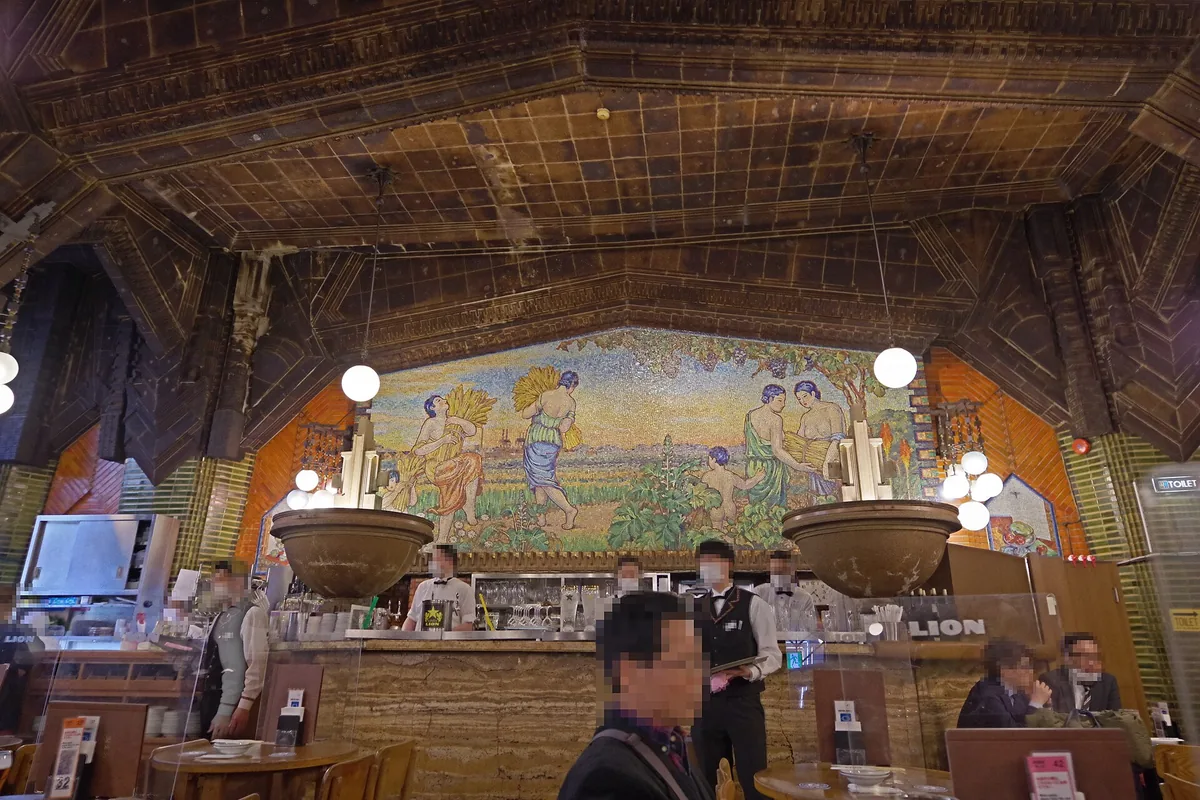
Beer Hall Lion Ginza is the best bar in Tokyo for a historic beer hall. The building dates from 1934 and is widely described as Japan’s oldest surviving beer hall, with a tall, tiled interior and a great hall that still feels like the 1930s. It was registered as a tangible cultural property in 2022, and the hall remains in operation under the Sapporo brand, which makes it a rare place where you can drink inside a piece of heritage.
The atmosphere is relaxed and noisy, with long tables, large glasses of beer and a menu of beer hall food such as sausages and fried dishes. It is a good place for a group, and it works as a first stop before cocktails. The staff are used to visitors, and it is far easier to enter than a tiny cocktail bar, since you can simply walk in and sit.
Because it is popular, queues form at peak times, particularly on weekends and in the early evening. Weekday afternoons and early evenings are quieter. Hours and menus vary, so check before you go. Some floors are for different styles of food, so ask which floor you want.
The hall sits in the middle of Ginza, so it is easy to combine with a walk and with Bar High Five. Take a moment to look at the building itself, which is one of the few of its kind left in the city.
- How to get there: Ginza Station or Shimbashi Station, then a short walk to Ginza 7-chome. Check the route.
- How long to spend: One to two hours.
- Best time to go: Weekday late afternoon, or early evening before the rush.
- Tip: Order a classic beer with sausages, and arrive early at weekends.
10. Beer Club Popeye
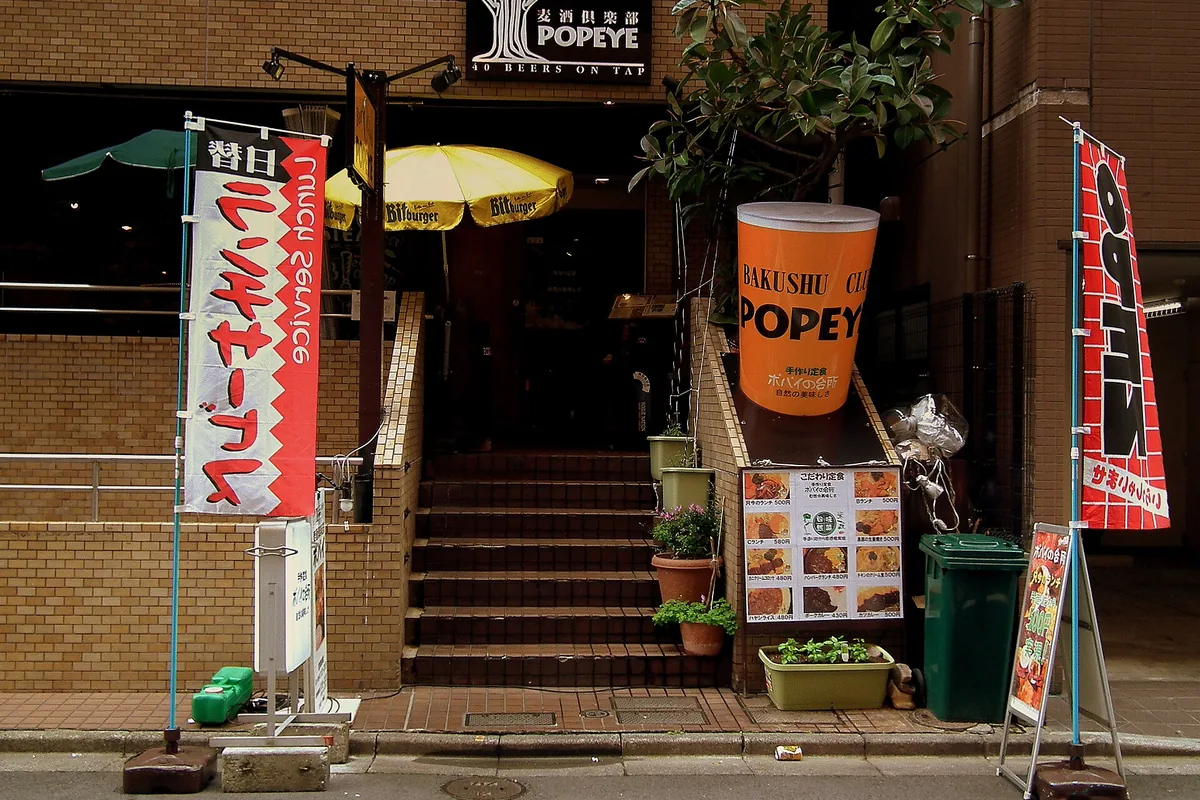
Beer Club Popeye is the best bar in Tokyo for craft beer on tap. It is a long-running beer bar near Ryogoku Station, close to the sumo district, and it is often described as one of the pioneers of craft beer in Japan. Guides mention a very large tap list, with around seventy beers on tap at any one time, mostly Japanese craft beers alongside international bottles, and a menu of simple food to go with them.
It is a friendly, casual place, and a good break from the more formal cocktail bars. If you do not know where to start, ask the staff for a recommendation, or order a tasting set if one is offered. The bar draws locals, beer fans and visitors, and the staff are used to explaining the beers in English. It is a good choice if you are visiting the sumo area or the nearby museums.
Details such as opening days and hours differ between sources and may change, and some listings suggest the bar is closed on one day a week, so check before you go. Expect crowds at busy times, since word has spread among craft beer fans. The bar is small enough that large groups should arrive early.
Ryogoku is also a good place to eat, with many restaurants serving chanko nabe, the stew eaten by sumo wrestlers, so you can combine a meal and a beer in the same area. It is easy to reach by train, and it is a calm change from central Tokyo.
- How to get there: JR Sobu Line or Toei Oedo Line to Ryogoku Station, then a short walk. Check the route.
- How long to spend: One to two hours.
- Best time to go: Early evening, before the bar fills up.
- Tip: Ask the staff for a recommendation, and check the weekly closing day.
Tokyo bar basics: charges, etiquette and what to expect
Tokyo bars follow a few simple rules, and knowing them makes the night smoother.
- Seating charge (otoshi): Many small bars add a fixed charge per person, sometimes with a small snack. Ask or look for a sign before you sit.
- No tipping: Tipping is not expected in Tokyo bars, and staff may politely refuse it.
- Cash: Many small bars take cash only, so carry enough.
- Smoking: Indoor smoking is restricted in most venues, but some bars have designated areas. Look for the sign at the door.
- Photos: Ask before taking photos, especially in small bars and cocktail counters.
- Reservations: The top cocktail bars often need them, and small bars may be full. Check each bar’s official channel.
- Last trains: Trains stop running around midnight, so plan your route home.
Suggested bar plans for 1, 2 or 3 days: a 3-Day Tokyo Bar Itinerary
Use this plan to cover the best bars without too much travel. Our free printable 3-day Tokyo bar itinerary has the same stops in a handy format.
Day 1: Shinjuku
Start in the early evening at Omoide Yokocho for skewers and a drink, then walk to Golden Gai and choose two small bars. If you want a special end to the night, take a taxi to Bar BenFiddich for a final cocktail, after checking its booking and closing day.
Day 2: Ginza and Azabu-Juban
Meet in Ginza late in the afternoon for a beer at Beer Hall Lion Ginza, then walk to Bar High Five for a classic cocktail. If you have booked, finish at Gen Yamamoto in Azabu-Juban, which is a short ride by train or taxi from Ginza.
Day 3: Shibuya, Ebisu and the view
Begin in Nonbei Yokocho in Shibuya with one drink, then travel to Bar Trench in Ebisu. If you want a view, visit the New York Bar just before sunset on another day instead, or add Beer Club Popeye in Ryogoku in the early evening for craft beer before a last night in the city.
Getting around Tokyo
Trains and the metro are the best way to reach Tokyo bars. Shinjuku, Shibuya, Ginza and Ebisu are all on major lines, and a contactless transport card or a phone wallet makes tapping in easy. Check the last train before you start, since most lines stop around midnight, and the official route planner at Tokyo Metro helps. Taxis are available but cost more, and they are useful for late nights or to link two districts. Walking between bars in the same area is easy and often the best way to discover small places.
How much does a night out in Tokyo cost?
A night in Tokyo bars can be cheap or expensive depending on where you go. Alley bars and beer halls are the budget end, while top cocktail counters and hotel bars cost more.
- Budget: Beer halls, craft beer bars and alley stalls, where drinks and snacks are modest.
- Mid-range: Golden Gai and similar small bars, where seating charges add up if you move often.
- Treat yourself: World-ranked cocktail bars and the hotel bar, where a few drinks make a splurge.
Check the charge before you sit, and keep small notes for cash-only bars.
Where should you stay in Tokyo for bars?
- Shinjuku: The best base for Golden Gai, Omoide Yokocho, BenFiddich and the New York Bar, with excellent transport.
- Ginza: Smart and central, close to Bar High Five and Beer Hall Lion Ginza.
- Shibuya and Ebisu: Lively and easy to reach, close to Nonbei Yokocho and Bar Trench.
- Roppongi and Azabu-Juban: Good for Gen Yamamoto and a quieter feel.
Frequently Asked Questions
What are the best bars in Tokyo?
The best bars in Tokyo include Golden Gai for tiny themed bars, Bar BenFiddich and Bar High Five for cocktails and the New York Bar for a view. Beer Hall Lion Ginza and Beer Club Popeye are good for beer.
Which area of Tokyo is best for bars?
Shinjuku is the best area for a first visit, with Golden Gai, Omoide Yokocho and several top cocktail bars close together. Ginza is best for classic cocktails and Shibuya and Ebisu are good for a more relaxed night.
Do Tokyo bars charge a cover?
Many small bars add a seating charge or cover charge per person, often with a small snack. Check the sign or ask before you sit, and expect it to be more common in tiny bars than in beer halls.
Do you need to book bars in Tokyo?
You need to book the most popular cocktail bars, such as Gen Yamamoto, and it helps at others, but many alley bars and beer halls take walk-ins. Check each bar’s official channel for the current rules.
Do you tip in Tokyo bars?
No, tipping is not expected in Tokyo bars and staff may politely refuse it. A seating charge or service charge may already be included.
Can tourists go into Golden Gai bars?
Yes, many Golden Gai bars welcome visitors, especially those with English signs, but some are for regulars only. Look for a sign that shows the charge, and move on politely if a bar is not welcoming.
Discover more of Tokyo
Continue your trip with our guide to the best day trips from Tokyo, and for more nights out in Asia see our guides to the best bars in Bangkok and the best night markets in Bangkok. If Tokyo is one stop on a longer trip, our guide to the best places to visit in Japan will help you plan the rest of the route.
Featured image: Photo by Basile Morin, CC BY-SA 4.0, cropped, via Wikimedia Commons