Last updated: November 2026
The best places to eat in Paris are not the glossy tourist restaurants by the monuments but the historic bouillons, neighbourhood bistros, specialist crêperies and market stalls where the city’s food is at its most honest. Eating well here can be cheap, and the best meals often come from the simplest, most traditional places.
For a first visit, start with Bouillon Chartier for a classic French meal, add Breizh Café for Breton galettes and finish with a steak frites at Le Relais de l’Entrecôte. This guide covers ten places to eat, how each one works, whether you can book and what to order. It also includes a free printable 3-day food itinerary that groups the places by area, so you can eat your way through the city without crossing it twice a day.
For general planning, the Paris tourist office has current listings and events. Opening days, booking rules and menus change often, and many small restaurants close on Sundays or Mondays, so check before you go. Anything this guide could not confirm is marked “check before you go”. For specific dishes, see our guide to the best foods to try in Paris.
Quick answer: Where are the best places to eat in Paris? Bouillon Chartier is the best classic and good-value choice, Breizh Café is the best for crêpes and galettes and Bistrot Paul Bert is the best traditional bistro. For something quick and cheap, try L’As du Fallafel in the Marais or the covered market at Aligre.
Free printable itinerary
Planning a trip? Download our 3-Day Paris Food Itinerary as a PDF: the day-by-day plan plus all 10 places with directions and map links. Print it or keep it on your phone.
Quick list: best places to eat in Paris
| Place | Area | Best for | Price tier |
|---|---|---|---|
| Bouillon Chartier | Grands Boulevards | A classic French meal in a grand dining room | Cheap |
| Bouillon Pigalle | Pigalle | Traditional dishes in a lively room | Cheap |
| Breizh Café | Marais | Buckwheat galettes and cider | Mid-range |
| L’As du Fallafel | Marais | A quick falafel lunch | Cheap |
| Bistrot Paul Bert | 11th arrondissement | A classic bistro dinner | Mid-range |
| Chez Janou | Marais | Provençal food and chocolate mousse | Mid-range |
| Le Relais de l’Entrecôte | Saint-Germain | Steak frites with a secret sauce | Mid-range |
| Du Pain et des Idées | Canal Saint-Martin | A famous bakery | Cheap |
| Marché d’Aligre | 12th arrondissement | Market lunch and picnic supplies | Cheap to mid-range |
| Le Comptoir du Relais | Saint-Germain | A modern bistro dinner | Comfortable |
1. Bouillon Chartier
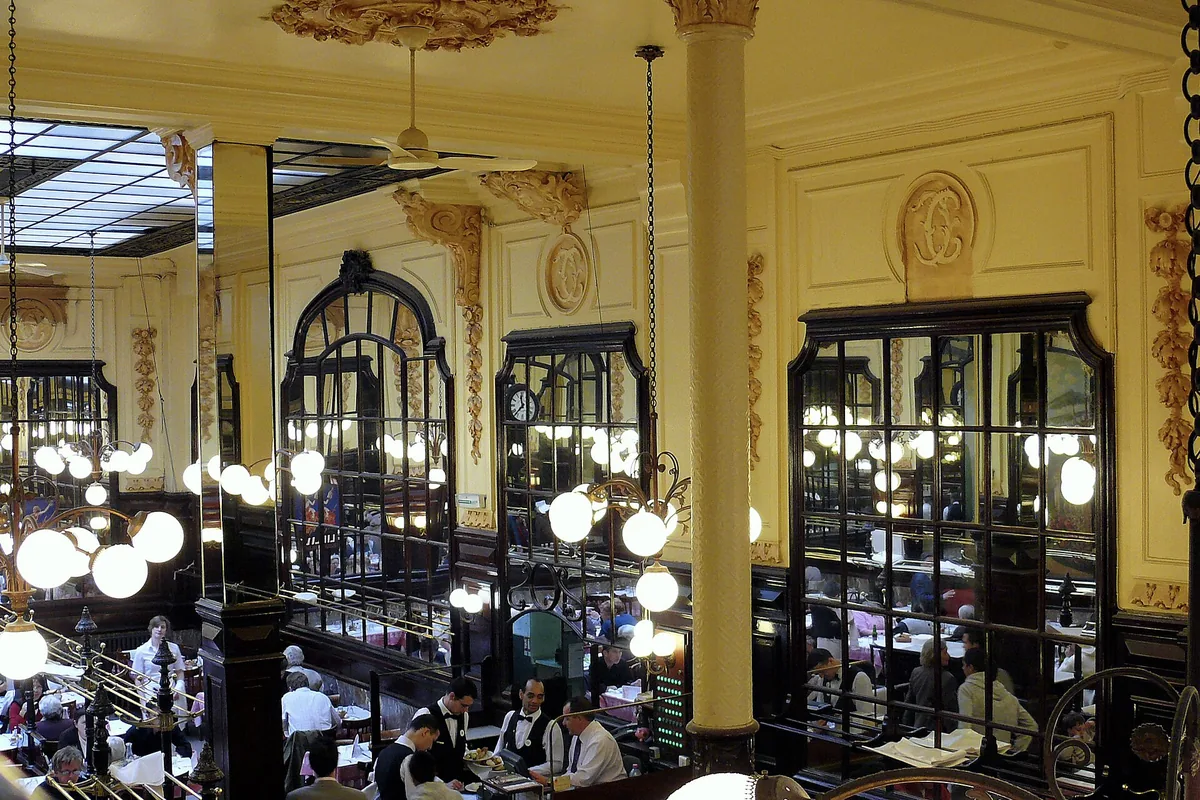
Bouillon Chartier is the best place to eat in Paris for a classic meal in a grand old dining room without paying restaurant prices. The Grands Boulevards restaurant at 7 rue du Faubourg Montmartre is a historic bouillon, a type of cheap, fast, traditional restaurant that began in the 19th century to feed workers. The high ceilings, brass luggage racks and waiters in black and white aprons are a big part of the experience.
The menu is long and traditional: onion soup, eggs with mayonnaise, snails, steak frites, duck confit, stews and simple desserts. Prices are low compared with most restaurants in central Paris, and service is quick and brisk. Waiters write the order on the paper tablecloth and may seat you with strangers if the room is busy, which is part of the charm.
The restaurant is known for not taking reservations at the Grands Boulevards branch, so expect a queue at peak times. Reports vary, with some visitors reporting long waits around dinner and others getting a table quickly late in the evening. Going at an off-peak time, for example in the middle of the afternoon or after the main dinner rush, is the best way to avoid a long line. A second branch in Montparnasse follows the same no-booking rule.
The official site lists continuous service every day, but check before you go. The food is honest rather than refined, so go for the setting and the value and you will not be disappointed.
- How to get there: Metro to Grands Boulevards (lines 8 and 9), then a short walk.
- How long to spend: About an hour.
- Best time to go: Mid-afternoon or late evening to avoid the longest queue.
- Tip: Be ready to share a table, and ask for the bill when you are ready, since the staff will not rush you but will turn the table quickly.
2. Bouillon Pigalle
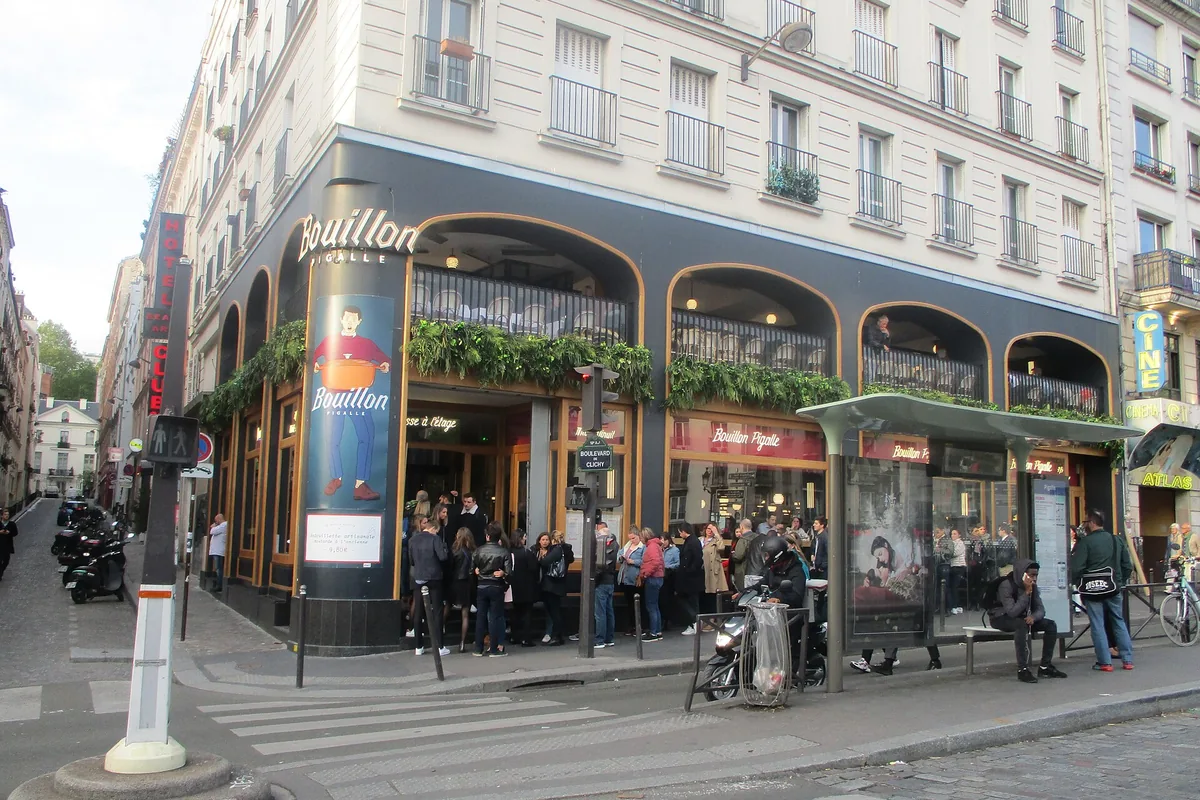
Bouillon Pigalle brings the same bouillon formula to Montmartre’s foot, with a big, bright room and an affordable menu of French classics. It is on boulevard de Clichy in the 18th arrondissement and is one of a newer wave of bouillons that has revived the format for a modern crowd. The dining room is large and lively, with the style of a traditional brasserie.
The food is the kind you expect from a bouillon: soups, charcuterie, eggs mayonnaise, roast chicken, steak with chips and classic desserts such as profiteroles. The point is value and tradition rather than creativity, and it is a good place for a budget meal before or after an evening in Pigalle or Montmartre.
Unlike Chartier, Bouillon Pigalle takes table reservations, and its official site has an online booking page. Walk-ins are still welcome and the queue tends to move quite fast, but booking is useful on busy evenings. The official site lists the restaurant as open every day with continuous service. If you are walking in, arrive early or late to shorten the wait.
Compared with Chartier, Pigalle is less of a museum piece and more of a lively neighbourhood restaurant. It makes a useful second bouillon if the queue at the Grands Boulevards is too long, and it is easy to combine with a walk up to Sacré-Coeur or an evening drink in the area.
- How to get there: Metro to Pigalle (lines 2 and 12), then a short walk.
- How long to spend: About an hour.
- Best time to go: Early in the evening or after the main dinner rush.
- Tip: Book a table on the official website for busy evenings, or arrive early or late if you are walking in.
3. Breizh Café
Breizh Café is the best place in Paris for Breton crêpes and galettes, and it takes the dish far beyond the street stall. The Marais branch on rue Vieille du Temple is a Breton crêperie that uses organic buckwheat flour for its savoury galettes, with good butter and carefully chosen toppings, followed by sweet crêpes to finish.
The format is simple: choose a galette, such as one with ham, cheese and egg or a more creative combination with smoked fish or vegetables, then finish with a sweet crêpe with salted caramel or chocolate. The drinks list leans towards cider, and the menu includes a range of ciders from small producers, which is part of the experience. Order a bottle to share for the full effect.
It is popular, and guides advise booking, particularly for dinner and weekends. The official site lists the Marais branch as open every day and takes bookings online, but times can change, so check before you go.
Breizh Café suits almost everyone, including vegetarians, and is easy to build into a Marais walk. After a meal, the Musée Picasso and the shops of the Haut Marais are within a few minutes on foot, the Place des Vosges is a short walk further so it fits neatly into a day of sightseeing.
- How to get there: Metro to Saint-Sébastien-Froissart, then a short walk.
- How long to spend: About an hour and a half for a full galette and crêpe meal.
- Best time to go: Lunch on a weekday, or book ahead for dinner.
- Tip: Have a savoury galette first and a sweet crêpe to finish, and order the cider.
4. L’As du Fallafel
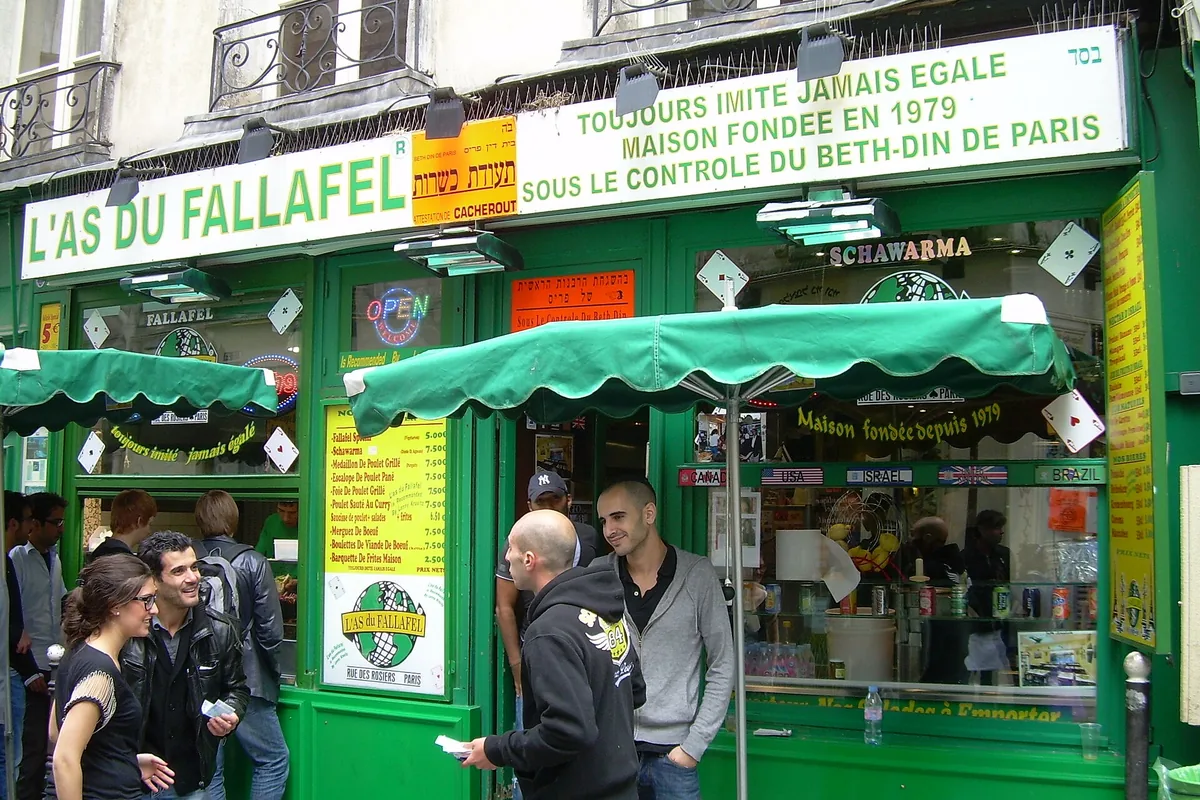
L’As du Fallafel is the quick, cheap lunch that Paris does best, and the falafel pitta has been a Marais classic for decades. The shop sits on rue des Rosiers, the heart of the old Jewish quarter, and the pitta stuffed with falafel, aubergine, cabbage and sauce is its famous order. It is filling enough for a full meal, and you can eat it standing on the street.
Rue des Rosiers is a food street in its own right, with bakeries, delis and other falafel counters, so the competition is lively. This shop is the one that draws the longest queue, partly because of its reputation and partly because it is cheap. You can order at the takeaway window for speed or sit inside, where service is still fast.
The opening hours matter here. Listings say it is closed on Saturdays, shuts early on Fridays and closes for Jewish holidays, like many businesses on the street. A phone call or a look at recent listings is the best way to confirm hours. Check before you go, especially if you plan to visit on a Friday or at the weekend.
This is a great stop between the Place des Vosges and the Musée Picasso or before a stroll through the Marais. Bring napkins, expect sauce on your hands and eat while it is hot.
- How to get there: Metro to Saint-Paul, then a short walk along rue Pavée to rue des Rosiers.
- How long to spend: Half an hour.
- Best time to go: A weekday lunch, or an early Sunday visit before the crowds build.
- Tip: Avoid Saturdays, when it is closed, and aim for Sunday to Thursday.
5. Bistrot Paul Bert
Bistrot Paul Bert is the Paris bistro dinner in its classic form, with a short menu, a lively room and a reputation that has lasted for years. It sits at 18 rue Paul Bert in the 11th arrondissement, away from the central tourist districts, in a street with a cluster of good restaurants and wine bars. The room has old tiles, mirrors and a busy, cheerful atmosphere.
The menu follows the traditional bistro line: a slate of starters, meat or fish mains and the famous desserts. Steak with chips and a pepper sauce is a classic order, and dessert is often a Paris-Brest or another French pastry. The wine list is long and sensible, and the staff will happily advise.
Booking is strongly advised, particularly for weekend dinners. The official site lists lunch and dinner from Tuesday to Saturday, so expect it to be closed on Sunday and Monday, but check before you go. Frommer’s suggests booking after 8pm to avoid the early tourist crowd, which also gives a more local feel.
The nearby streets make a good evening, with other places for an aperitif before dinner or a nightcap after. Our guide to the best wine bars in Paris covers La Cave du Paul Bert, a short walk away, so you can combine a bistro dinner with a glass elsewhere.
- How to get there: Metro to Faidherbe-Chaligny or Rue des Boulets, then a short walk.
- How long to spend: Two hours for dinner.
- Best time to go: A weekday dinner, booked in advance.
- Tip: Book the later seating for a more local atmosphere.
6. Chez Janou
Chez Janou is a lively Provençal bistro in the Marais, famous for its chocolate mousse and its huge pastis collection. It sits at 2 rue Roger Verlomme, just north of the Place des Vosges, and has a warm, busy dining room with terrace tables in good weather. The mood is relaxed, noisy and friendly, which suits groups.
The menu is Provençal, with dishes such as ratatouille, tian, lamb and fish with southern flavours. The pastis list is very long, with guides citing around 80 references, and the aperitif is part of the tradition. The dessert is the real draw: chocolate mousse served from a large bowl at the table. Some guides describe it as unlimited, but others say that is no longer the case, so ask about current portions and leave room for it.
It is popular, so booking is wise, especially at the weekend and in summer. Some regular diners find it a little touristy, and a few reviews say the food does not always match the hype, so treat it as a lively, fun meal rather than a fine-dining event. The restaurant’s own site says it is open every day for lunch and dinner, but check before you go.
Chez Janou is well placed for a Marais day. You can walk here from the Place des Vosges or the Musée Picasso, and the nearby Bastille and Canal Saint-Martin are a short metro ride away.
- How to get there: Metro to Chemin Vert or Bastille, then a short walk.
- How long to spend: One and a half to two hours.
- Best time to go: An early evening aperitif followed by dinner, booked ahead.
- Tip: Save room for the chocolate mousse, and ask what pastis suits you.
7. Le Relais de l’Entrecôte
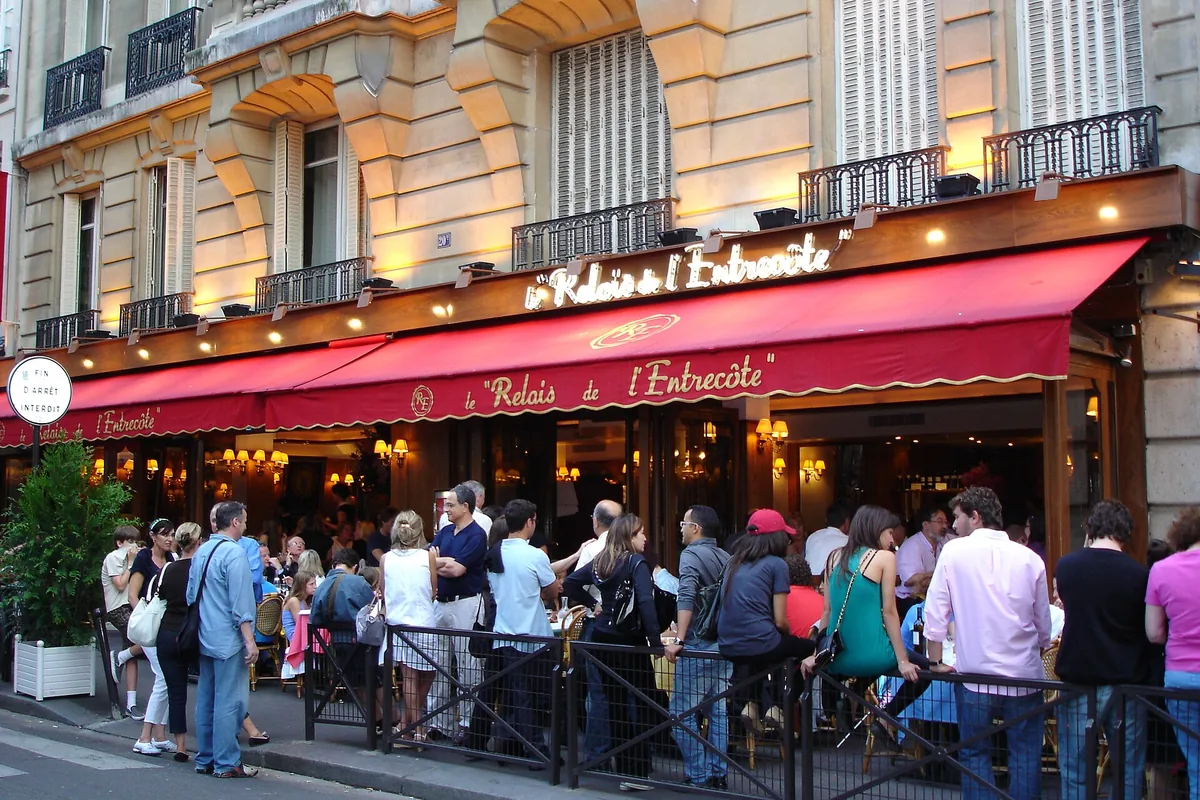
Le Relais de l’Entrecôte is the easiest, most reliable steak frites in Paris, with a single set menu and a sauce that people queue for. The Saint-Germain branch at 20 rue Saint-Benoît is one of three in the city, alongside branches in the 8th arrondissement and on boulevard du Montparnasse. The formula never changes: a walnut salad, then sliced steak in a rich sauce with chips, served in two rounds.
There is no menu to study. You choose how you want the steak cooked and the staff handle the rest, which makes it a very relaxed meal. Dessert follows, with a list of classic French sweets. The wine is simple and reasonably priced, and you pay a set price for the main course rather than by the dish.
The restaurant does not take reservations at its Paris locations, so queues are the price of admission. Reports describe a line forming before opening time, with the best strategy being to arrive early for lunch or dinner, or to try one of the other branches if the Saint-Germain queue looks too long. Hours are generally lunch and dinner, but check before you go.
It is a good meal for visitors who want something familiar and satisfying after a day of sightseeing. Saint-Germain has plenty to do before or after, from a walk through the Luxembourg Gardens to a visit to a church or gallery.
- How to get there: Metro to Saint-Germain-des-Prés, then a short walk.
- How long to spend: About an hour.
- Best time to go: Arrive before opening time for lunch or dinner.
- Tip: Try a different branch if the queue is long, since all three serve the same menu.
8. Du Pain et des Idées
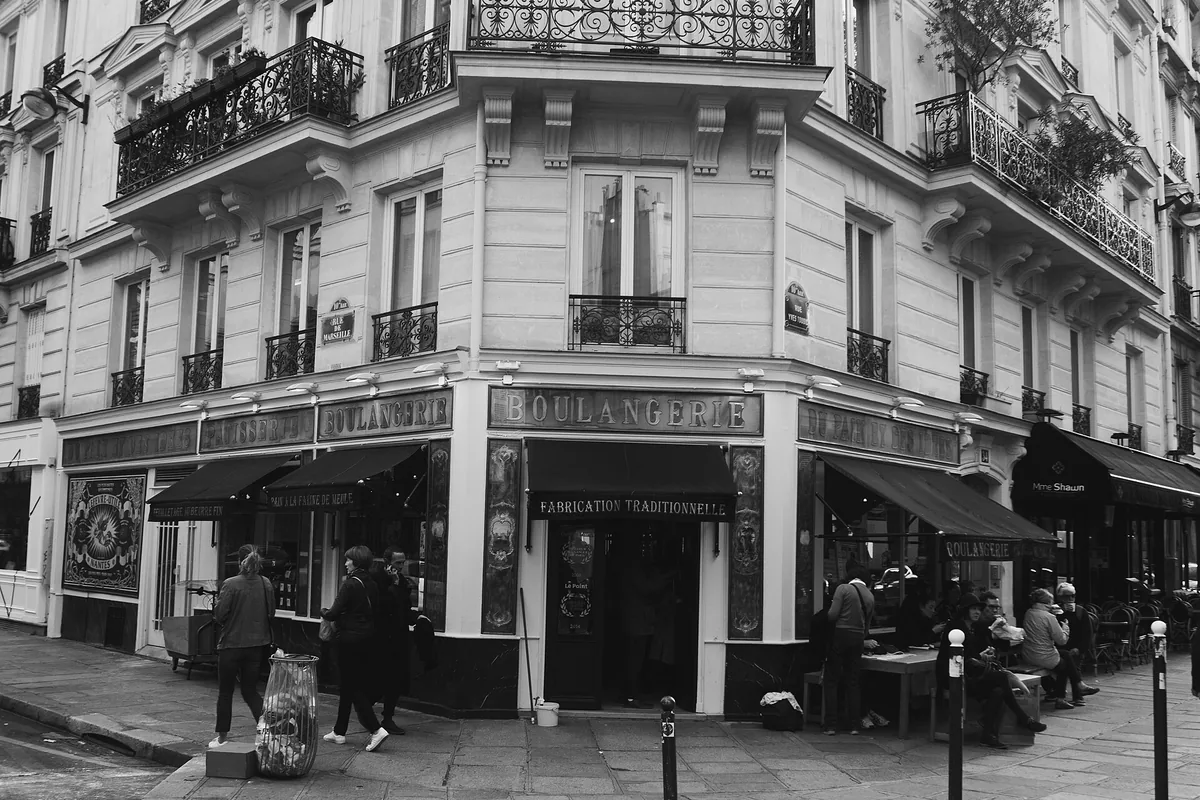
Du Pain et des Idées is one of the most celebrated bakeries in Paris, and it is worth a detour for the pastries and bread. It sits at 34 rue Yves Toudic near the Canal Saint-Martin, in a historic shopfront with an ornate painted ceiling. The baker has built a reputation on traditional bread, flaky pastries and a signature escargot pastry with pistachio and chocolate.
The bakery is not a sit-down restaurant. You queue, order at the counter and eat on the street or at the canal. Bread is the main attraction, along with viennoiseries such as croissants and the filled pastries. A pastry and a coffee from somewhere nearby makes one of the best budget breakfasts in the city.
The most important detail is the opening days. The bakery’s own site lists it as open from Monday to Friday and closed at weekends, so do not plan a Saturday or Sunday visit. Daily times are best checked on the official site or by phone before you go. Popular items can sell out later in the day, so go in the morning for the best choice.
The canal is a pleasant place to walk afterwards, with benches along the water and cafes on the nearby streets. It combines well with a brunch or coffee stop in the area, and it is the best place in this guide to buy something to eat while you walk.
- How to get there: Metro to Jacques Bonsergent, then a short walk.
- How long to spend: Twenty to thirty minutes.
- Best time to go: A weekday morning, soon after opening.
- Tip: Remember it is closed at weekends, and buy extra bread for later.
9. Marché d’Aligre
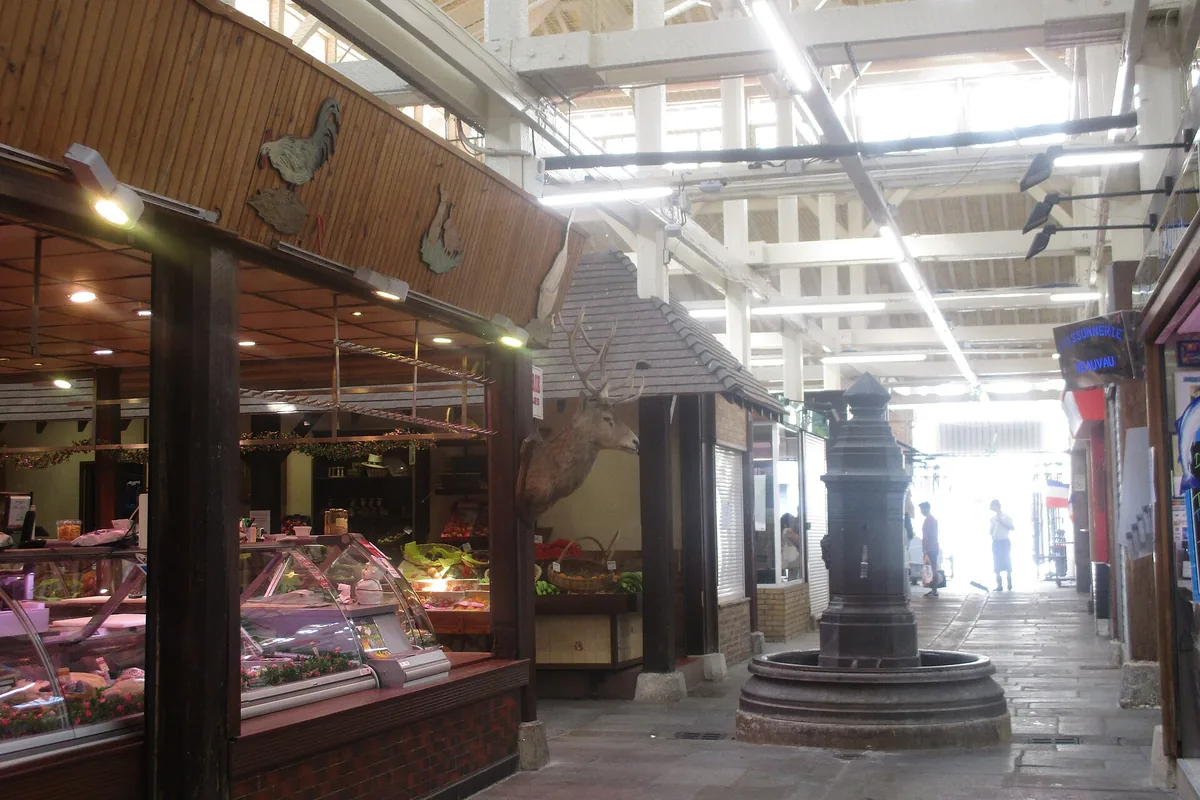
The Marché d’Aligre is the best market in Paris for a real local atmosphere, with an outdoor market, a covered hall and a flea market in one place. It sits in the 12th arrondissement around Place d’Aligre. The covered hall, often called the Marché Beauvau, houses cheese shops, butchers, bakers and specialist stalls, while the outdoor stalls sell fruit, vegetables and fish at lively prices.
It is a market for browsing and snacking. You can put together a picnic from bread, cheese, charcuterie and fruit, or sit at a nearby cafe and watch the stalls. The surrounding streets have wine bars, bakeries and small restaurants, so you can make a morning of it. Le Baron Rouge, a classic wine bar, is a short walk from the market.
Opening days matter. The covered hall is generally closed on Mondays, and the hours differ between sources, with a break in the afternoon on some days. The outdoor market typically runs from the morning into the early afternoon. Treat times as approximate and check before you go, particularly on Sundays and public holidays.
The market is busiest at weekends, when the crowd is large and the energy is high. For a calmer visit, go on a weekday morning. Either way, arrive hungry and with a bag, since the temptation to buy is strong.
- How to get there: Metro to Ledru-Rollin (line 8), then a short walk.
- How long to spend: One to two hours.
- Best time to go: A weekend morning for energy, or a weekday for calm.
- Tip: Bring a bag and cash for small stalls, and check the covered hall’s days.
10. Le Comptoir du Relais
Le Comptoir du Relais is a famous modern bistro on the Carrefour de l’Odéon in Saint-Germain, and it is the best choice here for a special meal. It sits in the Hôtel Relais Saint-Germain on the Carrefour de l’Odéon and made its name under chef Yves Camdeborde. He sold it to chef Bruno Doucet in 2022, so older reviews may describe a different kitchen, and it is worth checking before you go.
The cooking is French bistro food with a careful, seasonal approach: terrines, slow-cooked meats, fish and rich desserts, all served in a room with a busy, informal atmosphere. Lunch is traditionally walk-in, while dinner is the hard one to get and demand is high.
Booking policy is unclear, because sources disagree. The Michelin Guide and Paris by Mouth say it takes no reservations, while one listing says dinner is a reserved set menu and lunch is walk-in. Check the hotel website and call before you plan the trip.
Saint-Germain is a good place to spend a day, with the Luxembourg Gardens, the Église Saint-Sulpice and the cafes of the area nearby. Plan lunch here if you cannot get a dinner table, and treat it as a comfortable, relaxed meal.
- How to get there: Metro to Odéon, then a short walk.
- How long to spend: Two hours.
- Best time to go: Lunch on a weekday, or a booked dinner well in advance.
- Tip: Call the hotel line to confirm the booking policy for lunch and dinner.
What to eat in Paris
Paris has more to eat than croissants and snails, and a few dishes are worth knowing before you order. Steak frites is the national dish of the bistro, and onion soup, eggs with mayonnaise and duck confit are classics. Galettes are savoury buckwheat pancakes from Brittany, eaten with cider. Croque monsieur is a toasted ham and cheese sandwich, and jambon-beurre is a baguette with ham and butter, the standard quick lunch.
For dessert, look for profiteroles, crème brûlée, chocolate mousse and Paris-Brest, a ring of choux pastry with praline cream.
Booking, tipping and opening hours
Booking matters more in Paris than many visitors expect. Small bistros often fill days ahead, especially at the weekend, while bouillons and Le Relais de l’Entrecôte work on a queue. Use the restaurant’s own website or phone line when you can, and check the cancellation rules.
Service is included in the price in France, so tipping is optional. Leaving small change or rounding up for good service is common, but not expected. Opening hours vary: many restaurants close between lunch and dinner, and many small places close on Sundays and Mondays. The traditional French dinner starts later than in Britain, so booking before 7.30pm is often easy.
How Many Days Do You Need? A 3-Day Paris Food Itinerary
Three days is enough to eat at every place on this list without repeating an area. The plan below groups the places so each day stays in one or two neighbourhoods.
Day 1: The Marais and Canal Saint-Martin
Start the morning at Du Pain et des Idées for a pastry, then walk along the Canal Saint-Martin. For lunch, take the metro to the Marais and eat a falafel at L’As du Fallafel, then spend the afternoon around the Place des Vosges. Book dinner at Chez Janou for Provençal food and the chocolate mousse. Remember that the bakery is closed at weekends, so move this day to a weekday.
Day 2: Grands Boulevards, Pigalle and the Marais crêperie
Eat lunch at Bouillon Chartier, going at an off-peak time, then walk through the covered passages of the nearby 2nd and 9th arrondissements. In the evening, have dinner at Bouillon Pigalle, or switch to Breizh Café in the Marais if you prefer a booked table. Finish with a walk up to Montmartre.
Day 3: Left Bank, Aligre and the 11th
Spend the morning at the Marché d’Aligre, then enjoy lunch at Le Relais de l’Entrecôte or Le Comptoir du Relais in Saint-Germain, depending on whether you have a booking. In the evening, take the metro to the 11th arrondissement for dinner at Bistrot Paul Bert. If you want a final drink, La Cave du Paul Bert and other wine bars are on the same street.
Getting around Paris
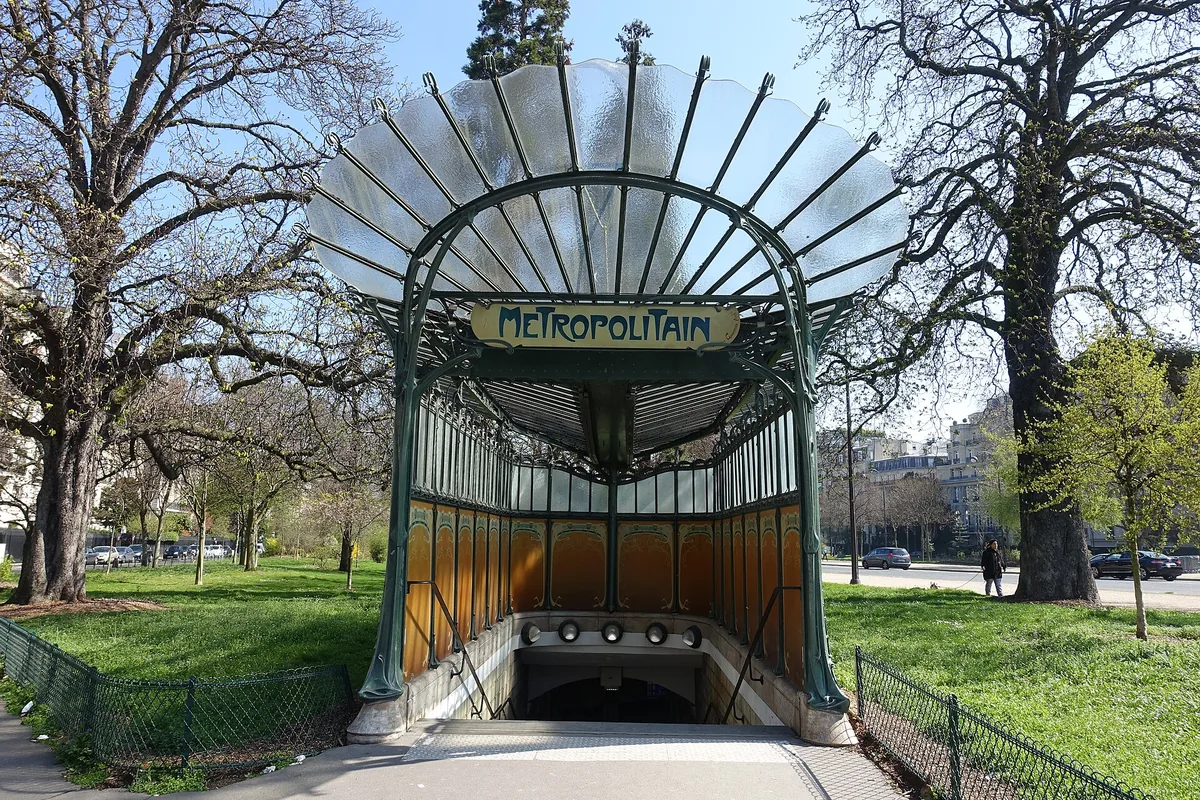
The metro is the fastest way to move between the neighbourhoods in this guide, and each restaurant is a short walk from a station. Paris is compact, and most of these places are within the central arrondissements. A contactless payment or a multi-day pass covers the trips, and the RATP website has current fares and passes.
Walking is the best way to link nearby stops, such as the Marais restaurants and the Canal Saint-Martin. Buses are slower than the metro but give you a view of the streets, and cycling is possible but needs care in traffic. Late at night, check the last metro times, since the service stops after midnight on most nights.
Where to stay in Paris for food lovers
The Marais is the best all-round base, with several restaurants in this guide on foot, plenty of cafes and good metro links. Saint-Germain is a calmer, more elegant choice close to Le Relais de l’Entrecôte and Le Comptoir du Relais. The area around Canal Saint-Martin and the 11th arrondissement suits those who want a lively, local feel, with bakeries and bistros on the doorstep.
If you want to be near the markets and wine bars, the 12th arrondissement around Aligre is a quieter, better-value base. Whichever area you choose, check the walk to the nearest metro station, since a few minutes can matter after a long dinner.
Budget guidance
Paris food can suit almost every budget. On a shoestring, build days around bakery breakfasts, falafel, market picnics and the bouillons, where a full meal costs far less than in a typical restaurant. A mid-range budget adds Breizh Café, Chez Janou, Le Relais de l’Entrecôte and a bistro dinner at Bistrot Paul Bert, with wine or cider. A comfortable budget can add Le Comptoir du Relais and a longer dinner with a good bottle. Drinking tap water, which is free and safe, saves money, so ask for “une carafe d’eau”.
Frequently Asked Questions
Where are the best places to eat in Paris?
Bouillon Chartier, Breizh Café, Bistrot Paul Bert, Chez Janou and Le Relais de l’Entrecôte are among the best. They cover classic French food, Breton crêpes, bistro dinners and steak frites across several neighbourhoods.
Do you need to book restaurants in Paris?
For small bistros such as Bistrot Paul Bert, Chez Janou and Breizh Café, yes, especially at weekends. Bouillon Chartier and Le Relais de l’Entrecôte work on a queue, and policies can change, so check each restaurant’s official site.
What is a bouillon in Paris?
A bouillon is a traditional restaurant that serves classic French dishes quickly and cheaply, a format that dates from the 19th century. Bouillon Chartier and Bouillon Pigalle are two well-known examples.
Is tipping expected in Paris?
No. Service is included in the price in France, so tipping is optional. Rounding up or leaving small change for good service is common but not required.
What is the best cheap food in Paris?
Falafel in the Marais, bakery pastries and sandwiches, market picnics and the bouillons are the best cheap options. All of them offer a real taste of the city without a large bill.
Is Paris expensive for eating out?
It can be, but it does not have to be. Bouillons, bakeries, falafel and market picnics keep costs low, while a bistro dinner with wine costs noticeably more.
What is the best area to eat in Paris?
The Marais is the best all-round area, with crêperies, falafel and Provençal food within walking distance. Saint-Germain and the 11th arrondissement are strong alternatives for bistro dinners.
What time do people eat dinner in Paris?
Dinner usually starts around 7.30pm to 8pm and runs late, though many restaurants open earlier for early diners. Lunch is generally served from noon, and some kitchens close between lunch and dinner.
Discover More of Paris
After a few days of eating, balance it with sightseeing off the usual path. Our guide to the best brunch spots in Paris covers your mornings, the best cocktail bars in Paris cover your evenings, and if you have a spare day, the best day trips from Paris take you out of the city.
Featured image: Photo by zoetnet, CC BY 2.0, cropped, via Wikimedia Commons