Last updated: October 2026
The best day trips from Paris are Versailles, Giverny, Fontainebleau and Chartres, and all four are doable on public transport in a single day. Paris sits at the centre of a rail network that fans out to palaces, cathedral towns and gardens, and most of the places below are less than two hours away. If you are also planning a crossing from the UK, our guide to the best day trips from London is a good companion read before you travel.
Some of these are quick wins for a free afternoon, while others, such as Reims and Rouen, work best as full days with an early start. Timetables and opening days change, so check the operators and the official sites, starting with Transilien for the regional trains and the Château de Versailles site for the palace.
Quick answer: What are the best day trips from Paris? The ten best are Versailles, Giverny, Fontainebleau, Chartres, Provins, Reims, Chantilly, Vaux-le-Vicomte, Auvers-sur-Oise and Rouen. If you only have one day, choose Versailles for the palace and gardens, or Giverny between spring and autumn for Monet’s garden.
Quick comparison: day trips from Paris
| Day trip | Best for | Getting there | Time each way |
|---|---|---|---|
| 1. Versailles | The palace and gardens | RER C | Under an hour |
| 2. Giverny | Monet’s house and garden | Train plus shuttle | About an hour and a half |
| 3. Fontainebleau | A royal château and forest | Regional train plus bus | Under an hour and a half |
| 4. Chartres | A Gothic cathedral | Intercity train | About an hour |
| 5. Provins | A medieval walled town | Regional train | Around an hour and a half |
| 6. Reims | Champagne cellars | TGV or regional train | Under an hour |
| 7. Chantilly | Horses and a fairytale château | Regional train | Under an hour |
| 8. Vaux-le-Vicomte | Baroque gardens | Train plus shuttle or taxi | Around an hour |
| 9. Auvers-sur-Oise | Van Gogh’s final weeks | Regional train, often with a change | About an hour |
| 10. Rouen | Gothic spires and old streets | Intercity train | Around an hour and a quarter |
1. Versailles
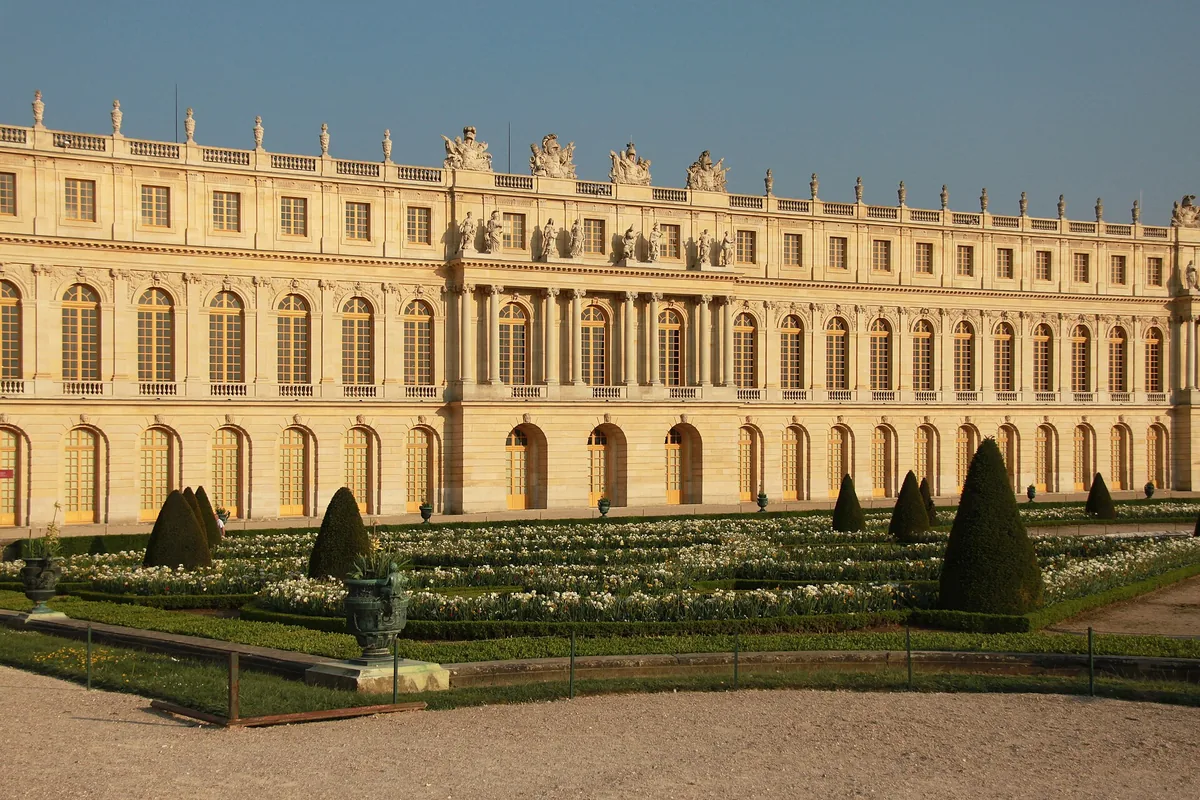
Versailles is the classic day trip from Paris, and it is easy to reach by RER C train. The former royal palace of Louis XIV is one of the grandest buildings in Europe, with the Hall of Mirrors, the State Apartments and a vast estate of gardens, canals and groves behind it. Trains run from central Paris to the Versailles Château Rive Gauche station, which is a short walk from the palace gates.
The palace is closed on Mondays, and the busiest period is mid-morning, so book a timed ticket in advance and aim to arrive early. The gardens are a large part of the visit, and on days when the musical fountains or musical gardens shows run, a wider estate pass is usually needed, so check the official calendar when you plan.
Beyond the main palace, the estate includes the Grand Trianon, the Petit Trianon and Marie-Antoinette’s hamlet, which are quieter and can be reached on foot, by bike or by the small tourist train inside the grounds. Bring comfortable shoes, because the estate is large.
The town of Versailles is pleasant in its own right, with a market and several cafes within a short walk of the station, so lunch outside the palace grounds is easy.
- How to get there: RER C from central Paris to Versailles Château Rive Gauche, then a short walk.
- How long to spend: A full day if you want the palace, gardens and Trianon estate.
- Best time to go: Weekday mornings in spring or autumn, outside the school holidays.
- Tip: Book a timed ticket online, and check the fountain show days before you choose your date.
2. Giverny
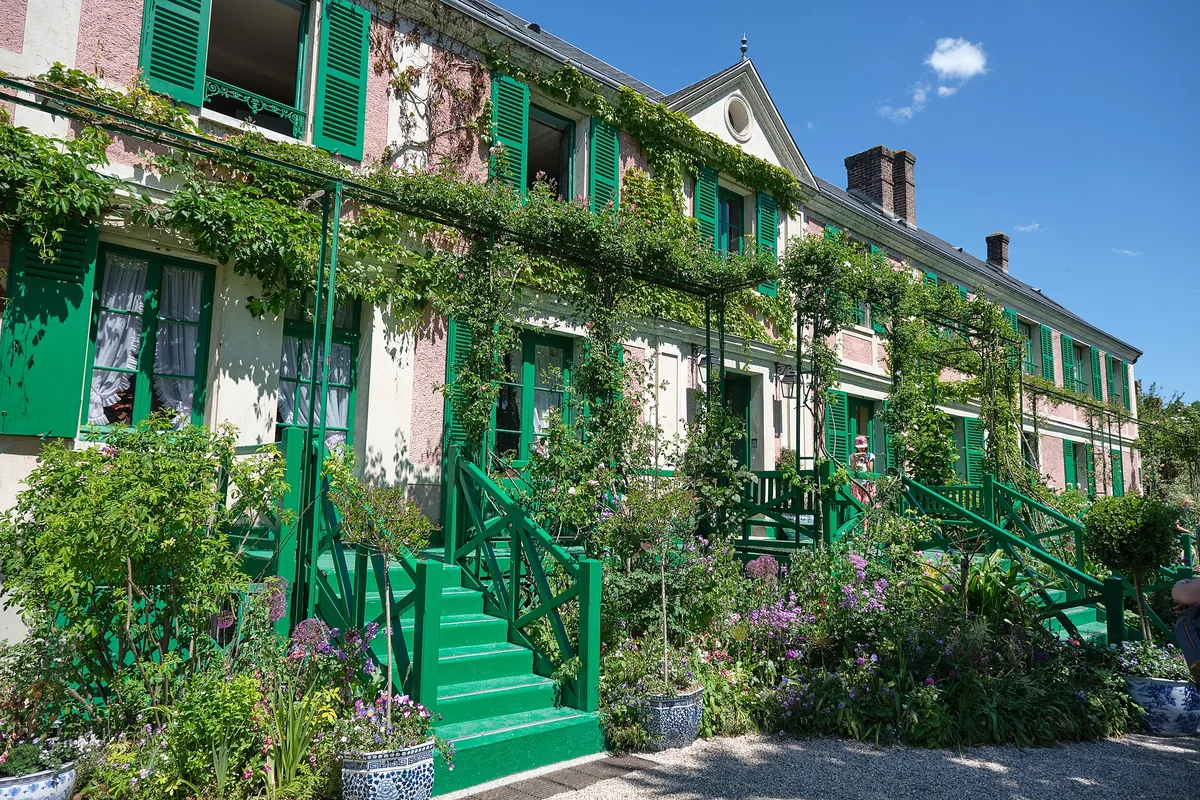
Giverny is the village where Claude Monet lived and painted, and his house and water garden are the reason to come. The famous lily pond with its green footbridge, the Japanese-style garden and the pink house with green shutters are all open to visitors, and they are especially beautiful from late spring to early autumn.
The garden is seasonal. It generally opens from around April to early November and closes for the winter, so confirm the dates on the Fondation Claude Monet website before you plan a trip, and book your entry online because walk-up queues can be long. Do not rely on a visit in the colder months.
Trains run from Paris Saint-Lazare to Vernon-Giverny in under an hour, and a shuttle bus or a bike ride covers the roughly five kilometres from the station to the village. The cycle path is flat and pleasant in good weather, and bikes can be hired near the station. The shuttle is simpler when time is short.
In the village you can also visit the Giverny Museum of Impressionisms and walk past the cottages and painted fences. Allow time for lunch, as the village is small and busy at midday in peak season.
- How to get there: Train from Paris Saint-Lazare to Vernon-Giverny, then a shuttle bus or bike to the village.
- How long to spend: A full day, including travel.
- Best time to go: May and June for roses and irises, or September for softer crowds.
- Tip: Book garden tickets and a return shuttle ahead, and check the opening season first.
3. Fontainebleau
Fontainebleau is a royal and imperial château with a more relaxed feel than Versailles, set beside one of France’s largest forests. French kings and Napoleon lived here, and the interiors range from Renaissance galleries to the grand apartments of the First Empire. The horseshoe-shaped staircase in the main courtyard is one of the best-known sights.
The château is closed on Tuesdays, so check the official site before you go. The gardens are open every day and include a large carp pond, formal parterres and an English-style garden.
Trains run from Paris Gare de Lyon to Fontainebleau-Avon in around 40 minutes, and a local bus connects the station with the château. Buy a regional Île-de-France ticket rather than a standard long-distance one, and check the bus connections on the Fontainebleau tourist office site.
The town of Fontainebleau itself is small and easy to stroll, with cafes and bakeries close to the château gates. The forest is a draw in its own right, with walking trails and rock-climbing boulders that are popular with Parisians. If you want a more active day, combine the château in the morning with a walk through the forest in the afternoon.
- How to get there: Train from Paris Gare de Lyon to Fontainebleau-Avon, then bus line 1 to the château stop.
- How long to spend: Four to six hours, or a full day with a forest walk.
- Best time to go: Spring and autumn, when the forest is at its best.
- Tip: Check the weekly closing day, and carry a valid ticket for the bus.
4. Chartres

Chartres is home to one of the finest Gothic cathedrals in the world, famous for its medieval stained glass. The cathedral is a UNESCO World Heritage Site, and its blue windows, labyrinth and twin spires of different styles reward a slow visit. The town around it has half-timbered houses, narrow lanes and a river valley that makes for a pleasant walk.
Restoration work has taken place inside the cathedral for many years, so expect some areas to look different from older photographs. The cathedral and the tourist office are the best places to check what is open, and guided tours of the nave and the stained glass are available through the Chartres tourist office.
Trains run directly from Paris Montparnasse to Chartres, usually taking about an hour. The cathedral is a short walk uphill from the station. From spring through to the new year, a free evening light trail, known as Chartres en Lumières, illuminates many of the town’s buildings at dusk, which is a good reason to stay for dinner.
Chartres is a smaller, quieter trip than Versailles, and it suits travellers who prefer architecture and history to gardens.
- How to get there: Direct train from Paris Montparnasse to Chartres.
- How long to spend: Half a day to a full day, with time for the cathedral and old town.
- Best time to go: On a bright day, so the stained glass is at its best.
- Tip: Stay for the evening light trail in the season it runs, and check the return train times.
5. Provins
Provins is a UNESCO-listed medieval town that feels a world away from Paris. Once a major trading centre for the Champagne fairs, it still has ramparts, a twelfth-century keep known as the Tour de César, underground passages and a lower town with old streets. The compact layout makes it easy to explore on foot.
The town is known for its medieval events, including a large festival in June, and falconry and jousting shows during the main season. Dates and programmes change from year to year, so check the Provins tourist office before choosing a date, and confirm which shows are running.
Trains leave from Paris Gare de l’Est on the Transilien line P and take roughly an hour and a half. The station is a short walk or bus ride from the upper town. The service is not as frequent as on some other lines, so check the return train before you settle in for a long lunch.
Provins is also famous for its roses, which were once used to make local sweets and jams. The rose gardens bloom in late spring, and the town’s food shops sell rose-flavoured treats all year.
- How to get there: Transilien line P from Paris Gare de l’Est to Provins, then a walk or local bus.
- How long to spend: A full day, especially if you add a show.
- Best time to go: June for roses and the medieval festival, or a quiet weekday in spring.
- Tip: Check the return train times before you plan the afternoon.
6. Reims
Reims is the easiest champagne day trip from Paris, with a Gothic cathedral and some of the biggest champagne houses within the city itself. The coronation cathedral of the French kings has beautiful stonework and stained glass, and it is a short walk from the central station area. Several major champagne houses have cellars in Reims, so you do not need a car.
Champagne tastings need planning. Most houses ask you to book a cellar visit in advance, and walk-in places are rare in busy periods, so reserve a slot before you travel. Some houses are within walking distance of the centre, while others are better reached by a short bus or taxi ride. Check the Reims tourist office for the current visitor information.
The fast train from Paris Gare de l’Est takes under an hour, and a slower regional service is also available. Reims has more than one station, so check which one your ticket uses. The route from the central station to the cathedral is short and easy.
If you want a quieter, more rural taste of the region, the nearby wine villages are best visited with a car or an organised tour. Otherwise Reims alone gives you a full and satisfying day.
- How to get there: Fast train from Paris Gare de l’Est to Reims, then a walk or taxi to the cathedral and champagne houses.
- How long to spend: A full day, with time for the cathedral and one or two cellar visits.
- Best time to go: Spring or autumn, with a booked tasting slot.
- Tip: Book your cellar visit early, and eat a proper lunch between tastings.
7. Chantilly
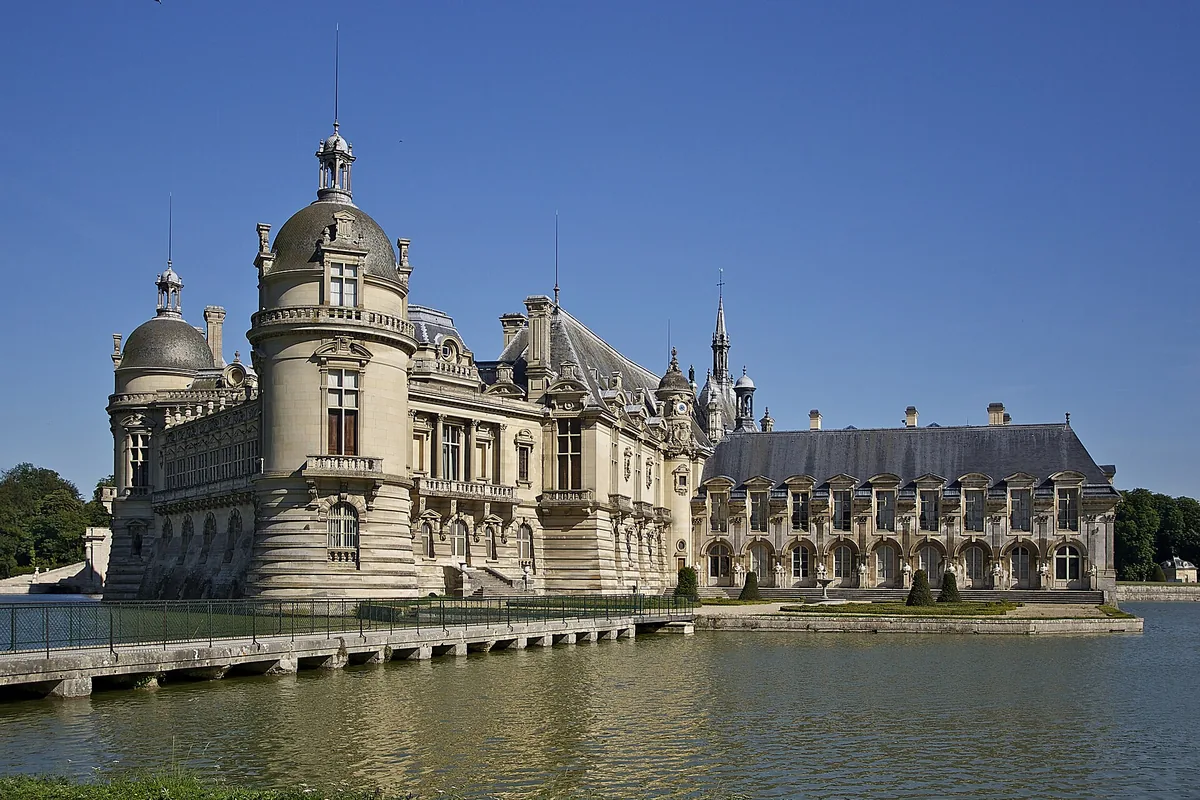
Chantilly combines a fairytale château, a famous horse museum and a forest, all within easy reach of Paris. The Château de Chantilly stands on a lake and houses the Musée Condé, which has one of France’s finest collections of historic paintings. Next to it, the Great Stables were built for the Prince de Condé and now hold the Living Museum of the Horse, which includes regular dressage demonstrations.
The estate also has gardens designed by André Le Nôtre, the landscape architect of Versailles, with canals, a water garden and a rustic hamlet. Check the Domaine de Chantilly site for opening days, current exhibitions and show times, since these change through the year.
Trains from Paris Gare du Nord reach Chantilly-Gouvieux in roughly 25 minutes. The walk from the station to the estate crosses the forest edge and takes a while, so allow time, or look for a local bus. Gare du Nord is big, so give yourself extra time to find the right platform.
The town is also known for its racecourse, and a traditional cream said to be named after it. A light lunch in town fits easily between the château and the stables. If grand houses are your thing, our roundup of the magical castles in Germany shows how another country does the fairytale château.
- How to get there: Train from Paris Gare du Nord to Chantilly-Gouvieux, then a walk or local bus to the estate.
- How long to spend: Five to six hours, or a full day with the gardens.
- Best time to go: Spring to early autumn, when the gardens are at their best.
- Tip: Check the dressage demonstration times when you book, and buy a combined ticket if you want both the château and the stables.
8. Vaux-le-Vicomte
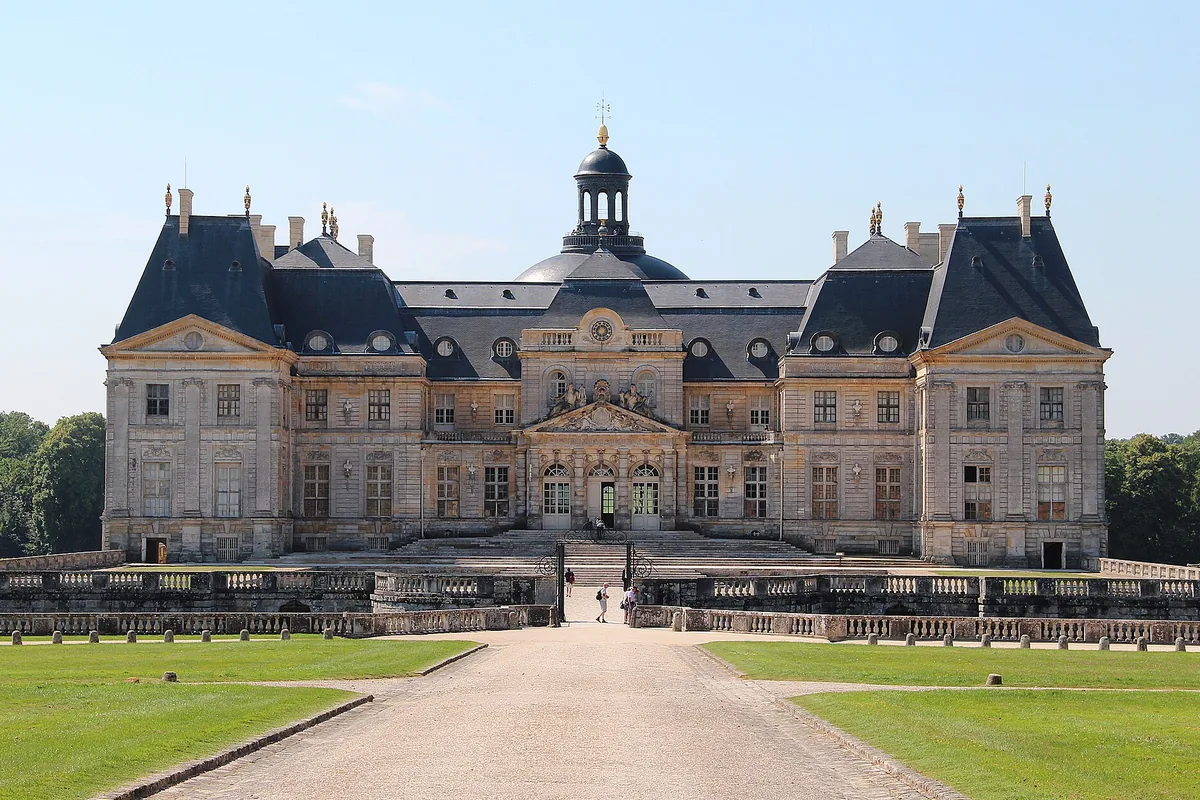
Vaux-le-Vicomte is the château that inspired Versailles, and its gardens are some of the most admired formal gardens in France. Built for Nicolas Fouquet in the seventeenth century, it brought together the architect Louis Le Vau, the painter Charles Le Brun and the garden designer André Le Nôtre. The result impressed the young Louis XIV so much that he later used the same team at Versailles.
It is less crowded than Versailles, and the view down the main axis of the garden is spectacular. Inside, the state rooms are richly decorated, and the cellars and kitchens give a sense of how a great house worked. In certain seasons the château also holds candlelit evenings, so check the official site for dates and any shuttle options.
Public transport is the one difficulty. The usual route is the RER R from Paris Gare de Lyon to Melun, then a shuttle bus or a short taxi ride. The shuttle runs on selected days and usually needs online booking, so check the timetable before you go. Taxis are the alternative, and drivers can be arranged in advance.
Because of the transport links, it works best as a planned trip rather than a spontaneous one.
- How to get there: Train to Melun, then the château shuttle on its operating days or a short taxi ride.
- How long to spend: Four to five hours.
- Best time to go: Spring or early autumn, on days when the shuttle runs.
- Tip: Book the shuttle and your entry online, and plan the return before you arrive.
9. Auvers-sur-Oise
Auvers-sur-Oise is the village where Vincent van Gogh spent the last weeks of his life, and it keeps a quiet, painterly feel. He arrived in May 1890 and stayed at a small inn, the Auberge Ravoux, where his tiny room has been preserved. The wheat fields, the village church that he painted and the cemetery where he and his brother Theo are buried can all be reached on foot.
Other Impressionists, including Camille Pissarro and Paul Cézanne, also worked here, and the village still has a gentle, rural character. The Château d’Auvers hosts an immersive exhibition about the Impressionists, while the Auberge Ravoux tells the story of Van Gogh’s final weeks. Check the Auberge Ravoux site for opening days and booking, as visits are limited.
The easiest journey is a regional train from Paris with a change, usually at Pontoise or Valmondois. In the main season a direct Train des Impressionnistes has run from Gare du Nord on weekends and public holidays, with very few departures a day. Check the current timetable on the SNCF or Transilien websites before you go. The village is small, and a day is enough to cover the main sights at a gentle pace.
This is a good choice for art lovers who want a quieter trip than the big palaces.
- How to get there: Regional train from Paris Gare du Nord or Saint-Lazare, usually with a change at Pontoise or Valmondois.
- How long to spend: A relaxed half day to a full day.
- Best time to go: Spring and summer, when the fields are green or golden.
- Tip: Check opening days for the inn and exhibitions, because several close on certain weekdays.
10. Rouen
Rouen is a Norman city of Gothic spires, half-timbered houses and a rich history, and it is a rewarding long day trip. Its cathedral inspired a famous series of Monet paintings, and the astronomical clock at the Gros-Horloge, set above a Renaissance arch, is one of the city’s best-known landmarks. The cobbled streets of the old town are full of cafes and small shops.
Rouen is also tied closely to the story of Joan of Arc, who was tried and executed here in 1431. The Place du Vieux-Marché marks the site of her death, and the modern church beside it commemorates her. The Rouen tourist office has a good map of the old town and information on current museum opening times.
Trains from Paris Saint-Lazare reach Rouen Rive Droite in roughly an hour and a quarter, and are frequent through the day. The centre is walkable from the station, and the main sights sit within a few streets of each other. It is easy to combine with the stop at Vernon for Giverny if you have more than a day.
Rouen is a good option when you want a proper city rather than a single attraction.
- How to get there: Direct train from Paris Saint-Lazare to Rouen Rive Droite, then a walk into the old town.
- How long to spend: A full day.
- Best time to go: A dry day in spring or autumn.
- Tip: Start with the cathedral, then walk down the Rue du Gros-Horloge, and leave time for the old market square.
How to pick the right day trip from Paris
If it is your first visit, Versailles is the obvious choice, and Giverny is the best second trip between spring and autumn. For architecture, choose Chartres, Rouen or Fontainebleau. For food and drink, go to Reims. For a quieter and more unusual day, Provins and Auvers-sur-Oise are less crowded, while Vaux-le-Vicomte and Chantilly suit travellers who like gardens and grand houses.
Think about opening days and seasons as well. Giverny is seasonal, Fontainebleau closes one weekday, Versailles closes on Mondays and several smaller sites keep limited hours. A quick check of the official websites saves a wasted journey.
Suggested plans for 1, 2 or 3 days
- One day: Versailles, starting early and finishing in the gardens.
- Two days: Versailles on the first day and Giverny or Reims on the second.
- Three days: Add Fontainebleau or Chartres for architecture, or Rouen for a full city day.
If you have more time, group trips by direction: Rouen and Giverny both use the Saint-Lazare line, while Chantilly leaves from Gare du Nord and Provins from Gare de l’Est.
Getting around
Paris has several main stations, and each serves a different direction, so check which one your train uses. Regional trains and RER lines in the Île-de-France area use zone-based tickets, while fast trains to places like Reims and Rouen use standard SNCF tickets. The SNCF Connect site and app cover longer routes, and Transilien covers regional lines. Buy tickets in advance for the fast services, and keep your ticket handy for any connecting bus or shuttle.
Where to stay in Paris
- Near Gare Saint-Lazare: Convenient for Giverny and Rouen, and close to the Opera area.
- Near Gare du Nord and Gare de l’Est: Good for Chantilly, Reims and Provins, with plenty of budget options.
- Near Gare de Lyon: Handy for Fontainebleau and Vaux-le-Vicomte, and close to the Marais.
- Near Montparnasse: Best for Chartres, with a quieter residential feel.
- Left Bank near the RER C: A good base for Versailles.
Budget guidance
- Shoestring: Regional trains and RER lines are the cheapest options, and gardens and old towns cost little to explore. Bring a picnic.
- Mid-range: Add a palace ticket or a champagne tasting, and eat a proper lunch in town.
- Comfortable: Book a guided tour or private transfer for harder-to-reach places like Vaux-le-Vicomte, and add a premium champagne visit in Reims.
Frequently Asked Questions
What is the best day trip from Paris?
Versailles is the most popular choice, thanks to its palace, gardens and easy RER link. Giverny is the best alternative between spring and autumn.
What is the easiest day trip from Paris by train?
Versailles and Chantilly are the easiest, because both are under an hour from the centre of Paris. Reims is also quick by fast train.
Can you visit Giverny in winter?
Monet’s house and gardens are seasonal and usually closed in winter, so check the official dates before travelling. Rouen or Chartres are better choices in the colder months.
Which day trips from Paris are best for adults without children?
Reims for champagne, Auvers-sur-Oise for art, and Chartres or Rouen for architecture all suit adult travellers well.
Can you do two day trips from Paris in one day?
It is possible with a good plan, such as Rouen and Giverny on the same line, but a single destination is usually more enjoyable. Trains and opening times can make a double trip tiring.
Do you need a car for day trips from Paris?
No. All ten places in this guide can be reached by public transport, although Vaux-le-Vicomte needs a shuttle or taxi from the station.
Discover More of Europe
Once you have picked your Paris escape, compare it with other rail-friendly bases: see how the day trips from Madrid and the day trips from Amsterdam work by train, or browse our wider list of the top places to see in Europe to plan the next leg of your trip.
Featured image: Photo by Pedro Kümmel pedrokummel, CC0, cropped, via Wikimedia Commons