Last updated: October 2026
Croatia has more than a thousand islands along its Adriatic coast, and the best Croatian islands offer clear blue water, pine-scented hills, Venetian stone towns and some of Europe’s most beautiful beaches.
Some islands are lively and glamorous, while others are sleepy places where little has changed in decades. This guide covers the top 10 Croatian islands, with what makes each one special and how to choose. The official Croatian National Tourist Board has detailed regional guides, and ferry routes are run mainly by Jadrolinija.
Quick answer: What are the best Croatian islands? Our top 10 are Hvar, Brač, Korčula, Vis, Mljet, Lošinj, Krk, Pag, Kornati Islands and Elaphiti Islands. Hvar is best for nightlife, Brač for beaches, Korčula for history, Vis for authentic island life and Mljet for nature. Split and Dubrovnik are the main ferry gateways.
Top 10 Croatian Islands at a Glance
| # | Destination | Best for |
|---|---|---|
| 1 | Hvar | Nightlife and glamour |
| 2 | Brač | Beaches and windsurfing |
| 3 | Korčula | History and wine |
| 4 | Vis | Authentic island life |
| 5 | Mljet | Nature lovers |
| 6 | Lošinj | Wellness and dolphins |
| 7 | Krk | Easy access and families |
| 8 | Pag | Food lovers and party-goers |
| 9 | Kornati Islands | Sailing and boat trips |
| 10 | Elaphiti Islands | Easy day trips from Dubrovnik |
1. Hvar
Hvar is Croatia’s most famous island, known for its glamorous harbour town, lavender fields and lively nightlife. It’s also one of the sunniest places in Europe.
Hvar Town has a beautiful main square, a Venetian fortress with sweeping views and beach clubs that party late into the night. For a calmer stay, choose Stari Grad, one of the oldest towns in Europe, or Jelsa. Boat trips run to the nearby Pakleni Islands, a cluster of islets with secluded coves.
Best for: nightlife and glamour.
2. Brač
Brač is home to Zlatni Rat, one of the most photographed beaches in Europe, a long tongue of pebbles near the town of Bol whose tip shifts with the wind and currents.
The island is famous for its white stone, which has been used in buildings across the world. Hike up to Vidova Gora, the highest point of the Adriatic islands, for incredible views. Brač is a short ferry ride from Split, making it ideal for a quick trip.
Best for: beaches and windsurfing.
3. Korčula
Korčula Town is a mini Dubrovnik, a walled medieval town on a small peninsula with streets laid out like a fishbone to keep out the wind and let in the breeze.
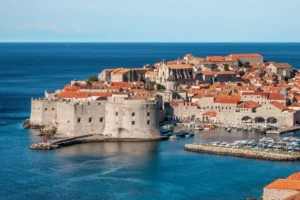
Locals claim it’s the birthplace of the explorer Marco Polo. The island is known for its white wines, especially Grk and Pošip, and the traditional Moreška sword dance. It’s an easy add-on from Dubrovnik. Use our guide to the best things to do in Dubrovnik, from the city walls to Lokrum to plan the mainland part of your trip.
Best for: history and wine.
4. Vis
Vis was closed to foreign visitors for decades as a Yugoslav military base, which helped preserve its unspoilt character. It’s one of the furthest inhabited islands from the mainland.
Explore military tunnels, visit the picturesque villages of Komiža and Vis Town, and relax on Stiniva, a hidden cove enclosed by tall cliffs. Boat trips run to the Blue Cave on the nearby islet of Biševo, where sunlight turns the water a glowing blue.
Best for: authentic island life.
5. Mljet
Mljet is one of the greenest islands in the Adriatic, and much of its western end is a national park. Pine forests surround two saltwater lakes, connected to the sea.
On a tiny island in the larger lake sits a 12th century Benedictine monastery, reached by a short boat ride. Rent a bike and cycle around the lakes, or swim in the warm water. Mljet is popular with day trippers from Dubrovnik, but staying overnight lets you enjoy its peace.
Best for: nature lovers.
6. Lošinj
Lošinj in the northern Adriatic is known as the “island of vitality” for its mild climate and clean air, which made it a health resort in the 19th century.
The harbour town of Mali Lošinj is colourful and lively. The waters around the island are home to a resident population of bottlenose dolphins, studied by a local marine conservation centre. Pine forests and walking paths cover much of the island.
Best for: wellness and dolphins.
7. Krk
Krk is one of Croatia’s largest islands and the easiest to reach, connected to the mainland by a bridge. It’s close to Rijeka Airport and popular with road-tripping families.
Krk Town has Roman ruins and a medieval cathedral, while Vrbnik is a hilltop village famous for its Žlahtina white wine. Baška has one of the island’s best beaches, a long curve of pebbles beneath bare mountains.
Best for: easy access and families.
8. Pag
Pag has a lunar, rocky landscape unlike anywhere else in Croatia, shaped by the strong bora wind that blows salt across the island.
It’s famous for Paški sir, a sheep’s cheese with a salty flavour from the island’s herbs, and for intricate Pag lace. Zrće Beach, near Novalja, is one of Croatia’s top party spots in summer, with large open-air clubs.
Best for: food lovers and party-goers.
9. Kornati Islands
The Kornati are an archipelago of around 140 mostly uninhabited islands, and much of the area is a national park. The bare, white islands in a deep blue sea create a striking, almost otherworldly landscape.
Most people visit on a day boat trip from Murter, Zadar or Šibenik, or by sailing yacht. There are a few seasonal restaurants serving fresh fish in tiny harbours.
Best for: sailing and boat trips.
10. Elaphiti Islands
The Elaphiti Islands are a small chain near Dubrovnik, of which three are inhabited: Koločep, Lopud and Šipan.
Lopud is car-free and home to Šunj, one of the best sandy beaches in southern Croatia. Šipan is the largest, with olive groves and old summer houses. Ferries and day trips run from Dubrovnik, making these islands perfect for a relaxing escape.
Best for: easy day trips from Dubrovnik.
How to Choose the Right Croatian Island
For nightlife, choose Hvar or Pag. For history, choose Korčula or Krk. For quiet nature, choose Mljet, Vis or Lošinj. For beaches, choose Brač or Lopud. For short trips from Dubrovnik, choose Korčula, Mljet or the Elaphiti Islands. For short trips from Split, choose Brač, Hvar or Vis.
What Should You Know Before Island Hopping in Croatia?
Book ferries and catamarans in advance in summer. Car ferries and fast catamarans fill up in July and August.
Travel light. Foot passengers have more flexibility, and many island towns are best explored on foot or by scooter.
Visit in June or September. The sea is warm, prices are lower and crowds are smaller than in high summer.
Bring water shoes. Many beaches are pebbly or rocky, and sea urchins are common.
Consider a sailing trip. Chartering a yacht or joining a small group sailing tour is one of the best ways to see several islands.
How Do You Get to the Croatian Islands?
Split is the main gateway to the central Dalmatian islands, with frequent ferries and catamarans to Brač, Hvar and Vis. Dubrovnik is best for Korčula, Mljet and the Elaphiti Islands, while Rijeka and Zadar serve the northern islands of Krk, Lošinj and Pag.
Frequently Asked Questions
What is the most beautiful island in Croatia?
Hvar, Vis and Mljet are often named among the most beautiful, each for different reasons.
How many days do you need for island hopping in Croatia?
A week lets you visit three or four islands comfortably. Ten days gives you time to relax.
Can you visit Croatian islands as day trips?
Yes. Brač and Hvar are easy day trips from Split, and Mljet, Korčula and the Elaphiti Islands from Dubrovnik.
Plan Your Island Escape
Croatia’s islands offer something for every traveller, from party beaches to quiet monasteries. Choose a mix of lively and peaceful islands for the perfect Adriatic trip.
Starting in Dubrovnik? Our guide to Dubrovnik’s best sights and day trips helps you plan a day or two before you sail. Want to compare coastlines? Compare the islands with the Albanian Riviera’s quieter beaches or the Amalfi Coast’s most beautiful towns.
Featured image: Photo by Meg von Haartman on Unsplash