Last updated: October 2026
Dubrovnik is known as the “Pearl of the Adriatic”, a perfectly preserved walled city of marble streets, terracotta roofs and baroque churches set above a sparkling blue sea. Its Old Town is a UNESCO World Heritage Site.
It’s also one of Croatia’s busiest destinations, especially when cruise ships are in port. With some planning, though, you can enjoy its beauty without the worst of the crowds. This guide covers the top 10 things to do in Dubrovnik, plus practical tips. The Dubrovnik Tourist Board website lists events, opening hours and details of the Dubrovnik Pass.
Quick answer: What are the best things to do in Dubrovnik? Walk the city walls, ride the cable car up Mount Srđ, take a boat to Lokrum Island and swim at Banje Beach. Visit the Old Town early or late in the day to avoid cruise ship crowds.
Top 10 Things to Do in Dubrovnik at a Glance
| # | Thing to do | Best for |
|---|---|---|
| 1 | Walk the City Walls | Must-do sightseeing |
| 2 | Stroll Along the Stradun | Old Town strolls |
| 3 | Ride the Cable Car up Mount Srđ | Views |
| 4 | Escape to Lokrum Island | Swimming and nature |
| 5 | Visit Fort Lovrijenac | History and views |
| 6 | Take a Game of Thrones Tour | Game of Thrones fans |
| 7 | Explore the Rector’s Palace and Museums | Museums |
| 8 | Go Sea Kayaking | Active travellers |
| 9 | Swim at the City Beaches | Swimming |
| 10 | Take a Day Trip | Exploring further |
1. Walk the City Walls
Walking Dubrovnik’s city walls is the number one thing to do in the city. The walls run for nearly 2 km around the Old Town, with towers, forts and views over the rooftops and the sea at every turn.
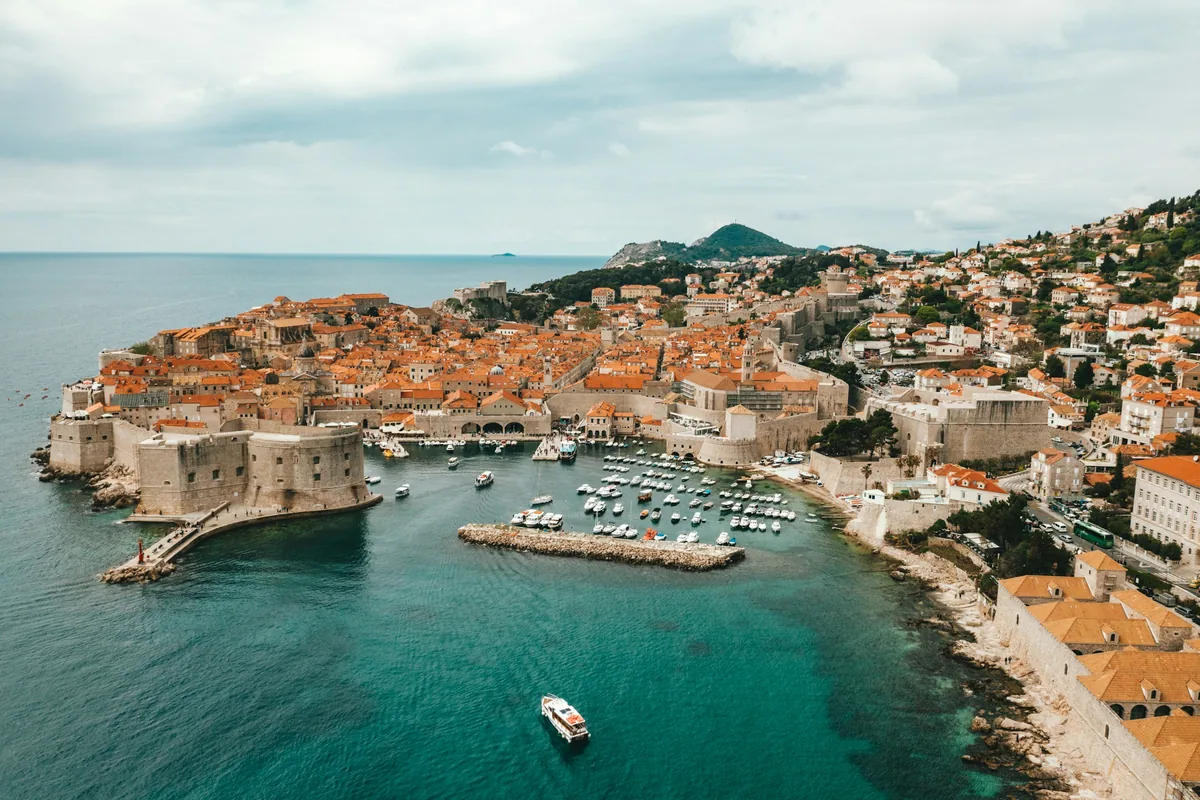
The full loop takes around one and a half to two hours. Go at opening time or in the late afternoon to avoid the midday heat and the biggest crowds. There’s little shade, so bring water, a hat and sun cream.
There are three entrances to the walls, near the Pile Gate, the Ploče Gate and the Old Port, and walkers follow a one-way route around the circuit. The Minčeta Tower is the highest point, with the best views over the rooftops, while the seaward side looks down onto tiny bars and swimmers on the rocks below.
- Getting there: The main entrance is just inside the Pile Gate, where most city buses stop.
- Time needed: One and a half to two hours.
- Tickets: Entry is included in the Dubrovnik Pass, which also covers several museums and city buses.
- Best time to go: At opening time or in the last two hours before closing.
2. Stroll Along the Stradun
The Stradun (also called Placa) is Dubrovnik’s main street, a wide limestone promenade polished smooth by centuries of footsteps. It runs from the Pile Gate to the Old Port.
At one end is the Onofrio Fountain, a large domed fountain built in the 15th century. At the other is the Sponza Palace and the bell tower. Walk it early in the morning or after dark, when the stone glows under the lamps.
At the western end, the Franciscan Monastery sits beside the Pile Gate, and at the eastern end, Luža Square is home to Orlando’s Column, a medieval symbol of the city’s freedom. Side streets climb steeply on both sides, lined with cafés, restaurants and tiny shops.
- Getting there: Enter through the Pile Gate or the Ploče Gate.
- Time needed: 30 minutes to an hour.
- Best time to go: Early morning or after dark, when the street is quieter.
3. Ride the Cable Car up Mount Srđ
The Dubrovnik cable car carries you up Mount Srđ in a few minutes, offering the best panoramic view of the Old Town, the Elaphiti Islands and the coast.
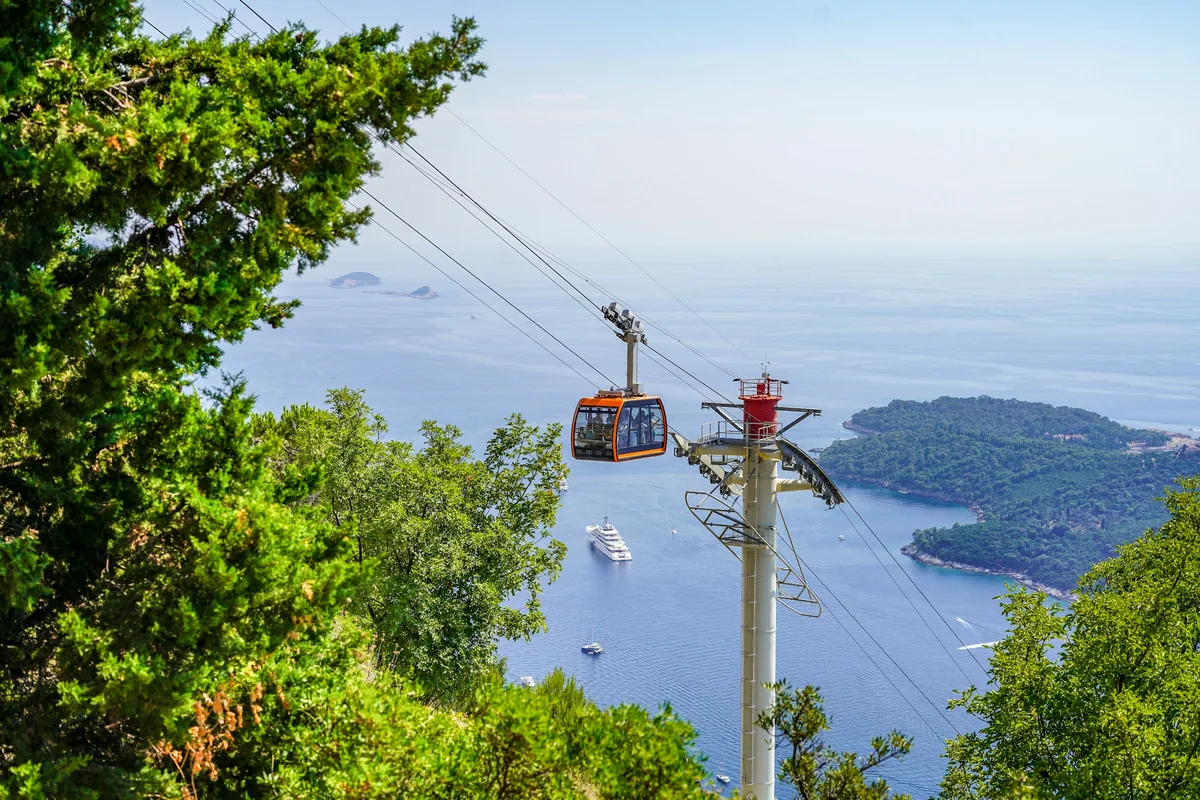
At the top, there’s a restaurant with a terrace and a small museum about the Croatian War of Independence in the 1990s, housed in an old Napoleonic fort. Sunset is the most popular time for good reason.
The ride takes just a few minutes. If you’re feeling active, you can walk up the zigzag path from the road above the Old Town instead, which takes around an hour, then ride the cable car back down.
- Getting there: The lower station is a short walk uphill from the northern walls of the Old Town.
- Time needed: One to two hours, including time at the top.
- Best time to go: Late afternoon and sunset, or early morning for clearer views.
- Insider tip: Walk up in the cool of the morning and take the cable car down.
4. Escape to Lokrum Island
Lokrum is a small, forested island just 10 to 15 minutes by boat from the Old Port. It’s a protected nature reserve with botanical gardens, a ruined Benedictine monastery and peacocks roaming freely.
Swim in the Dead Sea, a small saltwater lake, or from the rocky shores. There are no overnight stays allowed, so the island feels peaceful in the evening as the last boats leave.
Game of Thrones fans will find a replica of the Iron Throne in the island’s visitor centre. Bring a picnic and water shoes, as most swimming spots are rocky, and keep an eye on the time of the last boat back.
- Getting there: Boats leave from the Old Port regularly in season and take around 15 minutes.
- Time needed: Half a day.
- Good to know: No one may stay on the island overnight, and boats don’t run in rough weather.
5. Visit Fort Lovrijenac
Fort Lovrijenac stands on a 37-metre rock just outside the city walls, guarding the western approach to Dubrovnik. Above its gate is a Latin inscription meaning “Freedom is not sold for all the gold in the world”.
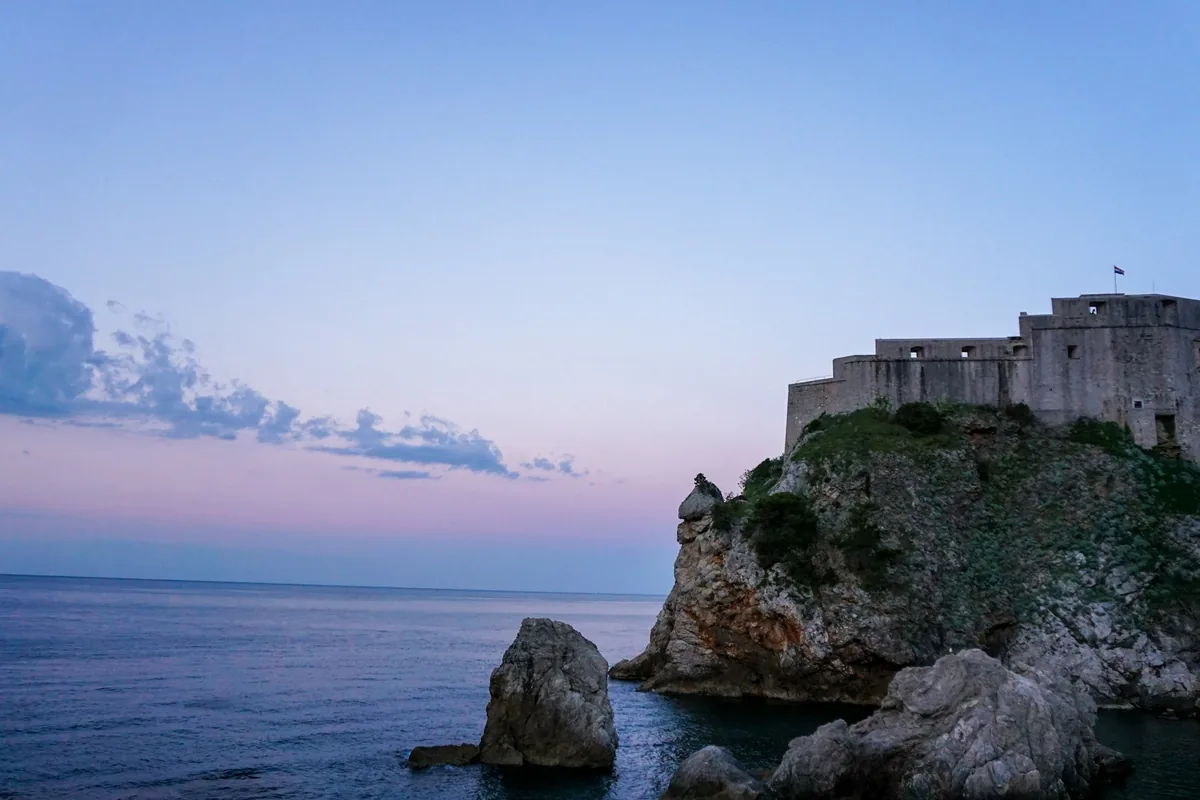
It’s a great spot for views back to the walls, and it’s used as a stage during the Dubrovnik Summer Festival of theatre and music. Your city walls ticket usually includes entry.
The fort has hosted performances of Shakespeare’s Hamlet during the Summer Festival, held each year from July to August. Its walls are thicker on the side facing the sea, where attacks were most likely.
- Getting there: Climb the steps from the small bay just outside the Pile Gate.
- Time needed: 30 to 45 minutes.
- Tickets: Usually included in the city walls ticket or the Dubrovnik Pass.
6. Take a Game of Thrones Tour
Dubrovnik was the main filming location for King’s Landing in Game of Thrones. Fans can follow in the footsteps of the characters on guided tours or by exploring on their own.
Famous spots include the Jesuit Staircase (the “walk of shame”), Fort Lovrijenac (the Red Keep), and parts of the city walls. Even if you’re not a fan, the tours share interesting history about the city.
Tours usually last a couple of hours and mix filming stories with the real history of the Republic of Ragusa. If you’d rather explore on your own, many filming locations are within a few minutes’ walk of each other.
- Time needed: About two hours.
- Insider tip: Book a morning tour, before the streets fill with cruise passengers.
7. Explore the Rector’s Palace and Museums
The Rector’s Palace was the seat of government of the Republic of Ragusa, the independent maritime state that ruled Dubrovnik for centuries.
It now houses the Cultural History Museum, with rooms showing how the city was governed. Also worth visiting are the Franciscan Monastery, home to one of the oldest working pharmacies in Europe, and the Dominican Monastery with its peaceful cloister.
The Franciscan pharmacy has been in operation since the 14th century and still sells traditional creams and remedies. Inside the Rector’s Palace, the courtyard hosts concerts during the summer festival.
- Getting there: All three are inside the Old Town, within a few minutes’ walk of each other.
- Time needed: Two to three hours to see them all.
- Tickets: The Dubrovnik Pass includes several of the city’s museums.
8. Go Sea Kayaking
Sea kayaking around the city walls is one of the best ways to see Dubrovnik from a different angle. Guided tours usually paddle around Lokrum and stop at a small cave or beach for snorkelling.
Sunset kayaking tours are especially popular. It’s a great activity for active travellers and offers a break from the busy streets.
Many tours stop at Betina Cave, a small beach in a sea cave that is only reachable by water, for a swim and a snack. No experience is needed for most guided tours, as guides give a short introduction before setting off.
- Getting there: Most tours start just outside the city walls.
- Time needed: Around three hours.
- Best time to go: Morning, when the sea is calmest, or a sunset tour.
9. Swim at the City Beaches
Dubrovnik’s beaches are mostly pebbly or rocky, but the water is crystal clear. Banje Beach, just outside the Ploče Gate, has views of the Old Town and is the most popular.
For something more unusual, look for the small doors in the city walls that lead to Buža bars, cliffside bars where you can swim off the rocks. Sveti Jakov Beach, a short walk east, is quieter and great at sunset.
Part of Banje Beach is a beach club with sunbeds for rent, while other sections are free. Water shoes are useful on the pebbles and rocks, and the sea is usually warm enough to swim from June to October.
- Getting there: Banje is a short walk from the Ploče Gate. Sveti Jakov is a longer walk or short taxi ride east.
- Time needed: Half a day.
- Insider tip: Head to a Buža bar for a sunset drink above the sea.
10. Take a Day Trip
Dubrovnik is a great base for day trips along the coast and to the islands. Popular choices include:
- Cavtat, a charming harbour town reached by boat along the coast.
- Ston, known for its long medieval walls and fresh oysters.
- The Elaphiti Islands and Mljet, for beaches and nature.
- Kotor in Montenegro, a dramatic bay town about two hours away.
Lokrum is just the start, and our guide to Croatia’s best islands to visit explains which are easy day trips from Dubrovnik.
Further afield, Mostar in Bosnia and Herzegovina, with its famous Old Bridge, is a popular full-day trip. Ston’s walls are among the longest fortifications in Europe, and the village is known for its oysters and mussels.
- Getting there: Boats run to Cavtat, while tours and buses run to Ston, Kotor and Mostar.
- Time needed: A full day for Kotor or Mostar, half a day for Cavtat or Ston.
- Good to know: Border queues into Montenegro and Bosnia and Herzegovina can be long in summer, so allow extra time and bring your passport.
What Should You Know Before Visiting Dubrovnik?
Check cruise ship schedules. The Old Town gets extremely busy when several ships are in port. Plan your Old Town visits for early morning or evening on those days.
Buy the Dubrovnik Pass. It covers the city walls, several museums and public buses.
Stay outside the walls. Accommodation in Lapad, Ploče or Gruž is often better value and quieter, with good bus connections.
Visit in May, June, September or October. The weather is warm, the sea is pleasant and crowds are lighter than in July and August.
Wear good shoes. The marble streets are slippery and there are many steps.
Where Should You Stay in Dubrovnik?
Inside the Old Town you’ll be steps from the walls, the Stradun and the best restaurants. It’s magical in the evening after day visitors leave, but rooms are expensive and many involve plenty of stairs. Cars can’t enter the walls, so you’ll need to carry your luggage.
Ploče, just east of the walls, offers some of the best views of the Old Town and easy access to Banje Beach. Many hotels here have terraces overlooking the sea and city walls.
Lapad is a residential peninsula with a pedestrian promenade, beaches and plenty of hotels. It’s about 15 minutes by bus from the Old Town and offers better value, making it a good choice for families.
Gruž is close to the ferry port and the main bus station, which is ideal if you plan to island hop. It has a lively morning market and good local restaurants.
Cavtat, a short boat ride south, is a peaceful alternative with a harbour, beaches and a relaxed pace, close to Dubrovnik Airport.
Tip: Prices in July and August can be double those in May or October. If you can travel in the shoulder season, you’ll get better value and more space.
A 3-Day Dubrovnik Itinerary
Three days lets you see the Old Town at its quietest and enjoy the islands and coast.
Day 1: The Old Town
Walk the city walls at opening time, explore the Stradun and the Rector’s Palace, then climb to Fort Lovrijenac. Ride the cable car up Mount Srđ for sunset.
Day 2: Lokrum and the Sea
Take the boat to Lokrum in the morning, then join a sea kayaking tour in the afternoon. End the day with a drink at a Buža bar.
Day 3: A Day Trip
Choose between Cavtat and Ston for a relaxed day, or Kotor or Mostar for a longer trip beyond Croatia.
Getting Around Dubrovnik
The Old Town is car-free and best explored on foot. City buses link the Pile Gate with Lapad, Gruž and other neighbourhoods, and they’re included in the Dubrovnik Pass.
An airport shuttle bus connects Dubrovnik Airport with the Pile Gate and the main bus station in around half an hour. Taxis and ride-hailing apps are available, but parking near the Old Town is limited and expensive.
How Much Does a Trip to Dubrovnik Cost?
Dubrovnik is one of the most expensive destinations in Croatia, especially in July and August. The city walls ticket is one of the biggest single costs, and restaurants inside the walls are pricier than elsewhere.
To save money, buy the Dubrovnik Pass if you plan to visit several museums, stay in Lapad or Gruž, and eat in the neighbourhoods outside the Old Town. Visiting in May, June or September also brings lower prices.
Frequently Asked Questions
How many days do you need in Dubrovnik?
Two to three days lets you see the Old Town, ride the cable car and visit Lokrum. Add more days for day trips.
Is Dubrovnik expensive?
It’s one of the most expensive places in Croatia, especially in the Old Town. Eating and staying outside the walls saves money.
Can you swim in Dubrovnik?
Yes. There are beaches just outside the walls, plus rocky swimming spots and Lokrum Island.
Is the Dubrovnik Pass worth it?
Yes, if you plan to walk the city walls and visit a few museums. It also includes city buses, which helps if you stay outside the Old Town.
How do you avoid the crowds in Dubrovnik?
Visit the Old Town early in the morning or in the evening, check cruise ship schedules, and travel in spring or autumn rather than midsummer.
Discover the Pearl of the Adriatic
Dubrovnik’s beauty is worth the crowds, especially if you time your visits well. Walk the walls, ride up Mount Srđ and finish your day with a swim at sunset. If you are planning a longer trip along the Mediterranean coast, our guide to the prettiest towns on the Amalfi Coast is a good next read.
Continue your Adriatic trip by ferry to Croatia’s best islands, from Mljet to Hvar, or head south along the coast to the best beaches on the Albanian Riviera.
Featured image: Photo by Ivan Ivankovic on Unsplash