Last updated: November 2026
The best day trips from Athens are Cape Sounion and Delphi for ancient sites, Aegina and Hydra for easy island escapes, and Nafplio, Mycenae and Epidaurus for the classical Peloponnese. Athens sits close to the sea and to some of the most important archaeological sites in Greece, so a single day can take you from city traffic to a clifftop temple or a car-free harbour.
This guide covers ten options by bus, ferry and organised tour, with realistic travel times and the main planning traps, such as which bus station to use and when the last boat back leaves. Before you go, read our guide to the top places to visit in Athens so you can fit the city sights around your excursions. Some trips suit a first visit, while others work best if you have a car or are happy to join a tour. At the end there is a free printable 3-day Athens day trips itinerary that groups the stops into days that make sense.
Quick answer: What are the best day trips from Athens? For an easy first trip, go to Cape Sounion for the Temple of Poseidon or take a ferry to Aegina or Hydra. For a big ancient site, choose Delphi. For history and a pretty old town, combine Nafplio with Mycenae or Epidaurus, ideally by car or on a tour.
Free printable itinerary
Planning a trip? Download our 3-Day Athens Day Trips Itinerary as a PDF: the day-by-day plan plus all 10 places with directions and map links. Print it or keep it on your phone.
Quick comparison: day trips from Athens at a glance
| # | Day trip | Best for | Getting there | Typical time each way |
|---|---|---|---|---|
| 1 | Cape Sounion | Sunset and a clifftop temple | Bus or car | About 1.5 to 2 hours |
| 2 | Aegina | Easy island day and pistachios | Ferry from Piraeus | About 40 minutes to 1 hour 15 minutes |
| 3 | Delphi | The ancient oracle and museum | Bus, car or tour | About 2.5 to 3 hours |
| 4 | Hydra | Car-free harbour town | Fast ferry from Piraeus | About 1 hour 10 minutes to 2 hours |
| 5 | Nafplio | Old town and fortress | Bus or car | About 2 to 2.5 hours |
| 6 | Mycenae | Bronze Age citadel | Car or tour | About 1.5 to 2 hours |
| 7 | Epidaurus | The ancient theatre | Car or tour | About 1.5 to 2 hours |
| 8 | Ancient Corinth and the Corinth Canal | Ruins and the canal | Bus, rail or car | About 1 to 1.5 hours |
| 9 | Poros | Pine-clad island and quiet town | Ferry from Piraeus | About 1 hour to 2 hours |
| 10 | Meteora | Cliff-top monasteries | Tour or overnight stay | About 4 to 5 hours |
1. Cape Sounion
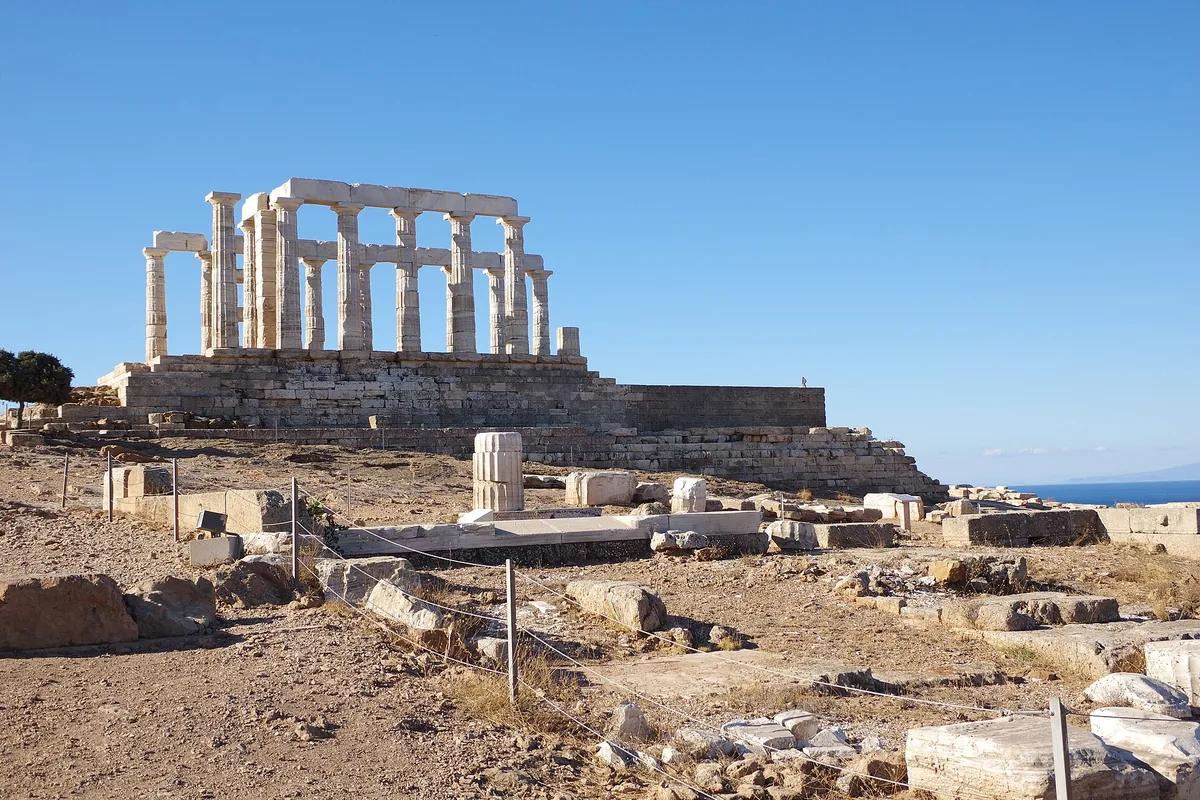
Cape Sounion is the classic short escape from Athens, a headland at the southern tip of Attica crowned by the Temple of Poseidon. The marble columns stand on a cliff above the Aegean, and the setting is the reason people come, particularly around sunset when the sky turns gold and orange.
The temple dates from the fifth century BC and was dedicated to the god of the sea, which makes sense when you see the view across the water to the islands. The archaeological site is small, so you only need an hour or so to walk around the columns, read the information boards and take photographs. The surrounding coast is also worth a stop, with beaches and fish tavernas on the road back towards the city.
Public buses run from Athens to Sounion along the coast, taking roughly 1.75 to 2 hours depending on traffic, and the route is scenic. Driving is faster, about 1 to 1.5 hours, and gives you more freedom to stop on the coast. The main planning problem is the return journey if you want to stay for sunset, since the timing of the last bus is reported differently, so check the official KTEL timetable before relying on it.
Bring a hat and water, because there is little shade on the headland, and the wind can be strong. Entry is by ticket at the site, and rules and prices change, so check the Greek Ministry of Culture’s Odysseus website before you go.
- How to get there: Take the coastal KTEL bus from Athens, drive along the coast road, or join a sunset tour.
- How long to spend: About 1 to 2 hours at the site, or a half day with a beach and lunch.
- Best time to go: Late afternoon for the sunset, outside the peak summer heat.
- Tip: If you go by bus, confirm the last return departure before you commit to staying for sunset.
2. Aegina
Aegina is the easiest island day trip from Athens, with a ferry crossing short enough to leave after breakfast and be home for dinner. Boats run from Piraeus port, and the fastest hydrofoils take around 40 minutes, while conventional ferries take about an hour and a quarter.
The island is famous for its pistachios, which grow in orchards across the hills and appear in sweets, ice cream and snacks in the harbour town. The main town is a pleasant place for a stroll, with a waterfront lined with cafes, fish restaurants and small boats. For something more historic, the Temple of Aphaia, a well-preserved Doric temple about 13 kilometres from the town, sits in a pine-covered hilltop and is the main sightseeing highlight.
You can get to the temple by local bus from Aegina town, and some ferries also stop at Agia Marina, which is closer to the temple, though that route mainly runs in summer, so check the operator’s timetable. A taxi is another option if you are short on time. Beaches and fishing villages such as Perdika add a lazy afternoon option for those who prefer water to ruins, and if swimming is your priority, our roundup of the best beaches in Europe shows how Greek coves compare with the rest of the continent.
Because the island is small, a day is enough to see the town, taste some pistachio sweets and visit the temple. If you want to avoid a rush, start with the temple in the morning and spend the afternoon in town.
- How to get there: Take a hydrofoil or ferry from Piraeus port, which you can reach by metro.
- How long to spend: A full day, with a morning at the temple and an afternoon in the harbour.
- Best time to go: Spring and autumn, or a weekday in summer to avoid crowds.
- Tip: Check the ferry timetable for the last boat back, and buy pistachio sweets from a local shop rather than the harbour stalls.
3. Delphi
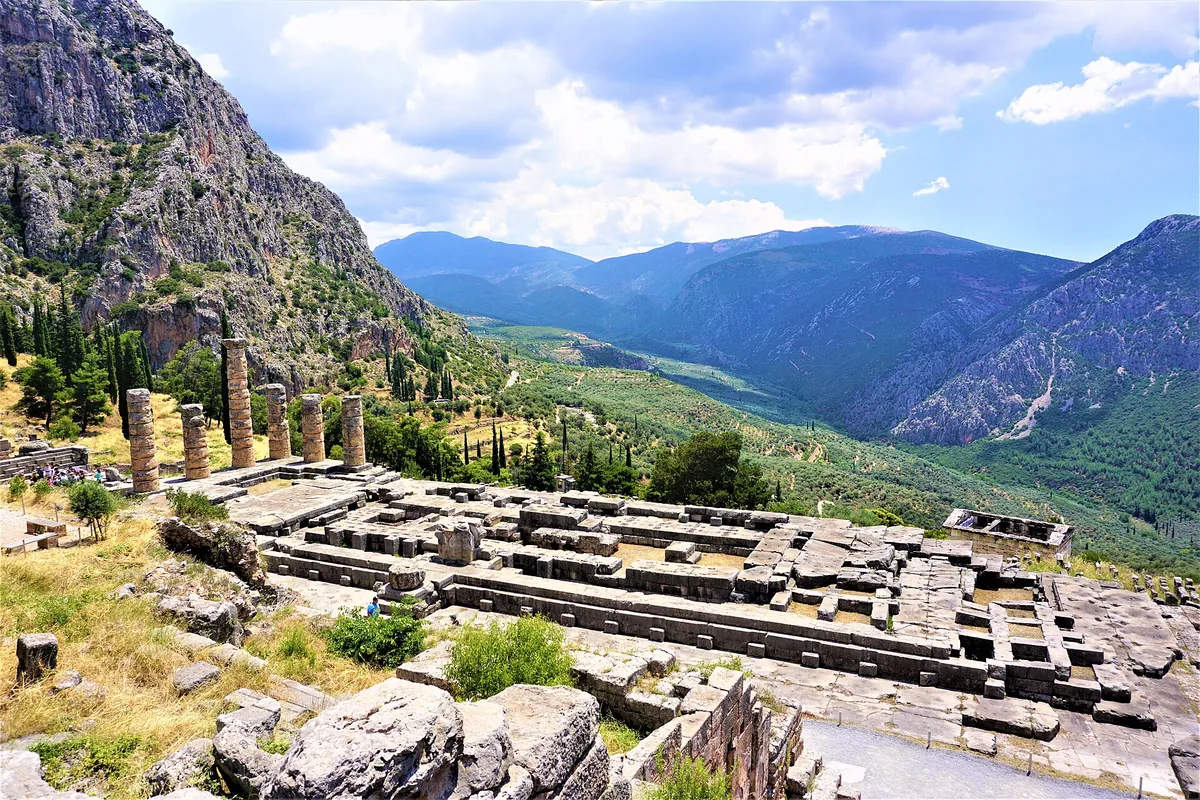
Delphi is the most important ancient site within a day’s reach of Athens, a mountain sanctuary that the ancient Greeks considered the centre of the world. It was home to the oracle of Apollo, and pilgrims travelled here to ask questions about war, colonisation and personal life. The site is a UNESCO World Heritage Site, and you can read the official description on the UNESCO World Heritage Centre.
The experience has two parts. The archaeological site climbs a steep hillside past the Sacred Way, the Treasury of the Athenians and the Temple of Apollo, finishing at the well-preserved theatre and stadium with far-reaching valley views. The museum next to the site holds the bronze Charioteer, one of the most famous statues of ancient Greece, and it is worth at least an hour.
Delphi is a long day. Public buses from Athens take roughly three hours each way, and they leave from the Liosion terminal rather than the Kifissos terminal, which is a common mix-up. Driving takes about two and a half hours. The return bus is the main constraint, so check the timetable with the regional bus operator, KTEL Fokidas, before you go. Many visitors prefer a guided tour for convenience, while others choose to stay overnight in the village.
Allow three to four hours for the site and museum together, and wear good shoes, because the paths are steep and the stone can be slippery.
- How to get there: Bus from the Liosion terminal, drive, or join a guided tour.
- How long to spend: About 3 to 4 hours on site, plus travel.
- Best time to go: Spring or autumn, when it is cooler for climbing.
- Tip: Confirm the last return bus before you travel, and consider an overnight stay if you want a relaxed visit.
4. Hydra
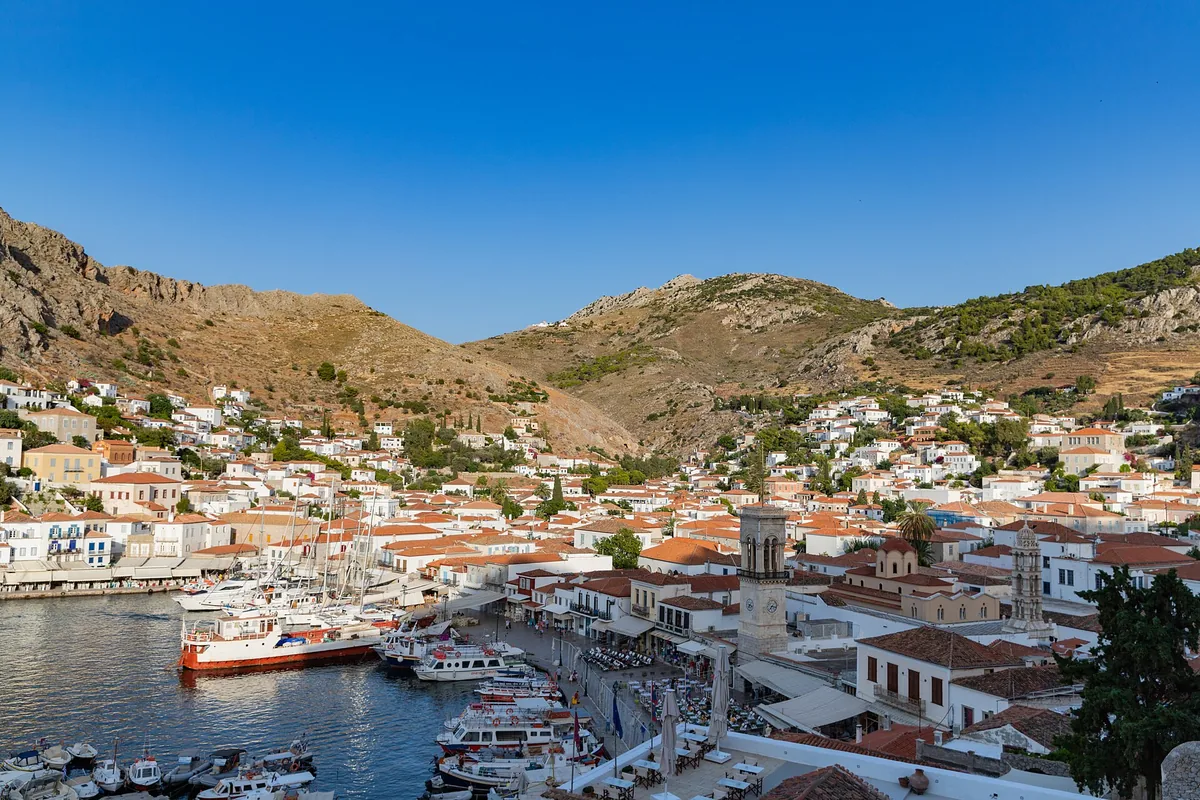
Hydra is a car-free island of stone mansions and a postcard harbour, and a fast ferry makes it a practical day trip from Athens. Motor vehicles are banned, so the main transport is on foot, by donkey or mule, or by water taxi, and the pace of life feels very different from the capital.
The harbour town is the main attraction, a horseshoe of white and grey houses climbing the hillside, with cafes, shops and small galleries along the waterfront. Walk uphill into the lanes to see the old captains’ houses, which date from the island’s wealthy shipping past. If you want a swim, a short walk or water taxi takes you to a rocky beach such as Vlychos or Spilia, and you can find places to swim from the rocks near the harbour.
Fast boats run from Piraeus, with the quickest crossing taking just over an hour and a typical journey closer to an hour and a half. Slower services take longer, so check which boat you are booking. Most guides say boats run through the year, with more services in summer, and the last departure back to Piraeus is in the evening, so plan to be at the port early.
Hydra is small enough to enjoy in a day, but a night here gives a calmer experience once the day trippers leave. If you do come for the day, leave the harbour for a short walk uphill and have lunch away from the busiest waterfront tables.
- How to get there: Fast ferry from Piraeus, reached by metro or taxi.
- How long to spend: A full day, about 5 to 6 hours on the island.
- Best time to go: May, June, September and October, for warm weather and fewer crowds.
- Tip: Check the ferry operator’s website for the current timetable and book the return trip at the same time.
5. Nafplio
Nafplio is widely seen as one of the prettiest towns in Greece, a harbour and old town of neoclassical houses beneath a hilltop fortress. It was the first capital of modern Greece in the 1820s, and its Venetian and Ottoman history is visible in the walls, squares and fountains.
The old town is compact and made for walking. Syntagma Square is the heart of it, surrounded by cafes and old mosques turned into civic buildings, and narrow streets lead to shops and tavernas. The Palamidi Fortress is the main sightseeing target, reached by a famous flight of stairs (commonly counted at around a thousand steps) or by road. The smaller Bourtzi fortress sits on an islet in the harbour, and you can see it from the waterfront promenade.
Buses from the Kifissos terminal in Athens take about two to two and a half hours, and by car the journey is somewhat shorter on a modern highway. A single day is enough for a taste, though many travellers feel Nafplio deserves an overnight stay, particularly if you want to pair it with Mycenae or Epidaurus. Beaches such as Arvanitia are within walking distance for a quick swim in summer.
Climb Palamidi early or late in the day to avoid the heat, and bring water. Ticket prices vary, so check the official Odysseus site before you go.
- How to get there: KTEL bus from the Kifissos terminal, or drive via the highway.
- How long to spend: A full day, or overnight to combine with other sites.
- Best time to go: Spring or autumn, when climbing the fortress is comfortable.
- Tip: Leave Athens early and do Palamidi first, then wander the old town in the afternoon.
6. Mycenae
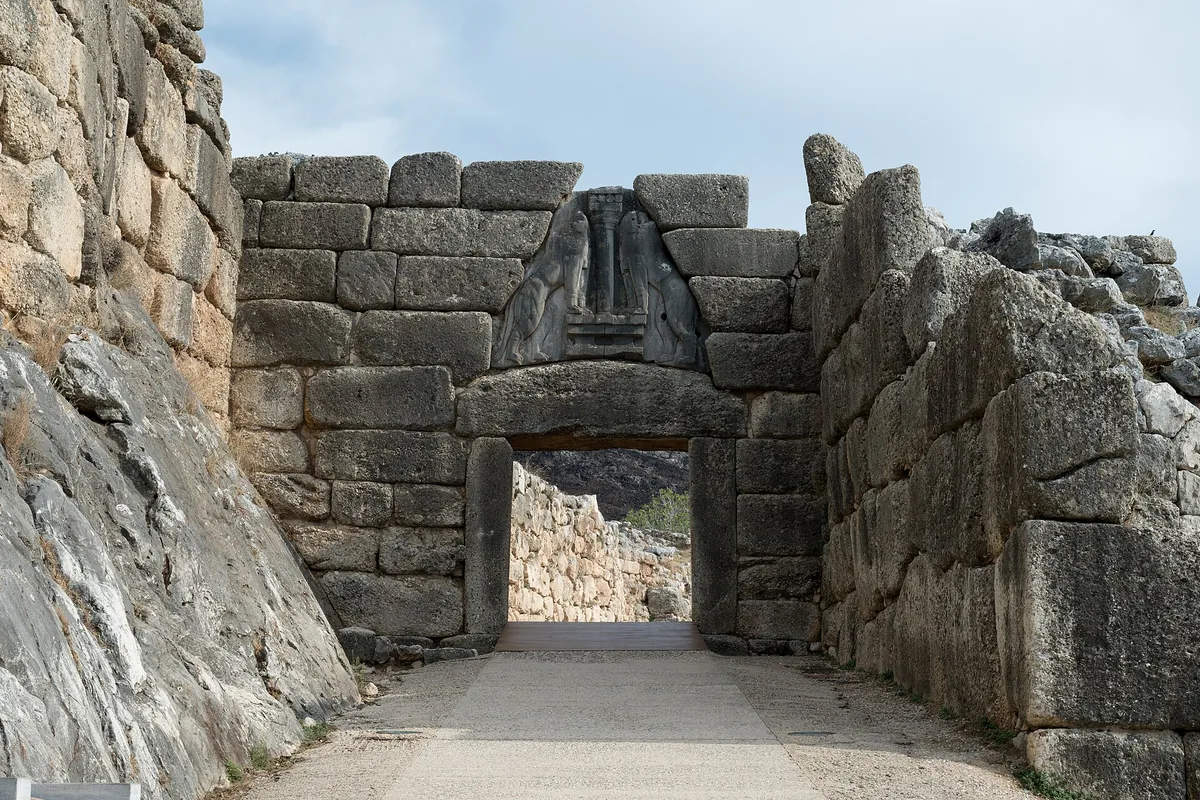
Mycenae is the citadel of the Bronze Age king Agamemnon in legend, and it is one of the most evocative ancient sites in Greece. The ruins sit on a rocky ridge in the Argolid, surrounded by mountains, and the famous Lion Gate still marks the entrance to the citadel. Mycenae is a UNESCO World Heritage Site, together with nearby Tiryns, and you can read the official description on the UNESCO World Heritage Centre.
Inside the walls, you can see the remains of the palace, the grave circles where gold treasures were found and a deep cistern reached by an underground passage. Outside, the Treasury of Atreus, a huge beehive-shaped tomb, is one of the highlights of the visit. The small museum at the site displays pottery, jewellery and other finds, and the most famous gold objects are in the National Archaeological Museum in Athens, which makes a good pairing if you are in the city for a few days.
Public transport to Mycenae is awkward. Most visitors drive, join a guided tour, or take a bus to the nearby town and then a local connection or taxi, so check current options with the bus operator before you plan. A car lets you combine Mycenae with Nafplio and Epidaurus in one long day, which many tour operators also do.
Because the site is exposed, start early, bring water and plan around the midday heat in summer.
- How to get there: Drive, join a tour, or use a regional bus plus taxi, checking connections first.
- How long to spend: About 2 to 3 hours.
- Best time to go: Early morning in spring or autumn.
- Tip: Combine Mycenae with Nafplio or Epidaurus on a tour if you do not drive.
7. Epidaurus
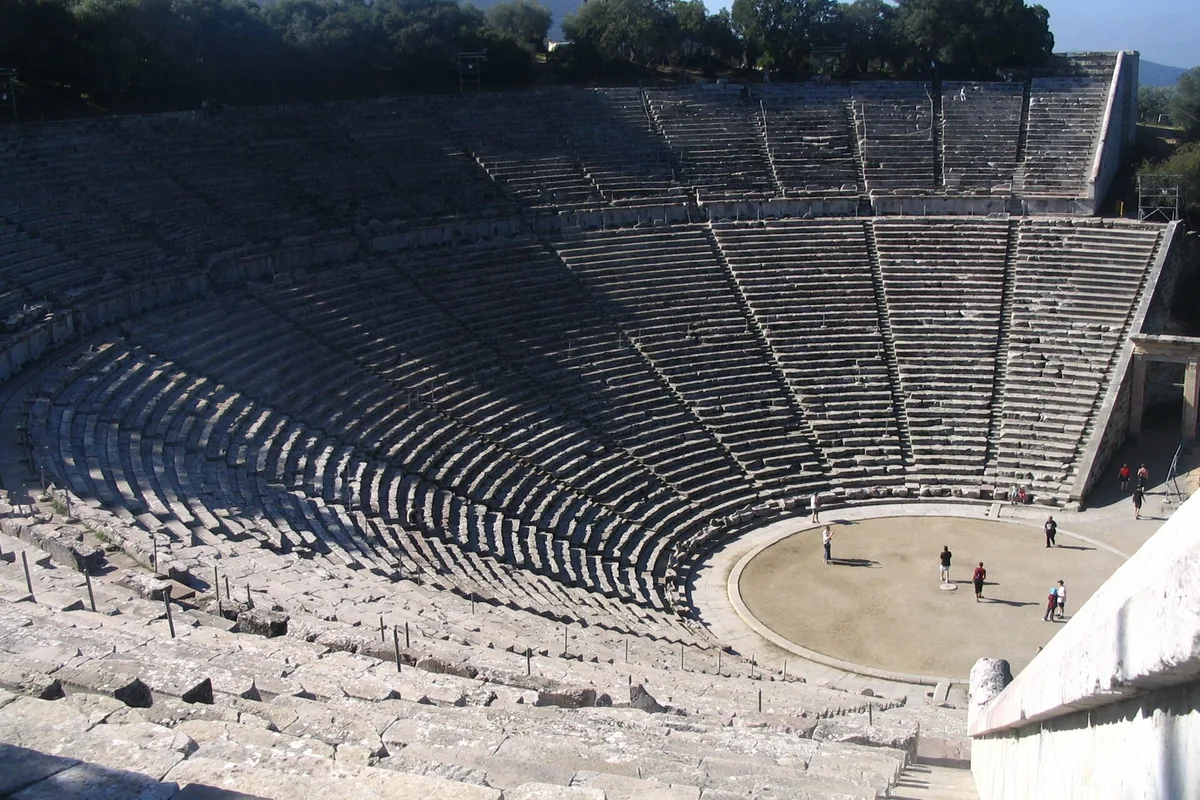
Epidaurus is home to the best-preserved ancient Greek theatre, famous for its near-perfect acoustics. The theatre was built in the fourth century BC, and it is part of a larger sanctuary of Asklepios, the god of healing, where people once came to be cured. The site is a UNESCO World Heritage Site, and you can read the official description on the UNESCO World Heritage Centre.
The theatre is the main attraction, a steep semicircle of stone seats set into a hillside. Guides often demonstrate the acoustics by dropping a coin or speaking from the centre of the stage, and you can hear it clearly from the top rows. Around the theatre are the remains of the sanctuary, including temples, baths and a stadium, and a museum displays statues and medical instruments from the ancient healing centre.
In summer, the Athens and Epidaurus Festival stages ancient dramas and concerts in the theatre, which makes an evening visit special if your dates match. Check the festival’s official site for the current programme before planning around it.
Getting to Epidaurus is easiest by car or on a guided tour, usually about one and a half to two hours from Athens. Public transport is limited, so many visitors combine the theatre with Nafplio, Mycenae or Corinth on an organised trip. Avoid the middle of the day in summer, when the stone seats get very hot.
- How to get there: Drive, or join a guided tour that often includes Mycenae and Nafplio.
- How long to spend: About 1.5 to 2 hours.
- Best time to go: Morning, or an evening performance in the festival season.
- Tip: Bring a hat and sit near the top for the best view and a good test of the acoustics.
8. Ancient Corinth and the Corinth Canal
Ancient Corinth and the Corinth Canal make the closest Peloponnese day trip to Athens, with ruins, a fortress hill and a dramatic engineering feat. The canal is a straight, narrow cut through rock that links the Gulf of Corinth with the Saronic Gulf, and you can see it from the bridges at either end.
At Ancient Corinth, the main sights are the seven surviving columns of the Temple of Apollo, the marketplace and the small archaeological museum. The city was an important trading power in the ancient world, and later a Roman colony visited by the apostle Paul, which is why Corinth appears in the New Testament. Above the ruins, the Acrocorinth is a huge fortified hill with Byzantine, Frankish, Venetian and Ottoman walls, and the views from the top reach across both gulfs.
Corinth is about an hour to an hour and a half from Athens by car, and buses run from the Kifissos terminal to the modern town, with a local connection to the ancient site. Suburban rail services also run towards Corinth, but you should check the current timetable and connections with Hellenic Train before you rely on them.
The canal itself takes only a short stop, so the day works best when combined with Ancient Corinth and Acrocorinth, or as the first stage of a longer tour towards Nafplio and Epidaurus.
- How to get there: Bus from Kifissos, suburban rail with a connection, or drive.
- How long to spend: A half day to a full day, depending on whether you climb Acrocorinth.
- Best time to go: Spring or autumn, early in the day.
- Tip: Visit the canal bridge first for photographs, then continue to the ancient site.
9. Poros
Poros is a small island separated from the mainland by a narrow strait, and it is a quiet alternative to Hydra or Aegina. The main town climbs a hill beside the water, topped by a clock tower, and the waterfront is lined with cafes and fish tavernas.
The island is green, with pine forests that reach down to the coast, and it has a relaxed, local feel. You can walk up to the clock tower for views over the town and the strait, then follow paths through the pines or along the coast to the quiet beaches. The shore across the water has the lemon groves of the mainland, which are a pleasant sight from the ferry.
Ferries run from Piraeus, with faster boats taking a little over an hour and slower ones about two hours, depending on the service. The island is small enough to walk, and a day gives you time for the harbour, a swim and an unhurried lunch. Check the ferry timetable carefully for the return crossing, because services vary by season.
If island hopping appeals beyond Greece, our guide to the best Croatian islands is a good next idea for another Mediterranean sea escape. Poros suits travellers who want a calm day rather than a list of sights, and it makes a good option when other islands are crowded. If you only have one island day, Hydra has more character, but Poros is easier and more relaxed.
- How to get there: Ferry from Piraeus port.
- How long to spend: A full day on the island.
- Best time to go: May to October, for swimming weather.
- Tip: Walk up to the clock tower early, before it gets hot, then spend the afternoon by the water.
10. Meteora
Meteora is a dramatic landscape of sandstone pillars topped by medieval monasteries, and it is the most spectacular, but also the longest, trip on this list. It is a UNESCO World Heritage Site, and you can read the official description on the UNESCO World Heritage Centre.
The monasteries were built on the rock tops from the fourteenth century onwards, and several are still active today. Visitors can usually enter a few of them, and each has its own opening days and dress code, so cover your shoulders and knees. The views from the viewpoints around the pillars are the real highlight, particularly at sunrise or sunset when the rock glows.
The trip is a stretch for a day. Recent guides report that the direct train between Athens and Kalambaka has not been running since flood damage in 2023, with a bus connection that adds time, so check the current service on the Hellenic Train website before you plan. By car, the journey is about three and a half to four hours each way, and a guided day tour is a long day of 13 to 14 hours.
Most travellers will enjoy Meteora more with an overnight stay in Kalambaka or Kastraki, which gives you time for sunrise and several monasteries. Treat it as a stretch day trip, and only choose it if you are happy with a very early start.
- How to get there: Guided tour, driving, or an overnight trip by train and bus after checking current services.
- How long to spend: At least 4 to 5 hours on site, plus a long journey.
- Best time to go: Spring or autumn, with an early start.
- Tip: Check the monasteries’ current opening days, as each closes on a different day of the week.
How to pick the right day trip from Athens
Choose by how much time you have and how you like to travel. If you have only one day and want something simple, take a ferry to Aegina or Hydra, or a bus to Cape Sounion. If you want ancient history, Delphi is the strongest option, with Mycenae and Epidaurus close behind. For a pretty town and good food, choose Nafplio. If you do not drive, a guided tour can save a lot of effort on routes such as Mycenae and Epidaurus, where public transport is limited.
Suggested plans for 1, 2 or 3 days of day trips from Athens
This plan groups the trips by direction, so each day is realistic. Always check the latest timetables for ferries and buses.
Day 1: Saronic islands
Take an early ferry from Piraeus to Aegina (item 2), see the Temple of Aphaia in the morning, then enjoy pistachio sweets and lunch in the harbour. If you prefer a car-free island, choose Hydra (item 4) instead and spend the day on foot around the harbour. Return to Piraeus in the evening.
Day 2: Peloponnese highlights
Drive or join a tour to Ancient Corinth and the Corinth Canal (item 8), then continue to Mycenae (item 6), Epidaurus (item 7) and Nafplio (item 5) for dinner. This is a full, long day, so consider staying overnight in Nafplio if you want to avoid driving back late.
Day 3: Delphi or Cape Sounion
For ancient history, go to Delphi (item 3) with an early bus or tour and allow most of the day. For something shorter, spend the afternoon at Cape Sounion (item 1) and watch the sunset at the Temple of Poseidon, with the bus timetable checked in advance.
Getting around: buses, ferries and tours
Athens has three main places to start your trips. Piraeus port is reached by metro and serves ferries to the Saronic islands. The Kifissos terminal is the main bus station for the Peloponnese, including Corinth and Nafplio, while the Liosion terminal serves Delphi and central Greece. Always check which station your bus leaves from, because they are in different parts of the city.
For official public transport information in the city, use OASA, and for rail services use Hellenic Train. Ferry operators publish timetables on their own sites, and these change by season. If you plan a long day, book your return ticket at the same time as your outward journey.
Guided tours are a good choice for Delphi, Mycenae, Epidaurus and Meteora, where public transport is slower or limited. Renting a car is possible, but Athens traffic can be heavy, so collect the car outside the city centre if you can.
Where to stay for day trips from Athens
- Syntagma and Plaka: central and well connected, close to the metro and to the Kifissos and Liosion terminals by taxi.
- Monastiraki and Psyrri: lively, with easy metro access to Piraeus for island ferries.
- Piraeus: useful if you have early ferries, though it is less atmospheric than the centre.
- Nafplio or Delphi: consider an overnight stay if you want to visit those places at a relaxed pace.
Budget guidance for day trips from Athens
- Shoestring: public buses to Sounion and Corinth, slower ferries and a packed lunch.
- Mid-range: hydrofoils to the islands, buses to Delphi or Nafplio and a taverna lunch.
- Comfortable: a private driver or guided tour with entry tickets included.
Archaeological site tickets and opening hours change, so check the Ministry of Culture’s Odysseus website, and for general planning see Visit Greece.
Frequently Asked Questions
What is the best day trip from Athens?
For most visitors, the best day trip is Delphi for ancient history, or Aegina or Hydra for an easy island day. Cape Sounion is the quickest option if you only have a few hours and want a sunset view.
Can I do a day trip from Athens without a car?
Yes. Ferries to Aegina, Hydra and Poros leave from Piraeus, and buses run to Cape Sounion, Corinth, Nafplio and Delphi. Mycenae and Epidaurus are harder without a car, so many people use a guided tour for those.
How far is Delphi from Athens?
Delphi is about 180 kilometres from Athens, and the journey takes roughly two and a half hours by car or around three hours by bus. Because it is a long day, check the return bus timetable before you set out.
Which Greek island is best for a day trip from Athens?
Aegina is the closest and easiest, with a short crossing and a famous temple. Hydra is the most charming, thanks to its car-free harbour, while Poros is the quietest.
Is Meteora possible as a day trip from Athens?
It is possible on a long guided tour or by car, but the journey is several hours each way, and the direct train has been reported as not running since 2023. Most people prefer to stay overnight near Meteora.
Do I need to book tickets in advance for ancient sites?
Not always, but it can help in peak season. Check the official Odysseus website for current prices, opening hours and any online ticketing for Delphi, Sounion, Mycenae and Epidaurus.
Discover more of Athens
Once you have chosen a day trip, save your evenings back in Athens for a long taverna dinner (our guide to the best places to eat in Athens has ten places to try), which is the best way to end a day of ferries, ruins and sunshine. Whichever route you pick, check the latest timetables and opening arrangements with the official sources linked above before you set out.
Featured image: Photo by Stathis floros, CC BY-SA 4.0, cropped, via Wikimedia Commons