Last updated: November 2026
Frankfurt sits in the middle of Germany’s rail network, which makes it one of the best bases for day trips in the country. Castles, wine villages, a UNESCO river valley, medieval towns and one of Europe’s great cathedrals are all within roughly two hours by train. This guide to the best day trips from Frankfurt picks ten of them, and it ends with a free printable 3-day itinerary to help you fit them around your stay.
Most trips use regional or ICE trains from Frankfurt Hauptbahnhof, so you can travel without a car. Journey times in this guide are given as safe bands, and train schedules change with the season and with engineering works, so check the official Deutsche Bahn journey planner before you go.
Quick answer: What are the best day trips from Frankfurt? The best day trips from Frankfurt are Heidelberg, Rüdesheim and the Rhine Valley, Mainz, Wiesbaden, Würzburg, Darmstadt, Marburg, Cologne, Rothenburg ob der Tauber and Bad Homburg. Heidelberg and the Rhine are the best choices for a first visit, while Mainz, Wiesbaden and Darmstadt are the easiest short trips.
Free printable itinerary
Planning a trip? Download our Suggested day trip plans for 1, 2 or 3 days as a PDF: the day-by-day plan plus all 10 places with directions and map links. Print it or keep it on your phone.
Quick comparison: day trips from Frankfurt
| Trip | Best for | Getting there | Time each way |
|---|---|---|---|
| Heidelberg | Castle and old town | Direct train | About 1 hour |
| Rüdesheim and the Rhine Valley | Wine and river scenery | Regional train | About 1 to 1.5 hours |
| Mainz | Cathedral and printing history | S-Bahn | Under 1 hour |
| Wiesbaden | Spa town elegance | Regional train or S-Bahn | Under 1 hour |
| Würzburg | Baroque palace and wine | Direct ICE | About 1 to 1.5 hours |
| Darmstadt | Art Nouveau and UNESCO | Regional train | Under 1 hour |
| Marburg | Hillside university town | Regional train | About 1 hour |
| Cologne | Gothic cathedral | ICE | About 1 to 1.5 hours |
| Rothenburg ob der Tauber | Medieval walled town | Train with changes | About 2.5 to 3.5 hours |
| Bad Homburg | Spa park and Roman fort | S-Bahn | Under 1 hour |
1. Heidelberg
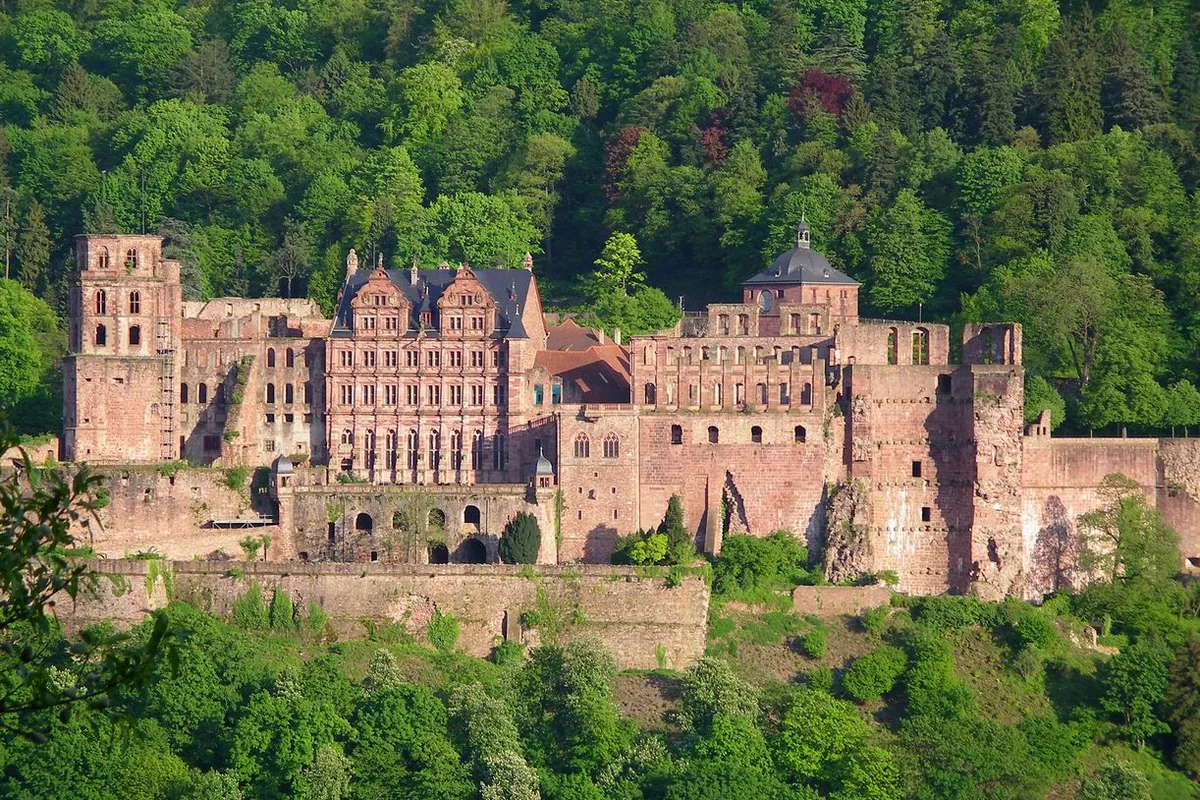
Heidelberg is the classic day trip from Frankfurt, with a ruined castle above a romantic old town on the Neckar river. The red sandstone ruins of Heidelberg Castle look down on narrow streets, the Old Bridge and a long riverside. It is the most popular trip from the city for good reason, and direct trains make it simple.
Start by taking the funicular or walking up to the castle. The terrace gives a wide view over the roofs, and the courtyards and the Great Vat, a giant wine barrel, are the best-known features inside. Check the official castle website for ticket rules and opening details.
Back in the old town, walk the Hauptstrasse, Germany’s long pedestrian shopping street, and visit the University Library or the Church of the Holy Spirit. Cross the Old Bridge for the view back at the castle, then follow the Philosophers’ Walk on the north bank for the classic photograph.
Heidelberg is a student city, so there are plenty of cafes and cheap lunches. In December the old town has a Christmas market, which is a good reason to choose it as a winter trip. If markets are the main draw, our guide to the best Christmas markets in Europe shows how Germany’s festive towns compare with those further afield.
- How to get there: Direct train from Frankfurt Hauptbahnhof to Heidelberg Hauptbahnhof, then a bus or a walk of about 20 to 30 minutes into the old town.
- How long to spend: A full day, or a long half day for the castle and old town.
- Best time to go: Spring and autumn for good light, or December for the market.
- Tip: Walk up to the castle and ride the funicular down, because the stairs and cobbles are steep.
2. Rüdesheim and the Rhine Valley
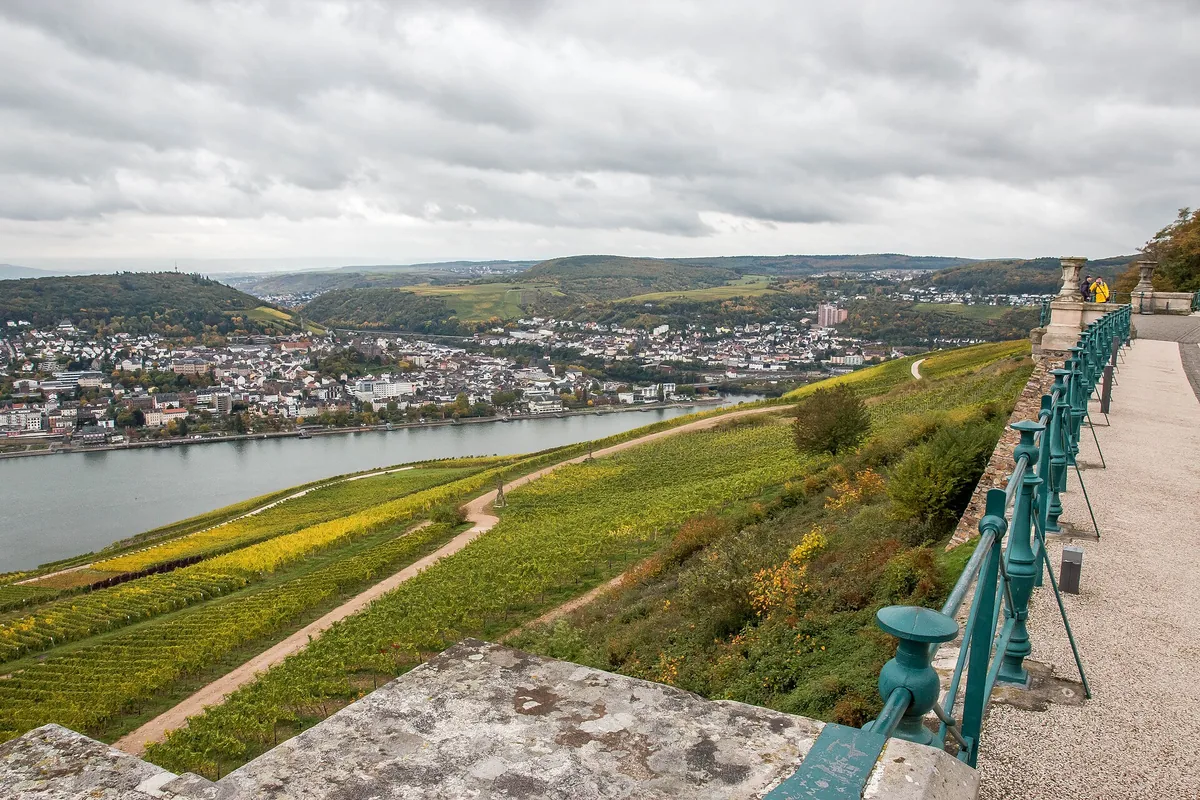
Rüdesheim is the gateway to the Upper Middle Rhine Valley, a UNESCO World Heritage landscape of castles, vineyards and steep river gorges. The stretch between Bingen and Koblenz is listed by UNESCO as the Upper Middle Rhine Valley, and it is one of the most scenic river journeys in Europe.
In Rüdesheim, the narrow Drosselgasse is the tourist centre, lined with wine taverns, while the cable car climbs to the Niederwald Monument above the vineyards. The town is known for Riesling and for Rüdesheim coffee, a hot drink with brandy and cream. Walk through the quieter lanes for more local wine bars.
The best way to see the valley is by boat. River cruises run between Rüdesheim, St Goar and other towns in the warmer season, passing castles and the famous Loreley rock. Check the KD Rhine cruise website for seasonal timetables. You can take a boat one way and return by train along the river.
On a longer day, add a stop at Bacharach, a small walled wine town, or Burg Rheinstein. Keep the return train time in mind, as regional services can be less frequent in the evening.
- How to get there: Regional train from Frankfurt Hauptbahnhof along the Rhine to Rüdesheim, then a boat or train for the valley.
- How long to spend: A full day with a cruise.
- Best time to go: Late spring to early autumn, with the wine festivals and cruises at their busiest in summer.
- Tip: Plan the boat leg one way and the train back, which avoids watching the clock for the last sailing.
3. Mainz
Mainz is the quickest of the big-city day trips, with a Romanesque cathedral, a lively old town and a claim to be the birthplace of printing in Europe. The S-Bahn from Frankfurt takes less than an hour, so it suits a relaxed day or a half day.
The Mainz Cathedral is the main sight, a large Romanesque building with a thousand years of history, and its cloister and museum are worth time. Nearby, the Marktplatz and the old town have timber-framed houses and a regular market. Check the cathedral’s visiting hours in advance, because services limit access.
Mainz was the home of Johannes Gutenberg, the printer of the Gutenberg Bible, and the Gutenberg Museum covers his work and the history of printing. The museum’s old building is closed while a new one is planned, and its exhibits have been shown in a temporary exhibition elsewhere in the city, so check its official site for what is open before you plan a visit around it.
Look up at the St Stephan’s Church, famous for its blue stained glass windows by Marc Chagall, which are a highlight for many visitors. Finish the day with a glass of local Rheinhessen wine in the old town, or walk along the Rhine promenade.
- How to get there: S-Bahn from Frankfurt Hauptbahnhof to Mainz Hauptbahnhof, then a short walk to the old town.
- How long to spend: Half a day to a full day.
- Best time to go: Any season, with the Christmas market in December and wine events in late summer.
- Tip: Visit St Stephan’s in the morning light, when the blue windows are at their strongest.
4. Wiesbaden
Wiesbaden is a grand spa town with hot springs, elegant buildings and a hillside railway, and it is only a short ride from Frankfurt. The city has been a spa destination since Roman times, and its 19th century Kurhaus and theatre show the wealth that followed.
Begin at the Kurhaus and the park in front of it, then walk to the thermal springs near the Kochbrunnen, where hot spring water still flows. The Marktkirche, with its red brick towers, dominates the central square. For a swim and a rest, the city’s thermal spas are open to day visitors, but check each spa’s rules and opening times online.
A highlight is the Nerobergbahn, a historic funicular powered by water ballast that climbs the Neroberg hill. At the top, the Greek Chapel, a Russian Orthodox church with golden domes, and a view over the city make a rewarding stop, and the woods around it are good for a short walk. Check the official site for its seasonal operating dates.
Because Wiesbaden is close to Mainz, the two cities can be combined in one day by local train, with Wiesbaden in the morning and Mainz in the afternoon.
- How to get there: Regional train or S-Bahn from Frankfurt Hauptbahnhof to Wiesbaden Hauptbahnhof.
- How long to spend: Half a day, or a full day with a spa visit.
- Best time to go: Spring and summer for the park and the hill, or winter for the thermal baths.
- Tip: Take the Nerobergbahn up and walk down through the woods and vineyards.
5. Würzburg
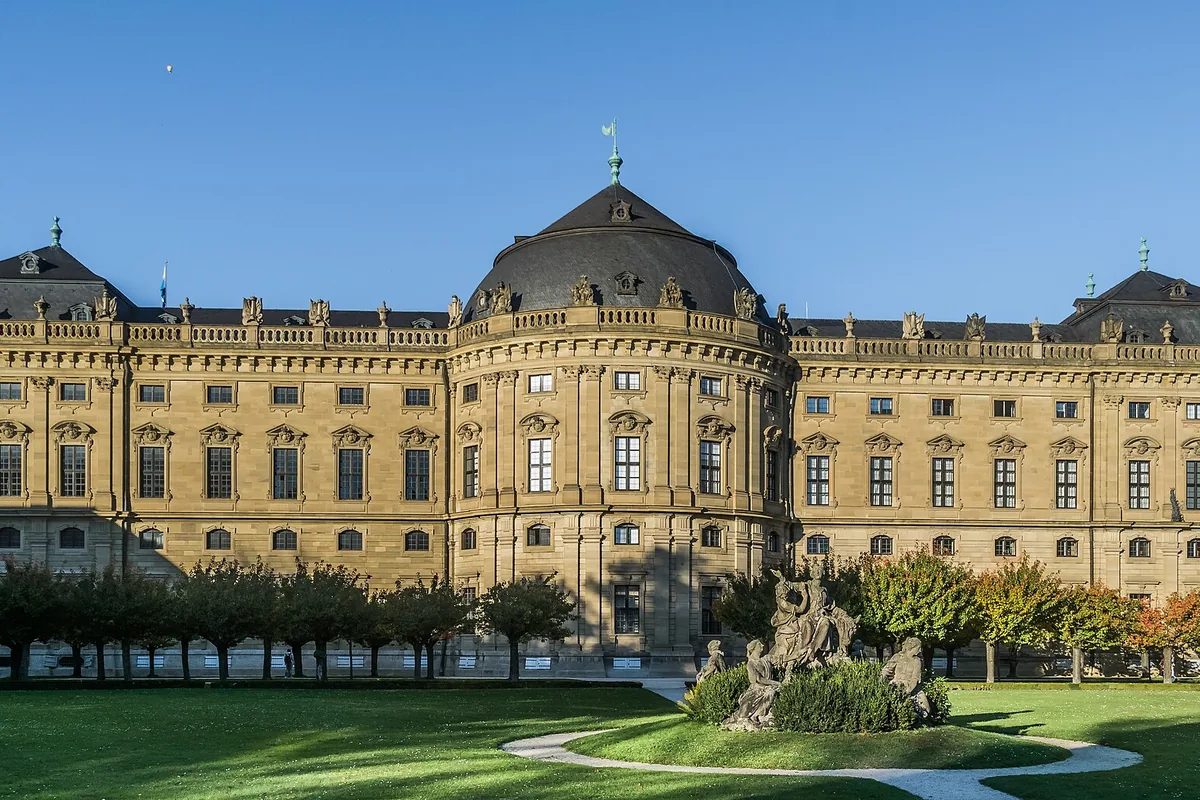
Würzburg is a baroque city on the Main river, with one of the grandest baroque palaces in Europe and a strong wine tradition. The Würzburg Residence is a UNESCO World Heritage Site, famous for its grand staircase and the huge ceiling fresco by Giovanni Battista Tiepolo. See the official palace website for tickets and guided tours.
Walk from the Residence to the old town and across the Old Main Bridge, which is lined with stone saints and is the best place for an evening drink. Locals gather there with glasses of Franconian white wine. Above the river, the Marienberg Fortress has views over the city and the vineyards.
The cathedral and the old town are compact enough to cover on foot. Franconian wine is sold in the traditional Bocksbeutel bottle, a flat, rounded shape that is easy to recognise. Look for wine taverns in the old town for a late lunch.
Direct ICE trains make Würzburg easy to reach in around an hour or a little more. It is also a good starting point for Rothenburg ob der Tauber, but combining the two makes for a very long day.
- How to get there: Direct ICE or regional train from Frankfurt Hauptbahnhof to Würzburg Hauptbahnhof.
- How long to spend: A full day.
- Best time to go: Late spring to early autumn, when the bridge and the vineyards are at their liveliest.
- Tip: Book a Residence tour in advance in summer, because slots can fill up.
6. Darmstadt
Darmstadt is the quiet, design-minded day trip, with an Art Nouveau artists’ colony recognised by UNESCO. The city is about half an hour from Frankfurt, and it is often overlooked, which is part of its charm.
The main sight is Mathildenhöhe, a hill where the Grand Duke of Hesse founded an artists’ colony in 1899. The area is a UNESCO World Heritage Site and has the Wedding Tower, the Russian Chapel and a collection of Jugendstil houses and gardens. The Wedding Tower, nicknamed the Five Fingers Tower, is the symbol of the city.
Nearby, the Hundertwasserhaus, called the Waldspirale, is a colourful apartment building with a spiral shape and a roof garden, and it is one of the most unusual buildings in Germany. It is a private residence, so look from the outside only. Darmstadt’s Residenzschloss and old town are good places for lunch.
A trip to Darmstadt works best with a short list. Allow time to walk between Mathildenhöhe and the centre, and check the opening details for the museum and the tower. The Hessian State Museum, one of the oldest museums in Germany, has art, natural history and design collections, and it is a good indoor choice if the weather turns. In the centre, the Luisenplatz and the market square have cafes where you can break the day before the train back. Because Darmstadt is so close to Frankfurt, it also suits visitors with only a spare afternoon, and it is rarely crowded even in summer.
- How to get there: Regional train or S-Bahn from Frankfurt Hauptbahnhof to Darmstadt Hauptbahnhof, then a tram or a walk.
- How long to spend: Half a day.
- Best time to go: Spring to early autumn for the gardens.
- Tip: Combine Darmstadt with a morning in Frankfurt, because the trip is short.
7. Marburg
Marburg is a steep, fairy-tale university town on the Lahn river, with a castle at the top and a Gothic church in the middle. It is about an hour from Frankfurt by regional train and makes a pleasant day of walking and climbing.
The lower town has the Elisabethkirche, one of the earliest purely Gothic churches in Germany, built for the cult of St Elisabeth of Thuringia. From there, a lane of stairs and cobbled streets leads up through the old town to the Landgrafenschloss, the castle above the rooftops. The Oberstadt is full of half-timbered houses, small shops and student cafes.
The Brothers Grimm studied in Marburg, and the town is part of the Fairy Tale Route in Germany. The Marburg University, founded in the 16th century, gives the town a youthful feel, and the Lahn river bank is a good spot for a rest.
The town is built on a hill, so wear comfortable shoes. A lift connects the lower and upper town, which helps if the climb looks too much. Check the opening times of the church and the castle before you go.
- How to get there: Regional train from Frankfurt Hauptbahnhof to Marburg, then a walk or bus into the centre.
- How long to spend: Half a day to a full day.
- Best time to go: Spring and autumn for walking, or summer for the riverside.
- Tip: Use the town lift to start at the top, then walk down through the old streets.
8. Cologne
Cologne is the longest of the big-city trips, but the high-speed ICE makes it a realistic day out, with one of the great Gothic cathedrals in Europe. The Cologne Cathedral is a UNESCO World Heritage Site, and it stands right outside the main station, so you can see it within minutes of arriving.
Climb the south tower if you are fit, for a wide view over the city and the Rhine. Then cross the Hohenzollern Bridge on foot, with its thousands of love locks, to the Deutz side for a skyline view of the cathedral. The old town has narrow lanes and brewery taverns that serve Kölsch, the local pale beer, in small straight glasses.
The Roman-Germanic Museum, next to the cathedral, shows the city’s Roman history, and the Chocolate Museum on the Rhine is a popular family stop. Museum opening hours vary, so check them online.
Because the ICE ride is quick, Cologne works as a day trip, but it is also a good overnight stop. If you have just one day, the cathedral, the bridge and a Kölsch lunch is a satisfying plan. Add the Romanesque churches of the old town if you like architecture, as several of them are within walking distance and are much quieter than the cathedral. The riverside walk along the Rhine promenade is a good way to rest between sights, and the Rheingarten offers views of the cathedral and the bridge together. Check the opening hours of any museum you want to visit, and remember that the cathedral can close to visitors during services.
- How to get there: ICE from Frankfurt Hauptbahnhof to Köln Hauptbahnhof, which is next to the cathedral.
- How long to spend: A full day.
- Best time to go: Any season, with the Christmas markets in December.
- Tip: Climb the cathedral tower early, as the queue and the stairs are easier before midday.
9. Rothenburg ob der Tauber
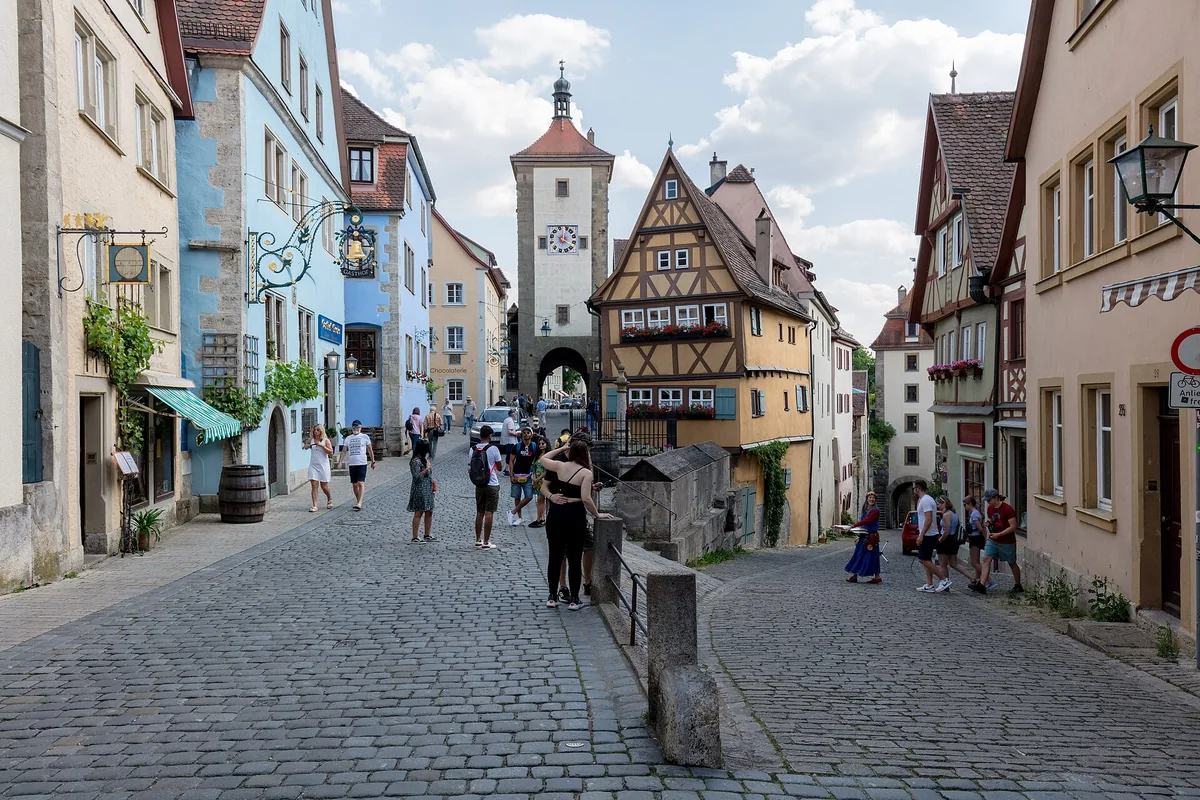
Rothenburg ob der Tauber is the best-preserved medieval walled town in Germany and one of the most visited, but it is a long day trip. The journey takes roughly 2.5 to 3.5 hours each way with changes, so it suits those who start early or who are happy with a very full day. Staying overnight is the better way to enjoy it.
Inside the walls, the Marktplatz and the town hall tower are the heart of the old town. Climb the tower for a view over the red roofs, then walk to the Plönlein, the much-photographed corner with a half-timbered house and two gates. The city wall walk gives a circuit around the town on a covered rampart.
The Medieval Crime Museum covers legal history, and the Christmas Museum and shop are famous across the region. The town has a strong tourist focus, so look for local Franconian dishes such as Schneeball, a pastry ball, and fresh bread.
Because of the long journey, check the timetable carefully, as Rothenburg’s station is on a small branch line with a change at Steinach. Many visitors combine it with Würzburg on a longer stay.
- How to get there: Train with changes, usually via Würzburg or Ansbach and Steinach, using the Deutsche Bahn planner.
- How long to spend: A full day, or better an overnight stay.
- Best time to go: Spring and autumn for fewer crowds, or December for the Christmas market.
- Tip: Stay for the evening, when the day visitors leave and the lanes are quiet.
10. Bad Homburg
Bad Homburg is the easiest nature-and-history day trip, with a spa park, a royal palace and a reconstructed Roman fort in the Taunus hills. The S-Bahn from Frankfurt takes under an hour, so it suits a half day.
The Kurpark is a large landscaped park with a spa tradition dating back to the 19th century, when it drew royalty and gamblers. The Bad Homburg Palace was a residence of the Landgraves of Hesse-Homburg, and its gardens and museum are open to visitors. Check the official site for tour details.
A short bus ride away, the Saalburg is a reconstructed Roman fort on the frontier of the empire, and it is part of the Upper German-Raetian Limes, a UNESCO World Heritage Site. It shows how soldiers lived and works well for families.
The town also has a famous thermal spa, the Kaiser-Wilhelms-Bad, and a pleasant pedestrian centre. For a longer day, walk in the Taunus woods above the town, where marked trails lead through beech forest to viewpoints such as the Großer Feldberg, the highest peak in the range. The town centre has a long pedestrian street with cafes and shops, and the Kurpark has a Russian chapel and a Siamese temple, a gift from the King of Siam in the 19th century. Check the official tourist office for details of seasonal events, as the town hosts spa and garden festivals in the warmer months.
- How to get there: S-Bahn line S5 from Frankfurt to Bad Homburg, then a bus to the Saalburg.
- How long to spend: Half a day.
- Best time to go: Spring to autumn for the park and the Roman fort.
- Tip: Visit the Saalburg first, then spend the afternoon in the park and palace.
How to pick the right day trip from Frankfurt
Choose by interest and by time. For castles and old-town charm, Heidelberg and Marburg are the best. For river scenery and wine, go to Rüdesheim and the Rhine Valley. For culture and big sights, choose Cologne or Würzburg.
If you have only a few hours, Mainz, Wiesbaden, Darmstadt and Bad Homburg are close enough to fit around a morning in Frankfurt. Rothenburg ob der Tauber is the one trip that is better as an overnight stay than a day trip.
Suggested day trip plans for 1, 2 or 3 days
Day 1: Castle and old town
Take a direct train to Heidelberg in the morning and walk up to the castle. Have lunch in the old town, cross the Old Bridge and follow the Philosophers’ Walk before an evening train back to Frankfurt.
Day 2: Rhine wine and river
Take the regional train along the river to Rüdesheim. Ride the cable car to the Niederwald Monument, then take a river cruise for part of the valley. Return by train in the evening, or break the day with a stop at Bacharach.
Day 3: Cathedrals and cities
Pair Mainz and Wiesbaden, using the local train between them. Start with the cathedral and St Stephan’s in Mainz, have lunch in the old town, then take the short train to Wiesbaden for the Kurhaus and the Nerobergbahn. If you prefer a longer ride, take the ICE to Cologne for the cathedral and the Rhine bridge.
For one day, choose Heidelberg. For two, add the Rhine. For three, add the cathedral pair or Würzburg.
If you are also visiting Bavaria, our guide to the best day trips from Munich covers castles, lakes and Alpine towns on the other side of Germany. For a similar rail-based format in another country, see our guide to the best day trips from Paris.
Getting around from Frankfurt
Frankfurt Hauptbahnhof is the hub for almost every trip. Regional trains and S-Bahn services leave from the main station, and ICE trains cover the longer routes to Würzburg and Cologne. The Deutsche Bahn website and app show live times and tickets.
Regional day tickets, such as state tickets valid on local trains, can be good value for groups, but rules and zones change, so check the official sites. Local transport in the Rhine-Main area is run by RMV, whose website explains regional fares. Keep your ticket validated if the rules require it, and plan the last return train before you leave.
Where to stay for day trips
The area around the Hauptbahnhof is the most practical base, with direct access to trains, though it is not the most attractive area at night. The Altstadt and Römerberg are central and pleasant for evenings, and the Sachsenhausen district has traditional apple wine taverns and easy tram links to the station.
The Westend is quieter and more residential, and it suits those who like leafy streets and cafes. If you prefer a smaller base, Mainz or Heidelberg work well for some trips, but Frankfurt gives the widest choice.
Budget guidance for day trips
Budget: Mainz, Wiesbaden and Darmstadt need only local train fares, and many sights are free to walk around. Mid-range: Heidelberg with the castle ticket, a Rhine cruise or a Würzburg Residence visit add up mostly through tickets and lunch. Comfortable: Cologne by ICE with a museum, or an overnight stay in Rothenburg ob der Tauber, raises the total.
To save money, travel outside peak commuting hours, use regional day tickets where valid, and picnic from a market. Check official fares, as they change.
Frequently Asked Questions
What is the best day trip from Frankfurt?
Heidelberg is the most popular, with its castle, old town and direct train. For river scenery and wine, Rüdesheim and the Rhine Valley are an excellent alternative.
Can you do day trips from Frankfurt by train?
Yes. Almost every trip in this guide uses regional or ICE trains from Frankfurt Hauptbahnhof, and most take under 1.5 hours. Check the official Deutsche Bahn journey planner for exact times.
How far is Heidelberg from Frankfurt?
It is about an hour by direct train, depending on the service. It works as a full day or a long half day, with time for the castle and the old town.
Is Rothenburg ob der Tauber a good day trip from Frankfurt?
It is possible but long, as the journey takes roughly 2.5 to 3.5 hours each way with changes. An overnight stay is a better way to enjoy the town, or combine it with Würzburg.
What is the best short day trip from Frankfurt?
Mainz, Wiesbaden, Darmstadt and Bad Homburg are all under an hour by train. Mainz and Wiesbaden can be combined in one day.
What are the best day trips from Frankfurt in winter?
Heidelberg, Mainz, Cologne and Würzburg all have Christmas markets in December and make good winter trips. The Rhine cruises and some castles run reduced timetables outside summer, so check first.
Featured image: Photo by Norbert Nagel, CC BY-SA 4.0, cropped, via Wikimedia Commons