Last updated: October 2026
Osaka has been called “the nation’s kitchen” since the Edo period, when it was Japan’s great trading hub for rice and other food. Its residents have a saying, kuidaore, which roughly means “eat until you drop”, and it sums up the city’s attitude to food perfectly. This is a city of sizzling griddles, neon-lit street stalls and tiny counters where locals have been eating the same dishes for generations.
Osaka’s specialities are casual and affordable: takoyaki (octopus balls), okonomiyaki (savoury pancakes), kushikatsu (deep-fried skewers) and more. This guide covers 10 of the best places to eat in Osaka, with a practical box for each: how to get there, how long to allow, the best time to go and one tip. Further down you’ll find dishes to try, suggested food routes, where to stay, getting around and budget guidance.
Opening days and queues vary, so check each venue’s current hours before you go. If you have more time in the region, our guide to the best day trips from Osaka covers easy excursions to fit around your meals.
Quick answer: Where are the best places to eat in Osaka? The best food in Osaka is found in Dotonbori, Kuromon Ichiba Market, Shinsekai, Mizuno, Hozenji Yokocho, Ura Namba, Tenjinbashisuji Shopping Street, Wanaka, Harukoma and Endo Sushi. For a first visit, start in Dotonbori for takoyaki and okonomiyaki, add Shinsekai for kushikatsu, and finish with an evening of izakaya hopping in Ura Namba.
Quick list: where to eat in Osaka
| Place | Area | Best for | Price tier |
|---|---|---|---|
| Dotonbori | Namba | Street food and neon | Cheap |
| Kuromon Ichiba Market | Nipponbashi | Market grazing | Cheap to mid-range |
| Shinsekai | Shinsekai | Kushikatsu | Cheap |
| Mizuno | Dotonbori | Okonomiyaki | Cheap to mid-range |
| Hozenji Yokocho | Namba | Atmospheric old lane | Mid-range |
| Ura Namba | Namba | Izakaya hopping | Cheap to mid-range |
| Tenjinbashisuji Shopping Street | Tenma | Local food and snacks | Cheap |
| Wanaka | Namba and other branches | Takoyaki | Cheap |
| Harukoma | Tenma | Good-value sushi | Mid-range |
| Endo Sushi | Osaka Central Fish Market | Breakfast sushi | Mid-range |
1. Dotonbori
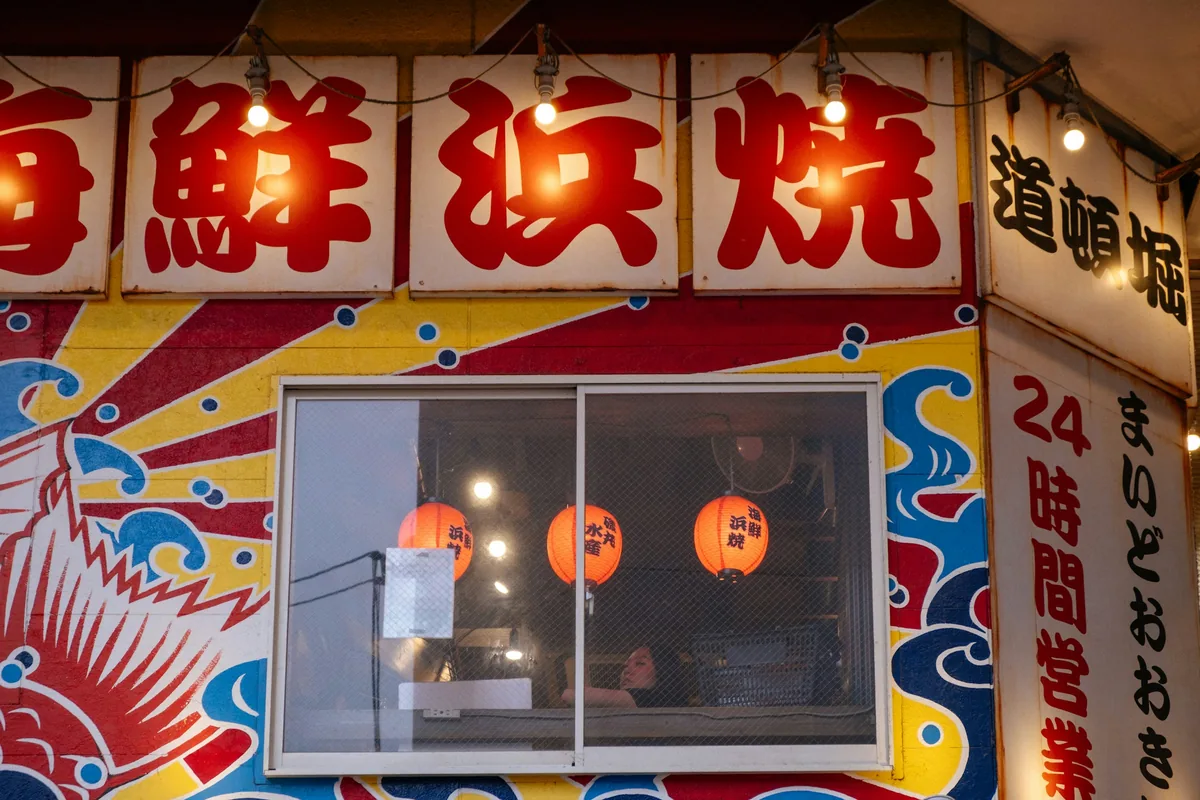
Dotonbori is the heart of Osaka’s food scene and the city’s most famous street. Running alongside the Dotonbori canal, it’s a dazzling strip of neon signs, giant 3D crabs, octopus and dragons, and dozens of restaurants and food stalls.
It’s the best place to start eating your way around Osaka. Try takoyaki from a street stall, okonomiyaki or kushikatsu, and look out for the famous Glico running man sign on the canal, one of Osaka’s most photographed landmarks.
Dotonbori is busy at all times, but it’s at its most atmospheric after dark, when the neon lights reflect in the canal.
- How to get there: A short walk from Namba station (Midosuji, Yotsubashi and Sennichimae lines) or Nippombashi.
- How long to spend: An hour or two, grazing as you go.
- Best time to go: Evening, after dark.
- Tip: Look for stalls with queues of locals, and share dishes so you can try more.
2. Kuromon Ichiba Market
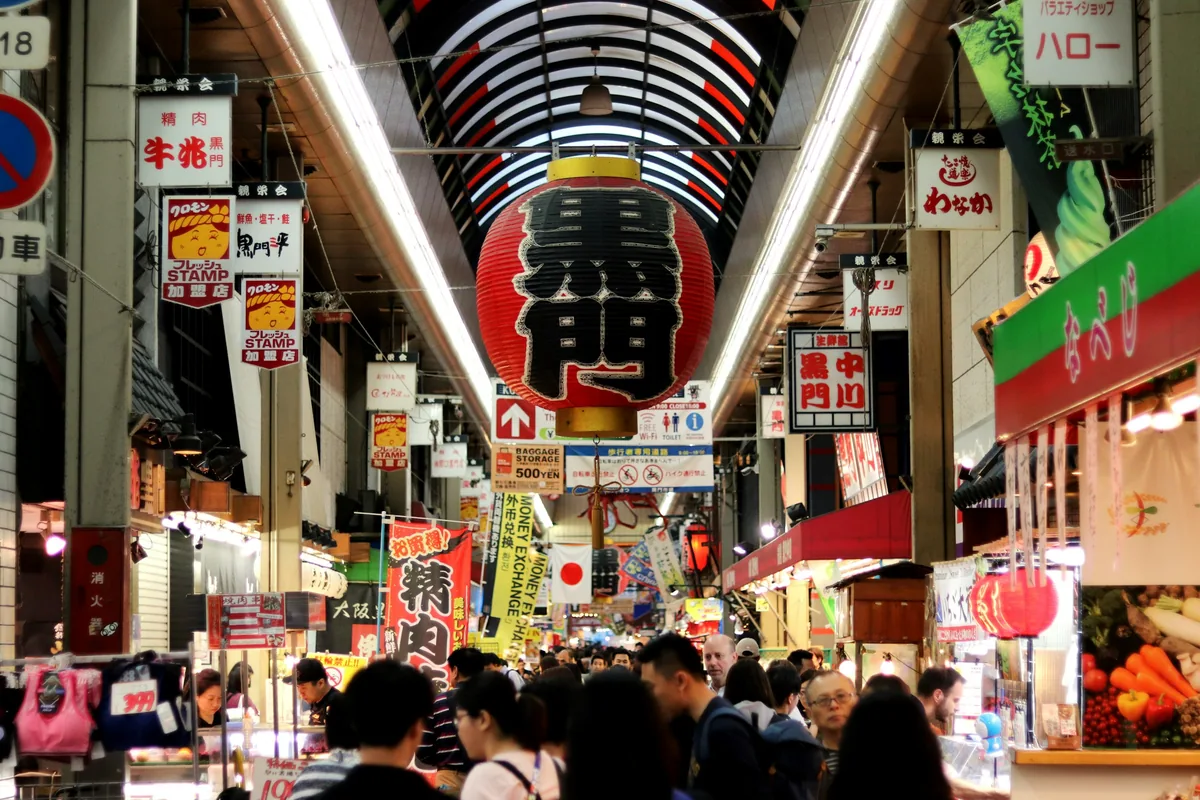
Kuromon Ichiba Market is a covered market street that has supplied Osaka’s restaurants and home cooks for generations. Today it’s a popular place for visitors to graze, with stalls selling fresh seafood, grilled scallops, sashimi, wagyu skewers, fruit and sweets.
Many stalls prepare food to eat on the spot, and some have small seating areas. It has become more tourist-focused in recent years and prices reflect that, but it’s still a fun introduction to Osaka’s love of fresh food.
- How to get there: A short walk from Nippombashi station.
- How long to spend: About an hour.
- Best time to go: Morning to early afternoon, as many stalls close early.
- Tip: Check prices before ordering seafood, which is often sold by weight.
3. Shinsekai and kushikatsu
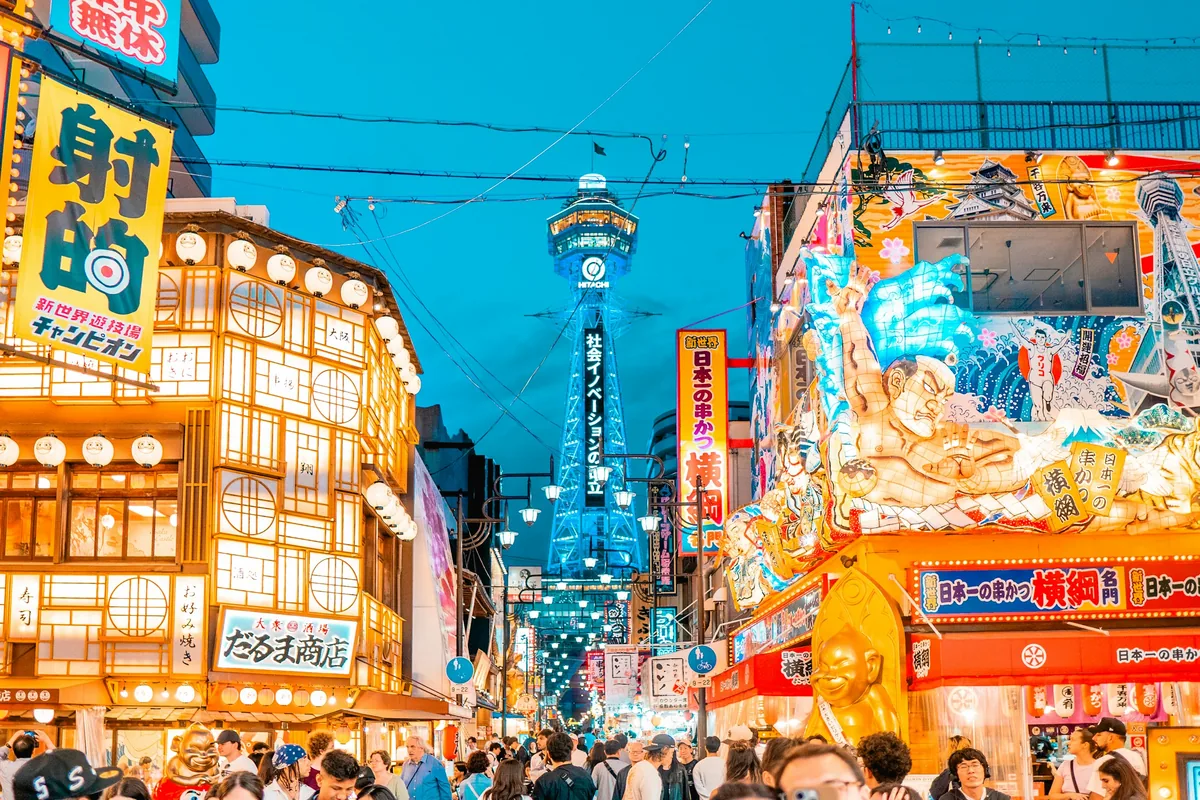
Shinsekai, meaning “new world”, is a retro district built in the early 20th century around Tsutenkaku Tower. Its streets are lined with colourful signs, game arcades and restaurants, and it’s the birthplace of kushikatsu, deep-fried skewers of meat, seafood and vegetables.
Kushikatsu restaurants are everywhere in Shinsekai, many with giant statues or signs outside. Daruma is one of the best-known chains, with a branch in Shinsekai. The skewers are dipped in a shared pot of sauce, and there’s one important rule: no double dipping.
Shinsekai is also home to Spa World, a huge hot spring complex, and the nearby Tennoji Park.
- How to get there: Ebisucho station (Sakaisuji line) or Dobutsuen-mae station (Midosuji line).
- How long to spend: One to two hours.
- Best time to go: Evening, when the neon signs are lit.
- Tip: Use the cabbage served on the side to scoop extra sauce, since double dipping your skewer is forbidden.
4. Mizuno
Okonomiyaki, a savoury pancake made with cabbage, batter and fillings of your choice, cooked on a griddle and topped with sauce, mayonnaise and bonito flakes, is one of Osaka’s signature dishes. Mizuno, a family-run restaurant in Dotonbori, has been making it for decades and is one of the most famous places to try it.
It’s known for its yamaimo-yaki, an okonomiyaki made with grated mountain yam for an especially light texture. The chefs cook it in front of you on a hot griddle, and you eat it straight from the hotplate with a small spatula.
Mizuno is very popular, and queues are common, but they move fairly quickly.
- How to get there: On the main Dotonbori street, a short walk from Namba station.
- How long to spend: About an hour, plus queuing time.
- Best time to go: Arrive before lunch or mid-afternoon to shorten the wait.
- Tip: Try the yamaimo-yaki, which is the house speciality.
5. Hozenji Yokocho
Hozenji Yokocho is a narrow stone-paved lane just a few steps from Dotonbori, but it feels a world away from the neon. Lined with traditional restaurants and lanterns, it has an old Osaka atmosphere that’s especially lovely in the evening.
At its centre is Hozenji Temple, where a statue of Fudo Myoo is covered in thick green moss because worshippers splash it with water as they pray. Around it, small restaurants serve okonomiyaki, kushikatsu, oden and kappo-style Japanese cuisine.
It’s a good place for a calmer, more traditional meal after the bustle of Dotonbori.
- How to get there: Just south of Dotonbori, a short walk from Namba station.
- How long to spend: One to two hours.
- Best time to go: Evening, when the lanterns are lit.
- Tip: Splash water on the mossy Fudo Myoo statue for good luck, following the locals.
6. Ura Namba
Ura Namba, or “behind Namba”, is a network of small streets east of Namba station packed with tiny izakaya (Japanese pubs), standing bars and casual restaurants. It’s one of the best places in Osaka for an evening of bar hopping and eating with locals.
Many places are small, with just a counter and a few tables, and some specialise in a single dish, such as yakitori, oden or seafood. The best approach is to try a couple of drinks and small dishes in one place, then move on to the next.
The atmosphere is lively and friendly, and it’s a great way to experience Osaka’s nightlife beyond the main tourist streets.
- How to get there: East of Namba station, around Sennichimae.
- How long to spend: An evening.
- Best time to go: From early evening.
- Tip: Some small bars have a cover charge (otoshi), which usually includes a small appetiser.
7. Tenjinbashisuji Shopping Street
Tenjinbashisuji is one of the longest covered shopping streets in Japan, stretching for around 2.6 kilometres through northern Osaka. It’s a local shopping street rather than a tourist attraction, which makes it a great place to see everyday Osaka life.
The street is packed with food shops, small restaurants, bakeries and snack stalls, and it’s a good place to try croquettes, taiyaki (fish-shaped cakes filled with sweet bean paste) and other street snacks. Tenma, at the southern end, is known for its cheap and lively izakaya.
Osaka Tenmangu Shrine, near the southern end, is the site of the Tenjin Matsuri, one of Japan’s biggest festivals, held each July.
- How to get there: Tenjinbashisuji Rokuchome, Ogimachi or Minami-Morimachi stations, or JR Tenma.
- How long to spend: One to two hours.
- Best time to go: Afternoon, then stay for dinner in Tenma.
- Tip: Walk the street from north to south and finish with dinner in the Tenma area.
8. Wanaka
Takoyaki, battered balls with a piece of octopus inside, cooked in special moulded pans and topped with sauce, mayonnaise, seaweed powder and bonito flakes, is Osaka’s most famous street food. Wanaka is one of the city’s most popular takoyaki shops, with several branches, including near Namba.
It’s known for a light, creamy interior and a range of toppings and sauces, from classic to salt-based. Watching the staff flip the balls in their pans with quick precision is part of the fun.
Takoyaki is served piping hot, so wait a moment before you eat.
- How to get there: Several branches, including around Namba and near Dotonbori.
- How long to spend: 15 to 30 minutes.
- Best time to go: Any time; it’s a perfect snack between meals.
- Tip: Let the takoyaki cool slightly, as the inside stays hot much longer than the outside.
9. Harukoma
Harukoma is a popular sushi restaurant on Tenjinbashisuji Shopping Street, known for large, fresh pieces of sushi at reasonable prices. It’s a favourite with locals, and queues often stretch outside, especially at weekends.
The atmosphere is busy and casual, and the menu includes a wide range of nigiri and rolls. It’s an excellent choice if you want good sushi without the cost of a high-end restaurant.
- How to get there: On Tenjinbashisuji Shopping Street, near Tenjinbashisuji Rokuchome station.
- How long to spend: About an hour, plus queuing time.
- Best time to go: Weekday lunchtime or mid-afternoon.
- Tip: Ask about seasonal fish; they’re often the best value on the menu.
10. Endo Sushi
Endo Sushi is a long-established restaurant at the Osaka Central Fish Market, and it’s one of the best places in the city for breakfast sushi. It opens early in the morning to serve market workers, and the fish comes straight from the market.
The menu is simple, usually sets of several pieces of nigiri, which you can mix and match. The sushi has a distinctive style, with generous toppings over a small amount of rice. Eating sushi at a fish market first thing in the morning is a memorable Osaka experience.
- How to get there: At the Osaka Central Fish Market, near Noda station (JR) or Tamagawa station (subway).
- How long to spend: 30 to 45 minutes.
- Best time to go: Early morning; check opening days, as the market has closures.
- Tip: Order several different sets to try a wider range of fish.
Osaka dishes to try
- Takoyaki: battered octopus balls, Osaka’s most famous street food.
- Okonomiyaki: a savoury pancake with cabbage and fillings, cooked on a griddle.
- Kushikatsu: deep-fried skewers of meat, seafood and vegetables.
- Kitsune udon: udon noodles topped with sweet fried tofu, said to have been invented in Osaka.
- Butaman: steamed pork buns.
- Doteyaki: beef tendon slow-cooked in miso, often served in kushikatsu restaurants.
- Kasu udon: udon with crispy fried beef intestine.
- Rikuro’s cheesecake: a jiggly, fluffy Japanese cheesecake that has become an Osaka favourite.
Suggested food routes for 1, 2 or 3 days
One day: Graze at Kuromon Ichiba Market in the morning, then have okonomiyaki at Mizuno for lunch. Spend the evening in Dotonbori and Hozenji Yokocho, finishing with izakaya hopping in Ura Namba.
Two days: Add Shinsekai for kushikatsu and Tsutenkaku Tower, then explore Tenjinbashisuji Shopping Street and have sushi at Harukoma.
Three days: Start early with breakfast sushi at Endo Sushi, and use the rest of the day to revisit favourite spots or try the dishes you haven’t had yet.
Where to stay for food lovers
- Namba: right next to Dotonbori, Kuromon Ichiba and Ura Namba. Best for food and nightlife.
- Shinsaibashi: close to Namba, with lots of shopping and restaurants.
- Umeda: Osaka’s main transport hub, convenient for day trips and well connected to the rest of the city.
- Tennoji: good value and close to Shinsekai.
Getting around
Osaka’s subway is easy to use, and the Midosuji Line connects Umeda, Shinsaibashi, Namba and Tennoji. IC cards such as ICOCA, Suica and PASMO work on trains, subways and buses. Many food areas, such as Namba and Dotonbori, are walkable.
For up-to-date timetables and visitor information, check the official sources: Osaka Info (official tourism site) and Osaka Metro.
Etiquette and eating habits
- Queues: Queuing is normal at popular places, and lines often move quickly.
- Cash: Many small restaurants and stalls still prefer cash, so carry some yen.
- Eating on the street: In Osaka it’s common to eat street food near the stall where you bought it, rather than walking around while eating.
- Tipping: Tipping isn’t customary in Japan and can cause confusion.
- Cover charges: Some izakaya charge a small fee for a starter dish (otoshi).
Budget guidance
- Cheap eats: takoyaki, street food, kushikatsu, okonomiyaki and convenience store snacks.
- Mid-range: izakaya, sushi restaurants and market seafood.
- Special occasion: kaiseki (traditional multi-course meals) and high-end sushi or wagyu restaurants.
Osaka is one of the best value cities in Japan for food, and you can eat extremely well on a modest budget.
Frequently Asked Questions
What food is Osaka famous for?
Osaka is famous for takoyaki (octopus balls), okonomiyaki (savoury pancakes) and kushikatsu (deep-fried skewers), as well as kitsune udon and a strong street food culture.
Is Osaka the food capital of Japan?
Osaka is often called “the nation’s kitchen” and is widely seen as one of Japan’s great food cities, known for its casual, affordable and hearty dishes.
Where to eat takoyaki in Osaka?
Dotonbori has many takoyaki stalls, and Wanaka is one of the most popular takoyaki shops, with several branches around Namba.
Is Kuromon Market worth it?
Yes, as a fun place to graze on seafood and snacks, but it has become more touristy and prices are higher than at local markets. Go in the morning and check prices before ordering.
Do you need reservations in Osaka?
Most casual restaurants and street food stalls don’t take reservations, so expect to queue at popular places. High-end restaurants usually require bookings.
Is eating out in Osaka cheap?
Yes. Osaka is one of the most affordable cities in Japan for food, especially for street food, okonomiyaki, kushikatsu and izakaya.
Discover More of Japan
Once you have eaten your way around Osaka, there is plenty more to explore nearby. Read our guide to the best things to do in Kyoto for temples and tea houses an easy train ride away, or see our picks for day trips from Tokyo if you are continuing your trip east. For planning inspiration across the country, the Japan National Tourism Organization is a reliable official starting point.
Featured image: Photo by Jason Rost on Unsplash