Last updated: October 2026
Europe’s best Christmas markets turn old town squares into glowing winter villages from late November until just before Christmas. Wooden stalls sell handmade ornaments, roasted chestnuts and steaming mugs of mulled wine, while church bells and choirs fill the cold air.
Some of these markets have been running for centuries. Others are newer but just as magical. This guide covers the top 10 Christmas markets in Europe, what makes each one special, and how to plan your trip so you see them at their best.
Quick tip: most markets open in the last week of November and close around 23 or 24 December, though a few run into early January. Always check the official dates for the year you travel, as they shift slightly each season.
Quick answer: What are the best Christmas markets in Europe? Our top 10 are Strasbourg, Nuremberg, Vienna, Dresden, Cologne, Prague, Budapest, Colmar, Tallinn and Copenhagen. Strasbourg and Nuremberg are the most famous, Dresden’s Striezelmarkt is one of the oldest, and Tallinn is the best pick for a snowy, less crowded market. Most open in late November and close around 23 or 24 December.
Top 10 Christmas Markets in Europe at a Glance
| # | Destination | Best for |
|---|---|---|
| 1 | Strasbourg, France | First-timers who want the full fairytale experience |
| 2 | Nuremberg, Germany | Traditional German food and crafts |
| 3 | Vienna, Austria | Market hopping in an elegant imperial city |
| 4 | Dresden, Germany | History lovers and authentic Saxon traditions |
| 5 | Cologne, Germany | Atmosphere and variety in one city |
| 6 | Prague, Czech Republic | A fairytale backdrop at a good price |
| 7 | Budapest, Hungary | Great food, value for money and thermal baths |
| 8 | Colmar, France | Couples and anyone who prefers a smaller, cosier market |
| 9 | Tallinn, Estonia | A snowy, less crowded alternative |
| 10 | Copenhagen, Denmark | Families and fans of Danish hygge |
1. Strasbourg, France
Strasbourg calls itself the “Capital of Christmas”, and its Christkindelsmärik dates back to 1570, making it one of the oldest markets in Europe. Stalls spread across the old town, with the main hub around the cathedral and Place Broglie. You can find the full programme on the city’s official Strasbourg Christmas guide.
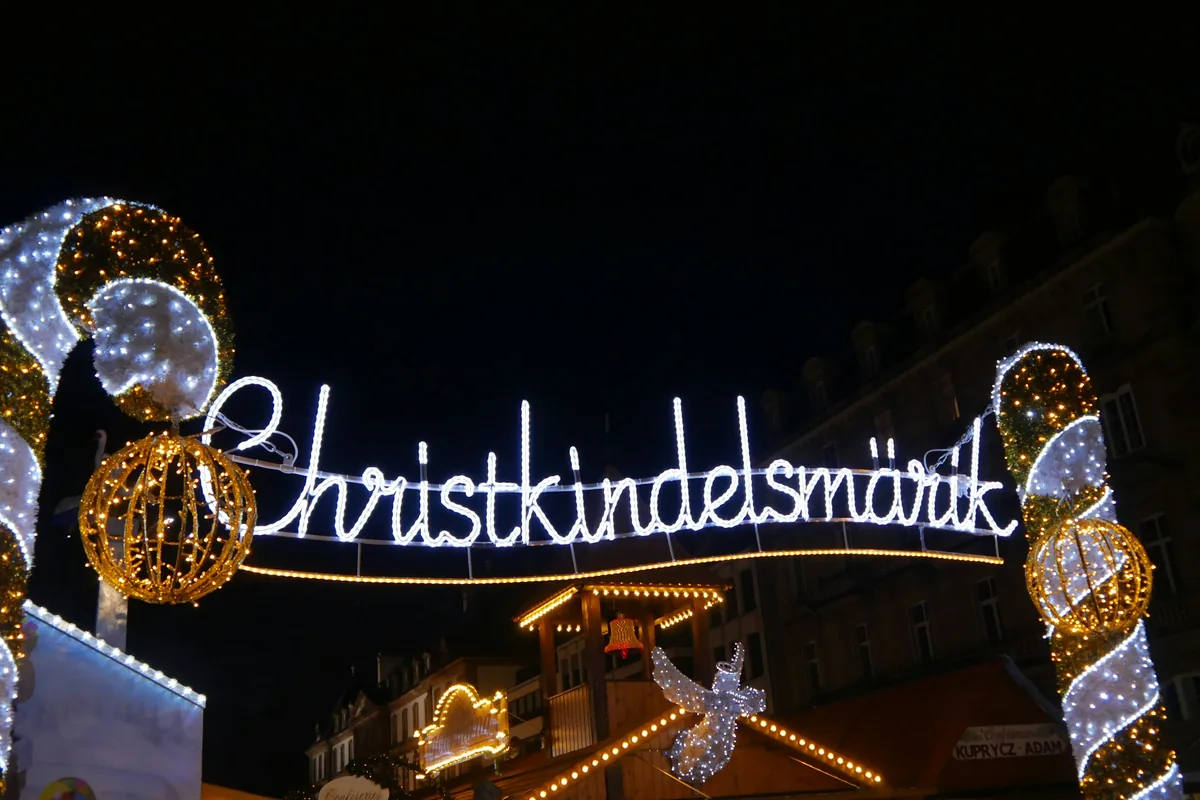
The whole city is decorated, from half-timbered houses to the giant tree on Place Kléber. Try vin chaud (Alsatian mulled wine) and bredele, small spiced Christmas biscuits sold by the bag.
Beyond the main market, wander into Petite France, the old tanners’ quarter, where half-timbered houses lean over the canals. Each square in the old town has its own theme, from local Alsace producers to a market for charities, so it’s worth walking between several rather than staying in one place.
- Getting there: High-speed trains from Paris take around two hours. The old town is a short walk or tram ride from the station.
- Time needed: One to two days, or three if you add Colmar.
- Best time to go: A weekday evening early in the season, when the lights are on and the crowds are thinner.
- Good to know: Expect bag checks at the bridges into the old town during the market season.
Best for: first-timers who want the full fairytale experience.
2. Nuremberg, Germany
Nuremberg’s Christkindlesmarkt is Germany’s most famous Christmas market. It fills the Hauptmarkt with red and white striped stalls and opens with a speech by the Christkind, a young woman dressed as a golden angel, from the church balcony. Dates and the opening ceremony are listed on the official Christkindlesmarkt site.
Don’t leave without trying Nürnberger Rostbratwurst (three small sausages in a roll) and Lebkuchen, the city’s famous gingerbread. Look out for prune people, little figures made from dried fruit.
Beside the main market, the Kinderweihnacht (children’s Christmas market) has a carousel and craft activities, and the Market of the Sister Cities sells food and gifts from Nuremberg’s twin towns around the world. Look out for the Rauschgoldengel, a gold foil angel that has become the city’s classic Christmas souvenir.
- Getting there: Fast trains reach Nuremberg from Munich in around an hour and from Frankfurt in a little over two.
- Time needed: One full day, with an evening at the market.
- Best time to go: The opening weekend for the Christkind ceremony, or midweek for more space.
- Insider tip: Climb up to the Imperial Castle in the afternoon for views over the old town before the market lights come on.
Best for: traditional German food and crafts.
3. Vienna, Austria
Vienna has more than a dozen Christmas markets, but the one in front of the City Hall (Rathausplatz) is the showpiece. The neo-Gothic Rathaus is lit up behind the stalls, and the park next door is strung with lights.
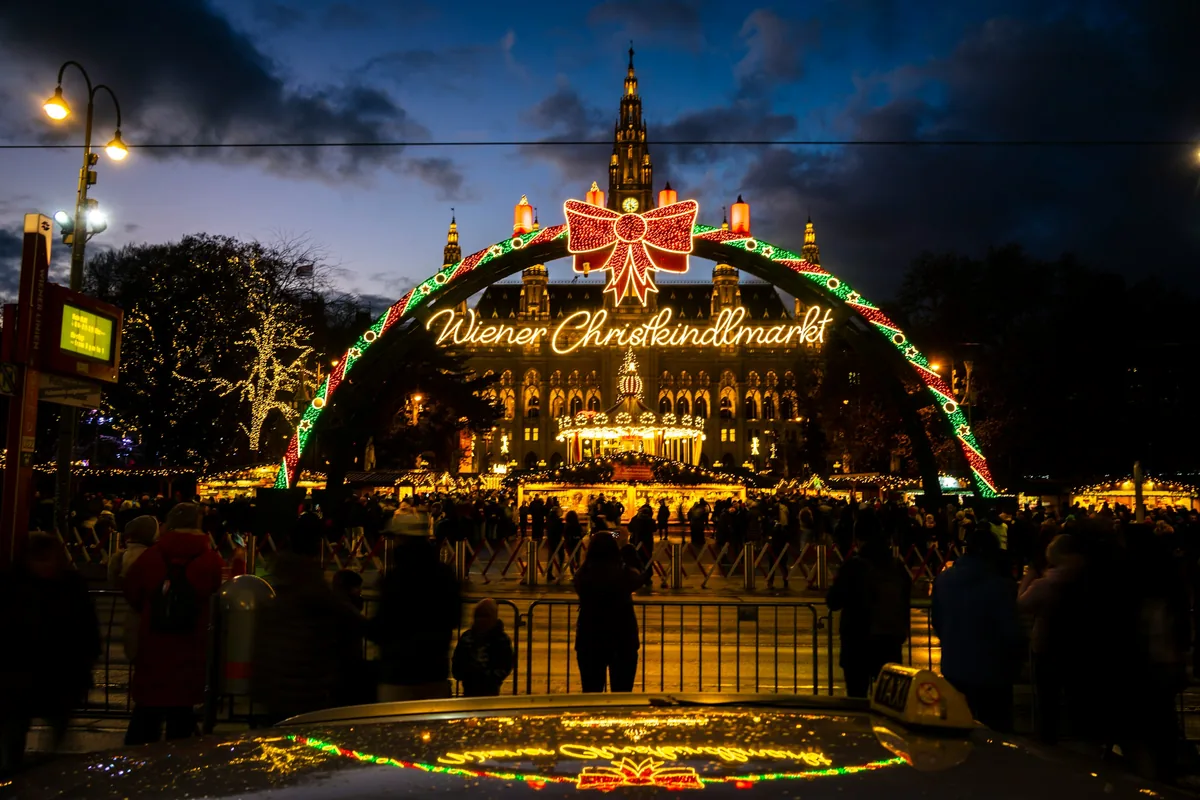
For something smaller, head to the markets at Schönbrunn Palace or Spittelberg, where the cobbled lanes are packed with artisan stalls. Drinks come in collectable souvenir mugs, so keep yours or return it for your deposit.
The Karlsplatz market, in front of the baroque Karlskirche, focuses on art, crafts and organic food, and is a favourite with Viennese families. At the Belvedere Palace, stalls are set up in front of the illuminated palace, which makes for one of the prettiest backdrops in the city.
Viennese markets serve Punsch, a hot fruit punch often spiked with rum, alongside Glühwein. Between markets, warm up in one of the city’s grand coffee houses with a slice of cake.
- Getting there: Vienna Airport is linked to the centre by fast trains in around 15 to 25 minutes.
- Time needed: Two days to see several markets and the city’s sights.
- Best time to go: Late afternoon, so you see the markets in daylight and then lit up after dark.
- Insider tip: Spittelberg gets busiest in the evening, so go in the afternoon if you want to browse the craft stalls in peace.
Best for: market hopping in an elegant imperial city.
4. Dresden, Germany
Dresden’s Striezelmarkt was first held in 1434, which makes it one of the oldest recorded Christmas markets in the world. It is named after Striezel, the old local word for Stollen, the fruit bread dusted in icing sugar.
The market is home to a giant wooden Christmas pyramid and a huge Schwibbogen (candle arch), both traditions from the nearby Ore Mountains. Buy Dresdner Stollen to take home, as it keeps for weeks.
The market fills the Altmarkt square in the heart of the city, a short walk from the rebuilt Frauenkirche and the riverside terraces of the old town. In December, the city also holds a Stollen festival, when a giant Stollen is paraded through the streets and cut into slices.
Dresden has several smaller markets too, including a medieval market in the courtyard of the Stallhof, with costumed traders, fire pits and mulled mead.
- Getting there: Trains run from Berlin in around two hours and from Prague in a little over two.
- Time needed: One to two days.
- Insider tip: Buy Stollen with the official seal of the Dresden Stollen association to be sure it was baked in the region.
Best for: history lovers and authentic Saxon traditions.
5. Cologne, Germany
Cologne has several Christmas markets, and the one beside the cathedral is the most striking. Hundreds of stalls sit under a canopy of fairy lights with the twin spires of Cologne Cathedral rising behind them.
The city’s other markets each have a theme, including a harbour market by the Rhine and an angel market in the old town. Pick up a mug of Glühwein and spend an evening walking between them. The German National Tourist Board has a good overview of markets across the country if you want to add more stops.
The Heinzels Wintermärchen market in the old town is themed around the Heinzelmännchen, little house gnomes from a local legend, and has an ice rink in winter. The Angel Market at Neumarkt is lit with stars hanging from the trees, and the harbour market sits beside the Chocolate Museum on the Rhine.
- Getting there: Cologne’s main station is right next to the cathedral, with fast trains from Brussels, Amsterdam and Frankfurt.
- Time needed: One or two evenings.
- Best time to go: Weekday evenings, as weekends draw large crowds from across the region.
- Insider tip: Warm up between markets in a traditional brewhouse with a glass of Kölsch, the local beer.
Best for: atmosphere and variety in one city.
6. Prague, Czech Republic
Prague’s Old Town Square market is one of the most photographed in Europe, with a towering Christmas tree set against the Gothic spires of the Týn Church and the Astronomical Clock.
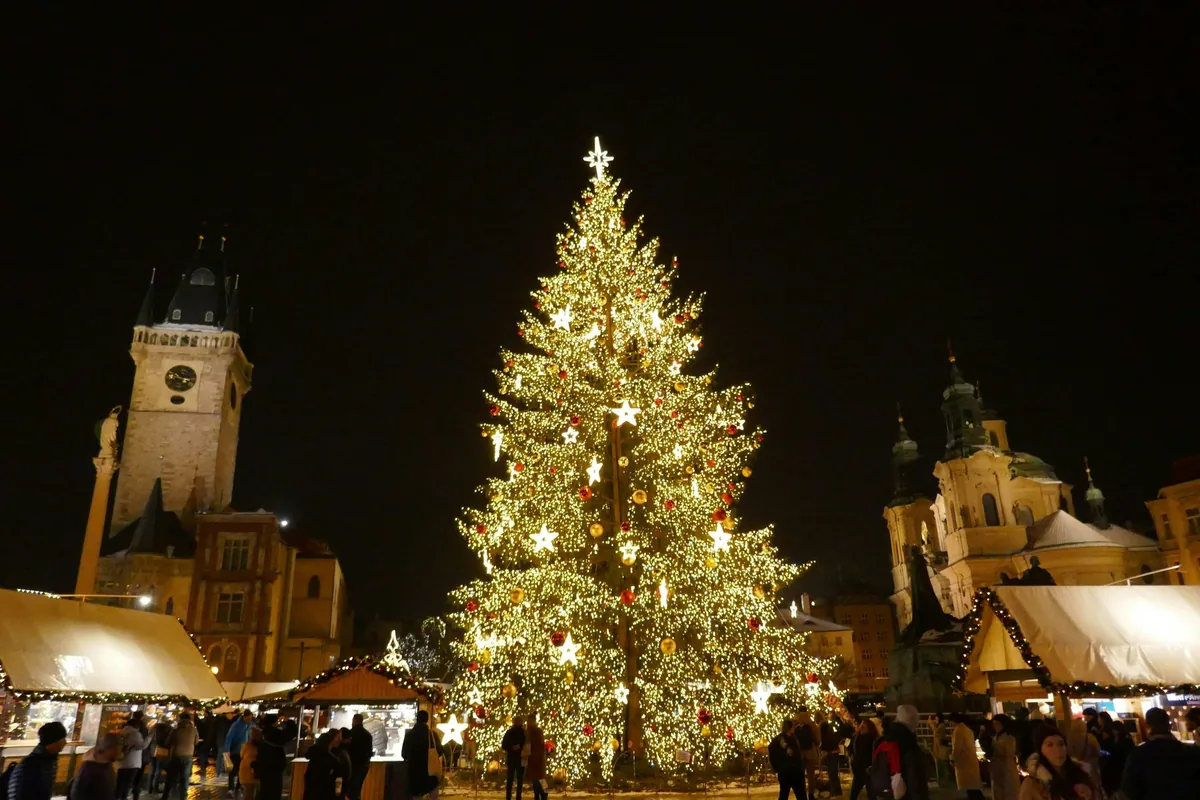
Warm up with trdelník, a sweet rolled pastry cooked over open coals, or a cup of svařák, the Czech version of mulled wine. A second market at Wenceslas Square is a short walk away.
For a more local feel, head to the market on Náměstí Míru (Peace Square) in Vinohrady, in front of a neo-Gothic church. It is smaller and quieter, and prices are often lower than in the Old Town.
Prague is also a great city for winter concerts, with classical music and Advent performances in churches across the old town throughout December.
- Getting there: Prague Airport is linked to the city by bus and metro, and trains run from Dresden, Berlin and Vienna.
- Time needed: Two days, with time for Prague Castle and Charles Bridge.
- Good to know: The Czech Republic uses the koruna, though cards are accepted at most stalls.
- Insider tip: Trdelník is popular but not a traditional Czech pastry. Try svařák and grilled sausages for a more local taste.
Best for: a fairytale backdrop at a good price.
7. Budapest, Hungary
Budapest has two headline markets: Vörösmarty Square and St Stephen’s Basilica. The basilica market is known for its ice rink and the light show projected onto the church facade each evening.
The food here is a highlight. Try lángos (fried dough with toppings), stuffed cabbage and kürtőskalács, the chimney cake rolled in cinnamon sugar. Combine your visit with a soak in one of the city’s thermal baths.
At the St Stephen’s Basilica market, an ice rink circles the Christmas tree, and the evening light projections on the basilica are one of the highlights of a winter trip to the city. Vörösmarty Square is the older of the two markets, with a strong focus on Hungarian crafts such as embroidery, ceramics and leather.
- Getting there: Trains from Vienna take under three hours. The airport is linked to the centre by express bus.
- Time needed: Two to three days, including a thermal bath.
- Good to know: Hungary uses the forint, but cards are widely accepted.
- Insider tip: Visit the Széchenyi Baths after dark, when steam rises from the outdoor pools into the cold air.
Best for: great food, value for money and thermal baths.
8. Colmar, France
Colmar is a small Alsace town that feels like a Christmas card come to life. It has several compact markets spread through the old town, each a short stroll from the next.
The canals of Little Venice are lit up at night and the half-timbered houses are covered in decorations. Colmar is about 30 minutes from Strasbourg by train, so it’s easy to visit both on one trip.
Colmar has around five or six markets, each with its own setting, from the Dominican Church square to the old customs house, the Koïfhus. The market in Little Venice is aimed at children, with decorations and activities for younger visitors.
Nearby villages on the Alsace Wine Route, such as Kaysersberg and Riquewihr, hold their own small markets and are easy to reach by car or local bus.
- Getting there: Regional trains from Strasbourg take around 30 minutes.
- Time needed: One day, or two with the wine villages.
- Best time to go: Weekdays, as Colmar gets very busy at weekends.
- Insider tip: If Colmar’s hotels are full, stay in Strasbourg and visit Colmar as a day trip.
Best for: couples and anyone who prefers a smaller, cosier market.
9. Tallinn, Estonia
Tallinn’s market sits in the medieval Town Hall Square, one of the best preserved old towns in Northern Europe. The city claims a public Christmas tree tradition going back to 1441.
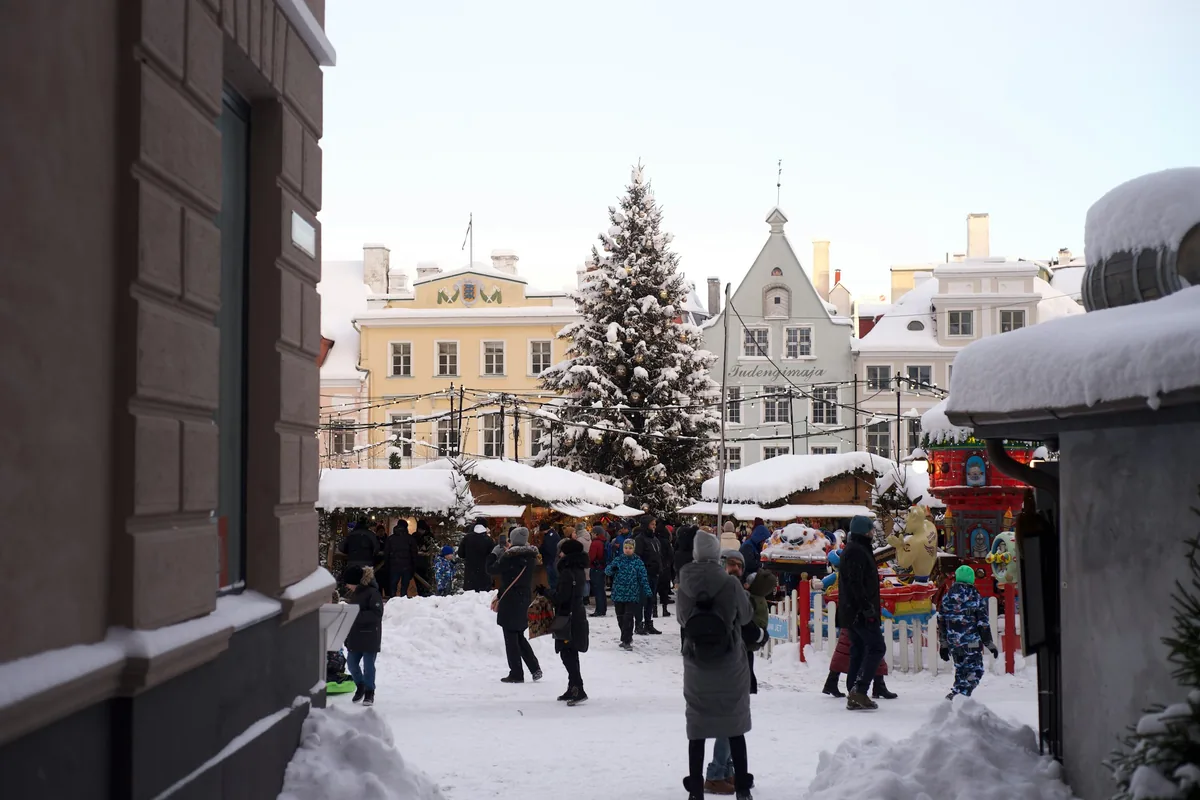
With snow on the ground, the market feels genuinely wintry. Try verivorst (blood sausage), sauerkraut and hõõgvein, Estonian mulled wine. Crowds are smaller than in Central Europe.
The market runs from late November into early January, so it’s a good choice if you want to travel between Christmas and New Year. Around the square, the medieval walls, towers and narrow lanes of the Old Town are a joy to explore, especially under fresh snow.
- Getting there: Tallinn Airport is only a few kilometres from the centre, and ferries from Helsinki take around two hours.
- Time needed: One to two days.
- Good to know: Daylight is short in December, often around six hours, so plan sightseeing for the middle of the day.
- Insider tip: Combine Tallinn with Helsinki by ferry for two Nordic Christmas cities in one trip.
Best for: a snowy, less crowded alternative.
10. Copenhagen, Denmark
Copenhagen’s Christmas season centres on Tivoli Gardens, one of the world’s oldest amusement parks, which transforms into a winter wonderland with stalls, rides and thousands of lights.
Outside Tivoli, the colourful harbour of Nyhavn hosts its own market. Order æbleskiver (round pancake puffs with jam) and gløgg, the Danish mulled wine served with almonds and raisins.
Christmas at Tivoli usually runs from mid November into early January, with themed areas, festive food stalls and the park’s historic rides lit up against the night sky. Entry requires a ticket, and rides cost extra.
Elsewhere in the city, look out for the smaller market at Højbro Plads and the festive windows along the main shopping street, Strøget.
- Getting there: The metro links Copenhagen Airport with the city centre in around 15 minutes.
- Time needed: One to two days.
- Tickets: Buy Tivoli tickets online in advance, especially for weekend evenings.
- Insider tip: Order gløgg with æbleskiver for the classic Danish Christmas snack.
Best for: families and fans of Danish hygge.
What Should You Know Before Visiting Europe’s Christmas Markets?
Go early in the season and on weekdays. The first two weeks of December are busiest, especially on Friday and Saturday evenings. Visiting late November or midweek means shorter queues and more space to browse.
Visit after dark. Markets look best once the lights come on, which is around 4pm in most of Northern and Central Europe in December.
Combine markets by train. Several of these cities pair well together:
- Strasbourg and Colmar (about 30 minutes apart)
- Vienna and Budapest (around 2.5 hours by train)
- Prague and Dresden (around 2.5 hours by train)
- Nuremberg and Cologne, which both sit on Germany’s main rail network
Bring cash and keep your mug. Many smaller stalls still prefer cash. In German and Austrian markets, drinks come with a deposit on the mug, which you get back when you return it, or you can keep it as a souvenir.
Dress for the cold. Temperatures often sit around freezing. Pack thermal layers, waterproof boots, gloves and a hat, as you will spend hours standing outside.
Book accommodation early. Hotels in Strasbourg, Nuremberg and Colmar sell out fast in December, so book as soon as your dates are fixed.
Expect security checks. Large markets often have barriers and bag checks at the entrances, so leave plenty of time and travel light.
Check what happens after Christmas Eve. Many markets close on 24 December, while others reopen after Christmas or switch to a New Year market. If you’re travelling between Christmas and New Year, choose cities where markets stay open, such as Vienna, Budapest or Tallinn.
How to Plan a Christmas Market Itinerary
The easiest way to see several markets is to pick a region and travel between cities by train. These three routes each work well over four to five days.
The Alsace Route: Strasbourg and Colmar
Base yourself in Strasbourg for two nights and spend a day in Colmar, adding a village such as Kaysersberg or Riquewihr if you have a car. It’s the most fairytale-like combination in Europe.
The Danube Route: Vienna and Budapest
Spend two days in Vienna, then take the train to Budapest for two more. You get two capital cities, very different markets and a thermal bath at the end.
The German Classic: Nuremberg, Dresden and Prague
Start in Nuremberg, travel on to Dresden for the Striezelmarkt, and finish in Prague. This route covers some of the oldest and most traditional markets in Europe.
Getting Around Between the Markets
Trains are the best way to travel between Christmas market cities. City centres are busy, parking is limited and the main stations are usually within walking distance of the markets. Book high-speed and long-distance tickets in advance for the best fares.
If you plan to visit several countries, a rail pass can be worth it, though booking individual cheap fares early is often better value. Overnight trains run on some routes, such as Vienna to several German cities, and save a night’s accommodation.
How Much Does a Christmas Market Trip Cost?
Accommodation is the biggest cost, and prices rise sharply in December, especially at weekends. Strasbourg, Colmar, Copenhagen and Vienna are among the most expensive. Prague, Budapest and Tallinn usually offer better value for food, drinks and hotels.
At the markets themselves, expect to pay a deposit for your mug, which you get back when you return it. Eating at the stalls is a fun way to save on restaurant meals, and many of the best experiences, like walking the lit-up streets, are free.
Where Should You Stay?
Stay within walking distance of the main market, so you can come and go as you like and avoid busy public transport in the evening.
In Strasbourg, look for hotels on or near the Grande Île, the island at the centre of the old town. In Vienna, the Innere Stadt puts several markets within walking distance. In Prague, the Old Town and Malá Strana are best, while in Budapest District V is close to both main markets. In Cologne, hotels around the main station and cathedral are ideal for market hopping.
Frequently Asked Questions
When do Christmas markets in Europe open?
Most open in the last week of November, often timed to the start of Advent, and close between 23 and 24 December. Some, including several in Vienna and Budapest, stay open into early January.
Which country has the best Christmas markets?
Germany has the most markets and the deepest traditions, with Nuremberg, Dresden and Cologne all ranking among the best. Austria and the Alsace region of France come close behind.
What is the oldest Christmas market in Europe?
Dresden’s Striezelmarkt, first held in 1434, is one of the oldest recorded. Strasbourg’s market has run since 1570.
How many days do you need?
One evening is enough for a single market, but two or three days lets you combine two cities and see both by night.
Are Christmas markets free to enter?
Most Christmas markets in Europe are free to enter. A few, such as Tivoli Gardens in Copenhagen, charge an entry fee.
Are Christmas markets open on Christmas Day?
Most markets close on or before 24 December. Some, including several in Vienna, Budapest and Tallinn, reopen after Christmas or stay open until early January.
Plan Your Winter Trip
Europe’s Christmas markets are at their best when you slow down, sip something warm and let the lights do the work. Pick one hub city, add a second by train, and book early.
Looking for more winter inspiration? Our guide to Europe’s best winter destinations, from Alpine villages to Lapland suggests where to go after the markets, and London’s best Christmas experiences covers the festive season in the UK capital. If you would rather stay closer to home, try one of the best weekend getaways in the UK or visit the UK’s most impressive castles, many of which host festive events in December.
Featured image: Photo by cmophoto.net on Unsplash