Last updated: October 2026
Porto is Portugal’s second city, a hilly, atmospheric place of tiled churches, riverside terraces and centuries-old port wine cellars. It feels a little grittier and more traditional than Lisbon, and many travellers end up loving it even more.
The historic centre is a UNESCO World Heritage Site and is compact enough to explore on foot, though the hills are steep. This guide covers the top 10 things to do in Porto, plus tips for making the most of your stay. The official Visit Porto site is handy for opening hours and events.
Quick answer: What are the best things to do in Porto? Walk the Ribeira riverfront, cross the Dom Luís I Bridge, taste port wine in Vila Nova de Gaia, see the tiles at São Bento station and take a day trip to the Douro Valley. Two to three days is ideal.
Top 10 Things to Do in Porto at a Glance
| # | Thing to do | Best for |
|---|---|---|
| 1 | Wander the Ribeira District | Riverside atmosphere |
| 2 | Cross the Dom Luís I Bridge | Views |
| 3 | Taste Port Wine in Vila Nova de Gaia | Wine lovers |
| 4 | Visit Livraria Lello | Book lovers |
| 5 | Admire the Tiles at São Bento Station | Azulejo tiles |
| 6 | Climb the Clérigos Tower | Panoramic views |
| 7 | Take a Six Bridges Cruise | Relaxed sightseeing |
| 8 | Eat a Francesinha | Food lovers |
| 9 | Shop at Mercado do Bolhão | Local produce |
| 10 | Take a Day Trip to the Douro Valley | A day trip |
1. Wander the Ribeira District
Ribeira is Porto’s postcard riverfront, a row of colourful, narrow houses stacked above the Douro River. Restaurants and cafés spill onto the quayside, and traditional rabelo boats, once used to carry port wine, are moored along the river.
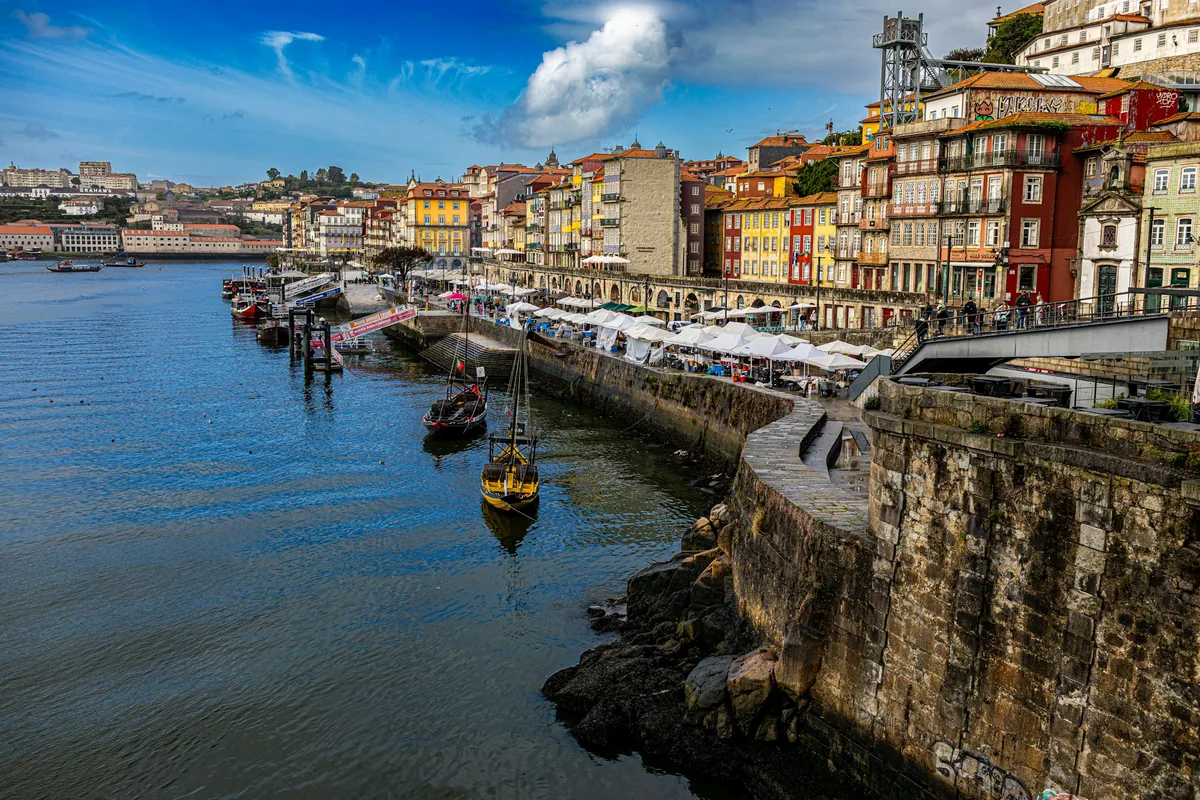
Explore the narrow lanes behind the waterfront, then visit the Church of São Francisco, whose interior is covered in gilded wood carvings. Ribeira is busy by day but lovely in the evening.
Just above the waterfront, the Palácio da Bolsa, the old stock exchange, is visited on guided tours and is famous for its lavish Arab Room. In the evening, the quayside fills with diners, street musicians and people watching the lights come on across the river.
- Getting there: Walk downhill from São Bento metro station in around ten minutes.
- Time needed: Half a day, including São Francisco and the Bolsa.
- Best time to go: Early morning for quiet lanes, or evening for the atmosphere by the river.
- Insider tip: Eat a street or two back from the waterfront for better value meals.
2. Cross the Dom Luís I Bridge
The Dom Luís I Bridge is Porto’s most famous landmark, a two-level iron arch bridge opened in 1886. It was designed by Théophile Seyrig, a former partner of Gustave Eiffel.
Walk across the upper deck, shared with the metro, for spectacular views over Ribeira and the river. The lower deck carries cars and pedestrians at river level. Go at sunset for the best light.
On the Gaia side, climb to the terrace of the Serra do Pilar Monastery, part of the UNESCO-listed area, for one of the best views of the bridge and the old town. It’s a favourite spot for sunset, so arrive early to find a place.
- Getting there: Walk across from Ribeira on the lower deck, or from the upper town on the upper deck.
- Time needed: About an hour, including the viewpoint.
- Best time to go: Sunset.
3. Taste Port Wine in Vila Nova de Gaia
Across the river from Ribeira, Vila Nova de Gaia is where port wine has been aged and stored for centuries. Famous houses such as Taylor’s, Graham’s, Sandeman and Cálem offer cellar tours and tastings.
Tours explain how port is made in the Douro Valley and aged in huge oak barrels. Book ahead in summer. Afterwards, ride the Gaia cable car for views over the cellar rooftops.
Many tastings compare different styles, from fruity ruby and nutty tawny to the less familiar white port. In summer, try a Porto tónico, white port with tonic water, a refreshing local favourite.
- Getting there: Walk across the lower deck of the Dom Luís I Bridge from Ribeira.
- Time needed: Two to three hours to visit one or two cellars.
- Tickets: Book cellar tours online, especially at weekends and in summer.
- Insider tip: Smaller, family-run cellars often offer more personal tastings than the big brands.
4. Visit Livraria Lello
Livraria Lello is one of the most beautiful bookshops in the world, famous for its red, curving staircase and stained glass ceiling.
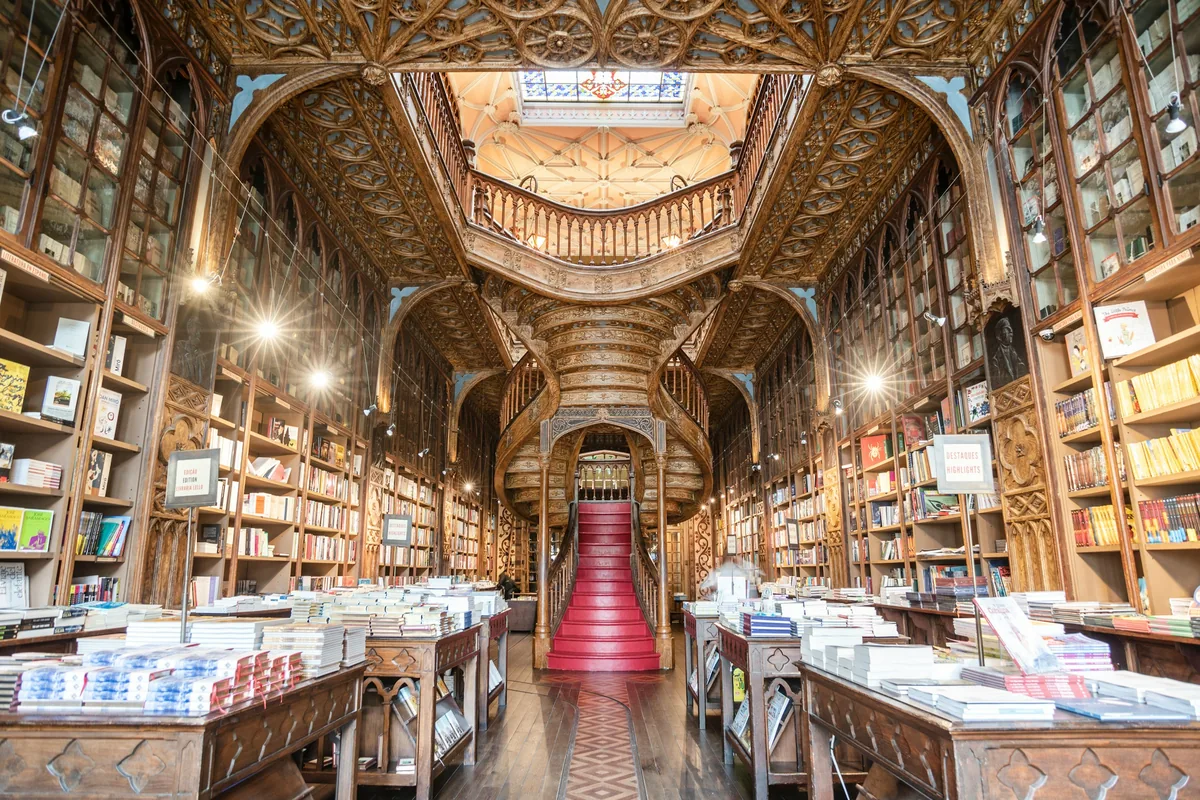
Because it’s so popular, entry requires a ticket, which can be deducted from the price of a book. Book a timed slot online and go at opening time to avoid the biggest queues.
The bookshop opened in 1906, and its neo-Gothic facade and carved wooden interior make it a favourite with photographers. Inside, the shelves are filled with Portuguese and international titles, including special editions you won’t find elsewhere.
- Getting there: The shop is a short walk from the Clérigos Tower.
- Time needed: 30 minutes to an hour.
- Tickets: Book a timed ticket online in advance.
5. Admire the Tiles at São Bento Station
São Bento Railway Station is a working train station with an entrance hall decorated with around 20,000 blue and white azulejo tiles. They show scenes from Portuguese history, including battles and royal processions.
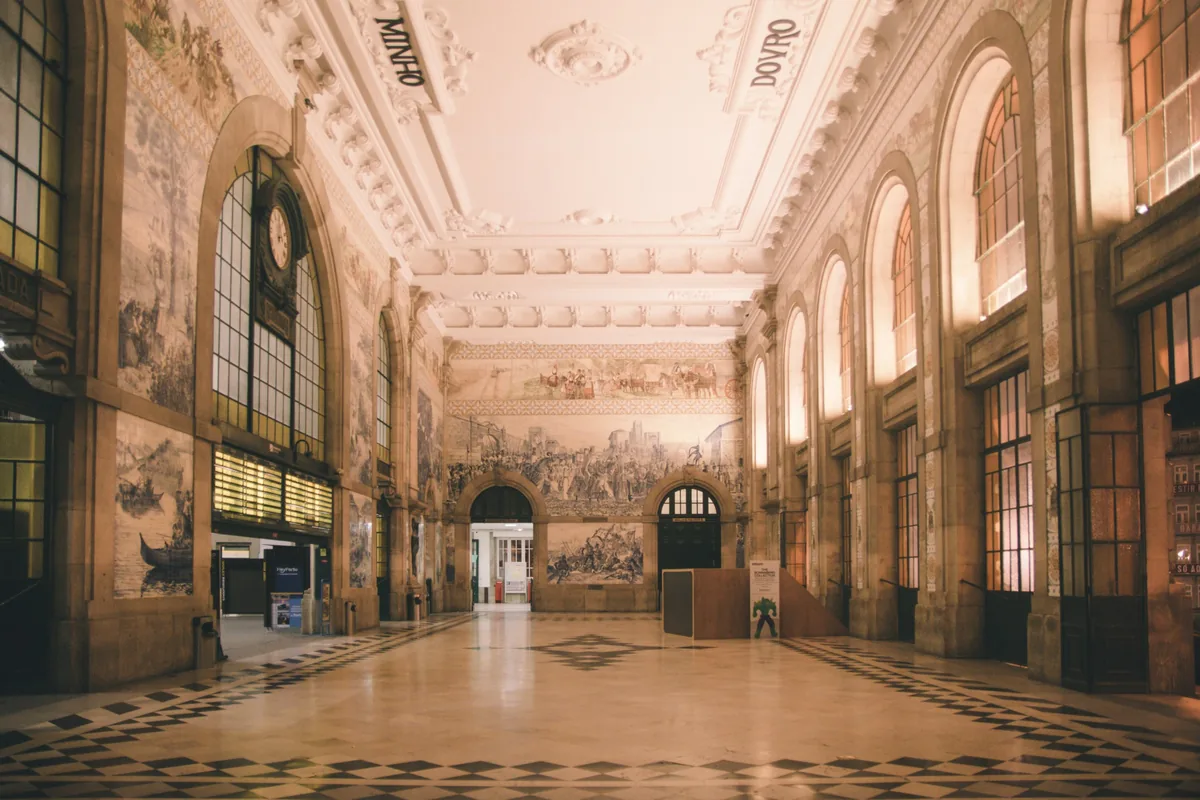
It’s free to enter and only takes a few minutes, but it’s one of the city’s highlights. Look out for other tiled facades nearby, including the Igreja do Carmo and the Capela das Almas.
The tile panels were painted by the artist Jorge Colaço in the early 20th century. Trains to the Douro Valley, Guimarães and Braga leave from here, so you may pass through again on a day trip.
- Getting there: São Bento has its own metro station on line D.
- Time needed: 15 to 20 minutes.
- Best time to go: Early morning, before the tour groups arrive.
6. Climb the Clérigos Tower
The Clérigos Tower is a baroque bell tower that rises high above the historic centre. Climbing its narrow spiral staircase of around 240 steps rewards you with panoramic views over the city’s rooftops and the river.
The ticket also includes the Clérigos Church, with its ornate interior. Go early or late in the day for fewer crowds.
The tower and church were designed in the 18th century by the Italian architect Nicolau Nasoni, who shaped much of Porto’s baroque skyline. From the top, you can pick out the cathedral, the river and the port lodges across in Gaia.
- Getting there: The tower is in the centre, a short walk from São Bento and Livraria Lello.
- Time needed: About an hour.
- Tickets: Buy online to skip the ticket queue.
7. Take a Six Bridges Cruise
A Six Bridges river cruise is a relaxing way to see Porto from the water. The boats travel up and down the Douro, passing under all of the city’s bridges in around 50 minutes.
Most cruises leave from Ribeira or Gaia. They’re especially pleasant in the late afternoon. For a longer journey, river cruises run up into the Douro Valley.
Along the way you pass under the Arrábida, Luís I, Infante, Maria Pia, São João and Freixo bridges, each from a different era. The Maria Pia railway bridge was designed by Gustave Eiffel’s company.
- Getting there: Boats leave from the quaysides in Ribeira and Gaia.
- Time needed: Around an hour.
- Best time to go: Late afternoon, for warm light on the riverside houses.
8. Eat a Francesinha
The francesinha is Porto’s signature dish, a huge sandwich of ham, sausage and steak covered in melted cheese and a rich beer and tomato sauce, often topped with a fried egg and served with chips.
It’s a heavy meal, so go hungry. Cafés across the city claim to make the best one. Other local dishes to try include tripas à moda do Porto (tripe stew), which gave Porto locals their nickname “tripeiros”, and fresh grilled fish.
Café Santiago is one of the best-known places to try one, but many locals have their own favourite neighbourhood café. Pair it with a cold local beer, and leave room for dessert only if you dare.
- Time needed: An hour for a leisurely lunch.
- Insider tip: Francesinhas are huge, so consider sharing one if you want to try other dishes too.
9. Shop at Mercado do Bolhão
Mercado do Bolhão is Porto’s historic food market, reopened in 2022 after a major restoration. Stalls sell fresh fish, fruit, flowers, cheese, cured meats and pastries.
It’s a great place to try local products and pick up gifts, from tinned fish to port. Small restaurants inside serve simple Portuguese dishes.
The restored 19th century building keeps its original two-level layout around an open central courtyard. It’s a lively, local place, with stallholders who are happy to let you taste before you buy.
- Getting there: Bolhão metro station is right outside.
- Time needed: One hour.
- Best time to go: A weekday morning, when the stalls are busiest and freshest.
10. Take a Day Trip to the Douro Valley
The Douro Valley is the world’s oldest demarcated wine region and a UNESCO-listed landscape of terraced vineyards along the river. It’s where the grapes for port wine are grown.
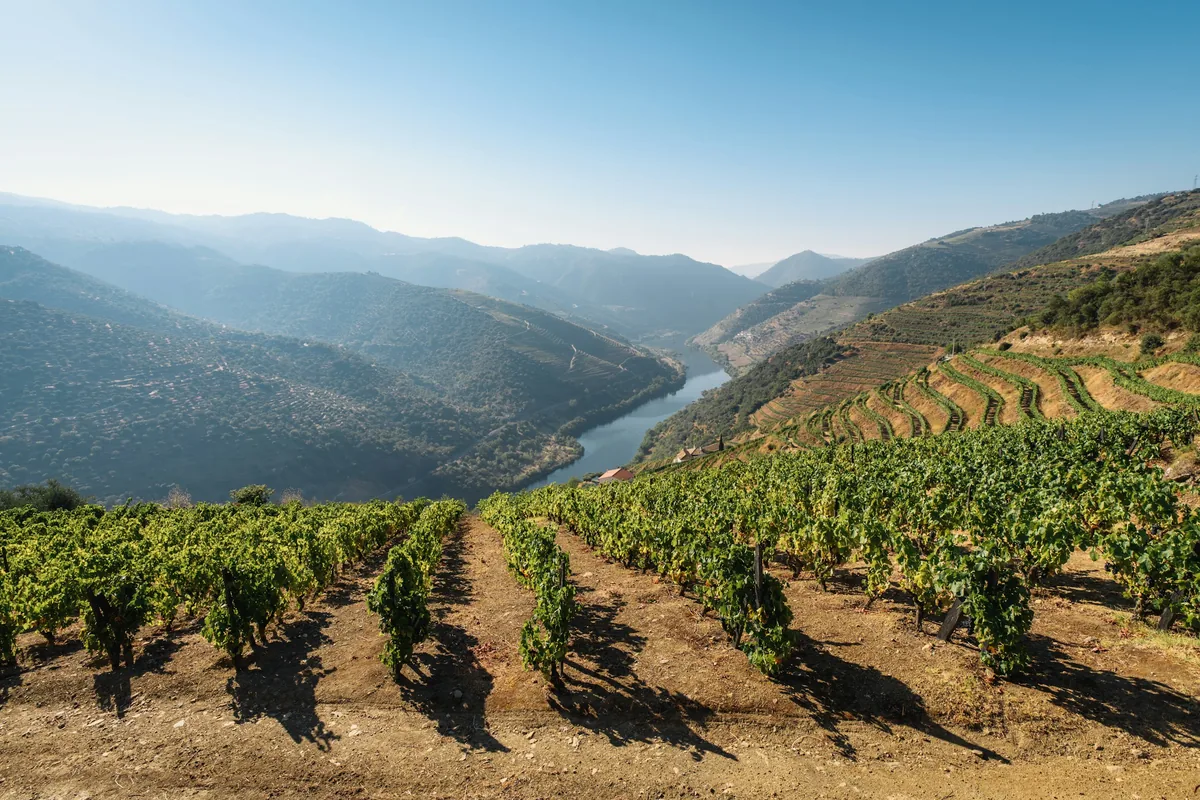
Join a day tour from Porto that includes wine tastings at quintas (wine estates) and a short boat trip. Alternatively, take the scenic train along the river to Pinhão, one of the most beautiful rail journeys in Europe.
Late September and early October is harvest time, when the valley is at its busiest and most beautiful, and some quintas invite visitors to join in the grape picking. To really slow down, stay a night at a wine estate overlooking the river.
- Getting there: Trains run from São Bento to Pinhão in around two and a half hours.
- Time needed: A full day, or two days with an overnight stay.
- Best time to go: May to October, especially at harvest time.
- Insider tip: Sit on the right side of the train heading east for the best river views.
More Things to Do in Porto
Foz do Douro is where the river meets the Atlantic, with a seaside promenade, beaches and lighthouses. Take vintage tram line 1 along the river to get there.
Serralves is a contemporary art museum set in beautiful gardens and an Art Deco villa.
Jardins do Palácio de Cristal offer peacocks, shady paths and great views over the river.
What Should You Know Before Visiting Porto?
Wear comfortable shoes. Porto’s hills are steep and the cobbles can be slippery when wet.
Use the metro and funicular. The Funicular dos Guindais connects Ribeira with the upper town.
Pack for rain. Porto is wetter than Lisbon, especially from November to March.
Visit from May to October for the best weather. June is especially lively during the Festa de São João on the night of 23 June, when the whole city parties until dawn.
Where Should You Stay in Porto?
Ribeira puts you right on the riverfront, surrounded by restaurants and views of the bridge. It’s beautiful but busy and hilly, so it suits travellers who don’t mind stairs.
Baixa, the downtown area around Avenida dos Aliados, is the most central and convenient. It’s close to São Bento station, Livraria Lello and the Clérigos Tower, with plenty of hotels and apartments at different prices.
Cedofeita is a creative neighbourhood with independent shops, galleries and cafés, a little calmer than the centre. Vila Nova de Gaia, across the river, offers some of the best views of the city skyline and is right next to the port cellars, though you’ll need to cross the bridge to reach most sights.
Foz do Douro suits travellers who want a seaside atmosphere and don’t mind a tram or bus ride into the centre. It’s especially pleasant in summer, with beaches and a long promenade.
Tip: Porto has good value accommodation compared with Lisbon, but prices rise during the São João festival in June and summer weekends, so book early.
A 3-Day Porto Itinerary
Three days lets you see the city at a relaxed pace and spend a day in the Douro Valley.
Day 1: The Historic Centre
Start at São Bento station, visit Livraria Lello and climb the Clérigos Tower. In the afternoon, wander down to Ribeira and the Church of São Francisco, then cross the Dom Luís I Bridge for sunset at Serra do Pilar.
Day 2: Port, the River and Foz
Visit a port cellar in Gaia in the morning, take a Six Bridges cruise, then ride vintage tram line 1 to Foz do Douro for a walk by the Atlantic.
Day 3: The Douro Valley
Take the train to Pinhão or join a wine tour to the quintas of the Douro Valley, returning to Porto for dinner.
Getting Around Porto
Porto’s centre is walkable, but steep. The metro is clean and efficient, and the violet line connects the airport with the city centre. Buy a rechargeable Andante card for the metro, buses and some trains.
Heritage trams run on a few routes, including line 1 along the river to Foz. The Guindais funicular and the Gaia cable car save a climb, and taxis and ride-hailing apps are reasonably priced.
How Much Does a Trip to Porto Cost?
Porto is one of the best-value city breaks in Western Europe, with affordable food, wine and public transport. Hotels have risen in price in recent years, especially in summer and during the São João festival.
Many of the best experiences are cheap or free, including the views from the bridge, São Bento station and walking the riverside. The Porto Card can save money if you plan to use public transport and visit several museums.
Frequently Asked Questions
How many days do you need in Porto?
Two to three days covers the city’s main sights. Add a day for the Douro Valley.
Is Porto better than Lisbon?
They’re different. Porto is smaller and more traditional, while Lisbon is bigger and sunnier. Many visitors see both, connected by a three-hour train ride.
Is Porto walkable?
Yes, the centre is compact, but it’s very hilly.
What is Porto famous for?
Porto is famous for port wine, its riverside Ribeira district, the Dom Luís I Bridge, azulejo tiles and the francesinha sandwich.
Is Porto expensive?
No. Porto is generally cheaper than Lisbon and most Western European cities, especially for food and drink.
Discover Porto
Porto combines history, food, wine and riverside views in one compact city. Take your time, try the port and enjoy a sunset on the Dom Luís I Bridge.
Continuing your trip through Portugal? Lisbon is three hours south by train, so add the best things to do in Lisbon to your route, then finish on the Algarve’s most beautiful beaches. Love historic cities? Edinburgh shares Porto’s hilly old town and UNESCO status, and our guide to Edinburgh’s best sights is a good next step.
Featured image: Photo by Nick Karvounis on Unsplash