Last updated: October 2026
Scotland has more than 900 islands, and fewer than a hundred are inhabited. The best Scottish islands to visit offer a mix of dramatic mountains, white sand beaches with turquoise water, ancient history, wildlife and world-famous whisky.
Each island has its own character, from the Gaelic-speaking Outer Hebrides to the Norse-influenced Northern Isles. This guide covers the top 10 Scottish islands to visit, with tips on getting there and what to see. Most west coast islands are served by CalMac ferries, and VisitScotland has detailed island guides.
Quick answer: Which Scottish islands are best to visit? Our top 10 are Isle of Skye, Isle of Mull, Iona, Islay, Lewis and Harris, Orkney, Shetland, Isle of Arran, Barra and St Kilda. Skye for mountains, Harris for white sand beaches, Mull for wildlife, Orkney for Neolithic history and Islay for whisky. Arran is the easiest short break, under an hour by ferry from the mainland.
Top 10 Scottish Islands to Visit at a Glance
| # | Destination | Best for |
|---|---|---|
| 1 | Isle of Skye | Dramatic landscapes and hiking |
| 2 | Isle of Mull | Wildlife and boat trips |
| 3 | Iona | History and tranquillity |
| 4 | Islay | Whisky lovers |
| 5 | Lewis and Harris | Beaches and Gaelic culture |
| 6 | Orkney | Ancient history |
| 7 | Shetland | Wildlife and Norse culture |
| 8 | Isle of Arran | A short, easy island break |
| 9 | Barra | Something unique |
| 10 | St Kilda | Adventurous travellers and birdwatchers |
1. Isle of Skye
Skye is Scotland’s most famous island, known for its jagged Cuillin mountains, fairy pools and otherworldly rock formations. It’s connected to the mainland by a bridge, making it the easiest island to reach.
Must-sees include the Old Man of Storr, a rock pinnacle reached on a steep walk, the Quiraing, a landslip with spectacular views, the Fairy Pools in Glen Brittle and the colourful harbour town of Portree. Skye gets very busy in summer, so book accommodation well in advance.
Beyond the famous sights, head to Neist Point for a lighthouse on dramatic cliffs, visit Dunvegan Castle, home of the MacLeod clan for centuries, or taste whisky at the Talisker distillery on the shores of Loch Harport.
- Getting there: Drive over the Skye Bridge from Kyle of Lochalsh, or take the ferry from Mallaig to Armadale.
- Time needed: Three to four days.
- Best time to go: May, June or September, when it’s less crowded than high summer.
- Insider tip: Start popular walks like the Old Man of Storr early in the morning, before the car parks fill up.
Best for: dramatic landscapes and hiking.
2. Isle of Mull
Mull is a large, green island with a rugged coastline and some of the best wildlife watching in Scotland. Look out for white-tailed eagles, otters, seals, dolphins and, in summer, whales and basking sharks.
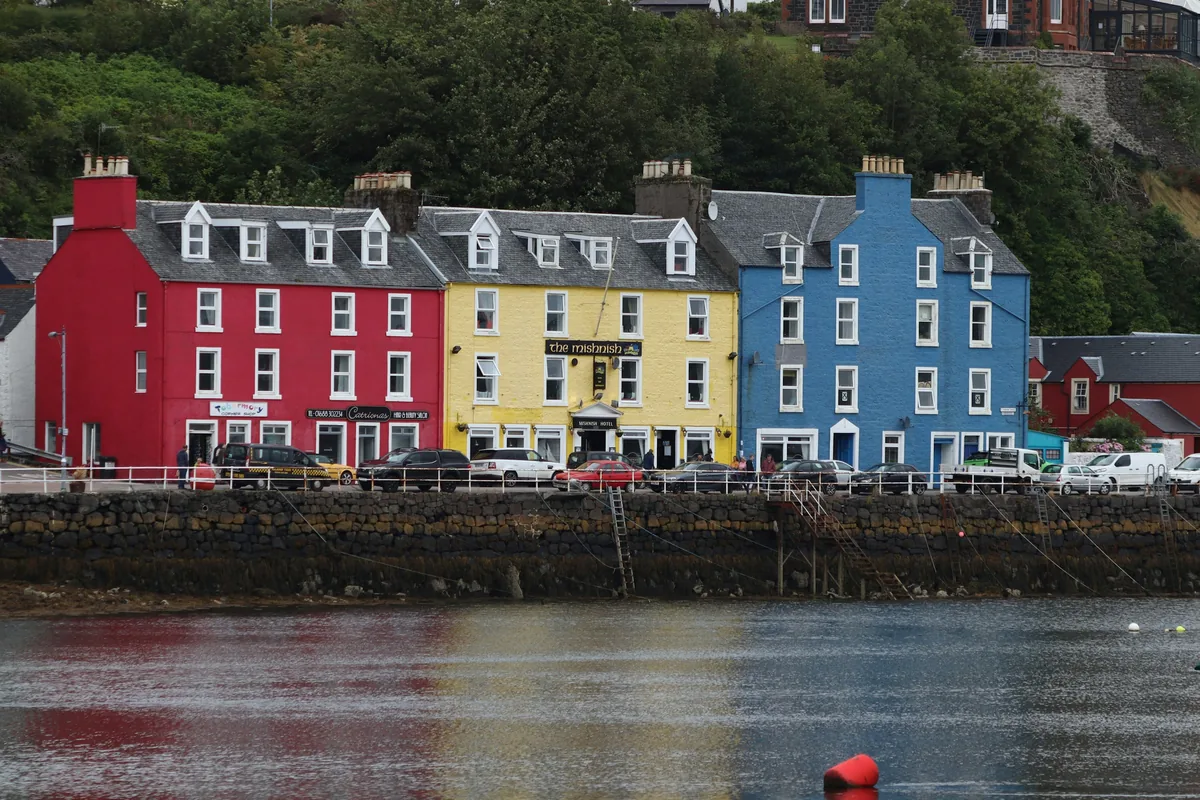
Tobermory, the main town, has a harbour lined with brightly painted houses. Boat trips to Staffa let you see Fingal’s Cave, a sea cave of hexagonal basalt columns, and in season, puffins on the Treshnish Isles.
Duart Castle, the ancestral seat of the Clan Maclean, stands on a headland near the ferry port and is one of the first things you see as you arrive. Mull’s roads are mostly single-track, so allow plenty of time to get around.
- Getting there: Take the CalMac ferry from Oban to Craignure, which takes under an hour.
- Time needed: Two to three days, with Iona and Staffa.
- Insider tip: Book wildlife and Staffa boat trips in advance in summer, as they often sell out.
Best for: wildlife and boat trips.
3. Iona
Iona is a tiny island off the tip of Mull, regarded as the cradle of Christianity in Scotland. Saint Columba founded a monastery here in 563 AD.
The restored Iona Abbey is a peaceful place to visit, and many early Scottish kings are said to be buried in its graveyard. The island’s white beaches and clear water are stunning. Visitor cars aren’t usually allowed, so leave yours in Fionnphort on Mull and walk on the ferry.
Iona is small enough to explore on foot, with quiet beaches on the north and west coasts and the marble quarry at its southern tip. The island has a strong sense of peace, especially once the day visitors have left.
- Getting there: A short passenger ferry runs from Fionnphort on Mull.
- Time needed: Half a day, or an overnight stay.
- Insider tip: Stay a night to enjoy the island after the last day trippers leave.
Best for: history and tranquillity.
4. Islay
Islay is known as the “Queen of the Hebrides” and is home to around ten working whisky distilleries, famous for their smoky, peaty single malts.
Distilleries such as Laphroaig, Lagavulin and Ardbeg offer tours and tastings. Beyond whisky, Islay has long sandy beaches, birdwatching (it hosts huge flocks of geese in winter) and quiet coastal walks. The Fèis Ìle whisky festival takes place each spring.
Many distilleries cluster along the south coast near Port Ellen, making it possible to walk between Laphroaig, Lagavulin and Ardbeg on a sunny day. Machir Bay on the west coast is one of Islay’s most beautiful beaches.
- Getting there: Ferries run from Kennacraig to Port Askaig or Port Ellen, and there are flights from Glasgow.
- Time needed: Three to four days.
- Good to know: Scotland has a strict drink-drive limit, so plan a designated driver or book distillery tours with transport.
Best for: whisky lovers.
5. Lewis and Harris
Lewis and Harris are two parts of the same island in the Outer Hebrides, with some of the most beautiful beaches in Europe. Harris’s Luskentyre and Seilebost beaches have white sand and turquoise water that could pass for the Caribbean.
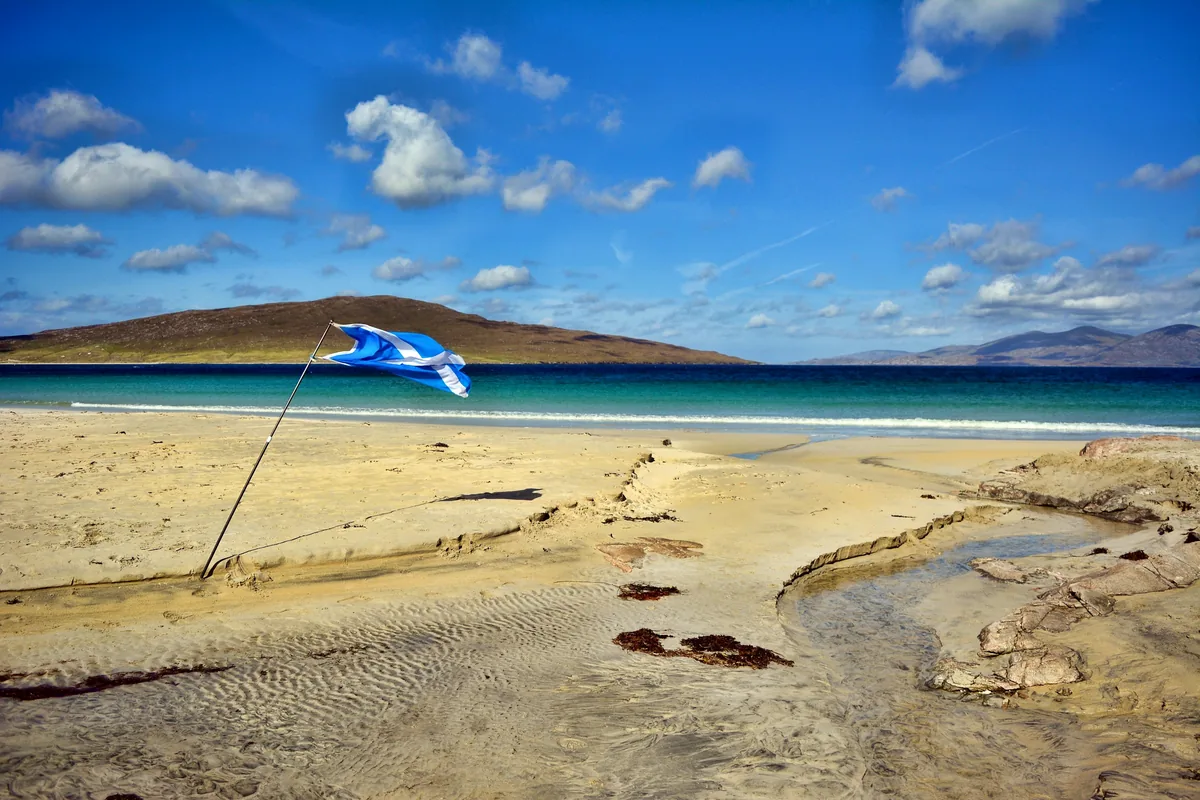
On Lewis, the Callanish Standing Stones are older than Stonehenge. Harris is famous for Harris Tweed, still hand woven in islanders’ homes, and gin from the Isle of Harris Distillery. Gaelic is widely spoken here.
At Gearrannan, a restored blackhouse village on Lewis, you can see the thatched stone homes where islanders once lived. Sunday is traditionally a quiet day here, and many shops, cafés and services close.
- Getting there: Take the ferry from Ullapool to Stornoway, or from Uig on Skye to Tarbert on Harris.
- Time needed: Four to five days.
- Good to know: Plan ahead for Sundays, when many businesses are closed.
- Insider tip: Visit Luskentyre at low tide, when the sand flats and colours are at their most striking.
Best for: beaches and Gaelic culture.
6. Orkney
Orkney is an archipelago off Scotland’s north coast with some of the best-preserved Neolithic sites in Europe. The Heart of Neolithic Orkney is a UNESCO World Heritage Site.
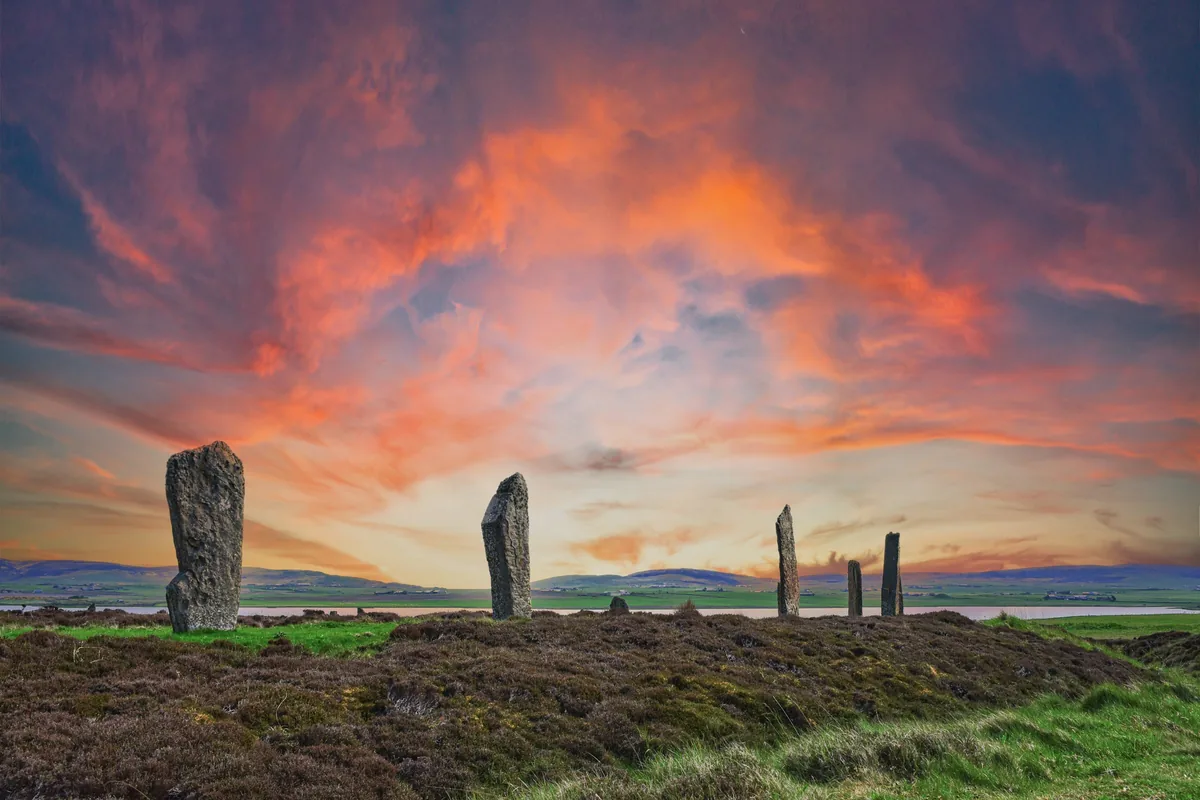
Highlights include Skara Brae, a 5,000-year-old stone village, the Ring of Brodgar stone circle and Maeshowe, a chambered tomb with Viking graffiti. Kirkwall’s St Magnus Cathedral was founded by Vikings. The Italian Chapel, built by prisoners of war during the Second World War, is a moving sight.
The ferry from Scrabster to Stromness sails past the Old Man of Hoy, a tall sea stack that is one of the most famous sights in Orkney. Orkney is also home to the Highland Park and Scapa whisky distilleries.
- Getting there: Ferries run from Scrabster and Gills Bay, and from Aberdeen. Flights land at Kirkwall.
- Time needed: Three to four days.
- Tickets: Maeshowe is visited on guided tours, so book ahead.
- Insider tip: Visit Skara Brae early in the day, before the coach tours arrive.
Best for: ancient history.
7. Shetland
Shetland is Britain’s most northerly point, closer to Norway than to Edinburgh. Its Norse heritage is strong, celebrated in the fire festival of Up Helly Aa each winter.
The islands are a haven for seabirds, including puffins at Sumburgh Head, and you may see otters along the coast. Look out for the famous Shetland ponies. In winter, Shetland is one of the best places in the UK to see the aurora. Shetland also appears in our guide to the best places to see the Northern Lights, alongside Norway and Iceland.
On the island of Mousa, an Iron Age broch, a round stone tower, is one of the best-preserved in Scotland, and on summer nights small seabirds called storm petrels return to nest in its walls. Up Helly Aa in Lerwick is held each January, with a torchlit procession and the burning of a Viking galley.
- Getting there: Take the overnight NorthLink ferry from Aberdeen to Lerwick, or fly to Sumburgh.
- Time needed: Four to five days.
- Best time to go: May to August for wildlife and long days, or winter for the aurora and Up Helly Aa.
Best for: wildlife and Norse culture.
8. Isle of Arran
Arran is known as “Scotland in miniature” because it packs Highland mountains, Lowland farmland, beaches and castles into one small island. It’s easy to reach by ferry from Ardrossan, under an hour from Glasgow by train.
Climb Goatfell, the island’s highest peak, visit Brodick Castle and taste Arran whisky, cheese and ice cream. It’s a perfect choice for a short break. For more short trips like this, see the best weekend getaways in the UK.
In the north of the island, Lochranza has a ruined castle and a whisky distillery, and red deer often wander through the village. Holy Isle, off the east coast, is home to a Buddhist retreat and can be visited by small boat in summer.
- Getting there: Ferries usually run from Ardrossan to Brodick in under an hour. Check the departure port when you book.
- Time needed: Two to three days.
- Insider tip: Arran is busy on summer weekends, so visit midweek if you can.
Best for: a short, easy island break.
9. Barra
Barra is a small island at the southern end of the Outer Hebrides, famous for its airport, where planes land on the beach. Flights are timed around the tides.
The island has beautiful beaches, a 15th century castle (Kisimul) sitting in the bay at Castlebay and a friendly, close-knit community. A ferry links Barra with Eriskay and South Uist, making it a great end point for an island-hopping trip.
Kisimul Castle is reached by a short boat trip from Castlebay in the summer months. The island is small enough to cycle around in a day, with sandy beaches and machair, flower-rich grassland that blooms in early summer.
- Getting there: Fly from Glasgow to the beach airport, or take the ferry from Oban to Castlebay.
- Time needed: Two to three days.
- Good to know: Flights depend on the tides and weather, so allow flexibility.
Best for: something unique.
10. St Kilda
St Kilda is a remote archipelago far out in the Atlantic, abandoned by its last residents in 1930. It’s one of the few places in the world with dual UNESCO World Heritage status for both its natural and cultural significance.
Its sea cliffs are among the highest in the UK and home to huge colonies of gannets, puffins and fulmars. Day trips run in summer from Harris and Skye, weather permitting, with a long but unforgettable boat journey.
St Kilda is owned by the National Trust for Scotland, and a small museum in the old village tells the story of the islanders who lived here for centuries. Landing is never guaranteed, as boats can only go ashore in calm conditions.
- Getting there: Day trips run in summer from Leverburgh on Harris and from Skye.
- Time needed: A long full day of around 12 hours.
- Good to know: The crossing can be rough, so take seasickness tablets if you’re prone to it.
Best for: adventurous travellers and birdwatchers.
When Is the Best Time to Visit the Scottish Islands?
May to September is the best time to visit, with long days, milder weather and full ferry timetables.
- May and June: long days, puffins nesting and fewer midges.
- July and August: warmest but busiest, with midges in the evenings.
- September: quieter, with golden light and autumn colours.
- Winter: dark and stormy but atmospheric, with aurora chances in the north.
What Should You Know Before Visiting the Scottish Islands?
Book ferries early. Car spaces on popular routes sell out in summer. Foot passengers usually have more flexibility.
Plan for weather delays. Ferries can be cancelled in high winds, so allow a buffer day before flights home.
Bring midge repellent. Midges are small biting insects that are common in summer, especially on calm, damp evenings.
Hire a car or bring a bike. Buses on the islands are infrequent, especially on Sundays, when some services don’t run at all. A car gives you the freedom to reach remote beaches and viewpoints.
Respect the land. Follow the Scottish Outdoor Access Code, close gates and take your litter home.
A 10-Day Scottish Islands Itinerary
Ten days is enough to combine three of the best islands on the west coast.
Days 1 to 3: Mull and Iona
Take the ferry from Oban to Mull. Spend a day on a wildlife or Staffa boat trip and another on Iona.
Days 4 to 6: Skye
Head north to Skye, via the Mallaig to Armadale ferry or the Skye Bridge. Walk to the Old Man of Storr and the Quiraing, and visit the Fairy Pools and Portree.
Days 7 to 10: Lewis and Harris
Take the ferry from Uig to Tarbert. Spend your days on the beaches of Harris, then drive north to the Callanish Standing Stones before sailing home from Stornoway to Ullapool.
Getting Around the Scottish Islands
CalMac ferries serve most west coast islands, and their island-hopping tickets cover several routes in one trip. NorthLink ferries sail to Orkney and Shetland, and Loganair flights connect the islands with mainland airports.
Car spaces on summer ferries sell out, so book as early as possible. On the islands, buses are limited, especially on Sundays, so a car or bike is the best way to explore. Many island roads are single-track with passing places, so drive slowly and pull in to let others pass.
How Much Does a Scottish Islands Trip Cost?
Accommodation is the biggest cost, especially on Skye in summer, where demand is high and supply is limited. Ferry fares for cars add up on a multi-island trip, so foot passengers and cyclists save money.
Self-catering cottages are often good value for families and groups. Many of the islands’ best experiences, from beaches to standing stones and coastal walks, are free.
Where Should You Stay?
Choose one base per island to cut down on driving. On Skye, Portree is the most convenient, while on Mull, Tobermory has the most choice.
On Harris, Tarbert is central, and on Lewis, Stornoway has the widest range of hotels. In Orkney, choose Kirkwall or Stromness, and in Shetland, Lerwick is the main town with the most accommodation.
Frequently Asked Questions
Which Scottish island is the most beautiful?
Skye is the most famous, but many visitors find Harris’s beaches and Mull’s coastline just as beautiful.
Which is the easiest Scottish island to visit?
Skye is connected by a bridge, and Arran is under an hour by ferry from the mainland.
How do you get to Orkney and Shetland?
By ferry from Aberdeen or Scrabster, or by flights from mainland Scottish airports.
Do you need to book ferries to the Scottish islands?
Yes, if you’re taking a car in summer. Foot passengers can usually buy tickets on the day, but booking is still wise on busy routes.
Can you visit the Scottish islands without a car?
Yes, but it takes planning. Use ferries, local buses and bike hire, and choose islands like Iona, Arran or Mull, where you can see a lot without driving.
Explore Scotland’s Islands
Each Scottish island offers something different, from Skye’s mountains to Orkney’s ancient villages and Harris’s white beaches. Pick two or three that suit your interests and take your time.
Starting your trip in the capital? Our guide to the best things to do in Edinburgh helps you plan a day or two before heading north. Love the coast? Our guide to the UK’s best coastal destinations covers Cornwall to Northumberland, and the UK’s best hidden gems has more places beyond the tourist trail.
Featured image: Photo by martin bennie on Unsplash