Last updated: October 2026
The best places to see the Northern Lights all sit inside the “auroral oval”, a ring around the Arctic where the lights appear most often. Get yourself under that ring between September and March, find a dark sky away from city lights, and you have a real chance of watching green and purple ribbons dance overhead.
The aurora is caused by charged particles from the Sun hitting gases in Earth’s upper atmosphere. The Sun has recently been near the peak of its roughly 11-year activity cycle, and strong displays are still common in the years just after the peak, which makes now a good time to plan a trip.
This guide ranks the top 10 places to see the Northern Lights, with what each destination offers beyond the sky itself, so your trip is worthwhile even on a cloudy night.
Quick answer: Where is the best place to see the Northern Lights? Our top 10 are Tromsø, Lofoten Islands, Abisko, Finnish Lapland, Iceland, Svalbard, Greenland, Yellowknife, Fairbanks and Scotland. Tromsø is the easiest base for first-timers, Abisko has some of the most reliable clear skies in Europe, and Yellowknife and Fairbanks offer the highest odds in North America. Go between September and March and stay at least three nights.
Top 10 Places to See the Northern Lights at a Glance
| # | Destination | Best for |
|---|---|---|
| 1 | Tromsø, Norway | First-timers who want plenty of tours and a lively base |
| 2 | Lofoten Islands, Norway | Photographers and road trippers |
| 3 | Abisko, Sweden | Travellers who want the best odds of clear skies |
| 4 | Finnish Lapland | Families and couples looking for comfort |
| 5 | Iceland | Combining the aurora with a classic road trip |
| 6 | Svalbard, Norway | Adventurous travellers who want something truly remote |
| 7 | Greenland | Travellers who want the aurora without the crowds |
| 8 | Yellowknife, Canada | Maximising your odds over a short stay |
| 9 | Fairbanks, Alaska | Travellers from North America |
| 10 | Scotland | UK travellers on a budget |
1. Tromsø, Norway
Tromsø is often called the capital of the Northern Lights, and it is the easiest Arctic city to reach. It sits well above the Arctic Circle, with direct flights from several European cities in winter.
The city itself has light pollution, so most visitors join an evening aurora chase. Guides drive out to the fjords or even across the border into Finland to find clear skies. By day you can go dog sledding, whale watching (usually from late autumn into winter) or ride the cable car up Mount Storsteinen. Visit Norway lists licensed operators and seasonal activities.
Best for: first-timers who want plenty of tours and a lively base.
2. Lofoten Islands, Norway
Lofoten combines the aurora with some of the most dramatic scenery in Europe. Jagged peaks rise straight out of the sea, and red fishing cabins called rorbuer line the harbours.
The islands are slightly milder than inland Lapland thanks to the Gulf Stream, but weather can change fast. Rent a car and stay flexible, as driving to the other side of a mountain often finds a gap in the clouds. Photographers love Lofoten because the lights reflect in the still water of the bays.
Best for: photographers and road trippers.
3. Abisko, Sweden
Abisko in Swedish Lapland is famous for its “blue hole”, a patch of sky that often stays clear when the rest of the region is cloudy. This happens because the surrounding mountains create a rain shadow over the national park.
The Aurora Sky Station sits on a mountain above the village and is reached by chairlift, offering a viewing platform far from any artificial light. Abisko is reachable by train from Stockholm, a scenic overnight journey that adds to the adventure.
Best for: travellers who want the best odds of clear skies.
4. Finnish Lapland
Finnish Lapland is where you can watch the lights from bed, in a glass igloo or a cabin with a glass roof. The main bases are Rovaniemi, Saariselkä, Levi and Inari, each with a range of aurora lodges.
Rovaniemi is home to the Santa Claus Village on the Arctic Circle, making it popular with families in December. Further north, Inari and Saariselkä are darker and quieter. Visit Finland has a good overview of the regions and how to get there.
Best for: families and couples looking for comfort.
5. Iceland
Iceland is one of the few aurora destinations where you can combine the lights with glaciers, waterfalls and hot springs on the same trip. The whole country sits close to the auroral oval, and you only need to drive 20 to 30 minutes from Reykjavik to escape the city glow.
Good viewing spots include Þingvellir National Park, the Snæfellsnes Peninsula and the south coast near Vík. The Icelandic Met Office publishes a cloud cover and aurora forecast each day, and Visit Iceland lists winter tours. Reykjavik makes an easy base, with most aurora tours offering hotel pickup.
Best for: combining the aurora with a classic road trip.
6. Svalbard, Norway
Svalbard is so far north that during the polar night, from around mid-November to late January, the sun never rises. That means you can see the aurora not just at night but sometimes in the middle of the day.
Longyearbyen is the main settlement and has hotels, restaurants and tour operators. Activities include snowmobile trips, ice cave visits and dog sledding. Polar bears live here, so you must go outside the town with a licensed guide.
Best for: adventurous travellers who want something truly remote.
7. Greenland
Greenland offers aurora viewing with almost zero light pollution and very few other travellers. Kangerlussuaq, home to the main international airport, has a dry, stable inland climate and many clear nights.
From there you can visit the edge of the ice sheet, go on musk ox safaris and stay in simple lodges. Ilulissat, with its huge icebergs, is another option. In summer, the same area is popular for long-distance hiking on the Arctic Circle Trail.
Best for: travellers who want the aurora without the crowds.
8. Yellowknife, Canada
Yellowknife in Canada’s Northwest Territories is one of the most reliable aurora destinations in the world. It sits directly under the auroral oval on flat land with very stable weather, so clear nights are common.
Many visitors stay three or four nights, which greatly increases the chance of a strong show. Lodges outside town have heated viewing cabins and teepees. Winters are extremely cold, often well below minus 20°C, so suits and boots can be rented locally.
Best for: maximising your odds over a short stay.
9. Fairbanks, Alaska
Fairbanks in interior Alaska is the top aurora destination in the United States. Like Yellowknife, it has a dry continental climate and sits under the auroral oval, with the season running from late August to April.
Pair your aurora nights with a soak at Chena Hot Springs, about an hour’s drive away, where you can sometimes watch the lights from the outdoor pool. The NOAA Space Weather Prediction Center is based in the US and publishes the forecasts most aurora apps rely on.
Best for: travellers from North America.
10. Scotland
Scotland is the most accessible place to see the Northern Lights in the UK, especially in the far north. Caithness, Sutherland, the Orkney and Shetland islands and the Cairngorms National Park all have dark skies.
Scottish displays are less frequent and usually lower on the horizon than in the Arctic, but during strong solar storms they can be spectacular. Locals in Shetland call them the “mirrie dancers”. Shetland, Orkney and Lewis are among the darkest places to watch, and our guide to the best Scottish islands, from Skye to Shetland explains how to reach them. For quieter corners further south, see lesser-known places to visit in the UK.
Best for: UK travellers on a budget.
When Is the Best Time to See the Northern Lights?
The aurora season runs from roughly September to March in the Northern Hemisphere. You need darkness, so the midnight sun months of summer are out in the far north.
- September to October: milder weather, lakes not yet frozen, so you can see reflections.
- November to January: longest nights, but often cloudier on the coast.
- February to March: colder, clearer skies and more daylight for activities.
The lights are usually most active between 10pm and 2am, though they can appear any time it’s dark.
How to Boost Your Chances
Stay at least three nights. Weather is the biggest factor, and a longer trip gives you more clear skies to work with.
Check two forecasts, not one. Look at the KP index (aurora strength) and, more importantly, the local cloud cover forecast. A KP of 2 under a clear sky beats a KP of 6 under thick cloud.
Get away from light. Even a small town creates enough glow to wash out faint displays. A guided tour solves this for you.
Avoid the full moon if you can. A bright moon makes faint aurora harder to see, though strong displays still shine through.
Dress properly. Thermal base layers, a down jacket, insulated boots, and hand warmers make waiting outside far more pleasant.
Frequently Asked Questions
Can you guarantee seeing the Northern Lights?
No. The aurora is a natural event and depends on solar activity and clear skies. Staying longer in a reliable location gives you the best odds.
What camera settings work for the aurora?
Use a tripod, a wide lens, ISO 1600 to 3200 and an exposure of 5 to 15 seconds. Most modern phones also have a night mode that works well.
Is it better to see the lights in Norway, Finland or Iceland?
All three are excellent. Norway has the most tours, Finland the cosiest accommodation and Iceland the best scenery to explore by day.
Plan Your Aurora Trip
Pick a destination under the auroral oval, stay at least three nights and keep your plans flexible. Do that and your chances of seeing the Northern Lights are high.
If you want to pair the aurora with a city break, our guide to Europe’s best winter destinations, from Lapland to Vienna suggests easy combinations. Combining Christmas with your trip? Several Nordic cities also host festive markets, and our list of Europe’s most magical Christmas markets includes Tallinn and Copenhagen.
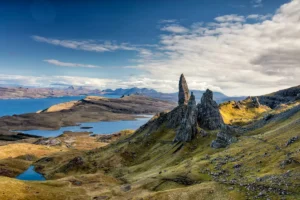
Featured image: Photo by Lightscape on Unsplash